Year: 2016

  • President-elect Trump’s trade team takes shape: What implications for the Caribbean?

    President-elect Trump’s trade team takes shape: What implications for the Caribbean?

    Photo source: Pixabay

    Alicia Nicholls

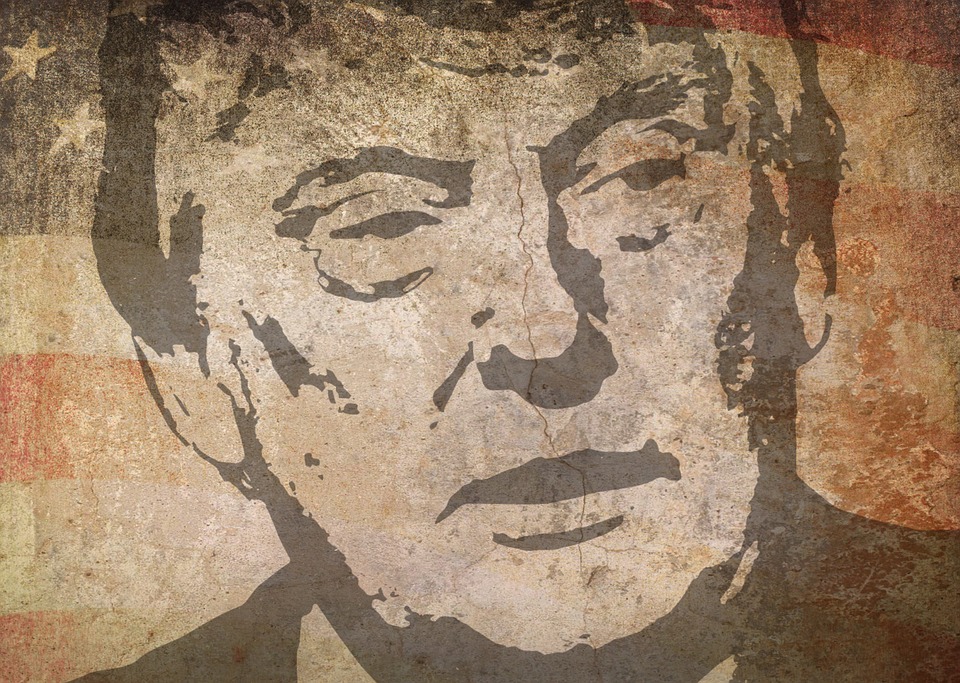
    US President-elect Donald Trump’s trade team is starting to take shape. A successful billionaire himself, Mr. Trump has so far stayed true to his promise of selecting business people as opposed to the traditional career politician for most of his Cabinet and administrative-level choices, with the selection of billionaire private equity investor, Wilbur Ross, as Commerce Secretary and Todd Rickets as Deputy Commerce Secretary. Former Goldman Sachs’ banker, Steven Mnuchin has been picked as Secretary of the Treasury. Mr. Trump’s pick for the US Trade Representative (USTR) has not yet been announced but it has been reported by POLITICO that Representative Charles Boustany is in the bidding for that post.

    Mr. Trump’s pick for the head of the Department of Commerce, Mr. Ross, appears to share the President-elect’s skepticism of America’s current trade deals, calling them “dumb deals”, and to support the President-elect’s  broad trade policy proposals. In this interview with Fox’s Maria Bartiromo, Mr. Ross reiterated that theTrans-Pacific Partnership (TPP) “isn’t going to happen” and that the North American Free Trade Area (NAFTA) needs to be “fixed”. Mr. Ross has expressed a preference for bilateral trade agreements perhaps because it may be felt that the US might have more bargaining power in a bilateral deal. Personally, I would submit that this is a non-starter. Because of its economic prowess, large market size and the USTR’s team of skilled negotiators, the US has leverage even when negotiating with groups of countries. As I have argued elsewhere, the TPP’s investment chapter is with few exceptions basically a replica of the US model BIT.

    So what does this mean for the Caribbean? As I have stated previously, the US is Caribbean countries’ largest trade and economic partner which means any changes in US trade and economic policy has implications for the region.

    Except for the Dominican Republic which is part of the US-CAFTA-DR free trade agreement, US-Caribbean trade and economic relations are framed by the non-reciprocal Caribbean Basin Initiative (Caribbean Basin Economic & Recovery Act and the Caribbean Basin Trade Partnership Act) and additionally for Haiti, the HOPE I&II and HELP Acts, as well as bilateral investment treaties and double taxation agreements where such exist between the US and individual Caribbean countries.

    At some point the Caribbean Community (CARICOM) will want to negotiate a free trade agreement with the region’s largest trading partner as the aforementioned preference schemes are unilateral and can by ended by the US at any time, require WTO waivers and also do not include services trade. However, negotiating bilateral agreements with individual Caribbean countries, save maybe for Trinidad & Tobago and Jamaica which have populations (potential markets) of around 1,300,000 and 2,800,000, respectively, will make little economic sense for the US because of the small market sizes of most Caribbean countries.

    Either way, this will be the team that regional leaders will have to interface with as we continue dialogue on the issues affecting US-Caribbean trade, as well as the correspondent banking/de-risking issue. Like all cabinet picks, these nominations will need to be confirmed by the Senate but seeing that Mr. Trump will be benefiting from a Republican-controlled Congress, it is unlikely there will be any major issues preventing their nominations.

    Alicia Nicholls, B.Sc., M.Sc., LL.B., is a trade and development consultant with a keen interest in sustainable development, international law and trade. You can also read more of her commentaries and follow her on Twitter @LicyLaw.

  • World Economic Forum Releases Global Enabling Trade Index 2016; Caribbean countries continue to lag

    World Economic Forum Releases Global Enabling Trade Index 2016; Caribbean countries continue to lag

    Photo source: Pixabay

    Alicia Nicholls

    The World Economic Forum (WEF) and the Global Alliance for Trade Facilitation released the 2016 edition of the Enabling Trade Report today November 30, 2016. Singapore topped the ranking for the 5th time in a row and was in the top 3 for 5 of the 7 pillars.

    For Latin America and the Caribbean, Chile was the top economy and led in all but 2 pillars. With a rank of 21st out of 136 economies, Chile was also the highest ranked emerging economy on the index. According to the WEF, the two main findings from this edition of the index were (1) a large part of the world is still excluded from globalization, and (2) some of the world’s largest economies offer limited market access. Another major finding is that the ASEAN market has become more accessible than European Union (EU) and the United States markets.

    Caribbean countries’ performance 

    Only three Caribbean economies were included on this year’s index: Dominican Republic (78), Jamaica (89) and Trinidad & Tobago (106).

    Dominican Republic

    The Dominican Republic ranked 78 out of 136 economies in 2016, compared to 77 out of 134 in 2014 and has not as yet ratified the WTO Trade Facilitation Agreement. The Dominican Republic’s best performance was on Pillar 4: Availability and Quality of Transport Infrastructure where it ranked 54th. Its worst was on Pillar 6: Availability and Use of ICTs where it ranked 95th.

    The most problematic factors identified for importing were tariffs/non-tariff barriers, burdensome import procedures, high cost or delays caused by domestic transportation, corruption at the border and high cost or delays caused by international transportation. The most problematic factors identified for exporting were difficulties in meeting quality and quantity requirements of buyers, identifying potential markets and buyers, high cost or delays caused by domestic transport, access to trade finance and inappropriate production technology and skills.

    Jamaica

    Jamaica ranked 89 out of 136 economies in 2016, compared to 88 out of 134 economies in 2014 and has ratified the WTO Trade Facilitation Agreement. Jamaica’s best performance was on Pillar 2: Foreign Market Access where it ranked 34th. Its worst was on Pillar 5: Availability and Quality of Transport Services where it ranked 108th.

    The most problematic factors identified for importing were burdensome import procedures, tariffs/non-tariff barriers, corruption at the border, crime and theft, and domestic technical requirements and standards. The most problematic factors identified for exporting were identifying potential markets and buyers, difficulties in meeting quality and quantity requirements of buyers, access to imported inputs at competitive prices, access to trade finance and inappropriate production technology and skills.

    Trinidad & Tobago

    Trinidad & Tobago ranked 106 out of 136 in 2016, sliding from 93 out of 134 in 2014 and ratified the WTO Trade Facilitation Agreement. Trinidad & Tobago’s best performance was on Pillar 6: Availability and Use of ICTs where it ranked 57th. Its worst performance was on Pillar 7: Operating Environment where it ranked 119th.

    The most problematic factors identified for importing were: burdensome import procedures, tariffs/nontariff barriers, corruption at the border, crime and theft and high cost/delays caused by international transportation. The most problematic factors for exporting were: identifying potential markets and buyers, access to trade finance, difficulties in meeting quality and quantity requirements of buyers, access to imported inputs at competitive prices and technical requirements and standards abroad.

    About the Index

    The Enabling Trade Index ranks economies according to “their capacity to facilitate the flow of goods over borders and their destination”.The index is useful as countries seek to implement the World Trade Organisation’s Trade Facilitation Agreement concluded in 2013 at the Bali Ministerial. It helps countries to see where they are excelling and where there is a room for improvement. It is therefore disappointing that more Caribbean countries are unable to be ranked.

    On this year’s index, one hundred and thirty-six (136) economies, accounting for 98 percent of world GDP and 98.3 percent of world merchandise trade, were ranked on seven pillars: domestic market, foreign market, efficiency, transparency and border, availability and quality of transportation infrastructure, availability and quality of transport services, availability and use of ICTs and operating environment.

    The full report may be accessed here.

    Alicia Nicholls, B.Sc., M.Sc., LL.B., is a trade and development consultant with a keen interest in sustainable development, international law and trade. You can also read more of her commentaries and follow her on Twitter @LicyLaw.
     

  • Happy 50th Anniversary of Independence Barbados! Tribute to Barbados at 50

    Happy 50th Anniversary of Independence Barbados! Tribute to Barbados at 50

    Alicia Nicholls

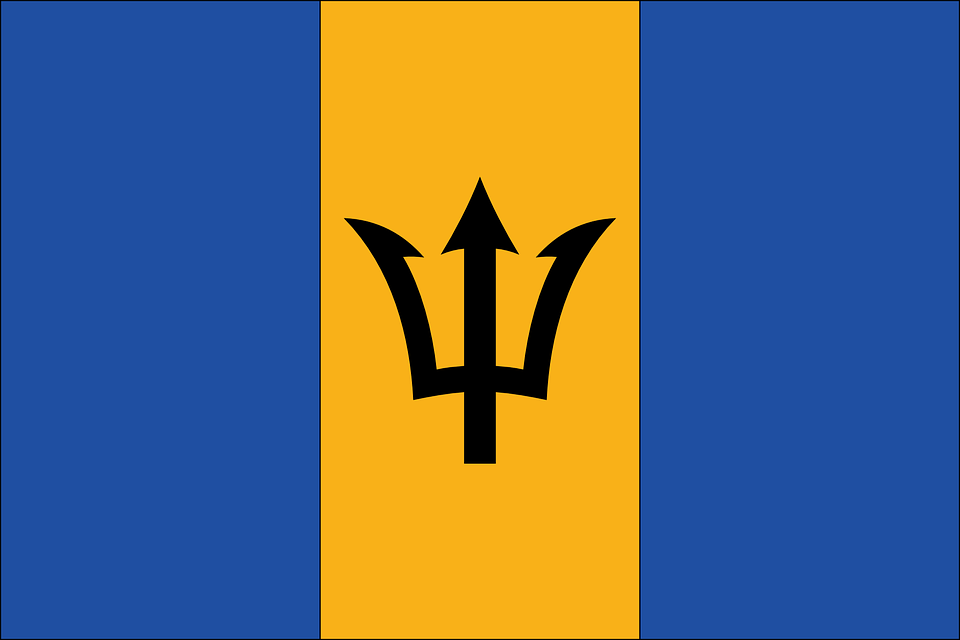
    I would like to take this opportunity to extend a happy 50th Anniversary of Independence to all my fellow Barbadians both at home and in the diaspora. Our country Barbados, with an area of just 166 sq miles and a population of around 280,000, may be little more than a small dot on the geographical map but it is hard to deny how far we have come from a small British colony prior to November 30, 1966.

    Barbados lacks any real natural resources. But thanks to the steady hand of successive governments, we became a country that former UN Secretary General, Kofi Annan, once described as “punching above its weight”. We are known as the inventors of road tennis, home to the third oldest Parliament in the world, the birthplace of international superstar Rihanna, the greatest cricketer the world has ever seen Sir Garfield Sobers and the inventor of the precursor to the search engine Alan Emtage, just to name a few.

    We cultivated a reputation both in the Caribbean and abroad as a country with an enviable level of social development, respect for the rule of law, good governance, a strong democratic tradition,  a 99% literacy rate, and a well-educated people who make our country proud wherever we roam. We punch above our weight on social indicators, ranking high on the Human Development Index. We are classified by the World Bank as a high income non-OECD country. In our 50 years of independence, we can boast of always having peaceful transitions of power. Political assassinations, coup d’etats, dictatorships and civil wars are alien to the Barbadian way and have never occurred in our country.

    On the global stage we have earned the respect of fellow countries by joining with other developing countries to provide decisive leadership on international issues affecting small island developing states such as climate change, and on issues critical to small vulnerable economies in the World Trade Organisation (WTO).

    Like every country, Barbados is not without its challenges. The post-Global Recession years have not been kind, exposing structural weaknesses which have festered for too long and need to be addressed by decisive leadership. There are things we need to improve upon to ensure that the gains our forefathers, like the late father of independence, Errol Walton Barrow, worked hard to build, will remain for future generations. Complacency will do us no favours.

    However, despite the challenges, I have no doubt we have the skills and creativity to overcome them. We just need the will. When I saw the recent newspaper article which showed some 110 people became new Barbadian citizens at the latest citizenship ceremony, it reiterated to me why we Barbadians are so proud of our country. For all its faults, there is no place like the 246. No matter where we roam, the “Rock” will always be home.

    Happy 50th Anniversary of Independence, Barbados!

    Alicia Nicholls, B.Sc., M.Sc., LL.B., is a trade and development consultant with a keen interest in sustainable development, international law and trade. You can also read more of her commentaries and follow her on Twitter @LicyLaw.

  • Dominica Ratifies WTO Trade Facilitation Agreement

    Dominica Ratifies WTO Trade Facilitation Agreement

    Photo source: Pixabay

    Alicia Nicholls

    Dominica has become the latest Caribbean Community (CARICOM) member state to ratify the World Trade Organisation’s (WTO) Trade Facilitation Agreement, according to a WTO press release. On November 28, 2016 Dominica, along with Mongolia, deposited its instrument of acceptance to the WTO. These two ratifications bring the number of WTO member states to have ratified the Agreement to 100, just 10 shy of the number (two thirds of WTO membership) needed for the Agreement to go into effect, according to the press release.

    The Trade Facilitation Agreement, which was concluded at the WTO’s Bali Ministerial in 2013, aims to lower trade costs by expediting the movement, clearance and release of goods, thereby cutting red tape, and improving cross-border customs cooperation on trade and customs compliance issues. Upon the request of developing and least developed country (LDC) WTO members, a Trade Facilitation Agreement Facility  was established in 2014 to assist them with implementing and gaining the benefits from the Agreement.

    The WTO expects the Agreement to  boost global merchandise exports by up to $1 trillion per year if fully implemented. As I had noted in a previous post on the Agreement, ratification and full implementation  of the Trade Facilitation Agreement by all CARICOM states could also improve Caribbean regional integration by easing transaction costs of exporting across CARICOM states. Implementing these reforms would also send a strong signal to the international business community of these countries’ commitment to improving their ease of doing business.

    The following other CARICOM countries have already ratified the Agreement: Trinidad & Tobago, Belize, Guyana, Grenada, St. Lucia, Jamaica and St. Kitts & Nevis.

    The WTO press release may be viewed here.

    Alicia Nicholls, B.Sc., M.Sc., LL.B., is a trade and development consultant with a keen interest in sustainable development, international law and trade. You can also read more of her commentaries and follow her on Twitter @LicyLaw.