Month: March 2018

  • Plastic Waste Emergency in Caribbean Sea: What is the Region Doing About It?

    Plastic Waste Emergency in Caribbean Sea: What is the Region Doing About It?

    Alicia Nicholls

    The 2.75 million square km Caribbean Sea’s ecological value is perhaps only outweighed by its economic value to the countries and territories, many of which are small island developing states, whose major industries and the livelihood of their populations depend on the health of the marine environment.

    A 2016 World Bank Report entitled Toward a Blue Economy: A promise for Sustainable Growth in the Caribbean estimated the total gross revenues of the Caribbean ocean economy at US$407 billion based on 2012 data. Considering only the Caribbean small island States and territories, these gross revenues were estimated at US$53 billion, equivalent to over 18 percent of the total GDP for all Caribbean Island States and Territories in 2012″, according to this report.

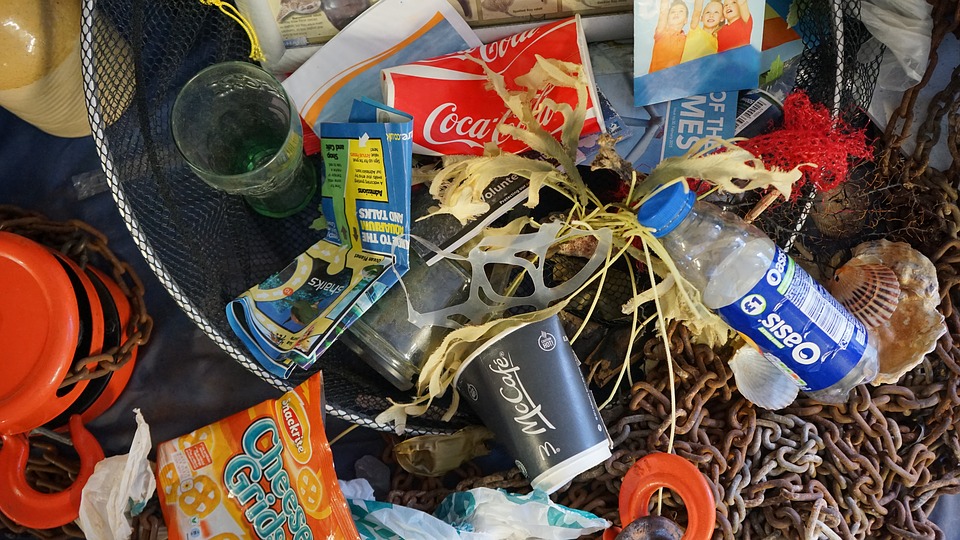
    Threats to the Caribbean Sea are numerous, but one of the biggest is the accumulation of plastic waste material.  The above-mentioned World Bank Report noted that the Caribbean Sea “is estimated to have relatively high levels of plastic concentrations compared with many other large marine ecosystems”.

    Major culprits are plastic shopping bags, as well as Styrofoam containers and plastic cutlery which are commonly used by street food vendors, food establishments and at festivals and parties. These materials take hundreds of years to decompose, while in the meanwhile clogging drains and being blights on the beaches and other landscape. Plastic waste is often transported through waterways into the ocean via normal rainfall or flooding, and poses serious danger to marine life and coral reefs, with knock-on effects for fisheries, food security and tourism.

    Legislative approaches

    Several countries in the Caribbean have taken steps to tackle the plastics problem. Haiti was among the first, banning the importation, marketing and sale of plastic products in 2012 by presidential decree, with mixed results.

    In 2016 Guyana banned the importation, sale and manufacture of expanded polystyrene products (styrofoam) and its regulations have served as a model for several other countries. Bans on the importation, sale and/or manufacture of various plastics have also been done in Antigua & Barbuda, Aruba, St. Vincent and the Grenadines, and the US Virgin Islands.

    In Antigua & Barbuda, for instance, the External Trade (Shopping Plastic Bags Prohibition Order) of 2017 prohibited after June 30, 2016 the importation, distribution, sale and use of shopping bags, except for those set out in the schedule. Another order, the External Trade (Import Prohibition) Order of 2017 takes a phased approach to banning certain polystyrene items, such as food service containers, utensils and the like. However, airline carriers, private charters and passenger cruise vessels are exempted from these rules. According to news reports, while larger retailers have been generally adhering to the ban, achieving compliance by some small retailers has been more challenging.

    Some other Caribbean countries are also contemplating similar measures. In 2017 the Government of Jamaica appointed a multi-stakeholder committee to make recommendations regarding plastic and Styrofoam. A petition has been launched by activists in Trinidad & Tobago for banning plastics.

    Market-based approaches 

    Market-based approaches have also been used to a limited extent, such as imposing point of sale charges for plastic bags as a disincentive to consumers. In Barbados, for example, a well-known environmental charity lobbied to have retailers charge consumers extra for plastic bags, and to encourage consumers to opt for reusable bags, with some limited success.

    Lessons Learnt So far 

    1. Strong enforcement and monitoring are needed to ensure compliance with the regulations. Under the Guyana Regulations, for example, the Environmental Protection Agency is empowered to conduct inspections and investigations to ensure compliance with the ban.
    2. Fines should be high enough to serve as a deterrent to non-compliance. In the US Virgin Islands, businesses found to be in violation are liable to a civil fine of not less than US$500 nor more than US$1,000 for each day of violation.
    3. Fines collected should be allocated towards some kind of environmental fund, environmental or waste management improvement agencies or programmes. Under the US Virgin Islands’ legislation, the monies collected are to be allocated as follows: 75 percent to the Virgin Islands Waste Management Authority; and 25 percent to the General Fund of the Treasury of the Virgin Islands.
    4. The penalty for non-compliance is generally fines or a term of imprisonment. However, community service is another option which could be used.
    5. Resistance by consumers and some business owners has delayed the implementation of the bans in some cases. Retailers incur losses from unused stock, and some consumers see the measures as an inconvenience or just another  tax. A phased approach is, therefore, preferable to allow retailers, wholesalers and the like time to get rid of as much of the stock, and shift to more environmentally-friendly products, while also giving the relevant implementing agency and civil society time to educate the public about the importance of the measures to be introduced. A possible option is also the issue of incentives, such as tax waivers for the importation of environmentally-friendly substitutes.
    6. As such, legislative and/or market-based approaches have to be married with strong stakeholder engagement, public education and sensitisation campaigns to change ingrained cultural behaviours and attitudes towards the use and disposal of plastics, to educate the public about the environmental harm caused by marine waste, to encourage public buy-in and to show persons more environmentally-friendly alternatives. To this effect, the Guyana Regulations mandate the Environmental Protection Agency to “offer guidance on, promote and encourage the utilisation of recyclable, biodegradable and other environmentally friendly products as containers, or packaging for food products”. The St. Vincent & the Grenadines Regulations also provide for the same.
    7. On-going monitoring of the impact of these measures is crucial in order to determine their effectiveness and what adjustments are needed in ensure the desired results are being  obtained. This requires conducting an adequate baseline study before the measures are implemented and collecting data on a regular basis.
    8. Besides curbing plastic consumption, another problem is proper waste management. Latin America and the Caribbean accounted for 12% of waste generation by region per year, according to a World Bank publication. According to the publication, “the total amount of waste generated per year in this region is 160 million tonnes, with per capita values ranging from 0.1 to 14 kg/capita/ day, and an average of 1.1 kg/capita/day.” Within this grouping, the largest per capita solid waste generation rates are found in the islands of the Caribbean, the Report notes. As such, encouraging individuals, households and businesses to reduce their waste, recycle and to find more environmentally sustainable ways of managing waste is vital.

    Alicia Nicholls, B.Sc., M.Sc., LL.B., is an international trade and development consultant with a keen interest in sustainable development, international law and trade. You can also read more of her commentaries and follow her on Twitter @LicyLaw.

  • Caribbean Trade & Development Digest – March 18-24, 2018

    Caribbean Trade & Development Digest – March 18-24, 2018

    Welcome to the Caribbean Trade and Development Digest for the week of March 18-24, 2018! We are pleased to share some of the major trade and development headlines and analysis across the Caribbean region and the World. We hope you enjoy this edition.

    REGIONAL

    CDB programme to support increased trade among CARICOM states

    St. Kitts & Nevis Observer: The Board of Directors of the Caribbean Development Bank (CDB) has approved USD$750,000 in funding for a programme that will assist the Caribbean Community (CARICOM) with strengthening intra-regional trade. Read more 

    Is Guyana ready for an oil boom?

    Eurasia Review: Guyana’s story shares many similarities with the story of the ugly duckling. One of the poorest countries in South America, it has historically been entirely dependent on oil imports. Read more 

    Catfish exports

    Stabroek (Guyana): It is incomprehensible that the government here was given notification by the US government in November, 2015 of new regulations for Siluriformes (catfish) and failed to take all of the required steps to enable continued exports from Guyana. Read more 

    North America continues to dominate imports into the TCI -Gov’t makes moves to improve trade with Caribbean neighbours

    Turks & Caicos Weekly News: The North American Free Trade Agreement (NAFTA) continues to dominate imports into the Turks and Caicos Islands, accounting for $394.1 million or 91.1 percent of the total import bill for 2017. Read more 

    What is the value of CARICOM to Curacao and Sint Maarten (and to ALL Caribbean nations)?

    St. Lucia Star: Earlier in March news broke that the Caribbean Community (CARICOM) was officially assessing the application of Curacao and Sint Maarten for associate membership. These two islands are separated by 900 km of water but they share a cultural heritage, central bank, and a view that within CARICOM a brighter future awaits them. Read more 

    Lessons from EPA must inform Post-Cotonou Agreement – Trade Expert

    Business Ghana: Mr Tetteh Hormeku, Head of Programmes at the Third World Network, has advised governments in the African, Caribbean and Pacific (ACP) countries to use lessons from the Economic Partnership Agreement (EPA) for the post-Cotonou possible framework. Read more 

    INTERNATIONAL

    Forty-four countries sign historic African Union free trade agreement

    Africa News: Forty-four African countries have signed up to a historic trade agreement aimed at paving the way for a liberalized market for goods and services across the continent. Read more

    Fiji-PNG discuss trade relations with UK post-Brexit 

    Fiji Times: The United Kingdom has begun the process of exiting the European Union (EU) and in this endeavour, it is working with the African, Caribbean, and Pacific (ACP) countries to avoid any trade disruptions, during and post-withdrawal. Read more 

    Brexit: Government still planning for no deal scenario

    The Independent: David Davis has said the Government will continue to plan for a no-deal scenario despite reaching an agreement with Brussels on the transition period last week.  Read more 

    Mercosur “blocks” talks on auto exports and government procurement contracts, claims EU

    Mercopress: European officials said this week that significant obstacles remain to a long-delayed trade deal between the European Union and Mercosur, even as South American officials expressed optimism a deal would be finalized soon. Read more

    Heatwaves, hurricanes, floods: 2017 costliest year ever for extreme weather and climate events, says UN

    Mercopress: Hurricanes, monsoon floods and continuing severe drought made 2017 the costliest year ever for severe weather and climate events, according to a new report by the United Nations weather agency launched on the eve of World Meteorological Day. Read more 

    India Hosting Mini-Ministerial meet to break WTO impasse 

    Economic Times: Taking a lead to break the impasse, India is hosting a two-day informal meeting of 50 WTO members here which would deliberate upon ways to create a positive atmosphere for carrying forward the mandate of the global trade organisation.  Read more

    G20 pushes for free trade as U.S. vows to defend national interest

    Reuters: World financial leaders pleaded for an endorsement of free trade on Monday amid worries about U.S. metals tariffs and looming trade sanctions on China, but Trump administration officials said they would not sacrifice U.S. national interests. Read more


    China threatens to raise tariffs on about $3 billion of U.S. imports

    Washington Post:  President Trump embarked Thursday on the sharpest trade confrontation with China in nearly a quarter-century, moving toward imposing tariffs on $60 billion in Chinese goods and limiting China’s freedom to invest in the U.S. technology industry. The Chinese government fired back hours later, threatening to hit $3 billion in U.S. goods with tariffs. Read more 

    US and South Korea Reach Agreement on Trade, Steel Tariffs

    Bloomberg: The U.S. and South Korea reached an agreement on revising the allies’s six-year-old bilateral trade deal and President Donald Trump’s plan to impose tariffs on imported steel, Treasury Secretary Steven Mnuchin said. Read more 

    EU Commission welcomes adoption of negotiating directives for a multilateral investment court

    EU: The Commission welcomes today’s adoption by the Council of the negotiating directives for a multilateral investment court, as well as the fact that for the first time the Council makes its negotiating mandate public right at the time it is adopted. Read more 

    WTO members raise concerns over US tariffs on steel and aluminium at Goods Council

    WTO: WTO members expressed concern over the United States’ imposition of higher tariffs on steel and aluminium imports and the impact they may have on the global trading system at a meeting of the Council on Trade in Goods on 23 March, the same day the new US measure came into effect. The US responded by saying that the tariffs are necessary to address the threat these imports pose to national security. Read more 

    Appellate Body issues report regarding Russian duties on vehicle imports from Germany, Italy

    WTO: On 22 March 2018, the WTO Appellate Body issued its report in the case “Russia — Anti-Dumping Duties on Light Commercial Vehicles from Germany and Italy” (DS479). Read more 

    WTO issues compliance panel report regarding US countervailing duties on Chinese imports

    WTO: On 21 March a WTO panel issued its compliance report in the dispute “United States — Countervailing Duty Measures on Certain Products from China — Recourse to Article 21.5 of the DSU by China” (DS437). Read more

    Liked this issue? To read past issues of our weekly Caribbean Trade & Development Digest, please visit here. To receive these mailings directly to your inbox, please follow our blog.

  • Brexit: Provisional Transition Deal Struck between EU and UK

    Brexit: Provisional Transition Deal Struck between EU and UK

    Alicia Nicholls

    A provisional agreement has been struck between the European Union (EU) and the United Kingdom with regard to the terms of the latter’s withdrawal from the EU.

    The 129-page provisional withdrawal agreement touches on a wide number of areas from  residence, employment rights and social security systems to public procurement and cooperation in criminal and civil matters. The Agreement provides for a transition period lasting from the date of entry into force of the Agreement until 31 December 2020.

    Most of the provisions have been agreed to, with some remaining areas still subject to further negotiation. One of these unresolved areas is the Draft Protocol on Ireland/Northern Ireland.

    A key concession is that the UK will be able to negotiate trade deals with third States during the transition period.

    Some aspects of the provisional deal, however, have received some push back in the UK. A particular sore point is that UK fishing policy will continue to be Brussels-controlled during the transition period, although the agreement provides for the UK to be “consulted”.

    More details to come

    The text of the provisional agreement may be found here.

    Alicia Nicholls, B.Sc., M.Sc., LL.B., is an international trade and development consultant with a keen interest in sustainable development, international law and trade. You can also read more of her commentaries and follow her on Twitter @LicyLaw.

  • Caribbean Trade & Development Digest – March 11-17, 2018

    Caribbean Trade & Development Digest – March 11-17, 2018

    Welcome to the Caribbean Trade and Development Digest for the week of March 11-17, 2018! We are pleased to share some of the major trade and development headlines and analysis across the Caribbean region and the World. We hope you enjoy this edition.

    REGIONAL

    Work to begin on new CARICOM Strategic Plan

    Barbados Advocate: By year end the CARICOM Secretariat will be hard at work getting the framework in place for the new strategic plan for the Caribbean Community. Read more

    CSME MER Framework Workshop 

    Barbados Advocate: It is imperative that systems be put in place to more effectively monitor and evaluate the CARICOM integration journey. So says Dr. Richard Brown, Director, CARICOM Single Market and Sectoral Programmes. Read more 

    CARICOM observer mission releases preliminary statement on Grenada elections

    CARICOM: At the invitation of the Government of Grenada the CARICOM Secretariat constituted an eleven-member team to observe Grenada’s Parliamentary Election held March 13, 2018.The full statement may be read here.

    Protecting consumers in the CSME

    CARICOM: It is important to consider the protection of the consumer as many persons now engage suppliers in a different jurisdiction. This was posited by a senior official from the Caribbean Community (CARICOMSecretariat during the Barbados Fair Trading Commission’s (FTC) annual lecture series held in Barbados. Read more 

    INTERNATIONAL

    EU Lists US Exports it could hit 

    CNNMoney: The EU has published a list of hundreds of American products that it could target if President Donald Trump moves forward with new tariffs on imports of steel and aluminum. Read more 

    EP wants to include gender equality in free-trade agreements

    EURACTIV: The European Parliament has adopted a resolution to better account for gender equality in trade agreements. The commission could follow up on the resolution in its agreement with Chile, which would be the first to integrate such a chapter. Read more 

    India-EU trade: India, EU to decide fate of trade agreement next month

    Economic Times: New Delhi: India and the European Union will discuss next month resumption of the much-delayed Bilateral Trade and Investment Agreement (BTIA) that hasn’t progressed much over the past five years. Read more 

    Vietnamese farmers expect higher profits with CPTPP

    Vietnam Net: At least $40 billion worth of export turnover from farm produce in 2018 is within reach, some experts believe. Read more 

    Trade deals a priority at ASEAN-Australia summit 

    Australian Financial Review: Prime Minister Malcolm Turnbull is pushing for free trade deals with Indonesia and the wider region to be signed by the end of this year, as he insisted there were “no protectionists” around the table at the ASEAN-Australia summit in Sydney. Read more 

    Buhari cancels Rwanda trip, reconsiders signing African trade agreement

    Premium Times: President Muhammadu Buhari has cancelled his trip to Kigali, Rwanda scheduled for Monday. Mr. Buhari was expected to attend an Extraordinary Summit of the African Union (AU) on Tuesday, March 21, to sign the framework agreement for establishing the African Continental Free Trade Area. Read more 

    Top five trade deals that changed history

    World Finance: Today, the global trading network is well established, but it has taken multiple decades and various trade agreements to reach the current degree of complexity. Read more 

    Jordan suspends free trade agreement with Turkey

    Ahval: The Jordanian government suspended a free trade agreement with Turkey, citing unfair competition, the Jordan Times reported. Read more

    Winners and Losers in an EU-UK agreement

    Financial Times: Read the article here.

    Indonesian President Widodo wants a free trade agreement with Australia

    Sydney Morning Herald: Indonesian President Joko Widodo will push to sign off an Australia-Indonesia free trade agreement when he meets Prime Minister Malcolm Turnbull this weekend, declaring that only “technical” details were delaying the deal. Read more 

    The Globe and Mail: Now that International Trade Minister François-Philippe Champagne has put Canada’s signature on the Comprehensive and Progressive Trans-Pacific Partnership (CPTPP) agreement, the doors to the Asia-Pacific are about to crack open for Canadian businesses. Read more 

    Severing NAFTA ties harms much more than trade

    The Hill: U.S. ties with Mexico and Canada touch the daily lives of more Americans than ties with any other two countries in the world. Trade, border connections, tourism, family ties and mutual security concerns link us closely, but we are endangering those links and our wellbeing by a contentious modernization of the North American Free Trade Agreement (NAFTA). Read more 

    What impact will trade agreements have on global food markets?

    Devex: The political uncertainty surrounding the Trans-Pacific Partnership Agreement and North American Free Trade Agreement, as well as the implications of Brexit, has left experts struggling to understand what their impacts will have on markets — particularly in developing countries. Read more 

    BONUS

    Trade War Bad for Region

    My commentary in the Business Authority of March 18 (page 15) on the possible fall-out of any trade war between the US and other major trading powers on the Caribbean.

    Liked this issue? To read past issues of our weekly Caribbean Trade & Development Digest, please visit here. To receive these mailings directly to your inbox, please follow our blog.