Caribbean Trade Law & Development (CTLD) and the Africa Caribbean & Pacific Young Professionals Network (ACP YPN) have submitted joint written evidence to the United Kingdom (UK) House of Commons’ International Trade Committee’s on-going UK-US Trade Relations Inquiry . The inquiry is examining the potential for a trade agreement between a post-BREXIT UK and the United States of America (US).
Noting the importance of having a youth voice in this process, our joint submission referenced the important issue of ensuring market access for UK young professionals in the US market and ensuring that youth are given the opportunity to contribute to monitoring any negotiated agreement. The submission also emphasised the importance of including a development chapter into the Agreement.
ACP YPN and CTLD are grateful for the opportunity to have been able to represent the views of youth on this important matter.
Our joint submission has been published on the UK House of Commons’ ITC’s website and may be viewed here.
About the Contributors
The African Caribbean and Pacific Young Professionals Network (ACP YPN) provides a platform for young people to play an active role in policy-making processes at the national, regional and international levels.
Caribbean Trade Law & Development Consulting (CTLD Consulting) is a Caribbean-based consulting firm and think tank specialising in international trade, development and international business research, policy advocacy and consulting.
Welcome to the Caribbean Trade and Development Digest for the week of March 12-18,2017! I am pleased to share some of the major trade and development headlines and analysis across the Caribbean region and the World.
We apologise for the absence of a Trade & Development Digest for the week of March 5-11, 2017 and trust you will enjoy this week’s edition. Some major news from the past week and a half were the Commonwealth Trade Ministers Meeting, the G20 Finance Ministers Meeting and the challenges to US President Trump’s new travel ban.
On a sad note, we also would like to take this opportunity to express our condolences on the passing of literary giant, St. Lucian born poet and playwright and 1992 Nobel Peace Prize in Literature winner, the late Mr. Derek Walcott who passed away last week.
For past issues of our weekly Caribbean Trade & Development Digest, please visit here.
To receive these mailings directly to your inbox, please follow our blog.
REGIONAL NEWS
Customs World inks cooperation Agreement with Dominican Customs
Dubai News: Customs World, a subsidiary of Ports, Customs and Free Zone Corporation in Dubai, has signed an agreement of cooperation with the General Directorate of Customs of the Dominican Republic. Read more
French rum brand buy stake in National Rums
Jamaica Gleaner: Goddard Enterprises Limited of Barbados has exited its investment in National Rums Jamaica Limited (NRJ) under a wider deal worth nearly US$13 million that hands ownership to a French company called United Caribbean Rum Limited. Read more
Delays continue over signing of Guyana-EU trade agreement to combat illegal logging
Mongabay: Guyana’s plan to sign a trade agreement with the European Union by the end of 2016 to combat illegal logging has been delayed again. Read more
DR: Haitian Customs Retain Dominican Goods at Border
HaitiLibre: Dominican merchants reported that several trucks loaded with plantains, bananas, carrots, lemons and other Creole products were retained at the Jimani-Malpasse border by the Haitian authorities. Read more
CARICOM seeks FATCA delay, but law may prove irrelevant
Cayman Compass: The Caribbean Community is looking at spending nearly quarter of a million dollars on a Washington-based consultant to lobby the Trump administration about the Foreign Accounts Tax Compliance Act. Read more
Industry Ministry says Jamaica to expand exports to UK
Jamaica Observer: Chief Technical Director in the Ministry of Industry, Commerce, Agriculture and Fisheries Stephen Wedderburn has reiterated Jamaica’s commitment to expand export of produce and products to the United Kingdom. Read more
Jamaica hopeful of banana export recovery
Fruitnet: Plans to invest almost €5m of EU funding in Jamaica’s banana sector are advancing well, according to reports in the country, raising the prospect of the Caribbean nation restoring its former key position in the international market. Read more
King Pepper re-enters Canadian market
Jamaica Gleaner: King Pepper Products Limited, manufacturers of the Eaton’s line of seasoning, has re-entered the Canadian market through exports and is hoping to push sales of the product there as well as increase its regional footprint. Read more
Alcazar calls for push to exports
Trinidad & Tobago Newsday: Admitting that it is a difficult time to take over the mantle of President of the Trinidad and Tobago Manufacturers Association (TTMA), Christopher Alcazar, who was elected on March 9, 2017 at the body’s 61st Annual General Meeting, said he is solution driven and will lead the organisation with a heavy amount of engagement and collaboration with the membership and stakeholders whether Government or different agencies. Read more
Bureau of Standards monitoring foreign cement
Trinidad Guardian: With the entry of foreign cement on the market, Trade and Industry Minister Paula Gopee-Scoon said the T&T Bureau of Standards is continuing to monitor all products to ensure they meet quality standards. Read more
CDB funds project to prevent loss of correspondent banking relationships
Caribbean News Now: The board of directors of the Caribbean Development Bank (CDB) has approved funding of US$250,000 to strengthen financial transparency, and assist in preventing the loss of correspondent banking relationships (CBRs) in the region. Read more
TCL ponders treating T&T waste
Trinidad Guardian: Two months after Mexican cement giant Cemex succeeded in its bid to take over Trinidad Cement Ltd (TCL), managing director Jose Luis Seijo has assured that the company will be dealing aggressively with environmental pollution. Read more
Trinidad’s MHTL cutting methanol production by 25%
ICIS: Trinidad’s leading methanol producer plans to idle 25% of its total capacity because of heavy natural-gas curtailments, sources said on Monday. Read more
INTERNATIONAL NEWS
Mexico turns to World Trade Organisation over avocado dispute with Costa Rica
The Costa Rica Star: The World Trade Organization (WTO) stated today that Mexico had requested consultations with Costa Rica as, allegedly, this country unlawfully imposed a restriction on Mexican avocado imports. Read more
Trump Travel Ban: Hawaii judge declines to narrow injunction
Politico: A federal judge in Hawaii who issued a temporary restraining order against key parts of President Donald Trump’s revised travel ban last week has turned down a Justice Department request to narrow the injunction. Read more
Decade old trade pledge dropped at G20 Meeting
Reuters: Try as they might, G20 nations in the German spa town of Baden-Baden could not persuade U.S. Treasury Secretary Steven Mnuchin at the weekend to agree to a joint pledge to resist protectionism so the phrase in question – a fixture of G20 communiques for a decade – was dropped. Read more
Mustapa: RCEP is next best option to junked TPPA
The Star Online: The Regional Comprehensive Economic Partnership (RCEP) is the next best option to boost trade after the Trans-Pacific Partnership Agreement (TPPA) fell through. International Trade and Industry Minister Datuk Seri Mustapa Mohamed said Malaysia is not keen to salvage the TPPA with the other 10 nations after the United States pulled out of the trade pact. Read more
EU, ASEAN Ministers agree to consider trade talks reboot
ICTSD Bridges: The EU and the Association of Southeast Asian Nations (ASEAN) are preparing to examine the prospect of re-launching talks for a region-to-region trade accord, nearly eight years after the original plans for such a project were put on hold. Read more
South Korea lobbies China at WTO over Missile Shield trade spat
Bloomberg: South Korea has taken a tentative first step against China at the World Trade Organization, complaining about its economic retaliation over the planned deployment of a U.S. missile shield. Read more
Commonwealth Trade Ministers conclude Meeting in London
Nation News: Commonwealth trade and business ministers concluded their two-day meeting in London with a commitment to make full use of the ‘Commonwealth Advantage’ to boost trade within the 52-member grouping. Read more
Brexit costly in trade terms whatever deal reach, says former WTO DG Pascal Lamy
Reuters: Britain’s departure from the European Union will be costly for both sides in trade terms, however good the exit deal reached, former head of the World Trade Organization Pascal Lamy said on Thursday. Read more
Brazil’s rotten meat scandal breaks amidst fresh EU talks
Euractiv: The European Union has insisted Brazilian representatives attend an emergency meeting today (20 March) to explain themselves regarding a scandal involving rotten meat and the country’s two largest exporters. Read more
Drive replace UK-EU trade ties with Commonwealth
Guardian (UK): Britain would harmonise regulations with its former colonies rather than the European Union under new proposals for trade integration that critics have dubbed Empire 2.0. Read more
CTLD NEWS
Alicia Nicholls was a panellist at TTOC Sport Conference 2017
I was honoured to be a panellist on “Panel III: Protecting the Legal Idea and Other Legal Issues for the Enterpreneur” at the Trinidad & Tobago Olympic Committee’s Future of Sport Conference 2017 which took place at Hotel Normandie in St. Ann’s, Trinidad on March 9th. My fellow panellists were Shyamal Chandradathsingh of Invest TT, and entertainment and sport attorney, Carla Parris. The conference was ably moderated by Ms. Racquel Moses of ACCA Caribbean.
The key note speaker was Dr. Terrence Farrell, former Deputy Governor of the Central Bank of Trinidad & Tobago and current chairman of the Economic Development Advisory Board.
The second annual conference hosted by TTOC, this year’s conference was designed to take audience members on a journey from conception of the business idea to execution. The panels focused on conception of the business idea, perspectives and best practices from entrepreneurs, protecting the idea, the importance of business plans and funding the venture.
Fellow panellists Carla Parris, Je-Anne Borneo (Panel #4) and I also enjoyed acting as judges for a business idea competition at the end of the Conference.
I wish to sincerely thank Mr. Brian Lewis, President of the TTOC for his kind invitation to be a panellist and commend both Mr. Lewis and his capable TTOC Team, the moderator Ms. Racquel Moses, and all fellow panellists and the audience members for an excellent conference. For further photos and videos from the Conference, please see the TTOC’s Facebook page.
Liked this issue? Read past issues of our weekly Caribbean Trade & Development Digest, please visit here. To receive these mailings directly to your inbox, please follow our blog.
Sport can be a powerful tool for development and economic diversification. This was the central thesis undergirding the Trinidad & Tobago Olympic Committee’s Future of Sport Conference 2017 which took place at Hotel Normandie in St. Ann’s, Trinidad last week. First let me once again commend TTOC President Mr. Brian Lewis and his team on a well-organised and informative event and for kindly inviting me to be a panellist. I also would like to give kudos to all fellow panellists, the moderator and to the audience for making the sessions as engaging as they were.
Sport is a multibillion dollar industry, and countries around the world are seeking ways to capitalise on this powerful tool for economic growth and development. For example, the small state of Qatar has identified sport as part of its national strategic plan. Among other upcoming international events, it will play host to the 2022 FIFA World Cup.
Here in the Caribbean we too have earmarked sport as a potential non-traditional growth sector. In his rousing key note address at the TTOC Conference, Chairman of Trinidad & Tobago’s Economic Development Advisory Board and former Deputy Governor of the Central Bank of Trinidad & Tobago, Dr. Terrence Farrell indicated as much, naming sport as a potential diversification sector for their currently hydrocarbons based economy.
Sport can also be an enabler for achieving the Sustainable Development Goals, which are targets set by the United Nations and to which all UN members agreed to pursue. Specifically, sport can assist not just in poverty alleviation (SDG 1), but also promoting good health and well-being (SDG 3), quality education (SDG 4), gender equality (SDG 5), and promoting peaceful and inclusive societies (SDG 16). Indeed, this was recognised by the UN through the adoption of a resolution recognising sport as a means to promote education, health, development and peace.
However, for sport to play such a transformational role for growth and development, it is not enough to have raw sporting talent. It is no secret that Caribbean countries’ sporting prowess dwarfs their economic and physical size. What is needed is a complete support structure. It requires not just the building of a sport entrepreneurial ethos, but a support system, including greater recognition of the role of intellectual property rights, financing and marketing, to name a few. It is this holistic approach which informed the four conference panels which aimed to take the would-be entrepreneur on a journey from conception of the idea to execution.
Again I would like to thank Mr. Lewis and his team for an excellent conference and I look forward to continuing the conversation on how we can harness sport for Caribbean development and growth. For videos and photos from the Conference, do have a look at the TTOC’s Facebook page.
Alicia Nicholls, B.Sc., M.Sc., LL.B., is a trade and development consultant with a keen interest in sustainable development, international law and trade. You can also read more of her commentaries and follow her on Twitter @LicyLaw.
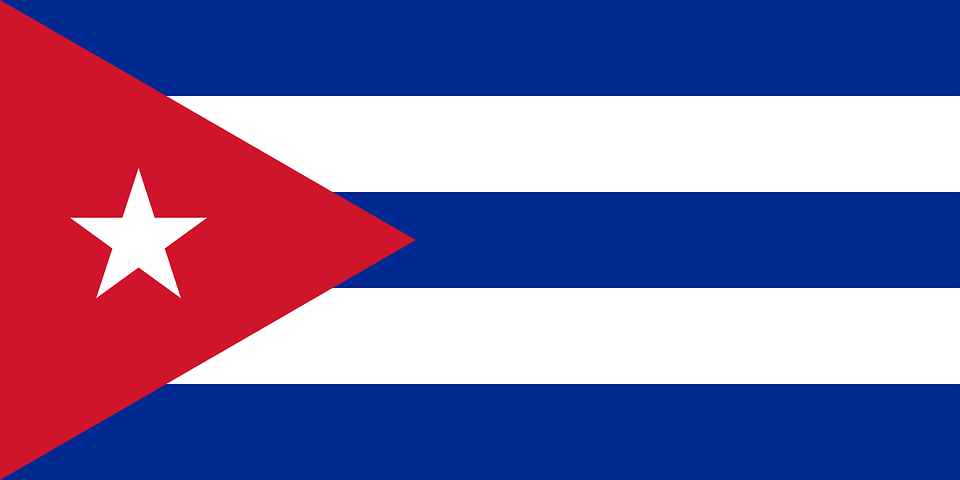
Foreign Affairs ministers of the Caribbean Community (CARICOM) and the Republic of Cuba met at the iconic Tryp Habana Libre Hotel in Havana, Cuba, on March 11, 2017, for the Fifth Ministerial Meeting of CARICOM-Cuba. As noted in the official communique, the meeting also marks the commemoration of the Forty-fifth Anniversary of the Establishment of Diplomatic Relations between the Independent States of CARICOM and Cuba and the Fifteenth Anniversary of Cuba-CARICOM Day.
Discussion items at the Meeting touched on climate change, cooperation in areas of mutual concern such as food security, education and health, solidarity with the Republic of Haiti, reparations for slavery, CARICOM countries’ inclusion on the EU’s list of non-cooperative tax list, the promotion of sustainable tourism, migrants’ rights, inter alia.
Caribbean countries have been among the most vocal supporters of Cuba in the face of the illegal US embargo. The official communique concluded with a call for “the President of the United States to use his broad executive powers to substantially change the application of the blockade and the Congress of that country to proceed with its elimination”.
Ministers also acknowledged the legacies of the late former Cuban President, Dr. Fidel Castro, and former Trinidad & Tobago Prime Minister, Patrick Manning, who died last year, and the former Haitian President, Rene Preval who passed away last week.
Alicia Nicholls, B.Sc., M.Sc., LL.B., is a trade and development consultant with a keen interest in sustainable development, international law and trade. You can also read more of her commentaries and follow her on Twitter @LicyLaw.




 Caribbean Trade Law and Development
You must be logged in to post a comment.