Author: caribbeantradelaw

  • Trump Presidency: What priorities for US-Caribbean Economic Engagement?

    Trump Presidency: What priorities for US-Caribbean Economic Engagement?

    Alicia Nicholls

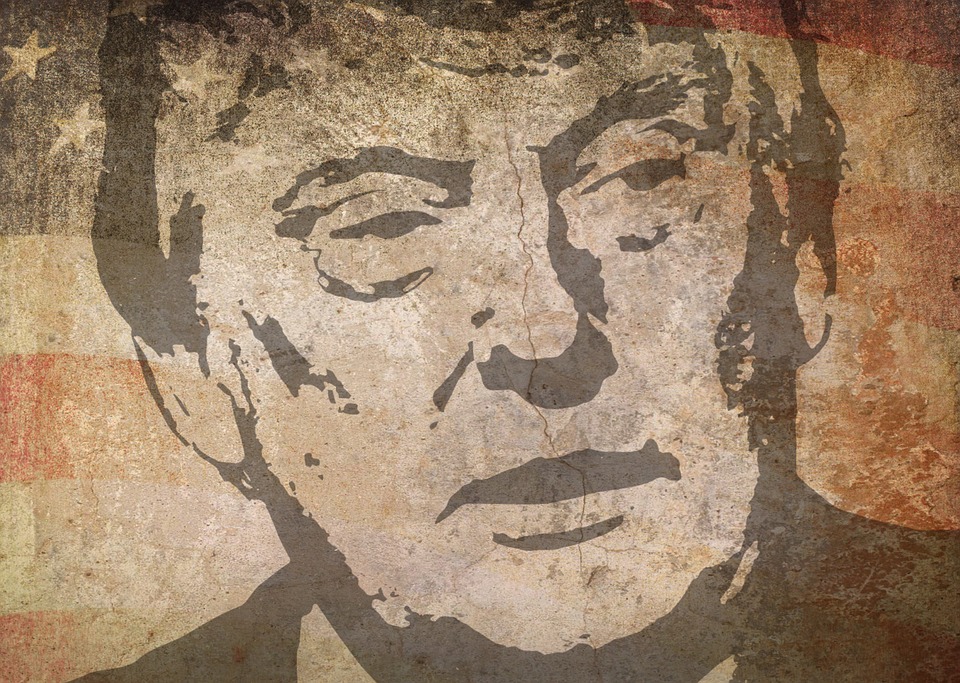
    The United States’ position as most Caribbean countries’ largest economic partner and an important foreign policy ally means that constructive engagement with the incoming Trump administration is not just a choice but an imperative. The Caribbean Community (CARICOM) and individual Caribbean governments have all expressed congratulatory messages, emphasizing their willingness to work with Mr. Trump and continuing the harmonious US-Caribbean relationship.

    But in contrast to the idealism attending then Senator Barack Obama’s “Yes we can” message eight years ago, a spectre of profound uncertainty shrouds the President-elect not just because of his extreme rhetoric on trade and foreign policy, undergirded by his “Make America Great Again” and “America First” refrains, but also the lack of policy specificity.

    In this article, I will outline what I believe are five key priorities which will likely frame US-Caribbean economic and foreign policy engagement for the foreseeable future:

    1. Correspondent Banking/De-Risking

    A first order of business will be continuing the conversation that CARICOM governments and stakeholders have started with US officials and regulators on the de-risking activities of US-based international banks, including the withdrawal and restriction of correspondent banking relationships. These relationships are Caribbean’ lifeline to the global financial and trading system, critical for the trade, investment and remittance flows which buoy our small open economies and sustain households.

    US foreign policy orientation towards the Caribbean has constantly recognized that an economically secure “third border” complements US’ strategic security interests. Any threat therefore to the region’s economic and financial inclusion is something which should be of mutual concern. Unfortunately, there appears to be limited progress on the correspondent banking issue.

    While de-risking is a cost-benefit decision for banks, it is also partly fuelled no doubt by ambiguous regulations and the Caribbean’s undeserved reputation in some quarters as a high risk place for doing business. To their credit, the US Treasury and Federal Banking Agencies released a Joint Factsheet on Foreign Correspondent Banking. Additionally, the US Treasury has reiterated that the de-risking issue is a “key priority”.

    However, actions by US authorities which unfairly label Caribbean countries as “tax havens” contribute to the perception that Caribbean jurisdictions and banks are higher risk. In 2015 the state legislature of Montana, and the District of Columbia, had included several Caribbean countries among their proposed lists of tax havens. This is despite Caribbean countries’ having taken steps to ensure their compliance with the Foreign Account Tax Compliance Act (FATCA) and our clean bill of health by the Organisation for Economic Cooperation and Development (OECD).Continued engagement with US states and federal authorities on this issue is a must.

    1. International Financial Services & FATCA

    Although President-elect Trump has promised to lower the US federal corporation tax rate from 35% to 15% and  provide a deemed repatriation of corporate profits held offshore at a one-time tax rate of 10%, his orientation towards international financial centres (IFCs) in general is not well-known.

    The Obama administration has not been friendly to Caribbean IFCs, and that is putting it mildly. On the other hand, Mr. Trump’s background as a businessman may make him more appreciative of the role IFCs play in making US businesses more efficient and profitable, which in turn facilitates their contribution to US economic and job growth. Moreover, conventional wisdom holds that Republican governments are usually friendlier to the Caribbean than are Democratic governments, and there is good anecdotal evidence to support this.

    Additionally, continued engagement with US authorities will be necessary to iron out any implementation and reporting issues under FATCA.

    1. Caribbean Basin Initiative & Other Market Access Issues 

    Manufacturers in most Caribbean countries enjoy non-reciprocal duty-free access to the US market for most goods under the Caribbean Basin Initiative (CBI), an initiative of the Reagan administration in the 1980s which had both economic, ideological and geopolitical imperatives. The CBI is unilateral which means that the benefits can be unilaterally revoked and the criteria for eligibility changed at any time. However, CBI is generally believed to be beneficial to US manufacturing and jobs and Caribbean has a large trade deficit with the US, which should keep CBI off the President-elect’s immediate radar.

    One sticking point in US-Caribbean trade relations is the cover over subsidies which the US Federal government pays to the US territories of Puerto Rico and the US Virgin Islands out of excise taxes it collects from imported rums, which has made Caribbean rums less competitive in the US market. Turning to merchandise trade in general, non-tariff barriers such as sanitary and phyto-sanitary and labelling requirements have also been a constraint on market access.

    Caribbean workers benefit from temporary employment under the US Farm Workers and Hospitality Workers programmes. However, outside of this, Caribbean service providers have no preferential access to the US market. The CBI does not cover services trade. Caribbean business persons seeking to supply a service in the US instead rely on non-immigrant visas. Mr. Trump has promised to tighten the US’ border and control policy. It is not certain whether this will be extended to non-immigrant visas as well.

    1. Immigration & Workers’ Programmes

    Mr. Trump made tightening immigration one of the cornerstones of his campaign platform. While his ire was directed towards Mexican and Muslim immigrants, Caribbean immigrants will be collateral damage. For instance, undocumented immigrants who had come to the US as children and had identified themselves in good faith when applying for protection under the Deferred Action for Childhood Arrivals (DACA) programme might have unwittingly made themselves prime targets for deportation if Mr. Trump goes through with his plans.

    Most Caribbean immigrants are law-abiding citizens who are making sterling contributions to the American society. However, another pertinent concern is Mr. Trump’s vow to accelerate the deportation of those immigrants convicted of crimes to their country of birth, which has been a sticking point in US-Caribbean relations for some time. Caribbean governments have criticised the deportation of persons who were born in the Caribbean but socialised in the US with only superficial Caribbean roots. They have also linked these deportations to increased violent crime in the Region.

    Mr. Trump has also spoken earlier about reforming legal immigration. This will make it difficult for Caribbean persons to emigrate legally to the US. This also has implications for remittances, a lifeline for many poorer Caribbean households.

    5. Mobilising Climate Finance

    Climate finance is needed to assist countries, particularly poorer and most vulnerable countries, in their climate change adaptation and mitigation efforts. It is something which the Small Island Developing States in particular were adamant upon during the negotiations leading up to the eventual signing of the Paris Climate Change Agreement.

    Developed countries committed themselves to mobilising 100 billion USD in climate finance from a variety of sources each year by 2020, a pledge which dates back to Copenhagen in 2009 and one which President Obama has supported. Caribbean countries have also received climate change aid under USAID programmes.

    Mr. Trump, however,  is not a believer in anthropogenic (man-made) climate change, and has vowed to “cancel the Paris Agreement”, to ramp up fossil fuel production and to defund the clean energy initiatives. Further US contribution to the Green Climate Fund, which was established to assist developing countries like those in the Caribbean, is now in question.

    Conclusion

    Mr. Trump’s election has evoked an aura of uncertainty over what will be the future paradigm of US-Caribbean relations. Although the Caribbean had not featured in the policy discussions during the campaign, Mr. Trump’s populist rhetoric illustrated a marked departure from the tenets of current US economic and foreign policy. He has, however, been light on specifics. If implemented, his proposals will be a strong departure from current US policy, particularly in the area of climate change which I addressed in a previous post.

    Nonetheless there are two sparks of hope. Firstly, President-elect Trump is a businessman at heart and should be more attuned to a ‘dollars and cents’ argument. Secondly, Mr. Trump’s malleability in regards to his positions evinces some pragmatism on his part. It is worth remembering that for much of his public life, Mr. Trump has espoused liberal views until becoming an independent and then a Republican in later years. He has also softened some of his most ardent positions during the campaign and since winning the election, and has also been rumored to be considering some of his former Republican opponents for Cabinet positions.

    These two factors suggest that there may be more scope for discussion with a Trump administration than may initially be perceived. What will the emerging Trump Doctrine mean for the Caribbean? And whether we will see a “hard” or “soft” Trump, to borrow the clever nomenclature employed by former WTO Director General, Pascal Lamy, no one knows. A clearer sense of Mr. Trump’s true policy orientation will be more discernible when more of his Cabinet picks are revealed and his proposals are elaborated upon.

    While these issues I have highlighted will not be policy priorities for the Trump Administration, they are issues of importance to Caribbean countries. As such, Caribbean governments and other stakeholders must be pro-active in their engagement with the Trump administration from day-one when he assumes office in January 2017.

    Alicia Nicholls is a trade and development consultant with a keen interest in sustainable development, international law and trade. You can also read more of her commentaries and follow her on Twitter @LicyLaw.
  • Caribbean Reflections on Soft Power

    Caribbean Reflections on Soft Power

    jo-annhamilton-400x300

    Jo-Ann Hamilton, Guest Writer

    What do China and the United States have in common? Global influence? Economic Hegemony? Let’s throw Qatar and Iceland into the mix. Any thoughts? The answer is soft power. China invests globally in infrastructure around the globe often in countries largely ignored by the international community. The Chinese government also gives away millions in scholarships to students around the globe to be educated in its Chinese universities.

    Whilst traditionally the Americans have often wielded hard power in the form of military might, they have also pioneered the concept of soft power through their powerful media business, namely American cinema. Silicon Valley’s technology in the form of Facebook, Google and Twitter are just a few examples of the American brands associated with innovation and the American entrepreneurial spirit.

    Qatar’s regional and international influence is being channeled through its state-funded global media network, Al Jazeera. The creation of the Qatar Foundation is the mini state’s approach to developing itself into a knowledge based economy whilst at the same time sharing this knowledge globally.

    Lastly, there is Iceland, a small nation in Northern Europe. Unlike its powerful neighbours the UK and other countries in the EU it wields no great power. What it does have is a clever and innovative approach which sets it apart as a leader in fields as diverse as science, computer research and public health. They are not too dissimilar to its other Northern European neighbours, such as Sweden and Finland who are global leaders in the area of sustainability.

    But what does this have to do with the Caribbean? The Caribbean is usually on the receiving end of soft power. What can the region do to leverage its soft power? How can it persuade and influence both collectively and individually to position itself as players in the global economy?

    Brand Caribbean.

    Brand Caribbean must be carefully orchestrated by each individual nation within the region but first it must gain significant buy-in from the citizens of each nation, who tend to possess a silo-ed pride. Like any good branding campaign, Brand Caribbean must position itself as being a source of inspiration, changing the world, doing good and developing its people.

    One great example of this is in the United Arab Emirates. Its Vice President Sheikh Mohammed bin Rashid Al Maktoum, who is also the Emir of Dubai, recently released his UAE strategy for the Future, in which he stated,

    “ As a nation, we have always been forward-looking and planning for the future, which has been a key driver of our success. With our future planning model, we will serve as a model for the world. The citizens of the UAE are our most important resource in building our future. To nurture their skills, we will strengthen education and training initiatives.”

    This is a brand based on upliftment, where collaboration, strategy, education and an investment in its human capital is key to its success.

    Brand Caribbean must speak with one voice and with a unified message. One may ask how can an entire Caribbean region which is so nuanced and diverse speak in one tone? How can this be achieved? The answer is simple, if the Caribbean region has a strong desire to propel itself and its people into the future, it has no choice. With the right leadership, enthusiasm, patience, confidence and discipline nothing is impossible. This is not a job solely for governments, but for the region’s intellectuals, culturalists, innovators,
    entrepreneurs and changemakers, both at home and in the diaspora.

    “Leadership is the capacity to translate vision into reality” Warren G. Bennis

    Brand Caribbean should be infused in every aspect of our wider societies and communities, leaving no one behind and promoting a society for all. So, what exactly is Brand Caribbean? Brand Caribbean is the representational self image of regional pride and ambition, which will lead the region beyond sun, sand and sea. Many reading this will think, the Caribbean is not a superpower, it is not wealthy, it has no military might or
    massive oil fields. Yes, this is all accurate but the beauty and brilliance of soft power is that it requires introspection, depth, emotional maturity and intellect. It is not measurable by any international standard it is merely a way to gain influence by using what you have. It is based on being who you are and begins with where you are.

    Soft power affects behaviour, it changes attitudes and perceptions, which in turn attracts the right kind of attention and visibility. This power is influential and stems from knowing one’s own worth. Unlike relational power it does not seek to position itself by comparisons to a wider authority or through deference but through self efficacy and knowing that it indeed has something unique to offer the world.

    Singapore is a small first world nation in South-East Asia, which was 50 years ago a member of the third world club. It was once dismissed as a nation barely surviving. Today it boasts world class universities, and is a global finance, commerce and trade hub amongst other notable things. It holds many firsts and exists in a world of superlatives.

    “The most valuable of all capital is that invested in human beings.” Alfred Marshall

    The Caribbean is the “Green Queen” which makes her a region for innovation on all matters sustainable from renewable energy to agriculture to fashion and all in between. She boasts the world’s best athletes, with a legacy spanning cricket, baseball and track and field. She has a vibrant literary, music and theatrical culture and she is a land of many people, living together for the most part peacefully resulting in every hue and cultural mix imaginable to the human race.

    This makes her an example for diversity and cultural capital of all forms. Each nation has
    something special. Her unique selling points are capable of solving some of the world’s biggest problems where the environment and diplomacy are concerned. Her music, art and culture can act as a hub for innovation centering peace and conflict resolution. Her diaspora is vast, therefore scope and reach are unlimited.

    In the end the biggest convincers of Brand Caribbean are not outsiders but those inside the
    community. We must first become our own early adopters and appreciate the diverse cultures, values and traditions we bring to the world.

    What do all of the Caribbean nations have in common? There are no low costs reliable ferries or planes offering multiple daily services throughout the region. Island hopping is extremely difficult and in some cases impossible. In many instances most Caribbean nationals do not travel inter-regionally. If we do not know ourselves how can we set goals for our region and make decisions which enable and have a long lasting impact? If soft power rests on ideas which are appealing, how can this be accomplished if we don’t know each other? In the end what we think of ourselves, is much more important than what others think of us. May our self esteem lead us into a new era, where our region leads with soft power.

    Jo-Ann Hamilton is a Caribbean-born, globally active freelance writer, UN Women Global Champion, consultant and the founder of SecretBirds which empowers women and young girls through entrepreneurship. You can follow her on Twitter at @JAlexandrHamil and read more of her work at SecretBirds Headquarters.

    The views and opinions expressed herein are solely those of the guest author and are not necessarily representative of those of the Caribbean Trade Law & Development Blog.

  • De-Risking remains “a key priority”, according to US Treasury

    De-Risking remains “a key priority”, according to US Treasury

    Alicia Nicholls

    De-risking remains a “key priority” for the United States’ (US) Department of the Treasury. This is according to Acting Under Secretary for Terrorism and Financial Intelligence in the US Department of the Treasury, Mr. Adam Szubin, in a key note address delivered at the American Bankers Association/American Bar Association’s annual Money Laundering Enforcement Conference held in Washington DC November 13-15, 2016.

    The withdrawal and/or restriction of correspondent banking services as part of banks’ de-risking efforts has been a growing problem internationally, with small states in the Caribbean appearing to be the most affected, according to a World Bank study published last year. For small open economies, the loss of correspondent banking relationships threatens to sever their access to global trade, finance and remittance flows. Belize in particular has been seriously impacted by de-risking as even its Central Bank has seen some of its CBRs severed.

    Responding to those who highlight that the current regulatory environment is prohibiting  financial inclusion, Mr. Szubin noted that “we at Treasury firmly believe that expanding access to the financial system and protecting it from illicit activity are mutually reinforcing goals that can and must be addressed simultaneously.”

    He went on to discuss what the Treasury found were the reasons why some international banks were reassessing their business relationships:

    • Correspondent banking is a low-margin business in a global banking environment that has seen many multinational banks reassess their global strategic footprint, cut costs, and reallocate capital.
    • Heightened prudential standards following the global financial crisis
    • There are often very real concerns about the risks presented by anti-money laundering and countering the financing of terrorism (AML/CFT) compliance

    It should be pointed out that Caribbean-based research on De-Risking and Its Impact found that “[banks’] decisions are based on a complex of factors, including the cost of compliance with laws and regulations, and is an unintended consequence of decisions taken by the official sector in globally systemic countries.”

    It is also worth noting that no CARICOM state is currently on the CFATF’s watch list, not even Belize which has been the most affected. Therefore, the view of Caribbean countries as “high risk” is unfounded. Another issue is that US banks themselves have highlighted the need for better regulatory guidance on de-risking, which shows that ambiguous regulations are indeed part of the problem. A good step is the Joint Fact Sheet entitled “Joint Fact Sheet on Foreign Correspondent Banking” released by the US Treasury and US regulators this August.

    Mr. Szubin then outlined the following ways in which the US is dealing with the problem:

    • On-going engagement with the private sector, foreign jurisdictions, money services businesses, non-profit organizations, including with the Caribbean
    • Ensuring that the global standards in place are well understood and implemented consistently and effectively e.g: release of its Factsheet clarifying that Knowing your customer’s customer – KYCC is not required
    • Treasury’s Office of Technical Assistance offers technical assistance to roughly 18 countries, including a number of countries impacted by de-risking
    • Information sharing and he gave an example of Mexico

    Mr. Szubin called the perception that banks are taking an indiscriminate approach to terminating, restricting, or denying services across entire sectors as “inaccurate and overblown and not, in fact, what most institutions are doing in terms of best practice”. This, however, has not been the experience of some banks in the Caribbean which have had their correspondent banking relationships severed without a concrete explanation and often with only a short notification period. Bank of America’s abrupt termination of its relationship with Belize’s largest bank, Belize Bank, is perhaps the most glaring example.

    Mr. Szubin did, however, encourage banks “to continue to take the time and effort to assess your controls and the risks presented by individual clients and where you cannot manage effectively that risk make conscientious decisions.”

    It is, however, comforting to know the US Treasury has reiterated its prioritisation of the phenomenon of de-risking, which bodes well for Caribbean governments and other stakeholders as they continue their lobbying on this issue.

    The full remarks may be accessed here.

    Alicia Nicholls is a trade and development consultant with a keen interest in sustainable development, international law and trade. You can also read more of her commentaries and follow her on Twitter @LicyLaw.

  • WTO: G20 Trade Restrictions remain high, despite slowdown in new measures

    WTO: G20 Trade Restrictions remain high, despite slowdown in new measures

    Alicia Nicholls

    Despite a slowdown in new measures, existing trade restrictions among the G20 countries remain high. This is according to the World Trade Organisation’s (WTO) latest Report on G2o Trade Measures (mid-May 2016 to mid-October 2016) released November 10, 2016.

    Some of the key findings of the sixteenth edition of this Report are as follows:

    • A total of 85 new trade-restrictive measures were implemented by G20 economies during the review period (mid-May to mid-October 2016).
    • This is an average of 17 new measures per month
    • The good news is that this is a decrease  from the 21 per month imposed in the previous reporting period (mid-October 2015 to mid-May 2016)but the WTO also cautioned that this is actually a return to the trend level for new trade-restrictive measures since 2009.
    • Of the 1,671 trade-restrictive measures (including trade remedies) recorded for G20 economies since 2008, only 408 had been removed by mid-October 2016.

    As noted by the WTO, these  findings are of concern given the slowdown in global trade flows and the continuing economic uncertainty in the world economy.

    The WTO in its recent downward revision of its trade forecasts is now predicting 1.7% growth in world merchandise trade volumes in 2016 (down from its previous forecast of 2.8%), the slowest rate of growth since 2009, and lower than global GDP forecasts of 2.2%.

    I would also add that President-elect Trump’s tariff-happy rhetoric does not bode well for the future reduction of trade restrictive barriers if he does go through with his promises.

    The WTO therefore noted that:

    “It is imperative that G20 economies — collectively and individually — re-double their efforts to deliver on their commitment to refrain from taking new protectionist measures and roll back existing ones.”

    The full report may be accessed here.

    Alicia Nicholls, B.Sc., M.Sc., LL.B. is a trade and development consultant with a keen interest in sustainable development, international law and trade. You can also read more of her commentaries and follow her on Twitter @LicyLaw.