Category: africa

  • Historic first CARICOM-Africa Summit – LIVE STREAM

    Historic first CARICOM-Africa Summit – LIVE STREAM

    Alicia Nicholls

    Days after the first ever United Nations (UN) International Day for People of African Descent was celebrated, there will be the first ever Caribbean Community (CARICOM)-Africa Summit! The summit, which was originally carded for July 2020, was postponed due to the COVID-19 pandemic. The rescheduled summit, which will now be held on September 7, will be hosted by the Government of Kenya and chaired by Kenyan President, His Excellency Uhuru Kenyatta under the theme “Unity Across Continents and Oceans: Opportunities for Deepening Integration”. The event will be livestreamed on CARICOM’s Youtube and Facebook pages. You can watch it below:

    CARICOM Today notes that participants will include “Heads of State and Government of the Caribbean Community and the African Union, Chairs of CARICOM and the African Union Commission, and the Africa Regional Economic Communities (RECs), the Secretaries-General of CARICOM and the Organisation of the African Caribbean and Pacific States (OACPS), and the President of Caribbean Development Bank (CDB)”.

    The summit is the latest initiative in a push on both sides of the Atlantic for closer Africa-CARICOM ties which transcend traditional historic and cultural ties towards real commercial ties and deeper economic and cultural cooperation. As I noted in a previous piece back in 2019 entitled “Africa-Caribbean Trade: What are the prospects?“, current Africa-Caribbean trade remains small, but the prospects for expanded Africa-Caribbean trade are promising given four main factors: (1) Caribbean countries’ push for export partner diversification, (2) Africa is on the rise, (3) increased Caribbean-African awareness such as the Timaya-Machel collaboration, (4) the signing of the Africa Continental Free Trade Agreement (AfCFTA). I had further argued in that piece that “since it is firms which trade and not countries, building linkages between chambers of commerce and investment promotion agencies in the Caribbean and African countries would also be key”.

    On another note, starting Monday, I am truly pleased to have co-convened this Afronomicslaw. org Blog Symposium with the brilliant Dr Ohiocheoya Omiunu (PhD) on “Prospects for Deepening Africa-Caribbean Economic Relations“! The insightful contributions to this symposium will be released daily (from Monday) and can be read on the Afronomics Law Blog. Deepest appreciation to our expert contributors for their invaluable contributions!

    The CTLD Blog wishes the organisers a successful CARICOM-Africa summit. I sincerely hope that the results go more beyond simply a lengthy communique of hortatory goals, but there will be a concrete action plan on deepening CARICOM-African ties.

    Alicia Nicholls, B.Sc., M.Sc., LL.B. is a trade and development consultant with a keen interest in sustainable development, international law and trade. All views herein expressed are her personal views and should not be attributed to any institution with which she may from time to time be affiliated. You can read more of her commentaries and follow her on Twitter @LicyLaw.
  • Happy Africa Day from the Caribbean!

    Happy Africa Day from the Caribbean!

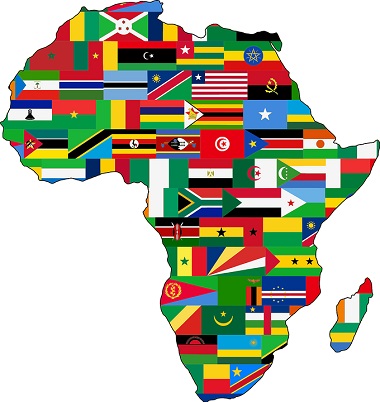
    Happy Africa Day! This day, celebrated in African countries and in several other countries around the world, commemorates the foundation of the Organisation of African Unity on 25 May 1963 (later superseded by the African Union). Today, we in the Caribbean join with our brothers and sisters of the 54 countries in Africa to celebrate this important day.

    This year’s Africa Day theme is “Arts, Culture And Heritage: Levers for Building the Africa We Want”. Indeed, arts, culture and heritage can also be levers for building the Africa-Caribbean relationship that we want. Because of our common history and ancestry, the peoples of the Caribbean and Africa share many similarities in our music, culture, food and arts. A great example of this is the musical collaboration between two favourite artistes of mine Trinidadian Machel Montano and Nigerian Timaya a couple years ago. The arts provide fertile ground for deepening the bonds of friendship between our regions, promoting Africa-Caribbean trade, people-to-people exchange and other forms of engagement.

    Afronomics Symposium on “Prospects for Deepening Africa-Caribbean Economic Relations” – Deadline June 4

    Of course, it would be remiss of me if I fail to mention the Call for Blogs for the upcoming Afronomics Blog Symposium on “Prospects for Deepening Africa-Caribbean Economic Relations” where we are encouraging blog submissions exploring aspects of the growing Africa-Caribbean relationship. Given the limited but promising trade and investment relationship between both regions, there is a dearth of scholarly analysis on the Africa-Caribbean economic relationship.

    This Symposium aims to address this gap in international economic relations scholarship through considered analytical pieces exploring aspects of this understudied relationship. The deadline for the submission of blog contributions has been extended to Friday, June 4. For further information on the Call for Blogs and submission guidelines, please visit here.

  • Deadline Extended (June 4) – Call for Blogs – Afronomicslaw Symposium: Prospects for Deepening Africa-Caribbean Economic Relations

    Deadline Extended (June 4) – Call for Blogs – Afronomicslaw Symposium: Prospects for Deepening Africa-Caribbean Economic Relations

    Total trade volumes between African and Caribbean countries remain small, but the potential and opportunities for enhancing trade, investment and economic cooperation between these two regions are encouraging based on shared historical and cultural ties. To this end, the Caribbean Community (CARICOM) has announced steps to formalize relations with the African Union (AU).Several CARICOM countries have also sought to deepen bilateral ties with individual African countries. Africa-Caribbean Economic Relations and cooperation are even more critical now as countries on both sides of the Atlantic aim to kickstart economic recovery following the devastation wrought by the COVID-19 shock. Indeed, vaccine cooperation became another form of Africa-Caribbean cooperation when the AU offered CARICOM access to some of the approved vaccines from a shipment it was receiving.

    Given the limited but promising trade and investment relationship between both regions, there is a dearth of scholarly analysis on the Africa-Caribbean economic relationship. This Symposium aims to address this gap in international economic relations scholarship through considered analytical pieces exploring aspects of this understudied relationship.

    We invite authors to submit contributions which critically analyze and examine this relationship from a variety of perspectives, including but not limited to:

    • Geo-political and economic ties (both historical and present) between these two regions; 
    • The future of trade and investment relations between both regions in light of WTO-plus mega-regional trade agreements popping up;
    • EU-ACP relations e.g. EU-EPAs and issues relating to fragmentation and dilution of negotiating positions by African and Caribbean countries;
    • The impact of COVID-19 on the vulnerability of trade and investment regimes in both regions;
    • Comparative perspectives from both regions on the role of education in the advancement of critical thought in international economic relations scholarship;
    • Comparative perspectives from both regions on the regulation of digital trade/e-commerce;
    • Africa-Caribbean collaboration in multilateral fora, e.g., WTO, ACP, Commonwealth, UNCTAD; •
    • Comparative perspectives from both regions on approaches to cooperation and regional integration; 
    • Comparative perspectives from both regions on Sustainable Development, e.g., approaches to mainstreaming regulation of renewable energy, the green and blue economy into trade and investment regimes;
    • Air Connectivity/Tourism/Travel Trade, e.g., prospects for promoting leisure and business travel between CARICOM and African countries;
    • Cultural Industries collaboration;
    • Role of the private sector in shaping future Africa-Caribbean trade and investment relations;
    • Investment relations, e.g., opportunities for Africa-Caribbean FDI, cooperation on investment rule-making reform.

    Submission Guidelines:

    Essays that are submitted as part of this symposium must be analytical and original. Authors must comply with the Afronomicslaw.org blog submission guidelines accessible here. Blogs are to be submitted to afronomicslaw@gmail.com with the title ‘African-Caribbean Relations Blog Submission’.

    Deadline for Submission of Essays:

    May 14, 2021.

    Inquiries or clarifications relating to this call should be directed to Ohio Omiunu (ohio.omiunu@dmu.ac.uk) and Alicia Nicholls (alicia.nicholls@cavehill.uwi.edu)

  • Closer Africa-Caribbean Relations: A COVID ‘legacy good’?

    Closer Africa-Caribbean Relations: A COVID ‘legacy good’?

    Alicia Nicholls

    Without doubt, if one considers the significant loss of life, human suffering and economic hardship inflicted by the novel coronavirus disease (COVID-19) since December 2019, the negatives far outweigh the positives. But as the saying goes, when ‘life gives you lemons, make lemonade’. For those unfamiliar with this phrase, it is an entreaty to make some good out of a less than ideal situation, no matter how bad it is. In this article, I argue that deeper south-south cooperation, and in particular closer Africa-Caribbean cooperation, appears to be one potential COVID-19 ‘legacy good’.

    First, let me state from the outset that bilateral and regional initiatives towards deepening Africa-Caribbean ties predate COVID-19. For instance, the African Union (AU) has for some time now recognized the African diaspora (including that in the Caribbean) as its sixth region. In 2019, the leaders of two African countries, Ghana and Kenya, respectively, made separate high-level visits to the region. Jamaica has its Africa-Caribbean Institute of Jamaica. An AU-CARICOM forum was planned for July 2020 but had to be unfortunately postponed due to the COVID-19 pandemic. CARICOM also announced the creation of a joint embassy to be housed in Nairobi, Kenya. Moreover, African and Caribbean countries participate and cooperate in various multilateral and other fora, such as the World Trade Organization (WTO), the United Nations (UN), Organisation of Africa, Caribbean and Pacific States (OACPS), the Commonwealth of Nations, as examples.

    However, it could be argued that the exigencies of the COVID-19 crisis have intensified the need for deeper Africa-Caribbean collaboration on areas of mutual interest in multilateral fora and at the regional and bilateral levels. As many western countries turned inward to focus on bringing the crisis under control in their countries, Caribbean countries were forced to turn to newer non-traditional partners for assistance in accessing vaccines. For instance, to use another South-South example, India’s generous donation of vaccines to Barbados and Dominica were critical to the start of Barbados’ vaccine programme which to date has vaccinated over 70,000 Barbadians, or nearly a third of the population. As such, it is heartbreaking to watch what is happening in India at the moment as it undergoes a deadly second-wave. I continue to keep our Indian brothers and sisters in my prayers.

    Turning back to Africa, CARICOM was also granted access to the Africa Medical Supplies Platform, a procurement system for medical supplies. Jamaica became the first CARICOM Member State to receive vaccine supplies under that mechanism. In a COVID-19 environment, improved vaccine access for developing countries has been a unifying theme for Africa and Caribbean countries’ multilateral cooperation, including at the sub-regional level. Both regions have condemned vaccine nationalism, particularly the hoarding of vaccines and imposition of export controls on needed medical supplies by some developed countries.

    Another laudable recent development in Africa-Caribbean cooperation is the formation of the Africa-CARICOM Group (AfCAR), a geopolitical grouping of sixty-eight African and Caribbean countries in the UN in March this year. Their first act was to issue a joint statement in the UN General Assembly in commemoration of  the ‘International Day of Remembrance of Victims of Slavery and Transatlantic Slave Trade’.

    There are many other areas in which Africa-Caribbean cooperation already exist, such as climate change, debt relief, financing for development and repatriations for the Trans-Atlantic Slave Trade, for example. There has been some  high-level cooperation involving Caribbean, African and Pacific countries on raising awareness on the de-risking issue, manifested most acutely by the withdrawal or restriction by large Western banks of correspondent banking services to banks in developing countries. African and Caribbean countries are among the most affected by this practice which has implications for trade, investment attraction and financial inclusion. The upcoming UNCTAD XV Quadriennial Conference due to be hosted virtually and chaired by Barbados in October this year presents another opportunity for our regions to collaborate on placing these and other issues on the global trade and development agenda.

    Additionally, as tourism-dependent Caribbean economies hard-hit by the COVID-19 pandemic seek to step up diversification efforts, African countries are among those targeted for greater economic engagement. Barbados has announced the creation of embassies in Ghana and Kenya (part of the CARICOM joint effort), while Jamaica will establish diplomatic relations with Liberia and Togo. Both Barbados and Jamaica have indicated the deployment of enhanced economic diplomacy as part of their Post-COVID-19 recovery strategies. There are also promising areas for further regional and bilateral collaboration, such as agri-business and sustainable agriculture, renewable energy, the cultural industries, education and digital payments systems.

    Naturally, for this momentum of closer Africa-Caribbean ties to be sustained, it must transcend the political level and trickle down to greater business-to-business and people-to-people engagement. Banking relationships would also need to improve to faciliate greater trade between the two regions. Current political discussions on improving air and sea connectivity would help to bolster the still meagre tourism, trade and investment ties between the two regions. Africa-Caribbean goods trade volumes remain small, with CARICOM countries enjoying a trade surplus with the continent on a whole.

    At the bilateral level, December 2020 saw an inaugural direct flight between Montego Bay (Jamaica) and Lagos (Nigeria), in hopes of commencing a regularly scheduled and most overdue direct link between the African continent and the English-speaking Caribbean. The potential for strong Africa-Caribbean tourism exists as an increasing number of Afro-Caribbean persons are interested in tracing their genealogy, discovering their African roots and learning about the ‘Motherland’. Encouragingly, the region’s top tertiary institution, The University of the West Indies (UWI) has signed a memorandum of understanding (MOU) with the University of Ghana. This raises the possibility of enhanced student and faculty exchanges, other educational collaboration and meaningful academic research between our two regions.

    As I conclude, I concur with the sage words of Dr. Len Ishmael who noted in her 2019 study ‘Under-invested: The Caribbean-African Relationship‘:

    “The future of Caribbean-African relations is one ripe with potential and promise, but it requires
    the investments of time, attention and political will to transform the relationship into one fit for
    purpose and suitable for these modern times.”

    It would also be remiss of me if in concluding I fail to lament the dearth of scholarship on Africa-Caribbean relations. As such, Afronomics Law will be hosting a scholarly Blog Symposium examining the “Prospects for deepening Africa-Caribbean Economic Relations”. The deadline for submission of blog contributions is May 14. Learn more about the symposium and how to submit a blog piece here.

    Alicia Nicholls, B.Sc., M.Sc., LL.B. is a trade and development consultant with a keen interest in sustainable development, international law and trade. All views herein expressed are her personal views and should not be attributed to any institution with which she may from time to time be affiliated. You can read more of her commentaries and follow her on Twitter @LicyLaw.