Category: alicia nicholls

  • Caribbean Trade and Development News Digest – August 15-21, 2021

    Caribbean Trade and Development News Digest – August 15-21, 2021

    Welcome to the Caribbean Trade and Development News Digest for the week of August 15-21, 2021! We are pleased to once again bring you the major trade and development news headlines and analysis from across the Caribbean Region and the world from the past week.

    We continue to express our solidarity with our brothers and sisters in Haiti who were affected by a 7.2 magnitude earthquake last week, as well as Tropical Storm Grace. The death toll at the time of this Digest’s publication was over 1900 innocent lives lost. Please donate if you can to reputable charities and organisations.

    HIGHLIGHTS

    According to the World Trade Organization’s latest Goods Trade Barometer, global merchandise trade is “continuing its robust recovery” from the shock of the COVID-19 pandemic and hit a record high in its latest reading issued on August 18. Read more here.

    ECLAC’s latest Foreign Direct Investment in Latin America and the Caribbean Report (2021) found that only five LAC countries received more foreign capital in 2020 than in 2019: Bahamas and Barbados in the Caribbean, Ecuador and Paraguay in South America, and Mexico. Access the full report here.

    Dr. Carla Barnett, the first appointed female Secretary-General of the Caribbean Community (CARICOM), took office this week following a virtual ceremony marking the occasion and in which she outlined her vision and priorities for her term. Read more here.

    UNCTAD has issued an open call for photo submissions for UNCTAD15 which will be hosted virtually by Barbados October 3-7. See the call for submissions.

    REGIONAL NEWS

    ‘Demerara Rum’ gets geographical indication recognition in EU

    Stabroek: Demerara Distillers Limited has succeeded in having its Demerara Rum geographical indication (GI) recognised and protected in the European Union (EU), a move the company’s Chairman, Komal Samaroo has described as a “major development”. Read more

    CARICOM Secretary-General donates books to University of Belize

    Breaking Belize News: As she leaves Belize’s shores for Guyana to become Secretary-General of the Caribbean Community (CARICOM), Dr. Carla Barnett is leaving behind a gift – a donation of books from her personal collection to the University of Belize Library. Read more

    July arrivals set new record for Barbados for 2021

    Barbados Today: Barbados recorded over 10,000 air passenger arrivals after months of being hard-hit by a global pandemic. For the first time since December 2020, the local tourism industry has recorded a major tourism milestone with the latest statistics from the Barbados Tourism Marketing Inc. (BTMI) suggesting a positive turn for the industry ahead of the 2021/2022 winter season. Read more

    T&T and Chile commence negotiations to expand trade

    Trinidad Guardian: Trade and Industry Minister, Senator the Honourable Paula Gopee-Scoon has expressed anticipation that the Agreement will support Trinidad and Tobago’s trade policy and eliminate non-tariff barriers. The following is a press release from the Ministry of Trade and Industry. Read more

    TTMA meets Cuba ambassador to talk trade

    Trinidad Guardian: President of the T&T Manufacturers’ Association (TTMA) Tricia Coosal has met with Cuban Ambassador Tania Diego Olite to discuss trade and other related matters. Read more

    Belize doesn’t have enough coconuts, Ministry of Agriculture looking at ways to increase production

    Breaking Belize News: If we walk around town, that is in any of the cities and towns, we see a lot of coconuts. Going by that, one would think that we have excess production. However, we don’t have enough says the Minister of Agriculture, Food Security, and Enterprise, Jose Abelardo Mai. Read more

    Belize Cabinet news: Decisions on trade licenses, medical waste, and national census

    Breaking Belize News: While COVID-19 dominated this week’s meeting of the National Executive as it has for so long, other decisions were made and announced. Read more

    More Belize trade talks with Guatemala

    Amandala: For two days last week, a delegation from the Guatemalan Republic held trade talks with the Chief Executive Officer in the Ministry of Foreign Affairs and Foreign Trade, Ambassador Amalia Mai. Read more

    JMEA wants more Caricom dollars

    Jamaica Observer: The Jamaica Manufacturers and Exporters Association (JMEA) is looking to increase its receipts from Caricom as it believes there are still opportunities within the bloc for local companies to grow while also advancing the Jamaican economy. Read more

    Communique issued after agreements between Guyana, Suriname

    Newsroom: Joint communique issued on the official visit by Guyanese President to Suriname. Read here.

    Latin America and Caribbean FDI in 2020 was the lowest since 2010, ECLAC annual report

    Mercopress: Latin America and the Caribbean received US$105.48 billion in Foreign Direct Investment, FDI, in 2020 – 34.7% less than in 2019, 51% less than the record high achieved in 2012, and the lowest since 2010, the Economic Commission for Latin America and the Caribbean (ECLAC) indicated during the presentation of the annual “Foreign Direct Investment in Latin America and the Caribbean, 2021”. Read more

    INTERNATIONAL NEWS

    UK becomes Dialogue Partner of the Association of Southeast Asian Nations

    Gov.uk: The UK has agreed a new partnership with the Association of Southeast Asian Nations (ASEAN). Read more

    Exclusive: UK eyes quick ‘interim’ trade deal with India as negotiations set to start this year

    City AM: The UK government is looking at wrapping up a quick “interim” trade deal with India, which could see tariffs slashed on products like Scotch whisky before a full agreement is in place. Read more

    Why the EU Sides with Southeast Asia in the South China Sea Dispute

    VoA: European Union members will step up their advocacy of open access to the disputed South China Sea, a key world trade route, despite Chinese claims to nearly all of it as they discuss the issue with Southeast Asian countries, analysts believe. Read more

    Economic Commission for Africa Director seeks ways to boost AfCFTA’s implementation as MSMEs consultation opens

    Africa News: The Economic Commission for Africa (ECA) and communication consultancy AUNIQUEI, with funding from the European Union (EU) today in Dakar opened a consultation with African micro, small and medium enterprises (MSMEs) on the implementation of the African Continental Free Trade Area (AfCFTA). Read more

    AfCFTA will promote made in Africa Goods — Perm Secretary

    The Guardian (Nigeria): Inauguration of the Technical Working Group of the African Continental Free Trade Area ( AfCFTA) for Agriculture and Agribusiness work stream will promote made in Africa Goods and Services. Read more

    Afreximbank restates commitment to AfCFTA implementation

    The Guardian (Nigeria): The Regional Chief Operating Officer of the African Export-Import Bank (Afreximbank), Eric Monchu Intong, has reiterated the bank’s commitment to the full implementation of the African Continental Free Trade Area [AfCFTA] as it remains the guaranteed strategy for the continent to propel economic recovery. Read more

    Swiss paper faulted for sexist headline about WTO chief

    Expatica: A media regulator faulted a Swiss newspaper on Tuesday for sexism over a headline earlier this year describing the World Trade Organization’s highly qualified new chief merely as a “grandmother”. Read more

    Toyota production cut highlights ASEAN supply chain vulnerability

    Nikkei Asia: Toyota Motor’s announcement that it will slash production next month has sparked concerns over vulnerabilities in Southeast Asia’s auto supply chain as the region grapples with new variants of the coronavirus. Read more

    Cheaper wine in the offing as Government close in on New Zealand trade deal

    Evening Standard: The Department for International Trade said imported wine, apples and honey could all see their prices slashed in a post-Brexit agreement. Read more

    GM workers in Mexico reject union in win for US free trade pact

    Al Jazeera: Workers at a General Motors Co. truck plant in Mexico voted to cancel their union contract after the U.S. initiated a dispute against conditions at the factory, a historic victory for the North American free trade agreement. Read more

    STRAIGHT FROM THE WTO

    NEW ON THE CTLD BLOG

    The Caribbean Trade & Development Digest is a weekly trade news digest produced and published by the Caribbean Trade Law & Development Blog. Liked this issue? To read past issues, please visit here. To receive these mailings directly to your inbox, please subscribe to our Blog below:
  • Global tax reforms and Caribbean countries’ investment policy implications

    Global tax reforms and Caribbean countries’ investment policy implications

    Alicia Nicholls

    As of August 12, all Caribbean Community (CARICOM) Member States have now endorsed the Organisation for Economic Cooperation and Development (OECD) statement on a ‘Two-Pillar Solution to Address the Tax Challenges Arising From the Digitalisation of the Economy’ of July 1, 2021. The OECD statement, signed now by 133 member jurisdictions of the OECD/G20 Inclusive Framework, is not a fait accompli per se but has been described as a ‘conceptual agreement’ indicating their ambition for global tax reform. The stated purposes behind this latest phase of the OECD Base erosion and profit shifting (BEPS) initiative, described as ‘BEPS 2.0’, are to ensure that multinational enterprises (MNEs) “pay their fair share of tax” and to stop a “race to the bottom” in countries’ corporate tax rates. As such, pillar one of the two-pillar solution seeks to ensure a fairer distribution of profits and taxing rights among countries with respect to the biggest MNEs globally, in particular large tech companies. Pillar two – and the more controversial for our region – aims to prevent tax base erosion by setting a global minimum corporate income tax of at least 15%.

    The technical details behind this solution remain to be worked out. As the statement notes, a detailed implementation plan and the remaining issues are to be finalised by October 2021. But what does this mean for the investment policies of Caribbean countries, especially in a COVID-19 climate where foreign direct investment (FDI) will be key to sustainable economic recovery efforts?

    In its latest IIA Issues Note entitled “Recent Developments in the IIA Regime: Accelerating IIA Reform”, UNCTAD (2021) devotes several paragraphs to the possible impact that ongoing global tax reform efforts might have for international investment patterns and global and national investment policies and policy-making. UNCTAD (2021) identified several possible implications. One implication is that it would discourage multinational corporations (MNCs) from shifting profits and tax revenues to low tax-countries, and second, stop the race to the bottom among countries’ tax rates which have occurred over the past three decades.

    Let us look at these first two implications. Not all Caribbean jurisdictions have low CIT rates, but some do, particularly those which have large international business sectors. A global minimum CIT, of course, would have implications for those countries (particularly low tax and no-tax jurisdictions) whose favourable tax regimes have traditionally been a key component of their value proposition to potential and existing foreign investors. Contrary to popular opinion, it is not only small island international financial centres (IFCs) which have made a favourable tax environment part of their investment attraction strategy, but some larger countries, including in the EU, such as the Republic of Ireland and Luxembourg.

    The possible loss of business from raising their CIT to meet a possible minimum global CIT of 15% could have implications for the macroeconomic stability of countries dependent on FDI inflows, as well as possible loss of jobs. Governments would need to conduct the appropriate economic analyses to ascertain the potential impacts of raising their tax rates to meet the proposed global minimum CIT, if and when it is decided. The possible socio-economic implications must be considered and weighed.

    A third implication raised by UNCTAD (2021), and what several Caribbean countries are currently undertaking, is the need to engage in a comprehensive review of their tax incentive regimes to attract investment. Indeed, those countries whose tax rate was their main value proposition will be forced to develop other areas of competitiveness which would make them attractive to global business. This, of course, is not a negative thing and could force our countries to build other areas of competitiveness and pay greater attention to accelerating on-going investment facilitation and wider business facilitation reforms.

    A fourth issue raised by UNCTAD (2021), and which must be seriously considered, is the implications for host country obligations under international investment agreements (IIAs) signed. More specifically, should host States decide to raise their tax rates to the proposed minimum standard (once agreed), there is the possibility of legal exposure to investor-State claims brought by investors under IIAs, especially relying on nebulous clauses such as the fair and equitable treatment (FET) standard. This is a real possibility as the majority of Caribbean countries’ bilateral investment treaties (BITs) are older generation treaties with broad investor protections and few, if any, explicit provisions for State regulation in the public interest. Even where a host State ‘wins’ an ISDS dispute, the costs incurred through the need to hire (often foreign) legal representation and the negative press surrounding such a dispute might be just as harmful.  

    While the threat of possible treaty-based investor claims would not be a concern for those Caribbean countries with few or no BITs in force, those whose investment promotion strategies have historically relied on the signing of BITs should pay close attention to this possible unintended consequence as they formulate new tax regimes.

    Caribbean  IFCs are in uncharted and hostile global regulatory waters, and not for the first time. The ideal response would have been unity among affected countries to contest this latest blatant encroachment on our sovereignty, in particular, our ability to determine our own tax regimes and by extension, investment policies. However, it appears that many countries have decided that it was in their own national interests to sign on to the initiative because of the very realistic possibility of victimisation (through arbitrary blacklisting, for example) and reputational risk at a time when they are already dealing with the impact of de-risking practices by global banks. Another stated reason for joining is the prospect of influencing and shaping the developments from within. Let us hope that by having a seat at the table, we can at least ensure our voices will be heard in an initiative that is likely to be consequential for our Caribbean small island developing States at a time when we most need FDI inflows for a sustainable post-COVID-19 recovery.

    Alicia Nicholls, B.Sc., M.Sc., LL.B. is a trade and development consultant with a keen interest in sustainable development, international law and trade. All views herein expressed are her personal views and should not be attributed to any institution with which she may from time to time be affiliated. You can read more of her commentaries and follow her on Twitter @LicyLaw.

  • SDG Index 2021: How did Caribbean countries perform?

    SDG Index 2021: How did Caribbean countries perform?

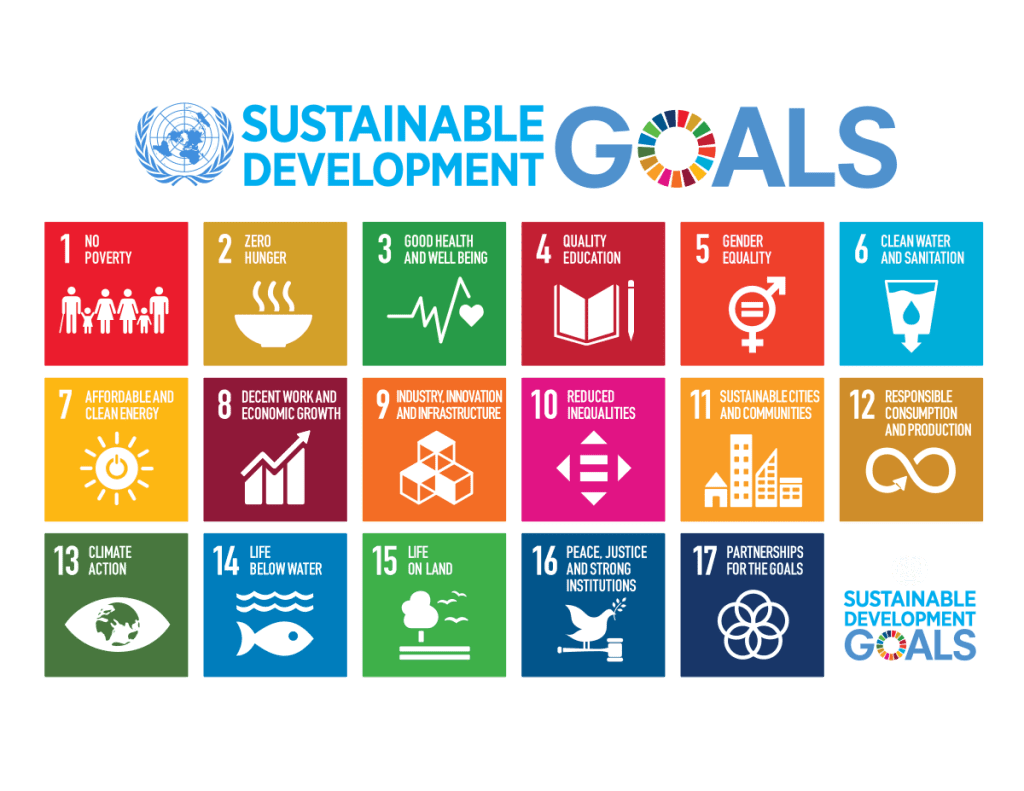
    Photo credit: The United Nations

    Alicia Nicholls

    The novel coronavirus (COVID-19) pandemic has been a significant setback for countries’ achievement of the 17 United Nations Sustainable Development Goals (SDGs) and their 169 targets. This was one of the main takeaways from the virtual launch of the Sustainable Development Report 2021: The Decade of Action for the Sustainable Development Goals on June 14.

    Released annually, the Sustainable Development Report is a key resource for tracking countries’ progress towards achievement of the SDGs which are part of the 2030 Agenda for Development agreed to by UN Member States, including those in the Caribbean, in 2015. The goals are ambitious, balancing all three elements of sustainable development: economic, social and environmental. Countries agree to achieve these goals by 2030 and this decade has been declared the ‘Decade of Action’ for the SDGs.

    A country’s rank on the SDG Index is determined by its overall score. This overall score measures a country’s total progress towards achieving all 17 SDGs, with a score of 100 being a perfect score, that is, complete achievement of all 17 SDGs. The score can be interpreted as a percentage of SDG achievement. The report also contains dashboards showing countries’ trends on the individual goals, subject to data availability.

    Top performers globally

    This year’s report ranked 165 countries. Overall, member states of the Organisation for Economic Cooperation and Development (OECD) are nearer to achieving the targets than any other country group, according to the Report. Finland tops the SDG Index 2021 with an overall score of 85.90, followed by Sweden, Denmark, Germany and Belgium to round out the top 5 performing countries. However, no country in the world has a perfect score nor is on track for achieving all the goals by 2030.

    Bangladesh has registered the most progress towards SDG achievement, followed by Afghanistan and Cote d’Ivoire. Indeed, East  and South Asia was revealed to be the region which has progressed the most on the SDGs. Brazil, Venezuela and Tuvalu were the countries which registered the most marked declines.

    Caribbean countries’ performance

    Many SIDS, including from the Caribbean, are not ranked on the SDG Index due to insufficient data. For those Caribbean countries ranked, Cuba was the highest with a rank of 49 followed by the Dominican Republic (67). Among countries of the Caribbean Community (CARICOM), Jamaica is the highest ranked at 81 out of 165 countries and a score of 69, a modest improvement from its score of 68.7 on the 2020 index.

    Jamaica is followed in rank by Barbados (83), Suriname (91), Belize (104), Trinidad & Tobago (108), Guyana (128) and Haiti (150). Jamaica and Barbados were the only two CARICOM countries to see an improvement in their overall score compared to 2020 levels. Suriname, Belize, Trinidad & Tobago, Guyana and Haiti saw declines in their overall scores towards SDG progress.

    Country profiles are however included even for those countries which are unable to be ranked on the index due to data shortages.

    Some key take-aways from the report

    The authors described 2020 as a ‘major setback for sustainable development’. For the first time since the SDG Index has been published, there has been a global decline in goal achievement driven in great part by an increase in extreme poverty and unemployment largely as a result of the COVID-19 pandemic.

    The report noted that there remains a gap between countries’ SDG commitments and implementation/mainstreaming. This must be addressed if the goals are to be achieved by 2030. The Report called for strong multilateral action to make the ‘Decade for Action’ count.  The authors further pointed to the need for a significant increase in fiscal space, global tax reform and expanded financing by multilateral development banks and debt relief to restore SDG progress in developing countries.

    The Report also contained a 2021 International Spillover Index which demonstrated how rich countries can generate negative socioeconomic and environmental spillovers undermining poorer countries’ ability to mobilise the financial resources needed to achieve the SDGs. Indeed, it highlighted how unsustainable trade and supply chains and tax havens and profit shifting in many rich countries undermine other countries’ ability to mobilize needed financial resources to achieve the SDGs.

    The report was prepared by teams of independent experts at the Sustainable Development Solutions Network (SDSN) and the Bertelsmann Stiftung and was authored by Jeffrey Sachs, Christian Kroll, Guillaume Lafortune, Grayson Fuller and Finn Woelm.

    The full SDG Report 2021 may be accessed here.

    Alicia Nicholls, B.Sc., M.Sc., LL.B. is a trade and development consultant with a keen interest in sustainable development, international law and trade. All views herein expressed are her personal views and should not be attributed to any institution with which she may from time to time be affiliated. You can read more of her commentaries and follow her on Twitter @LicyLaw.

  • What might a global minimum corporate tax mean for Caribbean International Financial Centres (IFCs)?

    What might a global minimum corporate tax mean for Caribbean International Financial Centres (IFCs)?

    Image by Gerd Altmann from Pixabay 

    Alicia Nicholls and Tammi Pilgrim

    Finance ministers of the world’s seven richest democracies (the Group of 7 or G7) have committed to an “at least 15%” global minimum corporate income tax (CIT) rate. This decision in principle has been lauded as a ‘landmark’ deal to ensure big multinational corporations (MNCs) pay their ‘fair share’ of tax. While the details of the proposed tax are still unknown, the decision, if implemented, could potentially have non-negligible implications for no-tax or low-tax jurisdictions globally. This article provides our initial reflections on what this development might possibly mean for Caribbean international financial centres (IFCs), including Barbados.

    What does a global minimum CIT entail?

    The global minimum CIT would require a corporation from a country which implements this floor (the “home country”) to pay taxes on its profits at this particular rate, even if those profits are declared overseas, such as in a lower-tax jurisdiction. It works as a “top up” tax, where the corporation’s home country (Country A) could charge the difference between the tax rate the corporation paid in the lower-tax jurisdiction (Country B). That undermines any advantage of shifting to a lower-tax jurisdiction.

    The idea of a global minimum CIT is not new. The introduction of common global minimum tax rules is presently part of Pillar 2 of the Organisation for Economic Cooperation and Development (OECD) Base Erosion and Profit Shifting (BEPS) Initiative which aims to stop corporations from exploiting gaps and mismatches in countries’ tax systems to avoid taxes.

    Why is this being proposed?

    Fundamentally, this worldwide minimum CIT seeks to discourage MNCs from moving profits to countries with low CIT rates in order to avoid paying the higher CIT imposed by their home countries. This inevitably results in reduced tax revenue for the home country.

    The OECD argues that “BEPS practices cost countries $US 100-240 billion in lost revenue annually, which is the equivalent to 4-10% of the global corporate income tax revenue”. Large countries, especially certain high tax European countries like France and Germany, blame this tax competition for the erosion of their tax bases and point to the higher rates paid by small businesses and the ordinary taxpayer. However, very little is said about the tax codes of these large countries which generally allow this ‘inequity’ to occur, by permitting corporations to take advantage of various tax loopholes. It also discounts the legal principle espoused by many common law jurisdictions, allowing taxpayers to legitimately arrange their affairs to minimize tax liability.

    Under the Trump Administration’s massive tax reform done pursuant to the Tax Cuts and Jobs Act of 2017, the US statutory CIT rate was lowered from one of the highest in the world at 35% to in the mid-range (21%). However, the Biden Administration initially sought to raise the statutory CIT rate to 28% to help finance its ambitious $2 trillion dollar infrastructure plan to stimulate the US economy. Therefore, the implementation of a global minimum CIT gained renewed traction in April 2021, when US Secretary of the Treasury Janet Yellen called for such a tax at a rate of 21%.

    This “call to action” was enthusiastically greeted by many European countries, the Organisation for Economic Cooperation and Development (OECD) and the International Monetary Fund (IMF). Perhaps not surprisingly, it has not received a similarly enthusiastic response in the Republic of Ireland, which has a CIT rate of 12.5% and is home to the European headquarters of US tech behemoths Apple, Facebook and Google.

    How does this impact Caribbean IFCs?

    Many countries, including Caribbean IFCs, have traditionally attracted foreign direct investment thanks in part to lower CIT rates. Among Caribbean IFCs, there are ‘no-tax’ jurisdictions like the Bahamas and the British Overseas Territories of the Cayman Islands, the British Virgin Islands (BVI) and Bermuda which charge no personal or corporate income tax. Then there are ‘low-tax’ jurisdictions, like Barbados, whose CIT rate (1% – 5.5%) is now the lowest in the world.

    These countries are now at risk of losing that business and the benefits that come along with it, as the global minimum CIT might act as a disincentive for companies to stay in no/low tax jurisdictions. While empirical data is limited, the global or international business sector is an important source of foreign exchange and direct employment in the Caribbean, while also providing spill-over benefits through skills transfer, corporate rental income and being a vital income source for corporate services providers. Corporate tax receipts from the global business sector comprise the lion’s share of Barbados’ CIT revenues and have proven resilient even in the face of the COVID-19 pandemic. Any negative impact on the global business sector at this time could inflict even greater economic devastation on these countries’ vulnerable economies.

    Aside from the potential loss of business and tax revenues, Caribbean IFCs may also be exposed to significant international pressure (including reputational damage) to conform to the global norm. Although the ability to levy taxes is a sovereign right flowing from statehood, Caribbean IFCs would not be unreasonable to fear they might be strong-armed into adopting the global minimum CIT rate through tactics such as blacklisting or denying corporations from receiving deductions on income earned in a jurisdiction which has not adopted the minimum CIT.

    Barbados, for example, lowered its CIT rate from 30% to the current low rate in response to the OECD’s allegations of ring-fencing, since international business companies (now abolished) then enjoyed a lower CIT rate than that imposed on domestic companies. Barbados also passed significant economic substance legislation requiring companies to demonstrate that they are carrying on their core income generating activities in the countries in which they declare profits. This has made it even harder for jurisdictions to compete for investment simply on tax rate.

    Finally, Caribbean IFCs following these developments might find it increasingly necessary to pivot to alternative methods of boosting their investment appeal. Indeed, a look at Invest Barbados’ “why Barbados” page reveals that Barbados has increasingly based its value proposition on non-tax factors, including facilitating businesses of substance, its human resources, lifestyle and tax treaty network

    Barbados’ response to this latest initiative seeks to attract more businesses to headquarter here where they would be taxed as Barbados companies. As stated by Advisor to the Barbados Government, Professor Avinash Persaud, at a recent business forum “America and the UK may decide to have a global minimum tax rate… they can decide how they tax a Barbadian subsidiary of a British company, but they cannot determine how they tax a Barbados-headquartered company. So we need to bring these companies to Barbados to do real business in Barbados and be headquartered here”.

    What happens next?

    The commitment in principle by G7 countries on a global minimum CIT is a major decision, but not yet a ‘fait accompli’. Talks will continue in the Group of 20 (G20) and OECD with the aim to reach a consensus by July. However, the fact that the G7 communique utilizes the wording “at least 15%” speaks to possible disagreement, even among proponents, on whether the rate should indeed be 15% or even higher. There are, of course, other issues that are yet to be resolved, such as to which companies would this tax be applicable.  

    Since the G7’s announcement, further dissension has come to light. The City of London (UK), as well as Hungary and Poland, have signalled their intention to seek carve outs (from the global minimum CIT rate) for financial services companies and income derived from a company’s substantive activities within a jurisdiction, respectively. It is possible that such exemptions might be necessary in order to achieve international consensus.

    The issues raised by the introduction of a global minimum CIT rate are complex. They bring sharply into focus the friction between the competing needs of a home country (to retain tax revenue) versus those of another country (to attract foreign direct investment), usually with the shared aim of promoting their own development and achieving their respective economic and social goals. Without doubt, therefore, the issue of MNCs paying their “fair share” in taxes is one which needs to be addressed multilaterally. However, arguably, this discussion should be occurring in a forum like the United Nations where all the world’s countries – big and small, developed and developing – are at the table, to avoid the perception that rich countries are setting the rules, changing them at will and moving goal posts, based on their own narrow political interests and economic exigencies.  

    Moreover, as too often happens, in seeking to go after the ‘big fish’, it is the little ones – small IFCs – which will likely feel the brunt of any economic fall-out. Caribbean IFCs should, therefore, strategize on how best to tackle this latest onslaught. One possibility might be to join forces with other similarly situated IFCs internationally, to voice objection to this proposal and demand a seat at the table. As Barbados is currently doing, they must also implement alternative strategies to attract investment if this latest proposal achieves ‘global’ agreement.

    Alicia Nicholls, B.Sc., M.Sc., LL.B. is an international trade consultant and founder of www.caribbeantradelaw.com. Tammi C. Pilgrim is an Attorney-at-Law, specializing in resolving commercial disputes by arbitration, litigation and mediation. She is the lead partner for arbitration at Lex Caribbean, Barbados, and is admitted to practice in Barbados, St. Lucia, New York and St. Kitts and Nevis. The views expressed in this article are solely those of the authors and do not necessarily represent the views of any entities with which they might be affiliated.

    This article also appeared in the Barbados Business Authority (Barbados’ leading business magazine) and Barbados Today.