Category: Caribbean

  • Turning the Brexit lemon into lemonade for Caribbean countries

    Alicia Nicholls

    In a non-binding referendum on June 23, 2016 the British public by a 52 to 48% margin voted for the United Kingdom (UK) to withdraw from the European Union (EU). Although the UK has not yet triggered Article 50 of the Treaty of European Union (Treaty of Lisbon), there is understandable concern among Caribbean countries about what implications the UK’s possible exit from the EU (Brexit) will have for their relationships with both the UK and EU. While I believe and have written elsewhere that Brexit will pose challenges to the small island developing states of the Caribbean, we need to think strategically and carefully about how we will turn this Brexit lemon into lemonade for our relations with both trading partners. 

    The countries of the Commonwealth Caribbean and the UK have a longstanding relationship. Barbados, for example, was under continuous British rule from 1627 until gaining its independence in 1966 and retains strong diplomatic, historical and cultural bonds which will not necessarily change due to Brexit. Commercial bonds exist as well. The UK accounts for almost 40% of Barbados tourist arrivals and is our largest export market in Europe. According to data retrieved from ITC Trade Map, Barbados exported US $13,879,000 worth of goods to the UK in 2015 but imported US$68,198,000 from that country in the same year, reflecting a merchandise trade deficit in the UK’s favour of US$54,319,000.

    Trade 
    One of the early impacts of Brexit is the depreciation of Sterling against the world’s major currencies, including the US dollar to which most Commonwealth Caribbean countries’ currencies are pegged. At the time of writing, the exchange rate is 1 GBP to $1.31 USD. Weaker Sterling would make UK goods and services cheaper for Caribbean importers. The increase in the importation of British goods would likely widen Caribbean countries’ trade deficits with the UK. However, it will also provide cost savings for local businesses which import frequently from that country and for Caribbean consumers of UK services (e.g: education, travel) in all four modes of services supply.

    Although Caribbean goods and services exports will be more expensive and less competitive to UK importers, one way our exporters could possibly mitigate this is by quoting their British buyers in British pounds. This would eliminate the currency risk for the British importer. The Caribbean exporter could build a small buffer into their pricing to mitigate some of the currency risk on their own end. We also need to use this opportunity to expand beyond the traditional exports to the UK by developing new and underdeveloped services exports such as in the cultural industries, consultancy services, medical tourism and the like.

    Once the UK has concluded its withdrawal from the EU it will cease to be a party to any EU trade treaties, including the CARIFORUM-EC Economic Partnership Agreement. The EPA, which was signed in 2008, provides CARIFORUM countries (CARICOM plus the Dominican Republic) with duty-free, quota-free access to the EU market on the basis of asymmetrical reciprocity – reciprocity which takes into account differences in size between the EU and CARIFORUM. A major value added of the EPA, besides its development component, is the market access concessions it provides for CARIFORUM service providers, particularly under Mode 4 (presence of natural persons), the most restricted mode of services supply.

    Until a withdrawal agreement with the EU has been finalised, the UK will continue to be bound by its obligations under the EPA. However, to safeguard their trade interests within the post-Brexit UK market, Commonwealth Caribbean territories , as part of CARICOM or CARIFORUM, should be proactive not only in monitoring the negotiations between the UK and the EU but also in lobbying for the negotiation of a new trade arrangement with the UK post-Brexit. Australia has already indicated its interest in negotiating a post-Brexit trade agreement with the UK. Although it is conceded that the Caribbean will unlikely be among those priority countries/regions with which the UK seeks to secure new trade deals, other interim arrangements could be found.

    Investment
    Caribbean countries’ existing double taxation agreements (DTAs) and bilateral investment treaties (BITs) with the UK also provide further opportunities to enhance investment promotion efforts in the UK, particularly targeting those UK companies which may be seeking to re-domicile post-Brexit. Commonwealth Caribbean territories like Barbados have many factors which would make it attractive to British companies as a domicile of choice for international business, including a common language (English), the common law legal system, political stability, a well-educated labour force and excellent professional services firms. Caribbean countries should continue to not only promote their attractiveness as a domicile of choice but continue to make reforms which will improve the ease of doing business.

    There is also the opportunity for the private sector to forge closer links with businesses and private sector organisations in the UK and seek out new business opportunities. In this vein, the Caribbean diaspora living in the UK, while an important source of remittance inflows, is a still largely undertapped resource as an export market and source of foreign direct investment.
    Most Commonwealth Caribbean territories do not have traditionally close relationships with most other EU countries. This is the opportunity to expand our level of trade and investment flows with continental Europe under the EPA, as well as continue to widen our DTA and BIT network with these countries. The consensus so far is that nearly 10 years after the signing of the EPA, most CARIFORUM countries have not realised the benefits expected. Simply put, market access does not guarantee market penetration. Sound market research will be needed to identify specific niches within the EU market which Caribbean goods and services providers could tap into. Business support organisations will continue to play an important role in assisting Caribbean exporters in their preparedness to enter the EU market.
    By no means is this article meant to negate or downplay the serious implications that Brexit could have for the Commonwealth Caribbean countries nor does it aim to present an exhaustive list of the opportunities available. What it does argue is that although Brexit does pose challenges for the Caribbean region, we should use it as a catalyst and impetus not only strengthen the already strong bonds we have with the UK, but to expand and deepen our trade and diplomatic engagement with the remaining 27 EU countries with which we are yoked via the EPA.

    Alicia Nicholls, B.Sc., M.Sc., LL.B. is a trade and development consultant with a keen interest in sustainable development, international law and trade. You can also read more of her commentaries and follow her on Twitter @LicyLaw.

  • CCJ Issues Ruling in Gay Rights Freedom of Movement Case

    CCJ Issues Ruling in Gay Rights Freedom of Movement Case

    Alicia Nicholls

    Test cases in law are a legal academic’s dream. They  help to map uncharted legal waters by establishing important legal principles and rights, which, as precedents, would be binding in subsequent cases whose facts are similar. The consolidated  test cases of Tomlinson v Belize, Trinidad & Tobago brought by prominent Jamaican attorney and LGBTI (lesbian, gay, bisexual, trans, and/or intersex) activist, Mr Maurice Tomlinson, before the Caribbean Court of Justice (CCJ) aimed to do just that.

    Mr. Tomlinson challenged the consistency of discriminatory provisions contained in the Immigration Acts of the defendant states, Belize and Trinidad & Tobago, which classify homosexuals among the classes of prohibited immigrants. He claimed that the mere existence of those provisions infringed his right of entry as an LGBTI Community national under Article 45 of the Revised Treaty of Chaguaramas and the 2007 Heads of Government Conference Decision.

    Article XII of the Agreement Establishing the Caribbean Court of Justice gives the Court exclusive jurisdiction, subject to provisions of the Revised Treaty, in matters concerning the interpretation and application of the Revised Treaty. Freedom of movement of CARICOM nationals has been a sore point in Community relations, with some States claiming that their nationals are routinely discriminated against.  The Court rendered its landmark decision on the right of freedom of movement of CARICOM nationals in the case of Myrie v Barbados. The CCJ’s ruling in that case established definitively that CARICOM member states were bound by the 2007 Decision of the Conference of Heads of Government of CARICOM to allow all CARICOM nationals hassle-free entry into their territories and a stay of six months upon arrival. The only exceptions for refusing entry are where  the Member State deems a person to be “undesirable person” or where  it is believed the Community national seeking entry may become a charge on public funds.

    The points of law raised in the instant case are unique as it is the first time that a CARICOM national has challenged the immigration laws of a CARICOM member state on the basis of infringing the right of entry of LGBTI community persons. Mr. Tomlinson also claimed infringement of his right under Article 7 of the Revised Treaty to not be discriminated against on the basis of nationality only and that being a UWI graduate and thus a Skilled CARICOM National, his rights under Article 46 of the Treaty would also be infringed.

    The relevant sections from the two Immigration  Acts in question are as follows:

    Belize Immigration Act (Cap 156):

    5.-(1) Subject to section 2 (3), the following persons are prohibited
    immigrants-

    (e) any prostitute or homosexual or any person who may be living
    on or receiving or may have been living on or receiving the
    proceeds of prostitution or homosexual behaviour;

    Trinidad & Tobago Immigration Act

    8. (1) Except as provided in subsection (2), entry into
    Trinidad and Tobago of the persons described in this subsection,
    other than citizens and, subject to section 7(2), residents, is
    prohibited, namely—

    (e) prostitutes, homosexuals or persons living on
    the earnings of prostitutes or homosexuals, or
    persons reasonably suspected as coming to
    Trinidad and Tobago for these or any other
    immoral purposes;

    As a matter of context for readers outside of the Caribbean, LGBTI rights are still not recognised in Caribbean countries. No one needs to look further than the many archaic and discriminatory laws still found on our statute books, which though not all enforced, still discriminate against members of the LGBTI community and are incongruous to the requirement of legal certainty.

    Mr. Tomlinson argued that while he has never been himself denied entry into the defendant member states,  the mere existence of the provisions in question were inconsistent with his right of entry as to enter would amount to him being in breach of the law. As such, Mr. Tomlinson not only requested the Court to make declaratory orders declaring his right of entry to these states, but also that the provisions in question violated his right to freedom of movement and his right not to be discriminated against on the basis of nationality only. He also requested the court to order Belize and Trinidad & Tobago to remove homosexuals from the class of prohibited immigrants.

    For their part, the defendant states argued, inter alia, that the existence of the provisions in question in their Immigration Acts  has not hindered Mr. Tomlinson’s entry into their territories. They also did not deny that Mr. Tomlinson was entitled to entry and stay of up to 6 months. The defendant states also agreed that they did not see Mr. Tomlinson, a homosexual, as an “undesirable person” within the meaning given in the 2007 Conference decision.

    Judgment

    The Court agreed that homosexuals cannot be categorised as ‘undesirable persons’ and concluded that homosexual CARICOM nationals have a right to freedom of movement on the same terms as any other CARICOM national. However, in regards to the central issue on whether the mere existence of the challenged statutory provisions constituted a breach of those States’ obligations, the Court had consideration for the state practice in Belize and Trinidad & Tobago. Interestingly, the Court accepted Belize’s interpretation of section 5(1)(e) of its Immigration Act that homosexuals are only prohibited from entering the country in cases where they are engaging in prostitution or benefiting from acts of prostitution performed by others.

    Turning to Trinidad & Tobago, the Court found that unlike the Belize provision, the provision in the Trinidad & Tobago Immigration Act expressly prohibited the entry of homosexuals and not solely those seeking to engage in prostitution. The Court, however, accepted Trinidad & Tobago’s evidence of state practice that despite the existence of this discriminatory provision, it is not enforced.

    Noting the inconsistency of 8(1)(e) of Trinidad & Tobago’s Immigration Act with the Revised Treaty, the Court, however, made reference to Article 9 of the Revised Treaty which provides that “in the event of any inconsistencies between the provisions of this Act and the operation of any other law, the provisions of this Act [the Revised Treaty] shall prevail to the extent of the inconsistency’. The Court also noted that the state practice of Trinidad & Tobago and Belize does not suggest any incompatibility with the Revised Treaty or the 2007 Conference Decision. The Court held, therefore, that Tomlinson had no valid reason to assume that his rights would not be respected by the States.

    However, the Court further emphasised at paragraph 59 of the Judgment that it was not condoning the retention by member states of legislation which conflicts with Community Law and stressed that “[s]tates should ensure that national laws, subsidiary legislation and administrative practices are transparent in their support of the free movement of all CARICOM nationals”. The Court also dismissed Mr. Tomlinson’s claims that his rights under Articles 7 and 46 of the Revised Treaty were infringed.

    Jurisprudential Impact

    Although the defendant lost his claim and was denied the requested remedies, this test case achieved two main things. Firstly, the Court stated definitively that “the practice or policy of admitting homosexual nationals from other CARICOM States (not falling under the two exceptions mentioned in the 2007 Conference Decision) is not a matter of discretion but is legally required based on Article 9 of the RTC as this is an appropriate measure within the meaning of that provision”. Therefore, States cannot as a matter of practice deny entry of homosexuals into their territories. It is hoped, however, that member States will move with alacrity to repeal those discriminatory sections of their Immigration Acts, and also give greater importance to bringing their laws into conformity with Community rules.

    Secondly, in so doing, the judgment has added to the Court’s growing jurisprudence, including on the contentious issue of freedom of movement.This significance was not lost on the Court. The justices stated at paragraph 65 of the judgment that the case “raised novel questions and has contributed to the clarification and development of Community law”. While litigation may be costly for member states against which claims are brought, the testing of issues of law by Community nationals helps to clarify points of Community law and ensure that member states are held accountable and uphold the rights which they agreed that Community nationals should enjoy.

    Recognising the need not to discourage parties from bringing test cases, particularly in the Court’s current stage of development, the Court in its discretion found the current circumstances were “exceptional circumstances” under Part 31.1(3) of its Original Jurisdiction Rules 2015 and so ordered both parties to bear their own costs.

    Copies of the summary, entire judgment and the video of the delivery of the judgment are available on the CCJ’s website here.

    Alicia Nicholls, B.Sc., M.Sc., LL.B. is a trade and development consultant with a keen interest in sustainable development, international law and trade. You can also read more of her commentaries and follow her on Twitter @LicyLaw.
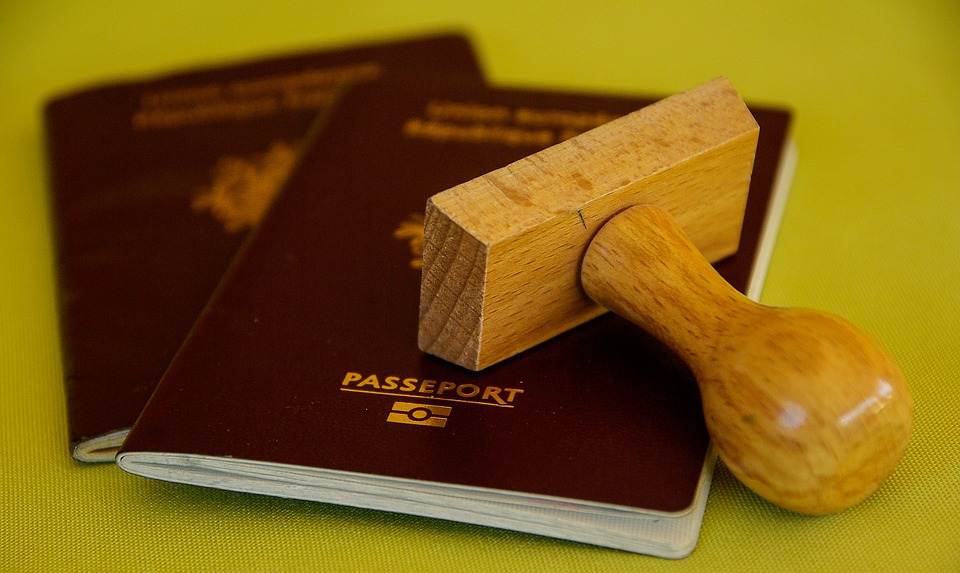
     

  • Are Citizenship by Investment programmes sustainable?

    Are Citizenship by Investment programmes sustainable?

    Alicia Nicholls

    The International Monetary Fund (IMF) in its end of mission press release following its recently concluded Article IV Consultation mission in St. Kitts & Nevis highlighted that strong construction activity, driven in part by large real estate projects funded under the island’s Citizenship by Investment (CBI) programme, had contributed significantly to the island’s five percent economic growth in 2015. Although the Article IV report itself has not been made available, the end of mission press release noted as follows:

    “The outlook for 2016 is positive, but remains dominated by developments in CBI inflows. Growth is expected to moderate to 3.5 percent in 2016 and 3 percent, on average, over the medium term, reflecting a tapering of construction activity associated with a potential slowdown in the pace of new CBI applications, given the increased competition from new CBI programs [emphases are this Author’s].”

    Two main things are clear from this paragraph and indeed from the entire press release. Firstly, St. Kitts & Nevis’ CBI programme, which has been in existence since 1984 and was the first of its kind, has contributed significantly to the island’s recent macroeconomic performance at a time when some Caribbean countries are still seeing sluggish GDP growth. Secondly, the IMF has concerns about the sustainability of this  CBI-led growth. This is reflected in the lower GDP growth rate projected for 2016 and for the medium term. It raises the question of how sustainable a role can CBI programmes play in fostering growth and development in the host country.

    Citizenship by investment programmes or jus pecuniae (economic citizenship) remain a controversial topic in the Caribbean. Despite this,  given the high level of indebtedness of many Caribbean countries, the need for economic diversification, the fickle nature of foreign direct investment inflows and limited access to concessional borrowing, Caribbean countries are increasingly considering their attractiveness. In January this year, St. Lucia recently joined four other Caribbean countries (Antigua & Barbuda, Dominica, Grenada and St. Kitts & Nevis) as the fifth Caribbean state currently operating a CBI programme. Each of these programmes differs in terms of fees, types of qualifying investment and admission and other qualification criteria.

    If managed well, CBI programmes can be an important source of targeted foreign direct investment and other foreign exchange inflows. They can also be alternative means of financing infrastructure projects which might be otherwise unattractive to most private investors. As an example, the Government of Dominica recently announced that its West Bridge project under the Roseau Enhancement Project will be financed through its CBI programme. Without private sector-led involvement, such projects would require use of government’s tax coffers, borrowing or public-private partnerships. Construction activity pursuant to these projects, where provided for, contributes to economic activity and generates employment. High Net Worth Individuals (HNWIs) and their families  also bring with them expertise, contacts and know-how to the businesses which they establish. CBI programmes can to some extent contribute to poverty reduction by creating employment and creating infrastructure in rural communities.

    Growing global demand for Second Passports

    There is also no disputing that global demand for second passports is increasing. Contrary to popular belief, this demand is not fuelled in the main by nefarious purposes but by HNWIs either fleeing political or economic instability in their home countries or seeking the greater mobility a less restrictive passport could bring. Caribbean passports, for example, rank among some of the least restrictive passports outside those of metropolitan countries.

    A growing and increasingly mobile Chinese, Russian, Middle Eastern and African HNW class, and continued instability in the Middle East, are two of the major developments to watch. Turning to this hemisphere, Fortune reports  that 2015 was the third straight year in which a record number of US citizens renounced their US citizenship. Besides the onerous reporting requirements under the Foreign Account Tax Compliance Act (FATCA), the main factor is that under US law,  American citizens or resident aliens living or travelling outside the  US are mandated to file taxes in the US in the same way as those resident in the US. Moreover, if media reports are to be believed, that number may jump depending on the outcome of the presidential election this fall! It is therefore no surprise that citizenship planning is a multibillion dollar global industry.

    Sustainability issues

    While it is unlikely that global demand for second passports will abate anytime soon, there are concerns about the sustainability of these programmes not just because of the inherent reputational risks to the host countries if applicants are not thoroughly vetted, the implications for loss of visa-free access with third states, but also the security implications in the context of the free movement of persons as envisioned under the CARICOM Single Market and Economy. For example, St. Kitts & Nevis had to revamp its programme after the US and Canada raised concerns. The latter revoked visa-free access  to Kittitian nationals. I have touched on these issues in previous articles so my main focus here is on issues of economic development.

    Like all inflows, CBI  revenue inflows are not guaranteed and could leave a country in the lurch if there is a sudden drop in inflows due to competition from other CBI programmes globally. It is a concern that the IMF rightly raised  in its Article IV end of mission press release in regards to St. Kitts & Nevis. Even so, market and size constraints mean there is only so much real estate and tourism construction activity which can take place in a small country at once, and concerns have been raised that increased demand for luxury real estate could drive up the general price of real estate, making it unaffordable to ordinary persons.

    The CBI programmes in the Caribbean are direct citizenship programmes, which means that once all fees are paid and due diligence requirements met, a qualifying investor is granted citizenship on the basis of a one-time qualifying investment and is not required to be resident in the country for any period of time prior to applying for citizenship or afterwards. A slight exception is that under Antigua & Barbuda’s CBI programme  an investor may lose citizenship if he fails to spend at least 5 days in Antigua & Barbuda during the period of five calendar years after having obtained citizenship. Five days out of a possible 1,826 days is hardly any time and only applies after citizenship is obtained.

    This may be contrasted with residence-to-citizenship programmes, such as the US’ EB-5 programme, which require a period of residency before an investor may apply for citizenship. The lack of a residency requirement means there is no incentive for the investor to reside in the new country of citizenship or contribute through expenditure, tax paying or otherwise once he receives citizenship.

    Some countries seek to address this by establishing a relationship with their new citizens. In this article on the Government of Dominica’s website, the Prime Minister of Dominica is reported to have visited and addressed several new citizens of Dominica in Europe, Asia, Dubai and the Arab Emirates and “impressed upon them the importance of their contributions for the development and modernization of [their] country.”

    Another option could be to do like Malta did and introduce a one-year residency requirement. A drawback is that this would increase the waiting time for the potential investor, making such a programme less competitive.  While one could argue that this has not hurt Malta which is currently  ranked as the top global residency and citizenship programme on Henley & Partners’ Global Residence and Citizenship Programs 2016 report, I believe that its  visa-free access to 168 countries, including EU citizenship, offsets any negative fall-out from having a residency requirement.

    Conclusion

    To go to the heart of the question posed in this article,  CBI programmes have their benefits. The revenue  inflows and the economic activity generated make the macroeconomic fundamentals of a country look good. However, they should not be relied on exclusively as an engine of inclusive growth and sustainable development.

    Careful planning is needed to ensure that investment under CBI programmes is steered towards targeted growth areas and sectors which can boost economic diversification and growth. To some extent we are already seeing this being done. CBI-funded projects in St. Kitts & Nevis are adding to the appeal of the island’s tourism product. St. Lucia is using its programme in order to develop its luxury tourism and real estate sectors. However, this should be done in a sustainable way in order to boost development and at the same time having a minimal adverse human and environmental impact.

    The IMF has also made a very interesting suggestion in its above-mentioned press release that the categories for qualifying investments under the Citizenship by Investment regulations be broadened to include renewable energy, education and health. This merits consideration by policy makers. However, promoting investment in these sectors would require more marketing as their profitability for investors may not be immediately apparent.

    The IMF also recommended the need for a prudent framework that “would help build resilience to a sudden stop in CBI inflows, and facilitate the accumulation of fiscal buffers necessary to address natural disaster shocks and absorb unforeseen financing needs if tax performance disappoints after a slowdown in CBI inflows”. The Fund also emphasised that a Growth and Resilience Fund using savings from the CBI programme should be established which could be used as a contingency buffer in the case of natural disasters.

    Besides these very timely suggestions, it would be useful if Caribbean countries released more data about the operation of their programmes. For example, periodic impact assessments should be done on the operation of the programmes and made publicly available, highlighting their contributions, challenges and whether they have met their targets. Such an exercise would not only assist policy makers in their policy planning but also show the public that CBI programmes are not a cloak used by unsavoury characters to conceal their illegal activity but are a policy tool to assist in development. I would also add that countries should continuously evaluate and monitor, and where necessary, revise their due diligence frameworks, to ensure the integrity of their programmes.

    Alicia Nicholls, B.Sc., M.Sc., LL.B. is a trade and development consultant with a keen interest in sustainable development, international law and trade. You can also read more of her commentaries and follow her on Twitter @LicyLaw.

  • Is Brexit a risk for the Caribbean?

    Is Brexit a risk for the Caribbean?

    Alicia Nicholls

    In a few weeks’ time, June 23rd to be exact, the British people will vote in a referendum to determine the future of the United Kingdom of Great Britain and Northern Ireland’s 40-plus year formal relationship with continental Europe. The possibility of a UK vote for an EU exit, poignantly termed “Brexit” in popular parlance, was identified by the International Monetary Fund (IMF) in its recently released World Economic Outlook Update Report as a major risk to the global economy.

    The fear of a negative impact of Brexit on the UK and global economy has been echoed off the walls of practically every major economic and political forum within the last few months, with the recently concluded IMF/World Bank Group Spring Meetings  being the latest example.

    Though the US, Canada, and in some respects China, have surpassed the UK’s economic importance to the Caribbean region as a destination for Caribbean exports and as a source of foreign direct investment (FDI), the UK remains an important source market for tourist arrivals.  It is also the region’s closest ally in the EU and a partner in helping to ensure the region’s concerns are raised and considered. Therefore, there are possible economic and foreign policy implications for the Caribbean if the UK severs its ties with the EU.

    Background

    The UK joined the European Economic Community (EEC), the predecessor to the EU, in 1973 but has never joined the eurozone, opting instead to retain the Pound Sterling as its currency and set its own monetary policy. While it is outside the scope of this article to delve into the merits and demerits of either position or to render an opinion on such, those who support the “Vote Leave” cite immigration from poorer EU countries and the perceived impact on UK social services, as well as the loss of British sovereignty as the EU looks to create an “ever closer union”. They see the costs of EU membership (both financial and figurative) outweighing the benefits and point to Switzerland and Norway as examples of European countries successfully striving outside of the EU.

    Those in favour of the “Stay vote” highlight the EU as a final destination for nearly half of all British exports and the hypothetical havoc that would be inflicted on the UK economy should the UK cease to be a member of the single market.According to data published by the UK Office of National Statistics, the EU in 2014 accounted for 44.6% of UK exports of goods and services, and 53.2% of UK imports of goods and services.

    While Article 50 of the Treaty on the European Union (TEU) provides for withdrawal from the EU by any member state, the current UK situation is untested waters. In 1975 British voters opted to remain in the EEC. Although Greenland left the EEC in 1985 following a referendum, no state has ever left the EU.  Therefore, there is uncertainty about the impact of a potential Brexit on the EU and the global economy considering that the UK is the EU’s 2nd largest member by GDP and 3rd largest by population.

     A “leave” vote will not automatically mean the UK is out of the EU and there is a process to be followed which Article 50 of the TEU outlines once the UK notifies its intention to withdraw pursuant to Article 50(2). This includes negotiation and conclusion of a withdrawal agreement in accordance with Article 218(3) of the Treaty on the Functioning of the European Union (TFEU). Unless the European Council and the UK decide an extension, EU treaties would cease to be applicable to the UK once the withdrawal agreement enters into force or, failing that, two years after the UK has notified its intention to leave.

    Caribbean Implications – Trade, Tourism & Investment

    The UK still ranks as a major partner for many Caribbean countries’ exports and imports. For commodities-exporting economies like Guyana, Belize, Suriname, the UK is within their top 5 export markets.

    The UK is more importantly a main source of tourist arrivals for many Caribbean countries. Some 1.1 million UK tourists visited the Caribbean in 2015, according to the Caribbean Tourism Organisation’s State of the Industry Report in February this year. For those tourism-dependent countries in the Caribbean for which the UK is the major source market, their economic fortunes are tied to the health of the UK economy and strength of Sterling. This was clearly illustrated by the slowdown many tourism-dependent economies in the region suffered while the US and UK economies were in recession during the global economic and financial crisis and during the height of the Air Passenger Duty (APD) saga when British demand for travel to the region fell..

    Studies on the impact of Brexit on the UK economy are inconclusive and range the gamut from positive to disastrous. However, the IMF position is clear as seen in its most recent WEO Update Report where it cut its growth projections for the UK from 2.2% to 1.9% in 2016, representing a projected slowdown from the  2.3% growth the UK economy realised in 2015.

    In Barbados, British nationals are also an important source of real estate FDI. It was recently reported by local real estate agents in a news broadcast that the softening  in the  value of the Great Britain Pound has dampened demand for Barbadian luxury real estate by British second home buyers and affected the tenuous recovery the island’s second home market was experiencing.

    Trade Agreements

    There is some disagreement among academics as to the continuity of the UK’s participation in treaties which it signed as part of the EU with third states. These include the Economic Partnership Agreement signed with CARIFORUM states, which is considered a “mixed” treaty under EU law, that is, a treaty under which both the EU and its member states exercised competencies and thus  is concluded by both the EU and its member states. Some posit that the UK can avail itself of the principle of continuity of treaties, which is more likely in a “mixed” treaty than an “exclusive” scenario where the EU has exclusive competence.

    However, the principle of continuity actually applies in the context of state continuity and succession and there is no precedent of a scenario like this where a state ceased to be a member of a trading bloc in which capacity it had concluded a treaty. Even if the continuity principle applies, the UK would have to enter into some kind of negotiations with these states if it is to continue to benefit from treaties it signed as part of the EU which still means there will be uncertainty for CARIFORUM exporters and investors. In the worst case scenario, CARICOM or CARIFORUM would have to negotiate a separate agreement with the UK to maintain the level of preferences to the UK market to what they have with the EU under the EPA. As the EU treaties and directives would no longer apply to the UK after the date of entry of the withdrawal agreement, the UK would have the regulatory freedom to set its own standards, such as technical standards and sanitary and phytosanitary standards, which may or may not be as onerous as the EU’s.

    Foreign Policy Implications

    The UK is most Commonwealth Caribbean countries’ closest ally in Brussels. A British exit would mean the UK no longer has the power to directly influence EU policy and the Caribbean region would lose an important voice to raise and articulate its concerns in regards to the future of EU foreign policy. It is particularly critical now as the EU is contemplating its position on the future framework for cooperation with the countries of the African, Caribbean & Pacific (ACP) Group once the Cotonou Partnership Agreement expires in 2020.

    The situation becomes more complicated for UK dependencies in the Caribbean which are not officially a part of the EU but benefit from EU funding and preferences because of their relationship with their mother country, the United Kingdom. A “yes vote” would raise questions about what future relationship they have with the EU.

    According to this news report, a  poll by YouGov released on Friday “found support for “In” stood at 40 percent, while 39 percent intended to vote “Out”, 16 percent were undecided and 5 percent did not intend to vote”. Similar to the Scottish independence referendum where polls were close and ultimately the status quo prevailed, my personal view is that despite the growing anti-EU sentiment in the UK, the British people will not vote to leave the EU. Besides the uncertainty a Brexit would portend for the British economy and business, Prime Minister David Cameron was able to secure several sweeping changes from Brussels after two days of negotiations in February and which would go into effect if the “stay vote” wins. 

    However, in the event that the “out vote” prevails, it is likely that the UK will negotiate some kind of preferential arrangement, similar to what obtains between the EU and Turkey, given the strong trade and investment ties to the continent. This would ensure UK businesses and exporters are not disadvantaged and still have favourable access to the EU single market once the transition period ends.

    The Bottom Line

    Brexit would be a risk to Caribbean economies. The nature of the risk would depend on several factors, including the type of withdrawal arrangement the UK negotiates with the EU and the impact on the British economy during the period of transition.

    The uncertainty in the UK economy during the post-exit phase could have strong implications for countries like Barbados whose economic fortunes are closely tied to the strength of the UK economy, something which we are already seeing happening to some extent as uncertainty among investors has led to the weakening of Sterling in recent months.  Furthermore, the UK’s exit from the EU would mean uncertainty for Caribbean exporters in the UK market and the loss of the region’s closest ally within the trade bloc at a time when the EU is reconsidering its foreign policy and its post-Cotonou cooperative framework with ACP countries. As such, the Region must brace itself for whatever happens on June 23rd.

    Alicia Nicholls, B.Sc., M.Sc., LL.B. is a trade and development consultant with a keen interest in sustainable development, international law and trade. You can also read more of her commentaries and follow her on Twitter @LicyLaw.