Category: CARICOM

  • Belizean Dr Carla Barnett will be next CARICOM Secretary-General

    Belizean Dr Carla Barnett will be next CARICOM Secretary-General

    Belizean Dr. Carla Barnett has been unanimously selected by CARICOM Heads of Government to be the next Secretary-General of the Caribbean Community (CARICOM). She will make history by becoming both the first Belizean and first woman to be appointed to this position. The Caribbean Trade Law & Development Blog congratulates Dr. Barnett and wishes her every success during her tenure.

    Read the statement from the Heads of Government here.

  • CARICOM Council for Foreign and Community Relations holds 24th Meeting (Virtual) – 6-7 May 2021

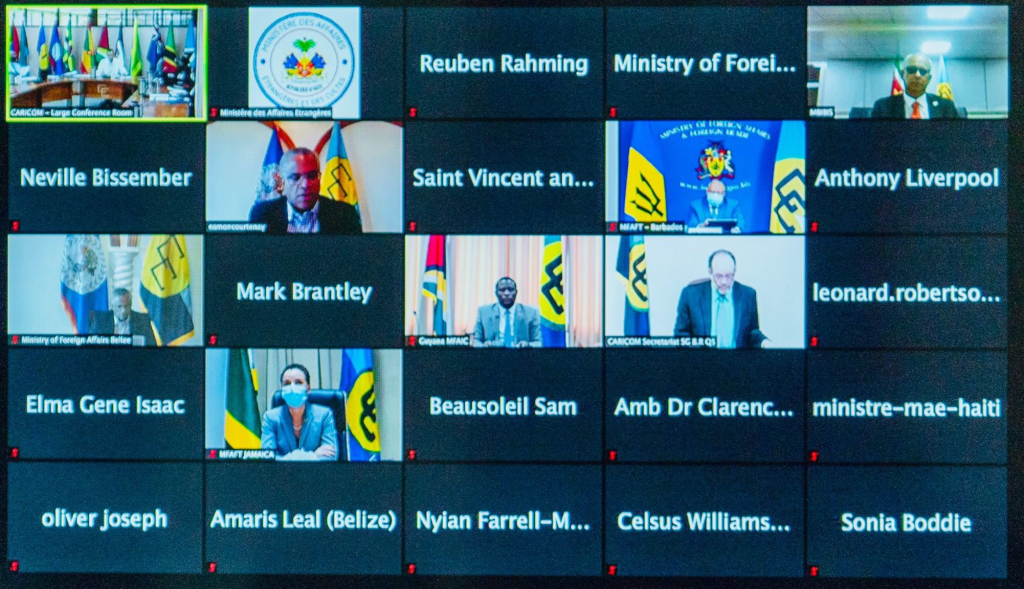
    CARICOM Council for Foreign and Community Relations holds 24th Meeting (Virtual) – 6-7 May 2021

    (CARICOM Secretariat, Turkeyen, Greater Georgetown, Guyana)     The Twenty-Fourth Meeting of the Council for Foreign and Community Relations (COFCOR) of the Caribbean Community (CARICOM) was held virtually on the 6-7 May 2021, under the Chairmanship of the Honourable Eamon Courtenay, Minister of Foreign Affairs of Belize.

    The COFCOR was attended by Honourable E. P. Chet Greene, Minister of Foreign Affairs, Immigration and Trade of Antigua and Barbuda; Senator Dr. the Honourable Jerome Walcott, Minister of Foreign Affairs and Foreign Trade of Barbados; Honourable Dr. Kenneth Darroux, Minister for Foreign Affairs, International Business and Diaspora Relations of the Commonwealth of Dominica; Honourable Oliver Joseph, Minister of Foreign Affairs, International Business and CARICOM Affairs of Grenada; Honourable Hugh Todd, Minister of Foreign Affairs and International Cooperation of Guyana; His Excellency Dr. Claude Joseph, Prime Minister a.i. and Minister of Foreign Affairs and Worship of the Republic of Haiti; Senator the Honourable Kamina Johnson-Smith, Minister of Foreign Affairs and Foreign Trade of Jamaica; Honourable Mark A.G. Brantley, Minister of Foreign Affairs and Aviation of the Federation of St. Kitts and Nevis; His Excellency Albert Ramdin, Minister of Foreign Affairs, International Business and International Cooperation of the Republic of Suriname; and Senator the Honourable Dr. Amery Browne, Minister of Foreign and CARICOM Affairs of the Republic of Trinidad and Tobago.

    His Excellency Reuben Rahming, Ambassador to The Bahamas to CARICOM, represented The Bahamas; Her Excellency Elma Gene Isaac, Ambassador to CARICOM to Saint Lucia, represented Saint Lucia; and His Excellency Allan Alexander, Ambassador of Saint Vincent and the Grenadines to CARICOM represented St. Vincent and the Grenadines.

    OPENING CEREMONY

    Remarks were delivered by Ambassador Irwin LaRocque, Secretary-General of the Caribbean Community, His Excellency Dr. Claude Joseph, Prime Minister a.i and Minister of Foreign Affairs and Worship of the Republic of Haiti, outgoing Chair of the COFCOR, and the Honourable Eamon Courtenay, Minister of Foreign Affairs, Foreign Trade and Immigration of Belize, the Chair of the COFCOR.
    (The statements are available at www.caricom.org)

    COORDINATION OF FOREIGN POLICY

    CARICOM Foreign Minister re-emphasised the importance for the Region to speak with one voice through the coordination of foreign policy, and the need to find new and more effective ways to strengthen the existing coordination mechanisms while recognising the sovereign right of Member States. It was noted that there continues to be successful coordination but the increasing complexity of international issues requires that it be enhanced.  In that regard, the COFCOR agreed to increase the frequency of its meetings. This would enable Ministers to address in a timely fashion new developments and challenges facing the Community and to shape Community responses and policies.

    CANDIDATURES

    The COFCOR reiterated the importance of CARICOM’s effective participation in international fora, including through the pursuit of increased CARICOM representation in relevant organisations.  In this regard, Foreign Ministers considered and endorsed a number of CARICOM candidatures to the United Nations (UN), the Organisation of American States (OAS) and other international and regional organisations. They also deliberated on the requests from Third Countries for CARICOM’s endorsement of their candidates to multilateral bodies.


    BILATERAL RELATIONS

    The COFCOR noted the progress made in the strengthening of relations with a number of Third States and groups of states since its last Meeting.  In so doing, it reaffirmed the importance of CARICOM’s relations with its traditional partners and the need to continue to expand the Community’s outreach to other regions and so develop its relations with non-traditional partners and groupings.

    The devastating impact of the COVID-19 pandemic and addressing its public health and economic effects, in particular the need for equitable access to vaccines and to economic recovery financing, were among the Community’s priority concerns discussed and for which assistance was sought.

    Ministers discussed relations the African Union. They reaffirmed their readiness for a CARICOM-AU Summit as soon as practicable.

    The COFCOR expressed its continued concern that the US embargo against Cuba has a significant adverse impact on the socio-economic development of Cuba and the well-being of the Cuban People.  Foreign Ministers reiterated CARICOM’s support for the termination of the long-standing US economic, financial and commercial embargo against Cuba and agreed to continue to advocate in this regard.

    MULTILATERAL AND HEMISPHERIC RELATIONS

    United Nations (UN)

    The COFCOR noted the developments regarding pursuit of the Financing for Development (FfD) agenda and the challenges associated with expanding public health expenditures while applying fiscal containment measures in line with the economic downturn arising from the COVID-19 Pandemic.  Foreign Ministers commended the Honourable Prime Minister of Jamaica who joined with the Prime Minister of Canada and the UN Secretary-General to launch an initiative that has resulted in a menu of over 250 policy options to address Financing for Development in the Era of COVID-19 and beyond. 

    The COFCOR agreed on the need for global solutions to the various challenges facing Small Island and Low-Lying Coastal Developing States, particularly in the midst of the COVID-19 pandemic. The COFCOR also agreed that  the Community should continue to prioritise the implementation of the SAMOA Pathway in a robust manner, including the launch of a strong COVID-19 economic recovery related appeal to the international community and,,  in particular  the G20, asking for the expansion and extension of the Debt Service Suspension Initiative (DSSI). The COFCOR encouraged the consideration of innovative debt relief measures such as debt swaps, debt buybacks, and State Contingent Debt Instruments to ease the economic fallout of the pandemic.
     They also agreed to continue to advocate against –

    1. the designation of CARICOM Member States as high-risk territories thereby resulting in the ongoing loss of correspondent banking relationships (CBRs); and
    1. the unilateral actions to blacklist some Member States as non-cooperative tax jurisdictions.

    The COFCOR welcomed the convening of a Food Systems Summit as part of the Decade of Action to Achieve the Sustainable Development Goals (SDGs) being hosted by the UN Secretary-General in October 2021 and encouraged the highest level of participation from Member States.

    The COFCOR agreed to continue to advance a common regional position, at the fourth and final Inter-Governmental Conference for the development of an Internationally Legally Binding Instrument on the Conservation and Sustainable Use of Marine Biological Diversity Beyond Areas of National Jurisdiction (BBNJ) scheduled for 16-27 August 2021.

    Organisation of American States (OAS)

    The COFCOR received an update on the issues of strategic importance to the Caribbean Community before the Organisation of American States (OAS). Foreign Ministers welcomed the CARICOM Framework Strategy entitled Vulnerability to Resilience put in place by the OAS Secretary-General with the assistance of the CARICOM Caucus. Ministers expressed concern over the limited resources allocated to areas identified as priority to CARICOM and agreed that every effort should be made to ensure that adequate resources are allotted to these areas. Foreign Ministers agreed to raise this matter at the Fifty-First OAS General Assembly, scheduled to be hosted this year by Guatemala. They also reiterated their commitment to the work of the hemispheric body. The COFCOR commended the work of the CARICOM Caucus in Washington D.C.


    Community of Latin American and Caribbean States (CELAC)
    The COFCOR reviewed a synopsis of the 2021 Work Programme of the CELAC PPT Mexico and commended the PPT Mexico and CELAC for advancing priorities related to recovering from the COVID-19 pandemic on the health and economic fronts.

    Association of Caribbean States (ACS)
    The Council welcomed the assumption to office of His Excellency Rodolfo Sabonge as the new Secretary-General of the ACS and agreed that CARICOM Member States should continue to act strategically within the Association.
    Foreign Ministers commended the coordination efforts in the Greater Caribbean in response to the pandemic.

    CLIMATE CHANGE

    The COFCOR agreed that COP26 should be the COP of Ambitious Action and that it must result in greater speed in scaling up climate finance flows to SIDS via the United Nations Framework Convention on Climate Change (UNFCCC) finance mechanisms, the Green Climate Fund and the Adaptation Fund. Foreign Ministers also reiterated their support to the Government of Antigua and Barbuda as Chair of the Alliance of Small Island States (AOSIS).

    In preparation for COP26, the COFCOR emphasised the need for Member States to engage in wide-ranging consultation with stakeholders at the national and regional levels.

    BORDER ISSUES

    Belize-Guatemala Dispute

    The COFCOR received an update on developments between Belize and Guatemala, including in respect of the case, arising from Guatemala’s territorial, insular and maritime claim, that is now before the International Court of Justice (ICJ) for final and definitive resolution, in accordance with the Special Agreement to Submit Guatemala’s Claim to the ICJ.

    The COFCOR urged Belize, Guatemala and the OAS to respect and implement fully the Confidence Building Measures as agreed under their Framework Agreement of 2005, pending a resolution of the case before the ICJ. They further urged both countries and the OAS to reinvigorate their efforts to engage in the design and development of a mechanism of cooperation for the Sarstoon River, which remains outstanding.

    The COFCOR recognises and supports the OAS’ crucial role in the process aimed at resolving the dispute, arising from Guatemala’s claims on Belize, and called on the international community to continue supporting the OAS Office in the Adjacency Zone.

    The COFCOR reaffirmed its unwavering support for the sovereignty, territorial integrity and security of Belize.

    Guyana-Venezuela Controversy

    Foreign Ministers received an update on the most recent developments in the controversy between the Cooperative Republic of Guyana and the Bolivarian Republic of Venezuela. They noted that Guyana had begun to prepare its Memorial for submission on 8 March 2022 in accordance with the schedule set by the International Court of Justice (ICJ) to hear the case on the merits of Guyana’s application concerning the validity of the Arbitral Award of 1899 and the related question of the definitive settlement of the land boundary between the two countries.

    Foreign Ministers reiterated the expression by CARICOM Heads of Government of the Community’s full support for the ongoing judicial process that is intended to bring a peaceful and definitive end to the long-standing controversy between the two countries and urged Venezuela to participate in the process.

    Foreign Ministers remained very concerned about the threatening posture of Venezuela and reaffirmed their consistent support for the maintenance and preservation of the sovereignty and territorial integrity of Guyana.

    ADVANCNG REGIONAL PRIORITIES: CARICOM AGRI-FOOD AGENDA

    The COFCOR affirmed the strategy adopted at the Thirty-Second Inter-sessional Conference of CARICOM Heads of Government (February 2021) for the advancement of the CARICOM Agri-Food Systems Agenda with priority attention to regional food and nutrition security. Ministers agreed to include the Agenda among the priority issues for engagement with relevant partners and in international fora, including the UN Food Systems Summit and the Summit of the Americas.


    UNCTAD XV

    The COFCOR received a report from Barbados on preparations for UNCTAD XV and noted that the Conference, which was scheduled to be held in Barbados in 2020, will now be held virtually on 3 October 2021.

    Foreign Ministers commended Barbados for its continuing efforts to convene this important Conference and affirmed their commitment to work collectively with Barbados in ensuring that CARICOM SIDS specific issues are reflected in the outcome of UNCTAD XV.

  • Tenth UK-Caribbean Forum: COMMUNIQUÉ

    Tenth UK-Caribbean Forum: COMMUNIQUÉ

    Source: CARICOM Secretariat

    Introduction

    1. The Tenth United Kingdom-Caribbean Ministerial Forum was held virtually on 18 March 2021. The Governments of the United Kingdom and the Caribbean again reaffirmed their commitment to the Forum as an important vehicle for dialogue, partnership and cooperation, reflecting the special relationship that exists between the United Kingdom, the Caribbean States and the British Overseas Territories.
    2. The Caribbean and the United Kingdom share a strong and enduring relationship based on mutual respect, trust and a shared history. The United Kingdom-Caribbean Forum continues to provide a space for sustained joint collaboration to address shared interests and concerns as well as to promote people-focused prosperity and sustainable development. Ministers affirmed the need for United Kingdom and Caribbean efforts to focus on addressing the challenges and maximising the opportunities presented by the post-COVID-19 and post-Brexit realities.
    1. Ministers also acknowledged that the COVID-19 pandemic is one of the most dangerous global threats to health, human security, prosperity and development, with devastating socio-economic impacts particularly on small and vulnerable states such as those of the Caribbean.
    2. At the Ninth United Kingdom-Caribbean Ministerial Forum, recognition was made by Ministers in their Joint Statement of the human and economic losses caused by infectious diseases, and the need to provide the necessary support. The global COVID-19 pandemic has illuminated the primacy and profile of these losses and elevated their impact. The pandemic has effectively put additional pressure on small island states’ finances and diverted critical resources away from crucial work in areas such as long-term resilience building.
    3. Ministers noted with concern that the COVID-19 crisis has exacerbated the debt situation of several Caribbean countries amidst significant GDP contraction and widening fiscal deficits. Ministers agreed on the need for timely international support for, and action on, exceptional measures to ensure debt sustainability and address new financing gaps as part of a short to medium-term economic recovery package.
    4. Ministers recognised the multi-dimensional challenge posed by the COVID-19 pandemic as an urgent and overriding priority and welcomed ongoing United Kingdom support to the Caribbean in the fight against COVID-19. Ministers also expressed their shared commitment to advocacy and action aimed at promoting and ensuring equitable access to and distribution of vaccines, including through the COVAX facility. The United Kingdom undertook to work with the Caribbean to build back better and more inclusively to strengthen long-term resilience, recognising that the pandemic has demonstrated the necessity and urgency of working together both regionally and internationally particularly in vaccine rollout and distribution, and the procurement of medical supplies and equipment.
    5. Ministers, recognising that no one is safe until everyone is safe, acknowledged the call from CARICOM Heads of Government for an urgent Global Summit to address inequitable access to, and distribution of vaccines to be convened in coordination with the World Health Organisation’s Access to COVID-19 Tools (ACT) Accelerator.
    6. Ministers noted the priority accorded by Caribbean countries to agriculture and food and nutrition security in the context of post-COVID-19 economic recovery, building resilience and achieving sustainable development. Ministers committed to exploring co-operation and investment possibilities in this area in the context of the United Kingdom-Caribbean partnership.
    7. Ministers paid tribute to the over half a million West Indians who have made an immeasurable contribution to the socio-economic fabric of the United Kingdom by helping the United Kingdom’s public services and economy to thrive. They have built their lives and their homes in the United Kingdom, and have done much for this country, significantly contributing to communities, culture and society, making the United Kingdom stronger, more vibrant, more inclusive, and more successful as a nation.
    8. This includes the significant contribution of West Indians of the Windrush Generation who migrated to the United Kingdom between 1948 and 1973, helping to rebuild a post-war United Kingdom as a modern and multicultural society, and developing key sectors such as the National Health Service (NHS) and the transport system across the country.
    9. Ministers welcomed the United Kingdom’s commitment to righting the wrongs of the Windrush Scandal and the decision to take swift and decisive action to make amends. This includes providing compensation to victims through the Windrush Compensation Scheme, which is making higher payments, more quickly, and implementing the recommendations of the Independent Windrush Lessons Learned Review.
    10. Ministers further welcomed the United Kingdom’s commitment to deepen its relationship with Caribbean countries, to reinvigorate, redesign and strengthen this partnership and to broaden engagement to include other stakeholders in business, the diaspora and youth. The potential and growing strength of this relationship is demonstrated by the United Kingdom’s opening of four new diplomatic missions in 2020: in The Bahamas, Antigua and Barbuda, Grenada, and St Vincent and the Grenadines. Ministers reaffirmed their commitment to the longstanding diplomatic partnership between Caribbean countries and the United Kingdom, and welcomed the United Kingdom’s deployment of additional diplomatic staffing across the Caribbean, as a further opportunity to enhance United Kingdom and Caribbean cooperation on key issues.
    11. Ministers welcomed progress made in priority areas since the Ninth United Kingdom-Caribbean Ministerial Forum held in Freeport, Grand Bahama, The Bahamas on 29-30 April 2016. They agreed to strengthen their collaborative efforts in the following areas, elaborated on in this joint Communiqué and its accompanying Action Plan.

    Prosperity and Sustainable Development

    1. Ministers committed to strengthening the promotion of economic, trade and investment relations between the United Kingdom and the Caribbean using the CARIFORUM-United Kingdom Economic Partnership Agreement (EPA) that came into effect on 1 January 2021. Ministers commended the CARIFORUM-United Kingdom EPA as a trade agreement with the potential for promoting sustainable development and being important for all parties’ recovery efforts following the economic shock of the global COVID-19 pandemic.
    2. Ministers committed to effective implementation of the EPA, including through the Agreement’s joint institutions, which would begin meeting from this year. Ministers also affirmed the EPA’s potential to support the joint ambitions of the United Kingdom and Caribbean countries to create enabling business environments for the promotion of trade and investment. The EPA will help to eliminate barriers to United Kingdom-Caribbean trade; provide preferential market access for exporters; reduce bureaucracy that restricts trade and strengthen supportive legislation to stimulate investment and growth.
    3. Ministers also reaffirmed their commitment to free trade, in an inclusive, transparent, fair, and open rules-based multilateral trading system, which recognises the special requirements of vulnerable, small economies. Ministers also agreed that the UNCTAD 15 Meeting in Barbados will provide the forum for Ministers to exchange best practices, expertise and experience to address capacity constraints, improve competitiveness and generate investment in sustainable development.
    4. Ministers welcomed the United Kingdom’s support to Caribbean development institutions, in particular the United Kingdom’s recent commitment of up to £21m to the Special Development Fund of the Caribbean Development Bank and to work in partnership with Caribbean countries to maximise the impact of this support and other spending in the region.
    5. Ministers welcomed United Kingdom support to Caribbean financial and regulatory institutions and agreed to collaborate further on international financial rules and global standards on tax transparency. Ministers agreed on the need for a framework within which Caribbean countries can be regularly consulted and included in the rules-making opportunities and processes which affect their economies. The United Kingdom agreed to advocate on behalf of Caribbean countries in multilateral fora, including the G7, G20 and OECD, to facilitate enhanced understanding and more effective discussions between the large and more established, and new and emerging financial centres.
    6. Ministers acknowledged that although several Caribbean countries have medium to high per capita GNI, giving the impression of wealth; they suffer disproportionately from diseconomies of scale, external economic shocks and catastrophic climatic events, which significantly and gravely impact their economies and societies; and that determining access to finance, ODA graduation and “differentiation”, based on their GNI per capita, uses a measure known to work poorly for small states. This can mean the end of support before those states have resilience, as opposed to alternative approaches that reduce these risks, including the use of a multi-dimensional vulnerability index.
    7. Ministers recognised the debt vulnerabilities for some Caribbean countries, and noted the importance of strengthening debt management capacity and transparency to support future debt sustainability.
    8. Ministers stressed the importance of increased awareness of the underlying vulnerabilities of the Small Island Developing States and agreed that these challenges are further compounded by difficulties in mobilising and securing concessional financing. Ministers agreed that joint action is required to address the unique challenges and vulnerabilities of small island states and that they must be supported in their efforts to participate fully and to contribute to sustainable development and prosperity for their people, empowering women, girls and marginalised people, advancing gender equality and leaving no-one behind.
    9. Ministers raised concerns over the threat posed to their financial stability by de-risking by international banks, which has resulted in the withdrawal, restricted access to, and higher costs of correspondent banking services to the Caribbean banking sector, alongside the negative impact on trade, investment, remittances and the regions’ ability to integrate into and benefit from the global financial, trade and economic systems.
    10. Ministers recognised the importance of maintaining progress in strengthening their respective AML/CFT frameworks in accordance with the Financial Action Task Force’s (FATF) international standards for combatting money laundering, terrorist financing, and WMD proliferation financing.
    11. Ministers reiterated their commitment to continue their ongoing efforts to comprehensively meet the FATF standards and ensure the Caribbean Financial Action Task Force (CFATF) is sufficiently resourced and equipped to enact its primary responsibility of assessing its Caribbean members against these standards.

    Climate Change and the Environment

    1. Ministers acknowledged that COP26, which will be hosted by the United Kingdom in November 2021, will provide an opportunity for both the United Kingdom and the Caribbean to further demonstrate their leadership on ambitious climate action, including through enhanced and updated Nationally Determined Contributions and Long-Term Strategies with pathways to net zero and Adaptation Communications.Ministers expressed their commitment to implementing the UNFCCC Gender Action, delivering gender-responsive climate finance, policies, plans, strategies and action and delivering on the needs and priorities of those that are disproportionately impacted by climate change, including people living in poverty, women and girls, people with disabilities and marginalised groups.
    2. Ministers signalled 2021 as a year of high ambition on climate change and agreed to commit to further explore practical partnerships in accessing green and blue finance, supporting adaptation, embedding climate resilience as well as working with new partners to optimise energy resources and create appropriate regulatory and policy frameworks for private sector investment.
    3. Ministers also expressed their concern about the role of gender and other inequalities in exacerbating vulnerability to disasters. In their approach to assessing risks in crises, Ministers set out their commitment to considerthe impact of gender, age and disability; prevent and respond to gender-based violence, and support lifesaving sexual and reproductive health services.
    4. Ministers underscored the climate vulnerability of Caribbean countries, which are among those at greatest risk from rising sea levels and extreme weather events.  Ministers noted that almost all the region’s populations and economic infrastructure lie within five kilometres of the sea, and recognised the additional challenges stemming from a lack of regional capacity and financial ability to mitigate and adapt to the effects of climate change. Work is needed to ensure funding and expertise on Adaptation and Resilience is deployed effectively.
    5. Ministers also underscored the important role of Standing Forests in maintaining climate stability, combating climate change and managing freshwater and ecosystems. Ministers agreed on the need for prioritising mitigation efforts in the combatting of impacts of climate change and support for the preservation and sustainable utilisation of forest resources.
    6. Ministers recognised the efforts by United Kingdom and Caribbean humanitarian and military staff and local authorities, working side by side, to provide life-saving humanitarian support in states in the region affected by hurricanes. Ministers committed to further sharing of technical expertise with and among Caribbean countries, in preparing not only for natural disasters, but also for other types of major events, such as cyber-attacks or public health incidents, using both formal and informal networks.
    7. Ministers confirmed their commitment to comply with existing international obligations regarding support to distressed cruise vessels. Ministers also confirmed that the United Kingdom and Caribbean countries will support each other in efforts to repatriate their nationals from such vessels.
    8. Ministers agreed to work together to address the challenges faced by Caribbean countries in accessing finance to respond to natural disasters, both for short-term recovery and longer-term resilience building. This includes looking at opportunities for greater disaster risk and insurance provision, and improved access to climate adaptation financing.
    9. Ministers reviewed their strong partnership in the field of disaster resilience. They noted examples of progress made since the last Forum, including in 2017, the increased commitment to £330m grant funding for the United Kingdom Caribbean Infrastructure Fund (UKCIF), which invests in climate and disaster resilient economic infrastructure in Antigua and Barbuda, Belize, Dominica, Grenada, Guyana, Jamaica, St Lucia and St Vincent and the Grenadines and Montserrat. They expressed satisfaction that most projects had now received approval for the capital phase, and that works have begun.
    10. Ministers also noted progress with the United Kingdom’s £43.8m Strengthening Health Facilities Programme, which is supporting the upgrading of 60 health facilities across the region to higher standards of climate and disaster resilience and developments with respect to disaster risk financing tools, shock responsive social protection and recovery planning.
    1. Ministers agreed that a healthy ocean and the natural environment are critical to human health, wellbeing, prosperity,and climate resilience. Ministers alsorecognised with concern that biodiversity is declining faster than at any time in human history. Ministers confirmed their strong determination to halt and reverse biodiversity loss by 2030. Ministers thanked those countries who had indicated their support for a global “30by30” ocean protection target via the Global Ocean Alliance, High Ambition Coalition for People and Nature, and High Level Panel for a Sustainable Ocean Economy and looked forward to welcoming additional countries in the region.Ministers also acknowledged the importance of protecting and conserving coastal and marine areas, particularly their biodiversity and ecosystems, and Ministers looked forward to the agreement of ambitious targets in the post-2020 Global Biodiversity Framework.
    2. Ministers also recognised the value of the Commonwealth Marine Economies Programme offered by the United Kingdom in supporting Caribbean Small Island Developing States to grow their marine economies, to create jobs, drive national economic growth, reduce poverty, ensure food security and build resilience. As such, Caribbean Ministers encouraged its continuation and expansion where possible.

    Our Shared Values

    1. Ministers noted that education has long been an area of deep collaboration between the United Kingdom and the Caribbean, with almost 300 Caribbean Chevening Scholars and 81 Commonwealth Scholarship Commission Scholars having studied in the United Kingdom since the last Forum in 2016, and 42 Commonwealth Distance Learning Scholars having registered for study at United Kingdom universities in this period. The United Kingdom looked forward to growing these links by welcoming further Chevening and Commonwealth Scholars later in 2021 and beyond. Collaboration will be further supported by a recently launched British Council scholarship scheme for the next generation of women and girls in STEM to study at United Kingdom Universities for master-degrees, open to Jamaican and Cuban applicants. The British Council is also committed to working across Caribbean countries to allow 15,000 more people to gain United Kingdom professional and university qualifications by 2024.
    2. Ministers acknowledged the mutual benefit brought about by work of the British Council more broadly to the United Kingdom and to Caribbean countries. They will continue to support programmes that develop skills of young people to improve their opportunities for the future. These programmes have influenced change of practice in schools, benefitting about 10,000 students and reaching about 8.2 million people through online engagement, readership and broadcast in Jamaica, and across other Caribbean countries and the diaspora since 2017.
    3. Ministers welcomed the United Kingdom’s commitment to ensuring people in tertiary education and research institutes across the Caribbean will continue to have access to scholarships, training and internships, and encourage collaboration with academic, technical and vocational institutions in the United Kingdom.
    4. Ministers further welcomed initiatives to support exchanges between the brightest and best talent from across the United Kingdom and the Caribbean, including scientists, innovators, academics, and those with special skills in advancing the shared prosperity agenda. In particular, Ministers applauded the recent announcement by the United Kingdom of a new graduate route which, from summer 2021, will allow students from the Caribbean to stay in the United Kingdom for two years (three years for PhD students) once they have successfully completed their studies.
    5. Ministers recognise that inclusion, gender equality and the empowerment of women, girls, people with disabilities and marginalised people is critical to national development and agree to mainstream gender equality throughout all national development plans and strategies, as well as to ensure equality of access to economic, social and political opportunities, rights, services, and at least twelve years of quality education.
    6. Ministers agreed the value of establishing programs to promote partnerships between tertiary academic institutions to prepare young leaders from the United Kingdom and Caribbean for the 21st century workplace, and encouraging them to come together to exchange ideas and to further opportunities for educational interaction.
    7. Ministers from the United Kingdom and the Caribbean countries who are members of the Commonwealth looked forward to a Commonwealth Heads of Government Meeting which – to the benefit of the whole Caribbean region – promotes sustainability, health, technology and skills, and the rule of law – in line with the values of the Commonwealth Charter; and addressing the particular needs of women and girls, youth, and small and vulnerable states.
    8. Ministers reaffirmed support for the principle and the right of self-determination for all peoples, recognising the historical importance of self-determination in the political development of the Caribbean, and its status under the United Nations Charter.
    9. Ministers reaffirmed their commitment to democracy, freedom of expression and independent, responsible and sustainable media freedom, which are essential to the self-determination of all peoples.
    10. Ministers also reaffirmed their commitment to ensuring the political, economic, social and educational advancement of their people, empowering women, girls, people with disabilities and marginalised people, and to eliminating discrimination in all its forms.
    11. Ministers welcomed the 18 December 2020 decision of the International Court of Justice that it has jurisdiction to entertain Guyana’s claim concerning the validity of the 1899 Arbitral Award, which settled the land boundary between then British Guiana and Venezuela. Ministers expressed their concern about the issuance of Decree No 4.415 on 7 January 2021 claiming exclusive sovereign rights for Venezuela in the waters and seabed adjacent to Guyana’s coast west of the Essequibo River. They called on Venezuela to follow a peaceful path of adherence to the tenets of international law.
    12. Ministers commended the efforts of Belize and Guatemala, which through referenda, have secured the consent of their peoples to refer Guatemala’s claim to the International Court of Justice (ICJ).  Ministers noted that the case arising from Guatemala’s claim is before the ICJ for final and definitive resolution, in accordance with the Special Agreement. Pending a resolution of the case before the ICJ, Ministers urge Belize, Guatemala and the Organisation of American States (OAS) to continue implementing fully the Confidence Building Measures that have been in place since 2005.  Ministers recalled the undertaking by both countries and the OAS to engage in the design and development of a mechanism of co-operation for the Sarstoon River, which defines the boundary between Belize and Guatemala, and urged both countries and the OAS to reinvigorate their efforts to this end.
    13. Ministers reaffirmed their longstanding and unambiguous support for the preservation and maintenance of the sovereignty and territorial integrity of Belize and Guyana.

    Protecting Our People

    1. Serious and organised crime and corruption continue to threaten United Kingdom and Caribbean interests, undermining the security, development and prosperity of the region, discouraging investment and contributing to high levels of violence.  Ministers resolved therefore to work together to tackle these challenges, and their enablers, and to cooperate with international and regional bodies to do so. This includes work to combat one of the key enablers, illicit finance, by denying and depriving criminals of the proceeds of crime through robust asset recovery legislation, financial investigations and prosecutions.
    2. Ministers further encouraged enhanced cooperation among member countries’ law enforcement and prosecution bodies to develop criminal justice systems fit for 21st century challenges; strengthened cooperation with the private sector, civil society and relevant international bodies tasked with combatting these issues.
    3. Ministers affirmed that an effective approach to counterterrorism is built on uniting the public and private sectors, communities, citizens and international partners around the single purpose to leave no safe space for terrorists to recruit or act. Ministers strongly condemned terrorism in all its forms and manifestations, including threats to cyber security, and committed to work together within the international community to ensure that their responses in the fight against terrorism are consistent with international law and conventions, including effective implementation of UN sanctions.
    4. Ministers noted the critical role played by cyberspace in the economic, social, cultural and political life of their countries, and its role in connecting those countries with one another and with the rest of the world.
    5. Ministers affirmed their commitment to a cyberspace that supports economic and social development and protects, and promotes all human rights, that builds the foundations of an effective national cybersecurity response and promotes stability and reliability in cyberspace through international cooperation and a series of measures outlined in the accompanying Action Plan, in conjunction with the CARICOM Cyber Security and Cybercrime Action Plan (CCSCAP).
    6. Ministers stressed the importance of protecting critical national infrastructure, old and new economies as well as preserving social equity and stability of cyberspace without compromising the values of an open, democratic, equitable, peaceful and secure internet, with full respect for human rights and fundamental freedoms. Ministers also highlighted the power and benefits of technology to promote economic growth and capacity building, while balancing these with the need to establish effective and proportionate domestic cybercrime and cybersecurity frameworks.
    7. Ministers welcomed that cyber security capacity building will continue with the United Kingdom and regional partners.  Ministers also noted the progress made in promoting online safety for citizens, improving capability and regional cooperation in responding to cyber incidents, the provision of training to tackle cybercrime, and the work to strengthen cyber security for democratic processes, in-part, supported by United Kingdom funding and cyber security expertise.

    Conclusion

    1. Ministers agreed that the shared ties between the United Kingdom and the Caribbean remain strong, and that they would strive to deepen and strengthen these links.  Ministers committed to continuing to work together to protect their people, to promote United Kingdom and Caribbean shared values, and to drive continued prosperity for all; recognising that in a world faced with unprecedented challenges, United Kingdom and Caribbean cooperation remains more vital than ever.
    2. Ministers agreed that progress against these commitments will continue to be monitored and reviewed by both sides, guided by the Communiqué and Action Plan of the Tenth United Kingdom-Caribbean Ministerial Forum, as well as the United Kingdom’s Caribbean Strategy and the Caribbean’s United Kingdom Partnership Strategy 2025.

    The preceding was from the CARICOM Secretariat. The Action Plan can be accessed here.

  • COMMUNIQUÉ ISSUED AT THE CONCLUSION OF THE THIRTY-SECOND INTERSESSIONAL MEETING OF THE CONFERENCE OF HEADS OF GOVERNMENT OF THE CARIBBEAN COMMUNITY, 24-25 FEBRUARY 2021

    COMMUNIQUÉ ISSUED AT THE CONCLUSION OF THE THIRTY-SECOND INTERSESSIONAL MEETING OF THE CONFERENCE OF HEADS OF GOVERNMENT OF THE CARIBBEAN COMMUNITY, 24-25 FEBRUARY 2021

     (CARICOM Secretariat, February 25, 2021) The Thirty-Second Intersessional Meeting of the Conference of Heads of Government of the Caribbean Community (CARICOM) was held virtually on 24-25 February 2021.  The Prime Minister of Trinidad and Tobago, Dr. the Honourable Keith Rowley chaired the proceedings.

    Other Members of the Conference in attendance were: Prime Minister of Antigua and Barbuda, Honourable Gaston Browne; Prime Minister of Barbados, Honourable Mia Amor Mottley, Q.C; MP;  Prime Minister of Belize, Honourable John Briceño; Prime Minister of Dominica, Honourable Roosevelt Skerrit; Prime Minister of Grenada, Dr. the Rt. Honourable Keith Mitchell; President of Guyana, His Excellency Dr Mohamed Irfaan Ali; President of Haiti, His Excellency Jovenel Moïse; Prime Minister of Jamaica, the Most Honourable Andrew Holness; Premier of Montserrat,  Honourable Easton Taylor-Farrell; Prime Minister of St Kitts and Nevis, Dr the Honourable Timothy Harris; Prime Minister of Saint Lucia, Honourable Allen Chastanet;  Prime Minister of St. Vincent and the Grenadines, Dr. the Honourable Ralph Gonsalves and  President of Suriname, His Excellency Chandrikapersad Santokhi.

    The Bahamas was represented by Honourable Darren Henfield, Minister of Foreign Affairs.
     Associate Members in attendance were: Bermuda represented by Deputy Premier Honourable Walter Roban and the British Virgin Islands represented by Premier, Honourable Andrew Fahie;

    OPENING

    Chair of the Conference of Heads of Government Prime Minister of Trinidad and Tobago, Dr. the Honourable Keith Rowley, immediate past Chair Prime Minister of St. Vincent and the Grenadines, Dr. the Honourable Ralph Gonsalves and Secretary-General Ambassador Irwin LaRocque delivered statements at the opening of the meeting.
    The statements are available at www.caricom.org

    COVID-19 AND ITS IMPACT ON THE REGION

    Heads of Government discussed the impact of the Covid-19 Pandemic on Member States and agreed to issue the attached statement.


     CARICOM ECONOMIC RECOVERY AND TRANSFORMATION (CERT)

    Heads of Government received an update from the Prime Minister of Barbados, Honourable Mia Amor Mottley, on the CARICOM Economic Recovery and Transformation (CERT) Programme which includes securing immediate liquidity enhancements to begin the process of economic revitalization; debt refinancing; measures to protect the balance of payments and boost regional production.  

    Heads of Government reiterated their call for a new allocation of Special Drawing Rights to boost global liquidity; the conversion of COVID-related debt into long-term, low-interest loans; and the use of a multi-dimensional universal vulnerability index and vulnerability criteria to determine access to concessional funding by small middle income States.

    Heads of Government also established a small team to be led by the Honourable Prime Minister of Barbados and comprising the Vice President of Guyana as well as representation from the Organisation of Eastern Caribbean States (OECS) and Trinidad and Tobago to undertake a resource mobilization roadshow.


    CARICOM SINGLE MARKET AND ECONOMY

    Heads of Government expressed continuing concern about the progress made and the outstanding actions still required to advance implementation of the CARICOM Single Market and Economy (CSME) particularly to support economic recovery in the face of the debilitating impact of COVID 19.

    Heads of Government reaffirmed the critical role of the CSME in the Region’s strategy for sustained economic growth, to build economic resilience by developing the capacity to withstand both external and internal shocks to the Community

    They agreed to review urgently the entire consultation and decision-making processes at all levels in the effort to establish the most effective strategy for effecting increased levels of implementation. They also agreed that an immediate step towards achieving implementation would be led by the Lead Head of Government with responsibility for the CSME, Prime Minister Mia Mottley.

    Heads of Government mandated the Council for Finance and Planning (COFAP) to meet urgently no later than end of March 2021, to resolve the outstanding issues and reach agreement with respect to the CARICOM Financial Services Agreement (CFSA), the Regional Securities Market, the Community Investment Policy and Credit Reporting.

    Heads of Government urged the removal of non-tariff barriers to trade among Member States and the simplification of administrative procedures for free movement of people in order to boost economic output.

    They stressed the urgent need to address and resolve those critical issues that impede the benefits of the CSME being enjoyed by all, particularly the private sector on which the Region is depending to fuel the recovery of its economies and which needed to be fully engaged at both the national and regional levels.

    Heads of Government also urged the Special Council for Trade and Economic Development (COTED)-ICT to expedite the establishment of the Single ICT Space together with access to reduced roaming rates and enhanced access to broadband as well as to examine the feasibility of establishing a Single Regional Telecommunications Regulator for the consideration of the Forty-Second Meeting of the Conference in July 2021. This would be fundamental to advance the digital economy.

    Heads of Government recognising that the Multilateral Air Services Agreement (MASA) is now in effect, instructed the Special COTED (Transportation) to work with Member States to take the action necessary for an effective air transportation system. The Council was also instructed to follow up on the initiatives aimed at building maritime capacity especially for transportation of agricultural produce.

    Heads of Government directed that to develop further maritime transportation and support intra-regional cargo, a study be undertaken to review the status of existing port facilities in Member States; this with a view to determining those requiring update to their facilities.


    CARICOM Development Fund (CDF)

    Heads of Government reiterated the important role of the CARICOM Development Fund (CDF) to the social and economic advancement of the Community. They noted that in the context of the dire fiscal, economic and social circumstances facing Member States arising from the impact of the COVID-19 pandemic, the CDF should be positioned to provide support to Member States’ post-pandemic recovery efforts.

    Heads of Government therefore agreed to a further one-year extension to the CDF’s second contribution and subvention cycle to 30 June 2022.

    They recognised the potential impact of funding shortfalls and protracted payment delays on Member States’ programmes and the CDF’s liquidity, financial sustainability and capacity to fulfil its mandate.

    Heads of Government instructed the CDF to continue its efforts at mobilising funds from international development partners (IDPs) and other agencies to assist in replenishing the capital fund of the CDF.  They further instructed the CDF to submit a proposal to the Council for Finance and Planning for the issuance of a Growth and Resilience Bond to support the economic recovery and transformation of Member States.


    Commission on the Economy

    Heads of Government accepted the Final Report (“Caribbean 9:58”) of the CARICOM Commission on the Economy, comprising of a group of eminent regional and international experts who provided advice on implementable solutions to build resilience and return CARICOM economies to a path of sustainable growth and development.  The Report contained a Prologue which set out a 12-Point Action Plan in Response to the COVID-19 Global Pandemic.

    Heads of Government decided that the CARICOM Secretariat will work with the Commission to review the recommendations so that the relevant Community Organs can formulate Implementation Plans for the consideration of the Forty-Second Regular Meeting of the Conference in July 2021.

    Heads of Government agreed to the early publication and circulation of the Report in order to facilitate a region-wide debate on the recommendations within the context of the economic challenges and prospects for the Community.  The regional debate will be facilitated by the Chairman and Members of the Commission.

    Heads of Government expressed their appreciation to the Chairman and Members of the Commission for their work in producing an incisive and strategic Report.


    ADVANCING THE REGIONAL AGENDA ON FOOD AND NUTRITION SECURITY

    Heads of Government welcomed the presentation by the Lead Head of Government responsible for Agriculture; Agricultural Diversification and Food Security in the CARICOM Quasi Cabinet, His Excellency Mohammed Irfaan Ali, President of Guyana.

    They commended the President of Guyana on the work done in developing the proposed strategies as set out in the paper entitled: “Advancing the CARICOM Agri-Food Systems Agenda; Prioritising Regional Food and Nutrition Security”.

    Heads of Government acknowledged that the situation of food security in the Caribbean Community remained a major challenge, now exacerbated by the COVID-19 pandemic. They noted issues with accessibility to healthy foods, disruptions in production and productivity and to global supply chains, as well as vulnerability to climate change and barriers to intra-regional trade.

    Heads of Government noted that the Region’s food import bill continued to rise and called for more investment in agriculture and food production.

    Heads of Government endorsed the development of the agri-food system strategy through strategic partnership with regional private sector bodies to promote commercialization of the sector and supported the implementation of policy recommendations in that regard.

    Heads of Government urged the Member States to consider to allocate a specific percentage of locally produced agricultural products to be procured through the public procurement systems within Member States.

    Heads of Government urged Member States to commit to a targeted percentage allocation of public spending in the Food and Agriculture Sector and to the harmonisation of sanitary and phytosanitary standards across the Region to address barriers to intra-regional trade.

    Heads of Government agreed to the establishment of a Special Ministerial Task Force on Food Production and Food Security which would work closely with the private sector on an Action Plan to follow-up and monitor implementation of the strategy.


    JOINT TOURISM POLICY

    Heads of Government deliberated on the framework for a Joint Tourism Policy for CARICOM (JTPC) to address the impact of the COVID-19 Pandemic on the Region’s tourism industry which has been particularly affected in terms of revenues, employment, foreign exchange retention and currency stability.

    Heads of Government noted that the Community is the most tourism and travel dependent region in the world and had mandated the development of the Policy led by an Interim Tourism Working Group.

    Heads of Government endorsed the framework and agreed to an iterative approach in developing the policy. They agreed that initially there would be an Emergency Tourism Plan with a subsequent more detailed policy and strategy being developed by the third quarter of 2021.

    Heads of Government also endorsed the development of a Tourism Reserve Fund which would be financed by a levy contributed by a coalition of willing Member States.

    Heads of Government commended the work of the Interim Tourism Working Group (ITWG) comprising representatives from the Caribbean Tourism Organization (CTO), Caribbean Hotel and Tourism Association (CHTA), the CARICOM Secretariat as well as representatives of the Organisation of the Eastern Caribbean States (OECS) Commission and the Government of Saint Lucia.


    ENGAGEMENT WITH THE PRIVATE SECTOR, LABOUR AND CIVIL SOCIETY

    Heads of Government engaged with representatives of the CARICOM Private Sector Organisation and the Caribbean Policy Development Centre (CPDC) on behalf of civil society.

    They exchanged views on the CARICOM Single Market and Economy and proposals to boost the agriculture sector in particular.

    Heads of Government welcomed the commitment by the CPSO to support fully the regional agenda on Food and Nutrition Security and to work closely with the Special Ministerial Task Force on Food Production and Food Security established by the Conference.

    They welcomed the commitment by the CPDC to becoming a more meaningful partner going forward.

    SECURITY ISSUES

    Heads of Government received a report from the Council for National Security and Law Enforcement (CONSLE). They also received a security brief on areas of concern to the Region from the CARICOM Implementation Agency for Crime and Security (IMPACS).

    Heads of Government agreed to convene as soon as possible a High-level Summit of Member States and regional multi-sectoral partners on violence as a public health issue.


    REPARATIONS

    Heads of Government received a report from the Prime Ministerial Sub-Committee on Reparations (PMSCR) and recommitted to support and advance the issue.

    They commended the CARICOM Reparations Commission (CRC) on the significant outreach activities undertaken and the global impact of its work to-date.

    Heads of Government urged Member States to engage actively youth and the creative community to increase public awareness and commitment as well as build a broad-based coalition in support of reparatory justice at the national and regional levels.

    Heads of Government agreed to seek collaboration with the African Union (AU), to co-sponsor a proposed Summit with European Heads of Government.  They also mandated the Secretariat to examine the modalities for convening a Summit on Reparations with the AU.

    They agreed that the Chair of the PMSC would collaborate with the CRC to mobilise technical assistance to develop a concept paper on the design, purpose and management of a proposed International Development Fund (IDF).

    Heads of Government congratulated Professor Sir Hilary Beckles, Chairman of the CARICOM Reparations Commission, on being conferred with the Dr. Martin Luther King Jr. Global Award in January 2021.

    COMMUNITY RELATIONS; Haiti; British Virgin Islands

    Heads of Government discussed the situation in Haiti and issued the attached statement.

    Heads of Government discussed the situation in the British Virgin Islands and issued the attached statement.


    BORDER ISSUES

    Belize-Guatemala Relations

    Heads of Government were informed of the progress of Guatemala’s Territorial, Insular and Maritime Claim (Guatemala/Belize) at the International Court of Justice and noted that Guatemala has filed its Memorial and that Belize has until June 2022 to submit its Counter Memorial.

    Heads of Government urged Belize, Guatemala and the OAS to continue implementing fully the existing Confidence Building Measures.

    Heads of Government recalled that both countries and the OAS had committed to design a mechanism of co-operation for the Sarstoon River and called on them to redouble their efforts to this end.

    They recognised the significant role of the OAS in the process aimed at resolving the dispute, and called on the international community to increase support for the OAS Office in the Adjacency Zone.

    Heads of Government reiterated their unequivocal support for the sovereignty, territorial integrity and security of Belize.


    Guyana-Venezuela Relations

    Heads of Government welcomed the decision made by the International Court of Justice (ICJ) on December 18, 2020, that it has jurisdiction to entertain the Application filed by Guyana on March 29, 2018 and noted that it paves the way for the ICJ to consider the merits of the case concerning the Arbitral Award of 3 October 1899 (Guyana v. Venezuela). Heads of Government expressed their disappointment over the rejection by Venezuela of the decision of the Court.

    Heads of Government reiterated their concern over the issuance of decree No 4.415 on January 7, 2021, which claimed for Venezuela sovereignty and exclusive sovereign rights in the waters and seabed adjacent to Guyana’s coast. The subsequent illegal interception and detention, in the Exclusive Economic Zone of Guyana, of two Guyanese registered fishing vessels and their crew members by a Venezuelan naval vessel on January 21, 2021 were condemned.

    Heads of Government noted with satisfaction that the cumulative effort of the region contributed to the unconditional release by Venezuela of the fishing vessels and crews.

    Heads of Government expressed their full support for the ongoing judicial process that is intended to bring a peaceful and definitive end to the long-standing controversy between the two countries and urged Venezuela to participate in the process.

    Heads of Government remained very concerned about the threatening posture of Venezuela and reaffirmed their consistent support for the maintenance and preservation of the sovereignty and territorial integrity of Guyana.


    CARICOM US RELATIONS

    Heads of Government exchanged views on CARICOM relations with the United States of America in the context of the change in Administration in the US and emphasised that the country remains one of the Community’s most important external relationships.

    Heads of Government agreed that every effort would be made to engage the new US Administration at all levels once sufficient groundwork has been laid. Efforts should also be made to build on existing formal initiatives such as the US-Caribbean Strategic Act and active platforms of engagement on energy, trade, security, education, disaster management and resilience.

    They called for greater cooperation on firearms including locating an ATF officer in the Southern Caribbean along with a Homeland Security Investigations Officer.  Heads of Government reaffirmed their commitment in the fight against Trafficking in Persons (TIP) and agreed to a démarche articulating their concerns with the modalities of the TIP Report.

    They underlined the importance of engaging also with the US Congress and its specialised committees. This would allow for engagement on issues of interest such as blacklisting, correspondent banking, access to concessional financing and other security issues.

    They also urged the Community to broaden its outreach beyond USA state-to-state institutions to include academia, labour, the private sector, think tanks and the Caribbean diaspora whose advocacy could be of assistance in advancing the Region’s interests.

    Heads of Government welcomed the early indications from the US that there would be greater emphasis on the fight against climate change, an issue of existential importance to the Community.


    DATE OF THE FORTY-SECOND REGULAR MEETING OF THE CONFERENCE

    The Prime Minister of Antigua and Barbuda will assume the Chair of the Conference for the six-month period commencing 1 July 2021.  The 42nd Regular Meeting will be held from 5 – 6 July 2021

    STATEMENT BY THE CARIBBEAN COMMUNITY ON HAITI
    Heads of Government expressed their deep concern over the deteriorating political situation and the deepening public anxiety over citizen security in Haiti.

    They took note of the Report of the United Nations Secretary General of 11 February 2021 and of the comments therein on the political and governance issues.

    Heads of Government underlined the importance of respect for the rule of law and constitutional processes as laid out in the CARICOM Charter of Civil Society, and the primary responsibility of the government to this end.

    They called on the political actors to engage in dialogue to reach consensus on the way forward and establish an enabling environment for the conduct, as quickly as possible, of the elections to renew the lapsed Legislative and Local Government Institutions.

    Heads of Government look forward to the conduct of free and fair Presidential Elections, in accordance with the Constitution of Haiti.

    25 February 2021

    STATEMENT BY THE CARIBBEAN COMMUNITY ON
    COMMISSION OF INQUIRY IN THE BRITISH VIRGIN ISLANDS
    Heads of Government received a letter from the Premier of the British Virgin Islands which apprised of the announcement on 18 January 2021 of a Commission of Inquiry (COI) “to establish whether there is evidence of corruption and abuse of office or other serious dishonesty” in the British Virgin Islands. The COI was ordered by the then sitting Governor.

    Heads of Government are cognisant of the disquiet that has arisen among the people of the British Virgin Islands about the establishment of the COI.  Further, the Heads of Government are dismayed at the manner in which the COI was established with no consultation, or prior communication, between the UK government and the duly-elected government of the British Virgin Islands.

    Heads of Government noted the strongly-expressed concerns on this matter by the British Virgin Islands government, which concerns are also shared by other Associate Members of the Community.


    25 February 2021

    STATEMENT BY THE CARIBBEAN COMMUNITY ON ACCESS TO COVID-19 VACCINES
    The Caribbean Community (CARICOM) is dissatisfied and deeply concerned about the inequitable access to vaccines for Small Developing States like those of the Community.

    CARICOM calls for equitable access to vaccines in order to curb the impact of the pandemic, to protect our citizens and bolster the economy.  As the virus does not discriminate, access to vaccines should not be discriminatory, with a few countries dominating the market with their resources and their volumes.  Heads of Government noted that to date, even countries with the funds to purchase, have been unable to procure and receive vaccines through commercial arrangements, given the relatively small volumes which they seek.

    Member States noted that although they have all signed on to the highly valued and appreciated COVAX Facility, the only vaccines received in the region to date were through the generosity of the Prime Minister of India, Narendra Modi, who has donated 170,000 vaccines to Barbados and Dominica through bi-lateral arrangements. CARICOM commends Prime Minister Modi for his generosity, which it is understood, will be continued. They also thanked Barbados and Dominica for having shared their initial supplies which were received from India.

    Member States further noted that while the COVAX Facility will provide up to 20 percent of Members’ needs, this limited supply will not allow us to attain the regional herd immunity, so necessary to fuel the resilient recovery that we are seeking.  Heads of Government therefore call for a mechanism that allows smaller countries to have access to sufficient vaccines at the earliest juncture, if action is to be put behind the oft-repeated phrase that “no-one is safe until everyone is safe”.

    Other initiatives, such as procurement through the African Union’s African Medical Supplies Platform (AMSP), as well as bilateral arrangements, are being pursued by some Member States with the support of CARICOM.  We commend the government of the Republic of South Africa and the African Union, for having carved out an allocation for CARICOM countries.

    We urge developed countries, and especially those in our neighbourhood whose populations travel frequently to our region, and who host our largest diaspora populations, to make some available to the Community, initially as an interim supply given the immediacy of the need. CARICOM has taken a decision to write to the governments of some traditional partners on the matter.


    Attention is also needed at the multilateral level and to this end, the Community has called on the World Health Organization (WHO) to convene a Global Summit to address urgently equitable access to COVID-19 vaccines, particularly for developing countries, which should be held in the context of the World Health Organization’s ACT-A Facilitation Council.

    25 February 2021