Category: CARICOM

  • Caribbean Trade & Development Digest – September 15-October 5, 2019

    Caribbean Trade & Development Digest – September 15-October 5, 2019

    Welcome to the Caribbean Trade & Development News Digest for the weeks of September 15-October 5, 2019! We are happy to bring you the major trade and development headlines and analysis from across the Caribbean Region and the world from the past weeks.

    HIGHLIGHTS

    The India-CARICOM Leaders’ Summit was held on the sidelines of the 74th session of the UN General Assembly. Read more about the meeting here.

    The WTO has cut its global trade growth forecast again. World merchandise trade volumes are now expected to rise by only 1.2% in 2019, substantially slower than the 2.6% growth forecast in April. Read the full outlook here.

    In the latest installment of the 15 year Boeing-Airbus saga between the US and the EU, a WTO arbitrator on October 2 authorised the US to impose tariffs up to $7.5 billion worth of European exports annually in retaliation for illegal government aid to Airbus. Read the full ruling here.

    With just three weeks to go before the UK is officially due to leave the EU, the UK PM Boris Johnson has made a new Brexit proposal regarding the Ireland-Northern Ireland border issue. Read the proposal here.

    REGIONAL NEWS

    India, CARICOM agree to create task force for trade, diversification

    LoopTT: The meeting concluded with a decision to create a joint India/CARICOM task force which will develop and implement concrete plans to further advance trade and facilitate diversification in the region. Read more

    No change

    Barbados Today: The UK’s Department for International Trade (DIT) in Bridgetown Barbados hosted a trade and investment reception to stimulate increased business opportunities between the UK and Caribbean markets. Read more

    Antigua and Barbados to continue talks over sale of LIAT’s shares

    Barbados Today: The Government of Antigua and Barbuda said that it intends to keep discussions going with Barbados with a view over the sale of the latter’s shares in the regional airline, LIAT, despite reports from other regional media houses that negotiations between both countries has fallen through. Read more

    Caribbean governments urged to take a collective approach to marijuana

    LoopSLU: St Vincent and the Grenadines Minister of Agriculture, Saboto Caesar is calling for Caricom and the Organisation of Eastern Caribbean States (OECS) to take a collective approach to the development of standards governing the negotiation of cannabis trade agreements for their member states. Read more

    CARICOM Sugar stakeholder engagement meeting held in Belize

    Breaking Belize News: Minister of Investment, Trade and Commerce, Tracy Panton, Minister of Agriculture, Godwin Hulse and the CARICOM Secretariat hosted sugar stakeholders from across the Caribbean Community at the Best Western Plus Biltmore Plaza in Belize City on October 2nd, 2019. Read more

    CARICOM and Central America make common cause on fish

    Breaking Belize News: The fishing communities of the Caribbean and Central America are meeting this week in Belize City to seek joint action on facing the problems affecting both. Read more

    Holness Reiterates Call For Concessionary Financing For CARICOM

    The Gleaner: Jamaica yesterday reiterated a call for concessionary financing for Caribbean Community (CARICOM) countries, saying that the present policy was severely hampering the socio-economic growth of the 15-member regional grouping. Read more

    Local Chamber of Commerce members meet with Indian High Commissioner

    Antigua Observer: On Monday 16th September 2019, a delegation of the local Chamber of Commerce held high-level discussions with the newly-appointed Indian High Commissioner to CARICOM, Dr. K.J. Srinivasa and his second in command, Mr. R.K. Perindia, on their first official visit since the High Commissioner’s recent posting. Read more

    INTERNATIONAL NEWS

    UK response to WTO ruling on Airbus

    UK.gov: The UK is confident that it has fully complied with WTO rulings in the Airbus dispute. Read more

    WTO members engage in exploratory talks on market access for environmental services

    WTO: WTO services negotiators debated market access issues relating to environmental services based on a new communication tabled by Australia, Canada, Mexico, New Zealand and Switzerland at an informal meeting of the Council for Trade in Services in Special Session held on 30 September 2019. Read more

    Brexit: We can do a deal if EU is willing – Johnson

    BBC: Boris Johnson has claimed his Brexit proposals have picked up support in Parliament as he urged the European Union to compromise. Read more

    EAEU signs free trade agreement with Singapore under Armenian chairmanship

    Emerging Europe: The Eurasian Economic Union (EAEU), the Russian-led economic alliance of Armenia, Belarus, Kazakhstan and Kyrgyzstan, has signed a free trade agreement with Singapore during the annual summit of the Supreme Eurasian Council, the organisation’s executive body in Yerevan, the Armenian press has reported. Read more

    High-level meeting in Peru takes aim at illegal wildlife trade

    CGTN: The jaguar, the largest cat in the Americas, is the emblem of a new initiative to combat the illegal trade in the continent’s wild animals. The iconic but threatened predator has a key role in the ecosystem but also tremendous cultural significance for the peoples of the Americas. Read more

    Nigeria, South Africa Seal 32 Trade Pacts

    AllAfrica: Nigeria and South Africa, yesterday, signed 32 bilateral agreements and memoranda of understanding covering trade and industry, science and technology, defence, agriculture and energy, thus expanding Africa’s deepest trade relationship. Read more

    WTO in ‘critical situation’, EU warns

    Euractiv: EU member states discussed on Tuesday (1 October) how to address the “critical situation” of the World Trade Organisation, as the US continues to block the renovation of its appellate body, key for the functioning of the institution. Read more

    STRAIGHT FROM THE WTO

    NEW ON CTLD BLOG
  • CARICOM and the African Union to deepen ties: Why this is a good idea!

    CARICOM and the African Union to deepen ties: Why this is a good idea!

    Alicia Nicholls

    Caribbean-African relations have become an exciting and refreshing trade space to watch in recent months. Over the past few weeks, two African leaders (Their Excellencies President Nana Akufo-Addo of Ghana and President Uhuru Kenyatta of Kenya) paid separate official visits to the Caribbean. Barbados’ Prime Minister, the Hon. Mia Amor Mottley also paid a state visit to Morocco in June 2019.

    It was also announced earlier this month that the Caribbean Community (CARICOM) would over the next year seek to deepen and formalise cooperation with its African equivalent – the African Union (AU). This article takes a brief look at why formalization of south-south cooperation and engagement between CARICOM and the African Union is a good idea.

    CARICOM and AU have more similarities than differences

    The formal relationship between the two regions has been mainly through their participation in the Africa, Caribbean, Pacific (ACP) and the Commonwealth of Nations groupings, and not directly bilateral. But change is on the horizon. In 2012, Heads of State and Government of the African Union, the Caribbean and South America concluded the Global African Summit with a declaration which outlined a plan of action for forging political, economic and social cooperation between the AU and ‘all inter-governmental entities in regions in which African Diaspora populations are part of’, which includes CARICOM.

    As I wrote in a previous article a couple of weeks ago, there is much promise for expanding and deepening economic and political relations between Africa and the Caribbean. A boost would be, of course, formal collaboration between CARICOM and the AU.

    CARICOM is an intergovernmental organization of fifteen mostly English-speaking Caribbean States and territories founded on July 4, 1973 by the Treaty of Chaguaramas (revised in 2001). It was preceded by the Caribbean Free Trade Agreement (CARIFTA) which lasted from 1968-1973 and the West Indian Federation (1958-1962). CARICOM has a collective population of approximately 18 million. Its secretariat is based in Georgetown, Guyana. Twelve CARICOM Members are currently full members of the CARICOM Single Market and Economy (CSME).

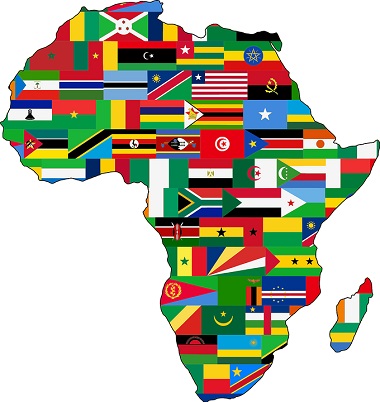
    The AU is a 55-nation pan-continental, intergovernmental organization which was officially launched in July 2002. The AU has a population of just over 1 billion. Its secretariat is in Addis Ababa, Ethiopia. The AU has launched Agenda 2063, an ambitious plan to transform the continent into a global powerhouse. There are currently eight regional economic communities considered ‘building blocks’ of the AU, and diaspora relations are also integral to the AU.

    Both CARICOM and the AU are intergovernmental organisations which encompass post-colonial States with cultural and linguistic differences, facing a myriad of challenges and varying levels of development. Both are in the process of wide-scale regional integration projects. CARICOM, for instance, is in the process of trying to consolidate its CSME. The African Continental Free Trade Agreement (AfCFTA), which was signed in March 2018 and currently has 54 signatories, seeks to create a seamless pan-African economic space. The AfCFTA came into effect in May 2019 and the process has started for the Agreement’s operationalization.

    There are, of course, differences between the two regions which may impact on the policy and negotiating positions taken in multilateral fora. For example, most CARICOM countries are services-based (mainly tourism and/or financial services) economies, with the exception of Belize, Guyana, Suriname and Trinidad & Tobago where commodities trade is important. In the mostly resource-rich African countries, however, commodities trade is king. Most Caribbean countries are Small Island Developing States (SIDS), while those in the AU include mainly landlocked and coastal continental States. The only six AU SIDS are Comoros, Guinea Bissau, Mauritius, Sao Tome e Principe and Seychelles. Moreover, 33 of the 55-member AU are classified by the United Nations (UN) as Least Developed Countries (LDCs), while Haiti is the only LDC in CARICOM.

    Despite these differences, which should not be overlooked, I believe the prospects for CARICOM/AU collaboration and engagement are very promising. Both regions can learn from each other as they seek to deepen their integration projects. There is also scope for closer Caribbean/Africa multilateral collaboration on issues of mutual interest, such as confronting the growing threat of unilateralism and protectionism; the achievement of the United Nations’ 2030 Agenda and its 17 Sustainable Development Goals (SDGs) and their targets; de-risking by global banks; climate change; reform of the World Trade Organisation (WTO); securing reparations, to name a few. Intra-regional cooperation prospects are also promising in many areas such as agriculture, education, the creative industries, renewable energy, medicine/health, the blue and green economies, sports, information and communications technology (ICTs), for example.

    Moreover, Barbados’ upcoming co-hosting of the UNCTAD 15 Quadrennial in October 2020 provides further prospects for collaboration on important multilateral trade and development issues. It is interesting to note that UNCTAD 14 was held in Nairobi, Kenya so there is the opportunity for Kenya to share with Barbados its experience in the successful hosting of the UNCTAD 14.

    Plans for Deepening CARICOM/AU ties  

    A press release issued by the CARICOM Secretariat noted that CARICOM Secretary General Ambassador Irwin LaRocque and Deputy Chair of the African Union Commission (AUC), His Excellency Kwesi Quartey, discussed the need for continued ACP solidarity in the on-going negotiations for the Post-Cotonou Agreement with the European Union (EU) and agreed to explore collaboration on multilateral areas of concern, such as climate change.

    The CARICOM press release further noted that the two leaders “took the opportunity to consider some of the areas in which their two organisations could work together including the formalisation of an institutional relationship between CARICOM and the AU to promote cooperation and to strengthen the deep bond of friendship between Africa and the Caribbean.”

    Moreover, St. Lucia Times has quoted St. Lucian Prime Minister, the Hon. Allen Chastanet, as stating that there will be a planned CARICOM and the AU Summit and the signature of a Memorandum of Understanding establishing a framework for engagement and cooperation. Prime Minister Chastanet is further quoted by this news agency as stating that “Barbados and Suriname will partner in establishing an Embassy in Ghana, while Barbados and Saint Lucia will partner in establishing an Embassy in Kenya.”

    During President Kenyatta’s visit, Barbados and Kenya have also committed to negotiating a Double Taxation Agreement and Bilateral Investment Treaty with each other, and discussed collaboration in areas such as ICTs, renewable energy, sports, the blue economy, health, education and air services. Kenya has also sought the Caribbean’s support in its bid for a seat on the UN Security Council.

    While this high-level political commitment to greater Caribbean-African engagement is needed and commendable, it is firm to firm, university to university and people to people collaboration which will transform deeper Caribbean-African relations from an aspiration to reality. An important step, therefore, will also be formalizing relations between private sector organisations, business support organizations, investment promotion agencies, universities and tourism boards in the Caribbean and Africa in order to promote Caribbean-Africa trade and investment in both traditional and emerging sectors, research and tourism. On this note, it was welcomed news that there will be commencement of engagement between the private sectors of Barbados and Kenya, as well as deeper university collaboration.

    Alicia Nicholls, B.Sc., M.Sc., LL.B., is an international trade and development consultant with a keen interest in sustainable development, international law and trade. You can also read more of her commentaries and follow her on Twitter @LicyLaw.

    DISCLAIMER: All views expressed herein are her personal views and do not necessarily reflect the views of any institution or entity with which she may be affiliated from time to time.

  • CARICOM Heads adopt St. Johns Declaration to address plastic pollution in Caribbean Sea

    CARICOM Heads adopt St. Johns Declaration to address plastic pollution in Caribbean Sea

    Alicia Nicholls

    Caribbean Community (CARICOM) Heads of Government this week adopted a Declaration aimed at addressing the high levels of plastics and microplastics in the Caribbean Sea and their adverse impact on Caribbean sustainable development.

    The St. John’s Declaration was signed and launched by the Government of Antigua and Barbuda at the Play it Out Concert hosted by Antigua and sponsored by Norway. It is part of the United Nations General Assembly (UNGA) President Maria Espinosa’s global call to action for Governments against plastic pollution and single-use plastics launched in December 2018. The Declaration was subsequently adopted by CARICOM Heads of Government during their 40th session held in St. Lucia July 3-5, 2019.

    Why is the St. John’s Declaration important?

    The Caribbean Sea is of tremendous economic, social and ecological value to the countries washed by its shores. A World Bank Study estimates that “in 2017, the insular Caribbean’s gross revenues from marine and coastal tourism alone totaled an estimated US$57 billion”. This same study cites pollution as one of the biggest threats to the Caribbean marine environment.

    Indeed, the World Bank study notes that “marine litter is accumulating in the Caribbean Sea, originating both in the region as well as distant countries overseas through the ocean currents” and that “studies have… found as many as 200,000 pieces of plastic per square kilometer in the northeastern Caribbean”.

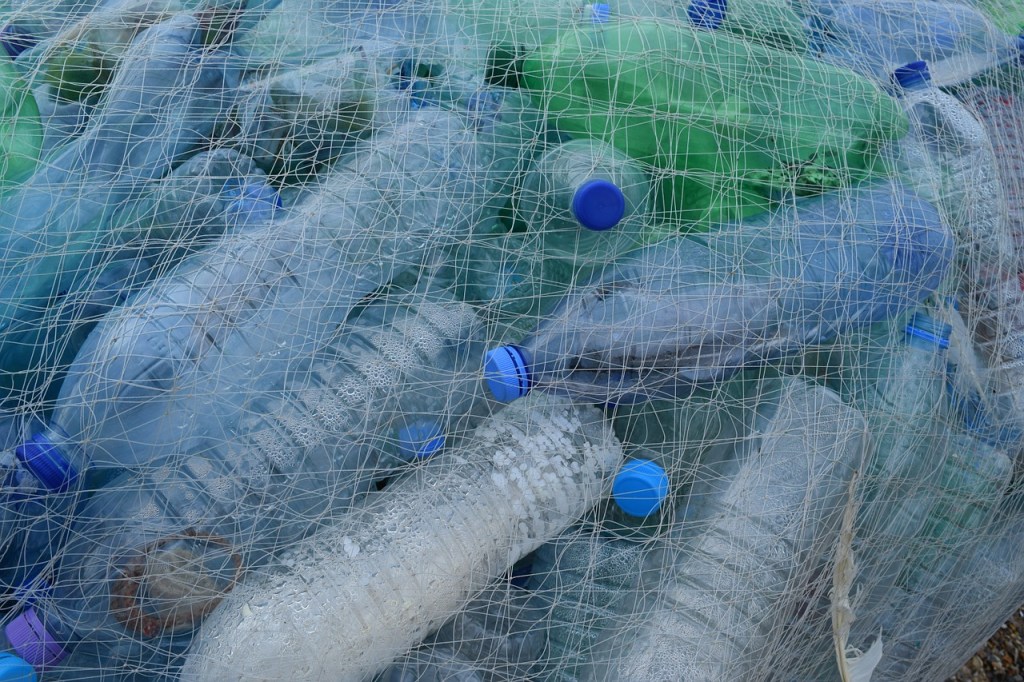
    According to the World Bank Report, “up to 80 per cent of the litter found in our oceans is made of plastic”. It further states that “Caribbean data from beach and coastal clean-ups in 2017 indicate that plastic beverage bottles alone amount to 21 percent of the items recorded.”

    These plastics are dangerous because they take many years to degrade, remaining blights on the marine and land-based environment and death traps for marine life. According to Ocean Crusaders, “100,000 marine creatures a year die from plastic entanglement” and approximately 1 million sea birds also die from plastic. This of course has implications for human health and food security.

    Twelve CARICOM Member States have to varying extents passed legislation to implement full or partial bans on the use of single use plastics and styrofoam products. However, the region has fallen short of a region-wide plastics ban. CARICOM’s adoption of the St. Johns Declaration is a good step towards showing our leadership’s commitment towards addressing the serious threat marine litter poses to our sustainable development.

    Key Elements of the Declaration

    The St. Johns Declaration encourages CARICOM Member States that have not yet done so to introduce measures to reduce and/or eliminate the use of single use plastics. It also commits to addressing the damage to our ecosystems caused by plastics by 2030 and to work with the private sector to “find affordable, sustainable and environmentally friendly alternatives”.

    The Declaration recognizes that effective implementation of these actions “requires enabling and coherent policy, legislative and regulatory frameworks, good governance and effective enforcement at the global, regional, national and local levels”. They also “encourage development partners and the private sector to contribute financial and technical assistance, capacity-building initiatives”.

    Marine litter is not just a Caribbean issue, but a global one. Firstly, plastic pollution in the Caribbean Sea comes not just from Caribbean countries, but from other countries, particularly in the North. Secondly, other oceans globally also face a similar threat.

    There has been some global action on the issue of marine litter. Goal 14 of the UN Agenda 2030 and its 17 Sustainable Development Goals is to “conserve and sustainably use the oceans, seas and marine resources for sustainable development’. More specifically, one of its targets is “to reduce significantly all forms of marine pollution by 2025”. There are also several United Nations resolutions, including resolution 4/7 on ‘Marine Litter and Microplastics’.

    Recently, the Association of Southeast Asian Nations (ASEAN) adopted the Bangkok Declaration on Combating Marine Debris in the ASEAN Region in June 2019. The St. Johns Declaration encourages other regional and sub regional groups of countries “to take similar measures to eliminate discharge of plastic litter and microplastics to wells, rivers, seas and oceans”.

    Given the magnitude of the threat of marine litter, and in particular, plastics pollution, global action still falls far short of what it should be. As such, the St. Johns Declaration calls for the urgent need for a global agreement to address plastics and microplastic pollution.

    Our CARICOM leaders’ adoption of the St. John’s Declaration is a good step, but this is just the beginning. It must be translated into concrete action. For instance, getting countries which have not yet done so to implement bans on single use plastics and styrofoam products. This requires not just strong enforcement of the bans, but widespread public service campaigns educating businesses and the general public on the impact plastics have on the marine environment, and consequent implications for human health and food security. As several countries around the world, including some Caribbean countries, have implemented bans, there is scope for learning from these countries’ experiences in order to formulate best practices.

    The full text of the Declaration of St. John’s is attached the Communique of the Conference of Heads of Government 40th Session which may be read here.

    Alicia Nicholls, B.Sc., M.Sc., LL.B., is an international trade and development consultant with a keen interest in sustainable development, international law and trade. You can also read more of her commentaries and follow her on Twitter @LicyLaw.

    DISCLAIMER: All views expressed herein are her personal views and do not necessarily reflect the views of any institution or entity with which she may be affiliated from time to time.

  • Prospects for deepening Caribbean-Africa Trade and Economic ties

    Prospects for deepening Caribbean-Africa Trade and Economic ties

    Caribbean and African countries share an extensive history forged from the scars of the egregious 300-year long Trans-Atlantic slave trade, the abuses of colonialism and the anti-colonial/independence struggle. As such, Africa’s imprint on the Caribbean is not just phenotypical, but its unmistakable genetic markers course through many of the rhythms, music and culinary delights which characterise the Caribbean cultural DNA.  

    Last week, President of Ghana, His Excellency Nana Akufo-Addo, visited five Caribbean countries: Barbados, Guyana, St Vincent and the Grenadines, Trinidad and Tobago, and Jamaica. Aiming to build on the shared historical and cultural ties between his continent and the Caribbean, President Akufo-Addo took the opportunity to sign bilateral cooperation agreements with these countries and to encourage Afro-Caribbean descendants to take part in Ghana’s Year of Return which marks 400 years since the commencement of the Trans-Atlantic slave trade which officially ended in the early nineteenth century.

    President Akufo-Addo’s visit presents an opportune occasion to consider the prospects for deepening Caribbean-African trade and economic ties, particularly in light of the recent entry into force of the African Continental Free Trade Area (AfCFTA) which will transform 52 out of 55 African countries into the world’s largest free trade area.

    Current Caribbean-Africa trade

    The Caribbean Community (CARICOM) comprises 15 Member States and territories in the Caribbean. Africa is one of the few trading partners with which the region enjoys a trade surplus. According to data from ITC Trade Map, CARICOM countries exported US$449 million worth in goods to Africa in 2017, representing 2.6% of CARICOM’s total exports to the world. Whereas, the region imported US$258 million worth of goods from the continent in that same year. Africa’s exports to CARICOM represented a mere 0.06% of its total world exports in 2017.

    On an international relations front, CARICOM countries and many African countries are both members of the Africa, Caribbean, Pacific (ACP) grouping and the Commonwealth of Nations and cooperate in multilateral fora, such as the World Trade Organisation and the United Nations. While CARICOM currently does not have a free trade agreement with any African country, some individual CARICOM Member States have bilateral investment treaties (BITs) and double taxation agreements (DTAs) with individual African States, not all of which are in force.

    Tourism between Africa and the Caribbean remains underdeveloped due to the lack of direct air links. Getting to Africa from the Caribbean or vice versa requires going through a major international gateway, usually London or New York City.

    Prospects for deepening Caribbean-Africa trade

    There are several developments which are promising for an expansion of Caribbean-Africa trade.

    1. Caribbean push for export partner diversification

    Caribbean countries have stepped up their attempts to diversify their export partners, particularly through promoting south-south trade. Thus far, among CARICOM Member States, Guyana, Haiti, Jamaica, Trinidad & Tobago and Suriname have a diplomatic mission in at least one African country. Barbados may soon join that list after announcing an intention to establish an embassy in Ghana by the end of 2019.

    Maintaining a diplomatic presence is often a costly exercise for small resource-constrained countries. Establishing a joint diplomatic mission in strategic African capitals, similar to what the Organization of Eastern Caribbean States (OECS) has done in key international capitals, is something CARICOM may wish to consider. Trade and investment liaisons could be attached to the missions to assist in promoting business and investment. Since it is firms which trade and not countries, building linkages between chambers of commerce and investment promotion agencies in the Caribbean and African countries would also be key.

    • Africa is on the rise

    Africa is home to some of the world’s fastest growing economies and according to the United Nations (UN), the world’s youngest population, comprising one fifth of the global youth population (aged 15-24). Despite challenges related to unemployment, Africa’s youth has the potential to unleash positive change and are an asset in a rapidly digitalizing global economy. The perceived lack of opportunities for youth in Africa may be the Caribbean’s gain leading to the export of high skilled services. Ghana, for example, which has a surplus of nurses, has agreed to assist Barbados with its nurses shortage. Indeed, there is already a small but growing ‘recent’ African diaspora in many Caribbean countries making sterling contributions in diverse fields, such as education, medicine, law and the like. There are also prospects for Caribbean-Africa trade and economic cooperation and sharing of expertise, particularly in the areas of education, renewable energy and health. Deepening and expanding links between universities in the Caribbean and those in African countries would allow for student and faculty exchanges.

    •  Increased Caribbean-African awareness

    Caribbean people are becoming better aware of the continent through for example, Nollywood/Gollywood movies, African music, traditional African dance and the Africa Channel broadcast in the US and the Caribbean. The potential exists for collaboration in the creative industries, particularly in film production, dance, the visual arts and music. Caribbean musical genres such as reggae, dancehall and soca are becoming quite popular in some African cities. For instance, renowned Nigerian artiste Timaya and famous Trinibagonian soca artiste Machel Montano have collaborated on several songs.

    In the area of tourism, Caribbean persons of African descent are increasingly interested in travelling to West African countries like Ghana, from which the majority of persons enslaved during the Trans-Atlantic slave trade were derived, in order to trace their ancestral roots and explore the Motherland.

    Barbados recently announced visa waivers for several African countries, including Ghana, which would facilitate greater tourism and investment. The lack of direct air or modern day sea links between the Caribbean and the African continent is a challenge. It is therefore refreshing to hear the current Barbados Prime Minister speak to the possibility of negotiating an air services agreement with Ghana. President Adufo-Addo and Prime Minister Mottley also spoke of Barbados being a gateway for Africa-Caribbean trade. Barbados, because of its location as the most easterly island in the Eastern Caribbean, was one of the first stops in the Trans-Alantic Slave Trade, the island would geographically make a logical hub for any direct Caribbean-Africa air links.

    • AfCFTA – a single African market

    At a time when some major world powers are retreating to protectionism and isolationism, all but three countries on the African continent (except Benin, Eritrea and Nigeria) have formed a continental-wide single market, a step towards a continental customs union.

    The AfCFTA was signed in March 2018 and entered into force on May 30, 2019, thirty days after The Gambia became the 22nd country to sign. It represents the world’s largest free trade agreement with a collective GDP of $2.5 trillion and a population of 1.2 billion people. The AfCFTA will eliminate tariffs on 90% of goods trade within the countries party to it. Once implemented, the AfCFTA is estimated to boost intra-African trade (which currently remains less than 20% of total African trade), promote economies of scale, industrialization, improve the competitiveness of African companies and lead to wider welfare and income gains.  

    While there is still much unfinished work to be done, as well as political, legal and regulatory hurdles to overcome before the ambitious agreement can be rendered operational, some of the potential benefits of the AfCFTA are apparent. Firstly, it aims to transform what is currently a disjointed and fragmented grouping of disparate regional markets and spaces with a maze of regulatory and legal barriers into one single continental market, making for a potentially more appealing and navigable market for investors. A company which establishes in one African State would not have to navigate a perplexing labyrinth of complicated rules of origin, regulations and other non-tariff barriers in order to trade across the continent.

    Secondly, the vast African continent currently has several regional economic groupings based primarily on geographic region and with varying levels of integration. Though these groupings are not replaced by the AfCFTA, the AfCFTA means that CARICOM and other third parties seeking to secure a free trade agreement with Africa could negotiate with one grouping as opposed to several.

    Thirdly, the AfCFTA and the Protocol on the Free Movement of Persons are potentially welcomed news for third parties seeking to establish a business in Africa as it could make sourcing inputs and hiring staff from other parts of the continent easier and much cheaper.  

    Additionally, both Africa and the Caribbean, which each comprise countries separated by language and geography, are in the midst of creating regional integration movements. CARICOM, and in particular the OECS sub-grouping which has evolved into a deeply integrated sub-region, can share its own experience as it seeks to consolidate its own CARICOM Single Market and Economy (CSME). It can also learn from any successes of the AfCFTA.

    In summary, Caribbean-Africa trade is small but there is potential for growth given Caribbean countries’ export partner diversification efforts, Africa’s economic rise and increased Caribbean-African cultural awareness. Additionally, the single African market contemplated by the AfCFTA is an exciting development which makes the prospects all the more alluring for deepened Caribbean-Africa trade based on a shared history, friendship and the potential for mutual benefit.

    Alicia Nicholls, B.Sc., M.Sc., LL.B., is an international trade and development consultant with a keen interest in sustainable development, international law and trade. You can also read more of her commentaries and follow her on Twitter @LicyLaw.

    DISCLAIMER: All views expressed herein are her personal views and do not necessarily reflect the views of any institution or entity with which she may be affiliated from time to time.