
Category: CARICOM

  • Caribbean Trade & Development Digest – June 9-15, 2019

    Caribbean Trade & Development Digest – June 9-15, 2019

    Welcome to the Caribbean Trade & Development News Digest for the week of June 9-15, 2019! We are happy to bring you the major trade and development headlines and analysis from across the Caribbean Region and the world from the past week.

    THIS WEEK’S TRADE HIGHLIGHTS

    UNCTAD released its World Investment Report 2019 noting that “global foreign direct investment (FDI) flows slid by 13% in 2018, to US$1.3 trillion from $1.5 trillion the previous year – the third consecutive annual decline”. Read the World Investment Report 2019.

    G20 Trade and Digital Economy Ministers for the first time met together. Read the Ministerial statement here.

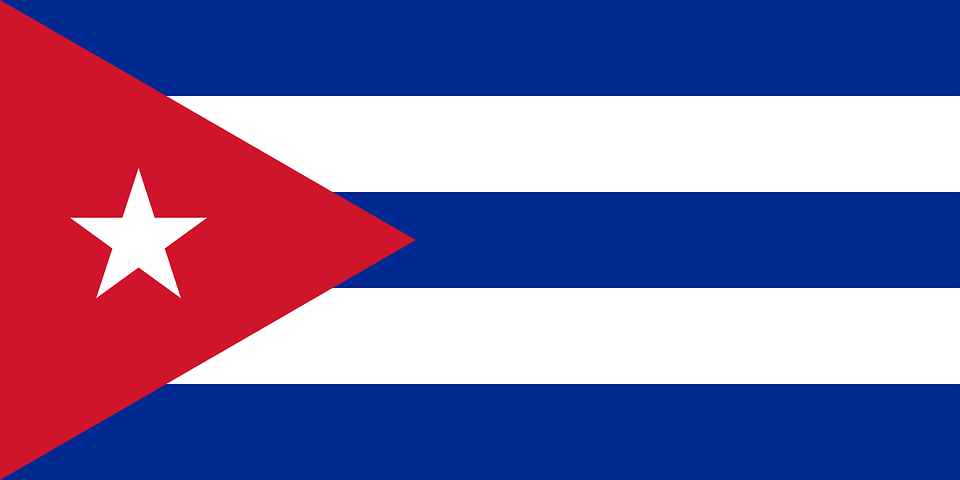
    CARICOM Ministers of Foreign Affairs of the Caribbean Community (CARICOM) and the Republic of Cuba, met in Georgetown, Guyana, on June 14th, 2019, on the occasion of the Sixth CARICOM-Cuba Ministerial Meeting. Read the Declaration here.

    REGIONAL NEWS

    Joint Communique: Barbados and Ghana

    Nation News: The following Joint Communiqué was issued on the occasion of the Official Visit to Barbados by Nana Akufo-Addo, President of the Republic of Ghana.President of the Republic of Ghana, His Excellency Nana Akufo-Addo, paid an official visit to Barbados from June 14 to 15, 2019, during which he held talks with Prime Minister Mia Amor Mottley. Read more

    Ghana to help Barbados with nurses soon

    Nation News: Barbados’ acute nursing shortage could soon be a thing of the past.Thanks to the government of the Republic of Ghana, the island should soon have more than enough registered nurses to fill the void that has been a bugbear for the medical health sector for decades. Read more

    CARICOM reaffirms great value of relations with Cuba

    CARICOM Today: Even as the Caribbean Community (CARICOM) on Friday reaffirmed the great value it attaches to ties with Cuba, it reiterated its call for an immediate and unconditional end to the economic, commercial and financial embargo imposed by the United States on Cuba. Read here

    Gov’t Taking Action to Mitigate Climate Change Impacts

    JIS: Foreign Affairs and Foreign Trade Minister, Senator the Hon. Kamina Johnson Smith, says the Government is taking steps to reduce and manage the effects of climate change across all sectors through national and international partnerships. Read more

    Norway to fund mega solar farms in Guyana

    Amsterdam News: Norway’s government has approved grant aid worth $80 million to help the largest Caribbean Community nation build a number of mega solar farms to provide energy to several communities located near the jungle close to the borders with Venezuela and Brazil, officials have said. Read more

    Caribbean women entrepreneurs export ready

    MENAFM: Nineteen Caribbean female entrepreneurs have completed the WE-Xport programme, an initiative geared at helping them to start exporting or to increase exports of their products and services. Read more

    Pushing exports

    Barbados Advocate: WITH Barbados’ goods exports languishing in the region of Bds$510 million over the last two years, there is a concerted effort by the current administration to push exports to help grow the economy. Read more

    Ghana to help Guyana’s energy sector

    Demerara Waves: Ghana’s President, Nana Akufo-Addo has agreed that his country would help Guyana’s energy sector, Director-General of the Ministry of the Presidency, Joseph Harmon said. Read more

    12,000 Pounds of Mangoes Exported from Jamaica to US

    JIS: Twelve thousand pounds of mangoes were exported on Thursday (June 13) to the United States (US).The mangoes – ‘Julie’ and ‘East Indian’ – were the first set to be exported to the US in 20 years. Read more

    Jamaica Dealers Object To New Directive To Sanitise Imported Autos

    Jamaica Gleaner: The Jamaica Used Car Dealers’ Association, JUCDA, says it is strongly opposed to a new directive by the Trade Board for importers of used motor vehicles to pay a Jamaica government agent based in Japan to sanitise each auto at a cost of up to US$150 before they are shipped. Read more

    INTERNATIONAL NEWS

    India is hitting the United States with more tariffs

    CNN: India just increased tariffs on US exports, dealing another blow to fragile global trade. Read more

    Trade tensions boosted international role of euro, ECB reports

    Euractiv: Trade tensions, challenges to multilateralism and unilateral sanctions might be bad for the economy but they have helped boost the global use of the euro, the European Central Bank reported on Thursday (13 June). Read more

    Europe wants to replenish UN Green Climate Fund

    Euractiv: EU member states want to replenish a UN fund aimed at supporting developing nations cut carbon emissions and adapt to climate change, according to draft conclusions from next week’s EU summit. Read more

    Indian, Chinese officials hold dialogue to break deadlock in RCEP trade negotiations

    Hindu Business Line: In a renewed attempt to break the stalemate in the ongoing Regional Comprehensive Economic Partnership (RCEP) negotiations involving 16 countries, senior officials from India and China met in New Delhi this week to try and reach a common ground on market opening commitments. Read more

    13 RCEP nations oppose India’s strict country of origin norms

    Economic Times: India wants strict rules of origin to prevent Chinese goods from flooding the country through member countries that may have lower or no duty levels. Read more

    Trade Policy Review: Canada

    WTO: The eleventh review of the trade policies and practices of Canada took place on 12 and 14 June 2019. The basis for the review is a report by the WTO Secretariat and a report by the Government of Canada. Read more

    Egypt’s exports to Africa rise $4.7B in 2018

    Egypt Today: Egypt’s exports to the African continent are expected to reach $4.7 billion in 2018, compared to$3.6 billion in 2017, with an increase of 30 percent, according to the Commercial Representative Office. Read more

    China issues new guidelines for its commercial space sector

    China Knowledge: China has introduced its first guidelines to regulate its commercial space sector in order to guide the health development of commercial space rockets manufacturing and test flights. Read more

    Customs fraud is thriving thanks to Trump’s trade war

    The Hill: As one would expect, and as Trump intended, the value of U.S. imports from China has dropped off considerably. But what may not have been anticipated is the growth in imports from other countries or, for that matter, the increased incentive to commit customs fraud. Read more

    Public Hearings on Proposed Section 301 Tariff List

    USTR: The Office of the U.S. Trade Representative (USTR) will hold public hearings from June 17 to June 21, 2019 and, the following week, from June 24 to June 25, 2019, regarding proposed tariffs on approximately $300 billion worth of Chinese products. Read more

    Rare earths give China leverage in the trade war, at a cost

    Economist: If China cuts off exports, it would hurt America but also undermine its own long-term economic goals. Read more

    No hope of avoiding tariffs in ‘no deal’ Brexit – EU’s Malmstrom

    Reuters: Supporters of Brexit are “completely wrong” if they think recourse to an obscure trade rule will stop tariffs springing up overnight if Britain leaves the European Union without a deal, EU Trade Commissioner Cecilia Malmstrom said on Friday. Read more

    Brazil asks for WTO investigation of Indonesia on poultry trade

    CNA: The Brazilian government has formally asked the World Trade Organization (WTO) to open a panel to investigate Indonesian policies on Brazil’s poultry exports, the Agriculture Ministry said on Friday. Read more

    Liam Fox warns WTO is ‘in crisis’ as businesses told to brace for no-deal Brexit

    Telegraph: The US-China trade war, industrial strife and political deadlock all threaten to overwhelm the World Trade Organization, putting the future of the institution and the system of free trade in mortal danger, Liam Fox has warned. Read more

    UK signs post-Brexit free trade deal with South Korea

    BBC: The UK and South Korea have signed an outline free trade agreement (FTA) that seeks to maintain existing trade arrangements post-Brexit. Read more

    Taiwanese companies hit by US-China trade war lured back home by Taipei

    South China Morning Post: ‘Invest Taiwan’ offers low-cost loans, help finding workers and even rent-free accommodation for firms struggling to make a profit on the Chinese mainland. Read more

    Representatives from India and Latin America Call for More Trade

    Prensa Latina: Options for enhanced economic cooperation in India and Latin America were discussed by diplomats from that region and officials of the Indian Government, banking entities and the National Federation of Chambers of Commerce and Industry. Read more

    China ready for trade talks with East Africa bloc: ambassador to Kenya

    Reuters: China is ready to negotiate a trade deal with the six-nation East Africa Community (EAC) to address Kenya’s complaints about a huge trade imbalance in favor of the Asian economic giant, China’s ambassador to Nairobi told Reuters. Read more

    EU: No strategy yet if China halts critical exports in U.S. trade war

    Reuters: The European Union on Thursday said it had no clear strategy on how to ensure continued supplies of critical raw materials if China, the world’s leading supplier of rare earth minerals, used such exports as leverage in the escalating U.S.-China trade war. Read more

    EU asks for formal consultations with Southern African Customs Union on trade in poultry

    EU: Today, the EU requested formal consultations – a first step in a dispute settlement process – with the Southern African Customs Union (SACU) over safeguard measures affecting imports of frozen chicken cuts from the EU. Read more

    No trade action against India as of now: USTR

    The Hindu: The office of the United States Trade Representative (USTR) said it had no announcement of a trade action at the moment but continued to raise market access concerns with India, reacting to media reports last week that the U.S. was considering launching a 301 probe against India. Read more

    U.S. Asks WTO to Temporarily Pause Its IP Dispute With China

    Bloomberg: The U.S. asked the World Trade Organization to suspend its dispute over China’s intellectual property practices for six months, according to a notice published Friday on the WTO website. Read more

    PM Modi slams protectionist, unilateral trade moves

    Economic Times: Prime Minister Narendra Modi on Friday criticised unilateral and protectionist decisions in trade, seeking instead a rules-based, anti-discriminatory and WTO-led inclusive system that would address the needs and aspirations of stakeholders globally. Read more

    Australian rare earth miners push development deals to counter China grip

    Reuters: Rare earth developers in Australia say they are edging closer to signing deals with new customers that would drive forward their projects amid mounting global supply concerns over the minerals that are crucial to high-tech industries. Read more

    WTO NEWS

    NEW ON CTLD BLOG

    The Caribbean Trade & Development Digest is a weekly trade news digest published by the Caribbean Trade Law & Development Blog. Liked this issue? To read past issues, please visit here. To receive these mailings directly to your inbox, please subscribe to our Blog below:

  • CARICOM and Cuba reiterate solidarity and cooperation at Sixth Ministerial Meeting

    CARICOM and Cuba reiterate solidarity and cooperation at Sixth Ministerial Meeting

    Alicia Nicholls

    Foreign Ministers from Caribbean Community (CARICOM) Member States and the Republic of Cuba held their Sixth CARICOM-Cuba Ministerial on June 14, 2019 in Guyana. Agenda items for the one-day meeting included: climate change, the 2030 Agenda for Sustainable Development, the impact of natural disasters on development, security and hemispheric developments.

    CARICOM countries and Cuba share a long friendship reinforced by cooperation in a myriad of areas, including trade, sport, agriculture, culture, education and health. For example, many Caribbean students have benefited from scholarships offered by the Cuban government to study at Cuban universities. Cuba and CARICOM also have a Trade and Economic Cooperation Agreement (TECA) signed in July 2000.

    In his remarks at the Opening Ceremony of the meeting, CARICOM Secretary General Ambassador Irwin Larocque reiterated that CARICOM and Cuba “have forged a deep and meaningful relationship based on solidarity and cooperation”. He further praised “Cuba’s contribution to the Community’s human resource development, its health sector, agriculture and in the area of sports and culture has been of major significance to our Member States”. Specifically on the area of trade, Ambassador Larocque highlighted the Second Protocol to the TECA with Cuba signed in November 2017 which expanded preferential access to both Parties.

    The current US Administration has sought to tighten sanctions on Cuba, a sharp reversal of the rapprochement which had occurred under the administration of former US President Barack Obama, in order to pressure regime change in Cuba and to stop its support for Venezuelan President Nicolas Maduro. Recent US aggression includes, for example, the enforcement of Title III of the Helms-Burton Act and banning cruise ships to Cuba.

    Ambassador Larocque noted that “the Community reiterates its call for an immediate and unconditional end to the economic, commercial and financial embargo imposed by the Government of the United States of America against Cuba”. He further stated that “CARICOM also rejects, especially the unilateral and extraterritorial nature of these actions”.

    In his address (text in Spanish), Cuba Foreign Minister Bruno Rodriguez Parilla expressed gratitude on behalf of the Cuban government, noting that “we feel that we have a permanent debt of gratitude to CARICOM for its historic and brotherly support for Cuba”. He further observed that Cuba and CARICOM “share a common history and similar challenges” and reiterated Cuba’s commitment to share its “modest successes with the Caribbean”. He also revealed that only a few weeks ago, Cuba unveiled a monument in memory of Caribbean National Heroes in a park in the Havana city centre as a symbol of friendship and Cuban recognition of the men and women who turned this group of countries into a “worthy community and independent foreign policy”.

    At the end of their meeting, the Ministers released a declaration. The main parts which speak specifically to trade are at paragraphs 7-9:

    In this regard, we reaffirm our commitment to continue promoting the implementation of projects to improve air and sea ports, infrastructure and connectivity between our countries and broaden our economic and trade relations through the implementation of the Revised Trade and Economic Cooperation Agreement between CARICOM and Cuba;

    Commit to complete the required internal legal procedures with a view to giving effect to the Second Protocol to the Agreement on Trade and Economic Cooperation, which will contribute to the strengthening of trade relations;

    Reiterate the importance of trade for the Region’s sustainable development and reaffirm the necessity of appropriate policy space and special and differential treatment for small vulnerable economies like those in the Caribbean. In that context, we welcome the hosting by Barbados of UNCTAD XV in October 2020, which will be the first time that an UNCTAD quadrennial conference has been held in a Caribbean country;

    The full Declaration may be read here.

    Alicia Nicholls, B.Sc., M.Sc., LL.B., is an international trade and development consultant with a keen interest in sustainable development, international law and trade. You can also read more of her commentaries and follow her on Twitter @LicyLaw.

    DISCLAIMER: All views expressed herein are her personal views and do not necessarily reflect the views of any institution or entity with which she may be affiliated from time to time.

  • Caribbean Trade & Development Digest – April 21-27, 2019

    Caribbean Trade & Development Digest – April 21-27, 2019

    Welcome to the Caribbean Trade & Development Digest for the week of April 21-27, 2019! We are happy to bring you the major trade and development headlines and analysis from across the Caribbean Region and the world from the past week.


    THIS WEEK’S HIGHLIGHTS

    This week, Caribbean representatives were among 5,000 delegates from around the world who attended the Second Belt and Road Forum for International Cooperation in Beijing April 25-27, 2019. The key note speech delivered by President Xi Xinping of China may be viewed here, while the Joint Communique of the Leaders’ Roundtable may be accessed here.


    REGIONAL NEWS

    Jamaica’s annual exports up by one-third

    Jamaica Gleaner: Jamaican exports grew by nearly 38 per cent last year, a pace that was nearly four times faster than the rise in imports. Read more 

    EU blacklisting causing irreparable harm to Caribbean says St Kitts-Nevis foreign minister

    Caribbean News Now: St Kitts and Nevis wasn’t blacklisted by the European Union in a revised blacklist for tax havens outside the EU last month; however, that hasn’t stopped foreign affairs minister Mark Brantley denouncing what he considers unfair targeting of Caribbean countries. Read more

    Closer EU-Caribbean ties mean greater prosperity for all

    EU Observer: This month ministers and officials from across the Caribbean assembled in Jamaica to discuss the future of our collective relationship with the European Union. This was the latest in a series of forums that have taken place in the past eighteen months, all with the aim of working toward a bolstered agreement that will further integrate our political and economic interests. Read more 

    Renewable energy is making its way into Guyana’s agriculture sector

    IICA: A pilot project by the Inter-American Institute for Cooperation on Agriculture (IICA), the Organization of American States (OAS), and the state-owned company, Guyana Power & Light Inc., will promote the adoption of renewable energy in the Guyanese agriculture sector. The project will unfold in the final six months of 2019. Read more 

    China says Latin America and Caribbean will benefit significantly under BRI

    Jamaica Observer: China’s Ambassador to Dominica Lu Kun says his country’s Belt and Road Initiative (BRI) will bring tangible benefits to Latin America and the Caribbean (LAC). Read more 

    Ghana and Suriname sign four agreements

    Government of Ghana: Ghana and Suriname on Tuesday signed four separate agreements as part of efforts to strengthen the bilateral relations between the two nations. Read more 

    ITFC signs 6 trade deals worth over $1.1bn, including with Suriname

    Trade Arabia: ITFC’s framework agreement with the Republic of Suriname will see it mobilize up to $75 million financing for SME’s, exports and lines of finance to local banks, in addition to a Murabaha agreement over three years to boost the import of essential goods. Read more 

    King Sugar takes a break as Belize exports fall sharply

    Breaking Belize News: Belize’s number one export is grinding into high gear for the end of the season in May and June. But in March it counted for just under three million of Belize’s almost $26 million in exports, representing a slash by more than half of March 2018’s total. Read more 

    China and the Caribbean’s future 

    CGTN: China’s highly anticipated second Belt and Road International Cooperation Forum (BRF) wrapped up on April 27. Initially not including Caribbean nations, the country’s signature policy has gained increasing momentum in the region since 2017. So far, several Caribbean countries, such as Barbados, Jamaica, Dominica and Grenada, etc., have signed up to the initiative, which provides a useful context for offering some reflections on the place of China in the future development of the independent states of the English-speaking Caribbean. Read more 

    COTED officials hold preparatory meeting

    CARICOM: Work in preparation for the Forty-Sixth Ministerial Meeting of the Council for Trade and Economic Development (COTED) began on Thursday. Read more

    CARICOM leaders to meet in Trinidad next week

    CARICOM: Caribbean Community (CARICOM) leaders will meet in Trinidad and Tobago early next month to discuss security issues within the 15-member regional integration movement. Read more 

    Future EU-Caribbean Relations in New ACP-EU Partnership

    ACP: As the EU is working to modernise its relations with 79 countries in Africa, the Caribbean and the Pacific (ACP), the two groups’ chief negotiators Neven Mimica and Robert Dussey met with ACP Caribbean leaders for a dedicated dialogue on the regional EU-Caribbean pillar in the framework of the post Cotonou ACP-EU partnership. Read more 


    INTERNATIONAL NEWS

    Eswatini walking tightrope to become Africa’s trade hub

    Yeni Safak: The Kingdom of Eswatini in Southern Africa is walking a tightrope in its bid to become Africa’s trade hub and is competing against some of the continent’s biggest economies to win hosting rights for the African Continental Free Trade Area (AfCFTA) Secretariat. Read more 

    AfDB signs $50m agreement with Natixis to boost trade finance in Africa

    Ghanaweb: The African Development Bank (AfDB) has signed a $50 million risk participation agreement (APR) with investment and corporate bank Natixis. Read more 

    EU and Japan in delicate trade talks

    EU Observer: Top EU officials will meet Japanese prime minister Shinzo Abe on Thursday (25 April) in Brussels as world leaders prepare for their G20 meeting in June in Osaka, Japan. Read more 

    USTR Releases Annual Special 301 Report on Intellectual Property Protection and Review of Notorious Markets for Piracy and Counterfeiting

    USTR: The Office of the United States Trade Representative today released its annual Special 301 Report on the adequacy and effectiveness of trading partners’ protection of intellectual property rights and the findings of its Notorious Markets List, which highlights online and physical markets that reportedly engage in and facilitate substantial copyright piracy and trademark counterfeiting. Read more 

    Turkey-Africa trade volume totals $179 billion in last decade

    Daily Sabah: Turkey’s improving relations with African countries have also been reflected in the growing trade volume. Between 2009 and 2018, bilateral trade volume between Turkey and the African continent stood at $179 billion. Read more 

    P&O sues over £33m Eurotunnel payout in Brexit ferry fiasco

    The Guardian: P&O Ferries is suing the government over its £33m settlement with Eurotunnel, in the latest controversy over the Department for Transport’s fraught no-deal Brexit preparations. Read more 

    Amid Brexit uncertainty and allegations, UK lawmakers consider Mueller-like inquiry

    ABC News: The parallels between Russian meddling in the U.S. presidential election and the Brexit referendum in Britain are striking. In fact, calls among lawmakers have been growing for a public inquiry, according to The Guardian, into Prime Minister Theresa May’s Brexit strategy. Read more 

    ‘Running OUT OF TIME’ – EU expert issues DAMNING statement on May’s latest extension

    Express: Although Mrs May has managed to buy some valuable time to get her Brexit deal through, the UK is only just coming to the end of the beginning of the whole process. Dr Simon Usherwood, deputy chair at The UK in Changing Europe think tank, has argued that with every extension, the UK is cutting into the crucial transition stage of the Brexit negotiations. Read more 

    U.S. organized labor opposes USMCA in current form, says official

    Japan Times: The head of the largest U.S. labor union said Tuesday he opposes ratification of the new North American free trade pact, because he doubts Mexico will enforce labor reforms required by the deal. Read more 

    U.S. considers concessions on drug protections in China talks: Sources

    BNN Bloomberg: The Trump administration may concede to a Chinese proposal that would give less protection for U.S. pharmaceutical products than they receive at home, according to people familiar with the matter, a move that could draw opposition from the American drug industry. Read more 

    U.S. and Japan Push for a Trade Deal Following Failed Pacific Partnership

    New York Times: President Trump said on Friday that trade talks between the United States and Japan were “moving along very nicely” and suggested a deal might be reached by late May as he met with Shinzo Abe, the Japanese prime minister, at the White House. Read more 

    Donald Trump pulls US out of UN Arms Treaty

    Euronews: Donald Trump has said he is pulling the United States out of an international arms treaty designed to prevent weapons being sold to those who abuse human rights. Read more 

    Qatar withdraws measures established against UAE at WTO

    Al Arabiya: Qatar has decided to withdraw its measures against the UAE in a significant concession aimed at averting the consequences of the UAE’s case in WTO against an illegal Qatari ban on UAE goods and services. Read more 

    U.S. says WTO national security ruling ‘seriously flawed’

    Reuters: The United States said on Friday a World Trade Organization ruling on national security was “seriously flawed”, a warning not to use it as a precedent to judge U.S. President Donald Trump’s tariffs on imported steel and cars. Read more 

    Japan seeks to join WTO dispute consultations over India’s import duties on ICT products

    Business Today: Japan has expressed interest to join consultations in a dispute case filed by the EU in the WTO against India’s import duties on some information and communications technology products, including mobile phones, according to a communication of the World Trade Organization. Read more

    Wine, beef imports rise after free trade pacts

    NHK: Japan’s Finance Ministry says wine and cheese imports from Europe, and beef imports from Canada and New Zealand, increased considerably up to March after two free trade deals came into effect. Read more


    WTO NEWS

    WTO Forum looks at addressing food safety concerns through trade and cooperation

    WTO rules on food safety play an important part in enabling governments to protect their citizens while ensuring trade can play its critical part in maintaining timely supplies of safe and affordable food, said Director-General Roberto Azevêdo in opening the International Forum on Food Safety and Trade taking place at the WTO on 23-24 April. Read more 

    DDG Wolff suggests members look at accessions as source of inspiration for WTO reform

    Is there scope for members to look at the experience of WTO accessions for additional inspiration in the ongoing WTO reform debate, asked Deputy Director-General Alan Wolff at a meeting of the Informal Group of Acceding Governments on 25 April. Read more

    DDG Wolff welcomes timely and substantive discussions on trends in food safety and trade

    Speaking at the pre-event session of the International Forum on Food Safety and Trade on 23 April at the WTO, Deputy Director-General Alan Wolff stressed the importance of interlinkages between trade and food safety standards, as recognized by WTO members in the Sanitary and Phytosanitary Measures Agreement. Read more 

    International Forum on Food Safety and Trade

    Remarks by WTO Director General Roberto Azevedo. Read more

    The Caribbean Trade & Development Digest is a weekly trade news digest published by the Caribbean Trade Law & Development Blog. Liked this issue? To read past issues, please visit here. To receive these mailings directly to your inbox, please follow our blog.


  • CARICOM Protocol on Contingent Rights: An important Step to CSME Consolidation

    CARICOM Protocol on Contingent Rights: An important Step to CSME Consolidation

    Alicia Nicholls

    The Government of Barbados has recently announced a Bill entitled the Caribbean Community (Amendment) Bill 2019, which, when passed, would amend the principal Act to give effect to the CARICOM Protocol on Contingent Rights, making it part of Barbadian law.

    Barbados, along with six other CARICOM Member States, had signed the Protocol during the 39th Regular Meeting of the Conference of CARICOM Heads of Government in Montego Bay Jamaica in July 2018.

    Following the recently held 30th Inter-sessional Meeting of the Conference of CARICOM Heads of Government in St. Kitts & Nevis, it has been reported that all CSME participating Member States have now signed the Protocol. But what is the Protocol about and why is it necessary for the consolidation of the CSME?

    What is the Protocol on Contingent Rights and Why is it Necessary?

    The Revised Treaty of Chaguaramas confers a number of rights to Community Nationals, including the right of establishment, the right to provide services, the free movement of capital and of skilled Community Nationals to seek employment in other CSME participating Member States. However, it was recognised by Member States that despite these rights (called ‘primary rights’) being conferred, additional enforceable rights (or ‘contingent rights’) were needed to ensure that Community Nationals could enjoy them effectively and without frustration.

    For example, there was concern by CARICOM nationals who were working in other jurisdictions about their inability to access social services on the same basis as nationals of the host country, the inability of their spouses to also legally seek employment, and for their children to access primary education on the same basis as the children of nationals of the host country. These barriers frustrate the exercise of the rights conferred in the Revised Treaty.

    The Protocol, which was a long time in the making, confers certain enforceable social and economic rights to Community Nationals and their immediate families who make use of the right of establishment, the right to provide services, the right to move capital and the free movement of skilled labour under the Revised Treaty of Chaguaramas. As such, the Protocol is not only a starting point for addressing some of the issues currently faced by Community Nationals seeking to exercise these rights effectively, but is, therefore, an important step towards the consolidation of the CSME.

    Rights guaranteed under the Protocol

    The framers of the Protocol define ‘contingent rights’ as “rights to which a national and his or her spouse and immediate dependents are entitled, contingent on the exercise by the principal beneficiary of the right of establishment, provision of services, movement of capital or free movement of skills”.

    Subject to certain exceptions, the contingent rights currently guaranteed under the Protocol are:

    • the right of a principal beneficiary resident in a host country, his or her spouse or their dependants to transfer capital into and from a host country subject to Article 43 of the Treaty, which speaks to restrictions to safeguard balance of payments;
    • the right of a spouse or dependants of a principal beneficiary resident in a host country to leave and re-enter a host country;
    • the right of the spouse of a principal beneficiary resident in a host country to work in a host country without a work permit;
    • the right of a principal beneficiary resident in a host country and his or her spouse to access on a non-discriminatory basis lands, buildings and other property for residential or business purposes reasonably connected with the exercise of the rights of the principal beneficiary;
    • the right of dependent children of a principal beneficiary resident in a host country to access primary education on a nondiscriminatory basis, where and to the extent provided by the Government of the host country;
    • the right of a principal beneficiary resident in a host country to import into the host country free of duties within six months of being granted a stay, subject to the principal beneficiary having already satisfied the duty regime in another Member State, tools of trade that are (i) reasonably connected with the exercise of any of the
      primary rights of the principal beneficiary; (ii) in the possession of the principal beneficiary in the exercise of any of those primary rights; and (iii) located in a Member State.

    These are a minimum standard and as such, Article IV of the Protocol specifically notes that Member States are not precluded from granting greater rights once not done in a discriminatory manner in contravention of the non-discrimination principle (Article 7) and more specifically, the Most Favoured Nation principle (Article 8) of the Revised Treaty respectively. It should be noted that consistent with a phased approach, the Barbados Bill adopts the Protocol as is and does not grant any greater rights.

    Who may qualify for these rights?

    Principal Beneficiary

    The Protocol defines a ‘principal beneficiary’ as a national of a Member State exercising one or more primary rights, that is, rights pursuant to the Treaty in relation to the operation of the CSME and described in Articles 32, 34, 36, 40 and 46 of the Treaty, which deal with right of establishment, right to provide services, the movement of capital and free movement of skilled community nationals respectively.

    For example, under the free movement of skilled nationals regime, ten categories of wage earners may move and work freely within CSME participating Member States without having to seek a work permit in the jurisdiction in which they seek to work and once they hold a CARICOM Skills Certificate (formally known as the CARICOM Certificate of Recognition of Skills Qualification).

    The five original categories under the Revised Treaty of Chaguaramas were: University graduates, artistes, musicians, sportspersons, media workers. These were later expanded to include five additional categories: nurses, teachers, artisans with a Caribbean Vocational Qualification (CVQ), holders of Associates Degrees or comparable qualification and Household Domestics with a Caribbean Vocational Qualification (CVQ) or equivalent qualification. These eligible categories will soon include others, namely, agricultural workers, barbers, security guards and beauticians.

    All other Community nationals need to apply for work permits in order to seek employment in another CSME jurisdiction.

    Spouses and Dependents

    With a nod to inclusiveness, the framers of the Protocol adopted a broad definition of ‘dependent’ to include any unmarried child of a principal beneficiary or of his or her spouse provided that such child is under the age of 18 years, under the age of 25 years attending school or university full time or over the age of 18 years who is disabled and dependent on the principal beneficiary. However, the definition of ‘spouse’ is still restricted to heterosexual relationships either via marriage, or via common-law unions to the extent that such unions are recognized by the laws of the host country.

    Built-in agenda and monitoring

    The issue of contingent rights has been a sensitive one as not all CARICOM Member States offer their own nationals the same level of social benefits. There are legitimate fears that there may be undue burdens placed on those States with more generous social welfare programmes, such as free education and free health care, as well as concerns about the potential for abuse of these programs.

    One way the framers of the Protocol appear to seek to address this concern is by allowing for a phased approach through a built-in agenda (Article III). It enumerates a list of potential more extensive rights to be adopted by Member States on a phased approach subject to agreement. It also provides for monitoring and review. Additionally, temporary service providers are not entitled to contingent rights and safeguard measures in Article 47 apply to the Protocol mutatis mutandis.

    Moving from paper to practice

    CARICOM Member States are dualist States, that is, even after a treaty is signed by a Member State, it needs to be translated into domestic law in order for the treaty obligations to be binding on the State domestically. Therefore, the rights under the Protocol can only be enjoyed, and the State bound to provide these rights, once they have been translated into domestic law through an Act of Parliament.

    1. Domestic Ratification Needed by all signatories – For the Protocol to enter into force, it must be signed and then ratified by all parties to the Revised Treaty, which will not be an easy task. The Protocol, however, may be provisionally applied once seven or more of the Parties to the Protocol declare their intention to apply the Protocol provisionally before the Protocol enters into force.The next step is to ensure the Protocol is brought into force as soon as possible, thereby ensuring it is parlayed from mere ink on paper. On this front, it is commendable that Barbados, which has lead responsibility for the CSME in CARICOM’s quasi cabinet, is leading by example through its commencement of the ratification process.
    2. Procedures for implementation and monitoring – Procedures and systems must be put in place domestically and regionally to allow for implementation and monitoring of the Protocol’s operation to ensure Member States are honouring their commitments and to ascertain any problems. Data collection will be key.
    3. Training – Guidance, as well as further training of staff members of agencies which are tasked with implementation and monitoring, may be necessary.
    4. Public Awareness Campaign – As evidenced by the misinformation which was circulated on social media after the Bill was announced in Barbados, it is evident that a public awareness campaign is needed not only to educate CARICOM citizens about the rights contained in the Protocol and how they as nationals may benefit, but to help assuage concerns and fears about the Protocol’s intentions and implications.

    The very timely Golding Commission Report, which had examined Jamaica’s relations within CARICOM and CARIFORUM, had spoken of the CSME implementation deficit and challenged regional leaders to chart a way forward. Having this Protocol enter into force would not only facilitate greater movement, but also be a much-needed injection of confidence to show the region’s populace that the CSME is not moribund. On this note, Barbados’ initiative to begin the ratification process is certainly a commendable one, and it is hoped that other CARICOM countries will swiftly follow suit.

    Alicia Nicholls, B.Sc., M.Sc., LL.B., is an international trade and development consultant with a keen interest in sustainable development, international law and trade. You can also read more of her commentaries and follow her on Twitter @LicyLaw.