Category: COVID-19

  • COVID-19’s Impact on Micro, Small and Medium-Sized Enterprises (MSMEs)

    COVID-19’s Impact on Micro, Small and Medium-Sized Enterprises (MSMEs)

    Deah James, B.Sc., M.Sc.

    Deah James, Guest Contributor

    The World Health Organization (WHO) classified the COVID-19 outbreak as a global pandemic in March 2020. To date, there have been over 8 million persons infected and over 400, 000 deaths worldwide as a result of the virus. Despite it being a health crisis, COVID-19 has not only taken a toll on the persons it has infected but on businesses and economies on a whole.

    In St. Vincent and the Grenadines, the effects of the virus have been no different. Most of our businesses can be categorized as micro, small and medium enterprises. And it is these businesses that are said to have been hit the hardest by the fallout from the pandemic.

    Even though they can be agile in response to the changing world, MSMEs are also susceptible to shocks such as COVID-19. This is because these businesses are vulnerable by nature. Access to finance is a primary obstacle.   

    According to the World Trade Organization (WTO), many of these enterprises depend on international trade. This is because they either export their products through direct or indirect channels or because they import the inputs needed to manufacturer their products to sell on the local markets.

    These types of businesses also account for a large portion of the employment in a country and are a major employer of women and youth.

    With the disruptions in the supply chain caused by unprecedented lockdown measures enacted to contain the spread of COVID-19, MSMEs are finding it increasingly difficult to find new suppliers, deal with price increases that have occurred and also the massive drop in demand for products in most sectors.

    To help business owners, governments have created stimulus packages with the focus on assisting with the effects of COVID 19. One such initiative by the Government of St. Vincent and the Grenadines is the expansion of the existing Promoting Youth Micro-enterprises (PRYME) programme. In addition support for business include loan forbearance, utility bill moratorium, VAT and Tax waivers and extension on filing income tax returns and for payment of motor vehicle licenses and liquor licenses.

    To show the value placed on Micro, Small and Medium Enterprises, the United Nations in April of 2017 adopted resolution 71/279 which designated June 27 as Micro, Small and Medium- sized Enterprises Day. This was done to raise public awareness of their contribution to sustainable development and global economy.

    For this year’s celebrations, the International Trade Centre (ITC) will host a WebTV programme on Wednesday June 24th entitled COVID-19: The great lockdown and its impact on Small business.

    Deah James, B.Sc., M.Sc., is an international trade and development professional with keen interest and experience in the areas of trade facilitation, sustainable development, regional integration, aid for trade and financing for development.    

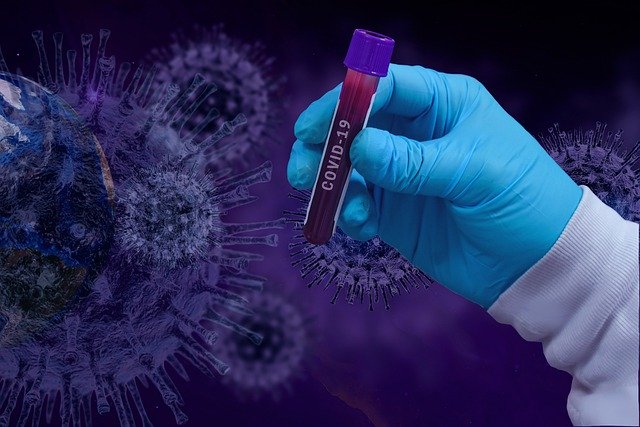
    Photo credit: Pixabay

  • COVID-19: The Push to Conflict

    COVID-19: The Push to Conflict

    Renaldo Weekes, Guest Contributor

    Renaldo Weekes

    The novel Coronavirus disease (COVID-19): a common threat that has united the world in unprecedented ways. As the pandemic rages on, however, some are getting anxious and want answers. United States (US) officials have accused China of mismanaging the coronavirus response and allege that it originated in a Chinese lab. China responded with allegations that the US military planted the virus in Wuhan. 

    The possibility for escalation is nigh as US President Donald Trump reportedly suggested that China may be punished for its alleged impropriety through new tariffs, sanctions and the lifting of sovereign immunity. As the US seeks to punish China, one wonders what the effects may be on the wider world.

    The Global Economy

    The tariffs being floated by the Trump administration as possible punishments will stifle the global economy since, being the world’s two largest economies, the US and China are very much intertwined in the global economy. Consideration must also be given to how China will retaliate to the tariffs.

    Tariffs, essentially being a tax on imported goods, will make goods more expensive at a time when many businesses and consumers cannot absorb such a cost. What little spending power exists will diminish, further pushing the economy downward. The global economy’s recovery rate will be restricted as supply chains will slowly regain traction amidst low numbers of buyers and sellers. Shocks will hit small open economies especially hard as they greatly depend on foreign production that travels through the US. It is still left to be seen if the US will follow through with such plans however.

    Sanctions have more versatility in the sense that they can be applied to certain businesses or individuals within the US banking system. This is effective because the US has a long reach in the world’s financial system. However, depending on where those sanctions are applied, there could be some disruption in the global supply chain because, as mentioned earlier, China is intertwined in the global system. Again, small open economies that regularly do business with China will be in trouble.

    The lifting of state sovereign immunity allows American citizens and the American Government to sue China for COVID-related issues. Removal of sovereign immunity may have at least two effects. First, it allows the US wants to fight China with its own rules by allowing lawsuits. Secondly, if state-owned or state-related Chinese businesses in US jurisdictions are entangled in lawsuits, China will have to decide if staying in the US is worth the retaliatory lawsuits or risk relocation which may cause disruptions in supply chains.

    Political

    Considering the implications of this clash to the wider world, both parties have been working to push their narrative to their partners for support. This puts a number of countries with mutual relationships in an awkward position as they must now play chess with their words and actions which, as seen through Australia and the European Union (EU), is quite difficult. 

    Australia has, just like the US, called for an investigation into the virus’s origins but has stopped short of saying the virus came from a lab. To China, not overtly opposing those claims is implicit support of the US’ claims and in response, Chinese Ambassador to Australia Cheng Jingye suggested a possible shift in trade relations between the two countries. Acting on those words, China has suspended beef imports from Australia. This underscores China’s willingness to use its economic might against countries politically opposed to it. Such tactics may hurt Australia as China accounts for 36 percent of Australia’s total annual exports. Though both countries claim that the issue is separate from the pandemic, it is hard to defend that point considering the veiled threat laid by the Chinese ambassador. One must ask whether it is possible to separate the two incidents or if it would have happened but for the call for an investigation.

    The EU has been under the spotlight for editing a report related to disinformation campaigns by China to appease China and for allowing China to censor an opinion piece written by the EU’s ambassador to China. The EU’s move is seen as bending more toward China by editing its report and allowing China to censor its piece. Added to this is reporting that the European External Action Service (EEAS), responsible for the bloc’s foreign policy, has been rife with problems related to each EU member state wanting to follow its own agenda. This suggests no real coordinated effort toward handling the issue and a weakening of the EU’s position as this may, theoretically, give China an opening to further cement this divide.

    Despite what may appear to be the case, EU member states have stood up to China. It is reported that China attempted to encourage German Government officials to make positive spins on how it has been handling the virus but it was quickly shot down. France hastily summoned its Chinese ambassador when a Chinese diplomat wrote a piece criticising Western countries on their treatment of the elderly. President of France Emmanuel Macron and German chancellor Angela Merkel have both called for investigations into the origins of the virus but, similar to Australia, have not claimed that the virus came from a lab. Joined with that is the EU’s support of the US’ push for an investigation into the coronavirus’s origins at the WHO general assembly. These examples show that the EU is not necessarily bowing to China. Considering the historically friendly relationship between the two, the EU would not have the same motivation as the US to immediately dismiss China.

    Even the World Health Organisation (WHO)?

    The WHO itself has been dragged into the fray by the US as the Washington has suspended its WHO funding due to accusations that that UN agency facilitated China’s hiding of coronavirus statistics. Such an accusation suggests that the WHO abdicated its duty in order to appease China. The US’ actions also serve to weaken the WHO’s ability to help the world at large; more so those who cannot help themselves. Allowing a spat to spill over into the UN agency for health during a pandemic is seen by many critics as a way for the Trump administration to deflect any blame it is receiving for its handling of the virus domestically; especially since a Presidential election is due this November.

    Conclusion

    COVID-19 has led to a pandemic that took the world by surprise. Most people did not think that a virus in China would spread to the world. Nevertheless it has and people’s magnanimity has shown through like never before. However, it has devolved into a blame game between the world’s most powerful countries about how the pandemic started, capturing many other countries in the fray. But for the pandemic, would the US and China be in this situation? Probably not, but here we are. The only real way for this situation to stop is if the US recants or if China admits fault. At this point, neither seems likely. One can only hope that the war of words between the two countries does not escalate to a point of no return that drags the rest of the world down as a result.

    Renaldo Weekes is a holder of a BSc. (Sociology and Law) who observes international affairs from his humble, small island home. He has keen interest in how countries try to maneuver across the international political and legal stage.

  • CARICOM’s Trade and Economic Council approves strategy for the re-opening of regional economies

    CARICOM’s Trade and Economic Council approves strategy for the re-opening of regional economies

    (CARICOM Secretariat, Turkeyen, Greater Georgetown, Guyana)    The fiftieth meeting of the Council for Trade and Economic Development (COTED) this week approved a strategy for the re-opening of economies in the Caribbean Community (CARICOM). The Council which is made up of Trade Ministers and officials agreed to a framework centered on the development and adherence to defined metrics related to the Covid-19 virus, which will guide in the reopening process.

    The strategy recommends a graduated model which sees governments relaxing restrictions in a deliberate, phased and incremental manner based on the transmission risk profile of the pandemic in specified geographical locations, sectors or businesses.

    The framework suggests establishing a national public private consultative mechanism to govern the relaunch of economic activity at the Member State level; minimum standards which must be attained before relaxation of restrictions and communications to build public trust. There is also the proposal for Certificates of Operation to be issued to businesses that have been verified to be compliant in the protocols established for the industry.

    The fiftieth meeting of COTED held virtually yesterday, 6 May 2020 was chaired by the Grenada Minister of Economic Development, Trade, Planning and Labour, the Honourable Oliver Joseph; with Ministerial representation from most CARICOM Member States. The Premier of Montserrat, the Honourable Joseph E. Farrell also attended the meeting as well as representatives from the public and private sectors.

    PHOTO CAPTION: Chair of COTED, Grenada’s Minister of Economic Development, Trade, Planning and Labour, the Honourable Oliver Joseph.

    The preceding was a press release from CARICOM.

  • COVID-19: Caribbean begins ‘to flatten curve’ but economic damage inevitable

    COVID-19: Caribbean begins ‘to flatten curve’ but economic damage inevitable

    Alicia Nicholls

    Weeks of COVID-19 induced shutdowns and travel restrictions in most Caribbean countries appear to have yielded results. As the English-speaking Caribbean’s rate of new cases slows, several regional governments have cautiously embarked on phased re-openings in the belief that the curve has finally begun to flatten.

    This is indeed welcomed news, both from a human and economic standpoint. However, in addition to the human toll, there is no denying that COVID-19 presents an economic shock the likes of which the region has not witnessed in decades. Reduced domestic economic activity, halted tourist arrivals and growing unemployment, as well as the possible economic fall-out in our major trading partners and tourism source markets, are poised to send the region’s economies into a tailspin.

    Biggest Contraction Economic Activity in History

    New growth projections released this week by the United Nations Economic Commission for Latin America and the Caribbean (ECLAC) warn that the COVID-19 pandemic will lead to the ‘biggest contraction in economic activity’ in the Latin America and Caribbean region’s history.

    In her press conference, the organisation’s Executive Secretary, Alicia Barcena stated categorically that  borrowing is not an option for Caribbean countries, many of which already have unsustainable debt levels and will need access to concessional financing and debt relief.

    As it currently stands, many Caribbean countries have been graduated from accessing many forms of concessional financing merely on the basis of being ranked by the World Bank as ‘middle income’ or ‘high income’ economies, without regard to the many inherent vulnerabilities they face.

    Barbados PM’s Renewed Call for a Vulnerability Index

    On this latter point, Barbados’ Prime Minister the Hon. Mia Amor Mottley’s renewed call for a vulnerability index instead of the current income per capita method for determining countries’ eligibility for concessional financing is timely. Her remarks were made during an eleven-minute interview with CNN International’s legendary journalist Christiane Amanpour in which she discussed the human and economic impact of COVID-19 on Barbados and the wider Caribbean Community (CARICOM), of which she is currently the Chairman.

    In the must-see interview, Prime Minister Mottley both praised and called for a revisiting of work conducted by The Commonwealth Secretariat on a Vulnerability Index over thirty years ago. On this note, the Shridath Ramphal Centre of The University of the West Indies (UWI) Cave Hill Campus has already begun conceptual work on a Trade Vulnerability Index.

    Caribbean Countries’ Economic Responses

    Within the limited fiscal space available, several Caribbean countries have announced stimulus packages whose social component aims at assisting the most vulnerable in their societies and supporting Small and Medium-sized Enterprises (SMEs) which have been among the most affected by the economic fall-out.

    Barbados, which will enter Phase 2 of its lockdown exit strategy from May 4, has not only announced a BDS$20 million stimulus package but has also established a Jobs and Investment Advisory Council to help the island navigate the current headwinds.

    The COVID-19 pandemic could not come at a worse time for Barbados which since October 2018 has been implementing an economic recovery and transformation programme supported by the International Monetary Fund (IMF)’s Extended Fund Facility. This week, a staff-level agreement was reached on the third review of the programme. In its first quarter economic review, the Central Bank of Barbados also this week forecasted a double-digit contraction in the Barbados economy this year due to the pandemic.

    COVID-19 lessons and legacies?

    From the start of the pandemic, the Caribbean’s leading tertiary institution, The UWI, has shown exemplary thought-leadership on this crisis through its research support to governments and general outreach activities.

    In an intellectually stimulating presentation during a conference entitled ‘COVID-19: Approaching Code Red’ hosted by The UWI’s Mona Campus, Ambassador Dr. Richard Bernal acknowledged the serious economic challenges posed by COVID-19, but also outlined some of the possible positive outcomes, such as the greater reliance on technology, more stringent health precautions taken by the airline industry, and the likelihood that the region’s tourism industry might rebound quickly as North Americans may prefer to travel closer to home.

    Like the Global Financial Crisis of 2008 whose economic impact it is predicted to surpass, the COVID-19 pandemic is leaving us with many lessons and legacies that will be debated by academics and policy makers for years to come. What is not debatable, however, is that this pandemic has further reinforced the vulnerability of many small States whose narrow export base and import dependence increase their susceptibility to external shocks such as this. As Prime Minister Mottley and many others before her have argued, there must be a rethink by the international community of eligibility for concessional financing.

    But the Caribbean must also take responsibility for its own fate. For starters, reliance on a single industry – in most cases tourism – for economic activity and employment has never been and will never be a sustainable economic path. Greater economic diversification, particularly into value added industries, is a must, as well as creating a facilitative environment for business, sustainable foreign direct investment (FDI) and entrepreneurship.

    The region’s high reliance on the importation of medical products and food remains unsustainable. Industrial and innovation policies are an imperative, and there is the need to, where possible, build manufacturing capacity for products which would be needed during a pandemic. On this score, it is commendable that several regional rum and spirit manufacturers have begun manufacturing rubbing and surgical alcohol and hand sanitisers to address regional supply shortages. The Bahamas has sought to reduce its dependence on imported masks by banning their importation and developing its own mask manufacturing industry. Regarding food security, CARICOM agricultural ministers met virtually on April 20 to discuss plans for boosting the region’s food production.

    The sometimes awkward shift from the face to face to online provision of services during the shutdowns reveals that the region’s governments and private sector still have far to go to fully take advantage of the digital age. Let us hope that even when the COVID-19 pandemic has been ‘conquered’ by a proven vaccine, Caribbean governments and businesses will continue to prioritise the embrace of technology.

    Additionally, it should not be forgotten that members of the Caribbean diaspora are among those who have tragically lost their lives to COVID-19, particularly in New York. Many of these persons would also have been supporting loved ones back in the region through remittances. That said, however, the diaspora can and has been a powerful resource, including by making donations of supplies and expertise.

    On a final note, I wish to extend my condolences to all families across the region and beyond who are mourning loved ones lost to this dreaded virus. I also join with many others in extending heartfelt kudos to all the essential workers who daily put their lives on the line to ensure we still have some measure of ‘normalcy’ in these abnormal times.

    Alicia Nicholls, B.Sc., M.Sc., LL.B., is an international trade and development consultant. You can also read more of her commentaries at www.caribbeantradelaw.com and follow her on Twitter @LicyLaw.

    DISCLAIMER: All views expressed herein are her personal views and do not necessarily reflect the views of any institution or entity with which she may be affiliated from time to time.