Category: Development

  • Introduction to Afronomics Blog Symposium – ‘Prospects for Deepening Africa-Caribbean Economic Relations’

    Introduction to Afronomics Blog Symposium – ‘Prospects for Deepening Africa-Caribbean Economic Relations’

    I am pleased to share that the Afronomics Law Blog Symposium entitled “Prospects for Deepening Africa-Caribbean Economic Relations”, which I am co-convening with the brilliant Dr. Ohio Omiunu, commences today Monday, September 6!

    To view the introduction to the Symposium authored by my co-convenor Dr. Ohio Omiunu and myself as well as the essays which will be posted daily, please click here.

  • CARICOM-Private Sector Engagement Requires Sustainable Development as its ‘Guide Star’

    CARICOM-Private Sector Engagement Requires Sustainable Development as its ‘Guide Star’

    Alicia Nicholls

    The novel coronavirus virus disease (COVID-19) pandemic has reiterated the need for Caribbean Community (CARICOM) Member States to not only diversify their economies and trading partners, but to deepen intra-regional integration as part of their economic recovery and sustainable development efforts. The astronomical term ‘guide star’ – the star used by a telescope to keep focus on a celestial object as the telescope moves – is a useful reference in seeking to contextualise the promise of a more structured CARICOM-private sector relationship in assisting in the region’s integration, trade and post-COVID-19 recovery.

    As recognized by the Addis Ababa Action Agenda on financing for development, the private sector is an important driver of growth, economic activity and job creation and can, therefore, be a valued development partner to governments in the formulation of policies and mobilisation of resources for achieving the 17 United Nations Sustainable Development Goals (SDGs) and their 169 targets. To achieve this, the private sector must move from being a mere passive actor which is simply informed of government policy, to a more active actor consulted on and involved in policy dialogue, but not in a way that encourages corruption or rent-seeking behaviour.  

    On December 3, 2020, CARICOM took further steps towards a structured relationship with the region’s private sector through the signing of a Memorandum of Understanding (MOU) with the recently formed CARICOM Private Sector Organisation (CPSO) for achievement of the CARICOM Single Market and Economy (CSME). This article discusses why these recent developments are both laudatory and encouraging, but that sustainable and inclusive development, and not merely CSME achievement, should be the ‘guide star’ for this relationship if it is to redound to the benefit of the region’s people on a whole.

    The new CPSO and the CARICOM-CPSO MOU

    Institutionalisation of a CARICOM- private sector relationship has been mooted on previous occasions and more recently, was one of the recommendations (recommendation 31) made in the Report of the Commission to Review Jamaica’s Relations within the CARICOM and CARIFORUM Frameworks (the Golding Report). The most recent ground work for the establishment of a regional body to facilitate more structured engagement between CARICOM and the regional private sector was laid at a meeting of regional private sector officials in June 2019. A year later on June 2, 2020, the CPSO was incorporated as a non-profit in Barbados, where it is presently headquartered.

    On October 29, 2020,  the CPSO was designated as a CARICOM associate institution, establishing a formal functional relationship with CARICOM. The MOU, whose text is thankfully available on the CARICOM website, establishes a mechanism “for substantive and effective cooperation” between CARICOM and the CPSO in pursuit of a fully implemented CSME. As such, the scope of the parties’ cooperation will be on achieving elements of the CARICOM work programme conducive to the goals of the CSME which seeks to transform CARICOM from a single market to a single economy in which there is free movement of goods, services, skills, capital and the right of establishment.

    Without doubt, the private sector’s active involvement is a necessary precondition for the successful implementation and monitoring of the CSME. Under the MOU, the CPSO will have the opportunity to participate in meetings of the Organs of the Community as an Observer and may be invited by CARICOM to participate in Committees, Working Groups and Technical Teams established by the Organs of the Caribbean Community. According to the press release announcing the MOU, the CPSO has already been engaging in several important CSME-related regional discussions.

    However, CPSO’s involvement in meetings does not entail a right to vote or to prevent consensus, which likely seeks to ensure that decision-making remains the purview of the government representatives and there is no undue special interest influence on decision-making. The MOU also provides for the appointment of a Joint Technical Team comprising representatives of the CARICOM Secretariat and the CPSO Technical Secretariat, and for working groups to be established for the furtherance of the MOU’s objectives.

    Potential benefits of a more structured CARICOM-private sector relationship

    There are several potential benefits which this push towards institutionalization of greater private sector engagement could have for enhancing the CSME more specifically, and trade and sustainable development more broadly. While it is governments which negotiate and sign trade agreements, it is firms which must convert this market access on paper into market penetration in practice. The private sector’s knowledge, expertise and experience are important for identifying priorities for CSME implementation, providing feedback on what aspects of the CSME are not working optimally and what barriers they face in regional markets. Additionally, any attempt to flesh out a regional export development strategy, trade policy or industrial policy requires active private sector involvement and engagement in their formulation, implementation and monitoring if these policies are to be effective.

    Policy-making at the national and regional level must be sensitive to and account for the diversity within the region’s private sector. The bigger firms of some Member States, such as Trinidad & Tobago, Jamaica and to a lesser extent Barbados, tend to be more experienced in exporting than those of some smaller Member States. It should not just be the larger firms – those whose operations often expand beyond the region – whose views are represented by the CPSO in its dealings with CARICOM organs and bodies. The voice of smaller firms like the micro-firms must also be represented and taken into account. Regional policy making should also appreciate the unique challenges facing women-owned enterprises, such as the difficulty in accessing financing on equal terms as male-owned enterprises, as well as those businesses owned by vulnerable groups, such as the youth and indigenous peoples.

    Private sector engagement will also be necessary for informing regional business and investment climate reforms. Despite some noteworthy business climate reforms, especially by Jamaica, ease of doing business remains a problem in many Caribbean countries. Where ranked, no CARICOM Member States ranks within the top fifty countries on World Bank’s Doing Business Index or the World Economic Forum’s Global Competitiveness Index. Besides improving ease of doing business at the national level, many of the Golding Report’s recommendations, such as the need for greater harmonization of laws and procedures, would also be beneficial for regional firms seeking to expand within the region by improving the predictability, transparency and ease of the regional business and investment environment.

    Up-to-date and disaggregated CARICOM-wide trade and FDI data, as well as data on the region’s private sector remains a perennial problem. Private sector firms in the region do not always like to participate in data collection surveys, either because of distrust of what the data will be used for or they fail to see the importance of such exercises, which makes data collection difficult. It is hoped that a structured CARICOM-private sector relationship through the CPSO could lead to better data collection and availability regionally – data which could help inform business decisions and national and regional policy making.

    Although the extent of formal CARICOM-CPSO cooperation under the MOU is limited to the CSME,  there are other development areas such as public health, climate action, gender equality, finance (including the blacklisting issue) and such like, where more structured private sector involvement in regional discussions could be beneficial. It could be that the framers of the MOU see the CSME as an initial priority, but intend to amend the MOU, as provided for under its amendment clause, to expand the areas of CARICOM-CPSO cooperation at a later date.

    If the general public is to trust that this closer CARICOM-private sector relationship will redound to the interest of the public and not special interests, transparency is key. It is therefore regrettable that, despite some improvement, there is still limited detailed information provided to the public on CARICOM meetings held, decisions taken and the status of the implementation by Member States of certain initiatives.

    Conclusion

    Without doubt, a dynamic, engaged and informed private sector is a necessary condition for expanding Caribbean trade and deepening regional integration with the aim of boosting growth and development. The private sector, which itself has been impacted by COVID-19, will be an invaluable partner in charting the region’s economic recovery post-COVID-19. The CPSO’s creation, its status as an associate institution of CARICOM and the MOU’s signature are promising initiatives for strengthening the institutional mechanisms for private sector consultation in the regional policy making process. That this will lead to regional development is, however, not a fait accompli but a work in progress. It will require commitment by both sides, including trust by the private sector that these initiatives are more than ‘pomp and show’, but that CARICOM Heads of Government see the private sector as a credible partner whose views they will take into account in charting the region’s future development trajectory.

    Greater information on the CPSO’s mission, composition and work would be welcomed, including the nature of its relationship and level of cooperation with other region-wide private sector associations such as the Network of Caribbean Chambers of Commerce (CARICHAM), the Caribbean Hotel and Tourism Association (CHTA), the Caribbean Network of Service Coalitions, the Caribbean Poultry Association and the newly formed CARICOM Manufacturers’ Association. Hopefully, these disparate regional private sector organisations will not work in silos but will cooperate and collaborate with each other on areas of mutual interest. If it has not already done so, CPSO should also establish links with cross-regional private sector associations, such as the Caribbean Chamber of Commerce in Europe (CCCE), the Caribbean-ASEAN Council (CAC) and the American Caribbean Chamber of Commerce (ACCC), which can be valuable sources of market information, networks and expertise on current and potential export markets.

    It is hoped that this structured CARICOM-CPSO relationship towards CSME achievement will evolve into one of mutual trust and information-sharing between regional governments and the regional private sector in the interest not of a few, but one which places sustainable and inclusive development as its ‘Guide Star’.  

    Alicia Nicholls, B.Sc., M.Sc., LL.B. is a trade and development consultant with a keen interest in sustainable development, international law and trade. All views herein expressed are her personal views and should not be attributed to any institution with which she may from time to time be affiliated. You can read more of her commentaries and follow her on Twitter @LicyLaw.
  • Sustainable Infrastructure Investment Indispensable for Caribbean Competitiveness and Growth

    Sustainable Infrastructure Investment Indispensable for Caribbean Competitiveness and Growth

    Alicia Nicholls

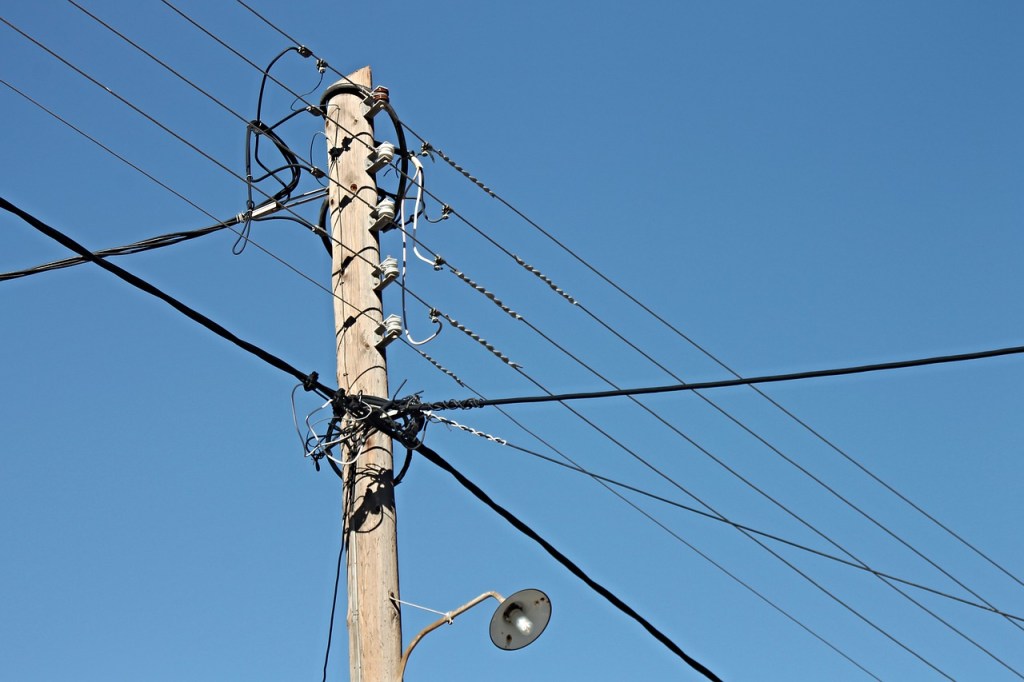
    Earlier this week, Barbadians experienced something that for many of us was a lifetime first – two consecutive days of island-wide electrical blackouts. While this phenomenon has made international news, it should be noted that such occurrences are very rare in Barbados, a country which has long boasted of a high level of human development which belies its small size.  It should also be remembered that similar events have happened in much more resource-endowed countries.

    According to information released by the island’s lone electrical company, the Emera-owned Barbados Light & Power Company (BL&P), the blackout was caused by an unfortunate combination of aging equipment and bad fuel. The blackout also had several spinoff effects. It led to water outages in many parts of the island due to the reliance of the Barbados Water Authority’s pumps on electricity. Moreover, some customers also had issues with their mobile service perhaps due to the heavy reliance on data caused by the unavailability of wifi.

    In the aftermath of ‘powergate’ in Barbados, there will be much discussion about the impact the two-day blackout has had on productivity, private sector profits and the Barbadian economy. What it reiterates, though, is that sustainable public and private infrastructure investment is indispensable for Caribbean competitiveness, trade and growth.

    Sustainable Infrastructure

    From the roads on which we drive, the ports and airports, the telecommunications network on which we depend for our daily communications, sanitation networks and the like, infrastructure comprises the physical building blocks of our countries. Infrastructure, for example, is what helps to connect suppliers with consumers, and exporters with foreign markets. It is needed for our daily work, play and comfort. Spillovers for the economy include increased productivity, economic inclusion, job creation and growth.

    Increasingly, owing to the need to build climate resilience, the conversation is turning towards sustainable infrastructure. CRC Research defines sustainable infrastructure as “the designing, building, and operating of these structural elements in ways that do not diminish the social, economic and ecological processes required to maintain human equity, diversity, and the functionality of natural systems.”

    The need for sustainable infrastructure is mentioned throughout the Sustainable Development Goals which comprise the United Nations’ Agenda 2030. For example, SDG 9 speaks to building resilient infrastructure. A report produced by The Economist magazine also highlighted the critical role of infrastructure in achieving sustainable development.

    Sustainable Infrastructure key to building competitiveness

    It is little wonder, therefore, why infrastructure is among the indicators of a country’s competitiveness, as seen with the World Economic Forum (WEF)’s Global Competitiveness Index. Countries, such as Singapore, New Zealand and Denmark, which rank high on that index, as well as on the World Bank’s Doing Business Index, almost always score high for their infrastructure. Jamaica, which currently leads the region in ease of doing business, has, among other things, made substantial investments in improving its infrastructure. The Transjamaica Roadway and the new Single Window for trade are two examples.

    Capital expenditure projects, such as for the upgrading of port facilities, hospitals and road infrastructure, are often costly for cash-strapped governments. As such, many governments turn to multilateral development agencies for loans for infrastructure development. It is also why the China-initiated Belt and Road Initiative (BRI) has become so attractive to many governments, including some in the Caribbean, which have signed Memoranda of Understanding with China on this.

    Private sector has role to play

    However, it is not only Governments which have a role to play in ensuring sustainable infrastructure. Private sector entities are increasingly taking over functions once believed to be the domain of the State, including the provision of utilities. As such, these private entities also have a duty to ensure that they continuously invest in upgrading their infrastructure in order to meet international best practices for efficiency and environmental sustainability. To do otherwise would be detrimental to the customers which rely on them, as well as the economy and society as a whole.

    Alicia Nicholls, B.Sc., M.Sc., LL.B. is an international trade and development consultant. Read more of her commentaries here and follow her on Twitter at Licylaw.

  • Human Development Report 2015 – A Mixed Bag for Barbados and the Caribbean

    Alicia Nicholls

    The United Nations Development Programme (UNDP) released its Human Development Report 2015 yesterday. Entitled “Work for Human Development”, this year’s report focuses on the link between work and human development.  The central thrust of the Report is that work (not limited to a job or employment but in the broadest sense) can enhance human development. However, the link between income and human development is not automatic. While sustainable work can contribute to human development, some types of work (such as work which violates human rights) are detrimental to human development.

    The Human Development Index 2015, the Report’s flagship index, ranks 188 countries based on a range of human development indicators. Norway again topped the HDI rankings with an HDI value of 0.944, followed by Australia, Switzerland, Denmark and the Netherlands which retained their top 5 positions in the same order as in 2013. Niger was the lowest ranked country with an HDI of 0.348.

    Caribbean Performance 

    Caribbean countries continue to have a high level of human development. However, their performance in the 2014 HDI rankings was mixed. Barbados, Jamaica, Cuba, Dominica, Haiti and Suriname declined slightly from their 2013 rankings. The Bahamas, Antigua & Barbuda, Trinidad & Tobago, St. Lucia and Guyana maintained their positions. Only four countries: Dominican Republic, St. Kitts & Nevis, Grenada and St. Vincent & the Grenadines improved their ranking. The biggest improver was Grenada which jumped from 82nd position in 2013 to 79th position in 2014, with improvements in life expectancy at birth and mean and expected years of schooling.

    Countries on the HDI are classified by development level into one of the following categories: very high human development, high human development, medium human development or low human development. The majority of Caribbean countries are ranked as having high human development.

    The Bahamas has the highest level of human development in the Caribbean, maintaining its 55th place overall and increasing in HDI value from 0.786 in 2013 to 0.790 in 2014. Barbados has the second highest human development level in the Caribbean, dropping one place from 56 in 2014 to 57 in 2015 but maintaining an HDI of 0.785.

    The other Caribbean islands included in the High Human Development rank were: Antigua & Barbuda (58), Trinidad & Tobago (64), Cuba (67), Saint Kitts & Nevis (77), Grenada (79), Saint Lucia (89), Dominica (94), Saint Vincent & the Grenadines (97), Jamaica (99), Belize (101), Dominican Republic (101) and Suriname (103).

    Guyana which ranked at 124 is the only Caribbean country ranked in the Medium Human Development category. Haiti was the lowest ranked Caribbean country with a rank of 163 and an HDI value of 0.483. It is the only Caribbean country in the Low Human Development category.

    When compared to the HDI values of SIDS on average (0.660) and the average world HDI of 0.711, the performances of the Bahamas, Barbados and Antigua & Barbuda are especially commendable.

    Room for Improvement

    However, Caribbean countries should not take their rankings at face value as a reason for complacency. Drilling down into the HDI indicators and in the other indices comprising the report, there are several areas of concern and where improvement is needed. HIV prevalence among adults remains high in the region compared to other SIDS and the world. The Report also reaffirms the high vulnerability of Caribbean populations to natural disasters.

    Another worrying statistic is the high prison population per 100,000. Saint Kitts & Nevis had the highest per capita prison population in the region with 714 prisoners per 100,000. Crime is also an area for concern. For the period 2008-2012 Belize had the highest homicide rate among CARICOM countries, with 44.7 homicides per 100,000. Violence against women also raises concern. For Barbados and Jamaica, two of the handful of Caribbean states for which this  data was available, 30 per cent and 35 per cent of women (15 years and over) respectively have experienced intimate or intimate partner violence.

    Many Caribbean countries are seeing declining private capital inflows as a percentage of GDP and have also seen a decrease in their GNI per capita. Barbados’ GNI per capita decreased by about 0.8 per cent between 1980 and 2014. Jamaica’s decreased by about 32.5 percent during the same period. On the contrary, Grenada’s GNI per capita increased by about 124.6 per cent.

    Another area for improvement is in gender equality. Despite females in Barbados having a higher level of human development than males due to their higher life expectancy at birth, longer expected years of schooling and mean years of schooling for females, GNI per capita is much higher for males (10,407 for females and 14,739 for males).  Moreover, while a higher percentage of Barbadian women than men have at least a secondary level education, women have a lower participation in the workforce and make up only 19.6% of seats in Parliament. Therefore, despite a ranking of 57 on the HDI, Barbados ranks 69 out of 155 countries on the Report’s Gender Inequality Index. In comparison, the Bahamas is ranked at 55 on the HDR and  58 on the GII.

    Maternal mortality ratios in the Region remain a cause for concern. Haiti’s rate is 380 maternal deaths per 100,000 live births. Though much lower than Haiti’s, Trinidad & Tobago’s maternal mortality ratio of 86 per 100,000 and Cuba and Jamaica’s of 80 per 100,000  are above the average rate for SIDS of 61.5 per 100,000 live births and above the average for high human develoment countries (41 per 100,000). Barbados’ ratio of 52 maternal deaths per 100,000 births is also worrying.

    Youth unemployment is a growing problem globally and in the region exacerbated by the global recession of 2008 and the continuing uncertainty in the global economy. According to the HDR report, the global youth-to-adult unemployment ratio is at a historical peak and in 2015, 74 million young people (ages 15- 24) were unemployed. Youth unemployment data was not available for all Caribbean countries. However, the available data in the report is troubling. For example, according to the report, Trinidad & Tobago’s rate of youth (not employed or not in school) was 52.5%.

    For too many indicators, there is lack of data available for Caribbean countries.  It is for this reason that we have no idea of how Caribbean countries would rank on the inequality-adjusted human development index which gives a truer measure of human development as it takes into account inequality. Lack of data makes it difficult to track progress.

    Despite a mixed performance in 2014, the Caribbean Region continues to enjoy overall high levels of human development. However, there are several areas of concern which policymakers will have to target if our countries are to reach the ranks of “very high human development”.

    The full Human Development Report 2015 may be accessed here.

    Alicia Nicholls, B.Sc., M.Sc., LL.B. is a trade and development consultant with a keen interest in sustainable development, international law and trade. Please note that the views expressed in this article are solely hers. You can also read more of her commentaries and follow her on Twitter @LicyLaw.