Category: Health

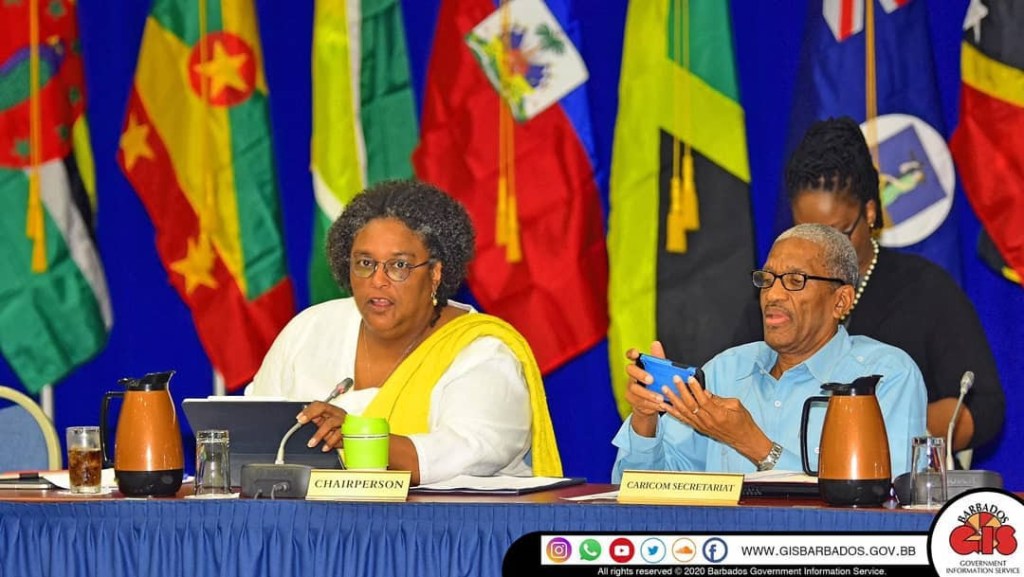
  • CARICOM Heads, Ministers agree on COV19 Protocol

    CARICOM Heads, Ministers agree on COV19 Protocol

    CARICOM Secretariat – A regional protocol establishing minimum standards for dealing with the COVID19 virus was agreed to by CARICOM Heads of Government and Ministers of Health at the 8th Special Emergency Meeting in Barbados on Sunday. The protocol is critical to avoid an outbreak of panic and fear in the Region.

    The meeting was attended by the Pan American Health Organisation (PAHO), Caribbean Public Health Agency (CARPHA), Caribbean Disaster Emergency Management Agency (CDEMA), CARICOM Implementation Agency for Crime and Security (IMPACS) and representatives of the leadership of the Cruise Ship industry and their representative bodies, the Florida Caribbean Cruise Associate (FCCA) and the Cruise Lines International Association (CLIA).

    The capacity to manage an outbreak was identified as an area of concern. Accordingly the Meeting agreed to establish an expanded Bureau of Heads of Government to continue discussions with the travel and tourism industry, regional Financial Institutions, International Financial Institutions and the private sector with respect to the marshalling of resources to augment the region’s capacity to deal with a possible outbreak. Against that background, the meeting asked CARPHA and PAHO to assist by conducting a gap analysis of Member States’ capacities.

    The protocol, drafted by CARPHA following two emergency meetings of the CARICOM Ministers of Health last week, allows for individual states to place additional measures if they so require. 
    Chair of the Caribbean Community (CARICOM) the Honourable Mia Mottley, Prime Minister of Barbados, emphasised that the leaders were prepared to protect the Region’s “vital national and regional interest at all times. We must act together to get through this,” the Prime Minister said referring to the Community’s response to the virus.

    The Protocol defines roles and responsibilities of all parties and seeks to ensure that there is effective communications between CARICOM governments and the cruise line industry with respect to decisions so that there would be a common understanding.

    The meeting also recognised that the existing Regional Response Mechanism co-ordinated by CDEMA was already on alert and was actively undertaking scenario planning in partnership with CARPHA, PAHO, IMPACS and Member States’ emergency management agencies and Chief Medial Officers.

    CDEMA would also provide guidance and share best practices to Member States in their approach to managing an outbreak. A draft framework document has already been shared with regional partners and all CDEMA participating states and this will be built upon.

     The cruise industry officials confirmed that they have been doing their part in screening passengers and stated they were willing to work with the established protocol.

    The officials said they greatly appreciated the commitment and expertise of their partners in CARICOM, PAHO, CARPHA, CEDEMA, and IMPACS as everyone works together in their mutual interest of providing the highest degree of safety and health for passengers, crew and the destinations visited.

    They said screening procedures and protocols for prevention, surveillance and response are integral to industry operations. The cruise officials added that clear and practical protocols throughout the Region are essential and look forward to continued co-operation with all stakeholders. They urged everyone to align with the guidance and procedures from the World Health Organisation (WHO) and other global medical experts.

    They expressed their gratitude for Prime Minister Mottley’s leadership and initiative in convening what was a productive meeting.

    The preceding was a press release from CARICOM. To watch the press conference following the Special CARICOM Heads of Government Meeting on COVID-19 please see below:

  • Can Novel Coronavirus ‘COVID-19’ impact the Caribbean?

    Can Novel Coronavirus ‘COVID-19’ impact the Caribbean?

    UPDATE: Several Caribbean countries have now reported cases of COVID-19.

    Alicia Nicholls

    Let me preface this brief article by stating that to date there has as yet been no confirmed case of COVID-19 – the official name given to the novel coronavirus – in any English-speaking Caribbean country. This, nonetheless, does not deny the region’s vulnerability to the shockwaves of the virus’ increasing global spread and concomitant potential impact on global trade, travel and the global economy, on a whole. Besides the possible human impact, Caribbean small open economies – reliant on tourism and trade for our ‘bread and butter’- could be severely impacted by the current outbreak.  

    Global impact to date

    The COVID-19 virus, which is suspected to have originated with bats, was first reported in Wuhan Province, China in December 2019. At the end of January 2020, the World Health Organisation (WHO) – the United Nations (UN) specialised agency in charge of public health matters – declared the outbreak of COVID-19 to be a ‘Public Health Emergency of International Concern’ and issued a set of Temporary Recommendations. According to the latest press briefing of February 28, 2020 by Director General of the WHO, “outside of China, there are now 4351 cases in 49 countries, and 67 deaths”. Further, the WHO has increased its assessment of the risk of spread and the risk of impact of COVID-19 to “very high at a global level”.

    Last week, coronavirus fears caused stock markets to suffer their worst crash since the financial crisis, while the International Energy Agency (IEA) has predicted that reduced Chinese demand for crude oil will lead to the first quarterly decline in global oil demand in over a decade. China – the worst affected country to date by the virus – is expected to see a slowing in its GDP growth to 5.6%, according to the International Monetary Fund (IMF).

    Potential Impact on the Caribbean

    While there has not yet been any confirmed case of COVID-19 in the Caribbean, the Caribbean Public Health Agency (CARPHA) has upgraded the risk of COVID-19 transmission from low to “moderate to high”.

    Of major concern to the majority tourism-dependent countries of the Caribbean is that cases of the disease have appeared in our major tourist markets – the United States, United Kingdom, and parts of Continental Europe which have direct flights to the region.  Naturally, the biggest concern is the possible loss of life, particularly for those persons with impaired immune systems, if the virus outbreak reaches the region. The virus’ estimated 1% fatality rate makes it deadlier than the flu, which is known to kill hundreds of thousands each year. Aside from the very real human impact, there is also the economic impact that could arise from loss of productivity, businesses’ loss of revenue and reduced output.

    It should be noted, however, that even if the virus outbreak does not directly reach the region, we could possibly still be impacted negatively. For example, even though the Caribbean is currently COVID-19 free, the spread of ‘fake news’ may deter persons from travelling to the region, robbing these countries of potential tourist arrivals and needed foreign exchange. This has implications for countries like Barbados, for example, which in January this year launched a year-long home-coming called “WeGathering” which encourages its diaspora to come back to the island.

    Another potential channel of impact for import-dependent Caribbean countries is from the interruption of global supply chains and impact on commodities prices. The outbreak is already having an impact on global shipping. One possible ‘benefit’ for oil-importing Caribbean countries is the slump in oil demand and reduction in oil prices, but this may negatively impact oil exporting countries like Trinidad & Tobago and now Guyana.

    This, of course, is not the first nor will it be the last public health threat the Caribbean has faced. Readers would recall SARS (another type of coronavirus) outbreak, as well as the mosquito-borne diseases of Chikungunya and Zika several years ago. However, Caribbean leaders have rightly taken the COVID-19 threat seriously. Regional governments have so far adopted different responses to the threat, with policy responses ranging from quarantining to banning of travelers originating from outbreak countries, and in some cases, denying entry to cruise ships with cases of persons exhibiting symptoms of respiratory illness. CARICOM Heads of Government have called an emergency meeting in Barbados on March 1, to discuss the latest developments.

    Both regionally and globally, cooperation among governments and with international agencies will be key to mitigating the virus’ spread and its economic impact.  In a joint statement by the WHO and UN World Tourism Organisation (UNWTO), the two agencies called for cooperation and argued that tourism’s response “needs to be measured and consistent, proportionate to the public health threat”.

    Similar sentiments were made by IMF Managing Director, Kristalina Georgieva to the G20 on the economic impact of COVID-19. The Managing Director noted while various scenarios could occur, under the IMF’s current baseline scenario “global growth for 2020 would be about 0.1 percentage points lower” than the 3.3 percent global growth the IMF forecast in January. She further advised that “global cooperation is essential to the containment of the COVID-19 and its economic impact, particularly if the outbreak turns out to be more persistent and widespread.”

    Caribbean officials will be forced to play the delicate balancing act between not overreacting and exacerbating the situation, but also seeking to do their utmost best to protect public safety within the limits of their public health infrastructure and capacity.  Timely communication with the public on, for example, their pandemic preparedness, will be necessary.

    We as citizens also have our part to play by observing hygiene best practices to prevent or mitigate the virus’ spread should it reach our region. Moreover, in light of the potential for “fake news”, it is incumbent that citizens be discerning about our information sources and rely only on official sources such as the WHO and associated regional bodies like CARPHA and PAHO.

    Alicia Nicholls, B.Sc., M.Sc., LL.B., is an international trade and development consultant with a keen interest in sustainable development, international law and trade. You can also read more of her commentaries and follow her on Twitter @LicyLaw.
    DISCLAIMER: All views expressed herein are her personal views and do not necessarily reflect the views of any institution or entity with which she may be affiliated from time to time.

  • Fat Taxes: What Role for Fiscal Policy Interventions in Promoting Good Health in Barbados?

    Alicia Nicholls

    Public health is once again under the microscope in Barbados, with the lens being focused on the crippling burden of non-communicable diseases (NCDs) on the country’s health care system. According to data reported by Nation News, “an estimated 64 per cent of adult Barbadians are overweight and 31 per cent of children are obese or overweight”. If that is not worrying enough, NCDs account for 84 percent of total deaths in Barbados, according to World Health Organisation estimates. What is more, the rates of diabetes and diabetic-related amputations in Barbados are among the highest in the world. The net result is a reported $700 million a year health care budget, which is very unsustainable for a cash-strapped small island developing state which also has an aging population.

    Not for the first time, public health advocates in Barbados have proposed levying a tax on foods with high fat and sugar contents as one policy measure to force dietary change among Barbadians. While it would appear that this suggestion has not met with the Barbados Government’s approval at this time, it does raise the question of what role could and should fiscal policy interventions play in promoting good health in Barbados.

    The intersection of fiscal and health policy

    Fiscal policy instruments are used by Governments mainly to raise revenue. However,their use  as tools for pursuing public health objectives has been receiving increased attention by governments around the world which are faced with a high incidence of obesity and NCDs. Public health advocates have argued that in much the same way that “sin taxes” such as excise taxes on alcohol and cigarettes have reduced consumption of these products over time, taxing foods high in fat, sugar or salt could influence consumption patterns away from poor dietary habits, a major risk factor for obesity and NCDs.

    The fat tax is usually levied as an ad valorem or specific tax, increasing the price of the product with the intention of dampening consumer demand for the taxed product and forcing a switch to healthy alternatives. Effective August 2015, Barbados introduced a 10 percent excise tax on “sweetened beverages”. Given its novelty, it is unknown whether the “sweet drink tax” has led to any shift in Barbadians’ soft drink consumption patterns. It is to be reviewed in two years to determine whether it has met its objectives.

    Fat taxes, like most taxes, are highly unpopular. Opponents argue that these measures are regressive and inefficient and are an intrusion by Government on consumers’ rights to choose their own lifestyles. Opponents also argue that these taxes place a disproportionate burden on the poor, who spend a larger proportion of their income on food.

    Worldwide use of “fat taxes” 

    There is still limited empirical data on the efficacy of “fat taxes” in changing consumption patterns. Several academic studies internationally have sought to model the impact of proposed taxes on consumption behaviour with mixed results. However, as one study points out, there appears to be some consensus in the academic literature that these taxes have to be substantial (at least 20 percent) in order to shift consumer behaviour.

    In the real world, what little is known about fat taxes shows that their impacts has varied by market. Among the countries which have experimented with, or currently have fat taxes include Norway, France, French Polynesia, Samoa, Finland, Hungary, to name a few.

    Denmark is perhaps the favourite “poster child” for anti-fat tax critics. In October 2011 Denmark instituted a tax on foods with a saturated fat content of more than 2.3 percent, which was repealed only a year later after much public outcry and dissent. According to an IEP report, the tax failed for several reasons, including the lack of impact on Danes’ purchasing habits. Many Danes either switched to cheaper brands or crossed the border into neighbouring countries to purchase these items, phenomena which Danish policymakers either had not considered or had dismissed at the time of design and implementation of the tax.

    On the flipside, Mexico has been a success story. Mexico is currently battling an obesity rate which is the second highest among OECD countries. It imposed a tax of MX$1 (US$0.80) per litre on sweetened beverages and an 8 percent tax on foods containing 275 calories or more for each 100 grams in 2014. A study found that in the first year of the tax’s operation, the volume of sweetened drinks sales is said to have declined on average by 6 percent while there was a 4 percent increase in the sale of untaxed beverages like bottled water. The impact on consumption was most marked on lower income households.
    What these two case studies show is that the efficacy of a fat tax  would depend on its design and application.

    The proof is in the pudding

    While fat taxes are often regarded as a Government intrusion, lifestyle choices, though personal in nature, can create huge burdens on the public health apparatus and the public purse. In this vein, they are a legitimate Government concern. Government intervention in the market  is sometimes necessary to save people from themselves. My personal belief is that there is a role for fiscal instruments like fat taxes in public health policy.

    However, like the two cases studies of Denmark and Mexico show, the proof is in the pudding. After all, on what basis should unhealthy foods/drinks be taxed? Should it be based on their caloric content? What level of tax would be prohibitive enough to have a material impact on Barbadian consumers’ purchasing behaviour? The answers to these questions require extensive market research, including research on Barbadian consumers’ habits, the level of price elasticity of demand for these unhealthy foods, income elasticity, of unhealthy food demand, and any other unhealthy substitutes which consumers might logically shift to.

    International studies and case studies are instructive but as each market is unique, Barbadian-based studies would be more consequential. A good case study would be the “sweet drinks tax” which was introduced last year. Some economists have argued that the 10 percent levy is too small influence consumer behaviour and this may well be the case.

    While any policy no doubt should take into account the impact on the local manufacturing sector and employment levels therein, particularly at a time when the sector has not seen much growth, such a policy could induce manufacturers to reduce the sugar and fat contents in their products and to produce more health-conscious alternatives. Even without a fat tax and before the introduction of the “sweet drink tax”, we have seen some of our Barbadian manufacturers over the years introducing health-friendly alternatives to the market with success as Barbadians become more health conscious. One ice cream manufacturer has introduced diabetic ice cream, while another manufacturer has a line of low fat milks and low sugar juices.

    There is a possible role for a fat tax but other policy interventions are needed as well. One of the major reasons given by most Barbadians for the popularity of unhealthy foods over healthy foods is the lack of affordability of many healthy alternatives. This pricing discrimination is seen in some supermarkets where low-fat foods are often more expensive than their high fat counterparts, which gives consumers little incentive to buy “healthy”. Healthy foods should be exempted from the imposition of value added tax, while import duties should be removed on healthy products, vegetables and fruits which are not made or produced locally to increase their affordability to the general public.

    Alicia Nicholls, B.Sc., M.Sc., LL.B. is a trade and development consultant with a keen interest in sustainable development, international law and trade. You can also read more of her commentaries and follow her on Twitter @LicyLaw.

  • Small dots but big footprints: Caribbean Countries and International Organisations

    Alicia Nicholls

    Another daughter of the soil has been called to serve on one of the world’s most eminent and most important intergovernmental organisations. This time it is Barbados’ Chief Medical Officer, Dr. Joy St. John who has been appointed Chairwoman of the Executive Board of the World Health Organisation (WHO).

    Dr. Joy St. John, a medical doctor, joins a growing list of Barbadian and CARICOM nationals who have been called to serve in the highest echelons of some of the world’s most prestigious international bodies. Casting our minds a bit back in time, one would recall another Barbadian woman who made a notable contribution to public health issues at the international level. Barbados’ former Governor-General, Dame Ruth Nita Barrow, served as a nursing advisor to the WHO and the Pan-American Health Organisation for more than a decade. Though a midwife and nurse, Dame Nita had also served as President of the International Council on Adult Education in 1975 and 1986.

    Outside of the health arena and more contemporarily, Mrs. Elizabeth Thompson, former Barbados Labour Party (BLP) cabinet minister and well-esteemed environmental lawyer and negotiator, was appointed as a United Nations Assistant Secretary General. In 2010 she was appointed by UN Secretary General Ban Ki-Moon as Executive Coordinator of the UNCSD Rio +20 Conference. In the field of trade in intellectual property, Mr. Trevor Clarke is the World Intellectual Property Organisation (WIPO)’s Assistant Director General for the Culture and Creative Industries Sector. Further in the area of culture, Alissandra Cummins, the Director of the Barbados Museum and Historical Society, is currently the Chairperson of the Executive Board of UNESCO  (2011-2013) and had also made history as being the first Caribbean and female president of the International Council of Museums between 2004-2010.

    We in the Caribbean often regard ourselves as small states. Indeed, by our geographic, demographic and economic size, we are. However, our contribution in international organisations, particularly on issues of greatest concern to us as small states,  should serve to us as a reminder that while we may appear as no more than little dots on a map, our footprint in these organisations often belies our size.  One would recall that it was Trinidad & Tobago under the leadership of then Prime Minister A.N.R. Robinson which was instrumental in pushing for the establishment of the International Criminal Court (ICC). Again in the field of law, eminent Jamaican law professor and former principal of the Norman Manley Law School, Dr. Stephen Vasciannie, served on the prestigious UN Law Commission whose mandate is the codification and progressive development of international law.

    There are many others that can be listed but I have made my point. The ability of Caribbean people to assume and function effectively in these key positions and the faith that other nations have put in the representation of our nationals stand as testament and vindication of the solid investment that our governments have tended to put in developing our greatest resource, that is, our people.

    I wish Dr. St. John all the best in her new position as she continues to fly our Barbadian and CARICOM flags high.

    Alicia Nicholls is a trade policy specialist and law student at the University of the West Indies – Cave Hill. You can contact her here or follow her on Twitter at @LicyLaw.