
Category: Plastic Pollution

  • Greening Caribbean Festivals

    Greening Caribbean Festivals

    Alicia Nicholls

    Festivals, inclusive of carnivals, are a defining feature of the Caribbean entertainment and cultural landscape. Be it music, food, arts, film or fashion, there is a Caribbean festival for everyone. In Barbados, for instance, we just concluded our Crop Over Festival – a three-month long summer festival with a variety of music competitions and other cultural offerings which culminate with street revelers bedecked in colorful costumes dancing to Soca music on what we call Grand Kadooment Day – the first Monday of each August.

    It is by now well-known that festivals make an important contribution to Caribbean economies and are among our countries’ biggest service exports. Festivals attract visitors from around the Caribbean and the world, generate foreign exchange inflows and other economic spillovers, and showcase our rich cultural and creative industries. Our biggest Barbadian superstar Rihanna is a well-known face among the revelers on Grand Kadooment Day.

    But what is less ventilated is the impact of Caribbean festivals on our fragile environments and how we can make them not just profitable but planet-friendly. This article provides an initial discussion as part of my on-going research on this topic.

    The environmental impact of festivals

    All festivals have an environmental footprint. They utilize finite resources such as water, fuel and electricity. They generate greenhouse gas (GHG) emissions from patrons driving to and from festival venues, as well as create waste and noise pollution.

    A significant amount of festival waste comes from single-use plastics. Thankfully, an increasing number of Caribbean countries have begun implementing bans on the importation, sale or use of single-use plastics which cuts down on the amount of waste generated from Styrofoam food containers, straws, plastic plates and cutlery. In Barbados, due to the recently implemented ban on single-use plastics, it was refreshing to see persons jumping on Kadooment Day with reusable cups in their hands instead of utilizing plastic cups.

    But waste is not only generated from these easily identifiable plastics. Scientists warn that microbeads like glitter, a staple of many costumes and cosmetics, are an often overlooked form of microplastics which can be ingested by marine life and contaminate our food chains. Waste is also generated from paper used in the printing of promo flyers, printed tickets and programmes.

    The literature on the environmental impact of festivals remains limited and is confined primarily to festivals in developed countries, such as the UK, Australia and the US. While I am unaware of any study which comprehensively measures the environmental impact of Caribbean festivals, a report by UK not-for-profit think tank Powerful Thinking studying the environmental impact of UK festivals may be instructive. While the UK festival experience might not be directly analogous to ours in the Caribbean as their major festivals often require patrons to travel and camp on-site, it still provides a useful point of departure for the environmental impacts festivals can have.

    The Powerful Thinking Report found that the UK festival industry, which attracts over 3 million people per year, produces 23,500 tonnes of waste and is responsible for nearly 20,000 tonnes of on-site carbon dioxide (CO2) emissions annually. This latter statistic should give us pause given the impact which GHGs like carbon dioxide have on climate change which is one of the biggest threats facing Small Island Developing States (SIDS) like those in the Caribbean. The report, however, also found that 78% of festival organisers in the UK have an environmental policy. The Glastonbury Festival, for example, has green policies for waste, energy and water on its website.

    How can our festivals go greener?

    In the Caribbean many of our big-ticket festivals are organized by government-run entities, but others are private sector initiatives. While no festival can be completely carbon or environmentally neutral, it is incumbent on our festival planners and organizers to make environmental sustainability a priority in our festival planning efforts to minimize their environmental impact.

    As previously noted, other festivals around the world are also grappling with how to make their festivals greener and are implementing policies to address this. The previously mentioned Powerful Thinking Report also offered several key recommendations to enable British festivals to meet the challenge of achieving a 50% reduction in emissions compared to 2014 by 2025. Some of these include local sourcing of food products, reducing food waste and segregating materials onsite.

    Empirically studying the environmental and carbon impact of Caribbean festivals will assist in designing evidence-based environmental policies for our festivals that are tailored to our Caribbean realities.  Something as simple as ensuring there are enough strategically placed garbage receptables could help reduce the likelihood of litter, as well as using recycling to reduce the amount of waste to going to the landfill. Festival organisers can either provide reusable cups or encourage participants to walk with their own reusable cups instead of using plastic cups. Biodegradable glitter can be used to reduce the plastic waste generated. Paper waste can be reduced by going paperless and making greater of digital technologies, such as event apps and e-tickets. In Barbados, a number of events now have park and ride options which can go a long way in reducing the CO2 emissions from multiple cars going to and from events. As noise pollution from late-night fetes and other events can be bugbear for residents, policies must be instituted regulating the times and locations of events in order to minimise noise pollution.

    Another option is international certification. The International Organization for Standardisation (ISO) has developed an International Standard for Sustainable Event Management (ISO 20121) that offers guidance and best practices for identifying, managing and mitigating the social, economic and environmental impacts of events. The ISO 20121 is not only for festivals, but other events such as conferences, concerts, sporting events and exhibitions. While the standard has not yet been widely adopted, some festivals, such as Spain’s Balelec Music Festival and Australia’s Sydney Festival, have opted to become ISO20121 certified in order to manage their environmental impact and enhance their image as part of their marketing efforts.

    The Way Forward

    Regrettably, many Caribbean countries do not publish extensive statistics, if any, on the economic impact of their festivals. Therefore, one recommendation would be that post-festival analyses be published and include an analysis of the environmental impact. This data would support the crafting of empirically sound greening policies and sensitise the public about the importance of environmentally-friendly practices even when they are, as we say in the Caribbean, ‘playing mas’.

    As always, the elephant in the room is what impact these greening initiatives may have on festival organizers’ bottom lines and whether any added costs from greening initiatives will be passed on to consumers, affecting the profitability of the festivals concerned. There is, therefore, the need to consider cost-effective greening options wherever possible.

    Greening our festivals should also not be seen as simply another cost imposition, but as an opportunity. Research has shown that millennials are more socially conscious than older generations and care much more about their carbon footprint. Millennials, therefore, are a ripe target market for festivals which are both fun, but also environmentally-friendly. Some UK festivals, like the Glastonbury Festival, use their environmental friendliness as part of their marketing strategies. Moreover, festival organizers’ demand for more environmentally friendly products could lead to start-ups specializing in such products.

    Above all, the costs to our Caribbean environments in the long run due to inaction would be much higher than the cost of positive action. Environmentally unsustainable festivals can negatively impact our geographical landscapes, contaminate the food we eat through marine pollution, the air we breathe and our climate. It is in our own interests as festival goers and organisers to ensure that we have enjoyable but also environmentally-friendly and sustainable festivals.

    Alicia Nicholls, B.Sc., M.Sc., LL.B., is an international trade and development consultant with a keen interest in sustainable development, international law and trade. You can also read more of her commentaries and follow her on Twitter @LicyLaw.

    DISCLAIMER: All views expressed herein are her personal views and do not necessarily reflect the views of any institution or entity with which she may be affiliated from time to time.
  • CARICOM Heads adopt St. Johns Declaration to address plastic pollution in Caribbean Sea

    CARICOM Heads adopt St. Johns Declaration to address plastic pollution in Caribbean Sea

    Alicia Nicholls

    Caribbean Community (CARICOM) Heads of Government this week adopted a Declaration aimed at addressing the high levels of plastics and microplastics in the Caribbean Sea and their adverse impact on Caribbean sustainable development.

    The St. John’s Declaration was signed and launched by the Government of Antigua and Barbuda at the Play it Out Concert hosted by Antigua and sponsored by Norway. It is part of the United Nations General Assembly (UNGA) President Maria Espinosa’s global call to action for Governments against plastic pollution and single-use plastics launched in December 2018. The Declaration was subsequently adopted by CARICOM Heads of Government during their 40th session held in St. Lucia July 3-5, 2019.

    Why is the St. John’s Declaration important?

    The Caribbean Sea is of tremendous economic, social and ecological value to the countries washed by its shores. A World Bank Study estimates that “in 2017, the insular Caribbean’s gross revenues from marine and coastal tourism alone totaled an estimated US$57 billion”. This same study cites pollution as one of the biggest threats to the Caribbean marine environment.

    Indeed, the World Bank study notes that “marine litter is accumulating in the Caribbean Sea, originating both in the region as well as distant countries overseas through the ocean currents” and that “studies have… found as many as 200,000 pieces of plastic per square kilometer in the northeastern Caribbean”.

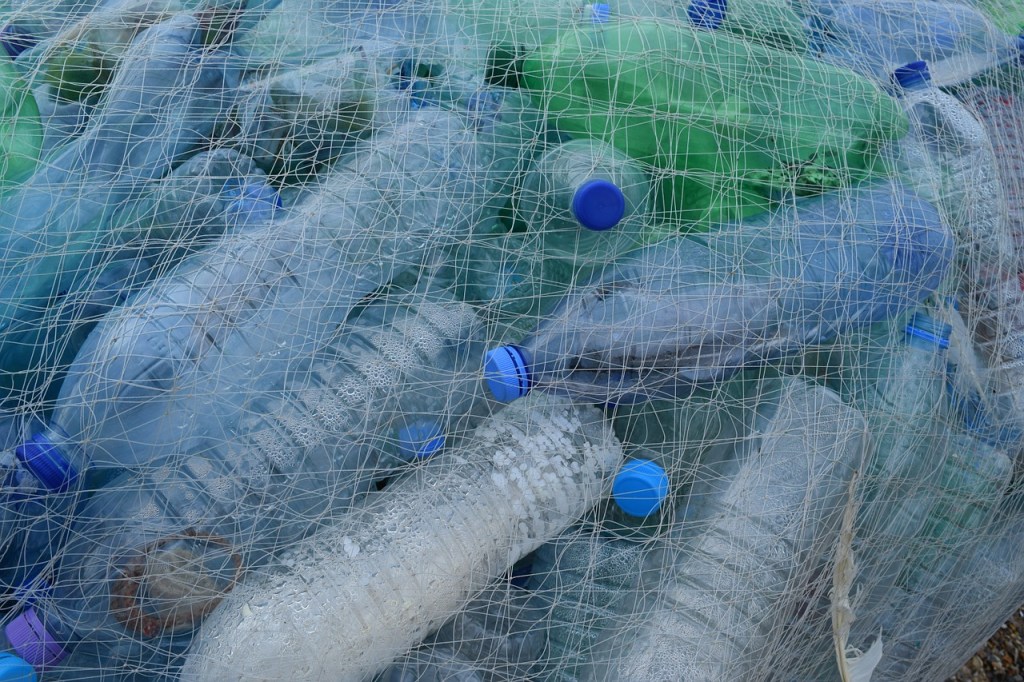
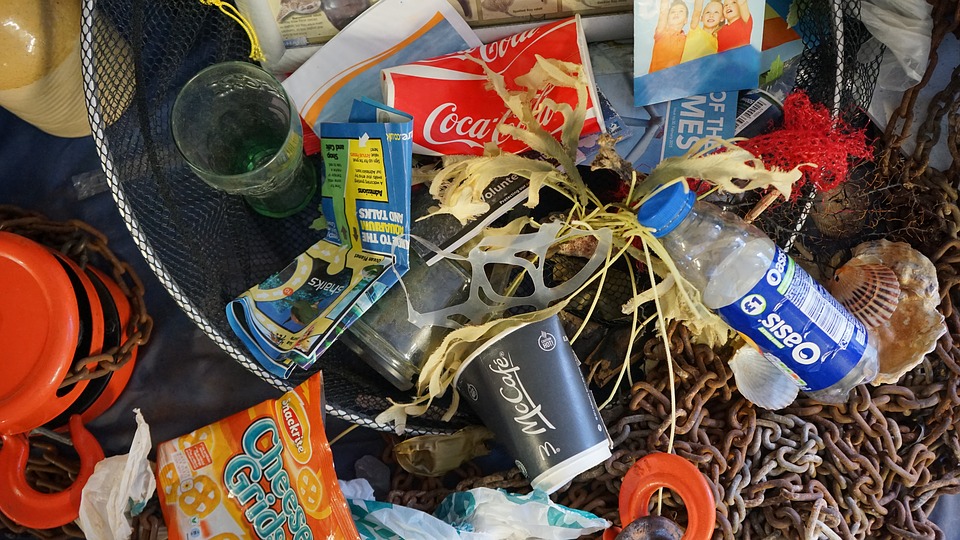
    According to the World Bank Report, “up to 80 per cent of the litter found in our oceans is made of plastic”. It further states that “Caribbean data from beach and coastal clean-ups in 2017 indicate that plastic beverage bottles alone amount to 21 percent of the items recorded.”

    These plastics are dangerous because they take many years to degrade, remaining blights on the marine and land-based environment and death traps for marine life. According to Ocean Crusaders, “100,000 marine creatures a year die from plastic entanglement” and approximately 1 million sea birds also die from plastic. This of course has implications for human health and food security.

    Twelve CARICOM Member States have to varying extents passed legislation to implement full or partial bans on the use of single use plastics and styrofoam products. However, the region has fallen short of a region-wide plastics ban. CARICOM’s adoption of the St. Johns Declaration is a good step towards showing our leadership’s commitment towards addressing the serious threat marine litter poses to our sustainable development.

    Key Elements of the Declaration

    The St. Johns Declaration encourages CARICOM Member States that have not yet done so to introduce measures to reduce and/or eliminate the use of single use plastics. It also commits to addressing the damage to our ecosystems caused by plastics by 2030 and to work with the private sector to “find affordable, sustainable and environmentally friendly alternatives”.

    The Declaration recognizes that effective implementation of these actions “requires enabling and coherent policy, legislative and regulatory frameworks, good governance and effective enforcement at the global, regional, national and local levels”. They also “encourage development partners and the private sector to contribute financial and technical assistance, capacity-building initiatives”.

    Marine litter is not just a Caribbean issue, but a global one. Firstly, plastic pollution in the Caribbean Sea comes not just from Caribbean countries, but from other countries, particularly in the North. Secondly, other oceans globally also face a similar threat.

    There has been some global action on the issue of marine litter. Goal 14 of the UN Agenda 2030 and its 17 Sustainable Development Goals is to “conserve and sustainably use the oceans, seas and marine resources for sustainable development’. More specifically, one of its targets is “to reduce significantly all forms of marine pollution by 2025”. There are also several United Nations resolutions, including resolution 4/7 on ‘Marine Litter and Microplastics’.

    Recently, the Association of Southeast Asian Nations (ASEAN) adopted the Bangkok Declaration on Combating Marine Debris in the ASEAN Region in June 2019. The St. Johns Declaration encourages other regional and sub regional groups of countries “to take similar measures to eliminate discharge of plastic litter and microplastics to wells, rivers, seas and oceans”.

    Given the magnitude of the threat of marine litter, and in particular, plastics pollution, global action still falls far short of what it should be. As such, the St. Johns Declaration calls for the urgent need for a global agreement to address plastics and microplastic pollution.

    Our CARICOM leaders’ adoption of the St. John’s Declaration is a good step, but this is just the beginning. It must be translated into concrete action. For instance, getting countries which have not yet done so to implement bans on single use plastics and styrofoam products. This requires not just strong enforcement of the bans, but widespread public service campaigns educating businesses and the general public on the impact plastics have on the marine environment, and consequent implications for human health and food security. As several countries around the world, including some Caribbean countries, have implemented bans, there is scope for learning from these countries’ experiences in order to formulate best practices.

    The full text of the Declaration of St. John’s is attached the Communique of the Conference of Heads of Government 40th Session which may be read here.

    Alicia Nicholls, B.Sc., M.Sc., LL.B., is an international trade and development consultant with a keen interest in sustainable development, international law and trade. You can also read more of her commentaries and follow her on Twitter @LicyLaw.

    DISCLAIMER: All views expressed herein are her personal views and do not necessarily reflect the views of any institution or entity with which she may be affiliated from time to time.

  • Plastic Waste Emergency in Caribbean Sea: What is the Region Doing About It?

    Plastic Waste Emergency in Caribbean Sea: What is the Region Doing About It?

    Alicia Nicholls

    The 2.75 million square km Caribbean Sea’s ecological value is perhaps only outweighed by its economic value to the countries and territories, many of which are small island developing states, whose major industries and the livelihood of their populations depend on the health of the marine environment.

    A 2016 World Bank Report entitled Toward a Blue Economy: A promise for Sustainable Growth in the Caribbean estimated the total gross revenues of the Caribbean ocean economy at US$407 billion based on 2012 data. Considering only the Caribbean small island States and territories, these gross revenues were estimated at US$53 billion, equivalent to over 18 percent of the total GDP for all Caribbean Island States and Territories in 2012″, according to this report.

    Threats to the Caribbean Sea are numerous, but one of the biggest is the accumulation of plastic waste material.  The above-mentioned World Bank Report noted that the Caribbean Sea “is estimated to have relatively high levels of plastic concentrations compared with many other large marine ecosystems”.

    Major culprits are plastic shopping bags, as well as Styrofoam containers and plastic cutlery which are commonly used by street food vendors, food establishments and at festivals and parties. These materials take hundreds of years to decompose, while in the meanwhile clogging drains and being blights on the beaches and other landscape. Plastic waste is often transported through waterways into the ocean via normal rainfall or flooding, and poses serious danger to marine life and coral reefs, with knock-on effects for fisheries, food security and tourism.

    Legislative approaches

    Several countries in the Caribbean have taken steps to tackle the plastics problem. Haiti was among the first, banning the importation, marketing and sale of plastic products in 2012 by presidential decree, with mixed results.

    In 2016 Guyana banned the importation, sale and manufacture of expanded polystyrene products (styrofoam) and its regulations have served as a model for several other countries. Bans on the importation, sale and/or manufacture of various plastics have also been done in Antigua & Barbuda, Aruba, St. Vincent and the Grenadines, and the US Virgin Islands.

    In Antigua & Barbuda, for instance, the External Trade (Shopping Plastic Bags Prohibition Order) of 2017 prohibited after June 30, 2016 the importation, distribution, sale and use of shopping bags, except for those set out in the schedule. Another order, the External Trade (Import Prohibition) Order of 2017 takes a phased approach to banning certain polystyrene items, such as food service containers, utensils and the like. However, airline carriers, private charters and passenger cruise vessels are exempted from these rules. According to news reports, while larger retailers have been generally adhering to the ban, achieving compliance by some small retailers has been more challenging.

    Some other Caribbean countries are also contemplating similar measures. In 2017 the Government of Jamaica appointed a multi-stakeholder committee to make recommendations regarding plastic and Styrofoam. A petition has been launched by activists in Trinidad & Tobago for banning plastics.

    Market-based approaches 

    Market-based approaches have also been used to a limited extent, such as imposing point of sale charges for plastic bags as a disincentive to consumers. In Barbados, for example, a well-known environmental charity lobbied to have retailers charge consumers extra for plastic bags, and to encourage consumers to opt for reusable bags, with some limited success.

    Lessons Learnt So far 

    1. Strong enforcement and monitoring are needed to ensure compliance with the regulations. Under the Guyana Regulations, for example, the Environmental Protection Agency is empowered to conduct inspections and investigations to ensure compliance with the ban.
    2. Fines should be high enough to serve as a deterrent to non-compliance. In the US Virgin Islands, businesses found to be in violation are liable to a civil fine of not less than US$500 nor more than US$1,000 for each day of violation.
    3. Fines collected should be allocated towards some kind of environmental fund, environmental or waste management improvement agencies or programmes. Under the US Virgin Islands’ legislation, the monies collected are to be allocated as follows: 75 percent to the Virgin Islands Waste Management Authority; and 25 percent to the General Fund of the Treasury of the Virgin Islands.
    4. The penalty for non-compliance is generally fines or a term of imprisonment. However, community service is another option which could be used.
    5. Resistance by consumers and some business owners has delayed the implementation of the bans in some cases. Retailers incur losses from unused stock, and some consumers see the measures as an inconvenience or just another  tax. A phased approach is, therefore, preferable to allow retailers, wholesalers and the like time to get rid of as much of the stock, and shift to more environmentally-friendly products, while also giving the relevant implementing agency and civil society time to educate the public about the importance of the measures to be introduced. A possible option is also the issue of incentives, such as tax waivers for the importation of environmentally-friendly substitutes.
    6. As such, legislative and/or market-based approaches have to be married with strong stakeholder engagement, public education and sensitisation campaigns to change ingrained cultural behaviours and attitudes towards the use and disposal of plastics, to educate the public about the environmental harm caused by marine waste, to encourage public buy-in and to show persons more environmentally-friendly alternatives. To this effect, the Guyana Regulations mandate the Environmental Protection Agency to “offer guidance on, promote and encourage the utilisation of recyclable, biodegradable and other environmentally friendly products as containers, or packaging for food products”. The St. Vincent & the Grenadines Regulations also provide for the same.
    7. On-going monitoring of the impact of these measures is crucial in order to determine their effectiveness and what adjustments are needed in ensure the desired results are being  obtained. This requires conducting an adequate baseline study before the measures are implemented and collecting data on a regular basis.
    8. Besides curbing plastic consumption, another problem is proper waste management. Latin America and the Caribbean accounted for 12% of waste generation by region per year, according to a World Bank publication. According to the publication, “the total amount of waste generated per year in this region is 160 million tonnes, with per capita values ranging from 0.1 to 14 kg/capita/ day, and an average of 1.1 kg/capita/day.” Within this grouping, the largest per capita solid waste generation rates are found in the islands of the Caribbean, the Report notes. As such, encouraging individuals, households and businesses to reduce their waste, recycle and to find more environmentally sustainable ways of managing waste is vital.

    Alicia Nicholls, B.Sc., M.Sc., LL.B., is an international trade and development consultant with a keen interest in sustainable development, international law and trade. You can also read more of her commentaries and follow her on Twitter @LicyLaw.