Category: Renaldo Weekes

  • COVID-19: Side Effects on the World

    COVID-19: Side Effects on the World

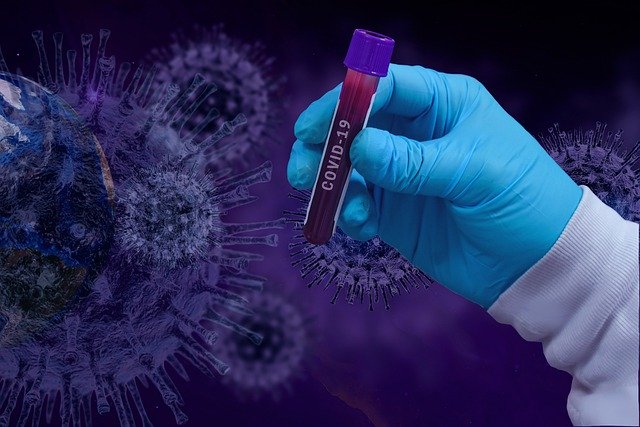
    Image by Alexandra_Koch from Pixabay

    Renaldo Weekes, Guest Contributor

    Renaldo Weekes, Guest Contributor

    COVID-19 has been characterised by the disruption of many systems and procedures that the world uses to conduct business and everyday life. It follows, then, that the global economy took a severe hit when the virus spread across the world and forced many countries to close their borders and businesses to halt or slow their operations. Many began to ponder how countries, especially Small Open Economies (SOEs), would survive. Now that a year has passed since the start of the pandemic, many are eager to return to the life we once had.  Though this is possible with the availability of vaccines, there is no doubt that COVID-19 has left a scar on the world that may never be healed. In assessing this, we must consider the ways in which trade is impacted. Namely, through scams and Anti-Money Laundering (AML), tourism and immigration, and the acceleration of technological trends.

    Scams and Anti-Money Laundering

    Scams are schemes used to swindle money out of unsuspecting persons. The money gained from scams are laundered through the bank system in order to legitimize it. AML seeks to prevent the act of laundering money. In the context of the current COVID-19 pandemic, government agencies such as the Federal Trade Commission (FTC) have warned that fraudsters are sending phishing emails, posing as government agencies promising to provide aid in exchange for access to bank accounts.

    As many countries and businesses are slow to recover from the pandemic, many persons remain desperate and vulnerable to scammers who continue to exploit the situation. In light of the increase in scam activity at a time when Governments are hyper focused on providing relief, it is imperative that AML procedures are enforced to ensure that fraudsters do not slip by. National Public Radio (NPR) in the United States (US) reported that so many business requested assistance that the government could not properly vet who actually needed assistance and thus, many fraudsters slipped by. How does this relate to trade?

    Trade is driven by businesses and individuals located in different countries buying from or selling to each other. AML procedures can persuade persons seeking to do business in other countries. They indicate a jurisdiction’s commitment to stopping money laundering which can be used for things such as acts such as terrorism. Persons must be sure that their assets are safe. Scammers’ abilities to continually slip through the cracks during this crisis unscathed may serve as an indication of weak enforcement of AML procedures. Reviews of internal procedures must be prioritized. This issue is more likely to affect countries with an already undesirable AML rating, especially those that may have had the unfortunate privilege of being included on lists such as the European Union’s (EU) list of non-cooperative jurisdictions. Such lists can restrict foreign investment which is especially important to SOEs.

    Tourism and Immigration

    Tourism and immigration are two aspects of trade that are sometimes overlooked. Tourism is only associated with vacationing families and immigration associated with persons moving from one country to another permanently. However, there is more to these two areas. Tourism and immigration are predicated on the movement of people across borders and the pandemic has hindered this significantly, but how does this affect trade? We will consider tourism first. Tourism is defined by the UNWTO as “a social, cultural and economic phenomenon which entails the movement of people to countries or places outside their usual environment for personal or business/professional purposes.” It “has to do with their activities” which involves “tourism expenditure.” This definition notes that tourists travel for business, and contribute to expenditure. A paper entitled ‘Tourism and Trade: A Global Agenda for Sustainable Development’ notes that tourism counts as an export for the destination country and import for the tourists country of origin.

    Tourism expenditure directly involves several companies such as hotels, travel agencies and tour companies, and self-employed persons who focus on tourists. Indirectly, tourism involves companies that provide services to the aforementioned companies. Part of their success depends on the success of those directly impacted by tourism. It is no secret that tourism is major source of revenue for SOEs, especially those in the Caribbean. A decline in a major revenue earner for SOEs counts toward a decrease in their exports and leads to the disruption of the value chains that exist between companies that are involved in tourism.

    In addition to this, tourists aid building the brand of a country. Not only the for the sake of leisure but for the sake of investments. Each product they return home with, review of services and other infrastructure gives insight into the country. Tourists themselves can turn into possible investors. Being physically in a country provides experiences that online-only services cannot provide.

    With this coming to a sudden halt during 2020 and some countries struggling to fully reopen, it remains a struggle to regain ground for those that rely on tourism. Though the distribution of vaccines seems promising, there are reports of a third wave of the pandemic in some parts of the world. This third wave will likely result in the reinstatement of lockdowns which will further hinder the regrowth of tourism. The institution of a vaccine passport is another hindrance as those unable to receive the vaccine will not be able to travel. This is especially for those who live in relatively poor countries that must rely on the COVAX facility and the generosity of wealthier nations for vaccine doses.   

    Immigration

    Immigration, being similar to tourism in terms of the movement of people, is affected in many of the same ways as tourism. Closed borders and the institution of a vaccine passport limit rates of tourism and immigration alike. This notwithstanding, immigration affects trade and concomitant supply links in other in its own ways. Firstly, immigrants add to the number of workers within a country and this increases the capacity of businesses and investment since there would be, in theory, more productivity. Added to this is the fact that immigrants are willing to do jobs that natural born citizens of a country may not be willing to do. For example, immigrants in America perform jobs that native born Americans opt out of. This being the case, immigrants contribute greatly to the export of commodities such as agriculture as this sector is likely to be filled with immigrant workers.

    Secondly, immigrants forge links to their home country in their destination country. Immigrants have family and friends in their home country that they send remittances and other products to. In turn, they import products from their home country that may not be otherwise available in their new home. This diasporic link contributes to businesses that specially target immigrants. Recognizing the contributions that immigrants make to both their home country and their resident country, any downturn in immigration can hinder the growth of these trade links.  

    Acceleration of technological trends

    Before the pandemic began, certain practices within the global economy were trending either upward or downward. One such practice that was trending upward was the reliance on technology. The worldwide spread of COVID has pushed a work from home initiative that has made technology more of a necessity in our lives. Many businesses and governments were forced to have more online presence and reshape their operations to have more technological focus. The benefits of this include more fluidity in logistics and operations as there would be less administrative overhead. This translates to better trade fluidity since efficiency would be increased. This is especially important for SOEs that heavily rely on trade. They must have a state of the art customs system that facilitates fluid importation and exportation that serve as the lifeline of the country.

    Conclusion

    While most persons are concerned with the side effects of the coronavirus on the body, the pandemic itself will prove to have variety of side effects on the global economy at large. It may have been obvious to the majority of persons that the world would have been forced to change as result of a pandemic that has pushed the boundaries of our systems and made reconsider things once considered impossible. However, some persons may not have considered the specific ways in which the world would be changed, especially international trade. In light of increasing scams related directly the pandemic, the current limits placed on tourism and immigration, and the acceleration of trends that were already in place, it is imperative that persons be ready for the stresses and permanent changes that are in place or will be put in place as we prepare to leave COVID behind once and for all and rebuild our society and economy.

    Renaldo Weekes is a holder of a BSc. (Sociology and Law) who observes international affairs from his humble, small island home. He has keen interest in how countries try to maneuver across the international political and legal stage.

    The views and opinions expressed herein are solely those of the guest author and are not necessarily representative of those of the Caribbean Trade Law & Development Blog.

    SOURCES

    FEDERAL TRADE COMMISSION WARNING – https://www.ftc.gov/news-events/blogs/business-blog/2021/01/business-owners-latest-covid-scam-directed-you

    NPR – https://www.npr.org/2020/10/28/928792199/billions-in-covid-19-relief-loans-may-have-been-handed-out-to-scammers-report-sa

    TOURISM DEFINITION – https://www.unwto.org/glossary-tourism-terms

    TOURISM AS TRADE – https://www.intracen.org/uploadedFiles/intracenorg/Content/Publications/Tourism_and_Trade__low%20res_2014-2015-335.pdf

    DO IMMIGRANTS STEAL JOBS? – https://www.brookings.edu/blog/brookings-now/2017/08/24/do-immigrants-steal-jobs-from-american-workers/
  • COVID-19: The Push to Conflict

    COVID-19: The Push to Conflict

    Renaldo Weekes, Guest Contributor

    Renaldo Weekes

    The novel Coronavirus disease (COVID-19): a common threat that has united the world in unprecedented ways. As the pandemic rages on, however, some are getting anxious and want answers. United States (US) officials have accused China of mismanaging the coronavirus response and allege that it originated in a Chinese lab. China responded with allegations that the US military planted the virus in Wuhan. 

    The possibility for escalation is nigh as US President Donald Trump reportedly suggested that China may be punished for its alleged impropriety through new tariffs, sanctions and the lifting of sovereign immunity. As the US seeks to punish China, one wonders what the effects may be on the wider world.

    The Global Economy

    The tariffs being floated by the Trump administration as possible punishments will stifle the global economy since, being the world’s two largest economies, the US and China are very much intertwined in the global economy. Consideration must also be given to how China will retaliate to the tariffs.

    Tariffs, essentially being a tax on imported goods, will make goods more expensive at a time when many businesses and consumers cannot absorb such a cost. What little spending power exists will diminish, further pushing the economy downward. The global economy’s recovery rate will be restricted as supply chains will slowly regain traction amidst low numbers of buyers and sellers. Shocks will hit small open economies especially hard as they greatly depend on foreign production that travels through the US. It is still left to be seen if the US will follow through with such plans however.

    Sanctions have more versatility in the sense that they can be applied to certain businesses or individuals within the US banking system. This is effective because the US has a long reach in the world’s financial system. However, depending on where those sanctions are applied, there could be some disruption in the global supply chain because, as mentioned earlier, China is intertwined in the global system. Again, small open economies that regularly do business with China will be in trouble.

    The lifting of state sovereign immunity allows American citizens and the American Government to sue China for COVID-related issues. Removal of sovereign immunity may have at least two effects. First, it allows the US wants to fight China with its own rules by allowing lawsuits. Secondly, if state-owned or state-related Chinese businesses in US jurisdictions are entangled in lawsuits, China will have to decide if staying in the US is worth the retaliatory lawsuits or risk relocation which may cause disruptions in supply chains.

    Political

    Considering the implications of this clash to the wider world, both parties have been working to push their narrative to their partners for support. This puts a number of countries with mutual relationships in an awkward position as they must now play chess with their words and actions which, as seen through Australia and the European Union (EU), is quite difficult. 

    Australia has, just like the US, called for an investigation into the virus’s origins but has stopped short of saying the virus came from a lab. To China, not overtly opposing those claims is implicit support of the US’ claims and in response, Chinese Ambassador to Australia Cheng Jingye suggested a possible shift in trade relations between the two countries. Acting on those words, China has suspended beef imports from Australia. This underscores China’s willingness to use its economic might against countries politically opposed to it. Such tactics may hurt Australia as China accounts for 36 percent of Australia’s total annual exports. Though both countries claim that the issue is separate from the pandemic, it is hard to defend that point considering the veiled threat laid by the Chinese ambassador. One must ask whether it is possible to separate the two incidents or if it would have happened but for the call for an investigation.

    The EU has been under the spotlight for editing a report related to disinformation campaigns by China to appease China and for allowing China to censor an opinion piece written by the EU’s ambassador to China. The EU’s move is seen as bending more toward China by editing its report and allowing China to censor its piece. Added to this is reporting that the European External Action Service (EEAS), responsible for the bloc’s foreign policy, has been rife with problems related to each EU member state wanting to follow its own agenda. This suggests no real coordinated effort toward handling the issue and a weakening of the EU’s position as this may, theoretically, give China an opening to further cement this divide.

    Despite what may appear to be the case, EU member states have stood up to China. It is reported that China attempted to encourage German Government officials to make positive spins on how it has been handling the virus but it was quickly shot down. France hastily summoned its Chinese ambassador when a Chinese diplomat wrote a piece criticising Western countries on their treatment of the elderly. President of France Emmanuel Macron and German chancellor Angela Merkel have both called for investigations into the origins of the virus but, similar to Australia, have not claimed that the virus came from a lab. Joined with that is the EU’s support of the US’ push for an investigation into the coronavirus’s origins at the WHO general assembly. These examples show that the EU is not necessarily bowing to China. Considering the historically friendly relationship between the two, the EU would not have the same motivation as the US to immediately dismiss China.

    Even the World Health Organisation (WHO)?

    The WHO itself has been dragged into the fray by the US as the Washington has suspended its WHO funding due to accusations that that UN agency facilitated China’s hiding of coronavirus statistics. Such an accusation suggests that the WHO abdicated its duty in order to appease China. The US’ actions also serve to weaken the WHO’s ability to help the world at large; more so those who cannot help themselves. Allowing a spat to spill over into the UN agency for health during a pandemic is seen by many critics as a way for the Trump administration to deflect any blame it is receiving for its handling of the virus domestically; especially since a Presidential election is due this November.

    Conclusion

    COVID-19 has led to a pandemic that took the world by surprise. Most people did not think that a virus in China would spread to the world. Nevertheless it has and people’s magnanimity has shown through like never before. However, it has devolved into a blame game between the world’s most powerful countries about how the pandemic started, capturing many other countries in the fray. But for the pandemic, would the US and China be in this situation? Probably not, but here we are. The only real way for this situation to stop is if the US recants or if China admits fault. At this point, neither seems likely. One can only hope that the war of words between the two countries does not escalate to a point of no return that drags the rest of the world down as a result.

    Renaldo Weekes is a holder of a BSc. (Sociology and Law) who observes international affairs from his humble, small island home. He has keen interest in how countries try to maneuver across the international political and legal stage.

  • A new UK Parliament and a new deal: What are the implications for Brexit?

    A new UK Parliament and a new deal: What are the implications for Brexit?

    Renaldo Weekes, Guest Contributor

    Renaldo Weekes

    On December 12, 2019, the United Kingdom (UK) held its second general election since 2015 which resulted in Prime Minister (PM) Boris Johnson retaining his position as the Conservative party regained the majority it lost in 2017.  It is apparent that Brexit dominated the campaign leading up to the election and some argue that the Conservatives’ win shows that the country is in alignment with PM Johnson’s views on the matter. Now that Mr. Johnson has a comfortable majority of 365 seats in the House of Commons, he is free to push through his Brexit agenda without the shackles of a minority that held him and his predecessor Theresa May back. We have already gotten a demonstration of his new found power as the second reading of his Withdrawal Bill has been passed on December 20 without any hiccups. The Bill that was passed, however, is somewhat different from the Bill the PM presented before Parliament agreed to an election. With a new Bill and a new Parliament, one must now consider what changes are contained in the new deal, the implications of those changes and the road from here on out.

    What is in the new deal?

    As Boris Johnson inherited a minority Government, he had to grant many concessions to opposition Members of Parliament (MPs) to increase his chances of getting his bill passed. This meant adding clauses favourable to the opposition. They included allowing MPs to approve extensions to the transition period and approve negotiating objectives; aligning UK workers’ rights with those of the European Union (EU) and adhering to the political declaration that accompanied the withdrawal agreement. With a newly secured majority, Mr. Johnson no longer needs to retain those concessions and as such, has removed them. The PM has also taken the liberty of adding his own clauses which, among other things, outlaw extensions to the transition period, grant Ministers power to change laws through secondary legislation and remove the Northern Ireland backstop that his predecessor put in place to prevent a hard border from being erected between Northern Ireland and the Republic of Ireland since Northern Ireland would be leaving the EU with the UK while the Republic of Ireland remains a member.

    Implications of changes in the new deal

    With no ostensible obstacle in Mr. Johnson’s way, one must seriously consider the implications of the changes to his withdrawal bill as they will likely become law. The removal of the concessions previously granted to MPs essentially strips power related to Brexit away from the Commons. Concomitant with that is the granting of Ministers with more power over the process. This bolsters Johnson’s position as he no longer has to submit to what may be an uncooperative House of Commons.

    Of main concern to the main opposition UK Labour Party was UK workers’ rights not being aligned with EU workers’ rights. Much of the UK’s employment standards are derived from EU standards so leaving the EU without any guarantee that EU standards will be retained is quite concerning for good reason. Mr. Johnson has not completely dismissed the idea, however, as he opted to address the issue of worker’s rights in a separate employment bill. The question is how long will it take for his Government to address those issues? This also brings up the broader question of the UK’s ability to make its own laws which was a motivating factor behind Brexit. Some argue that Brits should have faith that their country can competently draft its own laws. Some go further by saying that in many respects, UK law actually goes further than EU law. For example, UK maternity law goes up to 52 weeks versus the EU’s 14 week minimum.  Employer-employee relationships will certainly change as employers may have less responsibility to their employees, even if only for a short time.

    The decision to outlaw extensions to the transition period signals to MPs and the wider public that the Prime Minister is serious about getting Brexit done, even if no deal is reached by the end of the transition. In the context of almost back-to-back general elections, MPs’ stubbornness and a divided UK, Mr. Johnson feels it is his duty to end the Brexit issue, no matter what. As mentioned earlier, the fact that he returned with a comfortable majority reflects that the public agrees with him. His attempt to prevent an extension to the transition period may not necessarily stand as, depending on how negotiations go, he may seek an extension and amend the law as necessary.

    PM Johnson’s new arrangement for Northern Ireland is one that is welcomed by many Brexiteers who previously opposed Mrs. May’s backstop because they viewed it as tethering the UK to the EU; preventing a true Brexit. They did not buy into the idea that the backstop was necessary. Under Mr. Johnson’s new bill, Northern Ireland will be a part of Great Britain’s customs territory but will remain somewhat aligned to the EU’s single market. This creates special status for the territory and goods travelling between it and Great Britain. Goods travelling between the two areas will be subject to EU tariffs and other EU procedures if they are at risk of moving into the EU, whether in part or in whole.

    Critics argue that this new arrangement divides the UK by virtue of checks that will have to be performed on goods travelling between Northern Ireland and Great Britain; similar to what would have happened between Northern Ireland and the Republic of Ireland. Given the large amount of goods that will be subject to checks due to trade that occurs between the UK and EU members, especially since Northern Ireland and the Republic of Ireland share a physical space, the UK divide is a real possibility in theory. In practice, however, the UK will be free to make ambitious trade agreements with countries all over the world including the US, the UK’s largest trading partner. This may help to mitigate any UK dependence on the EU and thus, mitigate any split that may occur between the Northern Ireland and Great Britain.

    Considering that Northern Ireland will be partially under two different regulatory regimes, the UK and the EU will have to coordinate with each other to ensure that goods travelling through the territory are classified correctly. The UK has also taken the extra step of giving the Northern Ireland Assembly the ability to consent to the arrangement. If the assembly decides to not retain it, then the issue of the hard border will arise once again, meaning that in theory, the issue is not completely solved. Given the consequences should they not consent, the assembly is likely to approve.

    The road from here

    Passage of PM Boris Johnson’s Brexit bill without any major defections from his party shows that we are on our way to the Brexit that many envisioned we would have since March 29, 2019. ‘Remainer’ MPs and citizens hoping to have Brexit reversed have even less of a chance of doing so in the face of a more united Conservative party; though the chances were already quite slim. The chance for even a delay has been, on its face, eliminated as the Government has made it illegal to delay the transition period, thus making no extra time for negotiations. Though this may be subject to change if the Government has a change of position, without the pressure from the House of Commons that PM Boris Johnson and his predecessor had before the December 12 general election, it is very unlikely that this will be the case.

    With a more certain path for the UK’s future, UK businesses and citizens, and the wider world can rest assured that plans for their future will no longer suffer from uncertainty either. The constant questions of “will they?” or “won’t they?” may no longer pervade casual discourse. Though some persons will still argue that the UK should not leave the EU, the voters have spoken twice; in the 2016 referendum and in the 2019 general election. Nevertheless, considering how divisive Brexit has been since the referendum results were announced, we can only hope the PM Boris Johnson secures the best he can for the UK and mend a country that has been too focused on Brexit, much to its detriment at times.

    Renaldo Weekes is a holder of a BSc. (Sociology and Law) who observes international affairs from his humble, small island home. He has keen interest in how countries try to manoeuvre across the international political and legal stage.

  • Theresa May’s Resignation: What are the implications?

    Theresa May’s Resignation: What are the implications?

    Renaldo Weekes, Guest Contributor

    In 2016, the United Kingdom (UK) held the now famous ‘The United Kingdom European Union (EU) Membership referendum’ in which it voted to leave the EU. Due to then-Prime Minister David Cameron’s resignation over the result of the referendum, Theresa May became the Conservative party leader and concomitantly, Prime Minister of the United Kingdom of Great Britain and Northern Ireland. What followed was a tumultuous few years as Mrs. May tried to negotiate a deal that would satiate the country and the House of Commons.

    As she came to realise, however, this was no easy task. Disagreements over whether there should be a clean break from the EU with no deal, trading on World Trade Organization (WTO) rules, or a deal that would tie the UK to the EU in some form ensued. When a deal was finally crafted, Members of Parliament (MPs) from all across the Commons, including those in May’s own Conservative party, showed their displeasure for it as they rejected it three times. Though she tried to secure some changes, the EU effectively ruled that out. Fed up with the situation, many of her cabinet members began to resign and many MPs started calling for her own resignation as well.

    Amidst of all this, Theresa May argued that her deal was the best deal they could get and that she would not resign. That, however, did not last long. In an effort to persuade the Commons to support her deal, she promised she would resign if they voted for it. That was not enough, however, and now she has finally announced on Friday, May 25, 2019, that she will resign as Conservative party leader on June 7 and subsequently, Prime Minister of the UK. All problems do not end with Theresa May, however. In fact, some new ones now arise. One must ask what Theresa May’s resignation means for the Brexit withdrawal deal and the United Kingdom’s trade policy with other countries.

    A New Prime Minister and a new deal?

    Theresa May’s resignation has sparked a competition for leadership of the Conservative party and the UK as a whole. This means that all conservative MPs who were dissatisfied with May’s handling of Brexit now have the chance to correct all of her wrongs. At first, it may seem as though the party may choose one of the many vocal, hardline Brexiteers who wish to see a no-deal scenario, such as former Foreign Secretary Boris Johnson, to become the next Prime Minister since those hardliners are often credited as obstructing the passing of May’s deal. However, we must not forget that the Conservative Tory party is also made up of persons who wish to have a close relationship with the EU or even to remain in the Union. Those varying stances have all played a part in why May’s deal has been rejected. They all agreed on what they didn’t want but must now agree on what they want. Some Tory MPs have publicly said that will oppose the selection of someone like Mr. Johnson as his plans for a no-deal Brexit are too reckless.

    Let us consider a scenario where a no-deal supporter became the Prime Minister. Presumably, he may just rip up the deal and choose to exit the EU on WTO terms. This is next to impossible, however, as the House of Commons has already rejected a no-deal scenario under Theresa May. It is far less likely that those opposed to a no-deal withdrawal will change their minds just because of a new face. Especially if that new face is acting more ideological than pragmatic. If a no-deal scenario were to succeed, it would create massive disruption to operations and supply of goods as many businesses have deep ties within the EU that help them to survive. There will be an eventual recovery but how long will that recovery take? Would it really be wise to risk financial stability for the sake of satisfying an ideological point?

    What about a deal-supporting Conservative? There are many MPs who want to leave the EU with a deal but they differ on what they want in the deal. Some want an arm’s length relationship in the deal while others want to be as close as possible to the Union with a customs union or what has been dubbed as the common market 2.0. Though those scenarios would be more preferable than a no-deal, the House has also rejected those through the series of indicative votes that it held in late March and early April. On the face of it, no matter what the new Prime Minister brings, it may suffer the same fate as May’s deal. Of note though, is the margin by which each indicative vote failed. In the second round of indicative votes, the customs union vote tabled by ‘europhile’ Tory Kenneth Clarke, lost by only 3 votes; the lowest margin. The new Prime Minister who knows how to play politics better than Theresa May may able to swing people to the customs union provided that it is his or her preferred option.

    Forgetting Brexit entirely?

    Other options such as holding a second referendum and revoking article 50 are also desired by some but that may not be the wisest thing to consider at this time. The public will perceive that the Government is holding a new referendum simply because the first one produced an undesired result. Revoking article 50 goes directly against what the people voted for. Avoiding Brexit may be the desired outcome for some, but the public upheaval that may arise through the methods of trying to stop it may not be worth it. Implementing these options with support from the House and the public will be quite laborious. 

    The EU’s role in the deal

    Amidst of all this, no matter what the new Prime Minister puts forward, he or she still has to deal with the EU. The EU has made clear that they will not change the current deal. There is no more room for tweaks or changes, especially relating to the contentious Irish backstop that seeks to prevent a hard border between Northern Ireland and the Republic of Ireland. If a new Prime Minster believes that he or she can sway the EU to remove the backstop or any other restrictive conditions then he or she is sorely mistaken. It will be especially difficult to renegotiate the deal so late into the timeline with someone who may be hostile toward the EU. By all means, however, the EU will welcome anyone willing to build its current relationship with the UK. It will be easier to renegotiate the deal in that regard. The EU will also still be wary of crafting any kind of deal considering that the House has effectively ruled out all options on the table.

    The United Kingdom’s Trade policy with other Countries

    It is quite clear that Brexit will shape who becomes the next Conservative leader and the next Prime Minister but there are other trade policy issues that exist beyond Brexit. With a change in leadership and subsequent change in team, other world leaders must now adapt to what could be a change in trade policy approach. There could be a new Prime Minister who is more of a hardliner as it relates to overall trade policy or someone who has a softer approach. This will be of special interest to leaders like United States (US) President Donald Trump who wishes to renegotiate the US’ trade deals with other world leaders that he considers as conciliatory parties. This may not be much of a big concern, however, as a change in leadership is normal as this happens whenever there is a general election.

    Additionally, a Conservative is a Conservative. There may be no real major policy changes for the country as a whole. The relationship between the UK and the EU is also one that is unlike other relationships the UK has and issues surrounding Brexit will be far more complex than normal trade relationships. Others may claim that the EU is being a bully as it is merely concerned for its own sustainability.

    Conclusion

    Considering that all surrounding factors remain the same, those being Parliament’s and the EU’s stubbornness, and the fact that practically speaking, there are no changes that can be made unless they seek to bring the UK and the EU closer together, the new Prime Minister has to be one that looks at the situation in a pragmatic way rather than ideological. He or she must also be able to play politics. Though the legal relationship is what really matters, people must be sold on the idea that this is the best possible deal rather than simply being told it is the best. Whoever the new Prime Minister is, one can only hope they can achieve these things and solve the current Brexit problem rather than exacerbate it or even create new ones. The Conservatives must realize that Britain’s future, Brexit and beyond, is in their hands.

    Renaldo Weekes is a holder of a BSc. (Sociology and Law) who observes international affairs from his humble, small island home. He has keen interest in how countries try to maneuver across the international political and legal stage. Read his other postings here.