Category: SDGs

  • SDG Index 2021: How did Caribbean countries perform?

    SDG Index 2021: How did Caribbean countries perform?

    Photo credit: The United Nations

    Alicia Nicholls

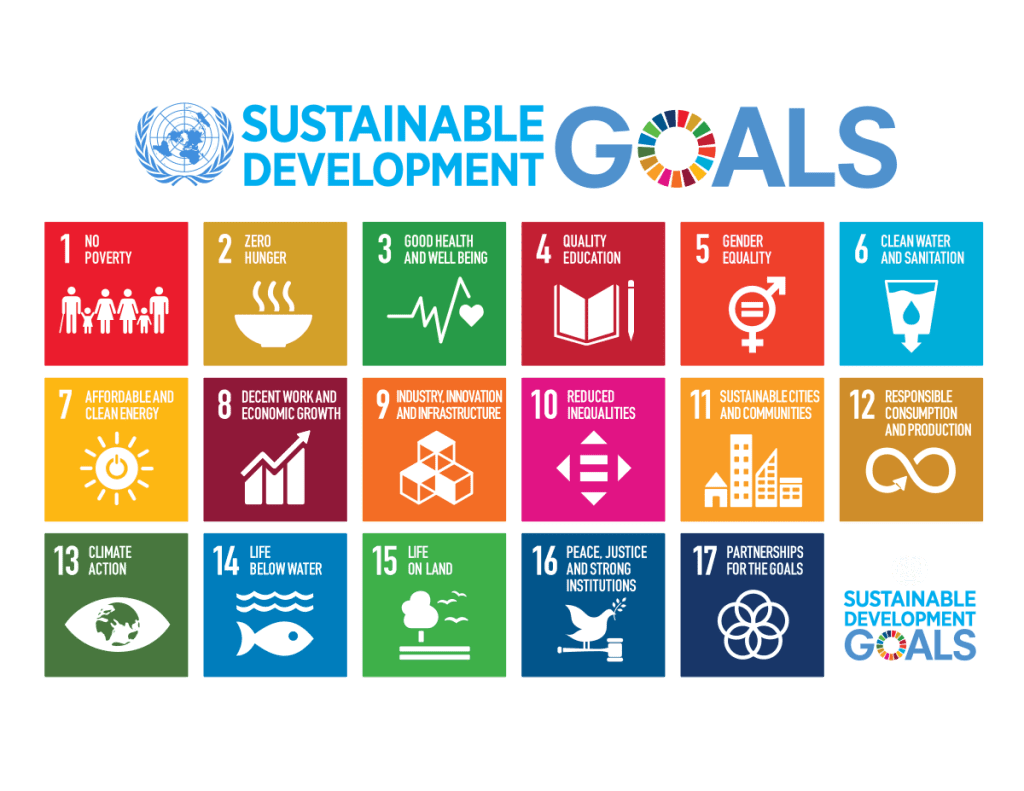
    The novel coronavirus (COVID-19) pandemic has been a significant setback for countries’ achievement of the 17 United Nations Sustainable Development Goals (SDGs) and their 169 targets. This was one of the main takeaways from the virtual launch of the Sustainable Development Report 2021: The Decade of Action for the Sustainable Development Goals on June 14.

    Released annually, the Sustainable Development Report is a key resource for tracking countries’ progress towards achievement of the SDGs which are part of the 2030 Agenda for Development agreed to by UN Member States, including those in the Caribbean, in 2015. The goals are ambitious, balancing all three elements of sustainable development: economic, social and environmental. Countries agree to achieve these goals by 2030 and this decade has been declared the ‘Decade of Action’ for the SDGs.

    A country’s rank on the SDG Index is determined by its overall score. This overall score measures a country’s total progress towards achieving all 17 SDGs, with a score of 100 being a perfect score, that is, complete achievement of all 17 SDGs. The score can be interpreted as a percentage of SDG achievement. The report also contains dashboards showing countries’ trends on the individual goals, subject to data availability.

    Top performers globally

    This year’s report ranked 165 countries. Overall, member states of the Organisation for Economic Cooperation and Development (OECD) are nearer to achieving the targets than any other country group, according to the Report. Finland tops the SDG Index 2021 with an overall score of 85.90, followed by Sweden, Denmark, Germany and Belgium to round out the top 5 performing countries. However, no country in the world has a perfect score nor is on track for achieving all the goals by 2030.

    Bangladesh has registered the most progress towards SDG achievement, followed by Afghanistan and Cote d’Ivoire. Indeed, East  and South Asia was revealed to be the region which has progressed the most on the SDGs. Brazil, Venezuela and Tuvalu were the countries which registered the most marked declines.

    Caribbean countries’ performance

    Many SIDS, including from the Caribbean, are not ranked on the SDG Index due to insufficient data. For those Caribbean countries ranked, Cuba was the highest with a rank of 49 followed by the Dominican Republic (67). Among countries of the Caribbean Community (CARICOM), Jamaica is the highest ranked at 81 out of 165 countries and a score of 69, a modest improvement from its score of 68.7 on the 2020 index.

    Jamaica is followed in rank by Barbados (83), Suriname (91), Belize (104), Trinidad & Tobago (108), Guyana (128) and Haiti (150). Jamaica and Barbados were the only two CARICOM countries to see an improvement in their overall score compared to 2020 levels. Suriname, Belize, Trinidad & Tobago, Guyana and Haiti saw declines in their overall scores towards SDG progress.

    Country profiles are however included even for those countries which are unable to be ranked on the index due to data shortages.

    Some key take-aways from the report

    The authors described 2020 as a ‘major setback for sustainable development’. For the first time since the SDG Index has been published, there has been a global decline in goal achievement driven in great part by an increase in extreme poverty and unemployment largely as a result of the COVID-19 pandemic.

    The report noted that there remains a gap between countries’ SDG commitments and implementation/mainstreaming. This must be addressed if the goals are to be achieved by 2030. The Report called for strong multilateral action to make the ‘Decade for Action’ count.  The authors further pointed to the need for a significant increase in fiscal space, global tax reform and expanded financing by multilateral development banks and debt relief to restore SDG progress in developing countries.

    The Report also contained a 2021 International Spillover Index which demonstrated how rich countries can generate negative socioeconomic and environmental spillovers undermining poorer countries’ ability to mobilise the financial resources needed to achieve the SDGs. Indeed, it highlighted how unsustainable trade and supply chains and tax havens and profit shifting in many rich countries undermine other countries’ ability to mobilize needed financial resources to achieve the SDGs.

    The report was prepared by teams of independent experts at the Sustainable Development Solutions Network (SDSN) and the Bertelsmann Stiftung and was authored by Jeffrey Sachs, Christian Kroll, Guillaume Lafortune, Grayson Fuller and Finn Woelm.

    The full SDG Report 2021 may be accessed here.

    Alicia Nicholls, B.Sc., M.Sc., LL.B. is a trade and development consultant with a keen interest in sustainable development, international law and trade. All views herein expressed are her personal views and should not be attributed to any institution with which she may from time to time be affiliated. You can read more of her commentaries and follow her on Twitter @LicyLaw.

  • Good Governance, the SDGs and Caribbean SIDS

    Alicia Nicholls

    Caribbean countries joined fellow United Nations Member countries in September 2015 in endorsing the 17 Sustainable Development Goals (SDGs) and their 169 targets which reflect the ambitions and aspirations for the 2030 global Agenda for Development. Good governance (SDG 16) is a standalone goal under the post-2015 global development agenda, but is considered an “enabler” goal, as enhancing institutional structures and governance can assist in the implementation and monitoring of progress towards achieving the other SDGs.

    Commonwealth Caribbean countries take pride in their British-inherited Westminster/Whitehall systems of government, political stability and smooth transitions of power. However, governance reform has been a consistent feature of the political discourse across the region and it is useful to consider what role can good governance play in Caribbean small island developing states’ (SIDS) achievement of the post 2015 global development agenda.

    The relationship between good governance and development is one which has dominated the development literature; a central debate in the academic literature is whether good governance is a prerequisite/enabler for, or consequence of, development. In July 2012, UN Member States unequivocally agreed pursuant to UN General Assembly Resolution 66/228 of July 2012 that good governance and rule of law are essential for sustainable development.

    The United Nations Economic and Social Commission for Asia and the Pacific (UNESCAP) defines good governance as “the process of decision-making and the process by which decisions are implemented (or not implemented)”. UNESCAP goes on to state that good governance “is participatory, consensus oriented, accountable, transparent, responsive, effective and efficient, equitable and inclusive and follows the rule of law”. Besides good governance, the development literature has identified two other components of governance: equitable and effective governance.

    SDG -16 (Good governance and rule of law)

    The UN High Level Panel of Eminent Persons opined that good governance should be a standalone goal as opposed to integrated into the other goals. This is enshrined in SDG16 which is to “promote peaceful and inclusive societies for sustainable development, provide access to justice for all and build effective, accountable and inclusive institutions at all levels”. SDG 16 therefore includes not just good governance but the rule of law.

    SDG16’s 12 targets are broad based, ranging from the reduction of violence and an end to human trafficking, promoting the rule of law, reducing illicit financial and arms flows, among other things. Those specific to governance are to substantially reduce corruption and bribery in all their forms, develop effective, accountable and transparent institutions at all levels, ensure responsive, inclusive, participatory and representative decision-making at all levels, and strengthen the participation of developing countries in the institutions of global governance, provide legal identity for all, ensure public access to information and protect fundamental freedoms, in accordance with national legislation and international agreements, strengthen relevant national institutions, including through international cooperation and promoting and enforcing non-discriminatory laws and policies for sustainable development.

    Governance in the Caribbean Region

    With few exceptions in history, we in the Commonwealth Caribbean have had peaceful transitions of power and are generally societies anchored by respect for the rule of law. Our constitutions contain bills of rights which enshrine important rights and freedoms for our citizenry, with limitations. Notwithstanding this, there are concerns about some aspects of our systems, particularly in regards to transparency, accountability, government responsiveness and citizen engagement. Moreover, many wonder how democratic are our systems outside of the periodic opportunity to vote for a new government.

    In regards to press freedom, Caribbean countries do quite well on the Reporters without Borders’ World Press Freedom Index 2015: Jamaica (9), Suriname (29), Eastern Caribbean (37), Trinidad & Tobago (41), Haiti (53). Barbados was not included. In contrast, of the few Caribbean countries included in the Transparency International’s Corruption Perceptions Index 2015, none is included in the top 50. Cuba is ranked 52, Jamaica (69), Trinidad & Tobago (72), Suriname (88), Dominican Republic (103), Guyana (119), Haiti (158). This trails behind other SIDS like Cape Verde and Seychelles (40), Mauritius (45) and Sao Tome e Principle (66). Barbados ranked 17 in 2014 but was not included in the 2015 index.

    Trinidad & Tobago was the first Commonwealth Caribbean country to implement freedom of information legislation in 1999. Antigua & Barbuda, Jamaica, Belize, St. Vincent & the Grenadines, Dominican Republic, Guyana, the Bahamas, Cayman Islands all have FOI laws with various levels of efficacy. Barbados, however, remains one of the few Caribbean countries not to have Freedom of Information legislation and despite promises by the political directorate, does not have integrity legislation. On the Global Open Data Index Barbados ranked 109 out of a 122 countries. The availability of official government data and regular reporting and information sharing by government agencies still leave a lot to be desired.

    While it may be tempting and politically expedient for our governments to pick and choose which rankings they wish to believe, several issues are symptomatic of governance failings in the region and of the feeling by our electorates that the quality of governance in our countries leaves a lot to be desired. These include low voter turnouts as seen in Jamaica’s recent general election and allegations of vote buying in Barbados’ elections in 2013. Across the Caribbean one can find examples of corruption scandals, accusations of political victimisation and media censorship, allegations of nepotism and of the awarding of questionable contracts. To fill the void, citizens are turning ever increasingly to social media to air their views and to expose alleged cases of corruption.

    Governance for sustainable development

    So how can improving the governance systems in the Caribbean assist our little countries in their progress towards achieving the SDGs? The achievement of many of the SDGs requires governance institutions which are strong, well-functioning and well-resourced. For example, well-managed and staffed Town Planning departments and the implementation and enforcement of town planning policies and regulations have a role to play making cities and human settlements inclusive, safe, resilient and sustainable (SDG 11). Social welfare institutions are needed to reduce inequality within and among countries (SDG 10). Efficient water management policies and strategies are needed to ensure availability and sustainable management of water and sanitation for all (SDG 6). Governance reforms must involve strengthening institutions to assist in the high quality provision of services such as health care and education for the most vulnerable groups in society, which in turn helps to reduce poverty and inequality.

    Good governance, embodied by governance that is “participatory, consensus oriented, accountable, transparent, responsive, effective and efficient, equitable and inclusive and follows the rule of law”, inspires confidence and participation in the system by the citizenry, civil society and the private sector. A more responsive and participatory governance structure allows for special interest populations such as the youth, the disabled and others greater voice.

    Key to citizen participation is access to accurate and timely information. Access to information allows scrutiny of policies by citizens and helps them hold elected officials accountable. Improving communication channels between the government and citizenry allows for the flow of information and ideas between the government and governed, between the government, private sector and civil society, which are essential for policy creation, evaluation and modification, where necessary. Participatory government helps to re-orient policies towards the needs of the community, allowing for greater public support for policies.

    In regards to SDG 8 (promoting sustained, inclusive and sustainable economic growth, full and productive employment, and decent work for all), responsive governance institutions allow for ease of doing business which facilitates private sector activity. The private sector has been identified by the global community as a critical partner for the implementation of the SDGs, not just in terms of providing financing for development, but by aligning their policies to help meet these goals, including the adoption of more environmentally sustainable business, production and investment practices, providing more opportunities for women’s participation and engaging in greater involvement in the community. However, what businesses need is a facilitating and not prohibitive regulatory environment. What they also need is confidence that government decisions will be made based on objective criteria and not on patronage.

    The way forward

    Good governance is essential for helping Caribbean countries in their pursuit of the SDGs. Corruption is a cancer which results in weak and selective enforcement of laws, lack of accountability and transparency, all of which have negative implications for sustainable development. Large informal economies make it difficult for governments to mobilise domestic resources for financing for development, while distrust of government officials makes the private sector less willing to invest or engage in public-private partnerships. These are issues which Caribbean countries must tackle in their pursuit of the SDGs.

    Another issue will be measuring progress made towards achievement of SDG16’s targets. In the Caribbean official data tends to be scarce. This is evidenced by the frequent absence of some Caribbean countries from international indices due to lack of data. Addressing these data shortages will be needed for monitoring.

    Alicia Nicholls, B.Sc., M.Sc., LL.B. is a trade and development consultant with a keen interest in sustainable development, international law and trade. You can also read more of her commentaries and follow her on Twitter @LicyLaw.
  • Access to Justice as a Linchpin of the SDGs: The Sustainable Development Implications of Barbados’ Judicial Backlog

    Alicia Nicholls

    Access to justice has been recognised as a linchpin of the sustainable development goals (SDGs) which define the post-2015 global development agenda. Much ink has been spilt on Barbados’ crippling judicial backlog but very little has been said about the implications of this status quo for meeting sustainable development goals. Access to justice, recognised in SDG 16, is both an end and prerequisite for sustainable development as it is the means by which rights and development gains are enforced and protected. As a barrier to the access to justice, Barbados’ clogged court system has not only implications for the achievement of SDG 16 but can also undermine achievement of other sustainable development goals.

    Barbados has a well-deserved and internationally renowned reputation as a constitutional democracy with strong institutions, respect for the rule of law and a high level of human development which far exceeds that of many fellow small island developing states. The endemic judicial malaise has been the subject of increasing concern and critique. The latest admonishment comes from the Caribbean Court of Justice, the country’s final court of appeal, in its judgment in Walsh v Ward et al, a dispute which originated in 1998. In what has become all too familiar, the CCJ at paragraphs 68 to 70 of the judgment criticised the length of time the case took and the hardships this delay has imposed on the litigants. The Court also noted that its frequent need to comment on Barbados’ excessive delays reveals that this is a “systemic problem”. On these points, there can be no disagreement.

    The Nature of the Problem

    In 2013 it was reported that there were over 3,000 cases awaiting trial and that there were 362 cases which were still undecided, some dating back to 1993. A plethora of reasons are usually posited for Barbados ’ backlog including late court starts and short court sessions, frequent adjournments, delays in judges’ delivery of written judgments, trial scheduling issues, misplaced files and/or incorrect filing of documents, lack of client/witness cooperation and the heavy workload of magistrates and judges. There is also no fixed time period for disposal of matters. In its 2008 judgment in Reid v Reid, the CCJ suggested “as a general rule no judgment should be outstanding for more than six months and unless a case is one of unusual difficulty or complexity, judgment should normally be delivered within three months at most”. There is no evidence that this suggestion has been adhered to.  These problems are further exacerbated by an increasingly litigious Barbadian society. In the above-mentioned report, it was estimated that between 1,700 and 2,000 new cases are filed each year.

    The Sustainable Development Impact

    Although there has been much criticism of Barbados’ judicial backlog, very little has been said about the sustainable development implications. Sustainable development, as defined in the Brundtland Report ‘Our Common Future’, is “development that meets the needs of the present without compromising the ability of future generations to meet their own needs”. Sustainable development depends on a tapestry of interconnected development issues, including poverty reduction, health and education and climate change. This diversity of issues is reflected in the 17 UN member agreed Sustainable Development Goals which succeeded the Millennium Development Goals (MDGs).

    Access to justice was not explicitly part of the MDGs but has been recognised by UN Member States in the post 2015 development agenda as both an end and an enabler of sustainable development. Specifically, Goal 16 of the Sustainable Development Goals (SDGs) is to “Promote Peaceful and Inclusive Societies For Sustainable Development, Provide Access to Justice for All and Build Effective, Accountable and Inclusive Institutions At All Levels”.

    Access to justice speaks to the populace’s ability to access and obtain redress through the institutions of justice in a manner that is fair, expeditious and equitable. It is fundamental to maintaining the rule of law and allows for the enforcement of rights, non- discrimination and accountability of decision makers. Judicial delays caused by a large judicial backlog limit the access to justice by ordinary citizens. Marginalised groups in society, such as the poor, elderly, disabled, children and victims of domestic violence and sexual abuse are disproportionately affected by judicial delays as they endure significant economic, social and mental hardship or in the case of the elderly, sometimes die before their matter has been satisfactorily settled. Each backlogged case therefore represents at least one victim for whom justice has been delayed and whose rights have not been protected.

    Judicial delays also deny accused persons, who often have to wait on remand for years before their case is heard, their constitutional and human right to a fair trial in a reasonable time. According to Prison Studies, about 40% of Barbados’ prison population consists of persons awaiting trial. A large prison population puts a strain on the public purse, resources which could be better used for social development programmes.

    Access to justice is also undermined where there is no public confidence in the system. If public utterances are anything to go by, the Barbadian public appears less than satisfied with the current state of the judicial system. Persons who do not have the confidence in the judicial system are more likely to take matters into their own hands.

    The current backlog not only threatens the access to justice for citizens but can hurt economic activity and thereby undermine economic development (SDG 8). Expeditious case processing and resolution are important in a commercial context where time is money. Economic and reputational costs associated with lengthy delays in the settlement of matters are problematic not just for big firms, but are even more costly for small and medium sized businesses which may lack the revenues to stay in business while awaiting a decision. Any investor seeking to do business or invest in a country wants to be assured that it has prompt access to the local courts in order to enforce contractual rights and that it will not waste resources or possibly go out of business due to inordinately long waiting times. In the Doing Business Report 2016 Barbados currently ranks poorly (164 out of 189 countries) on the efficiency of the judicial system at resolving commercial contracts before the courts. These are indicators which investors consider and have implications for Barbados’ attractiveness as a place to invest.

    What is being done?

    There have been numerous attempts over the years to unclog the judicial backlog problem with very limited success. Among the initiatives have been the new Civil Procedure Rules, the requirement of case management conferences, the creation of special purpose courts, the on-going removal from the computer system of “dead” cases, the addition of three more judges and the Chief Justice’s practice direction on backlog reduction. There are also more recent on-going regional initiatives like IMPACT Justice and the JURIST project which seek to address the justice system as a whole, including facilitating much needed digital access to all the Laws of Barbados and court decisions.

    But are the steps far enough? Alternative dispute resolution has been proposed as a possible solution, a suggestion supported by this Author in an article in 2012. The pre-action protocols provide that parties  to a dispute must engage in “genuine and reasonable negotiations with a view to settling the claim economically and without Court proceedings”. The Court Annexed Mediation Pilot project has been unrolled in the High Court and some of the magistrates courts. However, Barbados still has no Mediation Act or a mediation board. The solutions so far have not been enough to deal with the scale of the problem. Therein lies a critical issue; what is the scale of the problem?

    Official judicial data is woefully lacking on critical indicators such as time to resolution of cases before each court, the size, age and composition of the backlog in each court, the number of outstanding judgments, the average time each judge takes to render a judgment, and average stay on remand. In an effort to allow for comparative measurement of progress for countries, the UN will be developing global indicators during the next year to facilitate data gathering for each goal and target. Countries are expected to formulate their own indicators based on their own unique circumstances. Data on these indicators would provide local authorities with a comprehensive understanding of the scale, nature and causes of the backlog problem which would assist in the formulation of performance goals and the type of interventions needed. Without this any changes would simply be cosmetic.

    Additionally, we the Barbadian public have heard of many judicial reform initiatives but very little on what they have achieved thus far. Progress reports on the impact of these reform initiatives should be published to help restore public confidence in the system.

    An efficient and effective judicial system is essential for upholding the rule of law, safeguarding rights and ensuring the smooth functioning of democratic processes, all of which are needed for sustainable development. The long shadow of Barbados’ case backlog creates pressures on the courts, delays the process of justice and redress, particularly to the disadvantaged, and erodes public confidence in the system. Delays in the settlement of commercial cases can hamper business activity, potentially undermining economic development. Targeted interventions based on a data-supported understanding of the nature and causes of the problem are needed, while public reporting on gains made should inspire public confidence that change is on its way.

    Alicia Nicholls, B.Sc., M.Sc., LL.B. is a trade and development consultant with a keen interest in sustainable development, international law and trade. The Author wishes to thank everyone who provided insight for this article but any errors or omissions are solely those of the Author’s.