Category: WTO

  • Dominica Ratifies WTO Trade Facilitation Agreement

    Dominica Ratifies WTO Trade Facilitation Agreement

    Photo source: Pixabay

    Alicia Nicholls

    Dominica has become the latest Caribbean Community (CARICOM) member state to ratify the World Trade Organisation’s (WTO) Trade Facilitation Agreement, according to a WTO press release. On November 28, 2016 Dominica, along with Mongolia, deposited its instrument of acceptance to the WTO. These two ratifications bring the number of WTO member states to have ratified the Agreement to 100, just 10 shy of the number (two thirds of WTO membership) needed for the Agreement to go into effect, according to the press release.

    The Trade Facilitation Agreement, which was concluded at the WTO’s Bali Ministerial in 2013, aims to lower trade costs by expediting the movement, clearance and release of goods, thereby cutting red tape, and improving cross-border customs cooperation on trade and customs compliance issues. Upon the request of developing and least developed country (LDC) WTO members, a Trade Facilitation Agreement Facility  was established in 2014 to assist them with implementing and gaining the benefits from the Agreement.

    The WTO expects the Agreement to  boost global merchandise exports by up to $1 trillion per year if fully implemented. As I had noted in a previous post on the Agreement, ratification and full implementation  of the Trade Facilitation Agreement by all CARICOM states could also improve Caribbean regional integration by easing transaction costs of exporting across CARICOM states. Implementing these reforms would also send a strong signal to the international business community of these countries’ commitment to improving their ease of doing business.

    The following other CARICOM countries have already ratified the Agreement: Trinidad & Tobago, Belize, Guyana, Grenada, St. Lucia, Jamaica and St. Kitts & Nevis.

    The WTO press release may be viewed here.

    Alicia Nicholls, B.Sc., M.Sc., LL.B., is a trade and development consultant with a keen interest in sustainable development, international law and trade. You can also read more of her commentaries and follow her on Twitter @LicyLaw.

  • WTO Panel Rules US Tax Incentive to Boeing a Prohibited Subsidy

    WTO Panel Rules US Tax Incentive to Boeing a Prohibited Subsidy

    Photo source: Pixabay

    Alicia Nicholls

    In the latest saga of the on-going battle between aircraft giants Airbus and Boeing, a World Trade Organisation (WTO) dispute settlement body panel on November 28, 2016 has ruled that Washington State’s business and occupation (B&O) aerospace tax rate for the manufacturing or sale of commercial airplanes under Boeing’s 777X programme currently in development is a prohibited subsidy under the WTO’s Subsidies and Countervailing Measures (SCM) Agreement. The tax breaks to Boeing had been extended by Washington State in 2013 from 2024 to 2040.

    The Dispute

    The dispute DS487: United States — Conditional Tax Incentives for Large Civil Aircraft was brought by the European Union (EU) which claimed that seven tax incentives extended by Washington State to the civil aerospace industry, which would benefit Boeing’s 777x programme, constitute prohibited subsidies under Articles 3.1(b) and 3.2 of the WTO’s Subsidies & Countervailing Measures Agreement because they de jure require Boeing to use domestically assembled and not imported body and wings for its 777x jets.Such a measure would fall under a prohibited subsidy under Article 3.1(b) of the SCM Agreement as it is a subsidy tied to the use of local content. The EU had claimed that Boeing would gain over $5.7 billion in benefits from the measures.

    Findings

    The Panel found that all seven of the measures at issue were subsidies under Article 1 of the SCM but found that only the B&O aerospace tax rate for the manufacturing or sale of commercial airplanes under the 777X programme was a prohibited subsidy under the SCM Agreement as it was contingent on the use of domestic over imported goods.

    The Panel recommended that the US withdraw this prohibited subsidy without delay and within 90 days.

    With respect to the six other challenged measures, the Panel held that the EU did not demonstrate that the aerospace tax measures are de jure contingent upon the use of domestic over imported goods and were therefore not prohibited subsidies.

    Reactions

    Interestingly, both sides appear to have claimed victory which is perhaps not surprising as the WTO ruled only one out of the seven contested measures to be prohibited.

    The European Commission has hailed the ruling a “major win” in its press release following the ruling. In that release EU Trade Commissioner, Cecilia Malmstrom is quoted as stating:

    “Today’s WTO ruling is an important victory for the EU and its aircraft industry. The panel has found that the additional massive subsidies of USD 5.7 billion provided by Washington State to Boeing are strictly illegal. We expect the US to respect the rules, uphold fair competition, and withdraw these subsidies without any delay”.

    Boeing’s rival, the EU-based Airbus termed it a “knock-out blow”. In its own press release, Airbus claimed that “Boeing has caused at least $95 billion in commercial harm to Airbus, opening the door to trade sanctions against the US in an equivalent amount.”

    In its response to the ruling, Boeing stated that “the World Trade Organization (WTO) today rejected virtually all of the European Union’s challenges to the Washington state tax incentives”. Boeing’s General Counsel, J. Michael Luttig stated that “we fully expect Boeing to preserve every aspect of the Washington state incentives, including the 777X revenue tax rate.”

    What next?

    Either party can appeal the ruling and it is expected that this will occur. This dispute is just the latest in the 12-year old dispute between aerospace rivals Airbus and Boeing over the extent of “illegal” government support the manufacturers have received from EU member countries in the case of Airbus, and the US in the case of Boeing.

    The ruling comes on the heels of a report by a WTO compliance panel released September 2016 which held that the EU had not complied fully with a ruling against support provided to Airbus in the EC and certain member States – Large Civil Aircraft dispute. In 2017 the WTO is also expected to issue its ruling on another case regarding US support for Boeing.

    The full panel report may be viewed here.

    Alicia Nicholls, B.Sc., M.Sc., LL.B., is a trade and development consultant with a keen interest in sustainable development, international law and trade. You can also read more of her commentaries and follow her on Twitter @LicyLaw.
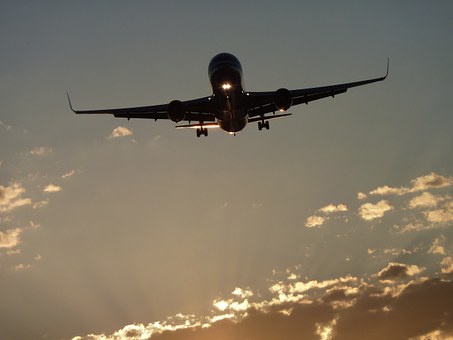
  • WTO: G20 Trade Restrictions remain high, despite slowdown in new measures

    WTO: G20 Trade Restrictions remain high, despite slowdown in new measures

    Alicia Nicholls

    Despite a slowdown in new measures, existing trade restrictions among the G20 countries remain high. This is according to the World Trade Organisation’s (WTO) latest Report on G2o Trade Measures (mid-May 2016 to mid-October 2016) released November 10, 2016.

    Some of the key findings of the sixteenth edition of this Report are as follows:

    • A total of 85 new trade-restrictive measures were implemented by G20 economies during the review period (mid-May to mid-October 2016).
    • This is an average of 17 new measures per month
    • The good news is that this is a decrease  from the 21 per month imposed in the previous reporting period (mid-October 2015 to mid-May 2016)but the WTO also cautioned that this is actually a return to the trend level for new trade-restrictive measures since 2009.
    • Of the 1,671 trade-restrictive measures (including trade remedies) recorded for G20 economies since 2008, only 408 had been removed by mid-October 2016.

    As noted by the WTO, these  findings are of concern given the slowdown in global trade flows and the continuing economic uncertainty in the world economy.

    The WTO in its recent downward revision of its trade forecasts is now predicting 1.7% growth in world merchandise trade volumes in 2016 (down from its previous forecast of 2.8%), the slowest rate of growth since 2009, and lower than global GDP forecasts of 2.2%.

    I would also add that President-elect Trump’s tariff-happy rhetoric does not bode well for the future reduction of trade restrictive barriers if he does go through with his promises.

    The WTO therefore noted that:

    “It is imperative that G20 economies — collectively and individually — re-double their efforts to deliver on their commitment to refrain from taking new protectionist measures and roll back existing ones.”

    The full report may be accessed here.

    Alicia Nicholls, B.Sc., M.Sc., LL.B. is a trade and development consultant with a keen interest in sustainable development, international law and trade. You can also read more of her commentaries and follow her on Twitter @LicyLaw.


  • WTO Public Forum 2016 focuses on “Inclusive Trade”

    Alicia Nicholls

    How can we make trade and trade rules more inclusive for small and medium sized enterprises (SMEs) and women in business? This was the central theme with which government representatives, NGOs, civil society organizations, business leaders, academics, students and ordinary citizens from around the world grappled at the World Trade Organisation’s (WTO) Public Forum held September 27-29, 2016. The flagship outreach event in the WTO’s calendar, the 2016 Public Forum attracted a record 2,000 registrants according to WTO Director General, Roberto Azevedo in his opening remarks on the first day of the event.

    This year’s main theme “Inclusive Trade” is timely given the current global trade and economic climate marked by slowing global trade and economic growth, rising anti-trade sentiment in advanced economies and a strong populist backlash against the Trans-Pacific Partnership (TPP) and the Trans-Atlantic Trade and Investment Partnership (TTIP).

    On the first day of the event, the WTO Secretariat launched its flagship trade policy publication, the World Trade Report 2016. Themed “Levelling the Trading Field for SMEs“, the Report explores SMEs’ participation in global trade, obstacles to their participation and cooperative approaches to promoting SME participation in global trade. Among the Report’s findings are that “trade participation of SMEs in developing countries is low, with exports accounting for 7.6 per cent of manufacturing sales, compared to 14.1 per cent for larger firms”.

    In his opening remarks Director-General Azevedo noted that the backlash against trade and globalisation is not unique during periods of low growth, but cautioned that “history also shows the dramatic consequences that this kind of sentiment can have”. He explained that while trade was an important anti-poverty tool there needs to be acknowledgement that the benefits of trade “don’t reach as many people as they should and we should act … not by attacking trade, but by making it work better.”

    Throughout the three-day event, a number of sessions and workshops were held exploring various themes, including e-commerce and bridging the global digital divide, SME access to trade finance, the sustainable development goals (SDGs), regional trade agreements (RTAs), sustainable investment, inter alia.

    Audio recordings of the various sessions are available on the WTO’s website here.

    Alicia Nicholls, B.Sc., M.Sc., LL.B. is a trade and development consultant with a keen interest in sustainable development, international law and trade. You can also read more of her commentaries and follow her on Twitter @LicyLaw.