Blog

  • US House of Representatives passes GSP Renewal Bill; on to Senate

    US House of Representatives passes GSP Renewal Bill; on to Senate

    Alicia Nicholls

    The first hurdle in the renewal of the United States’ Generalised System of Preferences (GSP) was overcome last week Tuesday when the US House of Representatives passed  H.R.4979 – To extend the Generalized System of Preferences and to make technical changes to the competitive need limitations provision of the program. This is welcomed news for the 120 countries and territories which benefit under the GSP, but just the first step towards the programme’s renewal.

    The US GSP lapsed on December 31, 2017. This Bill provides a three year extension through to December 31, 2020. H.R. 4979 requires there be an annual report on the enforcement of eligibility criteria to ensure that countries designated as beneficiary developing countries are meeting the eligibility criteria.

    Exporters would also be refunded for the duties collected during the lapse period. This is not the first time the GSP has expired, a fact which has created some uncertainty for exporters from GSP beneficiary countries seeking to make use of the programme. Other sources of uncertainty are that the President may graduate any country, remove products from GSP eligibility and remove products for an individual country which has exceeded competitive need limitations (CNLs). There are also a number of criteria for GSP eligibility which reflect the geopolitical  and other objectives underpinning the programme, for example, the ineligibility of communist countries.

    The US GSP was instituted by the Trade Act of 1974 and it is one of several US government trade preference programmes which allow designated goods from certain disadvantaged countries to enter the US market at preferential rates of duty. According to the Office of the United States Trade Representative (USTR) fact sheet on the GSP, some 5,057 8‐digit U.S. tariff lines are eligible for duty‐free entry under the GSP, of which 1,519 are eligible for Least Developed Countries (LDCs) only.

    The fact sheet further notes that in 2016, total US imports under the GSP was $18.7 billion, with the top five GSP beneficiary countries being 1. India ($4.7 billion), 2. Thailand ($3.9 billion), 3. Brazil ($2.2 billion), 4. Indonesia ($1.8 billion) and 5. Philippines ($1.5 billion).

    As of March 2017, the GSP-eligible countries in the Caribbean include: Belize, Dominica, Grenada, Guyana, Haiti, St. Lucia, St. Vincent and the Grenadines, while the following non-independent Caribbean territories are eligible: Anguilla, the British Virgin Islands (BVI) and Montserrat.

    Caribbean countries do not feature among top US GSP countries and there is a good reason for this. Most Caribbean countries are beneficiaries of the Caribbean Basin Initiative (CBI), while Haiti is a beneficiary of the HOPE Acts. As such, according to the 2015 Report on the Operation of the Caribbean Basin Economic Recovery Act (CBERA), in 2014, US imports under the GSP from CBI beneficiaries were just 0.02% of the total imports from those countries. As such, CBI countries’ exports under the GSP are quite small, though some countries like Belize, Jamaica and Dominica make more use of the GSP than others.

    The GSP renewal Bill received bipartisan support in the House and is now before the Senate. For HR 4979 to become law, the identical bill would have to be passed in the US Senate. Failing this, there must be reconciliation of the bills passed in both houses before being signed into law by President Trump.

    The text of the House Bill may be viewed here.

    Alicia Nicholls, B.Sc., M.Sc., LL.B., is an international trade and development consultant with a keen interest in sustainable development, international law and trade. You can also read more of her commentaries and follow her on Twitter @LicyLaw.


  • Golding Commission concerned about Caribbean Citizenship by Investment Programmes

    Golding Commission concerned about Caribbean Citizenship by Investment Programmes

    Alicia Nicholls

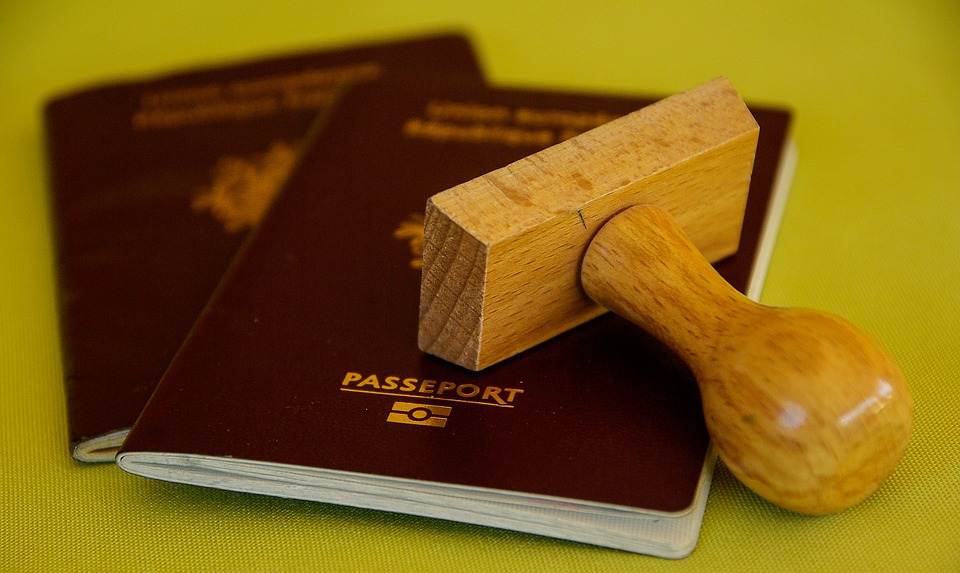
    The CARICOM Review Commission, whose report was tabled in the Jamaica Parliament last week, has expressed concern about the administration of Citizenship by Investment programmes (CIPs) currently operated by five CARICOM Member States, and has called for the establishment of a CARICOM framework agreement on their operation.

    CIPs were among the many diverse issues examined by the Commission whose mandate was to review Jamaica’s relations within CARICOM and CARIFORUM. CIPs are currently operated by five CARICOM Member States: namely, Antigua & Barbuda,  Dominica, Grenada, St. Kitts & Nevis and St. Lucia, and have been the subject of much scrutiny regionally and internationally.

    Though recognising the economic importance of CIPs to these countries, the Commission, chaired by former Jamaica Prime Minister Bruce Golding, raised several issues with their current administration:

    • The programmes are driven more by short-term revenue benefits than long term investment gains
    • The lack of a minimum period of residency
    • The lack of a regional agreement on the operation of such programmes, especially given the national security and other implications for non-CIP operating CARICOM territories
    • While referrals to the CARICOM Implementing Agency for Crime and Security (IMPACS) are made, the State is not obligated to accept the advice of IMPACS
    • Concerns raised by third States (namely the US and Canada) about Caribbean CIPs and the fact that two CIP-operating Member States (St. Kitts & Nevis and Antigua & Barbuda) have already lost visa-free access to Canada due to these concerns
    • Cases of persons granted citizenship under these programmes who were later found to be less than savoury characters
    • The risks to the Community in light of ever more sophisticated trans-national crime
    • The alleged issuance of diplomatic passports to some new citizens
    • Varying due diligence procedures used by CIP-operating Member States

    As such, one of the thirty-three recommendations made by the Commission in its Report is for the establishment of “an agreed framework with appropriate protocols and safeguards regarding the terms, conditions, qualifications and restrictions in relation to the operation of Citizenship by Investment programmes including prior consultations or sharing of information with other Member States”.

    The full report of the Golding Commission may be viewed here.

    Alicia Nicholls, B.Sc., M.Sc., LL.B., is an international trade and development consultant with a keen interest in sustainable development, international law and trade. You can also read more of her commentaries and follow her on Twitter @LicyLaw.


  • Caribbean Trade & Development Digest – February 4-10, 2018

    Caribbean Trade & Development Digest – February 4-10, 2018

    Welcome to the Caribbean Trade and Development Digest for the week of February 4-10, 2018! We are pleased to share some of the major trade and development headlines and analysis across the Caribbean region and the World. We hope you enjoy this edition.

    REGIONAL

    CDB reports Regional development gains in 2017 despite catastrophic Atlantic Hurricane Season

    CDB: Despite major setbacks caused by a destructive 2017 Atlantic Hurricane Season, the Caribbean Development Bank (CDB) is reporting a year of several developmental gains for the Region. Read more 

    Positive economic growth expected for Caribbean Region in 2018, but resilience-building measures needed

    CDB: The Caribbean Development Bank (CDB) is projecting regional economic growth of 2% in 2018. This follows a return to positive figures last year, during which the Region experienced overall growth of 0.6%–despite the devastation caused by the Atlantic Hurricane Season. Read more 

    Barbados ratifies Trade Facilitation Agreement

    BGIS: Barbados has ratified the World Trade Organization’s (WTO) on Trade Facilitation Agreement (TFA). Read more 

    Jamaica Prime Minister Tables Report on CARICOM

    JIS: Prime Minister, the Most Hon. Andrew Holness, tabled a copy of the Report of the Commission to Review Jamaica’s Relations within the CARICOM and CARIFORUM Frameworks in the House of Representatives,  yesterday (February 6). Read more

    CDB President announces up to US$800M for disaster recovery, amid strong Bank performance in 2017

    CARICOM: President of the Caribbean Development Bank (CDB), Dr. Wm. Warren Smith, today announced that the institution is making USD700 to 800 million (mn) available to help Borrowing Member Countries (BMCs) recover from the impact of the 2017 Atlantic Hurricane Season. Read more 

    INTERNATIONAL

    Brazil Circulates Proposal for WTO Investment Facilitation Deal

    ICTSD Bridges: Brazil submitted an extensive draft proposal for a potential agreement on investment facilitation to the WTO’s General Council last week, in a bid to jumpstart more “structured discussions” on the subject. Read more 

    EU-Chile trade talks: Commission releases its proposals and reports about progress

    EU: The Commission also published a report of the second round of talks that took place in Santiago (Chile) from 15 to 19 January 2018. These were the first substantive discussions on trade following the launch of talks in November last year. Read more 

    Commission imposes definitive anti-dumping duties on Chinese corrosion resistant steel

    EU: The investigation confirmed that Chinese producers were dumping the product on the EU market, a finding that already led to imposition of provisional duties in August 2017. The measures that will be in place for the next 5 years range from 17.2% to 27.9%. Read more 

    African Leaders Prep for Summit on Continental Trade Deal

    ICTSD Bridges: African national leaders concluded the 30th Ordinary Session of the Assembly of the African Union last week, with the summit adopting a series of decisions on issues related to continental economic integration – including on the next steps for the Continental Free Trade Area (CFTA), as well as the free movement of people and air travel. Read more 

    No blanket EU trade ban, says Mustapa

    The Star: As Malaysia is an open economy, the government cannot impose a blanket ban on trade with the European Union (EU), but it can collaborate with government-linked companies to determine where to buy and sell goods amid the economic bloc’s threat to palm oil, said International Trade and Industry Minister, Datuk Seri Mustapa Mohamed.
    Read more 

    Mozambique joins the Economic Partnership Agreement between the EU and Southern African States

    EU: Mozambique was the last piece of the SADC-EPA jigsaw to fall into place. The other five countries – Botswana, Lesotho, Namibia, South-Africa, and Swaziland – have been implementing the agreement since October 2016.  Read more

    Ministers admit almost 65 existing trade deals with non-EU countries are ‘at risk because of Brexit

    The Independent: Ministers have admitted for the first time that about 65 existing trade deals with non-EU countries are at risk because of Brexit, it has been claimed. Read more 

    This doesn’t help the little guy! Trader reveals why Germans are furious at EU trade deal

    The Express: The European Union has not learned lessons from its trade deal with Canada and the public will slowly start to resent Brussels bureaucrats and turn against the bloc, an expert has warned. Read more 

    How can East Asia defend the WTO?

    East Asia Forum: A confident, rules-based environment for international trade has made possible the remarkable improvements in East Asian living standards over the past 50 years. This environment — created by the General Agreement on Tariffs and Trade (GATT) and its successor in the World Trade Organization (WTO) — remains essential for the future. But its survival cannot be taken for granted. Read more 

    BiH near membership in the WTO

    IBNA: Bosnia and Herzegovina can reach full membership in the World Trade Organisation till summer this year, and is on the right path to finish negotiations. Read more 

    Bosnia and Herzegovina’s WTO accession negotiations advance towards conclusion

    WTO: At the 13th meeting of the Working Party on the Accession of Bosnia and Herzegovina held on 7 February, WTO members supported the swift conclusion of the negotiations and welcomed the strong commitment and desire by Sarajevo to finalize this process in the coming months. Read more 

    US blocks India’s request for WTO compliance panel on solar dispute

    Hindu Business Line: Moving on expected lines, the US, on Friday, blocked India’s first-time request for the establishment of a panel to settle a dispute on whether the country complied with a World Trade Organisation (WTO) ruling against domestic sourcing of solar cells and modules mandated in its national solar power generation programme. Read more 

    FM: Belarus has no plans to slow down WTO accession talks

    BELTA: In 2017 Belarus considerably intensified the talks on joining the World Trade Organization (WTO) and is intended to keep the pace, Belarus’ Minister of Foreign Affairs Vladimir Makei said in an interview to the Russian newspaper Izvestia, BelTA has learned. Read more 

    Italy eyes stronger ties with ASEAN countries

    Indian Express: “Italy wants to strengthen relations with ASEAN and will organise the 2nd High Level Dialogue ASEAN-Italy Economic Relations in Singapore in April,” said Foreign Minister Angelino Alfano. Read more 

    Liked this issue? To read past issues of our weekly Caribbean Trade & Development Digest, please visit here. To receive these mailings directly to your inbox, please follow our blog.

  • Barbados ratifies WTO Trade Facilitation Agreement

    Barbados ratifies WTO Trade Facilitation Agreement

    Alicia Nicholls

    On January 31, 2018, Barbados became the 130th World Trade Organisation (WTO) member to ratify the WTO’s Trade Facilitation Agreement.

    According to the press release from the Barbados Government Information Service (GIS), “the instrument of ratification was formally handed over by Ambassador to the United Nations and Other International Organisations, Bentley Gibbs, to Secretary General of  the WTO, Robert Azevedo, in Geneva, Switzerland”.

    The Trade Facilitation Agreement came out of the WTO’s Bali Ministerial in 2013 and entered into force in February 22, 2017 after two-thirds of the WTO’s membership ratified the Agreement. It aims to expedite the movement, release and clearance of goods across borders by reducing red tape, improving transparency and facilitating cooperation among customs authorities.

    The benefits of these provisions, once implemented, include reducing trade costs for businesses, increasing participation in global value chains and improving trade flows. Ratification of the Agreement is, therefore, an important signal to investors of a country’s commitment to improving its business environment for trade.

    In keeping with the principle of Special and Differential Treatment, there are implementation flexibilities in Section II for developing and least developed countries, recognising they may need more time to implement the provisions of the Agreement. Like other developing and least developed countries, Barbados has access to the Trade Facilitation Agreement Facility which provides assistance for notification, capacity-building support and grants.

    The following other Member States of the Caribbean Community (CARICOM) have already ratified the Trade Facilitation Agreement: Trinidad & Tobago, Belize, Guyana, Grenada  and St. Lucia (2015), Jamaica and St. Kitts & Nevis  (2016), St. Vincent and the Grenadines, the Dominican Republic and Antigua & Barbuda (2017).

    Alicia Nicholls, B.Sc., M.Sc., LL.B., is an international trade and development consultant with a keen interest in sustainable development, international law and trade. You can also read more of her commentaries and follow her on Twitter @LicyLaw.