Belize underwent its third World Trade Organisation (WTO) mandated Trade Policy Review over the period April 24th and 26th, 2017. Trade Policy Reviews are a mandatory exercise under the WTO’s Trade Policy Review Mechanism. Each WTO member country’s national trade and other trade-related policies are peer-reviewed by the Trade Policy Review Body (the WTO General Council acting under special rules and procedures).
The frequency of the reviews depends on the country’s share of world trade. The purpose of the trade policy reviews is to help to ensure transparency of member countries’ trade policies. Belize has previously undergone reviews in 2010 and 2004.
Some key findings from Belize’s 2017 review
These findings were taken from the WTO Secretariat Report and the Chairman’s concluding remarks.
The Report noted that several issues had affected Belize’s economy during the review period, including the decline in oil prices, disease outbreaks affecting its agriculture sector and the impact from the loss of correspondent banking relationships due to the de-risking practices of major global banks.
Areas of praise
Members praised Belize for the following:
Its diversification into tourism which is now the major driver of the country’s economy, and the adoption of the country’s first National Trade Policy Framework.
Belize’s participation in the WTO. Some members also suggested that the country establish a permanent mission in Geneva.
Belize was commended for being among the first Members to ratify the Trade Facilitation Agreement and for having notified its Category A commitments. Belize also recently established a National Committee on Trade Facilitation
Members commended Belize’s efforts to modernize its trade regime and customs procedures.
Reduction by half of the number of products subject to import licensing, but some members noted that this was followed by tariffication, resulting in some applied MFN tariffs exceeding their bound rates.
Noting Belize’s membership of the Caribbean Community (CARICOM), Members encouraged Belize to continue engagement in regional integration and trade liberalization schemes.
Belize was commended for its acceptance of the Protocol amending the TRIPS Agreement; while some Members encouraged Belize to join the WIPO treaties.
The establishment of Belize’s first Internet Exchange Point to reduce the costs of local internet traffic.
Members acknowledged the recent reforms to Belize’s financial services regulatory framework.
Some Members welcomed Belize’s efforts to improve its air transport infrastructure and air links, and encouraged Belize to replicate such efforts to enhance land and maritime transport.
Areas of concern
Members, however, were concerned that Belize had not submitted notifications in a number of areas, and urged for compliance with the WTO requirements.
Several Members highlighted Belize’s three incentive programmes granting export subsidies which should have been eliminated by 31 December 2015. However, they acknowledged Belize’s ongoing efforts to amend the relevant legislation.
As noted by the Chairman, Belize was commended for providing prompt and helpful answers to all written questions submitted in advance by members, as well as to all that came after the deadline.
Belize is the fourth WTO member country to undergo review so far for the year, following Sierra Leone, Japan and Mexico. The other CARICOM member state to be reviewed this year is Jamaica which will undergo its review on September 13 & 15.
The documents from Belize’s review, including the full WTO Secretariat Report and the Chairman’s Concluding Statement, may be viewed here.
Alicia Nicholls, B.Sc., M.Sc., LL.B., is a trade and development consultant with a keen interest in sustainable development, international law and trade. You can also read more of her commentaries and follow her on Twitter @LicyLaw.
Welcome to the Caribbean Trade and Development Digest for the week of April 23-29, 2017! We are pleased to share some of the major trade and development headlines and analysis across the Caribbean region and the World.
We do apologise for the lack of a Digest for the past two weeks due to my travelling. It has been an interesting two weeks in world trade, with the US imposing tariffs on Canadian softwood lumber imports and the EU releasing its Guidelines for the Brexit Negotiations with the UK pursuant to Article 50. On the home front, Belize has concluded its third World Trade Organisation (WTO) Trade Policy Review. And that’s just the tip of the iceberg! We hope you enjoy this edition.
REGIONAL NEWS
Belize has concluded its third WTO trade policy review
WTO: The third review of the trade policies and practices of Belize takes place on 24 and 26 April 2017. The basis for the review is a report by the WTO Secretariat and a report by the Government of Belize. Read more
US and region deepen security ties
Nation News: The United States has pledged its commitment to deepening its cooperation with the Caribbean region to combat all threats. Read more
Barbados Hotel occupancies drop during the first quarter
BarbadosToday: Against the backdrop of a fall in hotel occupancies and weak returns on hotel room rates during the first quarter of this year, Chairman of the Barbados Hotel and Tourism Association (BHTA) Roseanne Myers Wednesday disclosed that travel agents from source markets were reporting that some repeat visitors were opting not to travel in winter because they were waiting for “when the rates are a little better”. Read more
Hopes for Caribbean Trade Boost
Business Authority: Local exporters, and their Caribbean counterparts, stand to benefit now that a major international trade agreement has come into force. Read more
Barbados records significant rum trade with Europe
Jamaica Observer: Barbados has exported BDS$89.9 million (US$44.95 million) in rum products to the European Union over a four year period, Commerce Minister Donville Inniss has said. Read more
Barbadian Rum producers fear results of French election
BarbadosToday: Barbadian rum producers are keeping a close eye on the French presidential run-off election scheduled for May 7, fearing the results could hurt the local industry. Read more
Gopee-Scoon talks trade with local high commissioner and ambassador
Loop Trinidad: Trade and Industry Minister Paula Gopee-Scoon met with the High Commissioner-designate to the United Kingdom Orville London and Ambassador-designate to Costa Rica Tracey Davidson –Celestine on Wednesday. Read more
Sector leader sees improved trade relations with Trinidad & Tobago
Jamaica Gleaner: President of the Jamaica Manufacturers’ Association (JMA) Metry Seaga says his organisation has received fewer complaints from local manufacturers about unfair trade practices by their Trinidadian counterparts. Read more
We will do everything to keep GuySuCo alive – says Granger
Stabroek: President David Granger said today that his government will do everything possible to keep the sugar industry alive. Read more
Guyana considers Suriname’s gold export model
Demerara Waves: Guyana’s recent foreign currency shortage appears to have caused government to consider adopting Suriname’s model to ensure that more earnings from gold sales goes directly to the national treasury. Read more
Granger names three sugar estates to be retained
Demerara Waves: President David Granger has named at least three sugar estates that will be retained as part of a restructured Guyana Sugar Corporation. Read more
INTERNATIONAL NEWS
European Council Releases (Article 50) Guidelines
EU: The European Council has released its guidelines for the upcoming Article 50 Brexit negotiations with the UK. Read more
Africa and China trade is booming
BusinessReport: China remained Africa’s biggest trading partner as bilateral economic relations boomed, said Jiang Zengwei, head of the China Council for the Promotion of International Trade. Read more
US imposing 20 percent tariff on Canadian softwood lumber
CNBC: U.S. Commerce Secretary Wilbur Ross said on Monday his agency will impose new anti-subsidy tariffs averaging 20 percent on Canadian softwood lumber imports, a move that escalates a long-running trade dispute between the two countries. Read more
US lumber tariffs hit B.C. manufacturers hard
CBC Canada: New softwood lumber tariffs being imposed by the U.S. are already cutting deep into B.C. businesses. Read more
DG Azevedo: Global trade challenges are best tackled through the multilateral system
WTO: The WTO should seek to bolster global economic cooperation in order to leave a strong and well-functioning trading system for future generations, said Director-General Roberto Azevêdo. Read more
Downgrades depress South African exports and trade
BusinessReport: Recent credit downgrades by Standard and Poor’s (S&P) and Fitch have put more pressure on South African exports and international trade. Read more
WTO issues panel report on Chinese cellulose pulp duties
WTO: On 25 April 2017 the WTO issued the panel report in the case brought by Canada in “China – Anti-Dumping Measures on Imports of Cellulose Pulp from Canada” (DS483). Read more
Arbitrator issues decision in Mexico-US tuna dispute
WTO: On 25 April, a WTO arbitrator issued a decision on the level of retaliation that Mexico can request in its dispute with the United States over US “dolphin safe” labelling requirements for tuna products (DS381). Read more
ACP: One billion people to speak to Europe with one voice
The Southern Times: Seventy-nine countries from Africa, the Caribbean and the Pacific, which are home to around one billion people, will speak with one voice as they prepare to negotiate a major partnership agreement with the European Union (500 million inhabitants) in May. Read more
EU tells May: Give our citizens their rights or no trade talks
The Guardian: The EU has called on Theresa May to provide immediate “serious and real” guarantees to its citizens living in Britain. Read more
Some important clarifications on the EPA
The Guardian: All of the ECOWAS countries, apart from Nigeria and the Gambia, have to date signed the EU-West Africa Economic Partnership Agreement (EPA). The EPA may enter into force only if all ECOWAS member states sign and if at least two thirds ratify the agreement. Read more
Examining Trump’s record on trade
NPR: When the president speaks the world listens. Adam Behsudi of Politico talks with NPR’s Scott Simon about how Donald Trump’s outspoken commentary is affecting international trade with the U.S. Read more
Trump on trade: Scrutinise NAFTA, other deals for abuses
Politico: President Donald Trump’s latest executive order on trade calls for review of all U.S. free trade agreements — including NAFTA and the World Trade Organization pact — and possible renegotiation of any deal to eliminate “violations and abuses,” Commerce Secretary Wilbur Ross said Friday. Read more
Difficult trade-offs necessary for RCEP to be worthwhile: PM Lee Hsien Loong
Strait Times: Asean is keen to conclude a region-wide trade agreement with its key partners, but the pact must have substance to be worthwhile, said Prime Minister Lee Hsien Loong on Saturday (April 29). Read more
Southeast Asia prioritises trade pact including China
Channel News Asia: Southeast Asian countries will prioritise creating an Asia-focused trade pact this year that includes China, India and Japan, while trade issues with the United States will be put on the back burner, the Philippine trade minister said. Read more
Mwagiru: Durban forum expected to focus on intra-Africa trade
Daily Nation: Wary of the perils of depending on reluctant donors for its survival, Africa is on a quiet quest for self-reliance and intra-regional cooperation. These are among the themes that will feature at the three-day World Economic Forum that opens in Durban, South Africa, on Wednesday. Read more
CTLD NEWS
Alicia Nicholls presenting her paper at the SALISES Conference, Trinidad.
Alicia Nicholls presented a paper at the 18th Annual SALISES Conference 2017, a major academic conference organised annually by the University of the West Indies (UWI). The Conference was hosted this year by the Trinidad (St. Augustine Campus) at the Hyatt-Regency Hotel in Port of Spain, Trinidad & Tobago.
Alicia’s paper is a work in progress and is entitled “Economic Citizenship and Freedom of Movement of the Caribbean Community National: An Irreconcilable Tension?”.
The theme of this year’s conference was “Small Nations, Dislocations, Transformations: Sustainable Development in SIDS” and was held over the period April 26-28, 2017.
Liked this issue? Read past issues of our weekly Caribbean Trade & Development Digest, please visit here. To receive these mailings directly to your inbox, please follow our blog.
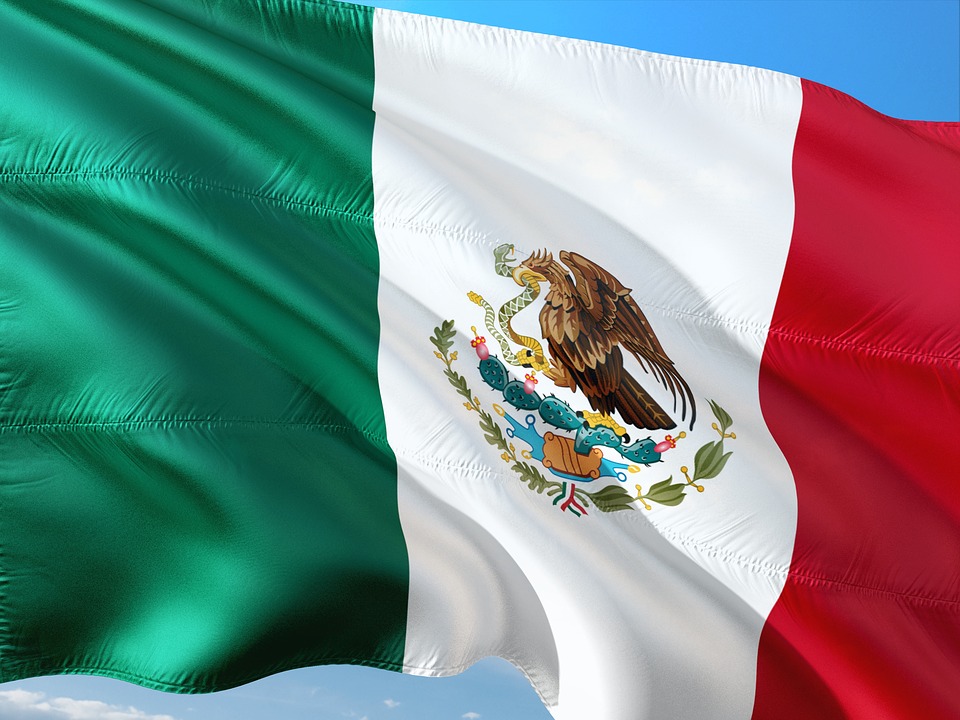
The cost of sending remittances from the US to some Latin American and Caribbean countries and dependencies will increase should HR 1813 introduced in the United States (US) House of Representatives on March 30, 2017, be passed. The proposed Bill entitled the “Border Wall Funding Act of 2017”, would amend the Electronic Fund Transfer Act by imposing a two percent fee on the US dollar value of remittances (before any remittance transfer fees) on the countries listed. The bill is sponsored by Representative Mike Rogers, a Republican from Alabama’s third district.
One of President Donald Trump’s most controversial campaign promises was to build a wall along the US’ southern border, which he claimed would be paid for by the Government of Mexico, to deter illegal immigration. The Government of Mexico has consistently and strongly denied that its taxpayers would be paying for the wall. As a result Republican lawmakers have been seeking ways to fund the wall without relying on the US taxpayer. Instead, should this bill become law, it will raise money for the wall on the backs of hardworking Caribbean and Latin American immigrants living in the US, some of which are actually US citizens.
Here are some few reasons why I, respectfully, believe the proposed fee makes no sense:
The wall will still be paid for by some US taxpayers
The two percent fee is to be imposed on the sender of any remittances sent to recipients in the countries identified. Ironically, it would still be funded by some US taxpayers as some remittance senders are either US-born or have acquired US citizenship or have greencard status. Data from the 2015 American Community Survey show that there are an estimated 4 million Caribbean-born immigrants living in the US. Some 58.4% of those became naturalised US citizens, while 41.6% are not yet US citizens according to US Census Bureau 2016 data.
2. The list of ‘foreign countries’ excludes some of the largest sources of illegal immigrants to the US
The affected countries would be: Mexico, Guatemala, Belize, Cuba, the Cayman Islands, Haiti, the Dominican Republic, the Bahamas, Turks and Caicos, Jamaica, El Salvador, Honduras, Nicaragua, Costa Rica, Panama, Colombia, Venezuela, Aruba, Curacao, the British Virgin Islands, Anguilla, Antigua and Barbuda, Saint Kitts and Nevis, Montserrat, Guadeloupe, Dominica, Martinique, Saint Lucia, Saint Vincent and the Grenadines, Barbados, Grenada, Guyana, Suriname, French Guiana, Ecuador, Peru, Brazil, Bolivia, Chile, Paraguay, Uruguay, and Argentina.
This arbitrarily drawn up list raises two main questions. (1) Why were Caribbean countries included in this list? The Caribbean sub-region as a whole only accounts for 2% of the illegal immigrant population in the US, according to Migration Policy Institute analyses. (2) Why were only countries from the Americas targeted when several Asian countries, like China for example, rank among the top sources of illegal immigrants to the US?
3. It is unlikely to raise enough money to pay for the border wall
It is unlikely that the two percent fee will raise enough money to pay for a wall which is estimated by a leaked memo from the US Department of Homeland Security to cost some 21.6 billion dollars, particularly if the monies will be raised mainly on the back of remittances sent to small Central American and Caribbean countries. Moreover, despite the threat of penalties, people will inevitably find ways to evade the fee by increasing their use of informal channels for sending remittances.
4. It could destabilise the US’ backyard which is contrary to US strategic homeland security interests.
With many of the region’s economies already threatened by de-risking, elevated debt levels and high unemployment, this proposed Bill is another worrying development. Although I do not believe the fee will stop the US-based Caribbean diaspora from remitting money to their loved ones, it may make it more difficult for them to do so as frequently as they normally do, which could have social and economic implications for the most remittance-dependent economies.
The Caribbean diaspora community in the US is an important source of remittance flows to the Region. According to a World Bank Migration and Development Brief released this month, stronger US job growth and a stronger US dollar were major reasons why the LAC Region was the only region to register an increase (6.9 percent) in remittance flows, with a total of $73 billion inflows in 2016. This is in contrast to the global landscape where remittances to developing countries in 2016 declined for the second consecutive year in a row.
Haiti and Honduras are the two most remittance dependent countries in the LAC Region and rank among the most remittance-dependent economies in the world, among countries for which data are available. Data provided in the previously mentioned World Bank Report show that in 2016 remittance inflows were equivalent to 27.8% of GDP for Haiti, 18.4% of GDP for Honduras, 17.6% of GDP for Jamaica, 17.2% of GDP for El Salvador, and 8.6% of GDP for Guyana. For Belize it was 5% and Dominica, 4.6% of GDP.
A 2010 Report released by the Bank of Jamaica entitled “Remittances to Jamaica: Findings from a National Survey of Remittance Recipients” revealed that “more than half of the remittances sent back to Jamaica come from the US” and found that “remittances are an essential source of financing to many Jamaican recipients, which is used to supplement household income for necessities such as food, utilities and education”.
Successive US administrations have generally recognised that an economically and socially stable Caribbean region was in the US’ strategic homeland security interests. This is why the US government through its various economic and military aid programmes has poured millions of dollars into assisting Caribbean countries on issues such as crime, border security, among other things.
Besides the hardship that could be caused at the micro-level, a reduction in remittance inflows due to higher costs could have poverty alleviation and crime reduction implications and could have a destabilising effect on those economies and societies which are the most dependent on them. The same Bank of Jamaica report noted that “remittances to Jamaica have become an important source of foreign exchange and balance of payments support”.
Due to the paucity of official remittance data for many Caribbean countries, the importance of remittances to LAC economies is still underestimated and its micro and macro-economic importance to Caribbean economies is likely higher than currently measured.
How should we respond?
The bill has been referred to the House Subcommittee on Crime, Terrorism, Homeland Security and Investigations on April 21, 2017 and will need to be debated and passed by both chambers of Congress before being sent to the President for signature into law.
Latin American and Caribbean governments, along with their diplomatic representatives and the diaspora, should lobby against the passage of this bill by engaging in discussions with Congressional and other officials on the serious economic and social impact any potentially significant decline in remittance inflows could have on remittance-dependent countries in the Region, and the spin-off negative effect this could have on the US homeland.
To view the text of the proposed Bill, please see here.
Alicia Nicholls, B.Sc., M.Sc., LL.B., is a trade and development consultant with a keen interest in sustainable development, international law and trade. You can also read more of her commentaries and follow her on Twitter @LicyLaw.
The results of the first round of voting in the two-round French presidential elections are in! Pro-EU businessman Emmanuel Macron and far-right candidate Marine Le Pen are the two candidates who will face off in the second/final round of voting within a fortnight.
French presidential elections do not normally attract this much fanfare internationally, but the results of the first round of the 2017 race are interesting for two main reasons. The first is that there is a 50% chance that there could be a Le Pen presidency which would add to a growing string of political upsets globally. The second is that neither candidate is from the mainstream political parties in France, a firm rejection by the French people of the entrenched political establishment, not unlike what occurred in the US with the election of Donald Trump.
France has a two-ballot presidential election system which means that in the event of no one candidate winning over 50% of the votes in the first ballot, the two front-runners have to face off against each other in a second ballot. As of the time of this article’s writing, Emmanuel Macron is estimated to have won this first run-off with 23.9% of the vote, while Ms. Le Pen came second with 21.4%, beating the other candidates.
France at the moment is facing lacklustre GDP growth, high unemployment, high debt and an increase in high-profile and deadly terrorist attacks, which means the anti-establishment, anti-business as usual mood comes as no surprise. Incumbent President, Francois Hollande, currently faces low approval ratings and has decided not to seek a second term.
The Two Candidates
While Macron and Le Pen are ‘outsiders’ from the political mainstream, the two candidates represent two diammetrically opposed worldviews. Emmanuel Macron is a former investment banker who has never held elected office, but had worked for Mr. Francois Hollande during the 2012 Presidential Election campaign. He also subsequently served as Minister of Economy, Industry and Digital Affairs under then Prime Minister Manuel Valls in 2014 until August 2016. Mr. Macron founded his own party En Marche! in April 2016 which currently has 253,907 members, according to the Party’s official website. The centrist Mr. Macron is pro- Europe, socially liberal and believes that France’s prosperity can be ensured through pursuing pro-trade and outward-looking policies and through continued membership in the EU.
Marine Le Pen is a lawyer, a Member of the European Parliament since 2009 and the leader of the populist Front National, a far-right party which had been on the dark fringes of French politics until recently. She is the daughter of Front National co-founder, Jean Marie Le Pen, a far-right ethno-nationalist. She sought to distance herself from some of her father’s most extreme views as she sought to broaden the Party’s appeal, and succeeded in having him ousted from the party. Ms. Le Pen, however, has strongly anti-immigrant, anti-EU views and has expressed enthusiastic support of both Brexit in the UK and the election of Donald Trump in the US.
The polarity in the views of the two candidates means that the election of either will have completely opposite global implications.
What’s at stake with the French presidential election?
Although polls are showing a Macron victory, Le Pen still has a chance of winning the final run-off on May 7. A Le Pen victory on May 7th would be the continuation of a nationalist, inward-looking turn in advanced western economies, with both economic and geopolitical implications. Domestically, she has indicated her intention to pursue protectionist economic policies and champion anti-immigration reforms. She is anti-globalisation and anti-free trade. She has vowed that she would pull France from the EU and the eurozone, and the North Atlantic Treaty Organisation (NATO). She has voiced her intention to strengthen relations with Russia and had forcefully condemned the EU decision to extend its sanctions on Russia until mid-2017.
In their forecasts for the global economy and world trade respectively, both the International Monetary Fund (IMF) and the World Trade Organisation (WTO) have forecast higher growth rates but noted the vulnerability of the forecast growth to trade, monetary and other policies pursued by governments. IMF Managing Director, Christine Legarde (who is a former French Minister of Finance) has been reported as stating that a Le Pen presidency could lead to political and economic upheaval.
First, France is the 6th largest economy in the world. A founding member of the EU, it is also the eurozone’s second largest economy. A more isolationist France would impact on the global economy and have implications for western approaches to current global threats and a reshaping of global alliances. Moreover, a French withdrawal from the EU (termed ‘Frexit’), coming on the heels of the UK’s withdrawal from same, could plunge the EU into an existential crisis more so than Brexit would.
Any implications of the French election for the Caribbean?
Will there be any implications of a possible Le Pen presidency for the Caribbean? The specifics of Ms. Le Pen’s policies are still not fleshed out. However, a French withdrawal from the EU would reduce the amount of EU development assistance which the region currently receives under the European Development Fund (EDF).
But what about trade? Thanks to the Economic Partnership Agreement (EPA) signed between the EU and CARIFORUM in 2008, the countries which make up CARIFORUM (CARICOM plus the Dominican Republic) currently enjoy preferential market access for their goods and services to the EU market, including to the French market (and to French Caribbean Outermost Regions, by extension).
However, should France leave the EU, it would no longer be a party to the EPA. On its own, the lack of preferential access to the French market would be unlikely to have any significant economic impact on the anglophone Caribbean trade-wise as the volume of trade between English-speaking Caribbean countries and metropolitan France is limited.
There are, however, small but growing trade links between some CARICOM countries) and the FCORs, which are Martinique, Guadeloupe and French Guiana. Martinique, for example, is one of the most important source markets for tourists to St. Lucia. While there are issues which have inhibited greater CARIFORUM trade with FCORs including the language barrier and the ‘octroi de mer’ (dock dues) charged on all imports into FCORs (despite the EPA), the FCORs are also seen as stepping stones for exporting to continental Europe using the EPA. A French withdrawal from the EU if Ms. Le Pen wins means the latter will not be possible.
It is the democratic right of the French populace to choose which of the two candidates is in their country’s best interests. However, given France’s economic and geopolitical importance globally, and the political upsets of late, the results of the final round on May 7 will reverberate far beyond its borders.
Alicia Nicholls, B.Sc., M.Sc., LL.B., is a trade and development consultant with a keen interest in sustainable development, international law and trade. You can also read more of her commentaries and follow her on Twitter @LicyLaw.
You must be logged in to post a comment.