We’re back! Welcome to the Caribbean Trade and Development Digest for the week of September 24-October 1, 2017! We are pleased to share some of the major trade and development headlines and analysis across the Caribbean region and the World. We hope you enjoy this edition.
REGIONAL NEWS
Online plaforms launched to promote regional trade, business
St Kitts & Nevis Observer: The Caribbean community’s development of a single market and economy has been given a boost with the launch of four new online platforms aimed at promoting trade and improving the ease of doing business. Read more
Services an untapped growth sector
Jamaica Information Service: Head of the Trade Agreements Implementation Unit in the Ministry of Foreign Affairs and Foreign Trade, Symone Betton-Nayo, says the services sector remains an untapped area that offers tremendous opportunity for Jamaica’s economic growth and development. Read more
INTERNATIONAL NEWS
WTO Chief Warns of Risks to Trade Peace
Financial Times: The head of the World Trade Organization has warned that the Trump administration’s blocking of the appointment of new judges to hear international disputes risks undermining a system that has kept trade wars at bay for more than two decades. Read more
Xinhua: Latin America’s Pacific Alliance is looking to do away with non-tariff obstacles to trade between its members Chile, Colombia, Mexico and Peru, according to a top Peruvian businessman. Read more
Cross-border rail links: the spark to ignite intra-African trade?
International Railway Journal: Trade between African nations is considered one of the continent’s great untapped economic opportunities, but poor cross-border connectivity continues to hinder growth. Keith Barrow reports from Cape Town on the potential role for rail in unleashing intra-African trade. Read more
Philippines revives plan to join Trans-Pacific Partnership
Philstar Global: The Philippines is reviving its plan to join the Trans-Pacific Partnership (TPP) even as the mega-trade deal pushes through without the US, the Department of Trade and Industry said. Read more
Britain caught in cross fire of trade spat between Boeing and Bombadier
The Globe and Mail: Britain, caught in the crossfire of a damaging trade dispute between airplane makers Boeing Co. and Bombardier Inc., said on Sunday it would fight to protect thousands of jobs put at risk in Northern Ireland. Read more
Ciobo chases Mexico free-trade deal
The Australian: Trade Minister Steven Ciobo will lead a business delegation to Mexico to open new opportunities for Australian companies as free-trade talks progress for a new Latin American free-trading bloc. Read more
The US made the global trade rules it claims are unfair
The South China Morning Post: If trade conflict erupts between China and the United States in the coming year, it will certainly not be for want of both sides trying to keep the peace. Read more
Ireland hopes to boost exports under Japan-EU Agreement
Japan Times: Ireland hopes to boost exports to Japan under an economic partnership pact the European Union and Japan reached a broad agreement on in July, Irish Deputy Prime Minister Frances Fitzgerald said in a recent interview. Read more
Zambia Commerce Minister saddened by low intra-African trade
Lusaka Times: MINISTER of Commerce, Industry and Trade Margaret Mwanakatwe has called for concerted efforts in boosting intra-Africa trade. Read more
Liked this issue? Read past issues of our weekly Caribbean Trade & Development Digest, please visit here. To receive these mailings directly to your inbox, please follow our blog.
Puerto Rico, an island the US acquired in 1898 after the Spanish-American War, has lived in legal ambiguity with respect to its relationship with America and its statehood. It was recently declared bankrupt and has demanded that the US bail it out. This article explores if such a demand is well–founded, both in logic and in law.
A general reading of Puerto Rico’s history makes such a demand appear to be a prudent call. However, would this be desirable from the WTO law making perspective? Are bailouts allowed under WTO rules? We explore Puerto Rico’s dilemma through international relations and WTO law.
Understanding Puerto Rico’s Debt
Puerto Rico’s debt is a complex one with multiple types of debts; making it harder to negotiate agreements with various investors. Michael Williams, the Attorney who was handling Puerto Rico’s case states that its $123 billion debt is a consequence of years of economic stagnation and bad policy according to writers like Thomas Heath of the Washington Post. There is a serious need for debt restructuring, with investments needed for upgrading the island’s infrastructure (water works, waste management, and electric supply) as well as in boosting the economy.
Investors bought bonds from one of the eighteen authorised Governmental Agencies under the belief that the mainland Government would do everything necessary to prevent such an awful bailout situation from happening. However, the authorised agencies missed payments to the investors. Its cumulative bond debt is $74 billion. Even with an Oversight Board and PROMESA (Puerto Rico Oversight & Economic Sustainability Act of 2015-2016), it remains unclear how a wholescale economic turnaround can be initiated, with not only settling claims with investors (who will undoubtedly require fees for the Government’s defaulting on payments), but also improving the economy. Puerto Rico also requires funding for its pension commitments ($40 billion debt) and for MEDICAID, so that its social security obligations can also be carried out.
The Island has had a terrible recession since 2006, which has only been worsened by questionable policies of its previous Governments by borrowing more and thereby putting the island into greater debt. In addition to this, the current Government’s negotiation attempts with the aforementioned investors have not helped the situation by producing any concessions in the repayment of money owed to these creditors.
At this juncture, it is unfortunate to note that Puerto Rico has been knocking on Washington’s doors for over two years now, requesting more involvement from the mainland. It has been involved in Congressional Committee hearings and submissions before the United States Supreme Court. This invites the question: If any, what is the extent of Washington’s obligations to Puerto Rico, and in particular to this debt crisis? To ascertain this, we must go back in time and establish the exact nature of their relationship.
The US & Puerto Rico’s Relationship
The United States of America (US) has several categories of land holdings that it acquired over time, none of which are considered “Federal States”. These categories include territories (Guam, American Samoa, and US Virgin Islands), Possessions (which includes Baker, Howland, Midway, Wake, Palmyra, Kingman Reef, Jarvis and Johnston, that are all islands), and finally land holdings that are a Commonwealth (Northern Mariana Islands and Puerto Rico). It is to be noted that the Commonwealth category of land holdings are “insular political communities” that have affiliations with the mainland Government of the US. They are above territories in prestige and status but below the level of states. The Possessions and Territories have low levels of political and legal power on account of their fluctuating populations and not desiring self-determination. An another interesting nuance is the fact that the Commonwealth category of nations works with the US Congress and has an established political system that works for both the Congress and the Commonwealth land holding. However where the territories are concerned, the US Congress as more power to impose measures and in effect rule over the populations on the given territory. Citizens of the territories also cannot vote for the members of the Congress.
Over time the offshore territory policy of the US has varied and has even come before the US Supreme Court. In one case (Puerto Rico v. Sanchez) which went into the question of whether or not double jeopardy was applicable to Puerto Rico, the Judges of the Supreme Court had some interesting ideas of what Puerto Rico really was. If it was considered a Federal State then double jeopardy would not apply because federal proceedings could not disallow a state government to try a person for the same crime. If it wasn’t a Federal State then double jeopardy would disallow the person from being tried twice for the same crime (once by the US and once by Puerto Rico). This is because double jeopardy in the US does not apply where the person is being tried by “separate sovereigns” which in this case would be the State Court and the Federal Court. The counsellor for Puerto Rico suggested that it be given “Semi-sovereign status” so as to avoid the political implications of calling it a sovereign and thereby the 51st Federal State of the US, while also ensuring that Puerto Rico would also be able to prosecute Sanchez. Justice Kennedy then sought clarification on whether this would be an “interim sovereignty”? In the end, however, the Supreme Court held that the sources of power for itself and for the Court in Puerto Rico were the US Constitution because Puerto Rico was not a State and therefore the double jeopardy principle did not apply. This meant that the Court in Puerto Rico could not also prosecute Sanchez.
This reasoning is the strongest for the US Congress to allow the bailing out of Puerto Rico. It has had many occasions to either grant freedom to Puerto Rico or to make it the 51st federal state, as the US Constitution empowers the Congress to deal with matters of allowing a new state to be a part of the federation [Article IV. Section 3. Clause 1]. Given the fact that the US has both promised the United Nations to respect Puerto Rico’s sovereignty in 1953 (after allowing Puerto Rico’s Constitution to come into force in 1952), but also never fully allowed it to be a free independent nation, it would suggest that the US wants continued association with Puerto Rico. The fact that on several occasions, the US Government has rejected even the commonwealth status of Puerto Rico, deeming it as merely a territory, also points towards the same conclusion. The US wants these “land holdings” because it clearly benefits from the culture, natural resources and of course the population, who have served in the US military forces. That being said, the US Government does not want to give it full power that a State has. Regarding the bankruptcy bailout, the current US Administration has said it would not extend a helping hand, to what is undoubtedly (based on facts and legal precedent), a US problem.
The US policy on its offshore holdings seems to be one of granting those populations a “second class citizenship” status. It must be noted that when the US conceived the idea of a commonwealth, it was used to mean that the path to self-determination was automatic. This, however, has not taken place for Puerto Rico. Could this be a new twist to an already floundering and ever changing US policy on its offshore land holdings? Could this be the impetus necessary for the Puerto Ricans to demand freedom over their own affairs and formation of a new country that is divorced from the US?
The WTO perspective!
May be yes! But an underlying problem with bailouts would be that it may not be allowed under the WTO norms. Though bailouts are not anything new and the 2008 financial crisis triggered a few bailouts, every forthcoming bankruptcy should push for a clearer stance of the WTO on whether such bailouts would be considered as a subsidy and thus prohibited under SCM? Is it trade distortive under GATS? Is it time to introduce special WTO rules to deal with economic crises; making state actions non-vulnerable from WTO consequences?
The WTO has a well drafted subsidy discipline under the SCM Agreement. Any financial contribution which provides some benefits to an enterprise or an industry would result in a subsidy. Bailouts being sponsored from public money may attract provisions of GATS as they may provide benefit to the bank and its dependent (read “whole economy” of a major bank). As financing of banks would ultimately assist manufacturers, exporters and other players; they may affect other trading partners by creating artificial competitive processes.
However, as banks provide services, a bigger case forms under the GATS; for affecting competition in banking & financial services and making market competitive artificially. This may violate GATS’ obligation of National Treatment, Most Favoured Nation and Anti–Competitive provisions.
Despite its widespread use as a tool for economic reconstruction, no member state of the WTO has challenged bailouts at the WTO. But even if one appears in future, would it be desirable? As financial crises are unavoidable and it is practically impossible to pin down fault to any one entity, group of entities or even a state – bailouts are inevitable. They are required not just to save the bank but the whole economy. Thus, desirability of an “economic crisis exception” in the SCM and/or GATS should be put on table for member states and WTO expert committees before we witness another Puerto Rico-like situation in some other part of the world.
Conclusion
It is unfortunate that today, much after colonialism and colonialist tendencies have lost international relevance, that Puerto Rico’s relationship with the US is still not well-defined in law. However, for the purpose of alleviating this crisis, this article firmly backs considering Puerto Rico to be an integral part of the US; although it may not be necessary to use the terminology of “federal state”. Puerto Rico must be treated for all intents and purposes as a federal state, that entitles them to federal support and involvement, as was granted when Detroit required an $18 million debt restructuring in 2013. This is because, the US still claims Puerto Rico as a land holding, and the US Congress is still empowered under the US Constitution to manage the same. It may have given Puerto Rico some degree of sovereignty but the fact is that the US still has not granted it independence. By the very fact of this lack of independence from US policies and control, Puerto Rico has a right to seek and get aid from the Federal government.
Even if Bankruptcy is declared and the Federal Government pumps money into the Commonwealth, the question of its legality from WTO perspective still remains unresolved. Nevertheless, the bigger question is would bailouts even be challenged at the WTO? As bailouts are used by every member state to safeguard its economy from financial crisis, it is unlikely that it they will be challenged at the WTO, much like the fossil fuel subsidies.
Namit Bafna is a Corporate Lawyer working in Bangalore. His area of interest includes derivatives & trade law.
Shamy Ravishankar is a 2015 Felix Scholar, now working as a Human Rights Lawyer. Her areas of interest include environmental law, public international law and of course Human Rights Law. Follow her on twitter: @shamy27 or on her blog: https://theworldweknowsite.wordpress.com/
Jaemin Lee, Beneath the Tip of the Iceberg – Global Financial Crisis, Bank Bailouts and the SCM Agreement, 10 Asian Journal of WTO & International Health Law and Policy (2015)
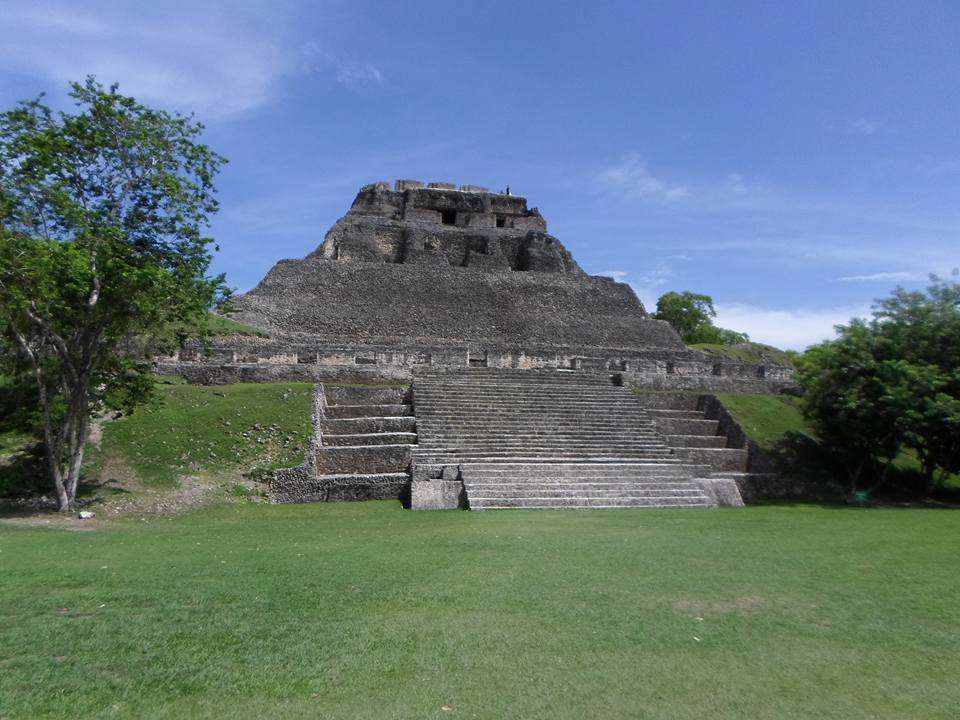
Belize underwent its third World Trade Organisation (WTO) mandated Trade Policy Review over the period April 24th and 26th, 2017. Trade Policy Reviews are a mandatory exercise under the WTO’s Trade Policy Review Mechanism. Each WTO member country’s national trade and other trade-related policies are peer-reviewed by the Trade Policy Review Body (the WTO General Council acting under special rules and procedures).
The frequency of the reviews depends on the country’s share of world trade. The purpose of the trade policy reviews is to help to ensure transparency of member countries’ trade policies. Belize has previously undergone reviews in 2010 and 2004.
Some key findings from Belize’s 2017 review
These findings were taken from the WTO Secretariat Report and the Chairman’s concluding remarks.
The Report noted that several issues had affected Belize’s economy during the review period, including the decline in oil prices, disease outbreaks affecting its agriculture sector and the impact from the loss of correspondent banking relationships due to the de-risking practices of major global banks.
Areas of praise
Members praised Belize for the following:
Its diversification into tourism which is now the major driver of the country’s economy, and the adoption of the country’s first National Trade Policy Framework.
Belize’s participation in the WTO. Some members also suggested that the country establish a permanent mission in Geneva.
Belize was commended for being among the first Members to ratify the Trade Facilitation Agreement and for having notified its Category A commitments. Belize also recently established a National Committee on Trade Facilitation
Members commended Belize’s efforts to modernize its trade regime and customs procedures.
Reduction by half of the number of products subject to import licensing, but some members noted that this was followed by tariffication, resulting in some applied MFN tariffs exceeding their bound rates.
Noting Belize’s membership of the Caribbean Community (CARICOM), Members encouraged Belize to continue engagement in regional integration and trade liberalization schemes.
Belize was commended for its acceptance of the Protocol amending the TRIPS Agreement; while some Members encouraged Belize to join the WIPO treaties.
The establishment of Belize’s first Internet Exchange Point to reduce the costs of local internet traffic.
Members acknowledged the recent reforms to Belize’s financial services regulatory framework.
Some Members welcomed Belize’s efforts to improve its air transport infrastructure and air links, and encouraged Belize to replicate such efforts to enhance land and maritime transport.
Areas of concern
Members, however, were concerned that Belize had not submitted notifications in a number of areas, and urged for compliance with the WTO requirements.
Several Members highlighted Belize’s three incentive programmes granting export subsidies which should have been eliminated by 31 December 2015. However, they acknowledged Belize’s ongoing efforts to amend the relevant legislation.
As noted by the Chairman, Belize was commended for providing prompt and helpful answers to all written questions submitted in advance by members, as well as to all that came after the deadline.
Belize is the fourth WTO member country to undergo review so far for the year, following Sierra Leone, Japan and Mexico. The other CARICOM member state to be reviewed this year is Jamaica which will undergo its review on September 13 & 15.
The documents from Belize’s review, including the full WTO Secretariat Report and the Chairman’s Concluding Statement, may be viewed here.
Alicia Nicholls, B.Sc., M.Sc., LL.B., is a trade and development consultant with a keen interest in sustainable development, international law and trade. You can also read more of her commentaries and follow her on Twitter @LicyLaw.
Welcome to the Caribbean Trade and Development Digest for the week of April 23-29, 2017! We are pleased to share some of the major trade and development headlines and analysis across the Caribbean region and the World.
We do apologise for the lack of a Digest for the past two weeks due to my travelling. It has been an interesting two weeks in world trade, with the US imposing tariffs on Canadian softwood lumber imports and the EU releasing its Guidelines for the Brexit Negotiations with the UK pursuant to Article 50. On the home front, Belize has concluded its third World Trade Organisation (WTO) Trade Policy Review. And that’s just the tip of the iceberg! We hope you enjoy this edition.
REGIONAL NEWS
Belize has concluded its third WTO trade policy review
WTO: The third review of the trade policies and practices of Belize takes place on 24 and 26 April 2017. The basis for the review is a report by the WTO Secretariat and a report by the Government of Belize. Read more
US and region deepen security ties
Nation News: The United States has pledged its commitment to deepening its cooperation with the Caribbean region to combat all threats. Read more
Barbados Hotel occupancies drop during the first quarter
BarbadosToday: Against the backdrop of a fall in hotel occupancies and weak returns on hotel room rates during the first quarter of this year, Chairman of the Barbados Hotel and Tourism Association (BHTA) Roseanne Myers Wednesday disclosed that travel agents from source markets were reporting that some repeat visitors were opting not to travel in winter because they were waiting for “when the rates are a little better”. Read more
Hopes for Caribbean Trade Boost
Business Authority: Local exporters, and their Caribbean counterparts, stand to benefit now that a major international trade agreement has come into force. Read more
Barbados records significant rum trade with Europe
Jamaica Observer: Barbados has exported BDS$89.9 million (US$44.95 million) in rum products to the European Union over a four year period, Commerce Minister Donville Inniss has said. Read more
Barbadian Rum producers fear results of French election
BarbadosToday: Barbadian rum producers are keeping a close eye on the French presidential run-off election scheduled for May 7, fearing the results could hurt the local industry. Read more
Gopee-Scoon talks trade with local high commissioner and ambassador
Loop Trinidad: Trade and Industry Minister Paula Gopee-Scoon met with the High Commissioner-designate to the United Kingdom Orville London and Ambassador-designate to Costa Rica Tracey Davidson –Celestine on Wednesday. Read more
Sector leader sees improved trade relations with Trinidad & Tobago
Jamaica Gleaner: President of the Jamaica Manufacturers’ Association (JMA) Metry Seaga says his organisation has received fewer complaints from local manufacturers about unfair trade practices by their Trinidadian counterparts. Read more
We will do everything to keep GuySuCo alive – says Granger
Stabroek: President David Granger said today that his government will do everything possible to keep the sugar industry alive. Read more
Guyana considers Suriname’s gold export model
Demerara Waves: Guyana’s recent foreign currency shortage appears to have caused government to consider adopting Suriname’s model to ensure that more earnings from gold sales goes directly to the national treasury. Read more
Granger names three sugar estates to be retained
Demerara Waves: President David Granger has named at least three sugar estates that will be retained as part of a restructured Guyana Sugar Corporation. Read more
INTERNATIONAL NEWS
European Council Releases (Article 50) Guidelines
EU: The European Council has released its guidelines for the upcoming Article 50 Brexit negotiations with the UK. Read more
Africa and China trade is booming
BusinessReport: China remained Africa’s biggest trading partner as bilateral economic relations boomed, said Jiang Zengwei, head of the China Council for the Promotion of International Trade. Read more
US imposing 20 percent tariff on Canadian softwood lumber
CNBC: U.S. Commerce Secretary Wilbur Ross said on Monday his agency will impose new anti-subsidy tariffs averaging 20 percent on Canadian softwood lumber imports, a move that escalates a long-running trade dispute between the two countries. Read more
US lumber tariffs hit B.C. manufacturers hard
CBC Canada: New softwood lumber tariffs being imposed by the U.S. are already cutting deep into B.C. businesses. Read more
DG Azevedo: Global trade challenges are best tackled through the multilateral system
WTO: The WTO should seek to bolster global economic cooperation in order to leave a strong and well-functioning trading system for future generations, said Director-General Roberto Azevêdo. Read more
Downgrades depress South African exports and trade
BusinessReport: Recent credit downgrades by Standard and Poor’s (S&P) and Fitch have put more pressure on South African exports and international trade. Read more
WTO issues panel report on Chinese cellulose pulp duties
WTO: On 25 April 2017 the WTO issued the panel report in the case brought by Canada in “China – Anti-Dumping Measures on Imports of Cellulose Pulp from Canada” (DS483). Read more
Arbitrator issues decision in Mexico-US tuna dispute
WTO: On 25 April, a WTO arbitrator issued a decision on the level of retaliation that Mexico can request in its dispute with the United States over US “dolphin safe” labelling requirements for tuna products (DS381). Read more
ACP: One billion people to speak to Europe with one voice
The Southern Times: Seventy-nine countries from Africa, the Caribbean and the Pacific, which are home to around one billion people, will speak with one voice as they prepare to negotiate a major partnership agreement with the European Union (500 million inhabitants) in May. Read more
EU tells May: Give our citizens their rights or no trade talks
The Guardian: The EU has called on Theresa May to provide immediate “serious and real” guarantees to its citizens living in Britain. Read more
Some important clarifications on the EPA
The Guardian: All of the ECOWAS countries, apart from Nigeria and the Gambia, have to date signed the EU-West Africa Economic Partnership Agreement (EPA). The EPA may enter into force only if all ECOWAS member states sign and if at least two thirds ratify the agreement. Read more
Examining Trump’s record on trade
NPR: When the president speaks the world listens. Adam Behsudi of Politico talks with NPR’s Scott Simon about how Donald Trump’s outspoken commentary is affecting international trade with the U.S. Read more
Trump on trade: Scrutinise NAFTA, other deals for abuses
Politico: President Donald Trump’s latest executive order on trade calls for review of all U.S. free trade agreements — including NAFTA and the World Trade Organization pact — and possible renegotiation of any deal to eliminate “violations and abuses,” Commerce Secretary Wilbur Ross said Friday. Read more
Difficult trade-offs necessary for RCEP to be worthwhile: PM Lee Hsien Loong
Strait Times: Asean is keen to conclude a region-wide trade agreement with its key partners, but the pact must have substance to be worthwhile, said Prime Minister Lee Hsien Loong on Saturday (April 29). Read more
Southeast Asia prioritises trade pact including China
Channel News Asia: Southeast Asian countries will prioritise creating an Asia-focused trade pact this year that includes China, India and Japan, while trade issues with the United States will be put on the back burner, the Philippine trade minister said. Read more
Mwagiru: Durban forum expected to focus on intra-Africa trade
Daily Nation: Wary of the perils of depending on reluctant donors for its survival, Africa is on a quiet quest for self-reliance and intra-regional cooperation. These are among the themes that will feature at the three-day World Economic Forum that opens in Durban, South Africa, on Wednesday. Read more
CTLD NEWS
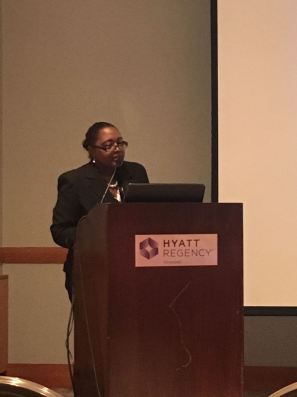
Alicia Nicholls presenting her paper at the SALISES Conference, Trinidad.
Alicia Nicholls presented a paper at the 18th Annual SALISES Conference 2017, a major academic conference organised annually by the University of the West Indies (UWI). The Conference was hosted this year by the Trinidad (St. Augustine Campus) at the Hyatt-Regency Hotel in Port of Spain, Trinidad & Tobago.
Alicia’s paper is a work in progress and is entitled “Economic Citizenship and Freedom of Movement of the Caribbean Community National: An Irreconcilable Tension?”.
The theme of this year’s conference was “Small Nations, Dislocations, Transformations: Sustainable Development in SIDS” and was held over the period April 26-28, 2017.
Liked this issue? Read past issues of our weekly Caribbean Trade & Development Digest, please visit here. To receive these mailings directly to your inbox, please follow our blog.

 Caribbean Trade Law and Development
You must be logged in to post a comment.