Blog

  • Caribbean Trade and Development Digest – February 5-11, 2017

    Caribbean Trade and Development Digest – February 5-11, 2017

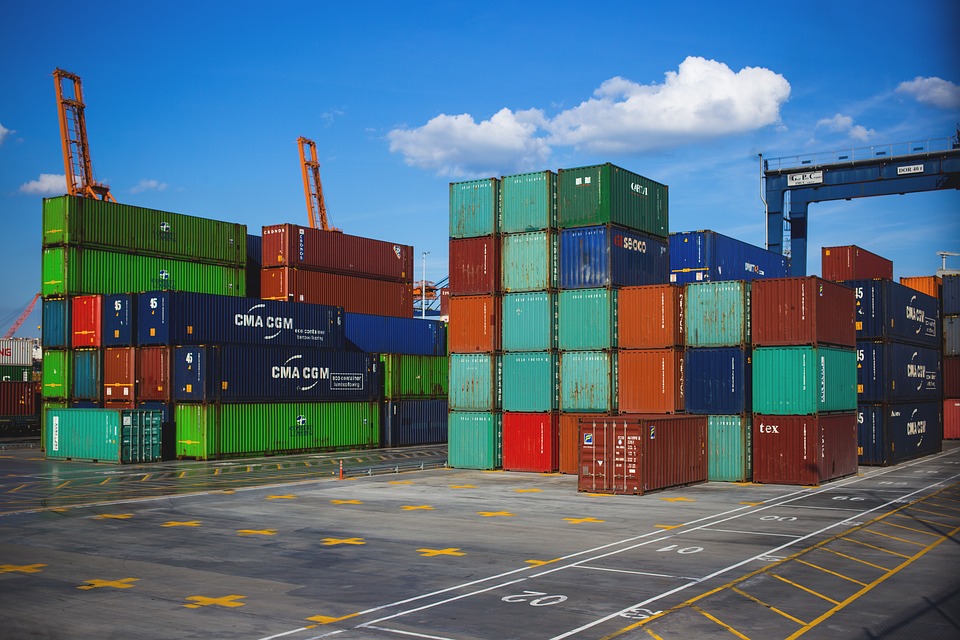
    Source: Pixabay

    Welcome to the Caribbean Trade and Development Digest for the week of February 5-11, 2017!  I am pleased to share some of the major trade and development headlines and analysis across the Caribbean region and the World. 

    For past issues of our weekly Caribbean Trade & Development Digest, please visit here.

    To receive these mailings directly to your inbox, please follow our blog.

    REGIONAL

    Curacao wants to import Dominican products due to Venezuelan crisis

    Curacao Chronicle: This week the government of Curaçao said that it is interested in importing agricultural products from the Dominican Republic after the collapse of relations in that field between the island and Venezuela. Read more 

    Caribbean Integration in times of Trump

    Prensa Latina: Caribbean leaders analyze with worry here this week, the political and economic impact and the regional scenario after the assumption, last January 20, of Donald Trump as President of the United States. Read more 

    OECS collaborates with ICAO

    St. Lucia Times: Border control officers across the OECS are now better equipped to facilitate regional travel, in conformance with international standards. Read more 

    Caricom Review Commission to publish report soon

    Jamaican Observer: The report of the Caribbean Community (Caricom) Review Commission is expected to be completed and submitted to Cabinet shortly. Read more 

    CTO signs MOU with Airbnb

    CTO: The Caribbean Tourism Organization (CTO), the region’s tourism development agency, and Airbnb, whose community marketplace provides access to millions of unique accommodations, today signed a landmark agreement to develop a set of policy principles and recommendations on the sharing economy for Caribbean governments and other stakeholders.Read more

    CTO enters Partnership with OAG to provide market insights

    CTO: The Caribbean Tourism Organization (CTO), the Caribbean’s tourism development agency, has entered into a marketing partnership with leading air travel data provider OAG to provide members with accurate, timely and actionable insight and analysis to aid decision-making and to spot opportunities in essential markets. Read more

    Caribbean Tourism Arrivals at All-Time High

    CTO: Caribbean tourism broke new ground in 2016, surpassing 29 million arrivals for the first time ever, and once again growing faster than the global average. Read more

    INTERNATIONAL

    RCEP nations set for meeting to finalise trade modalities

    Nation Multimedia: Officials from 16 countries, including Asean and its six trading partners, will try to conclude the modalities for liberalisation in the trade of goods by the middle of this year. Read more 

    Merkel and Uruguay’s Vazquez push to deepen EU-Mercosur ties

    Deutsche Welle:  Angela Merkel intends to push trade talks between the EU and Mercosur nations. The chancellor has met with Uruguay’s president to forge new bonds in the wake of Donald Trump’s inauguration in the United States. Read more 

    Macri and Temer agree to open Mercosur and to closer ties to Mexico

    Mercopress: The leaders of Brazil and Argentina said on Tuesday they would pursue closer ties with Mexico and other Latin American nations alarmed by U.S. President Donald Trump’s promises to tear apart trade deals and build a wall in the Mexican border to protect American jobs. Read more 

    Pre-clearance bill would give US border agents in Canada new powers

    CBCNews: U.S. border guards would get new powers to question, search and even detain Canadian citizens on Canadian soil under a bill proposed by the Liberal government. Read more 

    Reps urge Trump Administration to fix Cyber Trade Agreement

    The Hill: A bipartisan slate of representatives with cybersecurity chops is pressuring President Trump’s top national security adviser, Michael Flynn, to change an export agreement many believe weakens international cybersecurity.  Read more 

    Trade Agreement to boost MSG Ties

    Fiji Times: MINISTER for Industry, Trade and Tourism Faiyaz Koya believes the Melanesian Free Trade Agreement will usher a deeper and stronger trade and economic relations amongst the MSG countries. Read more 

    Commission publishes negotiating proposals for EU-Indonesia trade deal

    European Commission: European Commission has published nine initial European proposals for the trade agreement under negotiation with Indonesia. Read more 

    While Trump and Abe eye bilateral pact, Australia keeps TPP alive

    The Diplomat: Japan and the United States have agreed to start new talks on trade and investment, adding to speculation over a bilateral trade deal between the two security allies. However, all is not lost for the Trans-Pacific Partnership (TPP), with Australia’s trade minister vowing to salvage the deal at March talks.Read more 

    Brazil files WTO complaint against Canada over alleged subsidies to Bombardier

    WTO: On 8 February, Brazil notified the WTO Secretariat that it had requested WTO dispute consultations with Canada regarding alleged subsidies provided to Canadian aircraft manufacturer Bombardier. Read more 

    Indonesia files notice of appeal in EU Fatty Alcohols Anti-dumping case

    WTO: Indonesia filed a notice of appeal on 10 February 2017 in the case “European Union – Anti Dumping Measures on Imports of Certain Fatty Alcohols from Indonesia” (DS442). Read more 

    Germany’s global trade surplus hits a record in 2016

    WSJ: Germany’s exports exceeded its imports by the widest yearly margin on record last year. Read more 

    BONUS – Caribbean Tourism Breaks New Ground (from Hugh Riley Blog)

    This week the Caribbean Tourism Organisation (CTO) released a detailed report on the Caribbean’s tourism performance for 2016, showing the region surpassed a record 29 million stay-over arrivals in 2015. Please see CTO’s Secretary-General, Hugh Riley‘s very informative and detailed breakdown of the market performance on his blog here.

    NEW ON CARIBBEAN TRADE LAW & DEVELOPMENT

    US Federal Appeals Court Upholds Suspension of Trump Travel Ban

    CARICOM and Cuba reach agreement to expand market access preferences

    Caribbean Tourism Organisation (CTO) and Airbnb sign partnership agreement

    IMF Staff Recommend St Lucia CIP Revenues be used Primarily to Reduce Debt

    Liked this issue? Read past issues of our weekly Caribbean Trade & Development Digest, please visit here. To receive these mailings directly to your inbox, please follow our blog.
  • US Federal Appeals Court Upholds Suspension of Trump Travel Ban

    US Federal Appeals Court Upholds Suspension of Trump Travel Ban

    Photo credit: Pixabay

    Alicia Nicholls

    Less than a month after taking office, the Trump Administration received another judicial blow yesterday to one of its major policy actions. The United States’  Court of Appeals for the Ninth Circuit in its decision in State of Washington v Trump dismissed the Government’s motion for a stay pending appeal of an order of the US District Court for the Western District of Washington which had temporarily suspended the travel ban nationwide.

    Background

    The genesis to the legal dispute was an executive order entitled “Protecting the Nation from Foreign Terrorist Entry into the United States” signed by President Trump on January 27, 2017. Inter alia, the order sought to ban for 90 days entry into the US of all nationals of seven predominantly Muslim countries, namely Iraq, Iran, Sudan, Yemen, Libya, Syria and Somalia, and indefinitely suspended entry of all Syrian refugees into the US. It also sought to suspend the US Refugee Admissions programme for 120 days, with further direction that on recommencement of the programme, the Secretary of State should prioritise refugees of a minority faith in their country (in this case it would be Christians) with claims of religious persecution.

    Upon its signature, the executive order’s impact was quick and brutal. Not only were thousands of visas cancelled but US greencard holders were among those who were either stranded at airports, separated from their families or being deported pursuant to the order. Protests erupted across the US and in several other countries. Several legal challenges were filed, including rulings by federal judges in New York and Massachusetts against the ban. Among the chaos, President Trump swiftly fired Acting Attorney General Sally Yates after she refused to defend the constitutionality of the order.

    The decisive blow to the travel ban came after the February 3rd ruling of Judge James Robart, federal judge in the United States District Court for the Western District of Washington. In State of Washington v Trump et. al , a challenge brought by the State of Washington, Judge Robart  held that certain actions of the executive order were ultra vires the constitution, enjoining the government from implementing those provisions and granting a temporary nation-wide restraining order. Thereupon, the Department of Homeland Security suspended implementation of the executive order, whilst the Government prepared its appeal.

    Issue 

    In the instant case, the Court was asked to consider the Government’s request for an emergency stay of the temporary nation-wide restraining order issued by Judge Robart. The Government requested the stay pending appeal of the order.

    Arguments

    The Government argued that the federal district court lacked authority to enjoin enforcement of the order because the President has “unreviewable authority to suspend the admission of any class of alien” and that his/her decisions on immigration policy and national security are unreviewable even where they contravene constitutionally-enshrined rights and protections. They further submitted that any challenge to such presidential authority by the judicial branch would be a violation of the principle of separation of powers.

    Counsel for the Government also argued that the States of Washington and Minnesota had no locus standi in this matter. However, the Court found that by showing the harm caused to their universities’ research and teaching because of the impact of the travel ban on those faculty members and students who are nationals of those countries, the states met the test for standing of “concrete and particularised injury” as was elaborated in Lujan v Defenders of Wildlife.

    In their arguments before the lower court, the states had argued that the executive order violated the procedural rights of aliens, including denying entry to greencard holders and non-immigrant visa holders without sufficient notice and without giving them an opportunity to respond. The states had also argued that the damage to their state economies and public universities were in violation of the First and Fifth Amendments to the US constitution and that they violated a wide range of Acts, including the Religious Freedom Restoration Act. Counsel for the states also reminded the court of President Trump’s words during the campaign as support for their argument that it was intended to be a “Muslim ban” and not an act to protect against terrorist attacks by foreign nationals.

    In the instant case before the federal appeals court, one of the things the Government had had  to show that it was likely to prevail against the due process claims made by the States.

    Judgment

    The learned judges, William C. Canby, Richard R. Clifton, and Michelle T. Friedland, considered four main questions in arriving at their decision: likelihood of the Government’s success on the merits of its appeal, whether the applicant would be irreparably injured absent a stay, whether issuance of the stay will substantially injure the other parties interested in the proceedings, and where the public interest lies.

    In an unanimous ruling (3-0), the Court denied the Government’s emergency motion for a stay, finding that the Government has neither shown a likelihood of success on the merits of its appeal nor has it shown that failure to enter a stay would cause irreparable injury.

    Moreover, in dismissing the Government’s central claim about the unreviewability of the president’s decisions on immigration policy, the court argued that there was no precedent to support this claim and that it is a claim which “runs contrary to the fundamental structure of our constitutional democracy”. The court rightly argued that it was merely exercising its role of interpreting the law. Relying on decided cases, the court held that while courts owe a deference to the executive branch in matters of immigration and national security, this does not mean that the courts lack authority to review compliance of executive branch actions with the constitution.

    So what next?

    True to form, President Trump used Twitter as his medium of choice to express his displeasure with the verdict. It is likely that the next step for the administration will be to appeal to the US Supreme Court.

    The full text of the Court’s judgment may be obtained here.

    Alicia Nicholls, B.Sc., M.Sc., LL.B., is a trade and development consultant with a keen interest in sustainable development, international law and trade. You can also read more of her commentaries and follow her on Twitter @LicyLaw.

  • CARICOM and Cuba reach agreement to expand market access preferences

    CARICOM and Cuba reach agreement to expand market access preferences

    Alicia Nicholls

    It has been a while in coming but today the Caribbean Community (CARICOM) Secretariat announced in a press release that CARICOM and Cuba have finally agreed to expand the level of preferential access to each other’s markets as part of efforts to update the Cuba-CARICOM Trade and Economic Cooperation Agreement.

    According to the Press Release, CARICOM and Cuba reached agreement at the end of the Tenth Meeting of the CARICOM-Cuba Joint Commission established pursuant to the trade and economic cooperation agreement. This meeting took place between January 30-31, 2017 at the CARICOM Secretariat in Georgetown, Guyana.

    The Press release notes the following outcomes agreed to:

    • Duty-free entry for a number of CARICOM agricultural products and manufactured goods, such as beer and fish into the Cuban market
    • Duty-free access for Cuban goods, including pharmaceuticals, into the markets of CARICOM member states
    • More Developed Countries (MDCs) of CARICOM (Barbados, Guyana, Jamaica, Suriname and Trinidad and Tobago) will also determine the level of preference they will grant to Cuba on a number of other items.

    The release also notes that exploratory discussions were held on trade in services and there has been agreement to continue the exchange of information and cooperation on services trade, particularly tourism.

    The Cuba-CARICOM Trade and Economic Cooperation Agreement is a reciprocal trade agreement between Cuba and thirteen member states of CARICOM. Bahamas and Haiti were not part of the negotiations. The agreement was signed in Canouan,  St. Vincent & the Grenadines. According to a Jamaican Gleaner article from July 2016, negotiations on updating the Cuba-CARICOM Agreement began in 2006 but have been protracted.

    It is a partial scope agreement as it mainly covers goods trade. However, the agreement contemplates expansion towards to a full free trade agreement and has a built-in work plan which includes working towards the adoption of double taxation agreements between CARICOM member states and Cuba, to commence services  trade negotiations, to adopt an agreement on intellectual property rights, to negotiate an agreement for the protection and promotion of investment, among other things. On the latter point, Cuba already has individual bilateral investment treaties (BITs) with several CARICOM states, including Barbados, Belize, Jamaica, Suriname and Trinidad & Tobago.

    Alicia Nicholls, B.Sc., M.Sc., LL.B., is a trade and development consultant with a keen interest in sustainable development, international law and trade. You can also read more of her commentaries and follow her on Twitter @LicyLaw.


  • Caribbean Tourism Organisation (CTO) and Airbnb sign partnership agreement

    Caribbean Tourism Organisation (CTO) and Airbnb sign partnership agreement

    Photo credit: Pixabay

    Alicia Nicholls

    The Caribbean Tourism Organisation (CTO) has today signed a partnership agreement with one of the most visible faces of the global sharing economy, Airbnb. This is according to a Press Release on CTO’s website posted today February 7, 2017. According to the release, the agreement, which establishes a basis for mutual cooperation, is “to develop a set of policy principles and recommendations on the sharing economy for Caribbean governments and other stakeholders.”

    The Agreement was signed by CTO’s Secretary General and Chief Executive Officer Hugh Riley and Airbnb’s Shawn Sullivan, public policy director for Central America, the Caribbean at the CTO’s Headquarters in Barbados.

    Airbnb is a peer-to-peer online accommodation platform which was founded in 2008 in San Francisco, California, USA and has over 2,000,000 short-term rental listings in over 191 countries worldwide. A cursory search on Airbnb reveals thousands of listings from across the Caribbean, ranging from modest studio apartments to luxurious villas. Airbnb is just one of several virtual spaces where persons list for rent, or rent, vacation accommodation. Some other similar platforms are Homeaway, VRBO and Owner Direct.

    Based on the information outlined in the CTO press release, the prospects for mutual cooperation covered by the CTO-Airbnb partnership agreement appear quite promising and include:

    • Sharing of data and studies with policy makers
    • Identifying ways to make the sharing economy more inclusive
    • Broadening the benefits of tourism to non-traditional actors
    • Attracting new stakeholders and focus on providing amazing and unique travel and cultural experiences to visitors
    • Providing to the CTO an economic analysis of Airbnb’s positive impact on local economies.
    • Based on this, briefing key stakeholders on the value of a peer-to-peer review mechanisms

    Why is this timely?

    This formalised mechanism for mutual cooperation  between Airbnb and the Caribbean’s regional tourism development agency is an important development and is timely for several reasons. Firstly, peer-to-peer platforms like Airbnb have become important players in the global accommodation sector. As millennials comprise an increasing share of global travel demand, there has been a shift towards a more authentic tourism experience, with a preference for self-catering accommodation (such as villas, apartments and condominiums) being part of that shift.

    Secondly, it can be argued that peer-to-peer accommodation platforms allow for a more inclusive tourism model as they allow anyone from a retired person who has an extra room to rent to an expat with a vacation home to rent it for only a very minimal cost.

    Thirdly, this demand shift toward self-catering accommodation has not gone unnoticed by the traditional hospitality sector (hotels) which have blamed the shift for weaker revenues and occupancy figures. These concerns are not unique to the Caribbean. A 2013 study (last updated in November 2016), which sought to estimate the impact of Airbnb on the Texas hotel industry found, inter alia, that the impact on hotel revenue was non-uniform, with lower priced hotels and non-business traveller catering hotels being the most affected. As far as I am aware, no similar study has yet been done for the Caribbean. The data sharing pursuant to the MOU could make such a study a possibility.

    Fourthly,  traditional accommodation players complain that online market places are competing on an unequal footing. For instance, whereas a hotel has to comply with regulations and pay taxes, depending on the country a person who lists a villa or guest house on Airbnb for rent is not yet captured under the tax net and there may not be regulations for those types of accommodation.

    Fifthly, as villas and some other non-hotel accommodation remain unregulated, there are concerns about potential reputational risk to a tourism destination should a guest have a bad experience in a villa or apartment rented through Airbnb or through any other means for that matter.

    Given the above, this cooperation agreement is a welcomed and forward-thinking step as it will lay the framework for greater data-sharing to allow policy makers to estimate the size and contribution of the tourism sharing economy and to use this data to make evidence-based policy decisions for supporting and regulating the non-traditional accommodation sector. It will also set the framework for joint collaboration for promoting the Caribbean, bearing in mind shifting consumer tastes towards a more authentic tourism experience, and ensuring that the region’s tourism industry is inclusive and redounds to the benefit of all stakeholders.

    For further information, please see the CTO’s official press release.

    Alicia Nicholls, B.Sc., M.Sc., LL.B., is a trade and development consultant with a keen interest in sustainable development, international law and trade. You can also read more of her commentaries and follow her on Twitter @LicyLaw.