Blog

  • A Week of Trumpism in ‘Action’

    A Week of Trumpism in ‘Action’

    Alicia Nicholls

    If President Trump’s cabinet picks were not enough to demonstrate that his campaign promises to shake up the status quo were not mere puffery, his first full week in the Oval Office provides glaring glimpses into Trumpism in ‘action’. During the past week, Mr. Trump has signed several executive actions aimed at effecting some of his most controversial campaign promises, including on trade, climate change and immigration. Many of these executive actions have implications not just for US domestic policy but the world.

    Trumpism

    The corpus of beliefs, of which Trumpism is comprised, remains embryonic and imprecise but at its core, Trumpism is undergirded by the nativist credos of “Make America Great Again” and “America First”. Trumpism is informed by President Trump’s core belief that America is losing its global economic and military hegemony, while at home the average American worker is being disadvantaged by the offshoring of manufacturing jobs due to “horrible trade deals”, “corruption in Washington” and the “uncontrolled” influx of migrants, particularly from Mexico. It also believes that immigration is a threat to US national security and public safety.

    Trumpism, therefore, sees four main constraints on America’s greatness: badly negotiated trade deals, over-regulation, a high tax burden and porous borders. In light of this, Mr. Trump’s anti-establishment campaign platform was particularly anti-trade and anti-immigration. The President’s campaign promises reflected policy proposals which were targeted not just at the not insignificant segment of the US population which shared his beliefs, but were aimed at making America “win” again.

    Withdrawal from TPP

    Although President Trump’s Trade Team nominees foreshadowed the seriousness of his mercantilist predilections, in week 1, we further saw the trade component of Trumpism at work, namely a disavowal of large trade deals in favour of bilateral deals.

    Mr. Trump signed a presidential memorandum instructing the United States Trade Representative (USTR) to “withdraw the United States as a signatory to the Trans-Pacific Partnership (TPP), to permanently withdraw the United States from TPP negotiations, and to begin pursuing, wherever possible, bilateral trade negotiations to promote American industry, protect American workers, and raise American wages.” It should be noted that the TPP had been signed but not been ratified by the US. Although TPP had been championed by former President Obama, US withdrawal from the TPP was also an issue on which there was rare bipartisan consensus.

    In the memorandum the President confirmed that “it is the intention of my Administration to deal directly with individual countries on a one-on-one (or bilateral) basis in negotiating future trade deals”. On the basis of this, it is likely that the Trans-Atlantic Trade and Investment Partnership (TTIP), which was under negotiation with the European Union (EU), may suffer a similar fate.

    Executive Action on Immigration

    Nativism is a central pillar of Trumpism and it is no surprise that immigration was one of the main issues he sought to cover with his executive actions this week. President Trump signed an executive order entitled “Border Security and Immigration Enforcement Improvements” to protect American national security and public safety.

    Among other things, the Order provides for the construction of a border wall along the 1954 mile border between Mexico and the US, it ends the catch and release policy, provides for increased deportation of criminal immigrants, seeks to add an additional 5,000 border patrol agents and pulls funding from Sanctuary Cities. In regards to the latter, the mayors of several Sanctuary Cities have vowed to defy Trump’s immigration order.

    In an ABC interview, the President reiterated that Mexico would be reimbursing the US for the proposed wall and that negotiations will be starting soon. Current Mexican President Enrique Pena Nieto and former Mexican president, Vicente Fox, have both forcefully denied that Mexico would be footing the bill for any such wall.

    Mr. Pena Nieto cancelled a meeting with Mr. Trump which had been scheduled for this week to discuss, inter alia, the renegotiation of the North American Free Trade Agreement (NAFTA). When challenged in the same interview on Mexico’s refusal to pay, Mr. Trump noted the US will be reimbursed even if in a “complicated” form. He has since proposed that it will be funded by a tax on Mexican imports, which any student of economics knows would not be a tax on Mexico but on American consumers!

    Visa and Refugee Restrictions

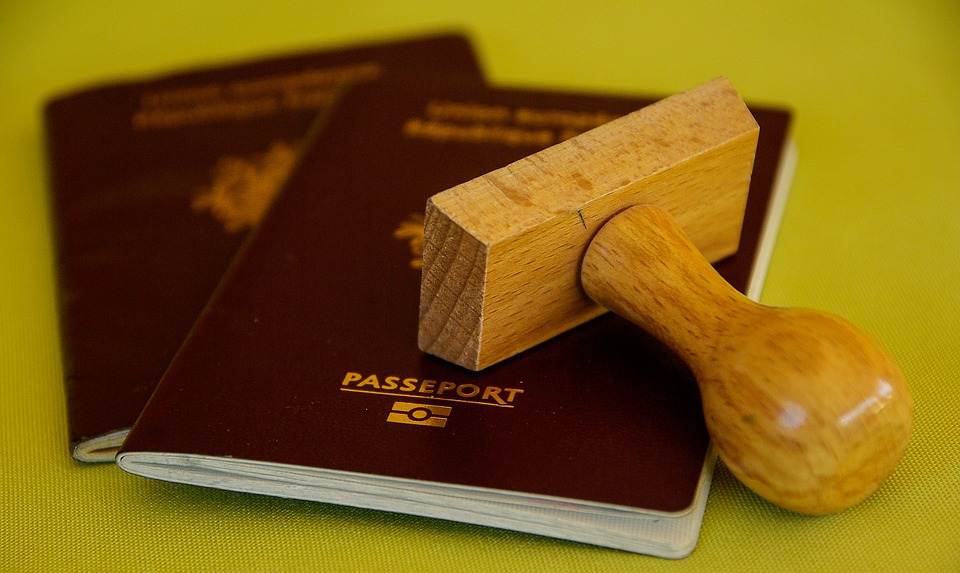
    Perhaps his most controversial executive action is the Protecting the Nation From Foreign Terrorist Entry Into the United States Order which puts a temporary entry ban on all refugees, as well as on nationals, immigrants and refugees from the following countries: Iraq, Syria, Iran, Sudan, Libya, Somalia, and Yemen. US Green card holders from these countries have also been affected. It also suspends the issuance of Visas and Other Immigration Benefits to nationals of those countries and also cancels the visa interview waiver.

    While the President has subsequently claimed it is not a “Muslim” ban, it is quite interesting that all of the countries on the list have majority Muslim populations. It also echoes the statement on preventing Muslim immigration which he had made during the campaign where he had called “a total and complete shutdown of Muslims entering the United States”.

    On Saturday, the detention of 12 refugees at John F. Kennedy Airport in New York, some of whom had provided assistance to the US government, sparked protests at major airports across the US and outrage around the world. Hameed Darwesh and Haider Al shalwi filed an Emergency Motion for Stay of Removal on behalf of themselves and others similarly situated.

    In the ruling on Darweesh v Trump, United States District Judge Ann Donnelly blocked (a) the removal of individuals with refugee applications approved by the U.S. Citizenship and Immigration Services as part of the U.S. Refugee Admissions Program, (b) holders of valid immigrant and non-immigrant visas, and (c) other individuals from the countries mentioned in the Ban which are legally authorized to enter the United States. However, it should be noted that it was not a ruling on the constitutionality of the Ban.

    The Wall Street Journal reports that the 90-day visa moratorium also applies to people who originally come the countries identified but are traveling on a passport issued by any other country.

    Iran has subsequently stated it will be taking ‘reciprocal’ action.

    A new US UN

    In a speech which raised eyebrows around the world, the US’ new United Nations Ambassador, Nikki Haley,threatened America’s allies that if they are not with America, America will be “taking a names”. Ambassador Haley, who is the former Governor of South Carolina, said there will be change in the way the US does business with the UN. She noted that US will show its strength and voice. The video of Ambassador Haley’s speech may be viewed on the New York Times’ online article.

    The Ambassador noted that “our goal with the administration is to show value at the U.N., and the way we’ll show value is to show our strength, show our voice, have the backs of our allies and make sure our allies have our back as well.” Without doubt, there are ways in which the UN’s operations can be improved. However, what this seems to be is a return to US unilateralism as opposed to multilateralism.

    Actions against the Environment

    In keeping with his promise to cut regulations and increase drilling for fossil fuels, Mr. Trump has signed presidential memoranda streamlining, permitting and reducing regulatory burdens for domestic manufacturing and facilitating the construction of the two controversial pipelines (Keystone XL Pipeline and the Dakota Access Pipeline). He also signed an executive order expediting environmental reviews and approvals for high priority infrastructure projects.

    All references to climate change were immediately scrubbed from the Whitehouse.gov website upon his taking office. Perhaps more worryingly are the gag orders on various government agencies, including the Environmental Protection Agency (EPA) which will now be headed by a climate change denier.  A report by the Guardian states that the Trump administration is now requiring studies or data from EPA scientists to undergo review by political appointees before they can be made public. US agencies are among some of the most important sources of climate-related data, which are critical in the fight against climate change.

    President Trump’s denial of climate change science is not outside of the Republican party mainstream, but as a Sierra Club report stated before the election, he would be (and currently is), the only sitting world leader to deny that man-made climate change exists.

    So what does this all mean?

    It has only been a week and we are already seeing the chaotic effects of Trumpism in action. Naturally, many of these executive orders will need the cooperation of Congress and the relevant agencies in order to be implemented. For instance, Congress will need to approve funds for the construction of the US-Mexico border wall, which despite President Trump’s assertions, Mexico will never pay for. The Congress is Republican-controlled but many Republican congressmen/women are self-professed fiscal conservatives who may not be willing to make the US taxpayer, of which they are a part, to  foot the astronomical costs for such a wall.

    Moreover, some of these actions may be challenged in court, as seen in the case of the Travel Ban. Of course, in light of the opposition to some of these moves it is possible that President Trump may moderate some of his stances. For the Caribbean, whose small island states have felt the ravages of climate change, the greatest worry will be his actions to reverse President Obama’s actions to curb the US’ emissions.

    What is most concerning for the world is that Mr. Trump’s actions evince a return to an inward looking US, a country once regarded as the leader of the “free world”. It prioritises a foreign, immigration and trade policy which places unilateralism over multilateralism, protectionism over fair/free trade and xenophobia over diversity. I would submit that this unfortunate shift not only weakens America’s standing in the world, but promotes increased global uncertainty, instability and perhaps, greater conflict.

    Alicia Nicholls, B.Sc., M.Sc., LL.B., is a trade and development consultant with a keen interest in sustainable development, international law and trade. You can also read more of her commentaries and follow her on Twitter @LicyLaw.

  • UK Government Loses Article 50 Brexit Appeal; Parliamentary Vote Needed

    UK Government Loses Article 50 Brexit Appeal; Parliamentary Vote Needed

    Alicia Nicholls

    In its ruling made shortly after 9:30 GMT this morning, the United Kingdom’s Supreme Court by a majority of 8 to 3 dismissed the Government’s appeal against a High Court decision that ruled that the Theresa May-led government must attain parliamentary consent before invoking the EU’s exit clause (Article 50 of the Treaty on European Union – Lisbon Treaty). A second issue which the court was called on to give its ruling upon was whether consultation with the devolved legislatures (e.g: Scotland, Wales, Northern Ireland) was required before Article 50 was triggered.

    In a judgment written by the 8 justices in majority and delivered by Lord Neuberger (President of the Supreme Court), the Court held that section 2 of the European Communities Act of 1972 Act did not allow the Government to trigger Article 50 without parliamentary authority.

    The main reasons for the Court’s decision were, inter alia, as follows:

    • Section 2 of the European Communities Act makes EU law another source of UK law which can override domestic law and will remain so unless and until Parliament decides otherwise.
    • Once the UK leaves the EU and as such is no longer party to the EU treaties, not only will UK domestic law have changed but the rights enjoyed by UK residents granted through EU law will be affected.
    • Under the UK constitution, parliamentary legislation is required for any fundamental changes to the UK’s constitutional arrangements. Withdrawal from the EU treaties would be such a fundamental change as it would cut off the source of EU law. The justices reiterated that there is “a vital difference between variations in UK law resulting from changes in EU law, and variations in UK law resulting from withdrawal from the EU Treaties”.
    • Parliamentary authority is needed because withdrawal from the EU would remove some existing domestic rights of UK citizens.
    • In regards to the June 23rd 2016 referendum, the Court held that “its legal significance is determined by what Parliament included in the statute authorising it, and that statute simply provided for the referendum to be held without specifying the consequences.”

    On the second issue under consideration, the Court unanimously held that the Government is not compelled to consult the devolved Parliaments.

    The Court’s ruling is final and it was a decision which was much more expected than the results of the June 23rd Brexit result which precipitated it. It should be emphasised that this ruling was on the legal question of whether the Government could make the Article 50 notification using its prerogative powers and not on the political question of whether Brexit should occur. It is also one of several legal challenges which have been filed since the Brexit vote decision.

    In brief remarks following the ruling, the Attorney General, Jeremy Wright, said the Government will comply with the ruling. Even before the ruling, the Government had indicated that in case it lost the appeal, it would present a short Brexit bill to minimise the need for lengthy amendments and debate that would jeopardise Prime Minister May’s end of March timeline for making the Article 50 notification. Once the Article 50 notification is received, the UK and EU would have two years to negotiate a withdrawal agreement, with an extension only possible if agreed to. EU countries had indicated that they would not be engaging in any informal negotiations with the UK prior to the latter’s Article 50 notification.

    In her long-awaited  speech last week in which she outlined her 12-point Brexit plan, Mrs. May confirmed that the UK would be pulling out of the single market (a move dubbed a “hard Brexit”) but also indicated that Parliament would be given the chance to vote on the final withdrawal deal negotiated with the EU.

    Alicia Nicholls, B.Sc., M.Sc., LL.B., is a trade and development consultant with a keen interest in sustainable development, international law and trade. You can also read more of her commentaries and follow her on Twitter @LicyLaw.

  • President Trump signs executive order pulling US out of TPP

    President Trump signs executive order pulling US out of TPP

    Alicia Nicholls

    With the stroke of a pen, newly inaugurated United States president, Donald J. Trump, today made good on one of his least controversial campaign promises; withdrawing his country from the 12-country Trans-Pacific Partnership (TPP) agreement via an executive order.

    The Agreement, which was signed by the US and eleven other Pacific-rim participants in February 2016, was intended to be a high standard agreement and was significantly WTO-plus in its provisions. While hailed by big business for its ambitiousness, several aspects made the agreement significantly unpopular with civil society groups and increasingly some politicians which criticised the secrecy under which the negotiations took place, the implications of its intellectual property rights provisions for access to medicines, the choice of the longstanding investor-state dispute settlement mechanism for settlement of investor claims against states, inter alia.

    Another criticism was that in absence of significant progress in the WTO Doha Round (which is now all but declared dead) it would set new standards and rules for 21st century global trade given that the parties account for 40% of the global economy and a third of global trade. It would turn the non members into standard-takers without having the chance to have been at the negotiating table. Mr Trump’s criticism of the agreement,however, was simply that it would kill American jobs.

    Although President Barack Obama had championed the agreement and had pushed unsuccessfully for its ratification by congress, TPP was a rare point on which there was consensus by then candidates Republican, Donald Trump and Democrat, Hillary Clinton who both criticised its possible implications for US manufacturing and jobs. During the campaign, Mr. Trump had likened the agreement to rape of the country. Previously Mrs. Clinton had called it the “gold standard” but later said she was against the final outcome.

    The move is a politically beneficial one for President Trump as it ticks off one of his most popular campaign promises and makes him look like a hero for American workers. It also gets him bipartisan support and will likely improve his approval ratings which have been the lowest for an incoming president.

    Mr. Trump’s move also signals that he aims to stick to his “America first” trade policies. In upcoming days Mr. Trump also signalled his intention to start renegotiation of the North American Free Trade Agreement with partners Canada and Mexico to secure a better deal for American workers. Among other proposals, Mr. Trump has restated his threat to impose a border tax on imports from US companies which outsource jobs overseas. The withdrawal of the US from the TPP also raises questions about the future of yet another mega regional trade agreement, the Trans-Atlantic Trade and Investment Partnership Agreement (TTIP) currently under negotiation between the US and the EU.

    Mr. Trump will be meeting with UK Prime Minister Theresa May on Friday to discuss, inter alia, UK-US post-Brexit trade relations. Unlike his predecessor, President Trump has indicated that the UK will not be at the back of the queue for a free trade agreement with the US. However, in contrast to Mr. Trump’s neo-mercantilist views, Mrs. May has enthusiastically reiterated her support of free trade and free markets, indicating last week her intention for the UK to become a global leader of free trade.

    President Trump has indicated he will seek to negotiate bilateral agreements with those individual TPP countries with which the US does not yet have an FTA. With regard to the future of TPP, the views of the other countries are mixed. Japanese Prime Minister Shinzo Abe previously indicated that TPP without the US was meaningless. Malaysia indicated it would go the bilateral route while Australia indicated it would try to salvage the agreement. A major geopolitical concern raised by foreign policy analysts about the US’ withdrawal is that it misses an opportunity for the US to increase its influence in the Asia-Pacific region, leaving an opening for China which was not a party to TPP. However, negotiations on RCEP, to which China is party and seen as a rival to TPP, have also been slow.

    Alicia Nicholls, B.Sc., M.Sc., LL.B., is a trade and development consultant with a keen interest in sustainable development, international law and trade. You can also read more of her commentaries and follow her on Twitter @LicyLaw.

  • WTO Ministers hold Informal Meeting on Davos Sidelines

    Alicia Nicholls

    On January 20, 2017 Ministers and other high-level officials from twenty-nine (29) World Trade Organisation (WTO) member countries held an informal gathering on the sidelines of the World Economic Forum’s 47th Annual Meeting which took place last week in the beautiful ski resort town of Davos, Switzerland.

    The attending ministers hailed from Asia, Africa, the US, European Union and Latin America, but none from the Caribbean. The meeting was chaired by Switzerland’s Federal Councillor, Johann Schneider-Ammann and involved discussion of the on-going negotiations before the WTO and the upcoming 11th WTO Ministerial which will take place this December in Buenos Aires, Argentina.

    According to notes taken by the Chair, Ministers stressed the key role of the rules-based multilateral trading system, the priority of working towards further integration into world trade of developing countries, the importance of trade as an engine for growth and development,inter alia. They also identified several issues for further work in the lead up to the Buenos Aires Ministerial, including domestic support in agriculture, fisheries subsidies, special and differential treatment and a permanent solution for public stockholding for food security issues. The Ministers also identified several “new” issues for discussion.

    Trade has been high on the political agenda due in the main to a growing popular backlash in western countries. As noted by Director-General Azevedo, some positive news is that the WTO’s Trade Facilitation Agreement will ever closer to coming into force, with only 3 more ratifications needed. Nigeria delivered its instrument of ratification during the Davos Meeting, while member state of the Caribbean Community, St. Vincent and the Grenadines, also recently ratified the Agreement.

    In attendance was also the WTO Director General, Roberto Azevedo whose remarks  after the ministerial gathering may be viewed here. The Director-General noted that there was need for better domestic policies to support persons who had lost their jobs but also reinforced that attacking trade was not the answer. In reference to the increasing speculation of a looming trade war between Trump’s US and China, Mr. Azevedo cautioned that trade wars and protectionism would destroy jobs and urged “everyone to show caution and leadership. We must avoid talking ourselves into a crisis.”

    Earlier this week, UK Prime Minister Mrs. Theresa May in her Davos Speech reiterated her desire for Britain to be a global leader in free trade and free markets.

    The Personal Concluding Remarks by the Chair, Federal Councillor Johann N. Schneider-Ammann, Switzerland can be found on the WTO’s website here.

    Alicia Nicholls, B.Sc., M.Sc., LL.B., is a trade and development consultant with a keen interest in sustainable development, international law and trade. You can also read more of her commentaries and follow her on Twitter @LicyLaw.