Alicia Nicholls
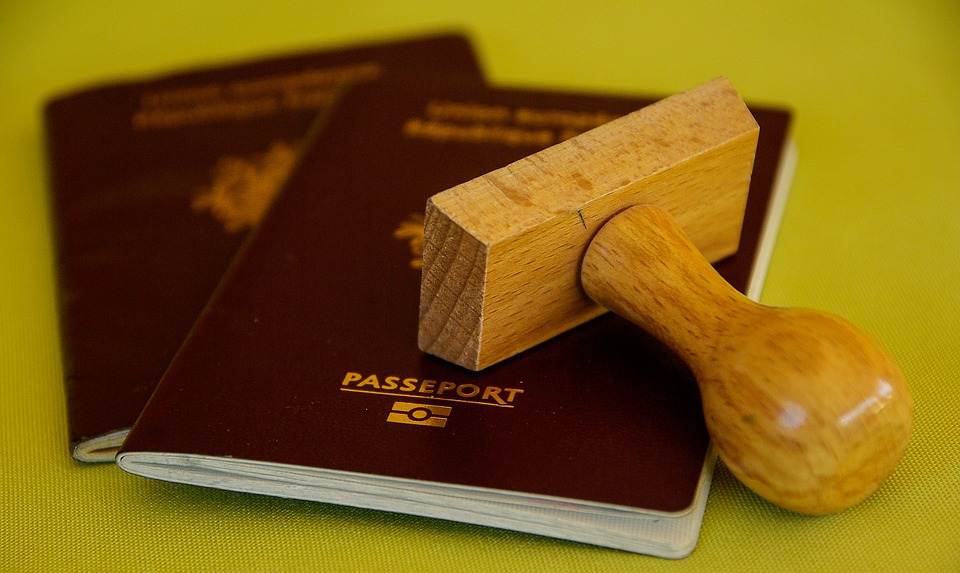
A 60 Minutes Special aired by American network, CBS, on January 1, 2017 has added fuel to the fiery debate on the legitimacy of Caribbean countries’ economic citizenship programmes. Whether intended or not, the segment entitled “Passports for Sale” cast a shadow of iniquity on the programmes which certain Caribbean countries, and to which an increasing number of countries are turning in order to stimulate their economies and attract much needed foreign investment.
Last year, St. Lucia joined four other Eastern Caribbean countries: Antigua & Barbuda, Dominica, Grenada and St. Kitts & Nevis by offering a direct citizenship programme. Economic investor programmes fall into two broad types: residency programmes (which only offer investors the right to reside) and citizenship programmes (which confer citizenship, either directly or after a period of residency).
Caribbean CBI programmes fall into the category of direct economic citizenship programmes which entitle qualifying investors and their qualifying spouse and/or dependents (e.g: children or elderly parents) to citizenship of the host country upon making a qualifying investment under that particular programme. Depending on the programme, a qualifying investment could be a monetary contribution of at least a certain amount to a special fund, the purchase of real estate of a minimum value or the purchase of government bonds in some cases. Investors and their co-applicants must also pass stringent due diligence procedures and pay the prescribed fees.
The reporting on the Caribbean CBI programmes was reduced to simply the “sale of passports” without taking into account the rationale behind the operation of these programmes. CBI programmes are not only about raising revenue through foreign investment for cash-starved Caribbean countries, but have wider development goals. These include helping to improve infrastructure, creating jobs and attracting investors who are the “best of the best”, that is, persons with know-how and skills and networks which could redound to the benefit of the host economy. It is for this reason that an increasing number of countries, including Western countries, have either implemented economic investor programmes or are thinking of doing so.
CBI programmes not limited to small states
Indeed, missing from the CBS segment was that economic investor programmes are not unique to small countries like those in the Caribbean or the EU small state of Malta whose programme has a one-year residency requirement. Economic investor programmes are offered by a growing number of countries around the world. For example, the United States has its EB-5 Immigrant-Investor Programme where eligible investors may obtain a green card once they “make the necessary investment in a commercial enterprise in the United States; and plan to create or preserve 10 permanent full-time jobs for qualified U.S. workers”. Several European countries offer Golden Visa programmes, while a number of Canadian provinces offer Provincial Entrepreneur Programs whereby qualifying investors can attain permanent residence once a qualifying investment is made.
As I argued in a recent article I wrote for Henley Partners’ Global Residence and Citizenship Review Q3 2016, once carefully managed, CBI programmes can be tools of development. A prime example is St. Kitts & Nevis, which at one point had been among the world’s most indebted countries, and has seen its economic fortunes turned around.
Focuses on missteps and not changes
The 60 Minutes Special focused almost exclusively on the missteps made under some of the CBI programmes, while comparatively little was said of the changes made to the programmes to increase the robustness of the due diligence processes. For instance, St. Kitts & Nevis undertook a revamp of its programme amidst concerns raised by the US and Canada.
The CBS 60 Minutes Special also harped on the fact that some unsavoury characters had managed to obtain passports through CBI programmes. This is regrettable, no doubt, but “shady”characters have managed to earn residency in western countries which have much greater due diligence capability than do small states. The CBS Special did not mention, for instance, that Caribbean CBI countries maintain a list of restricted nationalities. Nationals from Afghanistan, Iran and Syria are not eligible under St. Kitts & Nevis’ programme, as an illustration.
Moreover, when oligarchs from Russia and the Middle East set up homes in western countries, no one (and rightfully so) questions their intention. Yet, why is a nefarious light cast on a Russian or Middle Easterner who obtains citizenship via a Caribbean CBI programme? Why the double standard? Or better yet, why are Caribbean countries constantly being held to a higher standard? Or is it because Caribbean CBI programmes, just like our much maligned offshore financial services sectors, are one area in which Caribbean countries can actually go toe to toe with developed countries?
Growing demand for secondary passports
One of the biggest falsehoods about CBI programmes is that secondary passports are sought primarily by persons with nefarious intent or as the CBS Special put it “scoundrels, fugitives, tax cheats, and possibly much worse”. This is far from the case. The growing class of High Net Worth Individuals (HNWIs), which includes a growing number of persons from emerging economies, increasingly see second passports as an “insurance policy” against instability or economic uncertainty in their home countries. Moreover, simple things like travelling for business or taking one’s family on vacation can be burdensome if one comes from a country with limited visa-free access to other countries. A good quality passport, therefore, brings mobility benefits.
However, it is not only HNWIs from emerging economies which have sought secondary passports. Many, particularly those living abroad, are renouncing their American citizenship not because they necessarily want to dodge their tax duty, but because of the onerous and costly reporting requirements and the fact that American citizens may be liable to pay tax on income earned abroad to the Federal Government even if they have been resident in another country for years. Added to this, ever since the passage of the Foreign Account Tax Compliance Act of 2010 which requires foreign financial institutions to report to the US Inland Revenue Service on assets owned by US citizens, Americans have been renouncing their citizenship in record numbers.
The demand indicators for secondary citizenship are all trending in the right direction, which is yet another reason why countries are turning to economic investor programmes. The election of President-elect Donald Trump in the US led the Canadian Immigration Department’s website to crash on election night as Americans increased online enquiries about moving to Canada, while the UK’s impending withdrawal has spurred demand by UK nationals for second EU passports.
Additionally, investors who acquire citizenship under Caribbean CBI programmes do not only come from “questionable countries”. The St. Lucia Times reported in December that among the 38 citizenships which were granted in St. Lucia, “there were seven applicants from the Middle East, three from Russia, two from Asia, two from North Africa, two from South Africa, one from North America and one from Europe.”
Attractiveness of Caribbean passports
There is also the erroneous belief that Caribbean CBI programmes’ popularity stems from their purported corruption or because of the perceived negligible due diligence. Caribbean passports are attractive for a multiplicity of reasons. Holders of Caribbean passports enjoy visa-free access to a growing number of countries, which tick off the mobility box for investors. The high standard of living and political stability in the Caribbean appeals to those investors in search of a lifestyle change.
CBI Caribbean countries’ citizenship laws recognise both citizenship by birth (jus soli) and citizenship by descent (jus sanguinis) meaning that investors can pass on their citizenship to their children (born after the investor’s acquisition of citizenship) whether they are born in the host country or not.Moreover, Caribbean countries allow for dual citizenship so they do not have to renounce their current nationality.
Another factor is that the lack of residency requirement reduces the time it takes to acquire citizenship than through naturalisation. There are other factors such as Caribbean countries’ access to international business hubs through frequent flights to international gateways, their tax-friendly climates and their network of tax treaties and investment treaties with third states.
Conclusion
For the above reasons I found the CBS 60 Minutes Special’s “Passports for Sale” segment to be extremely unbalanced. I also question why except for a nominal reference to Malta at the beginning, Caribbean CBI programmes were singled out and why so much attention was devoted to some of the mishaps but little was said of the steps taken to prevent a recurrence. An online petition by One people, One Caribbean has sought to set the record straight and also calls for the retraction of the segment.
That being said, I do believe that robust and honest debate on the functioning of Caribbean countries’ CBI programmes is an important exercise once it is objective and not skewed. For example, the lack of transparency on the number of citizenship approvals granted under CBI programmes and to whom is a problem I have mentioned before. Although some countries have started to release some of their statistics, more data should be released and in a more timely manner.
What is needed as well is greater cooperation among Caribbean CBI countries. Some critics of CBI programmes raise the legitimate fears that increased competition both among Caribbean CBI programmes and with extra-Caribbean CBI programmes may lead to a race to the bottom in order to remain competitive. Perhaps what needs to be done is harmonisation of Caribbean countries’ CBI due diligence requirements so that an investor who fails the due diligence requirements of one Caribbean programme cannot gain access to another’s. Another option could be to harmonise CBI countries’ restricted countries’ lists. I am under no illusion that this would be an easy task but it is perhaps worth considering.
There is some support for greater OECS collaboration on this issue. The Prime Minister of St. Lucia, Allen Chastanet, has called for an OECS approach to CBI programmes through an OECS initiative based at the OECS Secretariat. However, it should be noted that a pan-OECS initiative may be problematic as not all OECS countries are supportive of such programmes. Additionally, CBI programmes must be free of political influence and interference.
Cooperation with the wider Caribbean Community (CARICOM) is also needed. Non-CBI CARICOM countries have raised concerns about reputational and security implications for their own countries. Under the Revised Treaty of Chaguaramas, the broad definition of “Community National” means that an individual who attains citizenship of a CARICOM country would qualify as a community national and be entitled to those benefits.
As I argued before, CBI programmes are not a panacea. Continued monitoring and upgrading of the programmes is needed to ensure that they meet their objectives of contributing to national development, while also ensuring the strictest of due diligence standards.
Alicia Nicholls, B.Sc., M.Sc., LL.B., is a trade and development consultant with a keen interest in sustainable development, international law and trade. You can also read more of her commentaries and follow her on Twitter @LicyLaw.



 Caribbean Trade Law and Development