Blog

  • Caribbean Trade and Development News Digest – September 26-October 2, 2021

    Caribbean Trade and Development News Digest – September 26-October 2, 2021

    Welcome to the Caribbean Trade and Development News Digest for the week of September 26-October 2, 2021! We are pleased to bring you the major trade and development news headlines and analysis from across the Caribbean Region and the world from the past week.

    We continue to express our solidarity with our brothers and sisters in Haiti who were affected by a 7.2 magnitude earthquake on August 14, and then by Tropical Storm Grace just days later. Even though the international media has largely moved on from the ‘story’, our Haitian brothers and sisters still need your help. Please assist by reaching out to reputable charities/aid agencies if you are so able.

    THE WEEK’S HIGHLIGHTS

    The WTO’s Public Forum was held this week under the theme “Trade Beyond COVID-19: Building Resilience”. Read more here.

    On September 30, 2021, the USITC released its latest report on the operation of the CBERA programme. Haiti, Barbados and Grenada tied for being the countries with the highest rate of utilisation of the programme. Read about this and other findings in my article on it here.

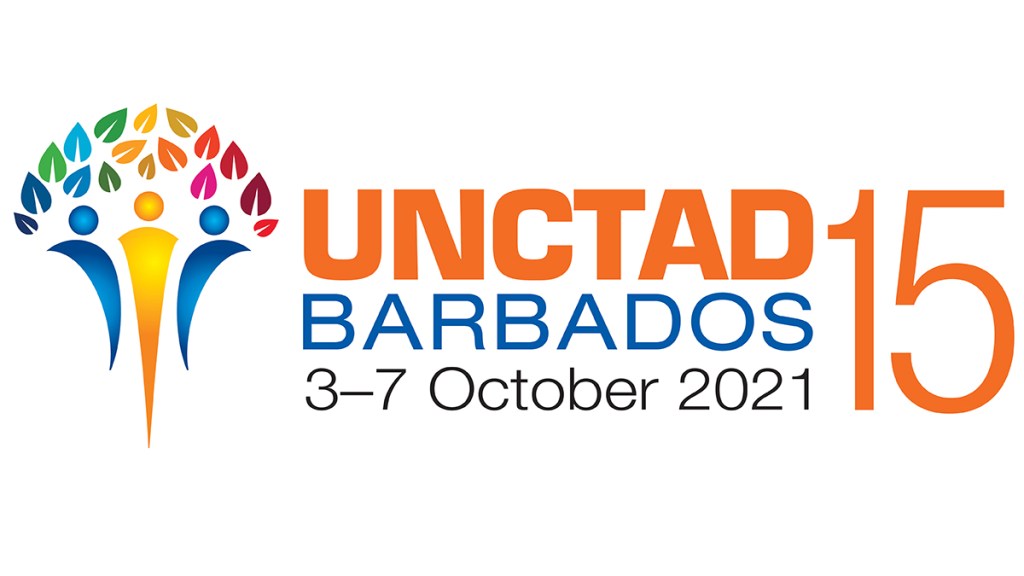
    UNCTAD 15 is finally here!

    The biggest news this coming week is that from October 3-7, Barbados will be hosting the 15th session of the UNCTAD (UNCTAD-15), which was postponed from 2020 due to the COVID-19 pandemic. Barbados will make history as the first Caribbean nation and the smallest State to host the UNCTAD quadrennial. Ordinarily, such an event would have led to thousands of delegates physically coming to Barbados to engage in the meetings and various side events, which would have been an important boost to our economy. However, in light of the COVID-19 pandemic, the event will be held virtually with only a small number of delegates on island, most notably the United Nations Secretary-General, Antonio Guterres and UNCTAD Secretary-General, Rebeca Grynspan. You can follow the UNCTAD activities here and access the programme here.

    REGIONAL NEWS

    Cuba begins commercial exports of local vaccines

    Jamaica Observer: Cuba has begun commercial exports of its homegrown COVID-19 vaccines, sending shipments of the three-dose Abdala vaccine to Vietnam and Venezuela. Read more

    African, Caribbean nations press ahead with new partnership

    Barbados Today: Trade and investment links between the Caribbean Community (CARICOM) and the African Union are in line for major strengthening as officials of the African Import-Export Bank (Afreximbank) hold talks with officials in Bridgetown and the rest of the region. Read more

    Kenya’s president to visit Barbados

    Barbados Advocate: Just days after playing host to the President of the Africa Export-Import Bank, Barbados will be receiving a visit from another high-level African official as Kenya’s President Uhuru Kenyatta is expected on-island on Monday. Read more

    Belize Prime Minister John Briceño says meeting with Mexican Employers Association was fruitful for trade and investment

    BBN: Prime Minister John Briceño says meeting with Mexican Employers Association, la Confederación Patronal de la República Mexicana (Coparmex), on Tuesday during his State Visit to Mexico was fruitful. Read more

    Belize delegation discusses cross-border payment systems with Banco de Mexico officials

    BBN: A Belize Delegation met with officials of the Banco de México on Tuesday to discuss payment systems and banking relations between Belize and Mexico to support trade and investment with Mexico. Read more

    Jamaica Gov’t pushing for front-of-package labelling

    Jamaica Observer: Having easy access to information about nutritional facts and ingredients of packaged food items will enable consumers to make healthier food choices and potentially reduce the prevalence of noncommunicable diseases (NCDs) and obesity in Jamaica. Read more

    PAHO pushing for region to produce COVID vaccines

    Jamaica Observer: Pan American Health Organization (PAHO) is ramping up efforts to have COVID-19 vaccines manufactured within the Latin American and Caribbean region in order to accelerate vaccination coverage and reduce dependency on global supplies. Read more

    Gopee-Scoon: Trinidad and Tobago’s non-energy export market improving

    Newsday: Monthly revenue generated by Trinidad and Tobago’s non-energy exports is stabilising after the negative financial effects of the pandemic. Read more

    INTERNATIONAL NEWS

    EU court annuls Morocco trade agreement over Western Sahara

    DW: The EU Court ruled the North African country did not have the consent of the people of the Western Sahara required for the now-canceled fisheries and agricultural treaties. Read more

    Asean-EU free trade deal negotiations set to resume

    Bangkok Post: Asean is set to resume free trade agreement (FTA) talks with the EU after negotiations were suspended since 2009. Read more

    Taiwan questions China’s suitability for Pacific trade pact, fears ‘obstruction’

    Reuters: China’s restrictive practices present fundamental problems for its application to join a major pan-Pacific free trade pact, and if it joins before Taiwan there is a risk it could block their application, the island’s economy minister said. Read more

    U.S. trade chief Tai will reveal Biden’s China trade strategy on Monday

    CNBC: U.S. Trade Representative Katherine Tai will unveil the Biden administration’s long-awaited strategy for the troubled U.S.-China trade relationship in a speech on Monday at a Washington think tank, her office said. Read more

    Britain’s hopes of early post-Brexit trade deal with US appear dashed

    Guardian: Britain’s hopes of a post-Brexit trade deal with the US have all but evaporated barring a dramatic change of heart from Joe Biden, it emerged on Tuesday as Boris Johnson held face-to-face talks in the White House. Read more

    Liz Truss: A UK-US trade deal not ‘the be all and end all’

    City AM: The former international trade secretary told a fringe event at the Conservative conference in Manchester that there are many other trade agreements the UK can close post-Brexit, apart from the long coveted one with the US. Read more

    India, Australia agree to conclude free trade agreement by 2022-end

    Business Standard: India and Australia on Thursday agreed to conclude the long-pending free trade agreement by the end of 2022 and an early harvest trade deal by as early as December. Read more

    ‘A perfect storm’: supply chain crisis could blow world economy off course

    Guardian: It was all going so well. Successful vaccination programmes were driving the post-pandemic recovery of the global economy, stock markets were back at record highs, and prices were rising just enough to make deflation fears a thing of the past. Read more

    Britain will threaten to scrap some Northern Ireland Brexit terms

    Guardian: Britain will threaten on Monday to dispense with some of the terms of its agreement overseeing post-Brexit trade with Northern Ireland, saying they have become too damaging to retain. Read more

    Fishing rights row: French anger as UK rejects most permits

    BBC: Fresh tensions have surfaced between Britain and France over post-Brexit fishing rights. In the latest round of applications, the UK granted just 12 licences from 47 bids for smaller vessels to fish in its territorial waters. Read more

    EU postpones trade talks with Australia amid sub deal anger

    Reuters: Australia’s trade minister said on Friday talks with the European Union over a trade deal have been postponed, as a row over Canberra’s decision to cancel a $40 billion deal with France escalated. Read more

    Africa trade boss describes patent rules as “outdated”

    Africanews: The head of the world’s biggest free trade area, AfCFTA, has described the global intellectual property rights system as “outdated” saying it is constraining Africa’s industrialisation. Read more

    STRAIGHT FROM THE WTO

    NEW ON THE CTLD BLOG

    The Caribbean Trade & Development Digest is a weekly trade news digest produced and published by the Caribbean Trade Law & Development Blog. Liked this issue? To read past issues, please visit here. To receive these mailings directly to your inbox, please subscribe to our Blog below:
  • USITC Releases latest CBERA Report: Haiti, Barbados & Grenada have highest utilisation rate

    USITC Releases latest CBERA Report: Haiti, Barbados & Grenada have highest utilisation rate

    Alicia Nicholls

    On September 30, 2021, the United States International Trade Commission (USITC) released its latest report on the operation of the Caribbean Basin Economic Recovery Act (CBERA) and its impact on US industries, consumers and on beneficiary countries. Enacted in 1983 and made effective in 1984, the CBERA is one of the constituent acts under the Caribbean Basin Initiative. The CBERA allows the US President to extend to designated beneficiary countries in the Caribbean Basin non-reciprocal and unilateral duty-free or reduced duty access to the US market for a wide range of goods. The CBERA is of indefinite duration in that it has no statutory end date unlike, for instance, the other Acts. The Caribbean Basin Trade Partnership Act (CBTPA) of 2000 extended preferential treatment to textiles and apparels and was most recently renewed in October 2020 until 2030.

    The 17 CBERA beneficiaries in 2020 were as follows: Antigua and Barbuda, Aruba, The Bahamas, Barbados, Belize, British Virgin
    Islands, Curaçao, Dominica, Grenada, Guyana, Haiti, Jamaica, Montserrat, Saint Kitts and Nevis, Saint Lucia, Saint Vincent and the Grenadines, and Trinidad and Tobago. CBTPA beneficiaries (8) in 2020: Barbados, Belize, Guyana, Haiti, Jamaica, Saint Lucia, and Trinidad and Tobago. The Haiti Economic Lift Program (HELP) Act of 2010 and Haiti Hemispheric Opportunity through Partnership Encouragement Act of 2006 and of 2008 (HOPE I & II) provide special preferences for Haiti and were extended in 2015 until 2025.

    The latest CBERA report found that “the impact of the CBERA program on the US economy and industries continued to be small in 2019 and 2020”, which it attributed to the fact that “the value of US imports under the CBERA preference program are a
    small share of total US imports”. Turning to the future effect of the CBERA program on the US economy, including on U.S. domestic industries and US consumers, the report found that the effect ” is likely to remain minimal for most products, given the relatively small volume of imports from CBERA countries that is unlikely to grow substantially”.

    The report highlighted that the top US imports under the CBERA were petroleum oils, methanol, T-shirts of cotton, sweaters of manmade fibers, and polystyrene. The five largest CBERA exporting countries over the reporting period were Trinidad & Tobago, Haiti, Guyana, Jamaica and the Bahamas. However, Haiti, Barbados and Grenada were the beneficiary countries with the highest utilisation rate (94.7%) of the programme. It is noteworthy that Barbados moved from a utilization rate of just 38.2% in 2016 (one of the lowest) to a utilization rate of 94.7% in 2020. US imports under CBERA as a share of total US imports for consumption remained small (only 0.07% in 2020), while US imports from beneficiaries that receive program preferences as a share of total US imports from beneficiary countries were 33.8% in that same year.

    The report may be accessed here.

    Alicia Nicholls, B.Sc., M.Sc., LL.B. is a trade and development consultant with a keen interest in sustainable development, international law and trade. All views herein expressed are her personal views and should not be attributed to any institution with which she may from time to time be affiliated. You can read more of her commentaries and follow her on Twitter @LicyLaw.

  • Caribbean Trade and Development News Digest – September 12-18, 2021

    Caribbean Trade and Development News Digest – September 12-18, 2021

    Welcome to the Caribbean Trade and Development News Digest for the week of September 12-18, 2021! We are pleased to bring you the major trade and development news headlines and analysis from across the Caribbean Region and the world from the past week.

    We continue to express our solidarity with our brothers and sisters in Haiti who were affected by a 7.2 magnitude earthquake on August 14, and then by Tropical Storm Grace just days later. Even though the international media has largely moved on from the ‘story’, our Haitian brothers and sisters still need your help. Please assist by reaching out to reputable charities/aid agencies if you are so able.

    THE WEEK’S HIGHLIGHTS

    China made its formal application this week to join the Comprehensive and Progressive Agreement for Trans-Pacific Partnership (CPTPP), but this decision has stirred up significant debate about the geopolitical implications of this announcement. See this report from Strait Times here.

    UNCTAD XV Youth Forum Session on “Redefining Trade Governance”

    This week I had the honour and pleasure of being a presenter on the “Redefining Trade Governance” panel at the United Nations Conference on Trade and Development (UNCTAD) Youth Forum, one of the pre-events of the UNCTAD XV Quadrennial being held virtually by Barbados. I wish first to congratulate and thank Ms. Roshanna Trim, UNCTAD Youth Forum Lead and her team, for a very thought-provoking and well-organised forum. In this article, I wish to share a few thoughts some of which, due to time constraints, I had been unable to flesh out fully during what was otherwise a very interesting session at the Youth Forum. Read more here.

    Afronomics Law Blog Symposium on Africa-Caribbean Economic Relations Continues!

    I am truly pleased to have co-convened this Afronomicslaw. org Blog Symposium with the brilliant Dr Ohiocheoya Omiunu (PhD) on “Prospects for Deepening Africa-Caribbean Economic Relations“! The insightful contributions to this symposium are being released every other day and can be read on the Afronomics Law Blog. I also wish to extend my deepest appreciation to the expert contributors – academics and practitioners – for taking time out of their busy schedules to share their invaluable contributions, without which this Symposium would not be possible!

    REGIONAL NEWS

    US$655.1 Million In Export Earnings Between January And May

    JIS: Jamaica generated export earnings of US$655.1 million between January and May 2021, representing a 24.6 per cent increase over the US$525.7 million for the corresponding period last year. The information is contained in a statement from the Statistical Institute of Jamaica (STATIN) on Tuesday (September 14). Read more

    Taiwan to continue strengthening relations with Belize: President Tsai

    Focus Taiwan: President Tsai Ing-wen (蔡英文) said the partnership between Taiwan and its diplomatic ally Belize will grow stronger over time at a virtual ceremony on Friday held to commemorate the 40th anniversary of the Caribbean nation’s independence. Read more

    Belize to trade “Superbond” for TNC’s Blue Bond

    Amandala: It is a historic agreement that is expected to free the country of its overwhelming international debt of US $572 million, and according to a release from the Ministry of Finance, “pave the way for strong and long-lasting economic growth”. Read more

    BELTRAIDE and DFC sign agreement to provide financial support to businesses

    BBN: This week, the Belize Trade and Investment Development Service (BELTRAIDE) signed a memorandum of understanding (MOU) with the Development Finance Corporation (DFC), which will be aimed at getting financial support for Belizean businesses. Read more

    ‘Burdensome’ measures stifling scrap metal trade – exporters

    Newsroom: Guyana’s scrap metal trade has taken a hit despite being reopened in April according to the General Secretary of the Guyana Metal Recyclers Association, Stephen Bourne. Read more

    INTERNATIONAL NEWS

    China formally applies to join TPP

    Bloomberg: China has applied to join an Asia-Pacific trade pact once pushed by the U.S. as a way to isolate Beijing and solidify American dominance in the region. Read more

    Mainland China bans Taiwan wax and sugar apple imports as cross-strait relations continue to worsen

    South China Morning Post: Mainland China has banned imports of sugar apples and wax apples from Taiwan from Monday, citing biosafety fears over plant pests. Read more

    US trade rep says India’s Mastercard crackdown ‘draconian’: Report

    Al Jazeera: The US has been frustrated since India’s central bank banned new card issuance on the back of breaking data-storage rules. Read more

    Trade group wants restrictions on U.S. natural gas exports

    Reuters: A manufacturers trade group on Friday urged the Department of Energy to order U.S. liquefied natural gas (LNG) producers to reduce exports, warning of price increases and supply shortages this winter. Read more

    U.S. trade chief urges ASEAN envoy to visit Myanmar soon, promote dialogue

    Reuters: U.S. Trade Representative Katherine Tai has urged the Association of Southeast Asian Nations (ASEAN) to send its special envoy to visit Myanmar as soon as possible to promote dialogue, her office said on Tuesday, days after opponents of the country’s military rulers declared a revolt. Read more

    France denies quitting trade talks with Australia over AUKUS row

    Euronews: French and Australian officials said on Monday that France’s anger over a cancelled submarine contract will not derail negotiations of an Australia-EU trade deal. Read more

    EU wants long-term solutions for post-Brexit trade, says diplomat

    Euronews: European Union ministers meeting on Tuesday will discuss how to ease tensions with London over trade between Great Britain and Northern Ireland but the bloc will not renegotiate provisions for the sensitive frontier agreed in the Brexit divorce deal, a senior EU diplomat said on Monday. Read more

    STRAIGHT FROM THE WTO

    NEW ON THE CTLD BLOG

    The Caribbean Trade & Development Digest is a weekly trade news digest produced and published by the Caribbean Trade Law & Development Blog. Liked this issue? To read past issues, please visit here. To receive these mailings directly to your inbox, please subscribe to our Blog below:

  • Youth and Trade Governance: Pulling up and Changing di Riddim

    Youth and Trade Governance: Pulling up and Changing di Riddim

    Alicia Nicholls

    This week I had the honour and pleasure of being a presenter on the “Redefining Trade Governance” panel at the United Nations Conference on Trade and Development (UNCTAD) Youth Forum, one of the pre-events of the UNCTAD XV Quadrennial being held virtually by Barbados. I wish first to congratulate and thank Ms. Roshanna Trim, UNCTAD Youth Forum Lead and her team, for a very thought-provoking and well-organised forum. Second, I am grateful for the opportunity kindly extended to me as a proud Barbadian to participate in this historic moment for our country – the first Small island Developing State to host an UNCTAD quadrennial starting officially from October 3-7, 2021. Third, as a young trade professional, I relished the opportunity to engage with my brilliant fellow panelists who hailed from Kenya, Indonesia and South Africa and who are all doing great things in their countries of origin. 

    In this article, I wish to share a few thoughts some of which, due to time constraints, I had been unable to flesh out fully during what was otherwise a very interesting session at the Youth Forum.

    Pull Up, Change Di Riddim

    In preparing for the session, the creative theme chosen by the UNCTAD Youth Forum organizers: ‘Pull up: Change di riddim’ gave me plenty of food for thought. Without doubt, the current soundtrack for the contemporary trade and development governance regime, both at national, regional and the multilateral levels, needs to be changed or remixed to create a more inclusive and equitable space that benefits marginalized groups, particularly the youth and in keeping with the overall UNCTAD XV theme of “from inequality and vulnerability to prosperity for all”.

    But what would this new or remixed ‘riddim’ sound like? It would be, for example, the rhythm of an updated World Trade Organization (WTO) trade rulebook with equitable trade rules on existing and emerging trade issues, allowing for sustainable job creation and facilitating youth-owned enterprises. It would be the rhythm of giving the youth opportunities to contribute meaningfully at national, regional and international levels solutions-oriented approaches to trade and development issues confronting our world.

    But whose responsibility is it to ‘pull up’ and change this rhythm? I will briefly outline my thoughts on some of the ‘DJs’ responsible for mixing and harmonizing this new riddim for trade governance. These include a wide range of actors, but in this article I am focusing on just a few.

    UNCTAD

    Nearly six decades ago, the Geneva-based UNCTAD was conceived and birthed out of the recognition that marginalized countries in the global trading system – developing countries – needed a voice in the trade and development conversation. UNCTAD already has commendably demonstrated that it values inclusion of youth and young women, including, for example, through its Youth Network and programmes like the Emtrepec Women in Business Award.

    Like other UN agencies, UNCTAD has an internship programme which allows those lucky youth chosen a front row seat on global trade and development issues and work alongside some of the world’s foremost experts on these issues. But these, like other UN system internships, are unremunerated positions, and interns have to pay for their own visas, travel and accommodation in Geneva which is a stunningly beautiful but very expensive city. Offering paid internships would extend this amazing opportunity to more youth, particularly those of poorer backgrounds and whose contributions are no less valuable.

    UNCTAD, as part of a Youth and Trade and Development work programme, can also serve as a forum for its 195 Member States to share best practices and providing technical assistance and capacity building on youth mainstreaming in trade and development policy making.

    National Governments

    Research from the Caribbean Development Bank in 2015 shows that youth unemployment in the Caribbean region is among the highest in the world at 25% and nearly three times the adult unemployment rate of 8%. An increasing number of youth are unable to find decent employment commensurate with their qualifications and skills and made worse by the COVID-19 pandemic. As a result, anecdotally, there has been an increase in youth in the region choosing to pursue entrepreneurial activities as opposed to working for someone else. These include from farming to soap-making to designing application software. But many of those businesses are in the informal sector and, therefore, often not eligible for assistance programmes, such as COVID relief.  

    Business facilitation, although there have been improvements, especially due to COVID-19 imperatives, remains a frustration, particularly for youth-owned SMEs. While Jamaica leads the region and is ranked sixth on the “starting a business” indicator, no Caribbean country currently ranks among the top 50 countries on the World Bank Doing Business Index overall. Improving access to information and reducing waiting times for simple things, such as registering a business or incorporating a company would help to incentivize business formalization.

    Governments can also expand the number of internship programmes in their ministries of trade, and other trade-related agencies so more young people can see international trade and international trade policy making and implementation in action at the national level.

    Another barrier facing youth-owned SMEs is lack of information, especially market intelligence information and having to deal with non-tariff barriers in markets they seek to access. Establishing and/or expanding bespoke youth-targeted export promotion programmes can help more youth make the transition from entrepreneurial exploits to exports to global markets and as part of global value chains.

    Youth concerns should be mainstreamed in national trade policies. As an example, Belize’s National Trade Policy includes a section on the youth. Moreover, we cannot create youth policies in a vacuum. Better data is needed for creating evidence-based youth policies and monitoring and evaluating the impact of trade and economic policies on the youth.  Additionally, we must move away from the notion that having a young face on a board or at a meeting is enough to qualify as involving a youth voice. The youth should be an important stakeholder in trade discussions, the way we would include the private sector and labour.

    Private Sector

    The private sector can play a role by mentoring and/or offering more internships to young people interested in trade. Mentorship of the youth, especially those interested in careers in the trade and development field is sorely lacking in the region. We must see investing in young people not as a threat or risk, but as an opportunity and investment that pays dividends.

    Access to finance is a major problem for SMEs, including youth SMEs which are often seen as risky. It is made harder by increased bank fees and stricter know your customer (KYC) requirements due to global anti-money laundering/countering the financing of terrorism (AML/CFT) rules. Not every young person has two forms of ID in order to open a bank account. Some also lack the financial records needed to borrow at non-prohibitive interest rates. Banks can do more to facilitate lending to young entrepreneurs.

    The ‘youth’ Diaspora

    Due to migration, there is a growing number of young professionals in our diasporas in the US, UK, Canada and even as far as China and Dubai. Caribbean governments need to have systematic ways of engaging our ‘youth diaspora’, many of whom have migrated to pursue better opportunities abroad but still want to give back to their home countries. The value of the youth diaspora is not limited to remittances. It is through the networks, know-how and knowledge they have which can be harnessed for our trade and development.

    Let’s take the area of sports which as I wrote a few years ago has tremendous potential for export diversification. I recently heard a Brasstacks discussion where our well-respected Olympic champion Obadele Thompson had indicated providing a comprehensive plan for high performance sport to our Olympic Association for their consideration. That is just one example of the eagerness displayed by some in the ‘youth’ diaspora in contributing to development ‘back home’. Additionally, members of the Caribbean diaspora, many of whom are professionals, can also be more fully engaged as potential mentors, particularly for other young entrepreneurs.

    Society

    While we may not wish to admit it, a big hindrance to greater youth involvement on trade and development matters is the anti-youth bias that pervades many of our societies and which rears its ugly head when youth try to insert their voices into debates on matters of public interest.  We need to get away from the belief that calls by the youth for inclusion are conceived in ‘millennial entitlement’ when really they are out of the desire for a voice and for opportunities to contribute meaningfully to the societies which invested in our education and where many of us which to retire some day.

    Youth ourselves as DJs

    We, as youth ourselves, are DJs and have a role in this riddim. The world is our oyster thanks to the internet. The COVID-19 pandemic has given greater imperative to create and expand spaces for ourselves to network, share information, ideas, opportunities, best practices, with other youth not just nationally, but regionally and across the world. We must also continue to advocate on trade and development issues.

    In conclusion, as a SIDS, Barbados’ virtual hosting of the UNCTAD 15 Quadrennial Conference and its concomitant chairmanship of UNCTAD for the next four years provides a unique opportunity for mainstreaming the voice of the youth, particularly from marginalized states like SIDS, in setting and advancing the trade and development governance agenda. This includes on trade issues such as special and differential treatment and solving the WTO Appellate Body crisis, but also non-trade issues like migration, climate change and the blue economy. A youth voice is also pertinent on issues of concessional financing and debt relief because it is the youth who are among today’s and tomorrow’s taxpayers. Every dollar spent in debt repayment is money that could be invested in education, in youth programmes and the like.

    Ultimately, the youth can be a valuable actor and change agent in helping to ‘pull up and change di riddim’ so we can have national, regional and international trading systems that move from inequality and vulnerability to prosperity for all.

    Alicia Nicholls, B.Sc., M.Sc., LL.B. is a trade and development consultant with a keen interest in sustainable development, international law and trade. All views herein expressed are her personal views and should not be attributed to any institution with which she may from time to time be affiliated. You can read more of her commentaries and follow her on Twitter @LicyLaw.