Blog

  • What might a global minimum corporate tax mean for Caribbean International Financial Centres (IFCs)?

    What might a global minimum corporate tax mean for Caribbean International Financial Centres (IFCs)?

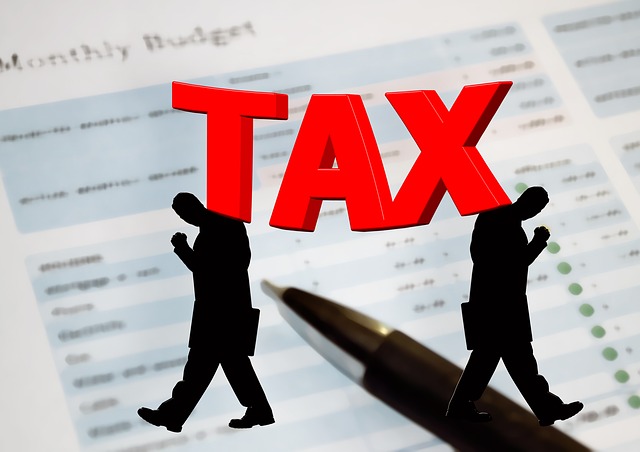
    Image by Gerd Altmann from Pixabay 

    Alicia Nicholls and Tammi Pilgrim

    Finance ministers of the world’s seven richest democracies (the Group of 7 or G7) have committed to an “at least 15%” global minimum corporate income tax (CIT) rate. This decision in principle has been lauded as a ‘landmark’ deal to ensure big multinational corporations (MNCs) pay their ‘fair share’ of tax. While the details of the proposed tax are still unknown, the decision, if implemented, could potentially have non-negligible implications for no-tax or low-tax jurisdictions globally. This article provides our initial reflections on what this development might possibly mean for Caribbean international financial centres (IFCs), including Barbados.

    What does a global minimum CIT entail?

    The global minimum CIT would require a corporation from a country which implements this floor (the “home country”) to pay taxes on its profits at this particular rate, even if those profits are declared overseas, such as in a lower-tax jurisdiction. It works as a “top up” tax, where the corporation’s home country (Country A) could charge the difference between the tax rate the corporation paid in the lower-tax jurisdiction (Country B). That undermines any advantage of shifting to a lower-tax jurisdiction.

    The idea of a global minimum CIT is not new. The introduction of common global minimum tax rules is presently part of Pillar 2 of the Organisation for Economic Cooperation and Development (OECD) Base Erosion and Profit Shifting (BEPS) Initiative which aims to stop corporations from exploiting gaps and mismatches in countries’ tax systems to avoid taxes.

    Why is this being proposed?

    Fundamentally, this worldwide minimum CIT seeks to discourage MNCs from moving profits to countries with low CIT rates in order to avoid paying the higher CIT imposed by their home countries. This inevitably results in reduced tax revenue for the home country.

    The OECD argues that “BEPS practices cost countries $US 100-240 billion in lost revenue annually, which is the equivalent to 4-10% of the global corporate income tax revenue”. Large countries, especially certain high tax European countries like France and Germany, blame this tax competition for the erosion of their tax bases and point to the higher rates paid by small businesses and the ordinary taxpayer. However, very little is said about the tax codes of these large countries which generally allow this ‘inequity’ to occur, by permitting corporations to take advantage of various tax loopholes. It also discounts the legal principle espoused by many common law jurisdictions, allowing taxpayers to legitimately arrange their affairs to minimize tax liability.

    Under the Trump Administration’s massive tax reform done pursuant to the Tax Cuts and Jobs Act of 2017, the US statutory CIT rate was lowered from one of the highest in the world at 35% to in the mid-range (21%). However, the Biden Administration initially sought to raise the statutory CIT rate to 28% to help finance its ambitious $2 trillion dollar infrastructure plan to stimulate the US economy. Therefore, the implementation of a global minimum CIT gained renewed traction in April 2021, when US Secretary of the Treasury Janet Yellen called for such a tax at a rate of 21%.

    This “call to action” was enthusiastically greeted by many European countries, the Organisation for Economic Cooperation and Development (OECD) and the International Monetary Fund (IMF). Perhaps not surprisingly, it has not received a similarly enthusiastic response in the Republic of Ireland, which has a CIT rate of 12.5% and is home to the European headquarters of US tech behemoths Apple, Facebook and Google.

    How does this impact Caribbean IFCs?

    Many countries, including Caribbean IFCs, have traditionally attracted foreign direct investment thanks in part to lower CIT rates. Among Caribbean IFCs, there are ‘no-tax’ jurisdictions like the Bahamas and the British Overseas Territories of the Cayman Islands, the British Virgin Islands (BVI) and Bermuda which charge no personal or corporate income tax. Then there are ‘low-tax’ jurisdictions, like Barbados, whose CIT rate (1% – 5.5%) is now the lowest in the world.

    These countries are now at risk of losing that business and the benefits that come along with it, as the global minimum CIT might act as a disincentive for companies to stay in no/low tax jurisdictions. While empirical data is limited, the global or international business sector is an important source of foreign exchange and direct employment in the Caribbean, while also providing spill-over benefits through skills transfer, corporate rental income and being a vital income source for corporate services providers. Corporate tax receipts from the global business sector comprise the lion’s share of Barbados’ CIT revenues and have proven resilient even in the face of the COVID-19 pandemic. Any negative impact on the global business sector at this time could inflict even greater economic devastation on these countries’ vulnerable economies.

    Aside from the potential loss of business and tax revenues, Caribbean IFCs may also be exposed to significant international pressure (including reputational damage) to conform to the global norm. Although the ability to levy taxes is a sovereign right flowing from statehood, Caribbean IFCs would not be unreasonable to fear they might be strong-armed into adopting the global minimum CIT rate through tactics such as blacklisting or denying corporations from receiving deductions on income earned in a jurisdiction which has not adopted the minimum CIT.

    Barbados, for example, lowered its CIT rate from 30% to the current low rate in response to the OECD’s allegations of ring-fencing, since international business companies (now abolished) then enjoyed a lower CIT rate than that imposed on domestic companies. Barbados also passed significant economic substance legislation requiring companies to demonstrate that they are carrying on their core income generating activities in the countries in which they declare profits. This has made it even harder for jurisdictions to compete for investment simply on tax rate.

    Finally, Caribbean IFCs following these developments might find it increasingly necessary to pivot to alternative methods of boosting their investment appeal. Indeed, a look at Invest Barbados’ “why Barbados” page reveals that Barbados has increasingly based its value proposition on non-tax factors, including facilitating businesses of substance, its human resources, lifestyle and tax treaty network

    Barbados’ response to this latest initiative seeks to attract more businesses to headquarter here where they would be taxed as Barbados companies. As stated by Advisor to the Barbados Government, Professor Avinash Persaud, at a recent business forum “America and the UK may decide to have a global minimum tax rate… they can decide how they tax a Barbadian subsidiary of a British company, but they cannot determine how they tax a Barbados-headquartered company. So we need to bring these companies to Barbados to do real business in Barbados and be headquartered here”.

    What happens next?

    The commitment in principle by G7 countries on a global minimum CIT is a major decision, but not yet a ‘fait accompli’. Talks will continue in the Group of 20 (G20) and OECD with the aim to reach a consensus by July. However, the fact that the G7 communique utilizes the wording “at least 15%” speaks to possible disagreement, even among proponents, on whether the rate should indeed be 15% or even higher. There are, of course, other issues that are yet to be resolved, such as to which companies would this tax be applicable.  

    Since the G7’s announcement, further dissension has come to light. The City of London (UK), as well as Hungary and Poland, have signalled their intention to seek carve outs (from the global minimum CIT rate) for financial services companies and income derived from a company’s substantive activities within a jurisdiction, respectively. It is possible that such exemptions might be necessary in order to achieve international consensus.

    The issues raised by the introduction of a global minimum CIT rate are complex. They bring sharply into focus the friction between the competing needs of a home country (to retain tax revenue) versus those of another country (to attract foreign direct investment), usually with the shared aim of promoting their own development and achieving their respective economic and social goals. Without doubt, therefore, the issue of MNCs paying their “fair share” in taxes is one which needs to be addressed multilaterally. However, arguably, this discussion should be occurring in a forum like the United Nations where all the world’s countries – big and small, developed and developing – are at the table, to avoid the perception that rich countries are setting the rules, changing them at will and moving goal posts, based on their own narrow political interests and economic exigencies.  

    Moreover, as too often happens, in seeking to go after the ‘big fish’, it is the little ones – small IFCs – which will likely feel the brunt of any economic fall-out. Caribbean IFCs should, therefore, strategize on how best to tackle this latest onslaught. One possibility might be to join forces with other similarly situated IFCs internationally, to voice objection to this proposal and demand a seat at the table. As Barbados is currently doing, they must also implement alternative strategies to attract investment if this latest proposal achieves ‘global’ agreement.

    Alicia Nicholls, B.Sc., M.Sc., LL.B. is an international trade consultant and founder of www.caribbeantradelaw.com. Tammi C. Pilgrim is an Attorney-at-Law, specializing in resolving commercial disputes by arbitration, litigation and mediation. She is the lead partner for arbitration at Lex Caribbean, Barbados, and is admitted to practice in Barbados, St. Lucia, New York and St. Kitts and Nevis. The views expressed in this article are solely those of the authors and do not necessarily represent the views of any entities with which they might be affiliated.

    This article also appeared in the Barbados Business Authority (Barbados’ leading business magazine) and Barbados Today.

  • Caribbean Trade and Development News Digest – June 6 – 12, 2021

    Caribbean Trade and Development News Digest – June 6 – 12, 2021

    Welcome to the Caribbean Trade and Development News Digest for the week of June 6-12, 2021! We are pleased to bring you the major trade and development news headlines and analysis from across the Caribbean Region and the world from the past week.

    THIS WEEK’S HIGHLIGHTS

    Lots of interesting developments happened this week. Where do we start? Leaders of the Group of Seven (G7) are meeting in Cornwall, United Kingdom (UK) on June 11-13, for their first in-person G7 summit since the start of the COVID-19 pandemic. Among the decisions so far has been a declaration on pandemics and a commitment to increase climate change finance contributions.

    Ahead of the Summit, US President Joe Biden and UK Prime Minister Boris Johnson agreed on a New Atlantic Charter covering US-UK bilateral and multilateral cooperation in a number of areas, including climate change and security. Access the new document and the Joint Statement by the two leaders here.

    Rebeca Grynspan of Costa Rica has been chosen to be the new head of UNCTAD, becoming the first Central American to hold the position and the first woman appointed. She will take over from interim SG Isabelle Durant. Read more here

    According to a WTO press release, WTO members have moved closer to a text-based process to address the proposals put forward by delegations aimed at improving the international response to COVID-19 and to providing equitable access for COVID-19 vaccines and medical supplies. Read here.

    US Trade Representative (USTR) Ambassador Katherine Tai outlined the Biden Administration’s “Worker-Centred Trade Policy”. Read her full remarks doing so here.

    Post-Brexit relations between the UK and the European Union (EU) remain tense as the latter has fired a warning that it would react swiftly if the UK acted alone to change post-Brexit trading arrangements for Northern Ireland. Read the full story here.

    Articles on the Proposed Global Minimum Corporate Income Tax

    I was pleased to co-author an article with Tammi Pilgrim entitled “What might the proposed global minimum corporate income tax mean for Caribbean International Financial Centres (IFCs)?”. I thank the Barbados Business Authority (the leading business magazine in Barbados) and Barbados Today for publishing.

    I also highly recommend Bruce Zagaris’ excellent recent article for Tax Notes on this same issue here.

    REGIONAL NEWS

    Caricom concerned about G7 tax initiative

    Jamaica Observer: Caribbean Community (Caricom) Secretary General Irwin LaRocque says Caribbean countries must be “concerned about the soundings” being made by the Group of Seven (G7) nations that last week announced a landmark deal that could help countries collect more taxes from big companies and enable governments to impose levies on United States tech giants such as Amazon and Facebook. Read more

    There could be greater achievements, says CARICOM SG

    Jamaica Observer: Outgoing Caribbean Community (Caricom) Secretary General Irwin LaRocque is suggesting that “another mechanism” be utilised in getting member countries to greater strengthen their existing cooperation and collaboration for the future development of the region. Read more

    Irwin LaRocque recommends other mechanism for quicker implementation of CARICOM decisions

    Dominica Online: Outgoing Secretary-General of the Caribbean Community (CARICOM), Ambassador Irwin LaRocque is proposing that another mechanism be put in place to speed up the implementation of decisions for greater achievement among countries in the region. Read more

    Campbell to CARICOM: Build resilience at front end of all future planning

    EyeWitness News: If the global COVID-19 Pandemic has taught regional countries one lesson, it would be the need for regional planners to place greater focus on building resilience at the front end of all future planning to create sustainable, preventative programmes for potential crises. Read more

    Tobacco sector generates more than 110,800 jobs in the Dominican Republic

    Dominican Today: Of the 15 products leading the Dominican Republic’s total exports during 2021, tobacco (or cigars) ranks second, trailing only gold, according to data published by the Dominican Republic’s Export and Investment Center (ProDominicana). Read more

    The US continues as the DR’s main export destination

    Dominican Today: According to data published by the Center for Exportation and Investment of the Republic Dominicana, of the 15 products that lead the total exports of the Dominican Republic during 2021, tobacco (or cigars) occupies second place, only remaining below gold (ProDominicana). Read more

    Cuba suspending cash bank deposits in dollars, citing U.S. sanctions

    Reuters: Cuba said on Thursday it would temporarily stop accepting cash bank deposits in dollars, blaming tighter U.S. sanctions that are restricting its ability to use greenbacks abroad, although it will still accept transfers. Read more

    Cuba: locally-made disposable face masks to be sold

    OnCuba: The distribution of Cuban masks will begin with health workers, while their commercialization will be carried out in establishments in freely convertible currency and in others in Cuban pesos (CUP) “at very affordable prices.” Read more

    Dominica Signs Agreement To Begin Construction Of International Airport

    News 784: A monumental signing for the Commonwealth of Dominica’s international airport took place at Windsor Park Stadium on Wednesday. The agreement saw the Government of Dominicaand Montreal Management Consultants (MMCE) move one step closer to the development and construction of the airport. Read more

    GOB Optimistic that Belize will see an Increase in Exports to Guatemala

    LoveFM: Following the formalities between the leaders and delegations for Belize and Guatemala, the official discussions began with one of the main topics being the idea of a partial scope agreement. Read more

    Antigua calls for tax cuts in airline ticket prices in region

    Jamaica Observer: Antigua and Barbuda Prime Minister Gaston Browne says the novel coronavirus pandemic has provided Caribbean governments with the opportunity to implement tax cuts for airline tickets across the region. Read more

    52nd meeting of COTED: emerging issues on regional affairs

    Jamaica Gleaner: The Council for Trade and Economic Development (COTED) of the Caribbean Community (CARICOM) held its 52nd session virtually on June 1-2. It was chaired by Jamaica’s Minister of Foreign Affairs and Foreign Trade, Senator Kamina Johnson Smith. Read more

    Vietnam, Barbados examine ways to step up bilateral cooperation

    VoV: Vietnamese Ambassador to Venezuela, and Barbados Le Viet Duyen on June 3 had an online meeting with Permanent Secretary of the Ministry of Foreign Affairs and Foreign Trade of Barbados Simone Rudder to discuss bilateral cooperative ties between the two countries. Read more

    INTERNATIONAL NEWS

    No movement: UK, EU show little sign of defusing post-Brexit row

    CNBC: Britain and the European Union showed little sign of defusing a post-Brexit trade dispute on Saturday, with both sides repeating their opposing positions even after U.S. President Joe Biden encouraged them to find a compromise. Read more

    Whatever it takes’, UK’s Johnson warns EU over post-Brexit trade

    Reuters: Britain will do “whatever it takes” to protect its territorial integrity in a trade dispute with the European Union, Prime Minister Boris Johnson said on Saturday, threatening emergency measures if no solution was found. Read more

    Figures show Brexit continues to depress trade with EU

    Independent: Brexit is continuing to depress UK trade with the EU, with total imports and exports of goods in the first four months of this year down by a quarter compared to 2019, according to new official figures. Read more

    Ambassador Tai Outlined Biden’s Goal of Worker-Focused Trade Policy

    New York Times: The U.S. trade representative called for stronger worker protections in trade policy as the administration looks to curb the negative impact of globalization. Read more

    US, EU, and the unmaking of Donald Trump’s trade war

    DW: Brussels and Washington are expected to put an end to much of the trade tensions fueled by the former US president. DW takes a look at the various trade crises that have strained relations between the two allies. Read more

    EU in talks with US, UK on mutual recognition of COVID-19 travel certificates

    Euractiv: The European Commission is discussing with the United States and the United Kingdom the recognition of the COVID-19 travel certificate that will come into force in July in the EU, the European Commissioner for Justice has announced. Read more

    EU ministers approve strategy on climate change adaptation

    Euractiv: European Union environment ministers on Thursday (10 June) approved the EU’s new climate change adaptation strategy, which sets out a vision up to 2050 to make Europe resilient and “fully adapted to its inevitable impacts”. Read more

    UK-Africa Forum on Trade, Policy and Reform to examine the future of trade and avenues for policy reform

    Africa News: Invest Africa (www.InvestAfrica.com), a Pan-African business and investment platform, aims to build constructive dialogue between policy makers and business leaders from the UK and Africa during the Forum. James Duddridge MP, Minister for Africa, Emma Wade-Smith OBE, H.M. Trade Commissioner for Africa, and His Excellency Ken Ofori-Atta, Minister of Finance of the Republic of Ghana will feature in the programme. Read more

    WTO council offers hope for TRIPS vaccine proposal

    Devex: It has been more than eight months since South Africa and India’s delegations to the World Trade Organization tabled a proposal to waive intellectual property protections for COVID-19 vaccines and therapeutics. Yesterday, delegates to the global body’s Council for Trade-Related Intellectual Property Rights, or TRIPS, finally agreed to move to the next stage of text-based negotiations amid growing international support for some version of the waiver. Read more

    Argentina still resists drive to make Mercosur more flexible

    Mercopress: A top official from the Argentine Government spoke yet again against a bid from Brazil and Uruguay to make Mercosur more flexible and allow members to broker one-on-one deals with other countries or blocs. Read more

    Push to change Mercosur rules opens rift among members

    BNAmericas: The Mercosur trade bloc is confronting a rift among key members Argentina, Brazil, Paraguay and Uruguay over a potential rule change. Read more

    STRAIGHT FROM THE WTO

    NEW ON THE CTLD BLOG

    SUBSCRIBE TO OUR MAILING LIST

    The Caribbean Trade & Development Digest is a weekly trade news digest produced and published by the Caribbean Trade Law & Development Blog. Liked this issue? To read past issues, please visit here. To receive these mailings directly to your inbox, please subscribe to our Blog below:
  • G7 finance ministers commit to 15% global minimum corporate income tax rate

    G7 finance ministers commit to 15% global minimum corporate income tax rate

    Alicia Nicholls

    Finance ministers and Central Bank governors of the Group of 7 (G7) have committed to a global minimum tax of at least 15% on a country-by country basis. They also agreed on “the importance of progressing agreement in parallel on both Pillars and look forward to reaching an agreement at the July meeting of G20 Finance Ministers and Central Bank Governors”.

    This was one of the decisions outlined in their communique released on June 5. This development, hailed by some as ‘historic’, will form the basis of what rich countries are hoping to be a multilateral deal. The aim of a global minimum tax rate is to stop corporate tax competition among countries and discourage multinationals from shifting profits to more tax competitive jurisdictions. It should be noted that the proposed global minimum corporate tax rate of 15% falls below the average statutory income tax rate among OECD countries of 21%.

    The Finance Ministers and Central Bank Governors of the G7, met virtually on 28 May 2021. This was followed by a further meeting of Finance Ministers and Heads of major global financial institutions, the International Monetary Fund (IMF), World Bank Group, Organisation for Economic Cooperation and Development (OECD), Eurogroup, Financial Stability Board (FSB) on 4-5 June 2021.

    Read the full communique here.

  • Caribbean Trade and Development News Digest – May 30 – June 5

    Caribbean Trade and Development News Digest – May 30 – June 5

    Welcome to the Caribbean Trade and Development News Digest for the week of May 30-June 5, 2021! We are pleased to bring you the major trade and development news headlines and analysis from across the Caribbean Region and the world from the past week.

    THIS WEEK’S HIGHLIGHTS

    The biggest news from the G7 meetings held this week is that the grouping of some of the world’s richest nations has committed to a 15% global minimum corporate income tax rate. This development will have implications for international financial centres (IFCs), including those in the Caribbean and others around the world like the Republic of Ireland which has resisted the EU’s attempt at a minimum corporate income tax rate for that bloc.

    The UK has reached a trade deal with Norway, Iceland and Liechtenstein. Read more here. The countries of the  Comprehensive and Progressive Agreement for Trans-Pacific Partnership (CPTPP) have agreed to hold accession talks with the UK, placing that country one step closer in its bid to join the trading bloc.

    This week the Caribbean Community (CARICOM) Council for Trade and Economic Development (COTED) held its 52nd annual meeting on June 1-2. WTO Director-General Ngozi Okonjo-Iweala addressed the grouping.

    CARICOM is among the priority regions to which the Biden Administration will provide vaccines through the COVAX Facility. Read the announcement from the White House here.

    Contrary to the Obama/Biden administration, the Biden/Harris Administration has shown no sign of loosening the US’ illegal trade, financial and economic embargo on Cuba or of reversing the retightening of policies under the Trump administration. Read more here.

    REGIONAL NEWS

    Caricom-Mercosur Chamber to attend WHO forum on post covid-19 trade

    Mercopress: The World Trade Organization (WTO) has invited the Inter-Regional CARICOM–MERCOSUR Trade Council (CCICaMe) to take part in the 2021 Public Forum “Trade after covid-19: Building Resilience,” to be held at its headquarters in Geneva, Switzerland, it was announced. Read more

    New Chamber seeking to boost Africa – Guyana trade, start direct flights

    News Guyana: Guyana and other countries across the Caribbean region are being presented with a new opportunity to access Africa directly and improve trade with the world’s second-largest and second-most-populous continent. A newly operational African Caribbean Chambers of Trade, Commerce and Industry, has moved in the direction of CARICOM and has opened its head office along Lamaha Street, Georgetown. Read more

    CARICOM SG calls for fairness in international financing for SIDS

    CARICOM: CARICOM Secretary-General Ambassador Irwin LaRocque has made a call for fairness in international financing for Small Island Developing States (SIDs), noting that they have been experiencing a battering from climate impacts, not of their own making. Read more

    Persaud highlights recommendations of CARICOM Commission on the Economy Report

    Barbados Advocate: During a recent web forum, Professor Avinash Persaud, Chairman of the CARICOM Commission on the Economy, highlighted that he believes CARICOM and the region’s economy could benefit greatly from enhanced co-operation and subsidiarity. Read more

    Caribbean Export, Caribbean Development Bank Join Forces to Provide Grants to MSMEs

    Caribank: The Caribbean Development Bank (CDB) and the Caribbean Export Development Agency (Caribbean Export) in collaboration with the European Union, have entered a partnership to support regional MSMEs with financial assistance to help businesses retool and preserve jobs. Read more

    With CARICOM economies in double-digit decline, PM prescribes a remedy

    Barbados Today: With ominous signs of emerging debt and other financial crises looming for Caribbean economies pummeled by the COVID-19 pandemic, Prime Minister Mia Mottley has told regional counterparts that increasing cooperation and deepening regional integration are the best options to kickstart the recovery. Read more

    Barbados Minister Discusses Areas Of Cooperation With EU

    BGIS: New models for climate financing, the setting up of a specialist centre in health care, and nutrition security were among the areas discussed, during a courtesy call with Minister in the Ministry of Economic Affairs and Investment, Marsha Caddle, and Head of Delegation of the European Union (EU) to Barbados and the Eastern Caribbean, Ambassador Malgorzata Wasilewska. Read more

    A pre-taste of UNCTAD15 with flavours from Barbados

    UNCTAD: With the 15th UNCTAD ministerial conference approaching, it’s time to give you a taste of what we are cooking for you. As the conference will be held online, we invite you to embark for virtual Barbados from 3 to 7 October 2021. Read more

    Regulations For Cannabis Import/Export In Final Stages

    JIS: Chairman of the Cannabis Licensing Authority (CLA), LeVaughn Flynn, says the Dangerous Drugs (Cannabis Import and Export Licensing) Regulations 2020 is now in the final stages before promulgation. Read more

    New loan window for SME exporters

    Jamaica Gleaner: JMMB Bank has partnered with EXIM Bank on a $150-million loan window for small to medium-sized businesses, or SMEs, involved in exports. Read more

    China woos Jamaican seafood exporters

    Jamaica Gleaner: Chinese Ambassador Tian Qi has agreed to facilitate further exploration of the economic ties between China and Jamaica to increase exports of deep-sea foods to his country. Read more

    INTERNATIONAL NEWS

    UK strikes trade deal with Norway, Iceland and Liechtenstein

    The Guardian: Digital documents to be used to cut post-Brexit paperwork under agreement hailed by Liz Truss as ‘massive boost’. Read more

    UK begins process to join Asia-Pacific bloc

    BBC: The 11-member Trans-Pacific Partnership trade bloc has agreed to open accession talks with the UK. The British government, which asked to join the TPP in February, said membership was a huge opportunity in a post-Brexit world. Read more

    UK and Australia bid to strike trade deal by mid-June

    Reuters: Britain and Australia are seeking to strike a trade agreement by mid-June, the British envoy said on Thursday, following another round of bilateral talks. Read more

    EU reaches deal on tax transparency for multinational firms

    Euractiv: European Union government and parliament negotiators reached a deal on Tuesday (1 June) on rules that will force large multinational companies to disclose how much revenue and tax they pay in the 27-nation bloc and how much in countries considered tax havens by the EU. Read more

    EU counters Biden’s vaccine patent-waiver with WTO plan

    EUObserver: The EU has submitted to the World Trade Organization (WTO) a plan aimed at expanding the production of Covid-19 vaccines – which Brussels sees as a quicker and more-targeted solution to unequal global distribution of vaccines than the intellectual property right-waiver proposal backed by the US. Read more

    EU’s Borrell: Palm oil issue shouldn’t hamper trade talks with Indonesia

    Reuters: Ongoing negotiations between the European Union and Indonesia on a trade and investment deal should not be hampered by differences over palm oil, the EU’s top diplomat said, even as the bloc aims to phase out use of palm oil in fuel. Read more

    Hungary to block EU’s Africa-Pacific trade and development deal

    Reuters: Hungary cannot approve a new European Union trade and development accord with African, Caribbean and Pacific countries because it would bring more migrants into the bloc, the country’s foreign minister said on Thursday. Read more

    Suez Canal disruption hits North African ports

    GTR: The Suez Canal – a vital artery for global trade – was brought to a sudden standstill in March, when giant container ship Ever Given became wedged sideways across it. Read more

    Uruguayan ministers travel to Paraguay to discuss flexibilization of Mercosur

    Mercopress: Uruguay’s Economy Minister Azucena Arbeleche and Foreign Minister Francisco Bustillo travelled to Paraguay Friday to discuss with the local administration of President Mario Abdo Benítez new steps towards flexibilities Mercosur’s rules. Read more

    Minister Guedes says Brazil favors the modernizing of Mercosur

    Mercopress: “We are liberal but not stupid,” said Brazil’s Economy Minister Paulo Guedes Thursday during a virtual event where he explained that his country has no intention of leaving Mercosur, but it does want to modernize it. Read more

    S. Korea, Mercosur bloc hold 6th round of FTA talks

    Yonhap News Agency: South Korea on Tuesday held the sixth round of free trade talks with a group of South American countries, after around a year of hiatus amid the COVID-19 pandemic. Read more

    India to start FTA talks with UK, EU by year-end

    Livemint: India may begin formal negotiations for free trade agreements (FTAs) with the United Kingdom (UK) and European Union (EU) by end of 2021 after completing ongoing preparatory work, commerce secretary Anup Wadhawan said. Read more

    APEC agree with WTO call for agreement on harmful fisheries by July 31- statement

    Reuters: Ministers from the Asia-Pacific Economic Cooperation (APEC) trade group said on Saturday that they supported the head of the World Trade Organization’s call to reach a “comprehensive and meaningful agreement” on harmful fisheries subsidies by July 31. Read more

    U.S. seeks trade-pact dispute panel to probe Canada dairy quotas

    BNN Bloomberg: The U.S. moved to set up a dispute-settlement panel to review Canada’s dairy quotas, which Washington alleges undermine the ability of American dairy exporters to sell a wide range of products to Canadian consumers. Read more

    STRAIGHT FROM THE WTO

    NEW ON THE CTLD BLOG

    SUBSCRIBE TO OUR MAILING LIST

    The Caribbean Trade & Development Digest is a weekly trade news digest produced and published by the Caribbean Trade Law & Development Blog. Liked this issue? To read past issues, please visit here. To receive these mailings directly to your inbox, please subscribe to our Blog below: