Blog

  • Lewis’ Industrialisation by Invitation Model and the COVID-19 Conundrum

    Lewis’ Industrialisation by Invitation Model and the COVID-19 Conundrum

    Alicia Nicholls

    The COVID-19 shock inflicted on Caribbean economies and societies is both deep and multi-sectoral. The shockwaves will be palpable for years to come. Stimulating resilience-based economic and social recovery will require large injections of capital which cannot come solely from public coffers. Moreover, heavy borrowing is unsustainable given the already high debt burdens many fiscally-constrained Caribbean economies carry, narrowing revenue bases and the limited access to concessional financing.

    Caribbean countries must step up current investment facilitation and promotion efforts to increase private investment by local, foreign and diaspora investors to assist their recovery efforts. In this blog piece, I rely conceptually on Sir W. Arthur Lewis’ Industrialisation by Invitation model and apply it to the present-day COVID-19 conundrum. I ultimately posit that efforts at facilitating and promoting greater private domestic and foreign investment flows must be informed by a sound development strategy, with clear measurable targets and built-in monitoring mechanisms if they are to achieve the desired development outcomes.

    The Lewisian Model of Industrialisation by Invitation

    Caribbean countries generally have very liberal and open investment regimes offering investors a wide suite of fiscal and other incentives as inducements to invest. In large part, our countries followed the ‘Industrialisation by Invitation’ model proposed by St. Lucian-born Nobel Prize Laureate in economics, the venerable Sir W. Arthur Lewis.

    Lewis’ model, outlined in his magnum opus ‘Industrialisation of the British West Indies’ of 1950, was informed by the development model he observed in the United States (US) Commonwealth of Puerto Rico. The Puerto Rico government lured foreign investors to the island’s shores by means of various fiscal incentives to assist in the development of industry in that territory.

    Lewis based his case for industrialization of the BWI on the overpopulation then experienced in the agrarian-based economies of the BWI. Technology, he argued, was causing a reduction in the amount of labour agriculture could absorb and this was exacerbated by population increases. Industrialisation would provide jobs for this surplus labour.

    His case for attracting foreign capital for industrialization was based on two major premises. First, financing industrialization was an expensive task for governments. Second, the local private sector at the time lacked expertise in manufacturing. He further noted that the involvement of foreign capital was less risky in manufacturing than in agriculture or mining. Moreover, while he recommended ‘inducements to foreign capital’, that is, incentives, he cautioned that “a sense of proportion” is required.

    Lewis recommended the creation of an industrial development corporation which would have three main roles, including to prospect the market and decide what types of industry to encourage, to advise the government on the types of assistance to offer and to interest manufacturers in coming into the area. He based this on several development agency examples he observed across the world, and these functions are fulfilled, in varying degrees, these form the blueprint of our contemporary investment promotion agencies. Today, all Caribbean countries have at least one agency charged with the promotion of investment.

    Why is investment facilitation even more critical now?

    Since the start of the COVID-19 pandemic, various multilateral institutions have provided sobering reports of the damage inflicted by the pandemic on Caribbean economies and societies. Pienknagura, Roldos & Werner (2020) in an International Monetary Fund (IMF) blog post of October 2020 noted that although the region had been relatively successful at managing the virus spread, our countries were the hardest hit economically because of their heavy dependence on tourism for economic activity and employment. The authors likened the sudden stop in tourist arrivals and local lockdowns to ‘a cardiac arrest to their economies’. The IDB has also noted the high social costs of the pandemic, which has led to job losses and increases in inequality. In short, the pandemic has reversed many of the development gains the region has realized.

    In order to rebuild for resilience post-COVID-19, domestic and foreign private foreign capital inflows must supplement increasingly constrained public revenue sources. Rising unemployment and a growing informal sector have caused a declining tax base. In Barbados, whose GDP contracted nearly 18% in 2020, personal and corporate tax receipts declined over the review period, according to the latest Central Bank of Barbados Report. This means that Governments are further unlikely to be able to finance capital works projects and spending on social and economic recovery programmes through taxes alone. Barbados is currently in an IMF-sponsored homegrown Barbados Economic Recovery and Transformation (BERT) programme which has unlocked some multilateral financing it otherwise would not have been able to access. However, what about those countries which lack this option?

    Borrowing is also not a particularly attractive option for many fiscally-constrained Caribbean countries. The macroeconomic fundamentals of many of our countries, including the high debt to GDP ratios, make borrowing at preferential rates unrealistic. Borrowing also adds to a country’s debt burden. Every dollar spent on debt-servicing is a dollar that could be spent on social programmes and capital works programmes that benefit the population. This is further compounded by many Caribbean countries’ ineligibility for most concessional financing and official development assistance (ODA) due to their classification as middle income or in some cases, high income countries on an income per capita basis. More recently, the press release for an upcoming Caribbean Development Bank (CDB) report revealed that all, but one (Guyana), of its Bank Member Countries (BMCs) registered double-digit declines in GDP. Moreover, all, except Guyana, saw an increase in their debt to GDP ratios, with the regional debt-to-GDP average rising from 66.5% to 79.5%.

    Increasing FDI inflows is the more attractive option for stimulating greater capital inflows. However, UNCTAD’s data estimates a 40% decline in global FDI flows, which means there will be increased competition by countries for a smaller pool of capital. The most competitive countries will be those most attractive to investors for their ease of doing business. Jamaica, ranked 71, is presently ranked as the easiest Caribbean country in which to do business and ranks 6th on the ‘Starting a Business’ indicator. While no CARICOM country ranks within the top fifty countries on the World Bank’s Doing Business Index, some small States have done well. Mauritius, for example, ranks 13th, Taiwan (15th), Iceland (26th) and Cyprus (54th). Clearly, therefore, CARICOM countries can do better.

    Applying Lewis’ model to the COVID-19 conundrum

    Lewis’ model, though criticized by many, bears much relevance for the current situation facing Caribbean countries today where investment is needed for the stimulation of investment activity, jobs and foreign exchange. However, there are some important differences.

    First, given the region’s sizable diaspora, the focus should not just be on attracting and facilitating foreign investors (those without ties to the region) but also diaspora investors. Caribbean IPAs have already made diaspora FDI targeting part of their promotion efforts.

    Second, the domestic private sector has become much more sophisticated since the days of Lewis and has a key role to play as investors and source of private capital flows. While some private sector entities have been impacted by the pandemic, the extent of impact differs and some have evinced an appetite to invest despite the current economic climate.

    Third, competition for investors cannot be merely on tax rate or incentives alone, but on their value proposition to investors, through things such as market potential, ease of establishment, access to finance, and other factors which investors consider in their decisions.

    Fourth, Lewis was focused at the time on inducing investment for building manufacturing capacity. These days, however, the focus should be on attracting and facilitating investment in high-technology and other high value-added sectors of strategic importance to the region, such as FinTech, medicinal cannabis, research & development, the creative industries, as examples. The aim is to attract investment which is development-friendly, sustainable and inclusive. Therefore, screening of proposed investments to prevent environmental degradation, as well as monitoring to ensure compliance with environmental and labour laws will ensure such investments are sustainable.

    Fifth, for this reason, investment facilitation reforms must not be ad hoc. They must instead form part of a wider investment strategy, which coheres with the country’s industrial and trade policies, all of which are moored to the country’s development strategy.  

    Sixth, monitoring the effectiveness of investment facilitation and promotion policies is needed and requires better data collection. Limited disaggregated data on investment type, source or sector makes it difficult to empirically assess the effectiveness of investment promotion and facilitation strategies. Moreover, investors often rely on such data in making their decisions on whether to invest or reinvest. As such, a concerted approach to improving the quality, timeliness and availability of data should be a key component of the region’s efforts.  

    In summary, it has been argued, using Lewis’ Industrialisation by Invitation Model as applied to the COVID-19 conundrum, that facilitating investment by local, foreign and diaspora investors will be critical to assisting Caribbean countries in their economic and social recovery efforts. It can do so by stimulating economic activity, foreign exchange inflows and job creation. However, these benefits are not automatic and must be informed by a sound development strategy and monitored if they are to achieve the desired results.

    Alicia Nicholls, B.Sc., M.Sc., LL.B is an international trade and development specialist. Read more of her commentaries here or follow her on Twitter @licylaw. All views expressed herein are her personal views and do not necessarily reflect the views of any institution or entity with which she may from time to time be affiliated.

  • Afronomicslaw Symposium: Prospects for Deepening Africa-Caribbean Economic Relations – Call for Blogs

    Total trade volumes between African and Caribbean countries remain small, but the potential and opportunities for enhancing trade, investment and economic cooperation between these two regions are encouraging based on shared historical and cultural ties. To this end, the Caribbean Community (CARICOM) has announced steps to formalize relations with the African Union (AU).Several CARICOM countries have also sought to deepen bilateral ties with individual African countries. Africa-Caribbean Economic Relations and cooperation are even more critical now as countries on both sides of the Atlantic aim to kickstart economic recovery following the devastation wrought by the COVID-19 shock. Indeed, vaccine cooperation became another form of Africa-Caribbean cooperation when the AU offered CARICOM access to some of the approved vaccines from a shipment it was receiving.

    Given the limited but promising trade and investment relationship between both regions, there is a dearth of scholarly analysis on the Africa-Caribbean economic relationship. This Symposium aims to address this gap in international economic relations scholarship through considered analytical pieces exploring aspects of this understudied relationship.

    We invite authors to submit contributions which critically analyze and examine this relationship from a variety of perspectives, including but not limited to:

    • Geo-political and economic ties (both historical and present) between these two regions; 
    • The future of trade and investment relations between both regions in light of WTO-plus mega-regional trade agreements popping up;
    • EU-ACP relations e.g. EU-EPAs and issues relating to fragmentation and dilution of negotiating positions by African and Caribbean countries;
    • The impact of COVID-19 on the vulnerability of trade and investment regimes in both regions;
    • Comparative perspectives from both regions on the role of education in the advancement of critical thought in international economic relations scholarship;
    • Comparative perspectives from both regions on the regulation of digital trade/e-commerce;
    • Africa-Caribbean collaboration in multilateral fora, e.g., WTO, ACP, Commonwealth, UNCTAD; •
    • Comparative perspectives from both regions on approaches to cooperation and regional integration; 
    • Comparative perspectives from both regions on Sustainable Development, e.g., approaches to mainstreaming regulation of renewable energy, the green and blue economy into trade and investment regimes;
    • Air Connectivity/Tourism/Travel Trade, e.g., prospects for promoting leisure and business travel between CARICOM and African countries;
    • Cultural Industries collaboration;
    • Role of the private sector in shaping future Africa-Caribbean trade and investment relations;
    • Investment relations, e.g., opportunities for Africa-Caribbean FDI, cooperation on investment rule-making reform.

    Submission Guidelines:

    Essays that are submitted as part of this symposium must be analytical and original. Authors must comply with the Afronomicslaw.org blog submission guidelines accessible here. Blogs are to be submitted to afronomicslaw@gmail.com with the title ‘African-Caribbean Relations Blog Submission’.

    Deadline for Submission of Essays:

    May 14, 2021.

    Inquiries or clarifications relating to this call should be directed to Ohio Omiunu (ohio.omiunu@dmu.ac.uk) and Alicia Nicholls (alicia.nicholls@cavehill.uwi.edu)

  • COVID-19: Side Effects on the World

    COVID-19: Side Effects on the World

    Image by Alexandra_Koch from Pixabay

    Renaldo Weekes, Guest Contributor

    Renaldo Weekes, Guest Contributor

    COVID-19 has been characterised by the disruption of many systems and procedures that the world uses to conduct business and everyday life. It follows, then, that the global economy took a severe hit when the virus spread across the world and forced many countries to close their borders and businesses to halt or slow their operations. Many began to ponder how countries, especially Small Open Economies (SOEs), would survive. Now that a year has passed since the start of the pandemic, many are eager to return to the life we once had.  Though this is possible with the availability of vaccines, there is no doubt that COVID-19 has left a scar on the world that may never be healed. In assessing this, we must consider the ways in which trade is impacted. Namely, through scams and Anti-Money Laundering (AML), tourism and immigration, and the acceleration of technological trends.

    Scams and Anti-Money Laundering

    Scams are schemes used to swindle money out of unsuspecting persons. The money gained from scams are laundered through the bank system in order to legitimize it. AML seeks to prevent the act of laundering money. In the context of the current COVID-19 pandemic, government agencies such as the Federal Trade Commission (FTC) have warned that fraudsters are sending phishing emails, posing as government agencies promising to provide aid in exchange for access to bank accounts.

    As many countries and businesses are slow to recover from the pandemic, many persons remain desperate and vulnerable to scammers who continue to exploit the situation. In light of the increase in scam activity at a time when Governments are hyper focused on providing relief, it is imperative that AML procedures are enforced to ensure that fraudsters do not slip by. National Public Radio (NPR) in the United States (US) reported that so many business requested assistance that the government could not properly vet who actually needed assistance and thus, many fraudsters slipped by. How does this relate to trade?

    Trade is driven by businesses and individuals located in different countries buying from or selling to each other. AML procedures can persuade persons seeking to do business in other countries. They indicate a jurisdiction’s commitment to stopping money laundering which can be used for things such as acts such as terrorism. Persons must be sure that their assets are safe. Scammers’ abilities to continually slip through the cracks during this crisis unscathed may serve as an indication of weak enforcement of AML procedures. Reviews of internal procedures must be prioritized. This issue is more likely to affect countries with an already undesirable AML rating, especially those that may have had the unfortunate privilege of being included on lists such as the European Union’s (EU) list of non-cooperative jurisdictions. Such lists can restrict foreign investment which is especially important to SOEs.

    Tourism and Immigration

    Tourism and immigration are two aspects of trade that are sometimes overlooked. Tourism is only associated with vacationing families and immigration associated with persons moving from one country to another permanently. However, there is more to these two areas. Tourism and immigration are predicated on the movement of people across borders and the pandemic has hindered this significantly, but how does this affect trade? We will consider tourism first. Tourism is defined by the UNWTO as “a social, cultural and economic phenomenon which entails the movement of people to countries or places outside their usual environment for personal or business/professional purposes.” It “has to do with their activities” which involves “tourism expenditure.” This definition notes that tourists travel for business, and contribute to expenditure. A paper entitled ‘Tourism and Trade: A Global Agenda for Sustainable Development’ notes that tourism counts as an export for the destination country and import for the tourists country of origin.

    Tourism expenditure directly involves several companies such as hotels, travel agencies and tour companies, and self-employed persons who focus on tourists. Indirectly, tourism involves companies that provide services to the aforementioned companies. Part of their success depends on the success of those directly impacted by tourism. It is no secret that tourism is major source of revenue for SOEs, especially those in the Caribbean. A decline in a major revenue earner for SOEs counts toward a decrease in their exports and leads to the disruption of the value chains that exist between companies that are involved in tourism.

    In addition to this, tourists aid building the brand of a country. Not only the for the sake of leisure but for the sake of investments. Each product they return home with, review of services and other infrastructure gives insight into the country. Tourists themselves can turn into possible investors. Being physically in a country provides experiences that online-only services cannot provide.

    With this coming to a sudden halt during 2020 and some countries struggling to fully reopen, it remains a struggle to regain ground for those that rely on tourism. Though the distribution of vaccines seems promising, there are reports of a third wave of the pandemic in some parts of the world. This third wave will likely result in the reinstatement of lockdowns which will further hinder the regrowth of tourism. The institution of a vaccine passport is another hindrance as those unable to receive the vaccine will not be able to travel. This is especially for those who live in relatively poor countries that must rely on the COVAX facility and the generosity of wealthier nations for vaccine doses.   

    Immigration

    Immigration, being similar to tourism in terms of the movement of people, is affected in many of the same ways as tourism. Closed borders and the institution of a vaccine passport limit rates of tourism and immigration alike. This notwithstanding, immigration affects trade and concomitant supply links in other in its own ways. Firstly, immigrants add to the number of workers within a country and this increases the capacity of businesses and investment since there would be, in theory, more productivity. Added to this is the fact that immigrants are willing to do jobs that natural born citizens of a country may not be willing to do. For example, immigrants in America perform jobs that native born Americans opt out of. This being the case, immigrants contribute greatly to the export of commodities such as agriculture as this sector is likely to be filled with immigrant workers.

    Secondly, immigrants forge links to their home country in their destination country. Immigrants have family and friends in their home country that they send remittances and other products to. In turn, they import products from their home country that may not be otherwise available in their new home. This diasporic link contributes to businesses that specially target immigrants. Recognizing the contributions that immigrants make to both their home country and their resident country, any downturn in immigration can hinder the growth of these trade links.  

    Acceleration of technological trends

    Before the pandemic began, certain practices within the global economy were trending either upward or downward. One such practice that was trending upward was the reliance on technology. The worldwide spread of COVID has pushed a work from home initiative that has made technology more of a necessity in our lives. Many businesses and governments were forced to have more online presence and reshape their operations to have more technological focus. The benefits of this include more fluidity in logistics and operations as there would be less administrative overhead. This translates to better trade fluidity since efficiency would be increased. This is especially important for SOEs that heavily rely on trade. They must have a state of the art customs system that facilitates fluid importation and exportation that serve as the lifeline of the country.

    Conclusion

    While most persons are concerned with the side effects of the coronavirus on the body, the pandemic itself will prove to have variety of side effects on the global economy at large. It may have been obvious to the majority of persons that the world would have been forced to change as result of a pandemic that has pushed the boundaries of our systems and made reconsider things once considered impossible. However, some persons may not have considered the specific ways in which the world would be changed, especially international trade. In light of increasing scams related directly the pandemic, the current limits placed on tourism and immigration, and the acceleration of trends that were already in place, it is imperative that persons be ready for the stresses and permanent changes that are in place or will be put in place as we prepare to leave COVID behind once and for all and rebuild our society and economy.

    Renaldo Weekes is a holder of a BSc. (Sociology and Law) who observes international affairs from his humble, small island home. He has keen interest in how countries try to maneuver across the international political and legal stage.

    The views and opinions expressed herein are solely those of the guest author and are not necessarily representative of those of the Caribbean Trade Law & Development Blog.

    SOURCES

    FEDERAL TRADE COMMISSION WARNING – https://www.ftc.gov/news-events/blogs/business-blog/2021/01/business-owners-latest-covid-scam-directed-you

    NPR – https://www.npr.org/2020/10/28/928792199/billions-in-covid-19-relief-loans-may-have-been-handed-out-to-scammers-report-sa

    TOURISM DEFINITION – https://www.unwto.org/glossary-tourism-terms

    TOURISM AS TRADE – https://www.intracen.org/uploadedFiles/intracenorg/Content/Publications/Tourism_and_Trade__low%20res_2014-2015-335.pdf

    DO IMMIGRANTS STEAL JOBS? – https://www.brookings.edu/blog/brookings-now/2017/08/24/do-immigrants-steal-jobs-from-american-workers/

  • Caribbean Trade & Development News Digest – March 14-20, 2021

    Caribbean Trade & Development News Digest – March 14-20, 2021

    Welcome to the Caribbean Trade and Development News Digest for the week of March 14-20 2021! We apologise for the delay in this week’s edition and are pleased to bring you the major trade and development news headlines and analysis from across the Caribbean Region and the world from the past week.

    THIS WEEK’S HIGHLIGHTS

    The UK released its “Global Britain in a Competitive Age” report. The UK and Canada have ratified their interim post-Brexit free trade agreement. Read more here.

    Katherine Tai has been unanimously confirmed by the US Senate as the new United States Trade Representative (USTR). Read more here.

    The Government of Barbados has announced that the 15th Quadrennial of UNCTAD (UNCTAD15) will be held virtually. Read more here

    The UK and CARICOM held their tenth UK-CARICOM Forum. Read the communique emanating from the talks and action plan here.

    My IFC Review Article: Barbados’ Welcome Stamp: A ‘Win-Win’ For ‘Stampers’ and Locals

    I recently contributed an article to IFC Review on the Barbados Welcome Stamp, where I outline the benefits of this digital nomad visa for both stampers and locals. Feel free to have a read here.

    REGIONAL NEWS

    Call for collective approach to marketing in the region

    With the unprecedented challenges facing Caribbean countries as a result of the COVID-19 pandemic, the Executive Director of Caribbean Export Development Agency, Deodat Maharaj, is adamant that it cannot be business as usual, and that there must be a collective approach to how regional firms market and sell their products to the world. Read more

    Why President Biden should follow CARICOM’s leadership during the COVID-19 pandemic

    Global Americans: Fortunately for the Caribbean Community (CARICOM), U.S. President Joe Biden has committed to re-engaging with multilateral organizations. Equally fortunate for the United States, CARICOM members have laid the groundwork on how a state or states should engage in multilateralism. Read more

    MSMEs To Benefit From Capacity-Building Interventions

    JIS: Micro, small and medium-sized enterprises (MSMEs) operating in the food industry are among stakeholders to benefit from capacity-building interventions, including improved market access, under the National Certification Body of Jamaica (NCBJ) Food Safety Management System Expansion Project. Read more

    JMEA welcomes removal of CAF on exports less than $500 US

    Jamaica Observer: The Jamaica Manufacturers and Exporters Association (JMEA) is commending the Government on the removal of the Customs Administrative Fee (CAF), for exports bearing a value less than or equal to US$500. Read more

    Husbands: Take a regional approach

    Barbados Advocate: With projections that trillions of dollars are being generated from converting waste into new products, a Barbados Government Minister does not want this country to be left behind. Read more

    Barbados to open new diplomatic offices in Kenya, Ghana and UAE

    Barbados Today: Barbados will open new diplomatic offices in Kenya, Ghana and United Arab Emirates, while at the same time extending its diplomatic mission in Asia. Read more

    Eximbank helping Trinidad and Tobago’s covid19 response

    TT Newsday: The Export Import Bank of Trinidad and Tobago (Eximbank) has been playing its part to ensure that adequate supplies of food, medicine, personal protective equipment (PPE) and other vital commodities could be imported into TT during the covid19 pandemic. Read more

    Caribbean Airlines Cargo, exporTT partner to bolster Trinidad & Tobago’s export industry

    STAT Trade Times: Caribbean Airlines Cargo has partnered with exporTT to better connect Trinidad and Tobago businesses to regional and international markets. A strategic alignment has been formed operating on the understanding that both organisations share similar goals and service many of the same clients. The areas of focus for the partnership will be information sharing, incentives and joint export promotions. Read more

    CDB – EU building capacity in Jamaica to improve export performance

    MenaFM: Greater food safety is the goal of a new project recently launched in Jamaica by the Bureau of Standards Jamaica (BSJ). The two-year activity will seek to provide BSJ’s subsidiary the National Certification Body of Jamaica (NCBJ) with capacity-building resources to assist and strengthen the country’s production of safe food products for local consumption and export. Read more

    CELAC supports CARICOM call for Global Vaccine Summit

    CARICOM: The Caribbean Community (CARICOM) welcomes the support of the Community of Latin American and Caribbean States (CELAC) for its call for a global summit to address urgently the issue of equitable access and distribution of vaccines to combat the COVID-19 pandemic. Read more

    Barbados, Belize PMs hail ‘essential’ GCF role in Caribbean

    Green Climate Fund: Caribbean leaders warned the region is facing the twin threats of climate change and COVID-19 during the Green Climate Fund’s (GCF’s) Regional Dialogue with the Caribbean Community (CARICOM). Read more

    UK Caribbean Forum recognises the challenges facing the region

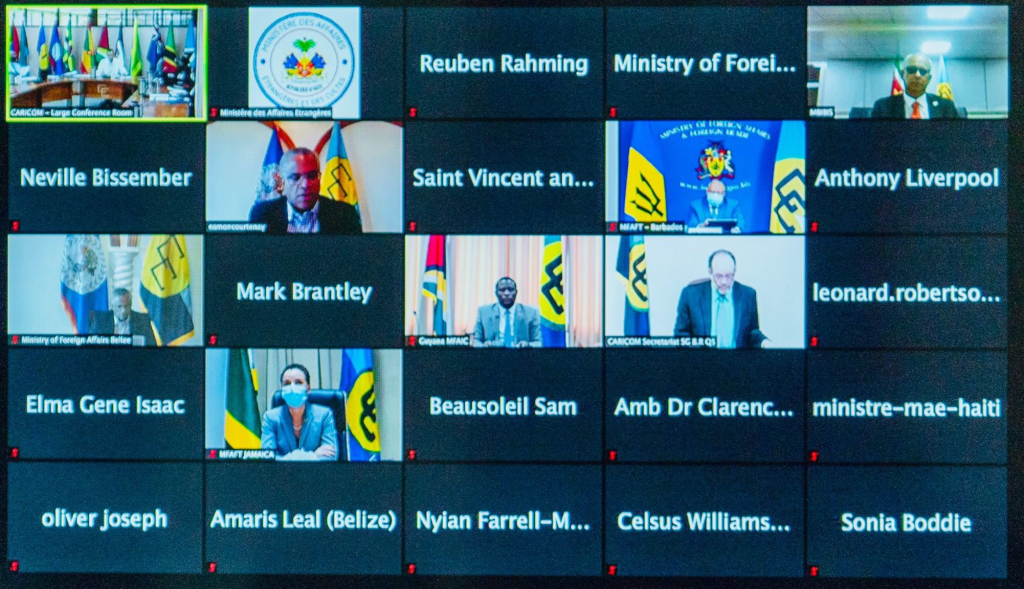
    SKNVibes: On Thursday 18 March, Hon Mark Brantley joined other Foreign Ministers from CARICOM countries, Cuba and the Dominican Republic, and ministerial counterparts from the UK at the Tenth UK Caribbean Forum, the first to take place in a virtual space. Also attending were the Premiers of the British Overseas Territories in the Caribbean and Secretary General of CARICOM, Irwin La Roque. Read more

    INTERNATIONAL NEWS

    WTO Domestic Regulation in Services Talks Note Similar Goals with Regional FTAs

    IISD: During a virtual meeting on domestic regulation in services, members of the World Trade Organization (WTO) noted that several disciplines currently under negotiation at the WTO share the same goals as those of regional trade agreements such as the Regional Comprehensive Economic Partnership (RCEP). Read more

    The new EU trade strategy: What’s actually new?

    Euractiv: The new EU trade strategy unveiled by the European Commission contains much to be welcomed, but not much that is new, writes Isabelle Brachet. Read more

    UK exports to Europe fall 41% as Brexit hits trade

    CNN: Britain’s exports to Europe collapsed in January as companies grappled with new terms of trade following Brexit. Read more

    EU Begins Legal Action Against U.K. Over Brexit Violation

    Bloomberg: The European Union launched legal action against the U.K. in a major escalation of tensions between the two sides less than three months after Brexit was formally completed. Read more

    Barley battle: Australia wants WTO to step in over China trade ban

    Sydney Morning Herald: Australia will ask the World Trade Organisation to decide if China broke free trade rules over tariffs that wiped out Australia’s barley trade with the Asian nation, after negotiations between officials from both countries broke down. Read more

    Aid for Trade: time to take stock of Covid-19’s impact

    EIF: A year into Covid-19 being declared a global pandemic, this month’s Aid for Trade stocktaking event, organized by the Development Division of the World Trade Organization (WTO), offers a timely opportunity to assess impact on developing and least developed countries’ (LDC) trade needs, discuss how to make the recovery sustainable and mobilize financing where it is needed most. Read more

    FTA partners upset over India’s new rules to trace goods’ origin

    Livemint: India’s free trade partners have raised concerns at the World Trade Organization (WTO) that its insistence on additional documents to determine the origin of imported goods could raise non-tariff barriers to trade. Countries such as Japan, South Korea, Indonesia, Malaysia and Sri Lanka have sought clarifications on the new rules during India’s quadrennial trade policy review (TPR) at WTO. Read more

    Waive COVID vaccine patents to benefit poor nations, activists say

    Reuters: Doctors Without Borders (MSF) staged a protest at the World Trade Organization on Thursday against what it said was the rich world’s reluctance to waive patents and allow more production of COVID-19 vaccines for poorer nations. Read more

    U.S. appeals WTO decision in South Korea trade dispute, official says

    Reuters: The United States has appealed against a World Trade Organization recommendation that Washington revise a series of duties imposed on South Korea under then President Barack Obama, a WTO official said on Friday. Read more

    Canada ratifies interim post-Brexit free trade deal with U.K.

    RCI: Canada has ratified an interim post-Brexit free trade agreement with the United Kingdom that will allow the two countries to continue trading virtually tariff-free while Ottawa and London work on a more permanent trade deal, International Trade Minister Mary Ng announced Friday. Read more

    Analysis: Twenty years on, EU turns cold on Mercosur trade deal

    Reuters: As the European Union looks forward to a fresh start with the United States under a new president, it is riddled with doubts over another transatlantic relationship. Read more

    Norway and China Strive to Complete Free Trade Agreement Negotiations

    China Briefing: Norway and China held a video conference on March 11, 2021, between their chief trade negotiators, with a view to concluding a free trade agreement (FTA) in the near future. Read more

    STRAIGHT FROM THE WTO

    NEW ON THE CTLD BLOG

    The Caribbean Trade & Development Digest is a weekly trade news digest produced and published by the Caribbean Trade Law & Development Blog. Liked this issue? To read past issues, please visit here. To receive these mailings directly to your inbox, please subscribe to our Blog below: