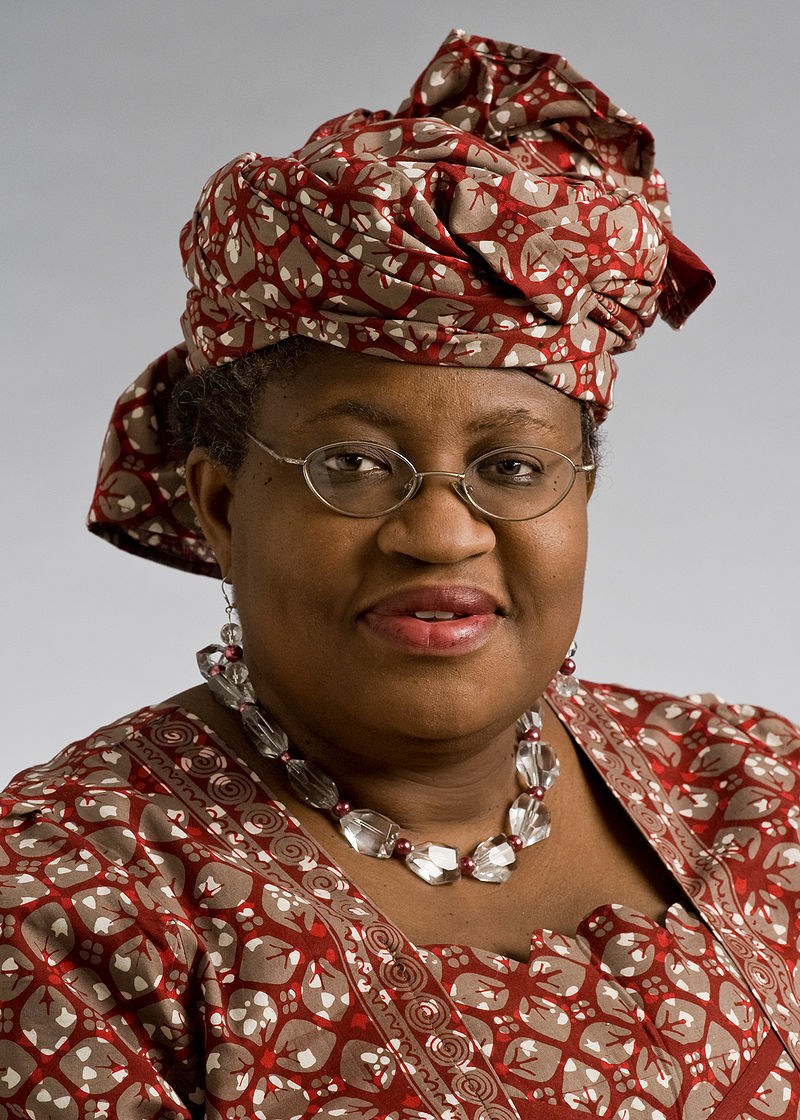
After several weeks of speculation over whether it would maintain the United States (US) objection to the selection of Dr. Ngozi Okonjo-Iweala as the next Director-General of the World Trade Organization (WTO), the Biden-Harris Administration this afternoon announced that it is in support of the world renowned development economist’s selection to the post.
In a statement released this evening on the website of the United States Trade Representative (USTR), it was noted that:
The Biden-Harris Administration is pleased to express its strong support for the candidacy of Dr. Ngozi Okonjo-Iweala as the next Director General of the WTO. Dr. Okonjo-Iweala brings a wealth of knowledge in economics and international diplomacy from her 25 years with the World Bank and two terms as Nigerian Finance Minister. She is widely respected for her effective leadership and has proven experience managing a large international organization with a diverse membership.
USTR Statement of February 5, 2021
Last year, after what seemed to be consensus around Dr. Okonjo-Iweala’s selection, the US (then under the Trump Administration) objected to, and effectively blocked her appointment, citing her limited experience in international trade compared to the other finalist, South Korea Minister of Trade, Yoo Hyung-Hee. Immediately before leaving office, then outgoing USTR Robert Lighthizer doubled down on his objection to her appointment, saying it would be a “mistake”.
This decision by the Biden-Harris Administration, hopefully, clears the way for the appointment of Dr. Okonjo-Iweala who would become not just the organisation’s first black and first female Director General, but its first from the African continent. A Nigerian born and internationally respected development economist who is also a naturalised US citizen, Dr. Okonjo-Iweala will bring to the post of WTO DG a wealth of experience and knowledge in tackling development issues at the national and global levels, international diplomacy and finance. Among other things, she previously served as Nigeria’s Minister of Finance for two terms where she championed several reforms, as well as second-in-command (Managing Director) at the World Bank. She currently serves as board chair of GAVI, the Vaccine Alliance, as well as sits on the boards of several other international agencies.
The USTR statement also lauded the credentials of Minister Yoo who withdrew her bid for the WTO’s top post.
“The future of growth and prosperity of the region must be underpinned by efficient, well-functioning, transparent institutions.”
Perry Douglas, The Inclusive Agenda
In mid-2020, Alan McIntosh, founder of Emerald Investments, sent a letter to the Prime Minister of Barbados in which he advised people not to invest in Barbados. The letter appeared soon after the Prime Minister of Barbados the Hon. Mia Mottley appeared in a Business Post article, and on TV promoting increasing economic links between Ireland and her country. Mottley also appeared on Irish radio and numerous other forms of media to talk about her “work from Barbados” initiative.
Perry Douglas of The Inclusive Agenda
Copies of the letter were also sent to multiple media outlets in the UK, “The Times”, “The Independent”, “Sunday Independent Ireland” and more, and of course, the story made its way onto social media: Twitter and Facebook, building all kinds of narratives along the way.
Therefore, what could possibly motivate a wealthy European investor, and highly respected businessman, to write such a letter?
From what the letter says, McIntosh made a US$2.5M investment in a Barbados hotel project about four years ago. He then ended up filing an action against Hotelier Peter Odle, for breach of contract, the individual he loaned the money to. The investment was in relation to “The Sands Barbados” hotel, led by Mr. Odle. Emerald Investments started formal legal action in 2018 against Odle, who had signed a personal guarantee.
This letter clearly reflects McIntosh’s exacerbation with the situation: “I am an Irish investor who invested in Barbados, and I wish I’d never done so. Unless changes are made to the legal system in Barbados, I would urge no one to invest in Barbados, either commercially or to buy a condo, holiday home or even take a holiday there. Why? The legal system is not fit for foreign investment or even to settle minor disputes promptly.”
McIntosh went on to say: “I have waited for the court system to allow me due process, and after almost three years have seen no progress in the courts whatsoever.”
“My advice to anyone contemplating investing in Barbados is: “Do not Do It.”
Now, imagine for a moment, that you are a potential investor in the UK or elsewhere in the world, or even a potential vacationer to Barbados, other Caribbean islands, with thoughts of making a business investment, purchasing a vacation home, or condo?
After hearing that “the legal system is not fit for foreign investment,” and said by a multi-millionaire businessman, co-founder of Irelands biggest home builder, Cairn Homes, owner of the Radisson Hotel at Dublin Airport, the Fleet Hotel in Dublin City centre, and numerous other property holdings. It would defy logic or common sense for one not to heed such a dire warning, and from such a credible source. You might ask yourself, how am I supposed to stand a chance as a small investor, if this powerful and sophisticated businessman can’t even get a day in court to settle a basic commercial dispute?
The story reached Canada, the US, Europe, even Asia and Africa. In the digital age, all stories are global.
Of particular note, the story was also published on “AfricaBrief”, a digital business and investment news platform in Africa. It so happens that Mottley is trying to court wealthy African’s to invest in Barbados. This story is a blow to her efforts because wealthy African investors traditionally look to move their capital out of the inefficient, corrupt home jurisdictions, into safe and reliable ones. The reason why countries like Canada and the UK continue to experience robust property investment markets, via wealthy Asian, African, and Indian investors particularly, is because these destinations are seen as safe, stable counties with transparent and effective governing and legal institutions. Country-specific risk scenarios are a primary factor in investment decisioning; perception, real or imagined, about corruption or lacking legal institutions, drive negative investment narratives.
Potential investors take in that information subconsciously through media then make really consequential decisions, consciously, based on the subconscious information they’ve processed. This is how bias is formed and opportunity lost if no counter-narrative is actively applied in the information age.
Negative stories in the digital era often take on a life of their own, permeating exponentially, killing opportunity and economic growth without anyone being the wiser. If governments in the Caribbean are not mindful of the economic impacts of the information/misinformation age, they risk the long-term prosperity of their nations.
The future of growth and prosperity of the region must be underpinned by efficient, well-functioning, transparent institutions. Strong and inclusive institutions are the hallmarks of prosperous societies in the promotion of global trade and commerce. Gaining foreign investor confidence is something all societies must do, both the developed and developing ones.
According to the World Bank, weak political, economic and legal institutions lead to countries operating with high levels of inefficiencies, unable to function, or prosper, which causes suffering for its society foremost. For emerging market economies, inefficiencies drive corruption and can lead to an uneven distribution of wealth as small businesses face unfair competition from larger companies or business people, with established yet dubious connections with government officials. Resources are inefficiently allocated to friends/companies that otherwise would not be qualified to win government contracts, opportunities, or business facilitation, had it not been for relationships with officials. This crony capitalism holds back innovation and entrepreneurship and stifles younger, more educated and talented entrepreneurs from coming up. Wealth then tends to concentrate with the very few and much older “elites” in the society, and the nation remains stuck in a perpetual economic loop of underdevelopment, never reaching its full economic potential.
In 2018, Commonwealth Secretary-General Patricia Scotland said: “Corruption is poisonous, corrosive, vicious and an enemy of sustainable development. It destroys people’s confidence in their leaders, their politicians and their country.” However, currently, five Caribbean countries – the Bahamas, Barbados, St Vincent and the Grenadines, Dominica and St. Lucia – rank amongst the 50 least corrupt countries in the world (out of 180), according to Transparency International’s 2017 Corruption Perceptions Index. So, the news is not bad.
Therefore, without a coordinated response from the government, its leaders are essentially leaving the reputation and economic growth of their countries, not to fact, but to narratives on the internet.
One of the main reasons, Mr. McIntosh has gone to such lengths, is his dismay with the system, not being able to get his case heard in a reasonable time in the Barbados court system. This then fuels his perception that the Barbados political system is inherently corrupt and that Barbadian hotelier, Peter Odle, is being purposefully protected by friends in high places. Odle’s personal friend does happen to be Prime Minister Mottley. So, it is merely a logical connect-the-dots mental process for McIntosh, and other investors watching from afar. We really don’t know if these perceptions are true or not; however, that does not matter. If not countered, perception becomes the prevailing reality! Furthermore, it exacerbates the problem when we learn that in September 2020, Mottley appointed Odle as Chairman of the Barbados Port Authority, (BPI)—a clear patronage appointment, for a friend who helped her in the election.
McIntosh has also made it clear in the letters he’s written to PM Mottley, that he is not asking Mottley to use her influence towards a favourable outcome for him. He simply seeks to advocate for himself in bringing to the PM’s attention, the state of her legal system, and how it is a negative factor for those considering Foreign Direct Investment (FDI) in Barbados. Mottley not responding simply hurts Barbados and the broader CARICOM region’s FDI climate.
In 2019, Foreign Direct Investment (FDI) in the Caribbean, declined 7.8%, which represents a precipitous decline from its highest historical value reached in 2012. Furthermore, the impact of the current COVID-19 crisis has caused a profound reduction in FDI in 2020 and is expected to continue to fall further by at least another 10%, in 2021. Therefore, it is not helpful when these types of stories get out and are not countered. These stories only reinforce bias, preconceived notions, perceptions, and stereotypes of Black people and the region as corrupt and backwards.
To help sustain and stimulate FDI in Caribbean markets, as a base, strong, efficient, active, and transparent institutions must bolster the recovery and future growth agendas. Research shows that FDI is the most critical factor in economic expansion for any society, particularly for developing Small Island States (SIS). SIS without mature, robust, localized global capital markets—building investor confidence becomes even more paramount to a viable future growth existence. If negative public discourse around foreign investors’ losing money, due to local business people hiding behind systems of corruption, or inefficient institutions, and an indolent legal system, this then becomes the prevailing narrative, which investors make decisions off of.
Programs like Citizenship by Investment (CBI,) for example, a program Grenada and other Caribbean states currently operate, have been plagued with an abundance of shady characters over the many years.
Major media outlets have produced non-flattering documentaries about CBI programs throughout the region, a blow to the reputations of these SIS. According to the Economist, the “defenders of the schemes insist that criminals seeking a bolthole are the exception and that they are making great strides in imposing stricter due diligence standards. The vast majority of their customers, they argue, are honest, respectable people with a legitimate hankering.”
Nevertheless, after looking into it, we couldn’t find any reasonably positive CBI story online.
Therefore, the big risk, and future priority towards a positive growth curve trajectory for the region, is the un-branding of the region away from the narrative as a haven for illegal, unscrupulous, criminals. We must control our own narrative, write our own stories, otherwise, others will write them for us. The well-written story that needs to be told going forward should be about well-intentioned, legit investors like Allan McIntosh, Emerald Investments, honestly investing in the region, finding the place efficient, well managed, with strong public institutions that build investor confidence. The story should also go on to say, that McIntosh makes good money on his investments, and creates meaningful amounts of jobs, the enterprise becomes a responsible corporate citizen, contributing to climate change mitigation, specific to the region, and investing in education and skills training programs to prepare the next generation for the future-of-work.
In an era of digital transformation, the world is increasingly competing for limited global investment dollars. Unless the region can become savvier at controlling information and communication narratives, in its favour, valuable investment dollars will end up elsewhere.
Leadership, from islands like Barbados, about public occurrences like the McIntosh/Odle saga, which finds itself closely associated with the Prime Minister, cannot go unaddressed. For example, on social media or in public discourse in the investor community abroad, the story/narrative going around is that Peter Odle is notorious for using political relationships to protect himself from numerous lawsuits. We, of course, do not know if these narratives are true or not, nor can they be substantiated in real-time, but that’s the nature of social media, and if you don’t have your own media strategy in place or story to tell, your image becomes whatever narrative emerges online. Salacious, headline-grabbing stories get more attention and go on to create further unwanted narratives.
This fundamentally works against the efforts of the PM, for example, who is whole-heartedly trying to sell Barbados to the world, with her “work from Barbados” scheme.
However, in the end, while the big boys fight it out publicly, the little guys bear the economic brunt.
I would think it critical and responsible for government to understand precisely, how the new digital playing field works, and that everything comes back to economics in the end. Digital message control and business image strategies are now an essential discipline in order to carve out your place in the digital universe. To have a long-term sustainable economy for the benefit of the people, you must adapt to globalization, and promote your country to the world, this is how the wealth of nations grow.
Perry C. Douglas is an Entrepreneur and Innovator…for Inclusive Caribbean Economies. Read more of his work at his blog The Inclusive Agenda: http://theinclusiveagenda.blogspot.com.
The views and opinions expressed herein are solely those of the guest author and are not necessarily representative of those of the Caribbean Trade Law & Development Blog.
Welcome to the Caribbean Trade and Development News Digest for the week of January 24-31, 2021! We are pleased to bring you the major trade and development news headlines and analysis from across the Caribbean Region and the world.
THIS WEEK’S HIGHLIGHTS
Is your head spinning from all the breaking news from this week? Here are some of the top highlights! The Annual World Economic Forum Meetings at Davos were held virtually (for the first time) this week. Themed “The Great Reset after COVID-19,” the packed agenda included COVID-19, the environment, the fourth industrial revolution, among other pressing global topics. But of course, the sessions that really caught my attention were those on ‘Fixing the International Trading System’ which can be viewed here.
Negotiations at the World Trade Organization on fisheries subsidies and investment facilitation for development restarted this week. Meanwhile, the WTO has reported that global services trade in the third quarter of 2020 fell 24% compared to the same period in 2019″.
The EU row with Astra-Zeneca over vaccine supplies led the bloc to impose export controls on vaccines manufactured in the EU, a move swiftly criticised by the World Health Organisation as most developing countries are yet to receive any vaccine access. The EU has backtracked on its decision to trigger an emergency provision (Article 16 of the Northern Ireland Protocol) to control Covid vaccine exports to Northern Ireland. Read the BBC’s report on this here.
The UK has applied formally to accede to the Comprehensive and Progressive Agreement for Trans-Pacific Partnership (CPTPP) which would give it access to a market of over 500 million people, including some of the world’s largest emerging economies. Brexit ‘teething problems’ continue as longer delivery times, more complex customs paperwork, higher fees, all with supply chain implications, are some the problems being reported by companies on both sides of the English Channel.
Turning to the Caribbean region, the report from the second review of the CARIFORUM-EU Economic Partnership Agreement has been released. Inter alia, it found a five-fold increase in FDI from the EU to CARIFORUM countries over part of the review period, but this was not as a direct result of the EPA. The executive summary may be read here.
The online version of my latest article in IFC Economic Review 2021 entitled “‘Do As I Say, Not As I Do’: FinCEN Leaks Prove Misplaced Scrutiny Of Caribbean Offshore IFCs” is now available online and may be viewed here.
REGIONAL NEWS
Deodat Maharaj takes over at Caribbean Export
Barbados Today: Deodat Maharaj has been appointed the Caribbean Export Development Agency’s (Caribbean Export) new executive director with effect from February 1, 2021. Read more
Caribbean foreign trade hit a new low
Barbados Today: Caribbean foreign trade had its worst performance since the global financial crisis of 2008-2009, arising from the current economic crisis caused by the COVID-19 pandemic and the restrictions imposed by governments to stop its spread, says the Economic Commission for Latin America and the Caribbean, ECLAC. Read more
Jamaica Customs reports US$15.1 billion in exports
Jamaica Observer: The Jamaica Customs Agency (JCA) says for the five year period commencing January 1, 2016 to December 31, 2020, the total value of exported goods declared was US$15.1 billion. Read more
New perspective of Japan-Jamaica partnership for 2021 and beyond
Jamaica Observer: Japan and Jamaica have a long history of friendship since the establishment of the diplomatic relationship in 1964. The two countries have common values of freedom, democracy, as well as market economy, and we have been collaborating on issues such as world peace and stability, the rule of law, and climate change. Read more
Belize gets sweet deal out of St. Kitts-Nevis brown sugar trade dispute
Amandala: An ongoing trade dispute between Belize and St. Kitts and Nevis has finally been settled. Belize had sued St. Kitts-Nevis, the Republic of Trinidad and Tobago and CARICOM for allegedly violating the 40% Common External Tariff (CET) by importing brown sugar from countries outside the Single Market without the CET provisions. Read more
Belize – India strengthen diplomatic ties
MENAFM: The meeting discussed areas of mutual interest on the current cooperation initiatives between the government of Belize and the government of India, including exploring the possibility of acquiring vaccines to support Belize’s COVID-19 response plan. Read more
Guyana warns of Venezuelan military escalation
Argus Media: Guyana is warning that Venezuela has expanded its military presence in oil-rich maritime territory off Essequibo province. Read more
INTERNATIONAL NEWS
Shell Ordered To Compensate Nigerian Farmers Affected By Oil Spills
NPR: A Dutch court has delivered a major victory to a group of Nigerian farmers in their 13-year-long effort to hold Shell’s Nigerian subsidiary accountable for oil spills on their lands. Read more
Global foreign direct investment fell by 42% in 2020, outlook remains weak
UNCTAD: UNCTAD says uncertainty about the COVID-19 pandemic’s evolution and the global investment policy environment will continue to affect FDI flows in 2021. For developing countries, the prospects for 2021 are a major concern. Read more
The EU and Canada adopt rules putting in place the CETA investment court
EU: Today, the EU and Canada adopted four decisions putting in place the Investment Court System provisions agreed in the EU-Canada Comprehensive Economic and Trade Agreement (CETA). The decisions – and all investment protection provisions in the agreement – will apply only once the elected lawmakers of all the 27 EU Member States will have approved CETA. Read more
Commission study finds positive impact of trade agreements on agri-food sectors
EU: Trade agreements are due to result in substantial increases in EU agri-food exports, with more limited increases in imports, creating a positive trade balance overall. The study also confirms that the EU’s approach to grant a limited amount of lower duty imports (through tariff rate quotas) is the best approach in terms of protecting specific vulnerable agri-food sectors in the EU. Read more
Irish commissioner: EU made serious ‘mistake’ in attempt to block vaccines across Irish border
Politico: Brussels made “a mistake with very serious consequences” when it initially moved to block vaccine exports across the Irish border by triggering an emergency provision of the Brexit withdrawal deal, Ireland’s EU Commissioner Mairead McGuinness said. Read more
EU offers UK ‘reassurances’ over vaccine supply after Irish border row
Politico: The EU has moved to assure Britain that vaccine exports into the country won’t be stopped by the bloc’s new trade restrictions, British Trade Secretary Liz Truss said. Read more
Factbox: The Brexit impact so far – paperwork, process and higher prices
Reuters: Britain’s departure from the European Union has triggered the biggest change in trade since it joined the bloc 48 years ago, with companies grappling with export documents, longer delivery times and the need to re-engineer supply chains. Read more
UK opens special visa route for Hong Kong residents to become citizens
Reuters: Hong Kong residents can apply from Sunday for a new visa offering them an opportunity to become British citizens after Beijing’s imposition of a national security law in the Asian financial hub last year. Read more
WTO members debate definition of ‘artisanal’ fishers to be exempted from subsidy ban
Hindu Business Line: Ecuador has floated a proposal at the World Trade Organization (WTO) on the need to define what qualifies as ‘artisanal fishing’ that should be exempted from prohibition of subsidies related to overfishing. Read more
Exclusive: UK’s next free trade deal set to be with Australia
City A.M.: The UK’s next free trade deal is set to be with Australia, with the agreement to give Brits greater freedom to live Down Under and provide a major boost for the UK’s telecoms sector. Read more
UK set to wrap up New Zealand trade deal before Easter
City A.M: The UK is reportedly just weeks away from closing a free trade deal with New Zealand that will see tariffs slashed on wine, gin and cars. Read more
UK Joins ASEAN as Dialogue Partner, Looking at Joining CPTPP Asia-Pacific Free Trade Agreement
ASEAN Briefing: The UK government has already taken steps to integrate with Asia’s regional blocs following its successful bid to become a Dialogue Partner of the Association of Southeast Asian Nations (ASEAN). Read more
Trump’s Trade Deal With China Is ‘Under Review,’ White House Says
Bloomberg: The Biden administration has former President Donald Trump’s so-called phase-one trade deal with China “under review” along with the rest of the U.S. posture toward Beijing, White House Press Secretary Jen Psaki said Friday. Read more
India records 13% FDI growth in 2020, higher than major economies. 5 reasons why
Livemint: India recorded 13% growth boosted by investments in the digital sector. Infrastructure and energy deals also propped up M&A deals in India. Piyush Goyal said, The government policies and reforms have made India a preferred destination. Read more
Chinese Investment In Africa Has Had ‘Significant And Persistently Positive’ Long-Term Effects Despite Controversy
Eurasia Review: Chinese foreign direct investment in Africa has had ‘significant and persistently positive’ long-term effects despite being highly controversial, according to new research by the London School of Economics and Political Science. Read more
France Rejects MERCOSUR Agreement without Anti-Deforestation Guarantee – Minister
Rio TImes: For negotiators on both sides, the repeated explicit French opposition is an indication that the EU-MERCOSUR agreement is unlikely to progress before the 2022 elections in France. Read more
New Zealand and China upgraded their free trade agreement: Bad news for Mercosur
Mercopress: The announcement is bad news for Mercosur since country members are in direct competition with Oceania (NZ and Australia) when it comes to commodities’ exports such as beef, wool, dairy produce, grains and oil seeds to the Chinese market. China is the main trading partner of Brazil, Argentina and Uruguay. Read more
The Caribbean Trade & Development Digest is a weekly trade news digest produced and published by the Caribbean Trade Law & Development Blog. Liked this issue? To read past issues, please visit here. To receive these mailings directly to your inbox, please subscribe to our Blog below:
Foreign Direct Investment (FDI) from the European Union (EU) increased five-fold to CARIFORUM countries on a whole over the period 2013-2017, with the Bahamas and to a lesser extent, Barbados, being the main destinations. This increase, however, was not as a direct result of the EU-CARIFORUM Economic Partnership Agreement (EU-CARIFORUM EPA). These are some of the conclusions emanating from the final report of the study “Ex-post evaluation of the Economic Partnership Agreement (EPA) between the European Union and CARIFORUM” evaluating the implementation of the EPA over the period 2008-2018.
The EU-CARIFORUM EPA was signed in 2008 and has been provisionally applied since then. It liberalises trade and investment between the EU and CARIFORUM on the basis of asymmetrical reciprocity and provides for development cooperation. It comprises 15 countries on the CARIFORUM side and had included the then 28 EU Member States when the United Kingdom was still an EU member. The first EPA monitoring report of 2014 had found several implementation shortcomings and it appears not much has changed since that first report.
The current report found overall that implementation of the Agreement has been “mixed”, noting that while “clear progress in implementation has been made, several shortcomings remain.” It revealed implementation shortcomings in a number of categories, namely, liberalisation commitments, regulatory commitments, as well the institutional commitments. It further stated that “while in the EU not many shortcomings in terms of EPA implementation were observed, there are clearly barriers in place which can limit the CARIFORUM countries’ expected benefits under the EPA.” Several implementation shortcomings on the CARIFORUM side have been noted, including regarding commitments on intellectual property rights, electronic commerce and regional preferences.
Implementation gaps related to the institutional commitments are common to both Parties, according to the report. Ratifications have, however, increased since the last report with 25 out of the (then) 28 EU countries and 10 out of 15 CARIFORUM countries having ratified the agreement.
It is not lost on the reader that there are some clear assumptions expressed in the report, some of the same assumptions that have resulted in the EU unfairly placing some CARIFORUM countries on its blacklists for tax and anti-money laundering and countering the financing of terrorism (AML/CFT) purposes. For one, with regard to the increase in FDI, the report questioned “to what extent these are productive investments, as they are concentrated in the Bahamas and to a lesser extent Barbados”, which are low tax jurisdictions, and that “in the consultations, no clear champions could be identified”.
The EU remains the top provider of development assistance to the region. It is, therefore, curious that while the report rightly listed a number of development challenges facing CARIFORUM, including climate change and the COVID-19 pandemic, it unfortunately appears to flippantly note that “the countries do not face these challenges alone, but together with their key partners”. That statement ignores the fact that CARIFORUM countries are primarily small island developing States whose capacity to meet these challenges, is much more circumscribed than that of larger countries. One only needs to look at the fact that CARIFORUM countries face significant challenges in accessing COVID-19 vaccines for their populations on equal terms as larger countries.
Another interesting finding from the report regarding FDI is that the EPA has had a low impact on EU FDI into the CARIFORUM tourism sector. The EPA, it argued, was rarely among the decisive factors driving FDI to the region and “the level of awareness of the EPA is very low, with even large investors often being unaware of the EPA.”
It should be noted that the EPA does not include a full investment chapter as the EU Commission at the time only had competence to negotiate investment liberalisation. Investment protection provisions are not included in the EPA’s investment chapter. Investors would have to rely on protections included in the individual BITs existing between various CARIFORUM and EU countries, where available and in force, most of which predate the EPA.
In sum, the study found that the EPA had occasioned limited changes in overall trade and investment between the EU and CARIFORUM, leading to a conclusion of a lack of a clear impact of the EPA. It also outlines several recommendations.
The executive summary of the final report may be accessed here.
Alicia Nicholls, B.Sc., M.Sc., LL.B. is a trade and development consultant with a keen interest in sustainable development, international law and trade. All views herein expressed are her personal views and should not be attributed to any institution with which she may from time to time be affiliated. You can read more of her commentaries and follow her on Twitter @LicyLaw.



 Caribbean Trade Law and Development
You must be logged in to post a comment.