Blog

  • Caribbean Trade & Development News Digest – January 17 – 23, 2020

    Caribbean Trade & Development News Digest – January 17 – 23, 2020

    Welcome to the Caribbean Trade and Development News Digest for the week of January 17-23, 2021! We are pleased to bring you the major trade and development news headlines and analysis from across the Caribbean Region and the world.

    THIS WEEK’S HIGHLIGHTS

    US President Joseph R. Biden and his Vice President Kamala Harris were inaugurated this week. Already the Biden administration has signed a raft of new executive orders aiming, in particular, to get a handle on the COVID-19 pandemic but also covering things such as immigration, discrimination, tackling the climate crisis, among others. Importantly, the US will be staying in the World Health Organization (WHO) and will also join the WHO-led COVAX facility which assists poorer countries’ access to vaccines.

    Belize and St. Kitts & Nevis this week settled a trade dispute that had been ongoing in the Caribbean Court of Justice (CCJ) over trade in brown sugar. Read more

    REGIONAL NEWS

    CARICOM engaged with region’s post-COVID recovery pursuits

    Stabroek: If the Georgetown-based Caribbean Community Secretariat has not been exactly ‘hogging the headlines’ insofar as its role in the regional response to the COVID-19 pandemic is concerned, it appears that the Secretariat is very much in the ‘thick of things’ in terms of coordinating the work of the Caribbean Community (CARICOM) insofar as the ongoing engagements pertaining to the recovery of the region from the impact of the virus on its respective economies are concerned. Read more

    Caribbean’s Foreign Trade At Its Worst Since Global Financial Crisis

    Jamaica Gleaner: The Economic Commission for Latin America and the Caribbean (ECLAC) says the region’s foreign trade in 2020 had its worst performance since the global financial crisis of 2008-2009, because of the economic crisis prompted by the global COVID-19 pandemic and the restrictions imposed by governments to stop its spread. Read more

    Use the Caribbean Trade Centre

    Barbados Advocate: The Caribbean Trade Centre (CTC) of the Caribbean American Chamber of Commerce could be utilised to build a strategy to put the region in a stronger position for negotiating. Read more

    Vibrant export-led strategy essential (for Barbados)

    Barbados Advocate: Barbados faces some very tough times in a troubled world and with that must come measures that are able to respond to the situation. Against this background, the call is again being made for such as the search continues for a better performing economy and to put the country on a path of sustainable growth, unlike the long talk which is getting Barbados nowhere. Read more

    Jamaica Senate Passes Microcredit Act

    JIS: The Microcredit Act 2021, which aims to license and regulate microcredit institutions that provide financing to individuals and micro, small and medium-sized enterprises (MSMEs), was approved in the Senate on Friday (Jan. 22). Read more

    Complex identities: Kamala Harris and US foreign policy towards the Caribbean

    The Atlantic Council: When Indian Prime Minister Narendra Modi congratulated US Vice-President elect Kamala Harris, he noted that her victory “is a matter of immense pride not just for your chittis, but also for all Indian Americans.” Prime Minister Andrew Holness of Jamaica said that Jamaicans “are proud that [Harris] bears Jamaican heritage,” while Prime Minister Mia Mottley of Barbados added that “we, in the Caribbean, will look forward with optimism to working with the new administration.” Read more

    INTERNATIONAL NEWS

    Readying regional trade agreements for future crises and pandemics

    UNCTAD: Policy responses to the COVID-19 pandemic have heavily disrupted trade and supply chains, with many countries putting in place ad hoc trade-restrictive measures, seemingly without any concern about their effect on trading partners – at least during the early stages of the crisis. Read more

    Key statistics and trends in trade policy 2020

    UNCTAD: With the notable exception of the increase in bilateral tariffs between the United States and China, tariffs have remained substantially stable during the last few years with tariff protection remaining a critical factor only in certain sectors in a limited number of markets. On the other hand, the use of regulatory measures and other non-tariff measures remains widespread. Read more

    Malaysia takes WTO legal action against EU over palm biofuel curbs

    Euractiv: Malaysia is taking legal action at the global trade watchdog against the European Union and member states France and Lithuania for restricting palm oil-based biofuels, the government said. Read more

    Britain’s Boris Johnson presses Biden for new trade deal

    AP: British Prime Minister Boris Johnson made clear to President Joe Biden on Saturday that he’s eager to forge a new U.S.-U.K. trade deal. Read more

    ‘She’ll be first American woman to lead WTO’ — US leaders write Biden to back Okonjo-Iweala

    The Cable: Some US leaders, including Nobel Laureate Joseph Stiglitz, have written President Joe Biden, urging him to support the candidacy of Ngozi Okonjo-Iweala for the office of the director-general of the World Trade Organisation. Read more

    UK firms told ‘set up in EU to avoid trade disruption’

    BBC: UK firms that export to the EU say they are being encouraged by the government to set up subsidiaries in the bloc to avoid disruption under new trade rules. Read more

    Rotting fish, lost business and piles of red tape. The reality of Brexit hits Britain

    CNN: For all the fanfare made when Prime Minister Boris Johnson struck a trade deal with Brussels on Christmas Eve, the inescapable reality of leaving the European Union’s customs and regulatory territory has already started to bite. The fact that the deal was only agreed one week before it came into effect meant that dangerous disruption to countless businesses that relied on seamless supply chains was inevitable. Read more

    After Brexit, Ireland and France cut out the middleman – Britain

    Reuters: From his office overlooking Cherbourg docks, general manager Yannick Millet points to trailers destined for Ireland that belong to Amazon and FedEx, new customers and a signal of a potential big shift in post-Brexit trade. Read more

    Businesses must deal with post-Brexit trade ‘challenges’ – Barnier

    Irish Times: Businesses, north and south, must deal with the consequences of Brexit and accept that it cannot be “business as usual” for trade with Britain, the EU’s chief negotiator Michel Barnier has said. Read more

    EU will have stronger powers in trade disputes

    EU: On Tuesday, Parliament adopted new rules allowing the EU to use countermeasures in trade disputes when arbitration is blocked. Read more

    China falling short of US trade deal targets

    BBC: China is falling short of its commitment to buy an extra $200bn (£146bn) worth of US goods over 2020 and 2021. China agreed to buy the goods in a trade deal with the US agreed last January in exchange for reduced tariffs on $120bn worth of goods. Read more

    China plans to expand free trade network, accelerate FTA talks

    Global Times: China has planned to expand its network of free trade and is willing to sign more free trade agreements (FTAs) with its trade partners to jointly promote free and convenient trade and investment, Gao Feng, spokesperson of the Ministry of Commerce said at a regular press briefing on Thursday. Read more

    Chinese exports rise 3.6% in coronavirus-plagued 2020; only economy with positive trade growth

    Global Times: With China’s export machine roaring into full swing, and helping mend the coronavirus-fractured global supply chains despite intermittent threats and hostile moves notably by the US and Australia, the country’s exports have proven to be a tower of strength with a full-year gain of 3.6 percent in dollar terms over 2020. Read more

    Biden speaks to leaders of Canada and Mexico on trade and migration

    Bloomberg: President Joe Biden spoke with the leaders of Canada and Mexico on Friday, his first calls with foreign counterparts since his inauguration this week. Read more

    WTO finds for South Korea over U.S. trade measures, in challenge for Biden

    Reuters: The World Trade Organization recommended on Thursday that the United States revise a series of duties imposed in the pre-Trump era on South Korea, presenting new U.S. President Joe Biden with a dilemma. Read more

    UK-Africa trade: What will Brexit change?

    Deutsche Welle: As part of its post-Brexit global vision, Britain is hosting a UK-Africa trade forum this week. But with its new trade deals failing to offer African nations much extra, the UK is falling behind as a key trading partner. Read more

    India-US trade deal may be put on the back burner

    Livemint: President Joe Biden may not be too keen to immediately pursue the India-US mini-trade deal that was under negotiation, choosing instead to focus on chalking out a China strategy and restoring US credibility in multilateral forums, including the World Trade Organization. Read more

    Indian Trade Promotion Council of India seeks flat 5 per cent GST on processed food

    New Indian Express: “Therefore, Indian texting facilities should be made at par globally with safe standards, so that it is accepted worldwide. Read more

    Qatar suspends WTO dispute with UAE as Gulf conflict thaws

    Reuters: Qatar has suspended its case at the World Trade Organization against the United Arab Emirates over measures it said were designed to isolate Qatar economically. Read more

    Portugal wants quick ratification of EU/Mercosur deal, but there are many objections

    Mercopress: Portugal which last week took the rotating presidency of the European Union for six months as of January 1st, said that it will try to conclude the bloc’s free trade agreement with Mercosur, agreed in 2019 after two decades of negotiations that have not yet been finalized. Read more

    Latin America’s Foreign Trade Drops to 12-Year Low: UN Agency ECLAC

    The Rio Times: In its newly-released annual report International Trade Outlook for Latin America and the Caribbean 2020, the UN agency estimated the value of regional exports dropped 13 percent in 2020, while imports shrank by 20 percent. Read more

    STRAIGHT FROM THE WTO

    NEW ON THE CTLD BLOG

    The Caribbean Trade & Development Digest is a weekly trade news digest produced and published by the Caribbean Trade Law & Development Blog. Liked this issue? To read past issues, please visit here. To receive these mailings directly to your inbox, please subscribe to our Blog below:

  • Belize and St. Kitts-Nevis Settle Trade Dispute over Brown Sugar

    Belize and St. Kitts-Nevis Settle Trade Dispute over Brown Sugar

    Belmopan (January 22, 2021): Belize and the Federation of Saint Christopher and Nevis this week settled a trade dispute that had been ongoing in the Caribbean Court of Justice (CCJ) over trade in brown sugar.

    Belize had sued Saint Kitts-Nevis, the Republic of Trinidad and Tobago and CARICOM, alleging that the two CARICOM member states were importing brown sugar from countries outside the Single Market without imposing the 40% Common External Tariff (CET). Belize alleged that because of this treaty violation, Belize Sugar Industries Ltd. (BSI) and Santander Sugar were losing sales to these countries. It was also alleged that the CARICOM Secretariat had failed to ensure that the CET was imposed by St. Kitts and Trinidad & Tobago, which by extension facilitated trade by the two respondents in which they did not apply the CET.

    Belize is seeking a ruling from the CCJ that requires the full application of the 40% CET on Brown Sugar imported from non-CARICOM sources; the establishment of the Monitoring Mechanism for Sugar that was approved by the COTED in 2019; implementation of the Monitoring Mechanism once finalized; and compensation for lost sales suffered by the sugar industry of Belize as an economic injury.

    Shortly after being notified of the legal action taken by Belize in the CCJ, the Government of Saint Kitts-Nevis commenced discussions with Belize on a possible out-of-court settlement. After targeted negotiations led by the Office of the Solicitor General, in collaboration with the Ministry of Foreign Affairs, Foreign Trade and Immigration and BSI, Saint Kitts-Nevis and Belize reached an out-of-court settlement on conditions satisfactory to Belize.

    This out-of-court settlement is a major victory for the sugar industry of Belize, which has been disadvantaged by imports of sugar from non-CARICOM sources, including Guatemala, as this sugar is displacing regionally produced sugar from the CARICOM Single Market. The sugar industry is now assured that it will get the trade policy support that it is entitled under the Revised Treaty, including application of the CET, and a renewed opportunity to fully enter the market of Saint Kitts-Nevis.

    The case continues in the CCJ against the Republic of Trinidad and Tobago and CARICOM.

    The Government of Belize extends its thanks and appreciation for the support provided by the BSI, Santander Sugar, and the Sugar Association of the Caribbean in the ongoing effort to secure access to the CARICOM market for sugar and to ensure the survival and sustainable development of the sugar industry of Belize.

    The preceding was a press release from the Government of Belize’s Press Office.

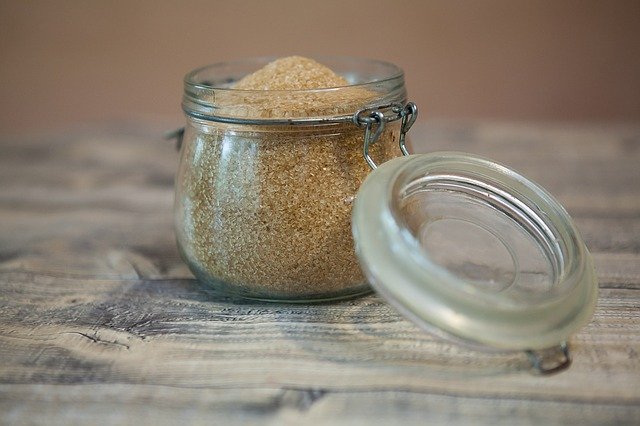
    Image by Gabriela Sanda from Pixabay

  • Biden/Harris Victory: What might it mean for US-Caribbean Relations?

    Biden/Harris Victory: What might it mean for US-Caribbean Relations?

    Today, United States (US) President-elect Joseph R. Biden will take the oath of office to become the 46th President, while Vice President-elect Kamala Harris will take hers to become Vice President. Here is a throwback to an article I did shortly after the election on what the Biden/Harris administration might mean for US-Caribbean relations on a variety of fronts!

    caribbeantradelaw's avatarCaribbean Trade Law and Development

    Photo credit: Image by heblo from Pixabay

    Alicia Nicholls

    Caribbean leaders have joined with those around the world to warmly congratulate US President-elect, Joe Biden, on winning the US presidential election of November 3, 2020. Of particular pride for the region is that his second-in-command, Senator Kamala Harris, who has both Jamaican and Indian parentage, is not just the first woman Vice President-elect, but first person of colour and first person of Caribbean descent to ascend to such high office in the US.

    As of the time of this article’s writing, incumbent Republican president, Donald Trump, who has now lost the popular vote twice, has not yet conceded defeat and has launched several legal challenges, calling the election ‘fraudulent’.

    Beyond the symbolism of the Biden/Harris win, and assuming a peaceful transfer of power come January 20, 2021 (the date set for Biden’s inauguration), what does the Biden/Harris victory portend for…

    View original post 1,246 more words

  • What’s Happened in Trade since December 2020?

    What’s Happened in Trade since December 2020?

    Alicia Nicholls

    Happy New Year to all of our readers! Since our last Caribbean Trade & Development News Digest was published near the end of December 2020, some major trade developments have occurred. If you missed any of these developments, we will bring you up to speed with the top ones in this article!

    UK-EU begin trading under new trade arrangements

    The United Kingdom (UK) and European Union (EU) received the Christmas present they both wanted. On Christmas Eve (December 24) 2020, political agreement was reached on their future trading terms before the Brexit transition period deadline of December 31, 2020. The deal averts the no-deal scenario, that is, trading on World Trade Organization (WTO) Most Favoured Nation (MFN) terms. Such a scenario would have caused, among other things, the reintroduction of tariffs. This would have been disastrous for both parties, and is a circumstance both sides sought to avoid at all costs, even as contingency plans were put in place in case of the worst case scenario.

    The new EU-UK Trade and Cooperation Agreement covers not just trade and investment, but also deals with issues such as competition policy, fisheries, State aid, tax transparency, among other areas of mutual interest. January 31, 2021 marked the start of the EU-UK’s new trading arrangement. Of course, implementation of the new arrangements have not been without their kinks, including border delays due to the reintroduction of customs checks.  

    The UK-CARIFORUM EPA, which rolls over the provisions of the EU-CARIFORUM, now governs trade between the UK and CARIFORUM countries. The EU-CARIFORUM EPA, of course, remains in effect as between CARIFORUM countries and the remaining EU-27. It remains to be seen what practical impact the new EU-UK trading arrangement may have on CARIFORUM’s trade with the EU and UK respectively, including on supply chains.

    Trading under AfCFTA begins

    Originally slated for July 1, 2020, but delayed due to the COVID-19 pandemic, trading under the Africa Continental Free Trade Agreement (AfCFTA) has officially started from January 1, 2021. A special ceremony marking the Start of Trading was held to mark this historic occasion and the recording may be viewed here.

    The AfCFTA is a landmark trade agreement comprising 54 African countries, with an integrated population of 1.3 billion people and a combined GDP of US 3.4 trillion. It is second only to the WTO as the world’s largest trade agreement. While full implementation of the AfCFTA is not expected for some time, it is expected to help boost economic development on the continent.

    A recent PWC report highlights the ways the AfCFTA could assist African countries in their COVID-19 economic recovery. These include providing the opportunity to reconfigure supply chains, allowing for greater intra-regional sourcing of goods, such as pharmaceuticals, thereby reducing dependence on third countries.

    CARICOM-Africa relations continue to develop and it was announced that the African Union (AU) has offered CARICOM access to approved COVID-19 vaccines from a shipment the AU recently secured.

    EU-China reach agreement in principle on Comprehensive Agreement on Investment (CAI)

    On December 30, 2020, it was announced that the EU and China had reached agreement in principle on the text of a Comprehensive Agreement on Investment (CAI). While the text does not appear to be public as yet, the agreement is said to cover market access for EU and Chinese investors respectively, sustainability commitments and provision for State-to-State resolution of disputes arising under the agreement. The EU and China also commit to try to complete negotiations on investment protection and investment dispute settlement within two years of the agreement’s signature.

    US Section 301 investigations on Vietnam currency valuation and on DSTs

    In December, the US Department of the Treasury designated Vietnam as a currency manipulator. According to the USTR, Vietnam currently enjoys a $55 billion dollar merchandise trade surplus with the US, but a $1.2 billion services trade deficit. In the report on its Section 301 investigation of Vietnam’s acts, policies, and practices related to currency valuation, the USTR concluded that in their totality, they were “unreasonable and burden or restrict US commerce”, but stopped sort of recommending punitive tariffs.

    On the digital services tax front, the USTR has suspended retaliatory duties on French luxury goods, until further notice, which were scheduled to have taken effect on January 6, 2021. On another note, the USTR’s section 301 investigations on digital services taxes adopted by several other countries, including Italy, India and Turkey, found that these countries had placed “unreasonable or discriminatory and burdens or restricts U.S. commerce” but did not recommend any retaliatory action as yet.

    A new direction for US trade policy?

    On January 20, Joseph R. Biden will be sworn in as the 46th president of the US, and it is widely anticipated that this will herald a change from the outgoing administration’s often chaotic trade policy.

    In a key note speech delivered last week, Katherine Tai, the nominee for United States Trade Representative (USTR), provided some idea of the incoming Biden administration’s trade policy priorities, of which China and the USMCA remain foremost. Notable was that there was no mention in Ms. Tai’s speech of the WTO, including the current impasse on the appointment of a Director-General or the Appellate Body crisis. However, further information on the Biden administration’s trade policy priorities and disposition will be gleaned when the USTR releases its report on the President’s trade agenda, expected sometime in February.

    Without doubt, domestic issues, such as COVID-19 vaccine roll-out and economic recovery, are expected to absorb much of the administration’s policy agenda within the first 100 days. Biden has proposed a $1.9 trillion-dollar stimulus package to combat the COVID-19 pandemic and its economic fall-out. Climate change is also one of the policy priorities and Biden has indicated that the US will rejoin the Paris Climate Agreement.

    Despite the outgoing Trump administration’s limited cooperation with the President-elect’s transition team, fate appears to have dealt Biden some fortune on the legislative front. With both Houses of Congress controlled by Democrats (albeit a slim majority in the case of the Senate), Biden should have some breathing space to get his policy agenda enacted, at least for the first two years of his administration.

    US redesignates Cuba as a State Sponsor of Terrorism

    The outgoing Trump administration’s State Department has redesignated Cuba as a state sponsor of terrorism (SST) for allegedly “repeatedly providing support for acts of international terrorism in granting safe harbor to terrorists”. Cuba had been delisted in 2015 under the Obama Administration as part of that administration’s attempts to normalize US-Cuba relations. However, the US’ illegal and unwarranted economic, commercial and financial embargo on Cuba, which requires Congressional action to remove, remains.

    The redesignation of Cuba as a SST is just the latest of several actions taken over the course of the Trump administration, which has seen a hardening of the US’ policies against the island nation. This included, for example, ending the suspension of Title III of the Helms-Burton Act. With regard to the trade implications of Cuba’s redesignation, which is extraterritorial in application, it penalises persons and countries engaging in certain trade with Cuba, bans defense exports and sales, and imposes certain controls on exports of dual use items.

    In a strong statement condemning this unilateral action taken by the administration, the Caribbean Community (CARICOM) argued that “Cuba’s international conduct does not in any way warrant that designation.” CARICOM also unequivocally condemned it as a “further attack on the country adversely affects its international standing and its social, human and economic development”.

    US President-elect Joe Biden, who had been the VP under the Obama administration and part of the efforts at rapprochement, has been critical of the Trump Administration’s handling of Cuba affairs. It remains to be seen what will be his administration’s approach to Cuba policy.

    Post-Cotonou Agreement Text faces opposition by some EU Member States

    Towards the end of last year, the EU and the Organisation of African, Caribbean and Pacific States (OACPS) announced political agreement on the text of a deal to succeed the Cotonou Agreement which was meant to have expired in December 2020. The post-Cotonou agreement is not a trade deal; trade between the EU and the OACPS is covered by the various Economic Partnership Agreements (EPAs). It is, however, the overarching framework for EU-OACPS relations and, therefore, covers EU-OACP cooperation on a variety of political and social issues.

    A Devex exclusive report released last week revealed that some EU states, particularly Poland and Hungary, expressed reservations with the proposed text, especially on the treatment of issues such as sexual education issues and migration and mobility.

    WTO Developments

    According to Bloomberg WTO reporting, in its final General Council meeting for the year held December 16-17, 2020, WTO members approved the WTO’s budget for 2021 and also decided that a Special General Council meeting will be held earlier this year to determine where and when the next Ministerial Council will be held. However, the US maintained its veto on the selection of Dr. Ngozi Okonjo-Iweala as the new Director-General. It remains to be seen whether the Biden administration will maintain the US’ current objection.

    The African Union, Cuba and African Union’s proposal on strengthening the WTO for promoting development and inclusivity was also one of the agenda items. At the meeting, WTO Members were unable to agree on the proposal advanced by several developing country members on amending the Trade-Related Aspects of Intellectual Property Rights (TRIPS) Agreement to facilitate developing countries’ access to COVID-19 vaccines. This week, the countries proposing the amendment released their responses to WTO Members’ questions on their proposal.

    In other developments, India was the first WTO Member to have its Trade Policy Review for 2021. Costa Rica has requested WTO dispute consultations with Panama regarding measures affecting strawberries, dairy products, meat products, pineapples and bananas.

    Caribbean Community (CARICOM) developments

    From January 1, 2021, Prime Minister of Trinidad & Tobago, the Hon Dr. Keith Rowley, has assumed chairmanship of CARICOM under its six-month rotating chairmanship. He took over from then outgoing chairman, the Hon. Dr. Ralph Gonsalves, Prime Minister of St. Vincent & the Grenadines. Dr. Rowley’s statement as incoming Chair may be viewed here.

    CARICOM has already had a busy start to the year. According to a press release from the Community, the Heads of Government last week held their 13th Special Emergency Meeting of the Conference and under Prime Minister Rowley’s chairmanship. Among other things, they received an update on the Caribbean Economic Recovery and Transformation (CERT) Plan.  

    CARICOM IMPACS and the Small Arms Survey signed a Memorandum of Understanding to Reduce Gun Violence in the Caribbean, including support efforts to improve CARICOM Member States’ to prevent the illicit circulation of small arms and light weapons.

    The CARICOM Committee of Ambassadors also met later last week and among other things, reviewed plans for the Thirty-Second Inter-Sessional Meeting of the Conference of Heads of Government slated for 23-24 February 2021. The Community Council of Ministers also convened to, inter alia, advance preparations for the Intersessional Meeting and to approve the CARICOM Secretariat’s Budget for the financial year 2021-22.

    The Secretariat has since the start of the year already released separate statements condemning the US’ designation of Cuba as a State Sponsor of Terrorism and repudiating any Venezuelan aggression in the escalating Guyana-Venezuela border dispute. The latter statement was in response to a statement released by the Maduro Government on January 7, announcing the creation of a so-called “Territory for the development of the Atlantic Façade” in the disputed Essequibo region of Guyana over which Venezuela has repeatedly claimed as part of its territory. An interesting development is that the Brazilian Government has expressed support for Guyana in the matter.

    In its statement demanding greater equality in COVID-19 vaccine dissemination, CARICOM has called for a global summit in the context of the World Health Organisation’s (WHO) ACT-A Facilitation Council to discuss equitable access and distribution of the COVID-19 vaccines.

    Now you are all caught up! We look forward to continuing to follow these developments and more throughout the course of what promises to be a critical year for trade.

    Alicia Nicholls, B.Sc., M.Sc., LL.B. is a trade and development consultant with a keen interest in sustainable development, international law and trade. All views herein expressed are her personal views and should not be attributed to any institution with which she may from time to time be affiliated. You can read more of her commentaries and follow her on Twitter @LicyLaw.