Blog

  • Caribbean Trade & Development Digest – November 3-9, 2019

    Caribbean Trade & Development Digest – November 3-9, 2019

    Welcome to the Caribbean Trade & Development News Digest for the week of November 3-9, 2019! We are happy to bring you the major trade and development headlines and analysis from across the Caribbean Region and the world from the past week.

    China hosted a WTO Mini Ministerial in Shanghai on November 5th. Jamaica was among the countries which attended. Read more here.

    India has opted out of the Regional Comprehensive Economic Partnership (RCEP). Read more

    Two high level meetings were held in Barbados this week: An Insurance Colloquium with the theme ‘Insurance in the Age of Climate Change‘ hosted by the Government of Barbados and the Inter-American Development Bank (IDB) and the 2019 Caribbean Forum: Regional Transformation for Inclusive and Sustainable Growth hosted by the International Monetary Fund (IMF) and the Caribbean Development Bank (CDB).

    REGIONAL NEWS

    Barbados to partner with Suriname for Black Belly Sheep operation

    Barbados Advocate: Local agricultural officials are seeking to partner with their counterparts in Suriname, to facilitate a Black Belly Sheep operation which will see land being utilised in that CARICOM country to increase production of our Black Belly Sheep and to build out the full value chain, where the local industry is concerned. Read more

    Saint Lucia gets help from Argentina to boost honey production, marketing

    IICA: The authorities of Saint Lucia give final touches to the preparations for the next visit of two Argentine experts in the framework of API Caribe, a regional project of the Inter-American Institute for Cooperation on Agriculture (IICA) and the government of Argentina to boost the beekeeping industry of the Caribbean nations. Read more

    Jamaica Launches Online Investment Guide

    JIS: Jamaica has joined 28 other nations, including several Caribbean states, that have developed online investment guides (iGuides). Read more

    Holness assures China of Jamaica’s cooperation in economic development

    Jamaica Observer: Prime Minister Andrew Holness yesterday welcomed the opportunity to pair Jamaican minds and aspirations with China’s experience and know-how. Holness said that Jamaica was excited about exploring the possibilities of pairing those assets in areas such as renewable energy, border security, agriculture, health care, and STEM education to achieve sustainability and resilience in its economy. Read more

    New age limit on imported vehicles takes effect

    Jamaica Observer: The new age limit at which motor vehicles can be imported into the island has taken effect. Read more

    Saint Vincent and the Grenadines to Export Largest Single Shipment of Livestock to Grenada

    OECS: The bilateral agri-export agreement between Grenada and St. Vincent and the Grenadines continues to grow from strength to strength. St. Vincent and the Grenadines is set to export a shipment of 100 heads of cattle and 400 pigs to Grenada on November 17, 2019. Read more

    UWITV: The Caribbean/St Vincent election

    Watch the recording of the debate here.

    INTERNATIONAL NEWS

    As deadline looms, WTO fish subsidy talks get new Colombian chief

    Reuters: World Trade Organization (WTO) member states agreed on Friday to a new chair for talks to end harmful fishing subsidies, though an NGO said it would still take a “Herculean” effort to reach a deal before an end-December deadline. Read more

    India, 16 others complain to WTO about EU’s residue limits for pesticides

    Hindu Business Line: India and sixteen other countries such as Brazil, Colombia, Argentina and the US have complained at the World Trade Organisation (WTO) against the EU decision to amend its policy on the maximum residue levels (MRLs) for a wide range of pesticides mainly used in the cultivation of citrus fruit and bananas. Read more

    Trade and Trade Diversion Effects of United States Tariffs on China

    UNCTAD: The study, Trade and Trade Diversion Effects of United States Tariffs on China, shows that the ongoing US-China trade war has resulted in a sharp decline in bilateral trade, higher prices for consumers and trade diversion effects (increased imports from countries not directly involved in the trade war). Read more

    East Asia Summit: PM Lee calls on regional leaders to update trade rules to keep up with digital economy

    Strait Times: Singapore Prime Minister Lee Hsien Loong on Monday (Nov 4) called on Asean nations and their partners to help write a new rule book on trade to keep up with the rapidly evolving digital economy. Read more

    RCEP trade deal can take effect without India, Thailand confirms

    Nikkei Asian Review: A historic Asia-Pacific trade pact may come into force without one of the biggest participants — a hesitant India — a top Thai official indicated on Friday. Read more

    Passing USMCA by Thanksgiving would be a ‘linchpin’ for global trade, former Trump aide says

    CNBC: Congress must approve the United States-Mexico-Canada (USMCA) trade agreement in order to provide a linchpin for global trade discussions, according to Rick Dearborn, the former White House deputy chief of staff for policy. Read more

    India, 30 other nations call to protect WTO appellate body at Shanghai meet

    Livemint: India and 30 other countries on Tuesday called for urgently resolving an impasse at the World Trade Organization’s (WTO’s) highest dispute settlement body, which faces being reduced to a one-judge court after 11 December. Read more

    STRAIGHT FROM THE WTO

    NEW ON THE CTLD BLOG

    The Caribbean Trade & Development Digest is a weekly trade news digest produced and published by the Caribbean Trade Law & Development Blog. Liked this issue? To read past issues, please visit here. To receive these mailings directly to your inbox, please subscribe to our Blog below:
  • CARICOM to tackle roaming rates

    CARICOM to tackle roaming rates

    [Press Release] Caribbean Community (CARICOM) Ministers with responsibility for Information and Communication Technologies (ICT) have agreed to collectively approach the Region’s telecommunications providers to eliminate roaming charges throughout the Community. This is one of the priorities which they identified as an early benefit with respect to achieving a CARICOM Single ICT Space.

    At a Special Meeting of the Council for Trade and Economic Development (COTED) on Friday, by video-conference, the Ministers agreed that this would provide social and economic benefits to the people and to the Region.

    A number of regional and international organisations and CARICOM Youth Ambassadors also took part in the discussions.

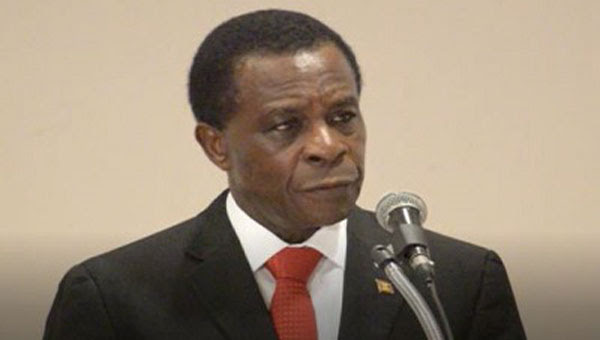
    Chairman of the meeting, Dr the Rt Honourable Keith Mitchell, Prime Minister of Grenada and Lead Head of Government for Science and Technology including ICT, said this was an issue which would give a real boost to regional integration and had the potential to drive growth and development in the Community.

    CARICOM Secretary-General Ambassador Irwin LaRocque concurred with the sentiments of the Prime Minister and stated that this should be viewed as a low-hanging fruit in achieving the Single ICT Space which should be realised as soon as practically possible.

    The Single ICT Space will allow for harmonisation of the ICT and other legislative frameworks in CARICOM, the removal of roaming charges, the encouragement of digital entrepreneurship, equipping all CARICOM nationals as digital citizens and looking at ICT financial solutions among other regional benefits. The Ministers emphasised the importance of cyber security in underpinning the Single ICT Space.

    The Ministers agreed on a Ministerial Understanding on the Single ICT Space in which they identified priorities as: developing the ICT sector as a catalyst to foster closer regional economic integration; enhancing the competitiveness of the Region through a vibrant ICT industry; and using the Single ICT Space as a driver of the CARICOM digital economy and the transformation of key sectors.

    The Understanding notes that the realisation of the CARICOM Single Market and Economy (CSME) and the fulfilment of the United Nations Sustainable Development Goals (SDGs) can be greatly advanced by the strategic application and increased usage of ICT and applying a whole-of-government approach.

    The Ministers recognised the ICT Space could only be developed with partnership and commitment of all stakeholders in the public and private sectors, civil society and International Development Partners.

    The preceding was a press release from the CARICOM Secretariat. The photo is of Dr. the Hon. Keith Mitchell, Prime Minister of Grenada.

  • The significance of the Caribbean Court of Justice’s pending Advisory Opinion

    The significance of the Caribbean Court of Justice’s pending Advisory Opinion

    Dr Jan Yves Remy and Alicia Nicholls

    The Caribbean Court of Justice (CCJ) will mark another milestone in its decade and a half history when it shortly delivers its first advisory opinion pursuant to Article 212 of the Revised Treaty of Chaguaramas (RTC).

    Late last month, the Court held a publicly broadcast two-day hearing where it heard oral submissions from counsel of the CARICOM Secretariat, member states and Caribbean law faculties from which it had received written submissions. The subject matter of the advisory opinion concerns the circumstances under which it is lawful for CARICOM Member States to “opt-out” of CARICOM Heads of Government decisions that involve fundamental objectives of the Community.

    In this SRC Trading Thoughts, we discuss the significance of the pending advisory opinion and its possible impact on the emerging body of CARICOM jurisprudence.

    Read more here

  • CSME working though ‘uneven and imperfect’

    CSME working though ‘uneven and imperfect’

    Alicia Nicholls

    Though “uneven and imperfect”, the five regimes of the CARICOM Single Market and Economy (CSME) (free movement of skilled nationals, capital, goods, services and the right of establishment) are working. This was the assurance given to audience members by His Excellency Ambassador Irwin Larocque, Secretary General of the Caribbean Community (CARICOM), in his welcome remarks at a public regional stakeholder consultation on the CSME. The event was held at the Errol Barrow Centre for Creative Imagination (EBCCI) of The University of the West Indies Cave Hill in Barbados on Monday, November 4th.

    The stakeholder discussion, which was also streamed online and broadcast via television, attracted a packed audience which included a wide cross-section of the general public, as well as online viewers from across the region. The moderator for the evening was Mr. Salas Hamilton, Communication Specialist at the Barbados-based CSME Unit.

    In his welcome remarks, Ambassador Larocque outlined some of the progress made on the regional agenda, including the recent St. Ann’s Declaration on Contingent Rights, work on government procurement and discussions around creating a single CARICOM Information and Communication Technologies (ICT) space. Noting that the public was an important constituency of the regional integration process, the Secretary General invited audience members to provide feedback on what needs to be done, whether the region was on the right track and whether what was being done impactful.

    President of the Caribbean Development Bank (CDB), Dr. Warren Smith, applauded Barbados’ Prime Minister, the Hon. Mia Amor Mottley, for “injecting a new energy into the CSME”. Under the quasi-Cabinet of CARICOM, Barbados has lead responsibility for the CSME. In making the case for an acceleration of the CSME, Dr. Smith reiterated the original vision of the CSME’s architects of increasing the competitiveness and viability of Caribbean economies on a global stage. Our region’s focus, he noted, must be on becoming an internationally competitive trading bloc, particularly given the shift towards inward looking policies and retreat from multilateralism by some of our main trading partners.

    Prime Minister Mottley reiterated that economic statistics show that the Caribbean is under-performing the world. She also noted that within the next 15 months there will be 8 general elections across the region which could put the pace of integration under strain. The Prime Minister noted that functional cooperation has been working for the region, and called for everyone to get on board to avoid the Caribbean becoming a source of climate refugees and having one of the poorest levels of economic performance in the world by 2050.

    Prime Mottley and Ambassador Lacroque fielded questions for over two hours during a lively question and answers session. The questions ranged on a variety of topics including consumer protection, the Labour Market Information System, the diaspora, youth engagement, indigenous persons, derisking, the high costs of intra-regional travel, to name a few.

    In response to a question on better integrating Haiti into the CSME, Ambassador Larocque indicated that there are ongoing discussions on providing a ‘special development dispensation’ for Haiti. He indicated CARICOM’s concern with the current political situation in Haiti and called for dialogue.

    Prime Minister Mottley suggested that CARICOM Member States commit to a minimum level of social development, what she termed a ‘social floor’, for things such as health, education and the like. She further highlighted the need for the end to roaming charges across the region through the creation of a single CARICOM ICT space. She also reiterated the need for CARICOM Heads of Government to meet more frequently than the current two meetings per year, and that technology now makes more frequent meetings possible.

    There were also several useful audience interventions, including one by Dr. Olivia Smith who called for a Labour Market Impact study, as well as the need for clarification of what “indefinite stay” means given the trouble some persons encountered with financial institutions when seeking to access financing.

    My take-aways

    There was much to take away from the discussion. However, while much ink has been spilled about the implementation deficit plaguing CARICOM, equally crippling is the information deficit. This prompted me to ask my question, which thankfully was one of the questions addressed, on the paucity of data and information.

    First let me applaud the CARICOM Secretariat for its increasing use of social media, its CARICOM One on One discussions and weekly news broadcasts. These are welcomed developments. However, the CARICOM website remains challenging to navigate in terms of finding information. Secondly, the communiques released at the end of meetings (when they are released) remain vague with little substance. Thirdly, decisions of Heads of Government should be made public. These decisions, after all, are binding on Member States and also have implications for we the average CARICOM citizen. Fourthly, there are many studies and documents which have been commissioned by CARICOM which are not online. Fifthly, live streaming of certain CARICOM meetings (and not just the opening ceremonies) should be public once they are not of a national security nature.

    Finding information and data remains a tedious task for persons conducting research in the Caribbean, far less, the average citizen who simply wishes to keep up to date with regional developments. Lack of information also feeds the impression that “CARICOM is doing nothing”, when indeed we know that there is some progress happening. Our regional process still remains opaque and there is need for much more transparency and information flows.

    On another note, I think there is cause for optimism. We often hear of apathy of the average Caribbean citizen towards CARICOM. The packed audience and the high level of engagement at the just concluded forum show that there is at least some level of engagement on the part of the regional public in wanting to know what is happening with the regional process. The questions posed, for the most part, were substantive and related to real issues faced by CARICOM nationals each day. There were also several suggestions raised which shows that people are thinking about ways the regional process could be improved.

    It shows that there is the need for more frequent engagement and contact between the average citizens and their leaders on regional issues. It is therefore heartening to hear that future public stakeholder sessions will be conducted.

    Another nugget of hope was the high level of youth engagement and attendance at the form. The future of our regional integration project lies with our youth. They are the ones who will be most utilizing the five CSME regimes now and in years to come. They will be the ones charged with taking the regional project forward. The youth involvement displayed at the forum, therefore, is a good sign.

    In conclusion, the CARICOM Secretariat (including the CSME Unit), the Office of the Prime Minister of Barbados and The UWI must be commended for hosting a very stimulating and rich discussion. It is hoped that similar public events will be hosted in other CARICOM countries and will be held with some frequency. You can view my live tweets from the event at #csmetownhall.

    The video recording from the event may be accessed below:

    Alicia Nicholls, B.Sc., M.Sc., LL.B., is an international trade and development consultant with a keen interest in sustainable development, international law and trade. You can also read more of her commentaries and follow her on Twitter @LicyLaw.

    DISCLAIMER: All views expressed herein are her personal views and do not necessarily reflect the views of any institution or entity with which she may be affiliated from time to time.