Blog

  • Caribbean Trade & Development News Digest – July 28-August 10, 2019

    Caribbean Trade & Development News Digest – July 28-August 10, 2019

    Welcome to the Caribbean Trade & Development News Digest for the weeks of July 28-August 10, 2019! We are happy to bring you the major trade and development headlines and analysis from across the Caribbean Region and the world from the past week.

    HIGHLIGHTS

    The World Trade Organization released its World Trade Statistical Review 2019 which provides a detailed analysis of global trade developments for the review period. Access the report here.

    The Caribbean Court of Justice upheld the classification decision of the CARICOM Council for Trade and Economic Development (COTED)’s on cement imported and distributed by the Barbados-based Rock Hard Cement Ltd.

    REGIONAL NEWS

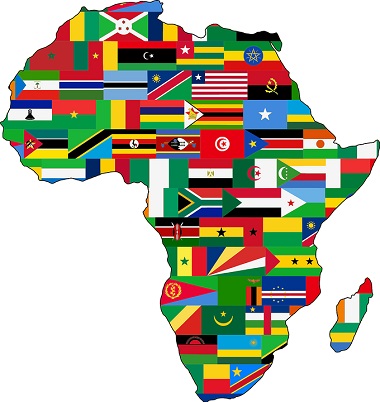
    CARICOM and the African Union discuss working together, formalising relationship

    CARICOM: Secretary General of the Caribbean Community (CARICOM), Ambassador Irwin LaRocque and Deputy Chair of the African Union Commission (AUC), His Excellency Kwesi Quartey discussed the need for continued ACP solidarity in the negotiations for the Post-Coutonou Agreement with the European Union (EU). Read more

    Caribbean Court upholds trade ministerial decision on cement classification

    Demerara Waves: The Caribbean Court of Justice (CCJ) on Tuesday delivered a judgement which upholds the classification decision of the CARICOM Council for Trade and Economic Development (COTED) on cement, known as Rock Hard Cement, imported and/or distributed within CARICOM by Rock Hard Cement (Rock Hard Distributors Limited) and, Mootilal Ramhit and Sons Contracting Limited. Read more

    Exports of essential oils from the Caribbean to Europe increasing

    South Florida Caribbean News: It is becoming increasingly common to find natural cosmetic products in large retail stores, perfume stores and supermarkets. Read more

    Government of Jamaica allocate $15 million to farmers affected by the ongoing drought

    Caribbean News Now: The ministry of industry, commerce, agriculture, and fisheries, through the Rural Agricultural Development Authority (RADA), is spending $15 million to assist farmers affected by the ongoing drought. Read more

    Addressing Genetically Modified Foods: A Rising Food Security Concern for the Region

    SRC: Genetically Modified Organisms (GMOs) are one of the most controversial areas of science. While their use in certain fields like medicine is accepted, when it comes to their use in food and agriculture, ethical and moral questions loom. Read more

    Barbados ‘vulnerable’ to food fraud

    Nation News: Despite having “pretty strong” food safety and security measures, Barbados is still vulnerable to food fraud, says Inter-American Institute for Cooperation on Agriculture (IICA) representative Ena Harvey. Read more

    Kenya to open trade links with Jamaica

    The Star: The Kenya National Chamber of Commerce and Industry and Jamaica Chamber of Commerce and Industry have expressed interest in deepening trade ties. Read more

    How did the Bahamas revitalise its sponge industry?

    IDB: A small community of about 900 people in Little harbour, in Mangrove Cay in The Bahamas, used to be home to a key driver of local economic growth–sponging. Little Harbour, which runs along a 1.5 million national marine park that is one of the Caribbean’s largest protected areas, is adjacent to the world’s third-largest barrier reef. Read more

    Uhuru seeks Caribbean support in Kenya’s bid for UN Security Council seat

    Capital FM: President Uhuru Kenyatta has urged the Caribbean community to support Kenya’s bid for the United Nations Security Council (UNSC) non-permanent seat for the period 2021 to 2022. Read more

    Uhuru invites Barbadian business community to invest in Kenya

    Capital FM: President Uhuru Kenyatta has invited Barbadian investors to set shop in Kenya saying his administration has created an enabling environment for both foreign and local businesses to thrive. Read more

    INTERNATIONAL NEWS

    US-Africa trade talks end in Abidjan, highlight AfCFTA

    North Africa Post: Talks between African and US officials to review the African Growth and Opportunity Act (AGOA) free-trade deal ended Thursday in Côte d’Ivoire with no major deal. Read more

    Japan expands trade and investments in Africa

    Fresh Plaza: In connection with the Tokyo International Conference on African Development, Japanese cumulative FDI in Africa increased from $3.9bn in 2007 to $10bn in 2016. Read more

    How new Trade Information Portal plans to plug Africa’s data and finance gap

    GTR: The African Export-Import Bank (Afreximbank) is building an online repository of information products for importers and exporters looking to access African markets or expand existing operations across the continent. Read more

    Two third of market access negotiations in RCEP over; 16-nation FTA talks to resume in September

    Business Today: The intersessional ministerial meeting among 16 countries to negotiate a mega free trade agreement – Regional Comprehensive Economic Partnership (RCEP) – concluded last week with a call to maintain the momentum in the run up to the closure of negotiations by the end of the year. Read more

    RCEP negotiations: India lists out demands before China for market access

    Business Line: Playing hardball with China in the on-going negotiations for the Regional Comprehensive Economic Partnership (RCEP) pact, India has read it out a big list of demands for market access in both goods and services, including larger exports of drugs, sugar, rice, dairy, soybean, IT and other services. Read more

    RCEP talks: New Zealand ready to ease work-visa rules for India

    Business Line: New Zealand wants to have greater market access for its dairy products, apples, kiwis and wine into India as part of the ongoing Regional Comprehensive Economic Partnership (RCEP) pact being negotiated by 16 countries, said the country’s special envoy for Commonwealth Trade Integration Jeremy Clarke-Watson. Read more

    ACP calls for unity as negotiations continue with Europe

    Jamaica Observer: Secretary General of the African Caribbean and Pacific (ACP) Group Dr Patrick I Gomes says the 79-member grouping must continue to show unity and be strong if it wants a successful outcome to the negotiations for a new agreement to replace the Cotonou Agreement that expires in 2020. Read more

    ACP Secretariat recommends actions for the UK government to facilitate physical market access of ACP Service providers to the UK market

    ACP: The ACP Group of States was recently invited to give evidence before the House of Commons International Trade Select Committee to speak about the movement of natural persons in the delivery of temporary services (Mode 4 of services supply). Read more

    Container ports: the fastest, the busiest, and the best connected

    UNCTAD: Known as the “humble heroes” of globalization, containers are handled in hundreds of millions at container ports worldwide annually. Efficient and well-connected container ports enabled by frequent and regular shipping services are key to minimizing trade costs, including transport costs, linking supply chains and supporting international trade. Read more

    There’s another trade war brewing over oil and milk

    Economic Times: While the world focuses on the ongoing trade war between China and the U.S., another spat has been brewing between commodity giant Indonesia and the European Union. Read more

    Western Australia’s huge reliance on China leaves it particularly vulnerable in a trade war

    ABC (Australia): The West Australian Government has been left walking a fine line in navigating the state’s economic reliance on China in the midst of a trade war and rising security tensions between the superpower and the United States. Read more

    Qatar prevails over UAE in trade dispute at WTO

    MENAFM: The State of Qatar announced yesterday that its permanent mission to the World Trade Organization (WTO) has received a formal communication indicating that the United Arab Emirates (UAE) had withdrawn its WTO dispute concerning certain alleged measures adopted by Qatar. Read more

    As Trump Scales Back, Asian Heavyweights Prep for World’s Biggest Trade Pact

    VoA: The world’s biggest free trade pact may be just months from final signatures after talks this month appeared to bring the trade group’s 16 members closer to agreement. Read more

    Biden: I would ‘renegotiate’ Pacific trade deal

    The Hill: Former Vice President Joe Biden said Wednesday night he would “renegotiate” the Trans-Pacific Partnership (TPP), not seek to rejoin it as it was previously written. Read more

    US Open to Further Talks as Trade War With China Escalates

    VoA: The White House is signaling it is not seeking to further escalate the trade war with Beijing, after the administration of President Donald Trump took the mostly symbolic action of declaring China a currency manipulator. Read more

    Trump has ‘huge appetite’ for free trade deal with UK – Raab

    Sky News: The foreign secretary sounds upbeat about UK-US trade after meeting President Trump at the White House. Read more

    Nicaragua Confirms Agreement With South Korea

    Q Costa Rica: Nicaragua is the first Central American country to establish a date of entry into force of the Free Trade Agreement (FTA) with South Korea, which is agreed for October 1, 2019. Read more

    Free trade agreement between Singapore and Britain in the works: Vivian Balakrishnan

    CNA: Singapore says it has an understanding with the United States that the city-state does not take advantage of privileges that come with “developing country” status in the World Trade Organisation (WTO). Read more

    US aware Singapore doesn’t take advantage of developing-country status: Chan Chun Sing

    The Strait Times: Singapore says it has an understanding with the United States that the city-state does not take advantage of privileges that come with “developing country” status in the World Trade Organisation (WTO). Read more

    WTO NEWS

    NEW ON CTLD BLOG

    The Caribbean Trade & Development Digest is a weekly trade news digest produced and published by the Caribbean Trade Law & Development Blog. Liked this issue? To read past issues, please visit here. To receive these mailings directly to your inbox, please subscribe to our Blog below:

  • Greening Caribbean Festivals

    Greening Caribbean Festivals

    Alicia Nicholls

    Festivals, inclusive of carnivals, are a defining feature of the Caribbean entertainment and cultural landscape. Be it music, food, arts, film or fashion, there is a Caribbean festival for everyone. In Barbados, for instance, we just concluded our Crop Over Festival – a three-month long summer festival with a variety of music competitions and other cultural offerings which culminate with street revelers bedecked in colorful costumes dancing to Soca music on what we call Grand Kadooment Day – the first Monday of each August.

    It is by now well-known that festivals make an important contribution to Caribbean economies and are among our countries’ biggest service exports. Festivals attract visitors from around the Caribbean and the world, generate foreign exchange inflows and other economic spillovers, and showcase our rich cultural and creative industries. Our biggest Barbadian superstar Rihanna is a well-known face among the revelers on Grand Kadooment Day.

    But what is less ventilated is the impact of Caribbean festivals on our fragile environments and how we can make them not just profitable but planet-friendly. This article provides an initial discussion as part of my on-going research on this topic.

    The environmental impact of festivals

    All festivals have an environmental footprint. They utilize finite resources such as water, fuel and electricity. They generate greenhouse gas (GHG) emissions from patrons driving to and from festival venues, as well as create waste and noise pollution.

    A significant amount of festival waste comes from single-use plastics. Thankfully, an increasing number of Caribbean countries have begun implementing bans on the importation, sale or use of single-use plastics which cuts down on the amount of waste generated from Styrofoam food containers, straws, plastic plates and cutlery. In Barbados, due to the recently implemented ban on single-use plastics, it was refreshing to see persons jumping on Kadooment Day with reusable cups in their hands instead of utilizing plastic cups.

    But waste is not only generated from these easily identifiable plastics. Scientists warn that microbeads like glitter, a staple of many costumes and cosmetics, are an often overlooked form of microplastics which can be ingested by marine life and contaminate our food chains. Waste is also generated from paper used in the printing of promo flyers, printed tickets and programmes.

    The literature on the environmental impact of festivals remains limited and is confined primarily to festivals in developed countries, such as the UK, Australia and the US. While I am unaware of any study which comprehensively measures the environmental impact of Caribbean festivals, a report by UK not-for-profit think tank Powerful Thinking studying the environmental impact of UK festivals may be instructive. While the UK festival experience might not be directly analogous to ours in the Caribbean as their major festivals often require patrons to travel and camp on-site, it still provides a useful point of departure for the environmental impacts festivals can have.

    The Powerful Thinking Report found that the UK festival industry, which attracts over 3 million people per year, produces 23,500 tonnes of waste and is responsible for nearly 20,000 tonnes of on-site carbon dioxide (CO2) emissions annually. This latter statistic should give us pause given the impact which GHGs like carbon dioxide have on climate change which is one of the biggest threats facing Small Island Developing States (SIDS) like those in the Caribbean. The report, however, also found that 78% of festival organisers in the UK have an environmental policy. The Glastonbury Festival, for example, has green policies for waste, energy and water on its website.

    How can our festivals go greener?

    In the Caribbean many of our big-ticket festivals are organized by government-run entities, but others are private sector initiatives. While no festival can be completely carbon or environmentally neutral, it is incumbent on our festival planners and organizers to make environmental sustainability a priority in our festival planning efforts to minimize their environmental impact.

    As previously noted, other festivals around the world are also grappling with how to make their festivals greener and are implementing policies to address this. The previously mentioned Powerful Thinking Report also offered several key recommendations to enable British festivals to meet the challenge of achieving a 50% reduction in emissions compared to 2014 by 2025. Some of these include local sourcing of food products, reducing food waste and segregating materials onsite.

    Empirically studying the environmental and carbon impact of Caribbean festivals will assist in designing evidence-based environmental policies for our festivals that are tailored to our Caribbean realities.  Something as simple as ensuring there are enough strategically placed garbage receptables could help reduce the likelihood of litter, as well as using recycling to reduce the amount of waste to going to the landfill. Festival organisers can either provide reusable cups or encourage participants to walk with their own reusable cups instead of using plastic cups. Biodegradable glitter can be used to reduce the plastic waste generated. Paper waste can be reduced by going paperless and making greater of digital technologies, such as event apps and e-tickets. In Barbados, a number of events now have park and ride options which can go a long way in reducing the CO2 emissions from multiple cars going to and from events. As noise pollution from late-night fetes and other events can be bugbear for residents, policies must be instituted regulating the times and locations of events in order to minimise noise pollution.

    Another option is international certification. The International Organization for Standardisation (ISO) has developed an International Standard for Sustainable Event Management (ISO 20121) that offers guidance and best practices for identifying, managing and mitigating the social, economic and environmental impacts of events. The ISO 20121 is not only for festivals, but other events such as conferences, concerts, sporting events and exhibitions. While the standard has not yet been widely adopted, some festivals, such as Spain’s Balelec Music Festival and Australia’s Sydney Festival, have opted to become ISO20121 certified in order to manage their environmental impact and enhance their image as part of their marketing efforts.

    The Way Forward

    Regrettably, many Caribbean countries do not publish extensive statistics, if any, on the economic impact of their festivals. Therefore, one recommendation would be that post-festival analyses be published and include an analysis of the environmental impact. This data would support the crafting of empirically sound greening policies and sensitise the public about the importance of environmentally-friendly practices even when they are, as we say in the Caribbean, ‘playing mas’.

    As always, the elephant in the room is what impact these greening initiatives may have on festival organizers’ bottom lines and whether any added costs from greening initiatives will be passed on to consumers, affecting the profitability of the festivals concerned. There is, therefore, the need to consider cost-effective greening options wherever possible.

    Greening our festivals should also not be seen as simply another cost imposition, but as an opportunity. Research has shown that millennials are more socially conscious than older generations and care much more about their carbon footprint. Millennials, therefore, are a ripe target market for festivals which are both fun, but also environmentally-friendly. Some UK festivals, like the Glastonbury Festival, use their environmental friendliness as part of their marketing strategies. Moreover, festival organizers’ demand for more environmentally friendly products could lead to start-ups specializing in such products.

    Above all, the costs to our Caribbean environments in the long run due to inaction would be much higher than the cost of positive action. Environmentally unsustainable festivals can negatively impact our geographical landscapes, contaminate the food we eat through marine pollution, the air we breathe and our climate. It is in our own interests as festival goers and organisers to ensure that we have enjoyable but also environmentally-friendly and sustainable festivals.

    Alicia Nicholls, B.Sc., M.Sc., LL.B., is an international trade and development consultant with a keen interest in sustainable development, international law and trade. You can also read more of her commentaries and follow her on Twitter @LicyLaw.

    DISCLAIMER: All views expressed herein are her personal views and do not necessarily reflect the views of any institution or entity with which she may be affiliated from time to time.

  • Caribbean Trade & Development News Digest – July 21 – July 27, 2019

    Caribbean Trade & Development News Digest – July 21 – July 27, 2019

    Welcome to the Caribbean Trade & Development News Digest for the week of July 21-27, 2019! We are happy to bring you the major trade and development headlines and analysis from across the Caribbean Region and the world from the past week.

    Please note that there will be no digest for the week of July 28-August 3, 2019.

    HIGHLIGHTS

    The WTO General Council met on July 23-24, 2019. The summary of the meeting may be viewed here. The US resubmitted its proposals on reforming the current model of eligibility for special and differential treatment, while a consortium of developing countries tabled a paper on strengthening the WTO.

    US President Trump issued a memorandum to the USTR to secure reform of developing country status in the WTO. Have a read of my article on this here.

    It was announced this week that Prime Minister of Barbados, the Hon. Mia Amor Mottley will be the speaker at UNCTAD’s 16th Raul Prebisch Lecture to be held September 10, 2019 in Geneva, Switzerland.

    REGIONAL NEWS

    June 2020 Target For Wto Is ‘Aspirational’

    Tribune 242: Elsworth Johnson, newly-appointed minister of financial services, trade and industry and Immigration, told Tribune Business he had been advised even the World Trade Organisation (WTO) itself felt the accession timeline set by The Bahamas was “extremely rigid”. Read more

    Guyanese manufacturers say Plantation white sugar unacceptable; reject call for 40% tax on refined sugar

    Demerara Waves: The Guyana Manufacturing and Services Association Limited (GMSA) on Monday rejected calls by a Belizean producer of Plantation white, or mill white, sugar to impose a Caribbean-wide 40 percent tax on extra-regionally refined sugar, saying that Plantation white sugar will result in poor quality products and in some cases injury to consumers. Read more

    CARICOM Secretariat Team carries out CSME Sensitisation in Jamaica

    CARICOM: A CARICOM Secretariat team is in Jamaica this week collaborating with the Ministry of Foreign Affairs and Foreign Trade (MFAFT) on a series of CARICOM Single Market and Economy (CSME) engagements with the private and public sectors, labour and other stakeholders. Read more

    Forex, FDI, trade in ‘freefall’

    Barbados Today: Caribbean capacity to generate foreign exchange, investment and exports appears be to freefall, a senior official of the United Nations regional economic watchdog has suggested. Read more

    Surinamese business delegation to visit Russia – Lavrov

    TASS: Russia and Suriname will prepare a visit of a delegation of Surinamese businessmen and government officials to Russia, Foreign Minister Sergei Lavrov said on Saturday after talks with Foreign Minister of Suriname Yldiz Deborah Pollack-Beighle. Read more

    INTERNATIONAL NEWS

    UK on course for no-deal Brexit as Johnson rejects EU agreement

    The Guardian: Boris Johnson has set the UK on an apparent course towards a no-deal Brexit by playing down the likelihood of any talks with the EU unless Brussels agrees to scrap the existing withdrawal agreement and Irish backstop, both of which it has ruled out. Read more

    Assuming EU will not budge, Britain ramps up preparations for no-deal Brexit

    Reuters: The British government is working on the assumption that the European Union will not renegotiate its Brexit deal and is ramping up preparations to leave the bloc on Oct. 31 without an agreement, senior ministers said on Sunday. Read more

    Johnson ready to talk if EU changes position on Brexit deal

    RTE: British Prime Minister Boris Johnson has told EU leaders he will sit down for Brexit talks when they indicate that they are ready to shift position, otherwise Britain will prepare for leaving without an agreement, his spokeswoman has said. Read more

    Fed Survey Finds Widespread Concerns Over Trade

    Jamaica Gleaner: The United States Federal Reserve’s latest nationwide survey, released on Wednesday, reveals that despite growing worries about the impact of President Donald Trump’s trade battles, the overall economy remained solid. Read more

    India’s proposal for Wto reforms supported by a large majority of countries

    Livemint: A large majority of countries on Wednesday endorsed a joint proposal by India, South Africa, and seven other countries for reforming the World Trade Organization, in the face of existential threats to the survival of multilateral trading system, say trade envoys. Read more

    Canada and Europe make deal to work around blocked World Trade Organization

    CBC Canada: Canada and the European Union have agreed on a plan to set up a substitute appeals body for trade disputes between them, they announced Thursday. Read more

    ICC welcomes EU and Canada’s decision to arbitrate WTO trade disputes

    ICC: The International Chamber of Commerce (ICC) welcomes the European Union (EU) and Canada’s announcement to utilize international arbitration panels to resolve trade disputes under World Trade Organization (WTO) rules. Read more

    Africa must boost industrial capacity to benefit from free-trade zone: AfDB

    Reuters: African nations will need to boost output of goods and services and integrate payment systems if they are to take advantage of a new $3.4 trillion economic initiative, according to the head of the African Development Bank. Read more

    WTO NEWS

    NEW ON CTLD BLOG

    The Caribbean Trade & Development Digest is a weekly trade news digest produced and published by the Caribbean Trade Law & Development Blog. Liked this issue? To read past issues, please visit here. To receive these mailings directly to your inbox, please subscribe to our Blog below:

  • US gets tough on reforming developing country status in WTO

    US gets tough on reforming developing country status in WTO

    On July 26, 2019, United States (US) President Donald Trump signed a memorandum on reforming developing country status in the World Trade Organization (WTO). This memorandum mandates the United States Trade Representative (USTR) to secure changes to the current method of WTO members’ eligibility for special and differential treatment (S&DT) in the WTO. Failing this, it outlines specific steps the USTR should take.

    Background

    Special and differential treatment (S&DT) is a bedrock of the rules-based multilateral trading system and grants certain flexibilities to developing countries and Least Developed Countries (LDCs) under the WTO’s agreements. These include, for example, longer time periods for implementing Agreements and commitments; measures to increase trading opportunities for developing countries; and provisions requiring all WTO members to safeguard the trade interests of developing countries. Least developed countries (LDCs), a special sub-category of developing country, also benefit from further flexibilities.

    Eligibility for S&DT in the WTO is currently premised on a country’s self-designation as a ‘developing country’ and at present, at least two-thirds of the WTO’s membership of 164 self-designates as ‘developing’. Unlike with LDCs which are based on the United Nations’ criteria and list, there is no criteria guiding designation as a ‘developing country’ in the WTO.

    In recent times, the issue of eligibility of certain WTO Members for S&DT has become increasingly contentious. Thus far, the European Union, Canada, the US and Norway have tabled proposals, which to varying degrees, call for a rethinking or reforming of the current eligibility model for S&DT in the WTO. Developing countries, on the other hand, argue for a retention of the eligibility status quo, while noting that the focus should be on the Doha mandate of ensuring effectiveness of S&DT.

    Earlier this year, the US took the call for reform a step further by not only tabling a lengthy paper in which it argued that self-designation risks condemning the WTO to institutional irrelevance, but followed this up with a draft General Council decision in which it proposed four exclusionary criteria which would, if implemented, exclude a large number of developing countries from eligibility from S&DT in current and future WTO negotiations.

    The US’ resubmission of these two documents during the WTO General Council‘s meeting last week and the Memorandum signed by President Trump reiterate that the US is not taking this issue lightly and is prepared to take any steps necessary to bring the WTO to heel in this matter.

    What does the Memorandum Entail?

    Inter alia, the Memorandum states that “while some developing-country designations are proper, many are patently unsupportable in light of current economic circumstances. ” It lists several countries which self-designate as ‘developing countries’ in the WTO, while being members of the G20 and/or the Organization for Economic Cooperation and Development (OECD) and/or are among the 10 wealthiest economies in the world as measured by GDP per capita. It dedicates several paragraphs to signalling out China as an example of a country which the US argues inappropriately self-designates as a ‘developing country’.

    It goes on to note that “When the wealthiest economies claim developing-country status, they harm not only other developed economies but also economies that truly require special and differential treatment. ” It further states that “such disregard for adherence to WTO rules, including the likely disregard of any future rules, cannot continue to go unchecked. ” Moreover, it states “with respect to the WTO, there is no hope of progress in resolving this challenge until the world’s most advanced economies are prepared to take on the full commitments associated with WTO membership. “

    The Memorandum directs the United States Trade Representative (USTR) to, as appropriate and consistent with applicable law, use all available means to secure changes at the WTO that would prevent self-declared developing countries from availing themselves of flexibilities in WTO rules and negotiations that are not justified by appropriate economic and other indicators.  

    The Memorandum further mandates the USTR to, where appropriate and consistent with law, pursue this action in cooperation with other like-minded WTO Members. It also directs the USTR to update the President on his progress within 60 days of the date of the memorandum.

    But here comes the interesting part. If, within 90 days of the date of this memorandum, the USTR determines that substantial progress has not been made toward achieving those changes at the WTO, the USTR is to no longer treat as a developing country for the purposes of the WTO any WTO Member that in the USTR’s judgment is improperly declaring itself a developing country and inappropriately seeking the benefit of flexibilities in WTO rules and negotiations; and where applicable, not support any such country’s application for membership of the OECD.

    The Memorandum further mandates what appears to be a ‘name and shame’ exercise by directing the USTR to publish on its website a list of all self-declared developing countries that the USTR believes are inappropriately seeking the benefit of developing-country flexibilities in WTO rules and negotiations.

    What potential implications for the Caribbean?

    Currently all CARICOM Member States are WTO Members, with the exception of The Bahamas which is currently in accession, and all self-designate as developing countries. It is no secret that the US’ main targets are larger emerging economies which continue to self-designate as developing countries.

    However, while Caribbean countries do not appear to be among the countries specifically targeted by the US, some Caribbean countries could still inadvertently be caught up in the large fishing net the US proposes to catch the big fish it has in its sight.

    For instance, one of the proposed criteria for exclusion for S&DT under the draft General Council decision advanced by the US is classification by the World Bank as a “high income” economy. If implemented, this criterion would deny five Caribbean countries: Antigua & Barbuda, The Bahamas (currently in accession to WTO), Barbados, St. Kitts & Nevis and Trinidad & Tobago from eligibility for S&DT in current and future WTO negotiations. While these countries are classified as ‘high income’ economies for World Bank lending purposes, GDP per capita does not tell the whole development picture. It does not, for example, take into account income inequalities, indebtedness or these countries’ vulnerabilities to financial or weather-related shocks.

    The US has shown that it is committed to reforming the current model of eligibility for S&DT in the WTO to ensure that countries which it feels should not be eligible no longer have this right. As such, Caribbean small vulnerable economies should only monitor these developments closely, but advance their own positions on this issue to ensure their voices are heard in the reform process.

    Firstly, it would be useful to ascertain to what extent are Caribbean countries utilising the current flexibilities under the WTO agreements. Secondly, do Caribbean countries agree that there is need for reform of the eligibility model currently utilised by the WTO? If so, what do we propose? Do we support an objective criteria approach as that being advanced by the US, or should we use this opportunity to reopen the call for an SVE sub-category, or is there something else we could propose which ensures that the most vulnerable economies remain eligible for S&DT. These are issues on which the region cannot afford to be silent.

    The full Memorandum may be accessed here.

    Alicia Nicholls, B.Sc., M.Sc., LL.B., is an international trade and development consultant with a keen interest in sustainable development, international law and trade. You can also read more of her commentaries and follow her on Twitter @LicyLaw.

    DISCLAIMER: All views expressed herein are her personal views and do not necessarily reflect the views of any institution or entity with which she may be affiliated from time to time.