Blog

  • Can CARICOM Countries Afford to Miss the WTO E-commerce train?

    Can CARICOM Countries Afford to Miss the WTO E-commerce train?

    Dr. Jan Yves Remy and Alicia Nicholls

    On the sidelines of this year’s World Economic Forum meeting in January at Davos, Switzerland, 76 Members of the World Trade Organization (WTO) expressed their intention to begin WTO negotiations on electronic commerce (e-commerce). Making up less than half of the WTO’s overall membership, these willing Members entreated other Members to join them in negotiating rules aimed at facilitating the use of e-commerce in trade.

    All independent CARICOM Member States, with the exception of the Bahamas – which is presently acceding to the WTO – are WTO Members and therefore eligible to join these negotiations. However, so far none has done so. Given the potential of e-commerce for their development, should CARICOM Member States reconsider their cautionary stance?

    Growing importance of e-commerce to global trade

    E-commerce, also referred to as “digital trade”, has been defined as “the production, distribution, marketing, sale and delivery of goods and services through electronic and digital means”.  In its World Trade Report 2018, the WTO noted that digital technologies – such as artificial intelligence, blockchain, the Internet of Things and 3-D printing – are reducing trade costs and revolutionizing the structure and patterns of global trade flows.[i]  The United Nations Conference on Trade and Development (UNCTAD) estimated the global e-commerce market to be around US $22.1 trillion in 2015.[ii]

    The WTO Report and numerous studies[iii] highlight the potential of e-commerce to catalyse economic transformation in developing countries by lowering trade costs, increasing market access opportunities for Micro, Small and Medium-Sized Enterprises and individual entrepreneurs, improving logistics, and widening consumer choice. Challenges, however, continue to plague the use of these technologies, including inadequate supportive policies, technology diffusion and regulation.

    While more modern regional trade agreements – like the US-Mexico-Canada Agreement and even the CARIFORUM-EU Economic Partnership Agreement – include comprehensive digital trade chapters, the WTO, which was negotiated in 1995, still does not contain a multilateral agreement dealing holistically with e-commerce. Instead, separate disciplines affecting digital trade in goods and services can be found in the WTO’s General Agreement on Trade in Services, the General Agreement on Tariffs and Trade, the Agreement on Trade-Related Aspects of Intellectual Property Rights, and more recently, the Trade Facilitation Agreement.

    The multilateral route: The WTO Declaration and Work Programme on E-Commerce

    Multilateral discussions on e-commerce involving all WTO Members were launched in 1998 through the adoption of a Declaration on Global Electronic Commerce, and a Work Programme to examine trade-related issues related to global electronic commerce.  The Work Programme has been continuously updated at most WTO Ministerial Conferences since 1998, the last one being the Buenos Aires Ministerial Conference in 2017.  Under that Work Programme, the WTO’s main committees have been reviewing progress on discussions, with general oversight provided by the WTO’s General Council.  Despite fits of activity, and some proposals by select countries, not much has yet been accomplished beyond a temporary moratorium on the application of customs duties on electronic transmissions and the formulation of a working definition of e-commerce.

    Although the negotiation of a multilateral agreement or rules among all 164 WTO Members would be ideal, consensus among all Members has been difficult to achieve.  This is in large part due to developing countries’ objections to what they consider to be ambitious proposals being pushed by developed countries.  On the one hand, WTO developing countries, led by India and the African Group of countries, support completion of the more limited mandate under the 1998 Work Programme framework.[iv]  On the other hand, developed countries, such as the US[v] and the European Union, advocate moving beyond mere discussions to actual negotiations to formulate rules aimed at increasing e-commerce opportunities in the twenty-first century.  Where CARICOM stands is unclear as no CARICOM government has to date tabled a proposal on e-commerce at the WTO.

    The plurilateral route: Joint Statements on Electronic Commerce at Buenos Aires and at Davos

    Without an official WTO mandate to proceed with multilateral negotiations, some WTO Members have begun negotiations on a plurilateral basis, that is, without all WTO Members but among a subset of willing ones.  The plurilateral discussions began when 71 Members signed a Joint Statement on E-Commerce in Buenos Aires in 2017, and was extended at Davos in January this year, when five more countries, including China, agreed to join the plurilaterals.

    In their Joint Statement at Davos, the 76 signatories agreed, inter alia, to achieve “a high standard outcome that builds on existing WTO agreements and frameworks with the participation of as many WTO members as possible”.[vi]  The willing countries also agreed to “recognize and [to] take into account the unique opportunities and challenges faced by members, including developing countries and Least Developed Countries (LDCs), as well as by micro, small and medium sized enterprises, in relation to electronic commerce”.

    Should CARICOM countries participate in plurilateral negotiations?

    As with the multilateral e-commerce negotiations, CARICOM countries’ have remained silent on whether they have an appetite for joining the plurilateral e-commerce negotiations.  A number of factors could account for their apparent hesitation.

    Firstly, CARICOM countries may be concerned about their capacity to engage in negotiations on an area of trade which is still relatively new and evolving, and their subsequent ability to implement in a timely manner any obligations undertaken. To allay such fears, it might be worth considering the approach to special and differential treatment taken in the Trade Facilitation Agreement, another WTO plurilateral agreement, where implementation is tied to a country’s capacity and the degree of technical assistance provided.

    Secondly, some CARICOM countries may fear that participation in these negotiations will restrict their policy space, particularly their ability to regulate online traffic and cross border data flows, and attendant issues like data privacy and cybersecurity.  They might also be wary of the revenue implications of agreeing to the proposed permanent moratorium on the imposition of customs duties on electronic transmissions.

    A third possible red flag for CARICOM may be the reluctance of other developing countries in joining the negotiations. While China joined at the last minute, others like India and the African Group countries have adamantly declined, preferring to focus attention on the multilateral discussions.[vii] These countries argue that e-commerce is monopolised by multinational corporations and that gains from e-commerce will not be realized for developing countries if they are required to cede their regulatory and policy space.

    Without a critical mass of developing countries involved in the negotiations, CARICOM countries’ ability to form coalitions with perceived “like-minded” countries may be circumscribed. That said, e-commerce is an area in which CARICOM countries have offensive interests given the predominance of services in their economies.  It may well be that new coalitions will have to be built on the basis of a new alignment of interests.

    Issues for Consideration

    Given the importance of digital technology in global commerce, missing the e-commerce train at the WTO may not be in CARICOM’s best development interests. But CARICOM countries would be ill-advised to pursue a strategy to negotiations that ignores the following considerations.

    Firstly, a negotiating strategy must be predicated on a sound digital trade policy that is informed by: data analysis of current patterns, scope and scale of e-commerce in the region; a clear-sighted appreciation of how e-commerce can promote the region’s overall economic transformation; and solid regulatory frameworks and infrastructure. Some studies, including one commissioned by UNCTAD on e-commerce legislation in Caribbean countries[viii], already exist.

    Secondly, both the digital trade policy and the subsequent negotiating strategy will require the input and feedback of key stakeholders, including the private sector and regulators which will be tasked with administering any rules, and consumer bodies. Canada, which is one of the Joint Statement signatories, has already launched stakeholder consultations.[ix]

    Thirdly, CARICOM countries must be tactical.  They should consider reaching out to other similar-minded developing countries to join the ongoing plurilaterals negotiations, and increase the visibility of issues that are unique to smaller developing countries.

    What Next?

    As CARICOM ponders its next move, negotiations on the plurilateral front are ramping up.  There is no agreement yet among those engaged in the plurilateral as to the legal structure any eventual agreement will take, nor as to its scope.  But there is a willingness to move beyond the “exploratory” phase to actual negotiations.  In fact, the first meeting of the plurilateral e-commerce negotiations is slated to take place on March 6.

    That means that there is still an opportunity for all WTO Members to participate in these negotiations, and thereby influence their shape. The 70 plus signatories include the world’s largest trading economies which account for 90% of global trade.[x]  As the rules negotiated will likely serve as the baseline for any future multilateral e-commerce deal, non-participation by developing countries would relegate them, once again, to the status of rule-takers. This is not an area in which CARICOM countries should leave their destinies in the hands of others.

    Dr Jan Yves Remy is the Deputy Director of the University of the West Indies, Cave Hill’s Shridath Ramphal Centre for International Trade Law, Policy & Services. Alicia Nicholls is an international trade and development consultant and a contributing author to the UWI SRC’s Trading Thoughts column. This article was also published in Barbados Today.

    [i] https://www.wto.org/english/res_e/publications_e/world_trade_report18_e_under_embargo.pdf

    [ii] https://unctad.org/es/paginas/newsdetails.aspx?OriginalVersionID=1281&Sitemap_x0020_Taxonomy=Information%20and%20Communication%20Technologies

    [iii] See for example Commonwealth (2017)  https://books.thecommonwealth.org/e-commerce-and-digital-trade-paperback; WTO (2013) https://www.wto.org/english/res_e/booksp_e/ecom_brochure_e.pdf ; E. Humphrey et. al (2003) https://eprints.lse.ac.uk/3710/1/The_reality_of_e-commerce_with_developing_countries.pdf.

    [iv] See link for a synthesis of some of the positions: https://www.wto.org/english/news_e/news16_e/good_17nov16_e.htm. For the Indian Government’s views see  https://www.ictsd.org/bridges-news/bridges-africa/news/african-group-submits-proposal-on-e-commerce-ahead-of-wto and also for the African Group’s position: https://www.ictsd.org/bridges-news/bridges-africa/news/african-group-submits-proposal-on-e-commerce-ahead-of-wto

    [v] See this link for a greater discussion on the diverging views of WTO members on the way forward: https://www.reuters.com/article/us-trade-wto-digital/some-wto-members-to-push-for-e-commerce-rules-as-broader-deal-fails-idUSKBN1E72YV

    [vi] The link to the text of the Joint Statement on E-commerce of January 25, 2019 text is available on this webpage: https://www.wto.org/english/news_e/news19_e/dgra_25jan19_e.htm

    [vii] See https://www.thehindubusinessline.com/info-tech/india-keeps-off-75-member-wto-e-comm-agreement-talks/article26093230.ece and https://www.livemint.com/politics/news/india-south-africa-others-skip-wto-negotiations-on-e-commerce-at-davos-meet-1548435856765.html

    [viii] https://unctad.org/en/pages/PublicationWebflyer.aspx?publicationid=2084

    [ix] http://www.internationaltradecomplianceupdate.com/2019/01/28/canada-launches-consultations-on-future-wto-e-commerce-negotiations/

    [x] https://www.wto.org/english/news_e/news19_e/dgra_25jan19_e.htm

  • Caribbean Trade & Development Digest – February 3-9, 2019

    Caribbean Trade & Development Digest – February 3-9, 2019

    Welcome to the Caribbean Trade & Development Digest for the week of February 3-9, 2019! We are happy to bring you the major trade and development headlines and analysis from across the Caribbean Region and the world from the past week. We apologise for the delay in the publication of this edition.

    THIS WEEK’S HIGHLIGHTS

    A bi-partisan bill has been introduced in the US House of Representatives to reauthorize the US Caribbean Basin Trade Partnership Act (CBTPA) until 2030.

    Trade was one of themes touched on by US President Donald J. Trump in his State of the Union Address. See write up here.

    UNCTAD identified the winners and losers from the US-China trade tensions in a recently released report entitled The Trade Wars: The Pain and the Gain which may be viewed here.

    REGIONAL

    Bipartisan Caribbean Trade Bill introduced in US congress

    CaribbeanNewsNow: US Reps. Terri Sewell (D-AL) and Brad Wenstrup (R-OH) have introduced legislation to reauthorize the US Caribbean Basin Trade Partnership Act (CBTPA) until 2030. Since 2000, CBTPA has allowed for the duty- and quota-free import of goods made with US yarns, fabrics and threads from Caribbean countries. Read more 

    Efforts take shape to reduce OECS food import bill

    St. Lucia News Online: Spurring domestic agricultural production to meet local and international demand while reducing the region’s food import bill is the focus of a powerful new data tool recently presented to agricultural decision-makers at the OECS Commission. Read more 

    Commercial Court ‘could boost’ Barbados economy

    Barbados Today: The minister responsible for business is counting on the planned commercial law court to transform the way business is done and boost the flagging economy. Read more 

    Trinidad: PM wants technology to play greater role in energy sector; offers help to Caribbean countries

    St Lucia News Online: The Trinidad and Tobago government Monday said it is prepared to assist its fellow Caribbean Community (CARICOM) countries develop their hydrocarbon sector as it placed much emphasis on the importance of technology in developing its own industry. Read more 

    Marshall and Brown launches Jamaican gourmet line in UK

    Jamaica Observer: A new premium Jamaican product line, Marshall & Brown, has been launched in the United Kingdom (UK) to fill a gap in the market for authentic Jamaican food and cooking ingredients.  Read more 

    High demand for Jamaican black castor oil in United States

    Jamaica Observer: A new study on the local castor oil industry is showing significant potential for Jamaican black castor oil in the United States. The Complete Caribbean study indicates that the US market for the product stands at about US$28 million. Read more 

    CDB President calls for resilience, transformation to drive Regional economic growth

    CARICOM Today: Although grappling with challenges related to climate change; wide fiscal deficits and high public debt; as well as high unemployment, the Caribbean Development Bank (CDB) today projected that the Region’s economy is expected to grow by 2% in 2019. Read more 

    Trinidadians seeking business opportunities in Jamaica

    CARICOM Today:A business delegation from Trinidad and Tobago is in the island for a four-day trade mission from February 5 to 8. The team, being hosted by the Jamaica Chamber of Commerce, represents 10 companies involved in various sectors. These are construction, architectural services, food and beverage, agro-chemical, consumer and household products, software development, marketing and advertising. Read more 

    Consultations on CARICOM Gender Policy

    CARICOM Today: The first of 15 national consultations on a draft Regional Gender Equality Strategy for CARICOM opened on Thursday, in St. John’s, Antigua and Barbuda. Read more 

    INTERNATIONAL

    Japan seeking big concessions from Britain in trade talks

    The Guardian: Japan is seeking tougher concessions from Britain in trade talks than it secured from the EU, while negotiations between London and Tokyo are also being slowed by the looming risk of no-deal. Read more 

    US-China trade war could slash almost 1 million jobs from the US economy, new study says

    South China Morning Post: Research from the Washington-based consultancy Trade Partnership Worldwide, paid for by the pro-free trade lobbying group Tariffs Hurt the Heartlands, ominously predicts that more than 2 million American jobs could be on the line should US President Donald Trump push ahead with his threat of a 25 per cent tariff on all Chinese exports. Read more

    WTO awards South Korea $85 million against U.S. over washing machine tariffs

    Reuters: South Korea can impose annual trade sanctions of $84.81 million on the United States after challenging U.S. anti-dumping and anti-subsidy tariffs on washing machines, a World Trade Organization arbitration panel ruled on Friday. Read more

    India, Peru to hold next round of free-trade agreement talks in March in Lima

    ET Now: India and Peru will hold the next round of negotiations for a proposed free-trade agreement (FTA) in the South American nation next month, a move aimed at boosting two-way commerce between the countries, an official said.  Read more 

    Uruguay Betting On Exports Of Medical Marijuana

    Jamaica Gleaner: The country got a head start on competitors in December 2013 when it became the first in the world to regulate the cannabis market from growing to purchase, a move that has brought a wave of investment. Read more 

    No-deal Brexit: What does the WTO rules option actually mean and how would it work?

    iNews: If the UK leaves the EU without a deal, which is still the default option if one cannot be agreed, it would automatically fall back to World Trade Organization (WTO) rules. But what would this actually mean? Read more

    Brexit: May says she can get deal through with binding changes

    BBC: Theresa May has told EU leaders she can get the Brexit deal through Parliament if they give her legally-binding changes to it. Read more 

    African Free Trade Zone deal may come into force in 2 months: Egypt’s FM

    Egypt Today: The agreement of the African Continental Free trade Area (AfCFTA) for 55 member states of the African Union may come into force within six months, said Egyptian Foreign Minister Sameh Shoukry on the sidelines of the 32nd session of the African Union that will kick off on Sunday in Addis Ababa. Read more

    Turkey, US ‘will reach $75 bln trade target with free trade agreement’

    Hurriyet: Trade volume between Turkey and the United States may reach $75 billion through a free trade agreement and the removal of regulations and tariffs, the chairman of the American-Turkish Council has said, stressing that the bilateral potential has never been realized. Read more

    A modernized WTO is far better than no WTO at all

    The Hill: Last month, on the sidelines of the World Economic Forum in Davos, leading members of the World Trade Organization (WTO) met to discuss how to improve the organization. At the same time, more than 70 governments agreed to commence WTO negotiations on trade-related aspects of electronic commerce. Read more

    China says US report on its WTO compliance lacks factual basis

    CNBC: China opposes a report by the U.S. Trade Representative’s office on its World Trade Organization (WTO) compliance, the commerce ministry said, saying it is inconsistent with the facts. Read more

    WTO NEWS

    Arbitrator issues decision in dispute between Korea and US on large residential washers

    WTO: On 8 February 2019, a WTO arbitrator issued a decision on the level of trade suspension Korea may request in its dispute with the United States regarding US anti-dumping and countervailing duty measures on large residential washers from Korea (DS464). Read more 

    The Caribbean Trade & Development Digest is a weekly trade news digest published by the Caribbean Trade Law & Development Blog. Liked this issue? To read past issues, please visit here. To receive these mailings directly to your inbox, please follow our blog.

  • Trade Takeaways from Trump’s Second State of the Union Address

    Trade Takeaways from Trump’s Second State of the Union Address

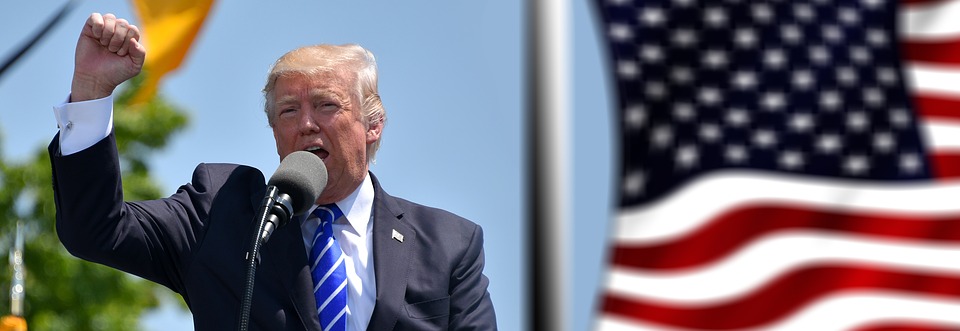
    Photo source: Pixabay

    Alicia Nicholls

    Last night (February 5, 2019), United States (US) President, Donald J. Trump, delivered his second State of the Union (SOTU) address before a joint session of the US Congress. The President highlighted his administration’s progress on his campaign promises, including on immigration, trade, tax policy, infrastructure and national security. This article takes a brief look at the trade takeaways from the SOTU.

    The Context

    President Trump came to office with the promise, inter alia, of effecting a seismic shift in US trade policy. America, Trump argued, was being taken advantage of by other countries, while “unfair” trade deals were leading to the outsourcing of American jobs to the detriment of American workers and the American economy.

    An underlying theme of President Trump’s SOTU address last night was that of “promises made, promises kept”. The President reminded viewers of his campaign promise “to defend American jobs and demand fair trade for American workers”, while highlighting the achievements made thus far.

    Much of President Trump’s trade policy actions have been done through executive actions utilising legislation like the Trade Act which empower the President to take certain trade-related action, such as raising tariffs. Indeed, in just two years, the Trump presidency has heralded a decidedly mercantilist turn in US trade policy, marked by increased unilateral action (even against traditional US allies, such as Canada and the EU), the US’ withdrawal from the Trans-Pacific Partnership Agreement, the renegotiation of the tripartite North American Free Trade Agreement (NAFTA), more aggressive action against China, coupled with threats of withdrawal from the WTO and blockage of appointments/re-appointments of WTO Appellate Body members.

    Main Trade Takeaways from SOTU

    However, in his address, President Trump focused exclusively on trade policy achievements regarding increased enforcement of US trade laws and the renegotiation of NAFTA. Below are the takeaways:

    US-China Trading Relations

    China has been the principal target of President Trump’s trade policy actions, leading to an escalation in trade tensions between Washington and Beijing which, according to the major multilateral institutions, are already negatively impacting global trade flows and dampening the outlook for the global economy.

    In 2018, the Trump administration imposed tariffs on $250 billion worth of Chinese goods, to which Beijing retaliated with tariffs on $110 billion worth of US goods. Although those parties threatened to impose further tariffs, they made a truce on the sidelines of the G20 Summit in December 2018 not to impose any further tariffs for a 90-day period while trade talks resumed between them. Since the start of the truce, two sets of face-to-face trade talks have been held between the two economic behemoths.

    While President Trump proudly boasted that America is “now making it clear to China that after years of targeting our industries, and stealing our intellectual property, the theft of American jobs and wealth has come to an end”, he further noted that he and Chinese President Xi were working on a new trade deal. The President, however, reiterated that any US-China trade deal “must include real, structural change to end unfair trade practices, reduce our chronic trade deficit, and protect American jobs”.

    From NAFTA to USMCA

    In his SOTU address, President Trump noted that “to build on our incredible economic success, one priority is paramount – reversing decades of calamitous trade policies”. To this effect, one of the President’s major trade policy campaign promises was the renegotiation of NAFTA, an agreement which he derided as a “historic blunder” in his SOTU address.

    This renegotiation was accomplished last year with the signing of a replacement agreement called the US-Mexico-Canada (USMCA) Agreement. Some of the major changes include the requirement that 75 percent (up from 62.5 percent under NAFTA) of an automobile’s contents needs to be made in North America for it to qualify for duty-free treatment, greater access to the Canadian dairy market for US farmers, an extension of the terms of copyright protection, stronger labour provisions, a sunset clause and provision for review of the Agreement every six years.

    The USMCA was signed in November 2018, but is awaiting ratification by the three parties. However, some Democrats have raised issues with the Agreement. President Trump encouraged Congress to ratify the USMCA, in order to “bring back our manufacturing jobs in even greater numbers, expand American agriculture, protect intellectual property, and ensure that more cars are proudly stamped with our four beautiful words: “Made in the USA.”

    United States Reciprocal Trade Bill

    President Trump also made a strong appeal to Congress to pass the United States Reciprocal Trade Bill (HR 764), “so that if another country places an unfair tariff on an American product, we can charge them the exact same tariff on the same product that they sell to us”.

    The US Reciprocal Trade Bill, was introduced in the House on January 24, 2019, by Republican representative from Wisconsin’s 7th District, Sean Duffy (R-WI), who is currently the ranking Member of the Financial Services Subcommittee on Housing & Insurance.

    Inter alia, the Bill provides that if the President determines that the rate of duty or non-tariff barriers imposed by a foreign country on a particular US good is “significantly higher ” than the rate of duty or non-tariff barriers imposed by the US on that same good imported from that country, the President is empowered to take several actions, including imposing a rate of duty on imports of that good that is equal to that imposed by that country.

    The Bill currently has 19 co-sponsors. According to Representative Duffy’s press release, the proposed legislation would give the President “more flexibility in responding to foreign tariffs on U.S. products” and “the tools necessary to pressure other nations to lower their tariffs and stop taking advantage of America”.

    If passed, the Bill will, however, likely be challenged by affected countries through the WTO’s dispute settlement system. However, it should be noted that its successful passage by Congress is not guaranteed. Firstly, the Democrats are the majority in the House of Representatives since January 2019, some of whom have openly criticised Trump’s protectionist trade policies. Secondly, and more importantly, some members of Congress, including some Republicans, are already proposing bi-partisan legislation to limit the President’s authority to unilaterally impose trade restrictions for national security purposes.

    In the House, for example, Representative Mike Gallagher (R-Wi-8) introduced H.R.940 to amend the Trade Expansion Act of 1962 to impose limitations on the authority of the President to adjust imports that are determined to threaten to impair national security, and for other purposes. Meanwhile, in the Senate, for example, Senator Mike Lee (R-UT)  introduced the Global Trade Accountability Act (S 177), which would amend the Trade Act of 1974 to require congressional approval of unilateral trade action. The House version (HR 723) was introduced by Representative Warren Davidson (R-OH-8).

    However, the passage of any of these proposed bills limiting the President’s trade policy powers are not a sure bet either. Even if passed by both Congressional chambers, the bill would almost certainly be vetoed by the President, and would require a two-thirds majority in each house to override a presidential veto, which is not an easy feat.

    The big takeaway

    The big takeaway is that President Trump is convinced that his mercantilist trade policy is delivering for the American people, a fact he evidences by the increase in jobs and economic growth. Indeed, a fact sheet  was released by the White House on the same day highlighting the President’s trade policy achievements.

    However, his trade policies have come at the cost of increased trade tensions, alienating traditional US allies and creating an impending crisis in the WTO’s Appellate Body whose membership is now down to three – the minimum number of members required to hear an appeal.

    Several WTO members have already initiated complaints against certain of President Trump’s trade measures, and/or have raised issues during the US’ most recent Trade Policy Review (TPR).

    However, barring some Congressional limit on Presidential trade policy powers, the current trade policy approach is likely to continue for the remainder of the Trump Presidency.

    The full transcript of the President’s SOTU Address may be viewed here.

    Alicia Nicholls, B.Sc., M.Sc., LL.B., is an international trade and development consultant with a keen interest in sustainable development, international law and trade. You can also read more of her commentaries and follow her on Twitter @LicyLaw.

  • CARICOM Foreign Policy Coordination: Priority or Pipe Dream?

    CARICOM Foreign Policy Coordination: Priority or Pipe Dream?

    Alicia Nicholls

    It has been generally recognized by most Caribbean Community (CARICOM) countries, at least in principle, that a coordinated voice on foreign policy issues endows our small countries with bargaining power beyond our size constraints. Indeed, foreign policy coordination is one of the four pillars of CARICOM, with economic integration, human and social development, and security being the other three. However, given the current and increasing discord among CARICOM countries on key international developments, is CARICOM foreign policy coordination still a priority, or is it merely a pipe dream?

    An exercise of foreign policy is an exercise of a State’s sovereignty. In general terms, a State’s foreign policy is its strategy in interacting with other States, and is influenced by what that State determines to be its strategic national interests, values, goals and priorities. The key words here are “national interests”, and they may be underpinned by ideology, pragmatism or a combination of the two. A State’s foreign policy is not static, and may change depending on the ideology of the Government in power (for example, whether right-wing, left-wing or centrist) and changing national interests, values, goals and priorities.

    As a State’s foreign policy is determined by its national interests, this means that a regional coordinated foreign policy inevitably necessitates the strategic alignment of the national interests of the countries concerned.

    Rationale behind the goal of a coordinated CARICOM foreign policy

    From as early as the days of CARIFTA (the Caribbean Free Trade Area), the predecessor of CARICOM, the founding architects of the Caribbean regional integration project viewed a coordinated foreign policy as a life raft for assisting our small, then newly independent Caribbean States, to navigate often hostile international Cold War waters in which powerful big country sharks would prey on us little small state ‘sprats’.

    Our founding fathers, and later the drafters of the Revised Treaty of Chaguaramas which established the CARICOM Single Market and Economy (CSME), saw a unified foreign policy position as an insurance policy against bullying tactics and the politics of ‘divide and conquer’ – the practice by major powers of playing off CARICOM States against each other, or picking them off one by one through inducements such as aid and other financial support in order to secure votes on hemispheric and international issues. It recognises the old adage of “strength in numbers”. For example, Article 6(h) of the Revised Treaty of Chaguaramas states as one of the Community’s objectives “enhanced co-ordination of Member States’ foreign and [foreign] economic policies”.

    Indeed, there have been several instances where Caribbean countries have successfully leveraged their collective voice and numeric strength to their own benefit. Comprising nearly half of the membership of the Organisation of American States (OAS), CARICOM countries are a crucial voting bloc which powerful countries deem necessary to court for voting support on critical hemispheric issues. In the United Nations (UN), CARICOM countries are a smaller but still critical voting bloc.

    But do CARICOM member States’ national interests really align to such an extent that a coordinated foreign policy on all issues is still (or was ever) achievable? CARICOM comprises fourteen independent countries and one British Overseas Territory (Montserrat). This necessitates balancing national interests, values, goals and priorities which do not always necessarily align. Indeed, CARICOM countries, while all small States, have their differences, whether in terms of language, geography, economic structure, population, resource endowment or size. All of these factors impact on each State’s perceived national interests, values, goals and priorities.

    Foreign policy coordination has been successful in areas like climate change where Caribbean countries see their national interests as inextricably linked. But even on this important issue, there is some policy incongruence. On the one hand, CARICOM countries have demanded more urgent global action to fight climate change, while on the other, some CARICOM member States are still pursuing hydrocarbon exploration and exploitation, as part of their economic development strategy.

    There have also been increasing (and frankly, embarrassing) instances of CARICOM foreign policy disunity, from as far back as the infamous US Ship Rider issue in the 1990s, the inability to unite around a single candidate for Commonwealth Secretary General in 2015, to as recently as the UN vote on the US’ controversial motion to recognize Jerusalem as the capital of Israel (instead of Tel Aviv). There is also the still unresolved issue of the region’s position on the One China Policy – some States recognize the People’s Republic of China, while a few still recognize the Republic of China (Taiwan).

    The Venezuela Humanitarian Crisis

    The latest example of foreign policy disunity relates to the devolving political, economic and humanitarian crisis in the Bolivarian Republic of Venezuela – a country which, despite some differences, has been an important friend to the region in terms of aid and other support. I highlight the Venezuela crisis not just because it is one of the biggest hemispheric crises affecting the region, but it is a nuanced issue which clearly shows the divide in CARICOM countries’ national interests, and hence their diverging positions on the perceived solution.

    The suffering of the Venezuelan people wrought by the incompetence of the Maduro regime, and made no better by western countries’ economic sanctions, have caused spill-over security, health, economic and other risks for neighbouring countries. According to the UN, over three million Venezuelans have fled that South American country since the start of the crisis. Many have migrated (illegally in many cases) to neighbouring countries, including Trinidad & Tobago. It is, therefore, in CARICOM countries’ interest for the humanitarian crisis to be solved. However, CARICOM countries differ on what they believe the solution should be.

    On January 10, 2019, the OAS Permanent Council approved a resolution not to recognize the legitimacy of the second term of current Venezuelan President, Nicolas Maduro Moros. CARICOM’s disunity on this issue was again on full display for the world to see. The Bahamas, Guyana, Haiti, Jamaica and Saint Lucia were among the 19 OAS member states which voted to approve the resolution. Dominica, St. Vincent and the Grenadines and Suriname were among the 6 (including of course, Venezuela) which voted against the resolution. St. Kitts and Nevis, Trinidad and Tobago, Antigua and Barbuda, Barbados and Belize abstained, while Grenada was the only OAS member State which was absent for the vote.

    What explains this disunity? To my mind, mainly national interests, exacerbated by the fact that CARICOM remains an inter-governmental organisation. For instance, Guyana is currently embroiled in a long-standing border dispute with Venezuela, which has been inflamed under the current Maduro regime. This may explain Guyana’s vote in favour of the resolution. Ditto could be said for Jamaica which had recently decided to reacquire Venezuela-owned shares in Petrojam. On the other hand, some other CARICOM Member States are members of the Bolivarian Alternative for the Americas (ALBA) and recipients of assistance from Venezuela through, inter alia, the PetroCaribe Initiative. This may explain why they voted against the resolution. National interests not only dictate a country’s position on an issue, but are what determine whether a CARICOM member State will change its vote based on the promise of aid or support.

    Moreover, while the majority of CARICOM member States appear to have adopted a position of non-intervention, some member States (the Bahamas and Haiti) have decided to follow major Western powers in recognizing Opposition leader, Juan Guaido, as interim president of Venezuela.

    Given the region’s friendship with Venezuela and the implications of the ongoing crisis for many CARICOM countries, it is commendable that some CARICOM governments have assumed a leadership role on this issue. Some CARICOM governments have vociferously challenged the pronouncements of the OAS Secretary General His Excellency Luis Almagro as not speaking for all OAS member states. A CARICOM delegation led by current CARICOM chairman Dr. the Honourable Timothy Harris, Prime Minister of St. Kitts & Nevis, recently initiated a visit to the UN to discuss the crisis. It should be noted, however, that not all CARICOM governments took part in this meeting, which shows that even on this very important issue, the region still cannot sing from the same hymn sheet.

    Is a coordinated CARICOM foreign policy merely a pipe dream?

    There appears, at least in rhetoric, a renewed interest by CARICOM leaders in advancing the regional integration process, of which foreign policy coordination has traditionally been a major pillar. This has been aided no doubt by the initiative taken by Jamaica in the commissioning and publication of the Report of the Commission to Review Jamaica’s Relations within the CARICOM and CARIFORUM Frameworks, more popularly referred to as the ‘Golding Report’, and the reinvigorated leadership displayed by Barbados under its new Prime Minister (lead for the CSME in CARICOM’s quasi-cabinet).

    The Golding Report identified the glaring failures in foreign policy coordination as one of several challenges currently confronting the regional integration process. The report rightly cites several of the issues which account for this policy disunity, including offers of aid in exchange for votes, lack of political will, inability of diplomats to get clear policy instructions from their capitals, and of course, national interests. As such, recommendation 26 of the Report is to “review the procedures for foreign policy consultation and coordination in order to avoid as far as possible, the types of conflicts and embarrassing positions that have emerged from time to time among CARICOM members depriving it of the collective force it is capable of exerting”.

    However, I would go further. In this time of increased introspection by our leaders on the regional integration process, I think there needs to be reconsideration of whether a coordinated foreign policy is really an achievable goal for the region or are we merely chasing a lofty pipe dream which our diverging national interests, values, goals and priorities may be unable to bridge. Indeed, can we really say that the region is any closer to a unified position on the One China policy? Moreover, given the current ideological divide in the region on the issue of citizenship by investment programmes (CIPs), can we really mount an effective and unified CARICOM approach against the EU’s targeting of CIPs in the region?

    Let me clarify that I staunchly support our founding fathers’ conviction that there is strength in unified foreign policy positions. Indeed, the enormity of the global challenges confronting the region, whether from Brexit, the possibility of another global downturn, Venezuela, rising populist and nationalist sentiments internationally, blacklisting etc, means that a unified CARICOM front, to the extent possible, should be the desired default position for helping us navigate these challenges.

    On the flipside, I also recognise that we must be honest with ourselves. We must face the reality that the goal of a coordinated foreign policy on all issues may be too ambitious given divergent national interests which have accounted for the increasing track record of foreign policy disunity. Indeed, these all too public displays of foreign policy disunity only serve to undermine the Caribbean public’s faith in the sincerity of our leaders’ commitment to the regional integration process, and to empower CARICOM-skeptics. We, perhaps, are setting ourselves up for failure.

    An alternative and more achievable approach, therefore, could be for CARICOM member states to clearly identify specific foreign policy priority areas on which they would strive to present a unified policy position. The European Union (EU), for instance, has sought to harmonise its foreign policy (Common Foreign and Security Policy) primarily around security and human rights issues. For CARICOM, priority areas for foreign policy coordination could be more straightforward “low-hanging fruits” such as foreign trade, security, the loss of correspondent banking relationships due to de-risking by global banks, tax issues, and climate change. These are areas in which a unified CARICOM foreign policy position is perhaps most achievable and most effective.

    I appreciate that my view may be unpopular and differs from traditional orthodoxy, but in these times of increased economic and geopolitical uncertainty, the continued desirability of pursuing a coordinated foreign policy is an issue which CARICOM will need to resolve and do so quickly, even if we decide we will only coordinate on certain foreign policy issues.

    Alicia Nicholls, B.Sc., M.Sc., LL.B., is an international trade and development consultant with a keen interest in sustainable development, international law and trade. You can also read more of her commentaries and follow her on Twitter @LicyLaw.