Alicia Nicholls
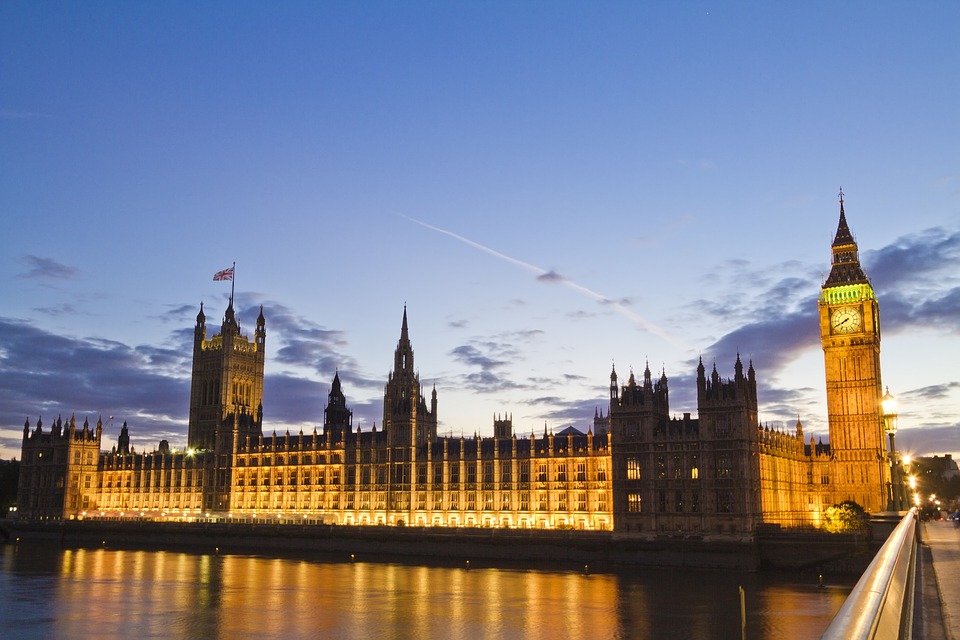
United Kingdom (UK) Prime Minister, Theresa May, has today ‘reluctantly’ announced that Britons could be going to the polls in a general election on June 8, 2017, three years shy of the due date of May 2020.
The UK has a parliamentary system of government. Since 2011, parliamentary elections are fixed for every five years pursuant to the Fixed-Term Parliaments Act. However, early general parliamentary elections may be called before the five year period, inter alia, where two-thirds of the House of Commons (including vacant seats) vote in favour of same. In the UK parliamentary system (also known as the ‘Westminster System’) and in most British-inherited parliamentary systems like those in the Caribbean, the Prime Minister is not directly elected. In practice, though, it is the person who leads the party which wins the majority of seats in the House of Commons who becomes the Prime Minister.
The announcement of an early poll is surprising for two main reasons (1) it comes after months of denials by Mrs. May that she would be calling an early election, and (2) it also comes less than a month after the May Government made the UK’s notification under Article 50 of the Treaty on European Union (Lisbon Treaty) of its intention to withdraw from the EU.
Pros
So what are the upsides? Firstly, it is likely that in light of the disarray of the Jeremy Corbyn-led Labour Party, the Prime Minister is anticipating a stronger Conservative working majority in Parliament, reducing the likelihood of the final Brexit deal being voted against.
The Tories currently have a 17-seat working government majority in the House of Commons following the 2015 poll, which is a slim majority when one considers that there is a total of 650 seats in the House of Commons. After all, what Prime Minister would not want a more comfortable majority at home when facing difficult negotiations with the EU for the next (at least) two years? Prime Minister May said as much in her statement when she noted that “Division in Westminster will risk our ability to make a success of Brexit and it will cause damaging uncertainty and instability to the country”, and warned that “If we do not hold a general election now, [Opposition Party] political game-playing will continue.”
Polls already show a Tory sweep, but let us also remember polls had predicted a “No” win in the Brexit referendum.
Secondly, it should be recalled that Mrs. May became Prime Minister in July 2016 not through leading the party in a general election, but after then Prime Minister David Cameron resigned following his Brexit defeat. If Mrs May leads the Conservative Party to victory in the June 8, 2017 poll, she would have:
(i) won a ‘direct mandate’ from the British people to pursue her own domestic agenda, which frees her from pursuing some of the policies promised by the then Cameron-led government.
(ii) This mandate, she would hope, would help quell the dissenting factions in her own party who disagree with her handling of Brexit thus far.
(ii) She would not be legally required to call another general election until June 2022, by which time the messiness of Brexit would be largely past (hopefully). Recall that Brexit negotiations could be extended up to 4 years, at which time the May Government would not wish to negotiating a final deal with the EU-27 while having to worry about an election at home which could be lost due to an unpopular final deal.
A third pro is likely economic. Although predictions of a British recession following the Brexit vote have not come to past, there is no telling what would happen to the British economy once the Brexit negotiations are underway. It makes more sense for Mrs. May to seek an election now than wait until things take a turn for the negative.
Cons
Firstly, on the flipside, calling a snap election after having made the Brexit notification and ahead of the negotiations with the Europeans risks adding even more uncertainty to an already uncertain political climate.
Secondly, although polls favour a Tory win, what happens if the polls are wrong and the Tories lose to an anti-Brexit Labour? Or what if Labour and the Liberal Democrats expand their number of seats, further reducing the already slim Tory majority?
Thirdly, she risks dealing with ‘voter fatigue’.
Calling the election at this time is a risky move but one, which like all high risks, could have big rewards if the May-led Tories win and expand their mandate. In anticipation of a Tory win, markets took the news of the snap election quite enthusiastically. Sterling appreciated against the US dollar to 1.26. However, it is also potentially a big gamble and the decision to hold the poll after triggering Article 50 is curious. It will be up to British voters to decide whether to reward or reject the gamble.
What is next?
When the House of Commons meets, they will need to deliberate and vote (as required under the Fixed-Term Parliaments Act) on whether they are in favour of an early election. A two-thirds majority will be needed. For his part, Labour leader Mr. Corbyn has supported the decision to go to the polls in his statement released on his official Facebook page following the Prime Minister’s announcement.
For Prime Minister May’s full statement, please see here.
Alicia Nicholls, B.Sc., M.Sc., LL.B., is a trade and development consultant with a keen interest in sustainable development, international law and trade. You can also read more of her commentaries and follow her on Twitter @LicyLaw.
 Caribbean Trade Law and Development