Please see the link to the online version of my latest piece in IFC Review’s Economic Review entitled “Why FATF’s Workstream On ‘Unintended Consequences’ Matters To IFCs” for IFC Review. It can be accessed here.
Tag: AML/CFT
-

COVID-19: Side Effects on the World
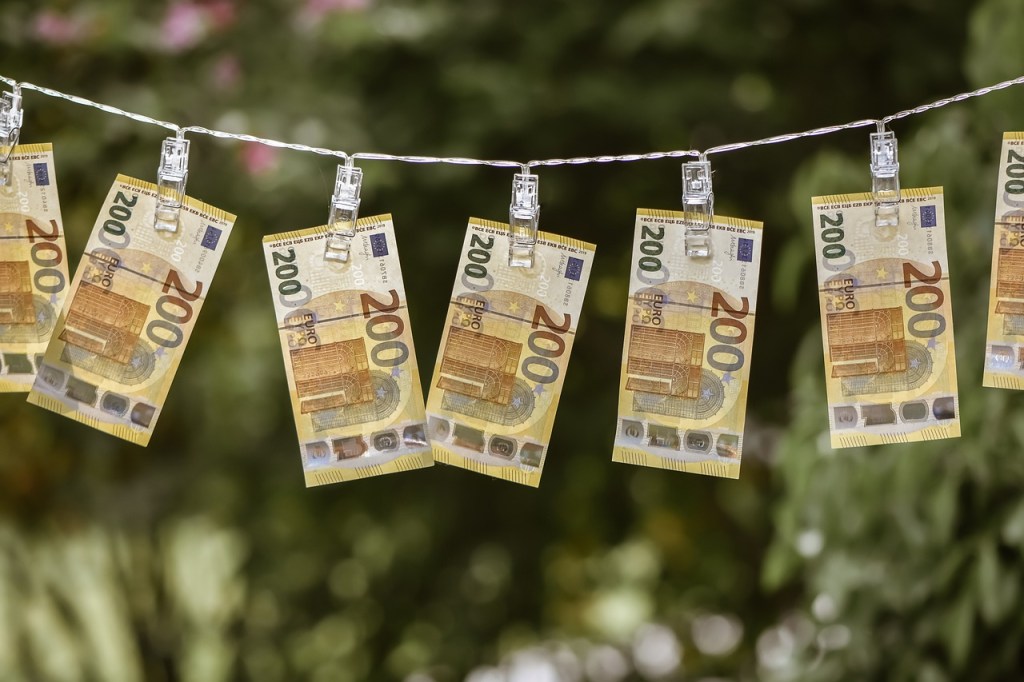
Image by Alexandra_Koch from Pixabay
Renaldo Weekes, Guest Contributor

Renaldo Weekes, Guest Contributor COVID-19 has been characterised by the disruption of many systems and procedures that the world uses to conduct business and everyday life. It follows, then, that the global economy took a severe hit when the virus spread across the world and forced many countries to close their borders and businesses to halt or slow their operations. Many began to ponder how countries, especially Small Open Economies (SOEs), would survive. Now that a year has passed since the start of the pandemic, many are eager to return to the life we once had. Though this is possible with the availability of vaccines, there is no doubt that COVID-19 has left a scar on the world that may never be healed. In assessing this, we must consider the ways in which trade is impacted. Namely, through scams and Anti-Money Laundering (AML), tourism and immigration, and the acceleration of technological trends.
Scams and Anti-Money Laundering
Scams are schemes used to swindle money out of unsuspecting persons. The money gained from scams are laundered through the bank system in order to legitimize it. AML seeks to prevent the act of laundering money. In the context of the current COVID-19 pandemic, government agencies such as the Federal Trade Commission (FTC) have warned that fraudsters are sending phishing emails, posing as government agencies promising to provide aid in exchange for access to bank accounts.
As many countries and businesses are slow to recover from the pandemic, many persons remain desperate and vulnerable to scammers who continue to exploit the situation. In light of the increase in scam activity at a time when Governments are hyper focused on providing relief, it is imperative that AML procedures are enforced to ensure that fraudsters do not slip by. National Public Radio (NPR) in the United States (US) reported that so many business requested assistance that the government could not properly vet who actually needed assistance and thus, many fraudsters slipped by. How does this relate to trade?
Trade is driven by businesses and individuals located in different countries buying from or selling to each other. AML procedures can persuade persons seeking to do business in other countries. They indicate a jurisdiction’s commitment to stopping money laundering which can be used for things such as acts such as terrorism. Persons must be sure that their assets are safe. Scammers’ abilities to continually slip through the cracks during this crisis unscathed may serve as an indication of weak enforcement of AML procedures. Reviews of internal procedures must be prioritized. This issue is more likely to affect countries with an already undesirable AML rating, especially those that may have had the unfortunate privilege of being included on lists such as the European Union’s (EU) list of non-cooperative jurisdictions. Such lists can restrict foreign investment which is especially important to SOEs.
Tourism and Immigration
Tourism and immigration are two aspects of trade that are sometimes overlooked. Tourism is only associated with vacationing families and immigration associated with persons moving from one country to another permanently. However, there is more to these two areas. Tourism and immigration are predicated on the movement of people across borders and the pandemic has hindered this significantly, but how does this affect trade? We will consider tourism first. Tourism is defined by the UNWTO as “a social, cultural and economic phenomenon which entails the movement of people to countries or places outside their usual environment for personal or business/professional purposes.” It “has to do with their activities” which involves “tourism expenditure.” This definition notes that tourists travel for business, and contribute to expenditure. A paper entitled ‘Tourism and Trade: A Global Agenda for Sustainable Development’ notes that tourism counts as an export for the destination country and import for the tourists country of origin.
Tourism expenditure directly involves several companies such as hotels, travel agencies and tour companies, and self-employed persons who focus on tourists. Indirectly, tourism involves companies that provide services to the aforementioned companies. Part of their success depends on the success of those directly impacted by tourism. It is no secret that tourism is major source of revenue for SOEs, especially those in the Caribbean. A decline in a major revenue earner for SOEs counts toward a decrease in their exports and leads to the disruption of the value chains that exist between companies that are involved in tourism.
In addition to this, tourists aid building the brand of a country. Not only the for the sake of leisure but for the sake of investments. Each product they return home with, review of services and other infrastructure gives insight into the country. Tourists themselves can turn into possible investors. Being physically in a country provides experiences that online-only services cannot provide.
With this coming to a sudden halt during 2020 and some countries struggling to fully reopen, it remains a struggle to regain ground for those that rely on tourism. Though the distribution of vaccines seems promising, there are reports of a third wave of the pandemic in some parts of the world. This third wave will likely result in the reinstatement of lockdowns which will further hinder the regrowth of tourism. The institution of a vaccine passport is another hindrance as those unable to receive the vaccine will not be able to travel. This is especially for those who live in relatively poor countries that must rely on the COVAX facility and the generosity of wealthier nations for vaccine doses.
Immigration
Immigration, being similar to tourism in terms of the movement of people, is affected in many of the same ways as tourism. Closed borders and the institution of a vaccine passport limit rates of tourism and immigration alike. This notwithstanding, immigration affects trade and concomitant supply links in other in its own ways. Firstly, immigrants add to the number of workers within a country and this increases the capacity of businesses and investment since there would be, in theory, more productivity. Added to this is the fact that immigrants are willing to do jobs that natural born citizens of a country may not be willing to do. For example, immigrants in America perform jobs that native born Americans opt out of. This being the case, immigrants contribute greatly to the export of commodities such as agriculture as this sector is likely to be filled with immigrant workers.
Secondly, immigrants forge links to their home country in their destination country. Immigrants have family and friends in their home country that they send remittances and other products to. In turn, they import products from their home country that may not be otherwise available in their new home. This diasporic link contributes to businesses that specially target immigrants. Recognizing the contributions that immigrants make to both their home country and their resident country, any downturn in immigration can hinder the growth of these trade links.
Acceleration of technological trends
Before the pandemic began, certain practices within the global economy were trending either upward or downward. One such practice that was trending upward was the reliance on technology. The worldwide spread of COVID has pushed a work from home initiative that has made technology more of a necessity in our lives. Many businesses and governments were forced to have more online presence and reshape their operations to have more technological focus. The benefits of this include more fluidity in logistics and operations as there would be less administrative overhead. This translates to better trade fluidity since efficiency would be increased. This is especially important for SOEs that heavily rely on trade. They must have a state of the art customs system that facilitates fluid importation and exportation that serve as the lifeline of the country.
Conclusion
While most persons are concerned with the side effects of the coronavirus on the body, the pandemic itself will prove to have variety of side effects on the global economy at large. It may have been obvious to the majority of persons that the world would have been forced to change as result of a pandemic that has pushed the boundaries of our systems and made reconsider things once considered impossible. However, some persons may not have considered the specific ways in which the world would be changed, especially international trade. In light of increasing scams related directly the pandemic, the current limits placed on tourism and immigration, and the acceleration of trends that were already in place, it is imperative that persons be ready for the stresses and permanent changes that are in place or will be put in place as we prepare to leave COVID behind once and for all and rebuild our society and economy.
Renaldo Weekes is a holder of a BSc. (Sociology and Law) who observes international affairs from his humble, small island home. He has keen interest in how countries try to maneuver across the international political and legal stage.
The views and opinions expressed herein are solely those of the guest author and are not necessarily representative of those of the Caribbean Trade Law & Development Blog.
SOURCES
FEDERAL TRADE COMMISSION WARNING – https://www.ftc.gov/news-events/blogs/business-blog/2021/01/business-owners-latest-covid-scam-directed-you
TOURISM DEFINITION – https://www.unwto.org/glossary-tourism-terms
TOURISM AS TRADE – https://www.intracen.org/uploadedFiles/intracenorg/Content/Publications/Tourism_and_Trade__low%20res_2014-2015-335.pdf
DO IMMIGRANTS STEAL JOBS? – https://www.brookings.edu/blog/brookings-now/2017/08/24/do-immigrants-steal-jobs-from-american-workers/
-
Blacklisting discussed at CARICOM Inter-Sessional Meeting
Image by angelo luca iannaccone from Pixabay
Alicia Nicholls
The arbitrary inclusion by the European Union (EU) of some Caribbean Community (CARICOM) Member States on its EU-wide blacklists for tax and anti-money laundering/countering the financing of terrorism (AML/CFT) purposes ranks high among several pressing issues occuping the minds of regional leaders when they meet over the next two days. The Thirty-Second (32nd) Inter-Sessional Meeting of CARICOM Heads of Government kicked off today, Wednesday February 24, 2021. The virtual meeting is being chaired by incoming Chairman of Conference, Dr. the Hon. Keith Rowley, Prime Minister of Trinidad & Tobago.
At the Opening Session held today, outgoing Chairman of Conference, Dr. the Hon. Ralph Gonsalves, Prime Minister of St. Vincent & the Grenadines, strongly condemned the EU’s inclusion of Dominica on its revised list of non-cooperative jurisdictions for tax purposes and its lack of a consultative approach in this exercise. Barbados was removed from this revised tax blacklist and placed on the grey list temporarily, pending its supplemental review by the Global Forum of the Organization for Economic Cooperation and Development (OECD). However, it should be noted that Barbados remains on the EU’s updated list of high risk third jurisdictions with strategic AML/CFT deficiencies released in May 2020 and entering into force October of that year.
Indeed, the blacklisting situation is a longstanding bugbear in the otherwise strong EU-CARICOM relationship, and compounded this time by the poor timing of the release of these revised lists in the middle of a pandemic. A jurisdiction’s inclusion on such a list not only has implications for how transactions originating from or involving individuals or entities from such jurisdictions are scrutinised by financial institutions, but can have implications for that jurisdiction’s ability to both attract and retain foreign investment. It should be borne in mind that Caribbean countries can neither recover nor build resilience on public revenue alone, but will also need private foreign capital injections, such as through foreign direct investment (FDI) inflows.
Indeed, Caribbean countries are among the most severely affected by the COVID-19 pandemic. Most are tourism-dependent economies, which have already suffered significant declines in revenue and job losses due to the reduction, and at one point, sudden stop in tourism arrivals resulting from both national and international COVID-19 containment and mitigation strategies. The EU’s inclusion of Dominica on its list of non-cooperative tax jurisdictions is particularly worrying given that country’s utter devastation by category five Hurricane Maria in 2017 and from which it is still rebuilding and recovering.
COVID-19 will also be a major theme in the two-day discussions. Lamenting the “loss of lives and livelihoods” caused by the pandemic, CARICOM Secretary-General Ambassador Irwin Larocque, however, revealed that CARICOM was taking steps to devise strategies for a resilient recovery. Over the coming days, the Heads of Government would be considering, inter alia, proposals on revivng the tourism industry, agriculture, advancing implementation of the CARICOM Single Market & Economy (CSME) and addressing fiscal challenges. Ambassador Larocque further noted that social partners will share their perspectives on the way forward.
Both Secretary-General Larocque and Chairman Rowley reiterated CARICOM’s call for a global summit to address the equitable access to vaccines, and also highlighted how instances of south-south cooperation in vaccine procurement have assisted the region. The Secretary-General noted that CARICOM has signed on to the African Medical Supplies Platform and the African Union has graciously provided 1.5 million doses of vaccines to CARICOM which they received through their procurement arrangement. These, he noted, will supplement those to be received under the COVAX Facility. The Secretary General also thanked the Governments of Barbados and Dominica for sharing with other Member States vaccines they had received as a gift from the Government of India.
On the basis of income per capita, many CARICOM countries are unable to qualify for most types of concessional financing from multilateral lending institutions, an especially grave situation for fiscally-constrained countries and which already generally have high debt to GDP ratios. In his address as incoming chairman, Dr. Rowley again appealed on behalf of CARICOM for a broadening of existing vulnerability indices to facilitate greater access by SIDS to finance their recovery and to build resilience.
Alicia Nicholls, B.Sc., M.Sc., LL.B. is a trade and development consultant with a keen interest in sustainable development, international law and trade. All views herein expressed are her personal views and should not be attributed to any institution with which she may from time to time be affiliated. You can read more of her commentaries and follow her on Twitter @LicyLaw.
-
EU Blacklist among issues discussed by OACPS Ministers at meeting
Alicia Nicholls
A resolution on the European Union (EU)’s List of High Risk Jurisdictions for Anti-Money Laundering and Countering the Financing of Terrorism (AML/CFT) was among the outcomes agreed to by Ministers of the Organisation of African, Caribbean and Pacific States (OACPS) at their 111th Council of Ministers session held virtually on 14, 15 and 17 December 2020.
The EU’s updated List of High Risk Jurisdictions for AML/CFT purposes in force from October 1, 2020 includes several ACP states. Note that this list is different from the EU’s list of non-cooperative tax jurisdictions.
Expressing concern about the list, the Council condemned the “unilateral, non-transparent and discriminatory approach” adopted by the EU in publishing the list especially in light of the socio-economic challenges wrought on the listed countries by the COVID-19 pandemic. The Council therefore “recommends a programme of action to effect a reasonable comprise in response to the situation”. It is assumed that details of this programme of action will be worked out at a later date.
The meeting was chaired by H.E. Prof. Palamagamba John Aidan Mwaluko Kabudi, Minister for Foreign Affairs and East African Co-operation, United Republic of Tanzania, and President-in-Office of the OACPS Council of Ministers.
The full paragraph on the EU blacklist from the OACPS press release is reproduced below:
The inclusion of Member States of the OACPS on the EU’s List of Third Countries at High Risk for Anti-Money Laundering and the Financing of Counter Terrorism (AML/CFT) continues to be a contentious issue for the OACPS despite the exchange of letters between the OACPS and the relevant EU institutions. In light of the existing situation, and recognizing that the fight against money laundering and the financing of terrorism is an immense global challenge and of equal concern to the OACPS as it is to the EU, the Council expressed its deep concern for the unilateral, non-transparent and discriminatory approach adopted by the EU in publishing the list of “small developing countries”, especially with respect to the additional socio-economic challenges caused by the COVID-19 pandemic, and recommends a programme of action to effect a reasonable compromise in response to the situation.
The Council of Ministers also endorsed the Political Agreement of the ACP-EU Partnership Agreement concluded on December 3, 2020. The new partnership agreement, which replaces the Cotonou Agreement, will be signed in Apia, Samoa in January 2021. They also approved decisions for restructuring the OACPS, as well as a resolution in support of action on fisheries subsidies.
According to the press release, the signed list of decisions and resolutions will be posted on the OACPS’ website at a later date.
Read the full OACPS statement here.
Alicia Nicholls, B.Sc., M.Sc., LL.B. is a trade and development consultant with a keen interest in sustainable development, international law and trade. All views herein expressed are her personal views and should not be attributed to any institution with which she may from time to time be affiliated. You can read more of her commentaries and follow her on Twitter @LicyLaw.
 Caribbean Trade Law and Development
You must be logged in to post a comment.