Tag: Brexit

  • Brexit White Paper Released by UK Government

    Brexit White Paper Released by UK Government

    Alicia Nicholls

    The Theresa May Government has today released its Brexit White Paper . The official policy document, which is entitled “The United Kingdom’s Exit from and new partnership with the European Union“, was introduced into Parliament today by Brexit Secretary, David Davis.

    The House of Commons yesterday voted overwhelmingly for the Brexit Bill to proceed to the second parliamentary stage – the Committee Stage where it will be subjected to increased scrutiny by Members of Parliament next week. Already, a number of amendments have been tabled for discussion. However, once the bill becomes law, the Government will have the legal authority to make the UK’s notification of withdrawal from the EU under Article 50 of the Treaty on European Union (Lisbon Treaty).

    Setting out the Government’s strategy for its expected upcoming exit negotiations with the EU, the White Paper mostly elaborates on the 12 priorities which had been outlined by Mrs. May in her major Brexit address delivered at Lancaster House last month. The paper reiterated that the objective was not only to build a new partnership with Europe, but to build a “stronger, fairer, more Global Britain”.

    Among the priorities identified in the Brexit Strategy are taking control of its own laws, controlling immigration, pursuing a free trade and new customs union agreement with the EU, securing rights of EU nationals in the UK and for UK nationals in the EU, securing new trade agreements with other countries, inter alia. The Plan has received mixed reviews from parliamentarians.

    The full White Paper may be accessed here.

    Alicia Nicholls, B.Sc., M.Sc., LL.B., is a trade and development consultant with a keen interest in sustainable development, international law and trade. You can also read more of her commentaries and follow her on Twitter @LicyLaw.


  • UK-US Trade Inquiry launched by UK Parliament’s International Trade Committee

    UK-US Trade Inquiry launched by UK Parliament’s International Trade Committee

    Photo source: Pixabay

    Alicia Nicholls

    The House of Commons’ International Trade Committee is accepting submissions from interested organisations and individuals pursuant to an inquiry it has launched into UK-US trade relations. According to the official press release on the Committee’s website, the inquiry will:

    • examine the potential for a UK-US trade agreement
    • the opportunities and challenges any agreement might present
    • the implications for the production and sale of goods and services on both sides of the Atlantic
    • make recommendations to the Government on how it should approach trade relations with the US.

    The Committee is inviting interested organisations or individuals to submit written evidence to the Committee via the inquiry page in accordance with the guidelines provided. The deadline for written submissions is Monday 27 February 2017.

    For further information, please see the official page of the Committee.


    Alicia Nicholls, B.Sc., M.Sc., LL.B., is a trade and development consultant with a keen interest in sustainable development, international law and trade. You can also read more of her commentaries and follow her on Twitter @LicyLaw.
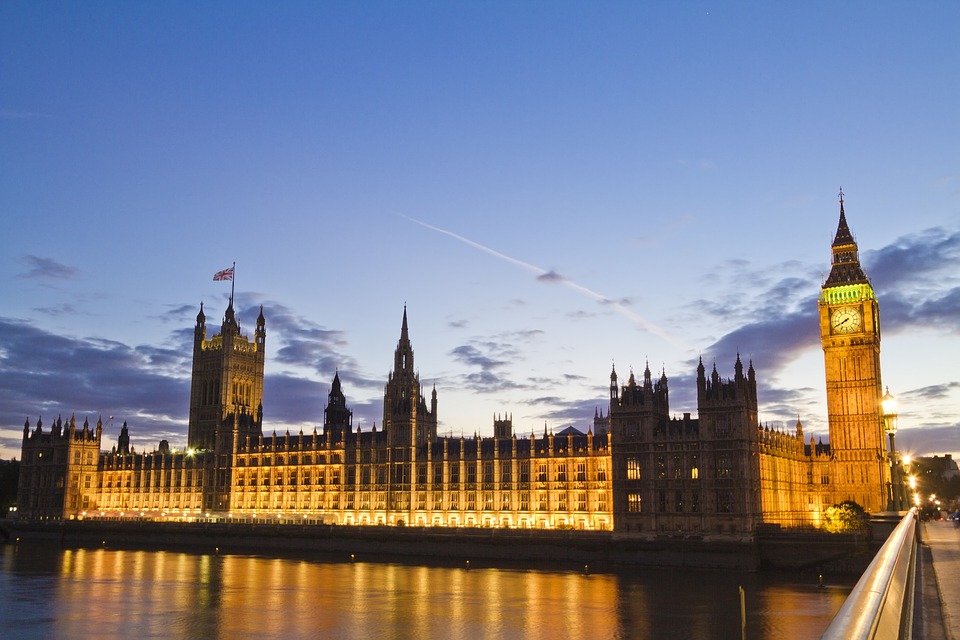


  • Brexit Bill Clears First Parliamentary Hurdle

    Brexit Bill Clears First Parliamentary Hurdle

    Photo credit: Pixabay

    Alicia Nicholls

    The Theresa May government may have lost its Supreme Court Appeal last month but today the Government’s Brexit bill cleared its first parliamentary hurdle. After fourteen hours of debate spread over two days, the House of Commons voted 498 to 114 in favour of the European Union (Notification of Withdrawal) Bill, a bill to confer power on the Prime Minister to notify the UK’s intention to withdraw from the European Union under Article 50(2) of the Treaty on European Union (Lisbon Treaty).

    Article 50(1) of the Treaty on European Union provides for any member state to decide to withdraw from the EU in accordance with that state’s own constitutional requirements. Last month, the UK Supreme Court, in dismissing an appeal by the UK government, held that a parliamentary vote was required in order for the Brexit process to begin. It should be noted that many of the parliamentarians who voted in favour of the Bill’s advancement had originally supported staying in the EU. However, many felt compelled to put aside personal views in order to give effect to the will of the 52% of British voters who had voted for Brexit. Mrs. May has reportedly indicated that she will publish a White Paper outlining the Government’s Brexit plans.

    So what’s next?

    Today’s House of Commons vote (the second reading) means that the Brexit bill is one step closer to becoming law, and will go to the next stage in the parliamentary process – the Committee Stage. During the committee stage, the Bill will be subjected to more enhanced scrutiny and it is here that any amendments may be made.

    Upon leaving the Committee stage, the bill (whether or not amended) will again be debated and subjected to a final vote in the House of Commons. If the ayes have it, then it will pass to the House of Lords where the process will be repeated. The bill will be referred back to the House of Commons if the Peers make amendments to the bill.

    However, once everything goes smoothly (i.e. there are no further amendments and the peers vote in favour of the bill), the Brexit bill will be sent to the Queen for the royal assent and thereupon will become law. This confers on the May Government the legal authority to make the Article 50 notification which commences the formal withdrawal negotiations with the EU. Mrs. May has indicated the end of March 2017 as her timeline for the notification. She has also promised that she will put the final withdrawal deal to a parliamentary vote.

    The full text of the Brexit bill and further reporting on the UK House of Commons’ vote may be found here.

    Alicia Nicholls, B.Sc., M.Sc., LL.B., is a trade and development consultant with a keen interest in sustainable development, international law and trade. You can also read more of her commentaries and follow her on Twitter @LicyLaw.

  • UK Government Loses Article 50 Brexit Appeal; Parliamentary Vote Needed

    UK Government Loses Article 50 Brexit Appeal; Parliamentary Vote Needed

    Alicia Nicholls

    In its ruling made shortly after 9:30 GMT this morning, the United Kingdom’s Supreme Court by a majority of 8 to 3 dismissed the Government’s appeal against a High Court decision that ruled that the Theresa May-led government must attain parliamentary consent before invoking the EU’s exit clause (Article 50 of the Treaty on European Union – Lisbon Treaty). A second issue which the court was called on to give its ruling upon was whether consultation with the devolved legislatures (e.g: Scotland, Wales, Northern Ireland) was required before Article 50 was triggered.

    In a judgment written by the 8 justices in majority and delivered by Lord Neuberger (President of the Supreme Court), the Court held that section 2 of the European Communities Act of 1972 Act did not allow the Government to trigger Article 50 without parliamentary authority.

    The main reasons for the Court’s decision were, inter alia, as follows:

    • Section 2 of the European Communities Act makes EU law another source of UK law which can override domestic law and will remain so unless and until Parliament decides otherwise.
    • Once the UK leaves the EU and as such is no longer party to the EU treaties, not only will UK domestic law have changed but the rights enjoyed by UK residents granted through EU law will be affected.
    • Under the UK constitution, parliamentary legislation is required for any fundamental changes to the UK’s constitutional arrangements. Withdrawal from the EU treaties would be such a fundamental change as it would cut off the source of EU law. The justices reiterated that there is “a vital difference between variations in UK law resulting from changes in EU law, and variations in UK law resulting from withdrawal from the EU Treaties”.
    • Parliamentary authority is needed because withdrawal from the EU would remove some existing domestic rights of UK citizens.
    • In regards to the June 23rd 2016 referendum, the Court held that “its legal significance is determined by what Parliament included in the statute authorising it, and that statute simply provided for the referendum to be held without specifying the consequences.”

    On the second issue under consideration, the Court unanimously held that the Government is not compelled to consult the devolved Parliaments.

    The Court’s ruling is final and it was a decision which was much more expected than the results of the June 23rd Brexit result which precipitated it. It should be emphasised that this ruling was on the legal question of whether the Government could make the Article 50 notification using its prerogative powers and not on the political question of whether Brexit should occur. It is also one of several legal challenges which have been filed since the Brexit vote decision.

    In brief remarks following the ruling, the Attorney General, Jeremy Wright, said the Government will comply with the ruling. Even before the ruling, the Government had indicated that in case it lost the appeal, it would present a short Brexit bill to minimise the need for lengthy amendments and debate that would jeopardise Prime Minister May’s end of March timeline for making the Article 50 notification. Once the Article 50 notification is received, the UK and EU would have two years to negotiate a withdrawal agreement, with an extension only possible if agreed to. EU countries had indicated that they would not be engaging in any informal negotiations with the UK prior to the latter’s Article 50 notification.

    In her long-awaited  speech last week in which she outlined her 12-point Brexit plan, Mrs. May confirmed that the UK would be pulling out of the single market (a move dubbed a “hard Brexit”) but also indicated that Parliament would be given the chance to vote on the final withdrawal deal negotiated with the EU.

    Alicia Nicholls, B.Sc., M.Sc., LL.B., is a trade and development consultant with a keen interest in sustainable development, international law and trade. You can also read more of her commentaries and follow her on Twitter @LicyLaw.