Tag: Caribbean Basin Initiative

  • USITC Releases latest CBERA Report: Haiti, Barbados & Grenada have highest utilisation rate

    USITC Releases latest CBERA Report: Haiti, Barbados & Grenada have highest utilisation rate

    Alicia Nicholls

    On September 30, 2021, the United States International Trade Commission (USITC) released its latest report on the operation of the Caribbean Basin Economic Recovery Act (CBERA) and its impact on US industries, consumers and on beneficiary countries. Enacted in 1983 and made effective in 1984, the CBERA is one of the constituent acts under the Caribbean Basin Initiative. The CBERA allows the US President to extend to designated beneficiary countries in the Caribbean Basin non-reciprocal and unilateral duty-free or reduced duty access to the US market for a wide range of goods. The CBERA is of indefinite duration in that it has no statutory end date unlike, for instance, the other Acts. The Caribbean Basin Trade Partnership Act (CBTPA) of 2000 extended preferential treatment to textiles and apparels and was most recently renewed in October 2020 until 2030.

    The 17 CBERA beneficiaries in 2020 were as follows: Antigua and Barbuda, Aruba, The Bahamas, Barbados, Belize, British Virgin
    Islands, Curaçao, Dominica, Grenada, Guyana, Haiti, Jamaica, Montserrat, Saint Kitts and Nevis, Saint Lucia, Saint Vincent and the Grenadines, and Trinidad and Tobago. CBTPA beneficiaries (8) in 2020: Barbados, Belize, Guyana, Haiti, Jamaica, Saint Lucia, and Trinidad and Tobago. The Haiti Economic Lift Program (HELP) Act of 2010 and Haiti Hemispheric Opportunity through Partnership Encouragement Act of 2006 and of 2008 (HOPE I & II) provide special preferences for Haiti and were extended in 2015 until 2025.

    The latest CBERA report found that “the impact of the CBERA program on the US economy and industries continued to be small in 2019 and 2020”, which it attributed to the fact that “the value of US imports under the CBERA preference program are a
    small share of total US imports”. Turning to the future effect of the CBERA program on the US economy, including on U.S. domestic industries and US consumers, the report found that the effect ” is likely to remain minimal for most products, given the relatively small volume of imports from CBERA countries that is unlikely to grow substantially”.

    The report highlighted that the top US imports under the CBERA were petroleum oils, methanol, T-shirts of cotton, sweaters of manmade fibers, and polystyrene. The five largest CBERA exporting countries over the reporting period were Trinidad & Tobago, Haiti, Guyana, Jamaica and the Bahamas. However, Haiti, Barbados and Grenada were the beneficiary countries with the highest utilisation rate (94.7%) of the programme. It is noteworthy that Barbados moved from a utilization rate of just 38.2% in 2016 (one of the lowest) to a utilization rate of 94.7% in 2020. US imports under CBERA as a share of total US imports for consumption remained small (only 0.07% in 2020), while US imports from beneficiaries that receive program preferences as a share of total US imports from beneficiary countries were 33.8% in that same year.

    The report may be accessed here.

    Alicia Nicholls, B.Sc., M.Sc., LL.B. is a trade and development consultant with a keen interest in sustainable development, international law and trade. All views herein expressed are her personal views and should not be attributed to any institution with which she may from time to time be affiliated. You can read more of her commentaries and follow her on Twitter @LicyLaw.

  • Caricom SG holds discussions with US Secretary of State

    Caricom SG holds discussions with US Secretary of State

    (CARICOM Secretariat, Turkeyen, Greater Georgetown, Guyana)     Secretary-General of the Caribbean Community (CARICOM) Ambassador Irwin LaRocque had fruitful discussions with United States Secretary of State Mr Michael Pompeo at the CARICOM Secretariat Headquarters, Turkeyen, Guyana on Friday 18 September.

    The discussions included exchanges on the Covid-19 Pandemic and the severe economic fall-out being experienced by CARICOM Member States, the renewal of the Caribbean Basin Trade and Partnership Act (CBPTA), the de-risking of regional banks by US financial institutions and co-operation under the Caribbean Basin Security Initiative (CBSI).

    The Secretary-General took the opportunity to thank Mr Pompeo for the response by him and US Treasury Secretary Mr Steve Mnuchin to the issues raised in a letter to them by the then Chair of the Community, the Honourable Mia Mottley, Prime Minister of Barbados earlier this year. The Community sought US support for initiatives to assist in combatting among other things, the economic fall-out from the pandemic.

    Ambassador LaRocque emphasised the need for CARICOM Member States to have access to concessional development financing which is denied to them due to the criteria applied of GDP per capita and the classification of Member States as middle income in that context. This access, he noted, was critical as the Region sought to emerge from the grave economic crisis brought on by Covid-19 as well as to build resilience to natural disasters.

    The preceding is a press release from the Caricom Secretariat.

  • Witnesses call for renewal of Caribbean Basin Trade Partnership Act at US House Hearing

    Witnesses call for renewal of Caribbean Basin Trade Partnership Act at US House Hearing

    On Thursday, September 10, 2020, the United States (US) House of Representatives’ Ways and Means Committee held a hearing to consider the renewal of the Caribbean Basin Trade Partnership Act (CBTPA), one of the constituent pieces of legislation of the Caribbean Basin Initiative.

    Five witnesses participated in the hearing. They were:

    The Honorable Hervé H. Denis, Ambassador of the Republic of Haiti, the Embassy of the Republic of Haiti

    Mr. Georges Sassine, Board Member and Former President, Association des Industries d’Haïti

    Ms. Lauren Stewart, Regional Program Director, Americas, Solidarity Center

    Ms. Beth Baltzan, Principal, American Phoenix Trade Advisory Services PLLC

    Mr. Jerry Cook, Vice President, Government and Trade Relations, Hanesbrands, Inc

    Written versions of their testimony and the recording of the hearing may be viewed on the official page here.

  • US House to hold Caribbean Basin Trade Partnership (CBTPA) Act Hearing this week

    US House to hold Caribbean Basin Trade Partnership (CBTPA) Act Hearing this week

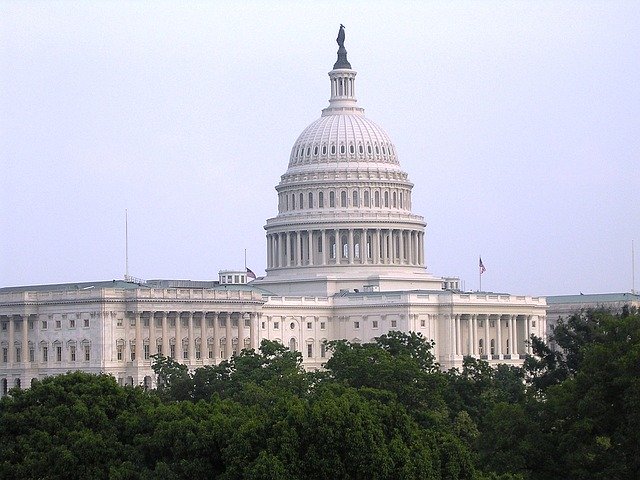
    Photo credit: Image by Phillip Roulain from Pixabay

    Alicia Nicholls

    This week, September 10, the United States (US) House of Representatives’ Ways and Means Committee will hold a hearing to consider the renewal of the Caribbean Basin Trade Partnership Act (CBTPA) which expires at the end of this month, that is, September 30, 2020.

    The CBTPA, which took effect on October 5, 2000, is one of the constituent pieces of legislation of the Caribbean Basin Initiative providing beneficiary Caribbean countries with duty-free access to the US market for a wide range of goods.

    The CBTPA provides expanded preferences for originating goods from Caribbean beneficiary countries beyond what is included in the Caribbean Basin Economic Recovery Act (CBERA). For example, it provides duty-free and quota-free (DFQF) treatment for apparel assembled in CBI countries from US fabrics formed from US yarns and cut in the US. It also provides a ‘regional fabric’ benefit by providing DFQF treatment for
    certain knit apparel made in CBTPA beneficiary countries from fabrics formed in the Caribbean Basin region once that the fabric is formed from US yarns.

    Moreover, it provides ‘NAFTA-parity’, that is, tariff treatment equivalent to that extended to Mexican goods under the North American Free Trade Agreement (NAFTA) (replaced by the US-Mexico-Canada Agreement – USMCA), for certain goods that were not included for duty-free treatment under the CBERA.

    Only a subset of CBERA beneficiaries are eligible for the enhanced benefits under the CBTPA. Several defined political, legal and other criteria restrict the US President in which Caribbean countries or territories could be designated as CBTPA eligible. According to the Thirteenth Report to Congress on the Operation of the Caribbean Basin Economic Recovery Act, the current CBTPA-eligible countries and territories are Barbados, Belize, Curacao, Guyana, Haiti, Jamaica, St. Lucia and Trinidad & Tobago.

    The CBTPA has been renewed by Congress several times. A further CBTPA renewal will ensure that those exporters in the Caribbean which rely on this preferential access to the US market will continue to do so. According to the Thirteenth Report to Congress on the Operation of the Caribbean Basin Economic Recovery Act, the US imported $US 344.4 million in goods under the CBTPA in 2018, a 0.2% increase from in 2017. Total US imports under the entire CBI programme were $US 1,031.3 million in 2018, while total US imports from CBI countries (including non-CBI programme imports) were US$6,020.1 million that same year.

    The hearing on the CBTPA renewal will be held remotely and can be watched via live stream on September 10 here.

    Alicia Nicholls, B.Sc., M.Sc., LL.B is an international trade and development specialist. Read more of her commentaries here or follow her on Twitter @licylaw. All views expressed herein are her personal views and do not necessarily reflect the views of any institution or entity with which she may from time to time be affiliated.