Tag: caribbean community

  • CARICOM at 50: Some Reflections on Trade for Sustainable Regional Development

    CARICOM at 50: Some Reflections on Trade for Sustainable Regional Development

    Alicia Nicholls

    This week I had the opportunity to moderate two panels which on the surface dealt with different topics, but in fact, had a central underlying theme. That theme, I argue, is that of how Caribbean Community (CARICOM) member States could better use trade and their trading relationships to meet their sustainable development imperatives. Read any of the speeches of our Caribbean statesmen or the writings of Caribbean scholarly giants over the years and you will see that the trade and development problematique has occupied the regional development discourse for decades. The topic bears continued significance as CARICOM celebrates its fiftieth year in existence. In this short article, I offer some cursory reflections on trade as an engine for sustainable development as we celebrate this important CARICOM milestone amidst a panoply of trade and development challenges facing not only our region but the global community.

    CARICOM Heads meet this week (July 3-5) in Trinidad & Tobago for the 45th CARICOM Heads of Government meeting. Formed in 1973 and now comprising 15 member States and 5 Associate Members, CARICOM is a regional inter-governmental organization and regional integration movement built on four pillars. One of those four pillars is economic integration. While trade fits under this pillar, in reality, trade also touches and concerns the three other pillars: human and social development, foreign policy coordination, and security which was added later. Trade is not an end in itself. It is really to be an engine for promoting human and social development through creating meaningful jobs and opportunities for entrepreneurship and knowledge transfer, for example. Under foreign policy coordination, commercial diplomacy is becoming an essential part of the foreign policy imperative of countries, including CARICOM Small Island Developing States (SIDS). Finally, trade in illicit goods such as narcotics, illegal firearms and endangered species are among the most pressing security issues facing the Caribbean region. In essence, trade impacts and is impacted by all four pillars underpinning CARICOM. Indeed, trade, even more so now, cannot be viewed in a silo given its increasing intersection with development issues, such as human rights, the environment, climate change and public health.

    Two key issues with which CARICOM continues to grapple as it celebrates its 50th year in existence is first, how can CARICOM promote greater intra-regional trade for sustainable development. Second, how can it meaningfully expand its trade with both traditional and non-traditional external trading partners in a mutually beneficial and sustainable manner?

    The CARICOM Single Market and Economy (CSME) envisions the creation of a single economic space. By removing barriers to the flow of each other’s goods, services, skilled nationals and allowing the right of CARICOM nationals to establish businesses in each other’s markets, it is expected that there would be greater intra-regional trade and investment, tourism and the like. However, despite the importance of the CARICOM market for some countries like Barbados, intra-regional trade as a percentage of CARICOM’s total trade with the world remains low and has declined over time due to many factors, including, but not limited to, remaining barriers which still impinge on the ability to export in a frictionless manner, as well as high costs of transport and other logistical challenges. Intra-regional transportation, including travel for business and leisure, remains a bug-bear due to high airfares and taxes, and let us face it, it is even more frustrating now in the post-COVID era due to the LIAT fiasco. The introduction of intra-regional flights by UK-carrier Virgin Atlantic is an encouraging development and I truly hope that at least in the short term this could be a partial solution to this vexing problem.

    Turning to extra-regional trade, most CARICOM countries, with the notable exception of Trinidad & Tobago which enjoys a trade surplus, are net-importing countries, that is to say, their imports exceed their exports. The region’s exports have in general been underperforming and remain highly concentrated in only a narrow range of goods and services despite attempts at diversification. Guyana has discovered oil and is developing a booming oil/gas industry but has to ensure it does not fall victim to ‘Dutch Disease’. Much of this declining competitiveness is due to high costs of production in the region, lack of economies of scale, loss of preferences and preference erosion in its main export markets which has led to declining competitiveness of Caribbean countries’ exports vis-à-vis exports of other countries.

    CARICOM presently has free trade agreements with the European Union, the United Kingdom, the Dominican Republic and Costa Rica. It has partial scope agreements with Colombia, Cuba and Venezuela. Not many publicly available studies exist analysing CARICOM’s trade performance under these agreements. However, a 2015 study by McClean and Khadan on the performance of CARICOM’s extra-regional agreements show the private sector’s limited utilization of the preferences under CARICOM’s trade agreements and arrangements. This is despite the many sensitization workshops, export promotion programmes and other great assistance offered by regional business support organisations (BSOs). Perhaps a more recent study is needed to see if this is still the case.

    Usually where more contemporary reports exist in the public sphere, such as the latest Ex Post Evaluation of the CARIFORUM-EU EPA, these are usually reports done by our trading partners and not our region itself. For instance, the latest  biennial CBERA Report published by the Office of the US Trade Representative (USTR) in 2022 showed a marked increase in the percentage of some CBI-beneficiary countries’ imports into the US under the various components of the CBI programme. By contrast, only some 4% of Caribbean imports into Canada are under CARIBCAN preferences according to StatCan data.

    I do not purport to have a magic wand to solve either of these issues and neither am I implying that these issues are easy to address or that they are not being actively worked on by the hard-working staff of the CARICOM secretariat, the BSOs and the various trade ministries across the region. Indeed, having spent two weeks in Geneva in May-June this year as part of an annual study tour offered by the UWI Shridath Ramphal Centre for students of the Masters in International Trade Policy (MITP) programme, I was able to see firsthand the hard work of our missions there, often with limited staff and resources. Perhaps it is time for CARICOM to more seriously consider having joint missions, similar to the OECS in key capitals, and pool their scarce financial and human resources. Additionally, there are clear initiatives underfoot, supported by commercial diplomacy, at expanding trade with non-traditional partners in China, Africa, Latin America and the Middle East, for example and deepening ties with the Caribbean diaspora, especially in the US, UK/Europe and Canada. Barbados’ recent opening of embassies in Ghana, Kenya and a consulate in Rwanda are examples of this outreach to non-traditional markets. Promoting digital transformation of regional economies is also another issue actively being worked on at both the regional and national levels, including how digitalization could improve the ease of doing business across the region, the role of digital technologies in building competitiveness, inter alia.

    What I am offering in this article are some of my personal reflections as a trade specialist who firmly believes, like most other regional figures, that expanding intra-regional trade and diversifying CARICOM’s trading relationships are necessary in helping the region meet not just the 17 sustainable development goals (SDGs) under the United Nations (UN) 2030 Agenda for Sustainable Development but its wider development imperatives. Chief among these imperatives are reducing poverty and creating meaningful jobs for our populations (especially the youth), building resilience in an increasingly polycrisis world to climate change and other natural disasters and other shocks, and combatting the challenges of non-communicable diseases (NCDs) which are severe threats to the region’s prosperity.

    With regard to extra-regional trade performance, CARICOM desperately needs to review its current trade agreements and evaluate their sustainable development impact. This means improving the data available on trade under these agreements. Have these agreements really contributed to job creation or expanded investment? This evaluation process is likely on-going but there is very little information publicly shared about the status or findings from such analyses. The point about evaluation of our trade agreements was certainly underscored in one of the panels I moderated at the CIC/CCI “Optimising the Canada-Caribbean Trade Relationship” webinar on June 29 with a key takeaway being the need to consider whether the current trade cooperation framework between Canada and the Caribbean was fit for the purpose of twenty-first century trade and development realities, where sustainability issues are increasingly recognized as being intersected with trade.

    This evaluation process must include CARICOM member States’ network of international investment agreements (IIAs), particularly the older bilateral investment treaties (BITs), which, due to their broad and vague investor protection provisions, are unfit for the purpose of attracting investment for sustainable development. As I argued in a recent policy brief published by the UWI’s Shridath Ramphal Centre, such outdated IIAs could open up the region to legal exposure from foreign investor claims as the region seeks to step up its climate action.

    I also think that there is still too much disconnect between CARICOM and the ordinary citizen, despite the excellent CARICOM youth ambassadors programme, the increasing public awareness campaigns, greater social media presence by the CARICOM Secretariat and to some extent, greater mainstreaming of teaching about CARICOM in schools. I think in many ways CARICOM does not do enough to tout its successes and how its work is beneficial to the ordinary CARICOM citizen. This could be focused on a lot more in its public awareness campaigns. Additionally, one of the things I would love to see is a CARICOM Young Professionals Programme, similar to what exists in other organisations, as well as greater opportunities for secondary school and university students to intern within CARICOM institutions.

    CARICOM has released a 50th Anniversary celebrations calendar of activities. As many countries in the region will be observing a one-off public holiday in celebration of CARICOM’s 50th anniversary, it would be good if regional airlines would consider the feasibility of offering specials on inter-island routes in celebration of this important milestone. Doing such would be a win-win as it would not only make it cheaper for persons wishing travel to other CARICOM islands for these celebrations or on vacation, but also help to foster intra-regional tourism and people-to-people connection, key ingredients for promoting a common Community spirit and connection.

    As trade and public health law expert Nicole Foster sagely opined in her presentation at the Public Health Law forum held June 30, it is imperative for ministries of trade and ministries of health, as well as other ministries to talk to each other to ensure policy coherence. This includes greater data sharing among ministries to ensure trade policy is being made based on actual empirical evidence and that trade policies support and do not undermine public health objectives. This latter point about empirical evidence also came up in a Barbados Coalition of Services Industries (BCSI) Breakfast Forum I moderated earlier this week. Data is key to effective trade policy making for development. As such, it is important for the private sector to recognize the need to respond to surveys in a timely and accurate manner and share data not only so governments have an accurate picture of economic activity, but also what challenges and barriers businesses face both in doing business domestically and when exporting. Governments themselves also need to improve access to data, including sharing data with the academic community whose research could be beneficial to both governments and the private sector. There needs to be deeper cooperation among government, business and academia if CARICOM is truly to prosper.

    I conclude by imploring that CARICOM’s celebration of its fiftieth year of existence is an achievement. We, as lifelong ‘students’ of international politics know that CARICOM is just one (albeit an important one) chapter in a much longer history of regional integration. There have been failures and disappointments, but there have also been many triumphs. Certainly, let us use this occasion of CARICOM’s fiftieth anniversary as an opportunity for deserved celebration. But it should also be a moment for considered reflection of the lessons to be learnt from the past half a century of CARICOM’s existence and the lengthier history of the regional integration process, including the Caribbean Free Trade Association (CARIFTA) and the West Indies Federation that preceded it. Let us reflect on how we can use our trade policy to operationalize the Bridgetown Declaration on NCDs and Mental Health, for example, or how we can work more cohesively as a region to push for the creation of a more equitable international financial architecture as envisioned by the Bridgetown Initiative which has been endorsed by the Community. Let us use the lessons learnt from the past 50 years and beyond to craft a CARICOM trade policy that is truly fit for our contemporary development realities and meaningfully promotes both intra-regional and extra-regional trade for sustainable development, especially for the youth who are to inherit and continue this regional integration movement. Happy 50th Anniversary, CARICOM!

    Alicia Nicholls, B.Sc., M.Sc., LL.B. is an international trade and development consultant and founder of the Caribbean Trade Law & Development Blog www.caribbeantradelaw.com.

  • Communique from 43rd Regular Meeting of CARICOM HoGs

    Communique from 43rd Regular Meeting of CARICOM HoGs

    CARICOM Secretariat: The Forty-Third Regular Meeting of the Conference of Heads of Government of the Caribbean Community (CARICOM) was held from 3-5 July 2022.  Chair of the Conference, the President of Suriname, His Excellency Chandrikapersad Santokhi presided over the proceedings.
    Other Members of the Conference in attendance were: Prime Minister of Antigua and Barbuda, the Honourable Gaston Browne; Prime Minister of The Bahamas, Honourable Philip Davis; Prime Minister of Barbados, Honourable Mia Amor Mottley, Q.C; MP; Prime Minister of Belize, Honourable John Briceño;  Prime Minister of Dominica, Honourable Roosevelt Skerrit; Prime Minister of Grenada, Honourable Dickon Mitchell; President of Guyana, His Excellency Mohamed Irfaan Ali; Prime Minister of Haiti, the Honourable Ariel Henry; Premier of Montserrat,  Honourable Joseph Farrell; Prime Minister of Saint Lucia, Honourable Philip Pierre; the Prime Minister of St. Vincent and the Grenadines, Dr the Honourable Ralph Gonsalves; and the Prime Minister of Trinidad and Tobago, Dr the Honourable Keith Rowley.

    Jamaica was represented by Senator the Hon. Kamina Johnson-Smith Minister of Foreign Affairs and Foreign Trade; St Kitts and Nevis was represented by Ambassador Lionel Sydney Osborne, Ambassador to CARICOM.

    Associate Members in attendance were: Bermuda represented by Hon. Walter H. Roban Deputy Premier and Minister of Home Affairs; British Virgin Islands represented by Premier, Honourable Dr. Natalio Wheatley; and the Turks and Caicos Islands represented by Premier Honourable Charles Misick.

    OPENING CEREMONY
    The Opening Ceremony was addressed by the Chair of Conference His Excellency Chandrikapersad Santokhi, outgoing Chair Honourable John Briceño; Prime Minister of The Bahamas, Honourable Philip Davis; Prime Minister of Grenada, Honourable Dickon Mitchell; Prime Minister of Saint Lucia, Honourable Philip Pierre; Secretary-General of the Caribbean Community, Her Excellency Carla Barnett, and the Secretary-General of the United Nations, His Excellency António Guterres.

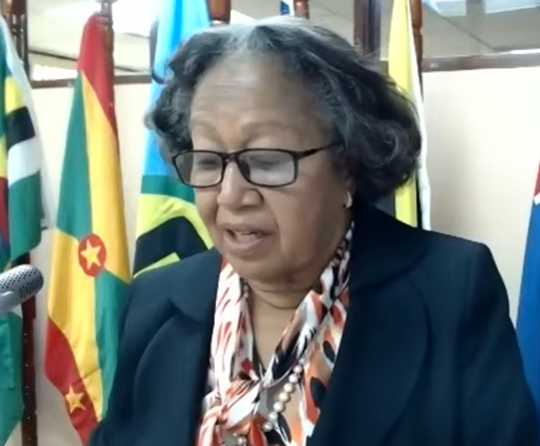
    Secretary-General Barnett underscored the need for the work of the Community to make a difference in the lives of its citizens. She said that the Conference was meeting at a time of severe global crisis in three vital areas, namely, food, energy, and finance.

    “Addressing solutions for our Region requires collective intellect and will to act together. This task is not beyond us, as we have proven time and again. Let us, therefore, once more unto the breach and make a difference in the lives of our people,” Secretary-General Barnett added.

    The United Nations Secretary-General said the meeting came at a moment of maximum peril for people and planet alike. He noted that CARICOM Member States were victims of the myth that middle-income countries did not need concessional financial support – a need that completely disregarded vulnerability to external shocks.

    He pointed to three areas of concern for consideration. He identified climate action that matches the scale and urgency of the crisis; reform of the morally bankrupt global financial system and the fight against the COVID-19 pandemic.

    The Prime Minister of The Bahamas said it was striking that so many of the Community’s most urgent struggles derived in great part from external causes. He noted that although responsibility for making the individual countries stronger and more resilient to the impact of external events lay within each government, the history of the Region made it clear that “we can have a greater impact if we also join forces and stand together.”

    “Too many times, our countries have acquiesced to the pressures of larger, more developed states. Their approach of divide and conquer has hurt us all,” he added. “The scaffolding for our regional architecture –the scaffolding for our future — is in our hands,” he said.

    The Prime Minister of Grenada noted that July 4th marked the 49th anniversary of the signing of the Treaty of Chaguaramas and provided an opportune time to pause and reflect on the many experiences in pursuit of regional integration.  “Over the last 49 years, we have had many moments of celebration coupled with moments that required solemn reflection, still all the while envisioning the future,” he said.

    The Prime Minister said he was excited and fully on board with the CARICOM 25% by 2025 Food Import bill Reduction strategy. “We must however transition to the next generation, along with new technologies and knowledge application to enhance agriculture production,” the Prime Minister said.
    He said now was a time for all the young people across the Caribbean Community. “This is your moment, where it is a Time for Action and a Time of Choosing,” he said.

    Prime Minister of Saint Lucia stated that the Russia-Ukraine war had left the entire world suffering from rising inflation, making life for most households very difficult, more so for the people of the region who were still reeling from the effects of the COVID-19 Pandemic, which brought with it business closures, loss productivity, reduced tourism arrivals and the reduction in government revenues.

    “The demands on our public health system, which we shouldered to keep our people safe and the provision of social protection and support measures for vulnerable citizens have left governments of the region with very little fiscal space to move ahead to grow their respective economies,” he added.
    The Prime Minister said that despite those dangerous winds, Saint Lucia’s faith in CARICOM remained strong and unshaken and continued to believe in the potential strength and protective shelter that CARICOM could provide.

    The Prime Minister of Belize noted that the Community should be proud that it had been able to effectively exert strong and influential leadership at the global level. He said CARICOM’s leadership on climate and on access to finance was starting to bear fruit.

    “We have a standing invitation from the G20 Presidency of Indonesia to participate in their work, which is now extended to Suriname as the Incoming Chair. The IMF’s new Resilience and Sustainability Trust — not without its imperfections— is a direct response to our advocacy. The finalisation of the multidimensional vulnerability index is within sight,” he said.

    Chair of Conference, the President of Suriname said we found ourselves at a crossroads and it was the moment, to re-assess, refocus and recommit our endeavours, to ensure sustainable development and prosperity, for the people of the Region, ultimately aimed, at leaving no one behind.

    “But we require leadership and willingness, to go for broad cooperation. To go for a creative approach. To go for innovation in our approach, for new strategies. To go, for private sector involvement. To go, for the participation of the youth,” the Chair stated.

    He proposed the establishment of a Caricom Private Equity Fund, to support Caricom Enterprises and the facilitation of Partners, to set up private equity and debt funds, in the Region, to bolster employment and growth.

    All the full statements are available at www.caricom.org.

    ORDER OF THE CARIBBEAN COMMUNITY

    During the Opening Ceremony, three outstanding CARICOM citizens were conferred with the Community’s highest award the Order of the Caribbean Community (OCC). Dame Billie Miller, former Deputy Prime Minister of Barbados; Ambassador Irwin LaRocque, former CARICOM Secretary-General; and Sir Isaac Vivian Alexander Richards, one of the greatest cricketers of all time.

    A fourth awardee was announced, Mr David Rudder, the exceptional calypsonian and he will be conferred at a later date.

    Ambassador LaRocque and Sir Vivian expressed their appreciation for being conferred with the award and Senator the Honourable Dr Jerome Walcott, who received the award on behalf of Dame Billie expressed appreciation on her behalf.

    The citations for the three who were awarded are available on www.caricom.org

    AGREEMENTS SIGNED AND RATIFIED

    Protocol to Amend Article 32 of the Revised Treaty of Chaguaramas establishing the Caribbean Community including the CARICOM Single Market and Economy (ratified by Barbados)

    Protocol to Amend the Revised Treaty of Chaguaramas establishing the Caribbean Community including the CARICOM Single Market and Economy to Allow for Enhanced Cooperation among Member States and to Address Related Issues. (ratified by Barbados; signed by Saint Lucia)

    Protocol on Public Procurement for the Caribbean Community (signed by Haiti)

    Declaration of Intent to Provisionally apply the Protocol on Public Procurement for the Caribbean Community. (signed by Haiti)

    Protocol Amending the Revised Treaty of Chaguaramas to Incorporate the Council for National Security and Law Enforcement (CONSLE) as an Organ of the Community and the CARICOM Implementation Agency for Crime and Security (IMPACS) as an Institution of the Community. (signed by Haiti)

    Agreement Establishing the Caribbean Accreditation Authority for Education in Medicine and other Health Professions. (signed by Haiti)

    HEALTH

    COVID-19

    Heads of Government acknowledged that COVID-19 still remains a pandemic with a substantial number of cases still being reported across the Region. They commended the Caribbean Public Health Agency (CARPHA)’s continued comprehensive response to COVID-19 in keeping with the Agency’s mandate.

    They also acknowledged that the impact of COVID-19 has demonstrated that, as countries advance towards recovery and resilience, a whole-of-government and society approach was needed which carefully balanced public health measures and economic recovery programmes.

    Heads of Government urged the multi-lateral financial institutions to recognise the urgent need for assistance as it is critical for Member States to strengthen social safety nets decimated by the support rendered to citizens during the COVID 19 pandemic.

    Heads of Government emphasised that this support was critical as there was genuine suffering and hardship being experienced by a significant number of people in the Region. They lamented the loss of face to face schooling time and its impact on the educational performance and all-round development of the students in the Community.

    Heads of Government emphasised responsible individual behaviours, vaccination, strengthened health systems and continued and enhanced vigilance, were all essential factors for successfully navigating through this current phase of the pandemic.

    Heads of Government recognised that measures should therefore be put in place to reduce the impact of COVID-19 taking into account the incidence of Long COVID which could result in a significant increase in chronic illness and disability that could potentially further overwhelm the health sector including its labour force, especially where countries already had a high burden of Non-Communicable Diseases (NCDs). 

    Heads of Government noted that as the health sector moved towards recovery after COVID-19, it was an opportunity to restructure health care services and public health programmes using the lessons learnt during the pandemic to respond to re-emerging and new diseases which may cause pandemics.

    Heads of Government paid tribute to Dr Douglas Slater the retiring Assistant Secretary-General Human and Social Development at the CARICOM Secretariat and thanked him for his service to the Region.

    CARICOM SINGLE MARKET AND ECONOMY (CSME)

    Heads of Government expressed disappointment at the slow pace of implementation of the CARICOM Single Market and Economy (CSME) and took immediate steps to move the process forward.
    They noted in particular the area of movement of skilled workers and in that regard agreed to definitions of and qualifications for household domestics, an agricultural worker and private security officer which are agreed categories for free movement.

    Heads of Government mandated the Secretariat to convene meetings of the Registrars of Companies and the Ministers with responsibility for companies before the end of July 2022 to elaborate the steps to enable Member States to implement the principle of mutual recognition of any company incorporated in another CARICOM Member State and report to the Conference at its meeting in September.

    Heads of Government acknowledged online solutions designed to increase efficiency in the delivery of services to the Region have been advanced. These include – the Labour Market Information System (LMIS), Online Companies Registry System (OCRS), the Community Public Procurement Notice Board (CPPNB), the CARICOM Rapid Alert System for Exchange of Information on Dangerous (non-food) Goods (CARREX) and the CARICOM Interactive Marketplace and Suspension Procedure (CIMSuPro).

    ADVANCING THE CARICOM AGRI-FOOD SYSTEMS AGENDA
    Heads of Government received an update on the progress made by the Ministerial Task Force on Food Production and Food Security (MTF) in advancing the CARICOM Agri-Food Systems Agenda to address the current food security challenges and rising food prices and to achieve the 25 by 2025 Vision – the reduction of the food import bill by 25 percent by 2025.

    They noted that a majority of Member States have developed and submitted to the MTF their national targets, which will contribute to the attainment of the 25 by 2025 targets. The MTF, through the Secretariat, has developed a reporting and monitoring tool which Member States are requested to report on monthly.

    They mandated the Council for Trade and Economic Development (COTED) to conclude, by the end of July 2022, various initiatives and programmes, aimed at the removal of Non-Tariff Barriers to Intra-Regional Trade.

    Heads of Government requested the CARICOM Private Sector Organization Inc. (CPSO) to accelerate implementation for its various agricultural investment projects.

    The MTF, working in collaboration with the CPSO, has identified 19 potential investment opportunities for displacing extra-regional agri-food imports among CARICOM Member States.

    They commended the Lead Head of Government with responsibility for Agriculture and Agriculture Development in the CARICOM Quasi-Cabinet, His Excellency Mohammed Irfaan Ali, President of the Cooperative Republic of Guyana, for the success of the CARICOM Agri-Investment Forum and Expo held in Guyana from 19-21 May 2022 and endorsed the Action Plan and Outcome Statement of the event.

    The Statement called for priority action to be centred around four main areas; Food Insecurity, Regional Transportation, Trade Barriers, and Women and Youth in Agriculture.

    Heads of Government welcomed the Draft Terms of Reference (TOR) developed by the Secretariat for the establishment of a Regional Youth in Agriculture Advisory Mechanism which was agreed upon following the Regional Youth in Agriculture Dialogue during the Forum and Expo.  This Advisory Mechanism will assist the MTF in ensuring that youth participation and inclusion is accounted for in all its efforts to achieving 25 by 2025. 

    Heads of Government endorsed and encouraged participation in the Agri-Investment Forum to be held in Trinidad and Tobago from 19-21 August 2022.

    Heads of Government commended the work of the MTF.

    TRANSPORTATION

    Heads of Government considered the Region’s need for a significantly enhanced transportation system that can bolster food security and deepen regional integration.

    Heads of Government welcomed an update from the Prime Minister of Barbados on advanced discussions with the United Arab Emirates regarding support for both a traditional ferry and fast ferry service for the Region and noted that a related proposal from the Capital Abu Dhabi is being awaited.
    Heads of Government requested the Caribbean Development Bank (CDB) to commence the proposed roadmap study on the factors needed for successfully establishing a fast ferry service for the transportation of agricultural produce – with an initial focus on trade between Guyana, Trinidad and Tobago, Grenada, and Barbados. 

    They agreed to establish a Working Group to provide oversight of the project which will include representatives from the Governments of Barbados, Grenada, Guyana and Trinidad and Tobago, as well as the CARICOM Secretariat, Caricom Private Sector Organisation (CPSO), and the CDB.

    ENERGY SECURITY

    Heads of Government considered and approved a paper on Economic Development and Energy Transition and Climate Change as its overarching strategy in advancing energy security.

    They agreed to increase focus and investment in energy security by utilising and harnessing hydrocarbon resources in the region towards reducing dependency on external resources and supplying the growing global needs arising out of the Russia-Ukraine conflict.

    Heads of Government agreed to pursue energy diversification and security through making use of significant assets in the Region with immediate existing capacity in LNG and fertiliser for agriculture.
    They also agreed to develop the renewable energy sector through building infrastructure to meet regional power generation needs.

    Heads of Government agreed, in the context of the bilateral relationship with the United States,to urge for the removal of the sanctions on Venezuela to allow for countries in the Region to benefit from the PetroCaribe initiative and for progress on the exploitation of cross-border natural gas fields between Trinidad and Tobago and Venezuela.

    CARICOM INDUSTRIAL POLICY

    Heads of Government recognising the need for urgency in the development of an Industrial Policy Strategy for the Community added Suriname, as Lead Head for Industrial Policy, to the core membership of the Prime Ministerial Sub-Committee on the CSME.

    Heads of Government agreed to establish a technical working group to focus on the implementation of the Policy and its recommendations would be considered and approved by a Ministerial Task Force (MTF) on Industrial Policy chaired by Suriname.

    HAITI

    Heads of Government received an informative update on the situation in Haiti and welcomed developments which heralded the possibility of a dialogue process taking place to resolve the protracted multidimensional crisis. They urged that this process should be pursued to ensure a Haitian-owned resolution and encouraged all stakeholders to participate

    They also welcomed the possible acceptance of international observers including CARICOM to accompany the dialogue process.

    Heads of Government expressed grave concern at the deteriorating security situation and noted the efforts of Haiti’s international partners to strengthen the capacity of the Haitian National Police. They reiterated the offer of assistance to combat the challenge.

    Heads of Government underlined the importance of a CARICOM initiative outside the existing parameters to address the situation and which could include other regional partners. In that regard, they mandated the Council for Foreign and Community Relations (COFCOR) to undertake consultations with international partners, including the African Union, the Francophonie and the Community for Latin American and Caribbean States (CELAC) to determine their readiness to assist.
    Heads of Government agreed that the Bureau of Conference expanded to include St Vincent and the Grenadines, Barbados and Jamaica should provide CARICOM leadership on Haiti.

    Heads of Government also agreed that a CARICOM fact-finding mission at high political level should take place in view of the security assurances given by the Government of Haiti.

    Heads of Government noted and supported Suriname’s hosting of a meeting of the International Partners Ministerial Level Meeting on Haiti to be held on 8 July 2022.

    Heads of Government support the renewal of the UN Office in Haiti (BINUH) as recommended by the UN Secretary General with a strengthened mandate taking into account the prevailing security situation.

    CLIMATE CHANGE

    Heads of Government acknowledged that all modelled scenarios indicate that the 1.5°C global warming level will be reached or exceeded in the near term with devastating implications for Small Island and low-lying coastal Developing States (SIDS).

    They noted that critical economic sectors and infrastructure would be severely affected by the impact of climate change. This would require considerable public and private investment and necessitate urgent access to adequate, predictable, affordable climate finance, at scale, to achieve climate resilient development.

    Heads of Government recognised, however, that the current international climate change architecture was not responsive to the urgent climate resilience requirements of CARICOM SIDS and is in immediate need of reform.

    They called for the simplification and streamlining of access criteria across donors and multilateral funds to accelerate climate finance to the Region, taking into account the unique and special circumstances of SIDS.

    Heads of Government agreed to the adoption of a two-pronged strategic Programme of Action to scale up climate finance towards building resilient economies and societies. This would entail focussed and active advocacy to secure the fair and equitable allocation of concessional finance, and a strategy for resource mobilisation.  In this regard, Heads of Government acknowledged the CDB’s Recovery Duration Adjustor model and called for the early adoption and implementation of a multi-dimensional vulnerability and resilience framework to facilitate the access of SIDS to more bilateral and multilateral concessional climate financing.

    Heads of Government further agreed that the CARICOM regional institutions operating in the climate change and climate finance space, would continue to coordinate and collaborate on key issues and emerging trends towards the formulation of a strategic approach to enhancing the Community’s access to climate finance.

    COMMUNITY GOVERNANCE

    Heads of Government discussed an initial paper on enhancing Community Governance with a view to facilitating more effective decision-making and timely follow up on the Community agenda.

    They welcomed the paper which set out a framework for addressing Governance issues in the immediate to medium term, focusing on improving the effectiveness of decision making as a critical factor in strengthening implementation.

    Heads of Government acknowledged that the role of the Organs, Bodies and Institutions was linked to the effectiveness of decision-making and implementation therefore a review of the decision-making processes in the Organs and Bodies was a critical precursor to strengthening Community governance.

    Heads of Government noted that the paper identified issues which prevented effective progress of the Organs and Bodies as well as the CARICOM Secretariat and outlined possible solutions. They also noted that there was an ongoing review of the Regional Institutions.

    Heads of Government mandated the Secretariat to implement the recommendations which did not need further authority from the Revised Treaty of Chaguaramas while consideration was being given to re-constitute the Inter-Governmental Task Force to further revise the Treaty.

    Heads of Government commended the Secretary-General for her work on the paper and mandated her to work with the Lead Head of Government for Governance in the Quasi-Cabinet to advance the process.

    SECURITY
    Heads of Government welcomed a briefing on the security situation in the Community from the CARICOM Implementation Agency for Crime and Security (IMPACS).

    They agreed to accept its recommendations and also agreed to convene a meeting of the Conference to address Crime and Violence as a Public Health issue at the earliest opportunity.

    They mandated the Council for Security and Law Enforcement (CONSLE) to lead the preparations for the Meeting along with the Council for Health and Social Development (COHSOD) and relevant public health personnel.

    Heads of Government further agreed to improve sharing of gun crime intelligence with the regional gun crime unit and to strengthen the co-operation in sharing of intelligence among law enforcement personnel of Member States.

    REPARATIONS

    Heads of Government reiterated their call for Reparations for the victims of slavery and native genocide.

    They welcomed the call by His Royal Highness the Prince of Wales for a conversation on the effects of slavery.

    Heads of Government recommitted to advancing the work of the CARICOM Reparations Commission.
    Heads of Government agreed to continue seeking the support of the African Union and the Government of India in their quest for reparations for the victims of slavery and native genocide.

    SUMMIT OF THE AMERICAS

    Heads of Government acknowledged the outcome of the Ninth Summit of the Americas which addressed health and resilience in the Americas, digital transformation, clean, sustainable renewable and just energy transition, sustainable green future, and democratic governance.   

    They were concerned, however, that its outcome did not adequately reflect issues of significance to the Community such as the post-pandemic recovery; climate financing; debt and debt financing; energy and food security; access to financing; firearms entering the CARICOM Region; and the importance of an inclusive Summit with the full participation of all the countries of the Americas.

    Heads of Government welcomed the exchange with the President of the United States to address some of their concerns. They accepted the proposal to establish immediately three joint committees to address cooperation on (i) Finance; (ii) Food Security; and (iii) Energy Security. 

    Heads of Government agreed that the work of these Committees would be monitored by the relevant Lead Heads of Government in the CARCIOM Quasi-Cabinet:  Prime Minister of Barbados, Honourable Mia Amor Mottley, for the Finance Committee; President of Guyana, His Excellency Mohamed Irfaan Ali, for the Food Security Committee; and Prime Minister of Trinidad and Tobago, Dr. the Honourable Keith Rowley, for the Energy Security Committee.

    Heads of Government agreed that the co-chairs to represent the Community on the committees were Finance:  Professor Avinash Persaud, representing the Lead Head of Government (Barbados); Food Security:  Mr. Robert Persaud, Foreign Secretary, Ministry of Foreign Affairs and International Cooperation, representing the Lead Head of Government (Guyana); and Energy Security:  Honourable Stuart Young, Minister of Energy and Energy Industries, representing the Lead Head of Government (Trinidad and Tobago).

    Heads of Government noted that the CARICOM Secretariat had also submitted to the United States an initial list of “near-term energy security, food security, and development/debt finance priorities” of CARICOM, as advanced by the Co-Chairs of the respective Committees.

    BORDER ISSUES

     Belize-Guatemala Relations

    Heads of Government received an update on the progress of Guatemala’s Territorial, Insular and Maritime Claim (Guatemala/Belize) at the International Court of Justice. They noted that Belize submitted its Counter Memorial to the Court on 3 June 2022.

    They noted with concern that the commitment by both countries and the Organization of American States (OAS) to design and develop a mechanism of co-operation for the Sarstoon River still remains pending and called on both countries and the OAS to redouble their efforts to this end.

    Heads of Government also urged Belize, Guatemala and the OAS to continue implementing fully the existing Confidence Building Measures.

    They reiterated their support for the important role of the OAS in the process aimed at resolving the dispute, arising from Guatemala’s claims on Belize; and called on the international community to continue supporting the OAS Office in the Adjacency Zone.

    Heads of Government reaffirmed their steadfast support for the sovereignty, territorial integrity and security of Belize.

     Guyana-Venezuela Relations

    With respect to the case before the International Court of Justice concerning the Arbitral Award of 3 October 1899 (Guyana v. Venezuela), Heads noted that Guyana had submitted its Memorial on 8 March 2022, in accordance with the schedule set by the ICJ to hear the case, concerning the validity of the Arbitral Award of 1899 and the related question of the definitive settlement of the land boundary between the two countries.

    Heads reiterated their full support for the ongoing judicial process that is intended to bring a peaceful and definitive end to the long-standing controversy between the two countries.

    Heads reaffirmed their firm and unwavering support for the maintenance and preservation of the sovereignty and territorial integrity of Guyana.

    ENGAGEMENT WITH THE PRIVATE SECTOR, LABOUR AND CIVIL SOCIETY

    Heads of Government welcomed presentations from the CARICOM Private Sector Organization Inc. (CPSO), the Caribbean Congress of Labour (CCL), the Caribbean Policy Development Centre (CPDC) and a representative of the Youth in keeping with their commitment to engage with all stakeholders in the integration process.

    Heads of Government congratulated in particular, the youth of the Community on their active engagement and participation in the CARICOM Youth Forum held on 24 June 2022 and agreed that a format similar to that of the Youth Forum would be used for engagement with Civil Society prior to the meetings of the Conference.

     Heads of Government supported the proposal for a Youth Summit to be held in Suriname before the end of 2022.  

    BRITISH VIRGIN ISLANDS

    Heads of Government welcomed the decision of the United Kingdom not to impose direct rule on the British Virgin Islands (BVI), an Associate Member of the Community, but are highly concerned that an Order in Council to impose direct rule on the people of the Territory has been placed on reserve that can be immediately brought into force at the United Kingdom Government’s discretion.

    Heads of Government declared that the imposition of direct rule, and the history of such imposition in the Caribbean, was never intended to deliver democratic governance or to be an instrument of economic and social development of our countries and peoples.

    Heads of Government recognised that the success and modernization of the BVI is due to the effort and initiative of its homegrown leadership.

    Heads of Government stated that the people of BVI and their duly elected representatives must be allowed every opportunity to provide good governance in the country with full transparency and accountability.

    They expressed faith in the leadership of Premier Wheatley and the Government of National Unity and commended their commitment to implement the recommendations for reform as mutually agreed by the BVI and the United Kingdom

    Heads of Government endorsed the UN Special Committee on Decolonization’s (C-24) approved draft resolution on the Question of the British Virgin Islands and will support its adoption at the next session of the UN Fourth Committee.

    They encouraged all parties concerned to approve a C-24 visiting mission to the British Virgin Islands.

    Heads of Government acknowledged that Member States will continue to support the British Virgin Islands’ decolonization process.

    FIFTIETH ANNIVERSARY

    Heads of Government look forward to the Draft Programme for the observance of the Fiftieth Anniversary of the Caribbean Community which will be prepared for their consideration before the end of 2022.

    This will allow for the inauguration of the 50th Anniversary Year in January 2023, with special events at the Thirty-Fourth Inter-Sessional Meeting of the Conference, and the main celebratory event at the 44th Regular Meeting of the Conference in July 2023.  Celebratory events are expected to take place across the Community throughout a 12-month period.

    SPECIAL GUESTS

    UN Secretary-General

    Heads of Government welcomed the United Nations Secretary-General His Excellency António Guterres for an exchange of views. They re-affirmed the importance of multi-lateralism and thanked the Secretary-General for his interest in the Region and his advocacy on issues of critical importance to Member States.

    The Secretary-General stressed that the voice of the Region was very important in the discussions around climate change as the Caribbean was on the front line of the phenomenon.

    Heads of Government welcomed the assurance of his continued support in efforts to obtain debt relief, to reform the International Financial System and towards the use of a Multi-dimensional Vulnerability Index.

    OACPSSECRETARY-GENERAL

    Heads of Government welcomed the presentation of His Excellency Georges Rebelo Pinto Chikoti, the Secretary General of the Organisation of African, Caribbean and Pacific States (OACPS), on addressing the challenges posed by shifts in the current geopolitical environment, climate change, and economic recovery from the COVID-19 pandemic.

    They noted that the new OACPS-EU Partnership Agreement has not yet been signed and that the transitional measures of the Cotonou Partnership Agreement have been further extended to June 2023.

    They emphasized the importance of intra-ACP collaboration and advocacy on the global issue of migration given the wide-spread acts of discrimination and injustice against migrants.
    Heads of Government urged the OACPS to take a leading and active role in supporting CARICOM in its quest for reparations and to obtain redress for slavery and other atrocities committed against persons of African descent.

    They agreed on the need to invest more time and effort in strengthening solidarity and cooperation to develop a common, strong stance in advocating on the issues of reparation and migration at the UN and other international fora.

    MINISTER OF STATE FOR FOREIGN AFFAIRS OF SAUDI ARABIA

    Heads of Government welcomed His Excellency Adel bin Ahmed Al-Jubeir, Minister of State for Foreign Affairs of Saudi Arabia.

    Heads of Government also welcomed the Minister’s suggestion that an institutional framework for engagements at the level of Leaders and Ministers should be established as well as a framework for investment in CARICOM.

    DATE AND VENUE OF THE THIRTY-FOURTH INTER-SESSIONAL MEETING OF THE CONFERENCE

    The 34th Intersessional Meeting of the Conference will take place in The Bahamas in February 2023.

    APPRECIATION

    Heads of Government expressed deep appreciation to the Government and people of Suriname for the generous hospitality received.

  • COMMUNIQUÉ: ISSUED AT THE CONCLUSION OF 33RD INTERSESSIONAL MEETING OF THE CONFERENCE OF HEADS OF GOVERNMENT OF CARICOM – 1-2 MARCH 2022

    COMMUNIQUÉ: ISSUED AT THE CONCLUSION OF 33RD INTERSESSIONAL MEETING OF THE CONFERENCE OF HEADS OF GOVERNMENT OF CARICOM – 1-2 MARCH 2022

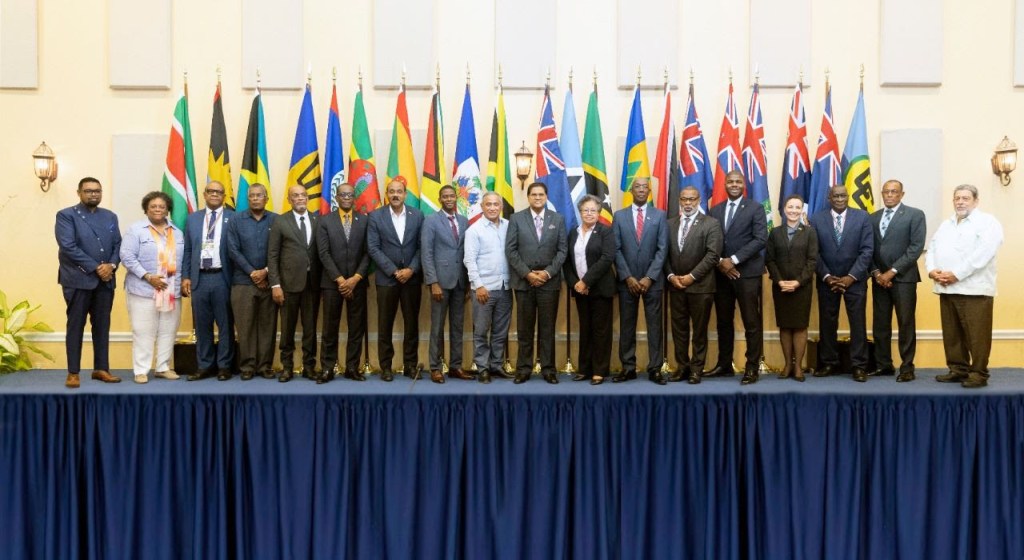
    (CARICOM Secretariat, Turkeyen, Greater Georgetown, Guyana – Thursday, 3 March 2022)   –   The Thirty-Third Inter-Sessional Meeting of the Conference of Heads of Government of the Caribbean Community (CARICOM) was held on 1-2 March 2022.  Chair of the Conference, the Prime Minister of Belize, the Honourable John Briceño presided over the proceedings.

    Other Members of the Conference in attendance were: Prime Minister of Antigua and Barbuda, the Honourable Gaston Browne (virtually); Prime Minister of The Bahamas, the Honourable Philip Davis; Prime Minister of Barbados, the Honourable Mia Amor Mottley, Q.C; MP;  Prime Minister of Dominica, the Honourable Roosevelt Skerrit; Prime Minister of Grenada, Dr. the Rt. Honourable Keith Mitchell; President of Guyana, His Excellency           

    Dr. Mohamed Irfaan Ali; Prime Minister of Haiti, the Honourable Ariel Henry; Prime Minister of Jamaica, the Most Honourable Andrew Holness (virtually); Premier of Montserrat,  the Honourable Easton Taylor-Farrell; Prime Minister of St. Kitts and Nevis, Dr. the Honourable Timothy Harris (virtually); Prime Minister of Saint Lucia, the Honourable Phillip Pierre (virtually); and President of Suriname, His Excellency Chandrikapersad Santokhi.

    St. Vincent and the Grenadines was represented by Deputy Prime Minister and Minister of Transport, Works, Lands and Physical Planning, the Honourable Montgomery Daniel; Trinidad and Tobago was represented by the Minister of Foreign and CARICOM Affairs, Senator the Honourable Dr. Amery Browne.

    Associate Members in attendance were: Bermuda represented by the Hon. Walter H. Roban Deputy Premier and Minister of Home Affairs; British Virgin Islands represented by Deputy Premier, the Honourable Dr. Natalio Wheatley; and the Turks and Caicos Islands represented by Premier the Honourable Charles Misick.


    OPENING CEREMONY
    Secretary-General, Her Excellency Dr. Carla Barnett, immediate past Chair, the Honourable Gaston Browne, Prime Minister of Antigua and Barbuda and Chair of Conference, the Honourable John Briceño, the Prime Minister of Belize addressed the Opening.

    The Secretary-General noted that the Community over the 49 years of its existence has been bound together, particularly, in times of adversity and this was such a time.  She advised that going forward, as CARICOM celebrates its 50th Anniversary, it must use its achievements as the foundation for building a resilient Caribbean Community.

    The Prime Minister of Antigua and Barbuda stated that the Community must continue to be vigilant in managing the threats to sustainable development including de-risking, the proposed global minimum corporation tax and sanction-listing of so-called uncooperative jurisdictions by the OECD and  European Union.  

    Climate change, he said, remained the most significant existential threat facing all of humanity   and noted the hopes of people in so many countries around the world, for meaningful action on the climate emergency, were dashed against the rocks of the obstinate and selfish attitudes of developed countries and large corporations assembled at COP26 in Glasgow, last November.

    The Chair of the Conference, Prime Minister of Belize stated that the Thirty-Third Inter-Sessional Meeting was a particularly consequential meeting which was taking place at a time when unprecedented and existential challenges coincided with our citizens’ expectations for relief and prosperity.

    He condemned in the strongest terms the unjustified invasion of Ukraine by Russia and called for an immediate cessation of hostilities and immediate and unilateral withdrawal of all Russian troops from Ukraine.

    The Prime Minister observed that CARICOM was contending with the worst economic recession in modern history. To foster our recovery, he said the Community needed to rekindle the founding vision of CARICOM both with respect to the scale of its ambition for integration, and the speed which was needed to achieve its consolidation. Our recovery, he said should be aligned to a new regional agenda that was centred around creating prosperity for the people.

    All the Statements are available at www.caricom.org.

    AGREEMENTS SIGNED
    Agreement on the Return or Sharing of Recovered Assets – The Bahamas and Belize

    Protocol to Amend Article 32 of the Revised Treaty of Chaguaramas establishing the Caribbean Community including the CARICOM Single Market and Economy (with respect to the definition of a CARICOM national) – Belize

    Protocol to Amend the Revised Treaty of Chaguaramas establishing the Caribbean Community including the CARICOM Single Market and Economy to Allow Enhanced Cooperation among Member States and to Address Related Issues – Barbados, Belize, Dominica and Grenada

    Instrument of Ratification -Multilateral Air Services Agreement – Deposited by Jamaica


    COVID-19 AND ITS IMPACT ON THE REGION
    Heads of Government acknowledged continued comprehensive response to COVID-19 in the Region the Caribbean Public Health Agency’s (CARPHA), the CARICOM Secretariat’s and the Pan-American Health Organisation’s.

    They agreed that Member States would continue to support the multi-sectoral and inter-sectoral regional public health response that has been successfully led by CARPHA supported by the Regional Security System (RSS) and other Regional Institutions.

    They also acknowledged that the economic impact of the COVID-19 pandemic has required that Member States re-imagine their development strategies and global economic engagement towards building back better with more sustainable and resilient economies. In that regard they mandated the Caribbean Development Bank (CDB), to coordinate the formulation of a regional resource mobilisation strategy to raise the funding required to drive the economic recovery programme.

    Heads of Government stressed the need for the continuation of public health measures including masks, testing, isolation and quarantine and supported CARPHA’s recommendations for safe and sustainable air and sea travel to protect the Region.

    Heads of Government noted the challenges in achieving desired levels of vaccination. They therefore agreed to mount a regional campaign to combat the disinformation that encourages vaccine hesitancy.

    Heads of Government agreed to explore a regional strategy for manufacturing vaccines in the Region.

    CARICOM SINGLE MARKET AND ECONOMY (CSME)
    Heads of Government agreed that implementation of the CSME is the Region’s best option for responding to the current development challenges and for building a more resilient Region.  They further agreed that immediate urgent action on CSME implementation was imperative. In that regard they endorsed the Action Plan for an Effective CSME and proposals for immediate action involving the Organs of the Community, Cabinets and Ministries of Member States, stakeholders, particularly the private sector, and the CARICOM Secretariat to hasten implementation. 

    Heads of Government adopted and opened for signature the Protocol to Amend the Revised Treaty of Chaguaramas Establishing the Caribbean Community including the CARICOM Single Market and Economy to allow Enhanced Cooperation among Member States and to address Related Issues. 
    They agreed that Suriname would assume the portfolio of Industrial Policy in the CARICOM Quasi-cabinet of Heads of Government.

    Heads of Government also agreed to review the governance systems within the Community to facilitate more effective decision-making and to ensure follow-up on the Community agenda.

    They requested that urgent attention be given to the strategy for development of the energy sector including the CARICOM Energy Policy (both in respect of fossil fuels and renewables) as well as to address the issue of local content.

    Heads of Government established an Open-Ended Working Group on Local Content for Sunrise Industries with core membership from Antigua and Barbuda, Barbados, Belize, Guyana, Jamaica, Saint Lucia, Suriname and Trinidad and Tobago. They also agreed that the CARICOM Private Sector Organisation (CPSO) would participate in the Working Group.

    They mandated the Secretariat to undertake further work on identifying ten (10) major non-food items imported into the Region for which there is production capacity and potential and significant demand considering that these could constitute priority products for investment and trade within the Community.

    Heads of Government agreed that early decision-making as well as cross-sectoral inter-agency regional and national actions were needed to support the economic recovery and transformation of CARICOM Member States.

    They therefore agreed to resuscitate the CARICOM Economic Recovery and Transformation (CERT) Working Committee under the guidance of Prime Minister Mottley, to serve as a clearinghouse for the many recommendations being tabled and to guide the economic recovery and transformation process in the Community.

    They also agreed that the Working Committee would be open-ended, with core membership comprised of The Bahamas, Barbados, Belize, Grenada, Guyana, Jamaica, Trinidad and Tobago, and the Governor of the Eastern Caribbean Central Bank (ECCB); and would be coordinated by the Secretary-General.  They further agreed to include the President of the Caribbean Development Bank, the Chief Executive Officer of the CARICOM Development Fund and the Chair of the CARICOM Commission on the Economy as members of the Committee.

    REGIONAL FOOD AND NUTRITION SECURITY
    Heads of Government commended the Ministerial Task Force (MTF) on Food Production and Food Security, and the leadership of His Excellency Dr. Mohammed Irfaan Ali, President of the Co-operative Republic of Guyana, Lead Head of Government in the CARICOM Quasi Cabinet for Agriculture, on the work completed in advancing the CARICOM Agri-Food Systems Agenda.

    They highlighted the importance of addressing key issues, including Climate Smart Agriculture, Land Reform, Transportation, Regional Infrastructural Development, Public-Private Partnerships, Legislative Reform, improving production and productivity, and incentives to encourage the sector.

    Heads of Government agreed to modernise current production methods including digitalization and greater use of technology, emphasise human resource development including youth involvement, and focus on research and development.

    Heads of Government recognised the challenges to the achievement of the reduction of the Region’s food import bill by 25 per cent by 2025 and the need for increased financial support, including though national budgets. In that regard, they committed to addressing the investment required and the attendant implementation timelines to achieve that objective and agreed to the staging in Guyana of an Agricultural Investment Conference on 19-21 May 2022 to accelerate the process of identifying alternative financing solutions.

    They welcomed Guyana’s offer of 25,000 acres of land to facilitate corn and soya production as well as to train 30 persons in the construction of shade houses aimed at increasing agricultural productivity and output.

    Heads of Government also welcomed the offer of Suriname of land for agricultural production.

    Heads of Government undertook to intensify efforts to remove all Non-Tariff Barriers to intra-regional trade.

    ENGAGEMENT WITH THE PRIVATE SECTOR
    Heads of Government received a presentation from the CARICOM Private Sector Organisation (CPSO) and undertook to review the proposals put forward.

    SECURITY
    Heads of Government received a report from the Chair of the Council for National Security and Law Enforcement (CONSLE).

    Heads of Government agreed that the support and cooperation of major partners, both nationally and regionally, including strong information and intelligence sharing were required to win the battle against Transnational Organised Crime.

    Heads of Government agreed to support the development of a regional Crime Guns Intelligence Unit which would function as an early warning system and a support mechanism for national firearms investigations.

    Heads of Government also agreed that there was urgent need for both intra-regional and international cooperation to address effectively maritime and cyber threats.

    Heads of Government agreed that the Caribbean Automated Biometric Identification System (CABIS) was necessary, especially as the Region moved toward full implementation of the CARICOM Single Market and Economy (CSME), in support of the free movement of CARICOM citizens and residents.

    They mandated the CARICOM Secretariat and CARICOM IMPACS to conduct needs assessments for a regional data privacy policy as well as the legislation required to cover such a System.

    HAITI
    Heads of Government received a presentation on the situation in Haiti from interim Prime Minister the Honourable Ariel Henry. The Prime Minister underlined that democracy is in decline, institutions are dysfunctional and collapsing. He spoke of the need to restore democracy and the constitutional framework through elections, to address insecurity, and to lay the foundation for future development.

    Heads of Government expressed concern over the protracted political impasse, the ongoing humanitarian crisis and mounting insecurity, and the repercussions for the Region of escalating instability.

    Heads of Government requested clear direction from the Government of Haiti with regard to the assistance required and, in this regard, agreed to the establishment of a CARICOM Team to interface with its Haitian counterparts and with the international community.

    Heads of Government welcomed the suggestion from the Prime Minister of Haiti that the Community could assist in facilitating dialogue, addressing insecurity, building democracy, staging the elections, training the police, and assisting the investigation into the assassination of President Jovenel Moïse.

    Heads of Government stressed the importance of ensuring good governance and respect for the rule of law and human rights as set out in the CARICOM Charter of Civil Society and underlined the importance of including civil society in the process of dialogue.

    Heads of Government commended Guyana for its commitment to provide rice to Haiti in view of the ongoing humanitarian crisis

    COP26 – FOLLOW-UP
    Heads of Government expressed concern that the overall COP26 package did not adequately address the pressing and urgent needs of Small Island and low-lying coastal Developing States (SIDS), in confronting the accelerating impacts of climate change and in meeting the requirements for climate resilience and adaptation.

    They reiterated their urgent call for a systematic global response to provide SIDS with adequate and predictable financial support to address loss and damage.  They further noted that the decisions were largely focused on process, so were unlikely to go far enough to keep 1.5 C alive.

    Heads of Government stressed the need for the financing of adaptation to be grant funds or not to be included in the debt profile of SIDS. They reiterated their support for the use of a Climate Vulnerability Index as the determining factor for access to concessional financing instead of GDP per capita.

    Heads of Government agreed to convene a special meeting on Access to Climate Finance and for a team to work on preparations for this special meeting.

    Heads of Government also agreed to support Antigua and Barbuda as Chair of the Alliance of Small Island States for the convening of a UNGA Special Session on the dire findings and projections of the latest International Panel on Climate Change report.

    Heads of Government agreed to remain fully engaged in the Global Climate Change Agenda and mandated the Council for Trade and Economic Development (COTED) – Environment to convene no later than June 2022, to further review progress on the achievement of the Region’s goals and priorities in relation to Global Climate Action and its related multilateral processes and to report to the next meeting of the Conference of Heads of Government.

    Heads of Government called on the CARICOM Secretariat and the Caribbean Community Climate Change Centre (CCCCC) to follow up on the recommended Next Steps of the COP 26 assessment matrix, to monitor the Roadmap to COP 27 and to update the COTED as necessary.

    Heads of Government agreed that the Community should pursue financial support from donors to assist the CCCCC to facilitate Regional consultations and coordination regarding the global goal on adaptation, the new quantified goal on climate finance, and the Glasgow Dialogue on Loss and Damage.

    They mandated the CCCCC to continue to explore options to enhance support to Member States in their efforts to access funding for further elaboration and implementation of climate adaptation plans, long-term strategies, capacity building for transparency, and other identified priorities.

    Heads of Government indicated their support for Vanuatu in its pursuit of an Advisory Opinion from the International Court of Justice on the rights of present and future generations to be protected from Climate Change.

    A Declaration outlining CARICOM’s assessment of the Outcomes of COP 26 and its expectations for COP27 is attached

    BRITISH VIRGIN ISLANDS/SELF-GOVERNANCE
    Heads of Government expressed deep concern about the lack of transparency and the manner in which the UK-backed Commission of Inquiry into the British Virgin Islands was called and is operating without having obtained all the legally required approvals.

    Heads of Government reiterated their call for the constitutional position of the duly elected Government to be respected and for self-governance to be upheld and not impeded.

    Heads of Government called for the implementation of the UN resolution on the question of the British Virgin Islands adopted by the 76th UN General Assembly on 9 December 2021, which calls for self-governance and self-determination in the Virgin Islands to be respected.

    Heads of Government agreed to adopt a unified position at the relevant UN decolonization fora in support of the self-determination of the British Virgin Islands.

    BORDER ISSUES (Caucus)

    • Belize-Guatemala Relations

    Heads of Government received an update on the status of Belize and Guatemala relations, including Guatemala’s Territorial, Insular and Maritime Claim (Guatemala/Belize) at the International Court of Justice. They noted that Belize will submit its Counter Memorial by June 2022.

    Heads reiterated the importance of Belize, Guatemala and the OAS continuing to fully implement the existing Confidence Building Measures. They also reiterated their call for both countries and the OAS to finally fulfil their commitment to design a mechanism of co-operation for the Sarstoon River.

    They expressed appreciation for the role of the OAS in accompanying the process and called on the international community to increase support for the OAS Office in the Adjacency Zone.

    Heads of Government reaffirmed their steadfast support for the sovereignty, territorial integrity and security of Belize. 

    • Guyana-Venezuela Relations

    Heads of Government received an update on the most recent developments in the controversy between the Cooperative Republic of Guyana and the Bolivarian Republic of Venezuela.

    They noted that Guyana will be submitting its Memorial on 8 March 2022 in accordance with the schedule set by the International Court of Justice to hear the case on the merits of Guyana’s application concerning the validity of the Arbitral Award of 1899 and the related question of the definitive settlement of the land boundary between the two countries.

    Heads of Government reiterated their full support for the ongoing judicial process that is intended to bring a peaceful and definitive end to the long-standing controversy between the two countries and urged Venezuela to participate in the process.

    Heads of Government reaffirmed their firm and unwavering support for the maintenance and preservation of the sovereignty and territorial integrity of Guyana.

    ROAMING RATES IN CARICOM
    Heads of Government welcomed the signing of the Declaration of St George’s Towards the Reduction of Intra CARICOM Roaming Charges to Facilitate the CARICOM Single ICT Space and the CARICOM Single Market and Economy. They noted that while the new roaming arrangement did not provide for complete elimination of roaming charges within the CARICOM space, operators indicated that savings would be on the order of 70-98 per cent depending on the service and the market. 

    Heads of Government stated it was an interim but significant milestone with respect to the Single ICT Space Roadmap.

    Heads of Government agreed to the establishment of a single regulatory space for telecommunications in CARICOM.

    Heads of Government commended the Prime Minister of Grenada, the lead Head of Government with responsibility for Science and Technology in the Quasi-Cabinet and the Prime Minister of Barbados the Honourable Mia Amor Mottley for leading this exercise.

    ORDER OF THE CARIBBEAN COMMUNITY
    Heads of Government agreed to bestow the Order of the Caribbean Community on the former Secretary-General Ambassador Irwin LaRocque of Dominica for his service to the Community.

    THE COMMONWEALTH
    Heads of Government expressed their overwhelming support for the re-election of Baroness Patricia Scotland as Secretary-General of The Commonwealth.

    DATE AND VENUE OF THE FORTY-THIRD REGULAR MEETING OF THE CONFERENCE

    The President of Suriname will assume the Chair of the Conference for the six-month period commencing 1 July 2022.  The 43rd Regular Meeting of the Conference will be held in early July 2022.

    STATEMENT OF THE CONFERENCE OF CARICOM HEADS OF GOVERNMENT ON THE WAR AND HUMANITARIAN CRISIS IN UKRAINE

    We, the Heads of State and Government of the Caribbean Community strongly condemn the military attacks and invasion of Ukraine by the Russian Federation and call for an immediate ceasefire and an end to all acts of aggression, the urgent withdrawal of Russian military forces in Ukraine. Any concerns the Russian Federation may have must be resolved diplomatically and not through warfare.

    We reaffirm the purposes and principles of the United Nations Charter and call for respect for the territorial integrity and sovereignty of Ukraine.

    We call on all parties involved to urgently intensify diplomatic dialogue and to immediately de-escalate hostilities and work towards sustainable peace. 

    The invasion of Ukraine is causing untold loss and destruction of life and property for the civilian population of Ukraine, including women and children, in violation of international humanitarian law, and has caused a growing humanitarian crisis.

    We express appreciation to the Governments and people of neighbouring countries who are extending humanitarian services to refugees fleeing Ukraine.  We are particularly concerned about the plight of and discrimination against non-European nationals and call for the guarantee of the safety and security of nationals of the Caribbean, Latin American and Africa and from those countries who are seeking to leave Ukraine.  In this regard, we underscore the importance of respect for human rights and the human dignity of persons in keeping with international commitments.

    We reiterate that the principles of respect for sovereignty, territorial integrity, non-interference in the internal affairs of another sovereign state, the prohibition on the threat or use of force, and the peaceful resolution of all disputes must be adhered to by all nations.


    The Caribbean as a Zone of Peace

    The Caribbean Community (CARICOM) is concerned that the military confrontation taking place in Europe could have repercussions in the Region.

    The Community strongly rejects any attempt to deploy military assets that can elevate tension and threaten the peace, territorial integrity, and sovereignty of this Region.

    The Community is resolute in its affirmation of the Caribbean as a Zone of Peace and calls on all countries to refrain from actions that undermine the Declaration made in 2014.

    2 March 2022
    Ambergris Caye Declaration on COP26 Outcomes and CARICOM Expectations in the lead up to COP27: “A Pathway from Ambition to Action”

    Recalling the Caribbean Community (CARICOM) Declaration on the 1.5 °C Ambition to Defend the Most Vulnerable

    Recalling further the regional priorities and expectations for the Glasgow Climate Change Conference aiming to consolidate global solidarity to close the gap for 1.5 °C ambition

    Taking note of the Glasgow Climate Pact and the decisions adopted by the respective governing bodies of the United Nations Framework Convention on Climate Change, the Kyoto Protocol, and the Paris Agreement

    Appreciating that the Glasgow Climate Change Conference focused the narrative of ambition on 1.5 °C and confirmed the role of science in informing ambition and accelerated action,

    Acknowledging that the Glasgow Climate Pact establishes work programmes to strengthen the 2030 emissions reductions targets, to support measurable progress on the global goal on adaptation, and to determine a new collective goal on climate finance by 2024, and further recognizes the start of the global stocktake and its importance to urgently address gaps in mitigation ambition, adaptation, loss and damage, and finance this decade to meet the goals of the Paris Agreement,

    Noting also the decision to initiate the Glasgow Dialogue on Loss and Damage and the finalization of the Paris Agreement Work Programme on common timeframes, transparency and article 6,

    Expressing grave concern that notwithstanding the pledges for net zero announced at the Conference, together with the range of voluntary initiatives launched during its Summit, according to the updated NDC Synthesis report, global warming is still projected to be 2.7°C in 2100, which confirms the latest findings of the Intergovernmental Panel on Climate Change AR6 Report, that on these trends 1.5 °C could be breached as early as this decade,

    Alarmed that emissions are expected to continue to rise to record breaking levelsas countries emerge from COVID-19, with 2021 seeing the second largest annual increase in CO2 emissions in history,

    Deeply concerned that developed countries support for climate action is incommensurate with the needs of developing countries to justly transition their societies and economies to low emissions climate resilient pathways and the increasing costs they face with rising emissions, the fast approaching or otherwise   breached tipping points, the compounding effects of the cumulative impacts of climate change on sustainable development, and unavoidable loss and damage,

    Particularly worried that despite being the least contributors to the climate emergency, Member States of the CARICOM face unsustainable and disproportionate debt burdens as they confront escalating climate impacts,

    Emphasizing thus the inexorable need to increase near term ambition, to accelerate urgent climate action, and increase and deliver timely support to developing countries, in this decade,

    Reiterating that limiting global warming to 1.5°C requires rapid, deep and sustained reductions in global greenhouse gas emissions, including reducing global carbon dioxide emissions by 45 per cent by 2030 relative to the 2010 level and to net zero around mid-century, as well as deep reductions in other greenhouse gases,

    Underscoring the need for an unequivocal political commitment that no effort shall be spared to strengthen emissions reduction targets of the major emitters as early as the end of 2022, and to enact the necessary measures to unlock and fast track the great potential of humanity, taking a an urgent and systematic approach, in line with principles of the Paris Agreement, and ensuring accountability and transparency, 

    Desiring thus for 2022 to initiate a roadmap from ambition to action with milestones for governments and non-state actors alike with COP27 as our first way point on the path to 1.5°C , the CARICOM Heads of Government,

    1. Affirm that for the Caribbean keeping global temperatures below 1.5°C is not an option, it is a matter of survival.
    2. Urgently call upon the international community to uphold its responsibility to protect the most vulnerable and maintain a central focus on the special case and particular circumstances of small island developing states (SIDS),
    3. Affirm that “Securing a safe climate future for the Caribbean” will remain under close consideration of the CARICOM Heads of Government with a view inter alia to elaborating further on the regional roadmap from ambition to action with a focus on articulating regional needs and priorities, forging new partnerships across the whole of society, and, strengthening CARICOM political engagement in multilateral processes to advance regional priorities,
    4. Endorse a Paris 2030 delivery agenda to include for 2022:
      1. At COP27 if not earlier, major economies plan for strengthened 2030 emissions reduction targets in line with the 1.5 °C Paris temperature goal and Low-emissions Development Strategies;
      2. Leading up to COP27, a US$100 billion finance dashboard progress report and at COP27, and during the High-level Ministerial Dialogue on Climate Finance, clarification on plans to scale beyond the floor of US $100 billion in the period through to 2025 taking into account the parity between adaptation and mitigation, and the additionality of loss and damage finance;
      3. Measures of progress on developed countries commitment to double adaptation finance from 2019 levels and to ensure that vulnerable countries are accessing and benefitting from these finance flows;
      4. Timely progress of technical work as called for in the Glasgow Climate Pact noting with appreciation the efforts of the COP Presidencies of the United Kingdom and of Egypt  to accelerate the work programmes geared towards clear deliverables at COP27;
      5. A timebound reform agenda for climate funds, multilateral development banks, and other finance providers to address SIDS access to grants and other concessionary finance arrangements in line with our urgent needs and priorities; and in this regard urge implementation and further elaboration of the call to action emanating from the second roundtable dialogue on SIDS and access to finance ;
      6. Allocation of an envelope of resources to SIDS under the Global Environment Facility Eighth Replenishment Process for capacity building and technology transfer including for the implementation of the enhanced transparency framework;
      7. Conclusion of elements for the full operationalization of Article 6 consistent with 1.5 °C ambition, accountability, transparency and environmental integrity;
    1. Welcome the focus of the UK COP Presidency on delivery, and urge the continued collaboration with the incoming President of COP27 (Egypt), to ensure consistency, coherence and implementation of commitments in line with the principles and goals of the Paris Agreement;
    2. Also take note of the UK COP Presidency Glasgow Breakthrough Initiatives and the launch of the Global Checkpoint Process and encourage the UK COP Presidency to engage with CARICOM Member States to identify how the region can benefit and champion SIDS specific breakthroughs;
    3. Urge the convenors of other fora intended to mobilize support for the UNFCCC process, including the Major Economies Forum, the Ministerial on Climate Action and the Petersberg Dialogue, to marshal efforts to support a Paris delivery agenda;
    4. Note the policy priorities of Germany’s G7 Presidency under the overarching objective of “Progress towards and equitable world” including the focus in particular on a sustainable planet;
    5. Take note further of the G7 Presidency’s intention to establish a global Climate Club to foster ambitious, climate action and encourage the G7 Presidency to engage with the Caribbean and other small island developing states as partners to jointly identify how such an alliance can directly address the SIDS needs in the near term particularly for addressing adaptation, and unavoidable loss and damage and avoid any unintended consequences;
    6. Note also that the Indonesian Presidency of the G20 has identified energy transition as a policy priority, and express the hope that the focus on sustainable energy transition will be framed in light of the temperature goal of 1.5°C and so lend support to strengthened 2030 emissions targets that could be brought forward to the COP27, underscoring that in so doing the G20 together can keep 1.5°C  within reach; 
    7. Calls also for global recognition of the SIDS need for finance for loss and damage to cover the costs of impacts and risks to which we cannot adapt;
    8. Urge all leaders to confront the reality that climate change poses an existential threat to SIDS and that its impacts represent a “Code Red for Humanity” and thus require immediate, global action to reduce greenhouse emissions and provide accessible and affordable finance in line with the science to keep 1.5°C within reach.

    There is no more time for equivocation and no more time for delay; we, the CARICOM Heads of Government, demand action now.

  • New CARICOM SG committed to a more ‘inclusive’ community

    New CARICOM SG committed to a more ‘inclusive’ community

    Alicia Nicholls

    Newly installed Caribbean Community (CARICOM) Secretary General, Dr. Carla Barnett, has voiced her commitment towards greater stakeholder engagement for a “truly integrated, inclusive and resilient community that is driven by knowledge, excellence, innovation and productivity”. She made this pledge while outlining her vision during an installation ceremony streamed online on August 16.

    Dr. Barnett, who assumes office as CARICOM’s eighth and first appointed female Secretary General, acknowledged the many “economic, social, environmental and financial challenges” affecting lives and livelihoods in the region. She specifically outlined the issues of climate change, youth unemployment, rising crime, the need for greater food security and the issue of blacklisting by large global powers which has led to the loss of correspondent banking relations (CBRs) for many indigenous Caribbean banks. The new SG also extended condolences to the people of Antigua & Barbuda on the passing of their second Prime Minister, Sir Lester Bird, who she acknowledged as a committed regionalist. She also expressed solidarity with the people of Haiti where over 1,200 innocent lives were lost as a result of a 7.2 magnitude earthquake on August 14 and who also face the impending Tropical Storm Grace.

    Dr. Barnett implored stakeholders to reach out to the Secretariat to share their “their fears, concerns, and vision for the future of the Community and telling us how they feel they can contribute to building our Community”, as no one has all the ideas or answers so all must be involved. She further noted that “it is, therefore, incumbent on all of us to be engaged in finding solutions and taking action to overcome these obstacles in our path to a secure, viable and ultimately sustainably prosperous Community for all”.

    She made reference to the unity showed by CARICOM people during sports, culture and in times of adversity. She stated she would “build on and maintain that strength” and “will require that my team and I reach out on a regular basis to explain, to exhort, to inform, to educate so that all will feel a part of the whole that constitutes CARICOM and “I Am CARICOM” will mean much more than a catchy slogan”.

    In addition to greater stakeholder engagement, Dr. Barnett also called for new thinking “not only to solve the problems of the present but to outline new paths for the future of our integration process”, including for closing the implementation gap. She praised the work of her predecessor Ambassador Dr. Irwin Larocque of Dominica who served from 2011-2021. She noted that much has been achieved in the past 48 years, but “a lot of it is taken for granted today, to the extent that some are not even associated with the integration movement”.

    Dr. Barnett is the first Belizean national to be appointed CARICOM SG. She brings to the position a wealth of experience, including as an economist and having previously served as the first woman and the youngest person appointed as Deputy-Secretary of CARICOM (1997 -2002).

    We at the Caribbean Trade Law & Development Blog wish Dr. Barnett the very best during her tenure.

    The recording from the event may be viewed here, while the transcript from her full address is available here.

    Photo credit: CARICOM

    Alicia Nicholls, B.Sc., M.Sc., LL.B. is a trade and development consultant with a keen interest in sustainable development, international law and trade. All views herein expressed are her personal views and should not be attributed to any institution with which she may from time to time be affiliated. You can read more of her commentaries and follow her on Twitter @LicyLaw.