Tag: caribbean community

  • Caribbean Trade & Development Digest – November 3-9, 2019

    Caribbean Trade & Development Digest – November 3-9, 2019

    Welcome to the Caribbean Trade & Development News Digest for the week of November 3-9, 2019! We are happy to bring you the major trade and development headlines and analysis from across the Caribbean Region and the world from the past week.

    China hosted a WTO Mini Ministerial in Shanghai on November 5th. Jamaica was among the countries which attended. Read more here.

    India has opted out of the Regional Comprehensive Economic Partnership (RCEP). Read more

    Two high level meetings were held in Barbados this week: An Insurance Colloquium with the theme ‘Insurance in the Age of Climate Change‘ hosted by the Government of Barbados and the Inter-American Development Bank (IDB) and the 2019 Caribbean Forum: Regional Transformation for Inclusive and Sustainable Growth hosted by the International Monetary Fund (IMF) and the Caribbean Development Bank (CDB).

    REGIONAL NEWS

    Barbados to partner with Suriname for Black Belly Sheep operation

    Barbados Advocate: Local agricultural officials are seeking to partner with their counterparts in Suriname, to facilitate a Black Belly Sheep operation which will see land being utilised in that CARICOM country to increase production of our Black Belly Sheep and to build out the full value chain, where the local industry is concerned. Read more

    Saint Lucia gets help from Argentina to boost honey production, marketing

    IICA: The authorities of Saint Lucia give final touches to the preparations for the next visit of two Argentine experts in the framework of API Caribe, a regional project of the Inter-American Institute for Cooperation on Agriculture (IICA) and the government of Argentina to boost the beekeeping industry of the Caribbean nations. Read more

    Jamaica Launches Online Investment Guide

    JIS: Jamaica has joined 28 other nations, including several Caribbean states, that have developed online investment guides (iGuides). Read more

    Holness assures China of Jamaica’s cooperation in economic development

    Jamaica Observer: Prime Minister Andrew Holness yesterday welcomed the opportunity to pair Jamaican minds and aspirations with China’s experience and know-how. Holness said that Jamaica was excited about exploring the possibilities of pairing those assets in areas such as renewable energy, border security, agriculture, health care, and STEM education to achieve sustainability and resilience in its economy. Read more

    New age limit on imported vehicles takes effect

    Jamaica Observer: The new age limit at which motor vehicles can be imported into the island has taken effect. Read more

    Saint Vincent and the Grenadines to Export Largest Single Shipment of Livestock to Grenada

    OECS: The bilateral agri-export agreement between Grenada and St. Vincent and the Grenadines continues to grow from strength to strength. St. Vincent and the Grenadines is set to export a shipment of 100 heads of cattle and 400 pigs to Grenada on November 17, 2019. Read more

    UWITV: The Caribbean/St Vincent election

    Watch the recording of the debate here.

    INTERNATIONAL NEWS

    As deadline looms, WTO fish subsidy talks get new Colombian chief

    Reuters: World Trade Organization (WTO) member states agreed on Friday to a new chair for talks to end harmful fishing subsidies, though an NGO said it would still take a “Herculean” effort to reach a deal before an end-December deadline. Read more

    India, 16 others complain to WTO about EU’s residue limits for pesticides

    Hindu Business Line: India and sixteen other countries such as Brazil, Colombia, Argentina and the US have complained at the World Trade Organisation (WTO) against the EU decision to amend its policy on the maximum residue levels (MRLs) for a wide range of pesticides mainly used in the cultivation of citrus fruit and bananas. Read more

    Trade and Trade Diversion Effects of United States Tariffs on China

    UNCTAD: The study, Trade and Trade Diversion Effects of United States Tariffs on China, shows that the ongoing US-China trade war has resulted in a sharp decline in bilateral trade, higher prices for consumers and trade diversion effects (increased imports from countries not directly involved in the trade war). Read more

    East Asia Summit: PM Lee calls on regional leaders to update trade rules to keep up with digital economy

    Strait Times: Singapore Prime Minister Lee Hsien Loong on Monday (Nov 4) called on Asean nations and their partners to help write a new rule book on trade to keep up with the rapidly evolving digital economy. Read more

    RCEP trade deal can take effect without India, Thailand confirms

    Nikkei Asian Review: A historic Asia-Pacific trade pact may come into force without one of the biggest participants — a hesitant India — a top Thai official indicated on Friday. Read more

    Passing USMCA by Thanksgiving would be a ‘linchpin’ for global trade, former Trump aide says

    CNBC: Congress must approve the United States-Mexico-Canada (USMCA) trade agreement in order to provide a linchpin for global trade discussions, according to Rick Dearborn, the former White House deputy chief of staff for policy. Read more

    India, 30 other nations call to protect WTO appellate body at Shanghai meet

    Livemint: India and 30 other countries on Tuesday called for urgently resolving an impasse at the World Trade Organization’s (WTO’s) highest dispute settlement body, which faces being reduced to a one-judge court after 11 December. Read more

    STRAIGHT FROM THE WTO

    NEW ON THE CTLD BLOG

    The Caribbean Trade & Development Digest is a weekly trade news digest produced and published by the Caribbean Trade Law & Development Blog. Liked this issue? To read past issues, please visit here. To receive these mailings directly to your inbox, please subscribe to our Blog below:
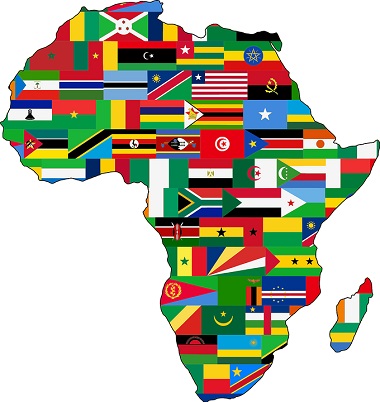
  • CARICOM and the African Union to deepen ties: Why this is a good idea!

    CARICOM and the African Union to deepen ties: Why this is a good idea!

    Alicia Nicholls

    Caribbean-African relations have become an exciting and refreshing trade space to watch in recent months. Over the past few weeks, two African leaders (Their Excellencies President Nana Akufo-Addo of Ghana and President Uhuru Kenyatta of Kenya) paid separate official visits to the Caribbean. Barbados’ Prime Minister, the Hon. Mia Amor Mottley also paid a state visit to Morocco in June 2019.

    It was also announced earlier this month that the Caribbean Community (CARICOM) would over the next year seek to deepen and formalise cooperation with its African equivalent – the African Union (AU). This article takes a brief look at why formalization of south-south cooperation and engagement between CARICOM and the African Union is a good idea.

    CARICOM and AU have more similarities than differences

    The formal relationship between the two regions has been mainly through their participation in the Africa, Caribbean, Pacific (ACP) and the Commonwealth of Nations groupings, and not directly bilateral. But change is on the horizon. In 2012, Heads of State and Government of the African Union, the Caribbean and South America concluded the Global African Summit with a declaration which outlined a plan of action for forging political, economic and social cooperation between the AU and ‘all inter-governmental entities in regions in which African Diaspora populations are part of’, which includes CARICOM.

    As I wrote in a previous article a couple of weeks ago, there is much promise for expanding and deepening economic and political relations between Africa and the Caribbean. A boost would be, of course, formal collaboration between CARICOM and the AU.

    CARICOM is an intergovernmental organization of fifteen mostly English-speaking Caribbean States and territories founded on July 4, 1973 by the Treaty of Chaguaramas (revised in 2001). It was preceded by the Caribbean Free Trade Agreement (CARIFTA) which lasted from 1968-1973 and the West Indian Federation (1958-1962). CARICOM has a collective population of approximately 18 million. Its secretariat is based in Georgetown, Guyana. Twelve CARICOM Members are currently full members of the CARICOM Single Market and Economy (CSME).

    The AU is a 55-nation pan-continental, intergovernmental organization which was officially launched in July 2002. The AU has a population of just over 1 billion. Its secretariat is in Addis Ababa, Ethiopia. The AU has launched Agenda 2063, an ambitious plan to transform the continent into a global powerhouse. There are currently eight regional economic communities considered ‘building blocks’ of the AU, and diaspora relations are also integral to the AU.

    Both CARICOM and the AU are intergovernmental organisations which encompass post-colonial States with cultural and linguistic differences, facing a myriad of challenges and varying levels of development. Both are in the process of wide-scale regional integration projects. CARICOM, for instance, is in the process of trying to consolidate its CSME. The African Continental Free Trade Agreement (AfCFTA), which was signed in March 2018 and currently has 54 signatories, seeks to create a seamless pan-African economic space. The AfCFTA came into effect in May 2019 and the process has started for the Agreement’s operationalization.

    There are, of course, differences between the two regions which may impact on the policy and negotiating positions taken in multilateral fora. For example, most CARICOM countries are services-based (mainly tourism and/or financial services) economies, with the exception of Belize, Guyana, Suriname and Trinidad & Tobago where commodities trade is important. In the mostly resource-rich African countries, however, commodities trade is king. Most Caribbean countries are Small Island Developing States (SIDS), while those in the AU include mainly landlocked and coastal continental States. The only six AU SIDS are Comoros, Guinea Bissau, Mauritius, Sao Tome e Principe and Seychelles. Moreover, 33 of the 55-member AU are classified by the United Nations (UN) as Least Developed Countries (LDCs), while Haiti is the only LDC in CARICOM.

    Despite these differences, which should not be overlooked, I believe the prospects for CARICOM/AU collaboration and engagement are very promising. Both regions can learn from each other as they seek to deepen their integration projects. There is also scope for closer Caribbean/Africa multilateral collaboration on issues of mutual interest, such as confronting the growing threat of unilateralism and protectionism; the achievement of the United Nations’ 2030 Agenda and its 17 Sustainable Development Goals (SDGs) and their targets; de-risking by global banks; climate change; reform of the World Trade Organisation (WTO); securing reparations, to name a few. Intra-regional cooperation prospects are also promising in many areas such as agriculture, education, the creative industries, renewable energy, medicine/health, the blue and green economies, sports, information and communications technology (ICTs), for example.

    Moreover, Barbados’ upcoming co-hosting of the UNCTAD 15 Quadrennial in October 2020 provides further prospects for collaboration on important multilateral trade and development issues. It is interesting to note that UNCTAD 14 was held in Nairobi, Kenya so there is the opportunity for Kenya to share with Barbados its experience in the successful hosting of the UNCTAD 14.

    Plans for Deepening CARICOM/AU ties  

    A press release issued by the CARICOM Secretariat noted that CARICOM Secretary General Ambassador Irwin LaRocque and Deputy Chair of the African Union Commission (AUC), His Excellency Kwesi Quartey, discussed the need for continued ACP solidarity in the on-going negotiations for the Post-Cotonou Agreement with the European Union (EU) and agreed to explore collaboration on multilateral areas of concern, such as climate change.

    The CARICOM press release further noted that the two leaders “took the opportunity to consider some of the areas in which their two organisations could work together including the formalisation of an institutional relationship between CARICOM and the AU to promote cooperation and to strengthen the deep bond of friendship between Africa and the Caribbean.”

    Moreover, St. Lucia Times has quoted St. Lucian Prime Minister, the Hon. Allen Chastanet, as stating that there will be a planned CARICOM and the AU Summit and the signature of a Memorandum of Understanding establishing a framework for engagement and cooperation. Prime Minister Chastanet is further quoted by this news agency as stating that “Barbados and Suriname will partner in establishing an Embassy in Ghana, while Barbados and Saint Lucia will partner in establishing an Embassy in Kenya.”

    During President Kenyatta’s visit, Barbados and Kenya have also committed to negotiating a Double Taxation Agreement and Bilateral Investment Treaty with each other, and discussed collaboration in areas such as ICTs, renewable energy, sports, the blue economy, health, education and air services. Kenya has also sought the Caribbean’s support in its bid for a seat on the UN Security Council.

    While this high-level political commitment to greater Caribbean-African engagement is needed and commendable, it is firm to firm, university to university and people to people collaboration which will transform deeper Caribbean-African relations from an aspiration to reality. An important step, therefore, will also be formalizing relations between private sector organisations, business support organizations, investment promotion agencies, universities and tourism boards in the Caribbean and Africa in order to promote Caribbean-Africa trade and investment in both traditional and emerging sectors, research and tourism. On this note, it was welcomed news that there will be commencement of engagement between the private sectors of Barbados and Kenya, as well as deeper university collaboration.

    Alicia Nicholls, B.Sc., M.Sc., LL.B., is an international trade and development consultant with a keen interest in sustainable development, international law and trade. You can also read more of her commentaries and follow her on Twitter @LicyLaw.

    DISCLAIMER: All views expressed herein are her personal views and do not necessarily reflect the views of any institution or entity with which she may be affiliated from time to time.

  • CARICOM Heads adopt St. Johns Declaration to address plastic pollution in Caribbean Sea

    CARICOM Heads adopt St. Johns Declaration to address plastic pollution in Caribbean Sea

    Alicia Nicholls

    Caribbean Community (CARICOM) Heads of Government this week adopted a Declaration aimed at addressing the high levels of plastics and microplastics in the Caribbean Sea and their adverse impact on Caribbean sustainable development.

    The St. John’s Declaration was signed and launched by the Government of Antigua and Barbuda at the Play it Out Concert hosted by Antigua and sponsored by Norway. It is part of the United Nations General Assembly (UNGA) President Maria Espinosa’s global call to action for Governments against plastic pollution and single-use plastics launched in December 2018. The Declaration was subsequently adopted by CARICOM Heads of Government during their 40th session held in St. Lucia July 3-5, 2019.

    Why is the St. John’s Declaration important?

    The Caribbean Sea is of tremendous economic, social and ecological value to the countries washed by its shores. A World Bank Study estimates that “in 2017, the insular Caribbean’s gross revenues from marine and coastal tourism alone totaled an estimated US$57 billion”. This same study cites pollution as one of the biggest threats to the Caribbean marine environment.

    Indeed, the World Bank study notes that “marine litter is accumulating in the Caribbean Sea, originating both in the region as well as distant countries overseas through the ocean currents” and that “studies have… found as many as 200,000 pieces of plastic per square kilometer in the northeastern Caribbean”.

    According to the World Bank Report, “up to 80 per cent of the litter found in our oceans is made of plastic”. It further states that “Caribbean data from beach and coastal clean-ups in 2017 indicate that plastic beverage bottles alone amount to 21 percent of the items recorded.”

    These plastics are dangerous because they take many years to degrade, remaining blights on the marine and land-based environment and death traps for marine life. According to Ocean Crusaders, “100,000 marine creatures a year die from plastic entanglement” and approximately 1 million sea birds also die from plastic. This of course has implications for human health and food security.

    Twelve CARICOM Member States have to varying extents passed legislation to implement full or partial bans on the use of single use plastics and styrofoam products. However, the region has fallen short of a region-wide plastics ban. CARICOM’s adoption of the St. Johns Declaration is a good step towards showing our leadership’s commitment towards addressing the serious threat marine litter poses to our sustainable development.

    Key Elements of the Declaration

    The St. Johns Declaration encourages CARICOM Member States that have not yet done so to introduce measures to reduce and/or eliminate the use of single use plastics. It also commits to addressing the damage to our ecosystems caused by plastics by 2030 and to work with the private sector to “find affordable, sustainable and environmentally friendly alternatives”.

    The Declaration recognizes that effective implementation of these actions “requires enabling and coherent policy, legislative and regulatory frameworks, good governance and effective enforcement at the global, regional, national and local levels”. They also “encourage development partners and the private sector to contribute financial and technical assistance, capacity-building initiatives”.

    Marine litter is not just a Caribbean issue, but a global one. Firstly, plastic pollution in the Caribbean Sea comes not just from Caribbean countries, but from other countries, particularly in the North. Secondly, other oceans globally also face a similar threat.

    There has been some global action on the issue of marine litter. Goal 14 of the UN Agenda 2030 and its 17 Sustainable Development Goals is to “conserve and sustainably use the oceans, seas and marine resources for sustainable development’. More specifically, one of its targets is “to reduce significantly all forms of marine pollution by 2025”. There are also several United Nations resolutions, including resolution 4/7 on ‘Marine Litter and Microplastics’.

    Recently, the Association of Southeast Asian Nations (ASEAN) adopted the Bangkok Declaration on Combating Marine Debris in the ASEAN Region in June 2019. The St. Johns Declaration encourages other regional and sub regional groups of countries “to take similar measures to eliminate discharge of plastic litter and microplastics to wells, rivers, seas and oceans”.

    Given the magnitude of the threat of marine litter, and in particular, plastics pollution, global action still falls far short of what it should be. As such, the St. Johns Declaration calls for the urgent need for a global agreement to address plastics and microplastic pollution.

    Our CARICOM leaders’ adoption of the St. John’s Declaration is a good step, but this is just the beginning. It must be translated into concrete action. For instance, getting countries which have not yet done so to implement bans on single use plastics and styrofoam products. This requires not just strong enforcement of the bans, but widespread public service campaigns educating businesses and the general public on the impact plastics have on the marine environment, and consequent implications for human health and food security. As several countries around the world, including some Caribbean countries, have implemented bans, there is scope for learning from these countries’ experiences in order to formulate best practices.

    The full text of the Declaration of St. John’s is attached the Communique of the Conference of Heads of Government 40th Session which may be read here.

    Alicia Nicholls, B.Sc., M.Sc., LL.B., is an international trade and development consultant with a keen interest in sustainable development, international law and trade. You can also read more of her commentaries and follow her on Twitter @LicyLaw.

    DISCLAIMER: All views expressed herein are her personal views and do not necessarily reflect the views of any institution or entity with which she may be affiliated from time to time.

  • CARICOM Protocol on Contingent Rights: An important Step to CSME Consolidation

    CARICOM Protocol on Contingent Rights: An important Step to CSME Consolidation

    Alicia Nicholls

    The Government of Barbados has recently announced a Bill entitled the Caribbean Community (Amendment) Bill 2019, which, when passed, would amend the principal Act to give effect to the CARICOM Protocol on Contingent Rights, making it part of Barbadian law.

    Barbados, along with six other CARICOM Member States, had signed the Protocol during the 39th Regular Meeting of the Conference of CARICOM Heads of Government in Montego Bay Jamaica in July 2018.

    Following the recently held 30th Inter-sessional Meeting of the Conference of CARICOM Heads of Government in St. Kitts & Nevis, it has been reported that all CSME participating Member States have now signed the Protocol. But what is the Protocol about and why is it necessary for the consolidation of the CSME?

    What is the Protocol on Contingent Rights and Why is it Necessary?

    The Revised Treaty of Chaguaramas confers a number of rights to Community Nationals, including the right of establishment, the right to provide services, the free movement of capital and of skilled Community Nationals to seek employment in other CSME participating Member States. However, it was recognised by Member States that despite these rights (called ‘primary rights’) being conferred, additional enforceable rights (or ‘contingent rights’) were needed to ensure that Community Nationals could enjoy them effectively and without frustration.

    For example, there was concern by CARICOM nationals who were working in other jurisdictions about their inability to access social services on the same basis as nationals of the host country, the inability of their spouses to also legally seek employment, and for their children to access primary education on the same basis as the children of nationals of the host country. These barriers frustrate the exercise of the rights conferred in the Revised Treaty.

    The Protocol, which was a long time in the making, confers certain enforceable social and economic rights to Community Nationals and their immediate families who make use of the right of establishment, the right to provide services, the right to move capital and the free movement of skilled labour under the Revised Treaty of Chaguaramas. As such, the Protocol is not only a starting point for addressing some of the issues currently faced by Community Nationals seeking to exercise these rights effectively, but is, therefore, an important step towards the consolidation of the CSME.

    Rights guaranteed under the Protocol

    The framers of the Protocol define ‘contingent rights’ as “rights to which a national and his or her spouse and immediate dependents are entitled, contingent on the exercise by the principal beneficiary of the right of establishment, provision of services, movement of capital or free movement of skills”.

    Subject to certain exceptions, the contingent rights currently guaranteed under the Protocol are:

    • the right of a principal beneficiary resident in a host country, his or her spouse or their dependants to transfer capital into and from a host country subject to Article 43 of the Treaty, which speaks to restrictions to safeguard balance of payments;
    • the right of a spouse or dependants of a principal beneficiary resident in a host country to leave and re-enter a host country;
    • the right of the spouse of a principal beneficiary resident in a host country to work in a host country without a work permit;
    • the right of a principal beneficiary resident in a host country and his or her spouse to access on a non-discriminatory basis lands, buildings and other property for residential or business purposes reasonably connected with the exercise of the rights of the principal beneficiary;
    • the right of dependent children of a principal beneficiary resident in a host country to access primary education on a nondiscriminatory basis, where and to the extent provided by the Government of the host country;
    • the right of a principal beneficiary resident in a host country to import into the host country free of duties within six months of being granted a stay, subject to the principal beneficiary having already satisfied the duty regime in another Member State, tools of trade that are (i) reasonably connected with the exercise of any of the
      primary rights of the principal beneficiary; (ii) in the possession of the principal beneficiary in the exercise of any of those primary rights; and (iii) located in a Member State.

    These are a minimum standard and as such, Article IV of the Protocol specifically notes that Member States are not precluded from granting greater rights once not done in a discriminatory manner in contravention of the non-discrimination principle (Article 7) and more specifically, the Most Favoured Nation principle (Article 8) of the Revised Treaty respectively. It should be noted that consistent with a phased approach, the Barbados Bill adopts the Protocol as is and does not grant any greater rights.

    Who may qualify for these rights?

    Principal Beneficiary

    The Protocol defines a ‘principal beneficiary’ as a national of a Member State exercising one or more primary rights, that is, rights pursuant to the Treaty in relation to the operation of the CSME and described in Articles 32, 34, 36, 40 and 46 of the Treaty, which deal with right of establishment, right to provide services, the movement of capital and free movement of skilled community nationals respectively.

    For example, under the free movement of skilled nationals regime, ten categories of wage earners may move and work freely within CSME participating Member States without having to seek a work permit in the jurisdiction in which they seek to work and once they hold a CARICOM Skills Certificate (formally known as the CARICOM Certificate of Recognition of Skills Qualification).

    The five original categories under the Revised Treaty of Chaguaramas were: University graduates, artistes, musicians, sportspersons, media workers. These were later expanded to include five additional categories: nurses, teachers, artisans with a Caribbean Vocational Qualification (CVQ), holders of Associates Degrees or comparable qualification and Household Domestics with a Caribbean Vocational Qualification (CVQ) or equivalent qualification. These eligible categories will soon include others, namely, agricultural workers, barbers, security guards and beauticians.

    All other Community nationals need to apply for work permits in order to seek employment in another CSME jurisdiction.

    Spouses and Dependents

    With a nod to inclusiveness, the framers of the Protocol adopted a broad definition of ‘dependent’ to include any unmarried child of a principal beneficiary or of his or her spouse provided that such child is under the age of 18 years, under the age of 25 years attending school or university full time or over the age of 18 years who is disabled and dependent on the principal beneficiary. However, the definition of ‘spouse’ is still restricted to heterosexual relationships either via marriage, or via common-law unions to the extent that such unions are recognized by the laws of the host country.

    Built-in agenda and monitoring

    The issue of contingent rights has been a sensitive one as not all CARICOM Member States offer their own nationals the same level of social benefits. There are legitimate fears that there may be undue burdens placed on those States with more generous social welfare programmes, such as free education and free health care, as well as concerns about the potential for abuse of these programs.

    One way the framers of the Protocol appear to seek to address this concern is by allowing for a phased approach through a built-in agenda (Article III). It enumerates a list of potential more extensive rights to be adopted by Member States on a phased approach subject to agreement. It also provides for monitoring and review. Additionally, temporary service providers are not entitled to contingent rights and safeguard measures in Article 47 apply to the Protocol mutatis mutandis.

    Moving from paper to practice

    CARICOM Member States are dualist States, that is, even after a treaty is signed by a Member State, it needs to be translated into domestic law in order for the treaty obligations to be binding on the State domestically. Therefore, the rights under the Protocol can only be enjoyed, and the State bound to provide these rights, once they have been translated into domestic law through an Act of Parliament.

    1. Domestic Ratification Needed by all signatories – For the Protocol to enter into force, it must be signed and then ratified by all parties to the Revised Treaty, which will not be an easy task. The Protocol, however, may be provisionally applied once seven or more of the Parties to the Protocol declare their intention to apply the Protocol provisionally before the Protocol enters into force.The next step is to ensure the Protocol is brought into force as soon as possible, thereby ensuring it is parlayed from mere ink on paper. On this front, it is commendable that Barbados, which has lead responsibility for the CSME in CARICOM’s quasi cabinet, is leading by example through its commencement of the ratification process.
    2. Procedures for implementation and monitoring – Procedures and systems must be put in place domestically and regionally to allow for implementation and monitoring of the Protocol’s operation to ensure Member States are honouring their commitments and to ascertain any problems. Data collection will be key.
    3. Training – Guidance, as well as further training of staff members of agencies which are tasked with implementation and monitoring, may be necessary.
    4. Public Awareness Campaign – As evidenced by the misinformation which was circulated on social media after the Bill was announced in Barbados, it is evident that a public awareness campaign is needed not only to educate CARICOM citizens about the rights contained in the Protocol and how they as nationals may benefit, but to help assuage concerns and fears about the Protocol’s intentions and implications.

    The very timely Golding Commission Report, which had examined Jamaica’s relations within CARICOM and CARIFORUM, had spoken of the CSME implementation deficit and challenged regional leaders to chart a way forward. Having this Protocol enter into force would not only facilitate greater movement, but also be a much-needed injection of confidence to show the region’s populace that the CSME is not moribund. On this note, Barbados’ initiative to begin the ratification process is certainly a commendable one, and it is hoped that other CARICOM countries will swiftly follow suit.

    Alicia Nicholls, B.Sc., M.Sc., LL.B., is an international trade and development consultant with a keen interest in sustainable development, international law and trade. You can also read more of her commentaries and follow her on Twitter @LicyLaw.