
Tag: caribbean community

  • CARICOM Foreign Policy Coordination: Priority or Pipe Dream?

    CARICOM Foreign Policy Coordination: Priority or Pipe Dream?

    Alicia Nicholls

    It has been generally recognized by most Caribbean Community (CARICOM) countries, at least in principle, that a coordinated voice on foreign policy issues endows our small countries with bargaining power beyond our size constraints. Indeed, foreign policy coordination is one of the four pillars of CARICOM, with economic integration, human and social development, and security being the other three. However, given the current and increasing discord among CARICOM countries on key international developments, is CARICOM foreign policy coordination still a priority, or is it merely a pipe dream?

    An exercise of foreign policy is an exercise of a State’s sovereignty. In general terms, a State’s foreign policy is its strategy in interacting with other States, and is influenced by what that State determines to be its strategic national interests, values, goals and priorities. The key words here are “national interests”, and they may be underpinned by ideology, pragmatism or a combination of the two. A State’s foreign policy is not static, and may change depending on the ideology of the Government in power (for example, whether right-wing, left-wing or centrist) and changing national interests, values, goals and priorities.

    As a State’s foreign policy is determined by its national interests, this means that a regional coordinated foreign policy inevitably necessitates the strategic alignment of the national interests of the countries concerned.

    Rationale behind the goal of a coordinated CARICOM foreign policy

    From as early as the days of CARIFTA (the Caribbean Free Trade Area), the predecessor of CARICOM, the founding architects of the Caribbean regional integration project viewed a coordinated foreign policy as a life raft for assisting our small, then newly independent Caribbean States, to navigate often hostile international Cold War waters in which powerful big country sharks would prey on us little small state ‘sprats’.

    Our founding fathers, and later the drafters of the Revised Treaty of Chaguaramas which established the CARICOM Single Market and Economy (CSME), saw a unified foreign policy position as an insurance policy against bullying tactics and the politics of ‘divide and conquer’ – the practice by major powers of playing off CARICOM States against each other, or picking them off one by one through inducements such as aid and other financial support in order to secure votes on hemispheric and international issues. It recognises the old adage of “strength in numbers”. For example, Article 6(h) of the Revised Treaty of Chaguaramas states as one of the Community’s objectives “enhanced co-ordination of Member States’ foreign and [foreign] economic policies”.

    Indeed, there have been several instances where Caribbean countries have successfully leveraged their collective voice and numeric strength to their own benefit. Comprising nearly half of the membership of the Organisation of American States (OAS), CARICOM countries are a crucial voting bloc which powerful countries deem necessary to court for voting support on critical hemispheric issues. In the United Nations (UN), CARICOM countries are a smaller but still critical voting bloc.

    But do CARICOM member States’ national interests really align to such an extent that a coordinated foreign policy on all issues is still (or was ever) achievable? CARICOM comprises fourteen independent countries and one British Overseas Territory (Montserrat). This necessitates balancing national interests, values, goals and priorities which do not always necessarily align. Indeed, CARICOM countries, while all small States, have their differences, whether in terms of language, geography, economic structure, population, resource endowment or size. All of these factors impact on each State’s perceived national interests, values, goals and priorities.

    Foreign policy coordination has been successful in areas like climate change where Caribbean countries see their national interests as inextricably linked. But even on this important issue, there is some policy incongruence. On the one hand, CARICOM countries have demanded more urgent global action to fight climate change, while on the other, some CARICOM member States are still pursuing hydrocarbon exploration and exploitation, as part of their economic development strategy.

    There have also been increasing (and frankly, embarrassing) instances of CARICOM foreign policy disunity, from as far back as the infamous US Ship Rider issue in the 1990s, the inability to unite around a single candidate for Commonwealth Secretary General in 2015, to as recently as the UN vote on the US’ controversial motion to recognize Jerusalem as the capital of Israel (instead of Tel Aviv). There is also the still unresolved issue of the region’s position on the One China Policy – some States recognize the People’s Republic of China, while a few still recognize the Republic of China (Taiwan).

    The Venezuela Humanitarian Crisis

    The latest example of foreign policy disunity relates to the devolving political, economic and humanitarian crisis in the Bolivarian Republic of Venezuela – a country which, despite some differences, has been an important friend to the region in terms of aid and other support. I highlight the Venezuela crisis not just because it is one of the biggest hemispheric crises affecting the region, but it is a nuanced issue which clearly shows the divide in CARICOM countries’ national interests, and hence their diverging positions on the perceived solution.

    The suffering of the Venezuelan people wrought by the incompetence of the Maduro regime, and made no better by western countries’ economic sanctions, have caused spill-over security, health, economic and other risks for neighbouring countries. According to the UN, over three million Venezuelans have fled that South American country since the start of the crisis. Many have migrated (illegally in many cases) to neighbouring countries, including Trinidad & Tobago. It is, therefore, in CARICOM countries’ interest for the humanitarian crisis to be solved. However, CARICOM countries differ on what they believe the solution should be.

    On January 10, 2019, the OAS Permanent Council approved a resolution not to recognize the legitimacy of the second term of current Venezuelan President, Nicolas Maduro Moros. CARICOM’s disunity on this issue was again on full display for the world to see. The Bahamas, Guyana, Haiti, Jamaica and Saint Lucia were among the 19 OAS member states which voted to approve the resolution. Dominica, St. Vincent and the Grenadines and Suriname were among the 6 (including of course, Venezuela) which voted against the resolution. St. Kitts and Nevis, Trinidad and Tobago, Antigua and Barbuda, Barbados and Belize abstained, while Grenada was the only OAS member State which was absent for the vote.

    What explains this disunity? To my mind, mainly national interests, exacerbated by the fact that CARICOM remains an inter-governmental organisation. For instance, Guyana is currently embroiled in a long-standing border dispute with Venezuela, which has been inflamed under the current Maduro regime. This may explain Guyana’s vote in favour of the resolution. Ditto could be said for Jamaica which had recently decided to reacquire Venezuela-owned shares in Petrojam. On the other hand, some other CARICOM Member States are members of the Bolivarian Alternative for the Americas (ALBA) and recipients of assistance from Venezuela through, inter alia, the PetroCaribe Initiative. This may explain why they voted against the resolution. National interests not only dictate a country’s position on an issue, but are what determine whether a CARICOM member State will change its vote based on the promise of aid or support.

    Moreover, while the majority of CARICOM member States appear to have adopted a position of non-intervention, some member States (the Bahamas and Haiti) have decided to follow major Western powers in recognizing Opposition leader, Juan Guaido, as interim president of Venezuela.

    Given the region’s friendship with Venezuela and the implications of the ongoing crisis for many CARICOM countries, it is commendable that some CARICOM governments have assumed a leadership role on this issue. Some CARICOM governments have vociferously challenged the pronouncements of the OAS Secretary General His Excellency Luis Almagro as not speaking for all OAS member states. A CARICOM delegation led by current CARICOM chairman Dr. the Honourable Timothy Harris, Prime Minister of St. Kitts & Nevis, recently initiated a visit to the UN to discuss the crisis. It should be noted, however, that not all CARICOM governments took part in this meeting, which shows that even on this very important issue, the region still cannot sing from the same hymn sheet.

    Is a coordinated CARICOM foreign policy merely a pipe dream?

    There appears, at least in rhetoric, a renewed interest by CARICOM leaders in advancing the regional integration process, of which foreign policy coordination has traditionally been a major pillar. This has been aided no doubt by the initiative taken by Jamaica in the commissioning and publication of the Report of the Commission to Review Jamaica’s Relations within the CARICOM and CARIFORUM Frameworks, more popularly referred to as the ‘Golding Report’, and the reinvigorated leadership displayed by Barbados under its new Prime Minister (lead for the CSME in CARICOM’s quasi-cabinet).

    The Golding Report identified the glaring failures in foreign policy coordination as one of several challenges currently confronting the regional integration process. The report rightly cites several of the issues which account for this policy disunity, including offers of aid in exchange for votes, lack of political will, inability of diplomats to get clear policy instructions from their capitals, and of course, national interests. As such, recommendation 26 of the Report is to “review the procedures for foreign policy consultation and coordination in order to avoid as far as possible, the types of conflicts and embarrassing positions that have emerged from time to time among CARICOM members depriving it of the collective force it is capable of exerting”.

    However, I would go further. In this time of increased introspection by our leaders on the regional integration process, I think there needs to be reconsideration of whether a coordinated foreign policy is really an achievable goal for the region or are we merely chasing a lofty pipe dream which our diverging national interests, values, goals and priorities may be unable to bridge. Indeed, can we really say that the region is any closer to a unified position on the One China policy? Moreover, given the current ideological divide in the region on the issue of citizenship by investment programmes (CIPs), can we really mount an effective and unified CARICOM approach against the EU’s targeting of CIPs in the region?

    Let me clarify that I staunchly support our founding fathers’ conviction that there is strength in unified foreign policy positions. Indeed, the enormity of the global challenges confronting the region, whether from Brexit, the possibility of another global downturn, Venezuela, rising populist and nationalist sentiments internationally, blacklisting etc, means that a unified CARICOM front, to the extent possible, should be the desired default position for helping us navigate these challenges.

    On the flipside, I also recognise that we must be honest with ourselves. We must face the reality that the goal of a coordinated foreign policy on all issues may be too ambitious given divergent national interests which have accounted for the increasing track record of foreign policy disunity. Indeed, these all too public displays of foreign policy disunity only serve to undermine the Caribbean public’s faith in the sincerity of our leaders’ commitment to the regional integration process, and to empower CARICOM-skeptics. We, perhaps, are setting ourselves up for failure.

    An alternative and more achievable approach, therefore, could be for CARICOM member states to clearly identify specific foreign policy priority areas on which they would strive to present a unified policy position. The European Union (EU), for instance, has sought to harmonise its foreign policy (Common Foreign and Security Policy) primarily around security and human rights issues. For CARICOM, priority areas for foreign policy coordination could be more straightforward “low-hanging fruits” such as foreign trade, security, the loss of correspondent banking relationships due to de-risking by global banks, tax issues, and climate change. These are areas in which a unified CARICOM foreign policy position is perhaps most achievable and most effective.

    I appreciate that my view may be unpopular and differs from traditional orthodoxy, but in these times of increased economic and geopolitical uncertainty, the continued desirability of pursuing a coordinated foreign policy is an issue which CARICOM will need to resolve and do so quickly, even if we decide we will only coordinate on certain foreign policy issues.

    Alicia Nicholls, B.Sc., M.Sc., LL.B., is an international trade and development consultant with a keen interest in sustainable development, international law and trade. You can also read more of her commentaries and follow her on Twitter @LicyLaw.
  • CARICOM Heads to meet this week for 29th Intersessional HoG Meeting

    Alicia Nicholls

    Heads of Government of the Caribbean Community (CARICOM) will meet this week, February 26 & 27, 2018, in Port au Prince, Haiti for their 29th Intersessional Meeting. The meeting will be chaired by current chairman of the Conference of the Heads of Government, Haitian President, His Excellency Jovenel Moise.

    Chairmanship of the Conference of Heads of Government rotates every six months. Haiti, which became a full member of CARICOM in 2002, will hold chairmanship from January 1st to June 30th. Jamaica’s Prime Minister Andrew Holness will assume chairmanship on July 1st.

    Major agenda items for the intersessional meeting include building climate resilience, crime and violence, the impact on CARICOM Member States of blacklisting actions and de-risking actions by global banks.

    Additionally, according to the official press release, the meeting “will seek to advance plans to further strengthen key elements of the CARICOM Single Market and Economy (CSME)  including those related to travel and trade”.

    CARICOM Secretary-General Ambassador Irwin LaRocque; the immediate-past CARICOM Chairman, Prime Minister Dr. Keith Mitchell of Grenada and current Chairman, President Moise of Haiti, will make remarks at the Opening Ceremony carded for February 26 and which will be live streamed on CARICOM’s website.

    In anticipation of the meeting, Haiti’s Ministry of Trade held a Public Forum last Friday to discuss “Integration of Haiti in CARICOM: Challenges and Opportunities”.

    Alicia Nicholls, B.Sc., M.Sc., LL.B., is an international trade and development consultant with a keen interest in sustainable development, international law and trade. You can also read more of her commentaries and follow her on Twitter @LicyLaw.


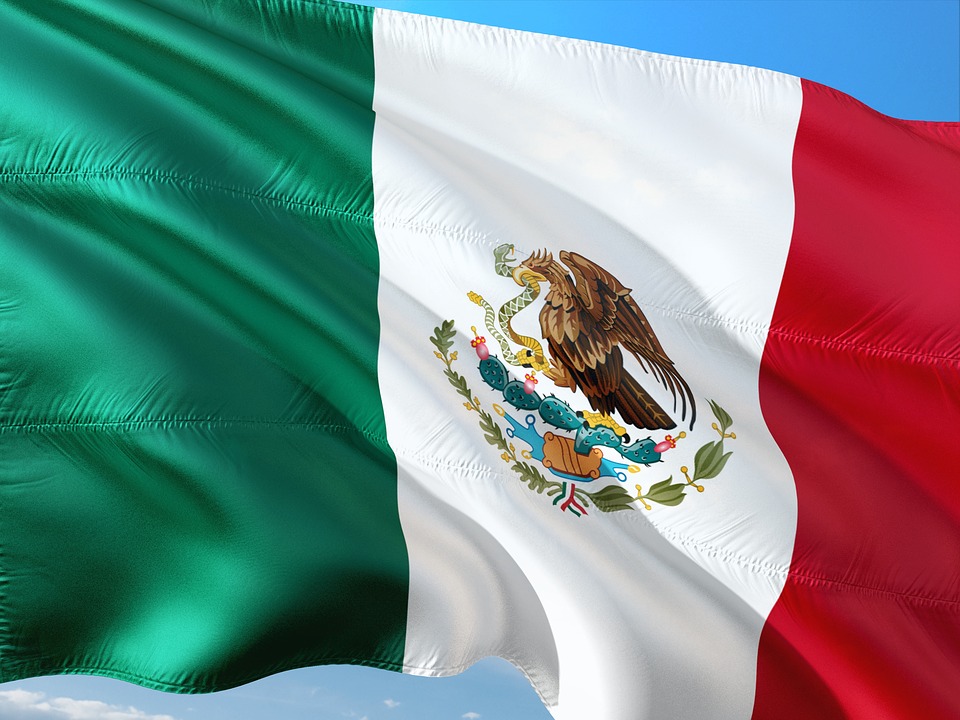
  • Mexico and CARICOM agree new areas for technical cooperation

    Mexico and CARICOM agree new areas for technical cooperation

    Photo credit: Pixabay

    Alicia Nicholls

    Caribbean Community (CARICOM) countries and the Government of Mexico have approved the seventh Mexico-CARICOM Technical Cooperation Programme (2017-2019). This was one of the main outcomes of the Fourth CARICOM-Mexico Summit held this week on October 25, in Belize City, Belize. Hailed as “a new paradigm” in cooperation between CARICOM and the Government of Mexico, the new programme will include both existing and new priority areas for development cooperation which align with those identified in the CARICOM Strategic Plan 2015-2019 and the global development agenda.

    Mexico and CARICOM have enjoyed four decades of diplomatic cooperation and friendship.  At the Third Mexico-CARICOM Summit in 2014 President of Mexico, His Excellency Enrique Pena Nieto had pledged his Government’s desire to build on and deepen those ties.

    The discussions at  Wednesday’s summit touched on several areas of cooperation, including trade and investment, public health, education, cultural cooperation, technical assistance, and cooperation on the global development agenda. A member country of the Organisation for Economic Co-operation and Development (OECD), Mexico has the world’s eleventh largest economy according to International Monetary Fund (IMF) forecast data for 2017. This makes Mexico a potentially powerful voice and ally on international issues of interest to the Caribbean, including climate action,  de-risking and the need for multilateral financial institutions to revisit graduation criteria for official development assistance.

    Disaster risk management was a major focus of the talks, as CARICOM countries and Mexico have both suffered significantly at the hands of natural disasters this year. Powerful hurricanes Irma and Maria caused major loss of life and damage in several Caribbean Islands, most tragically in Barbuda and Dominica. In September as well, Mexico was struck by Hurricane Katia around the same time that it was reeling from two devastatingly strong earthquakes within a two week span which claimed over 200 lives.

    In addition to pledging their continued support for the Paris Climate Change Agreement, the CARICOM and Mexico heads of government/State agreed to a Mexico-CARICOM Strategy for Comprehensive Disaster Risk Management which, according to the summit’s official declaration, will comprise the following three main lines of work:

    1. strengthening initiatives already in place
    2. developing a complementary cooperation agenda, such as early warning, awareness raising, emergency response, among others
    3. joint action in multilateral fora and international mobilization to further strengthen and support Caribbean institutional capabilities for disaster risk management

    The Mexican Government also made a US14 million grant to the Caribbean Catastrophe Risk Insurance Facility (CCRIF SPC), a regional catastrophe fund formed in 2007 and which has had to pay out about US$50.7 million since the start of the 2017 Atlantic hurricane season alone!

    They have also agreed to support the establishment of a hydrometeorological monitoring centre for the Caribbean region and to collaborate to ensure  the success of the CARICOM-hosted International Donor Conference planned for November 21, 2017 at the UN Headquarters, New York. This conference will seek to mobilise assistance for those hurricane-struck Caribbean islands.

    The Government of Mexico has also offered 150 scholarships for training Caribbean teachers of Spanish as a second language. This would assist in reducing the language barrier which would be one of the impediments for CARICOM exporters seeking to enter the Mexican market. According to data quoted in the CARICOM press release before the meeting, “between 2012 and 2016, imports from Mexico to CARICOM exceeded exports from CARICOM to Mexico, with Jamaica, Trinidad and Tobago, Belize, Barbados and Guyana being the main importing countries, accounting for 95 % of imports from Mexico between 2014 and 2016”.

    The Joint Declaration of the CARICOM-Mexico Summit may be accessed here.

    Alicia Nicholls, B.Sc., M.Sc., LL.B., is a trade and development consultant with a keen interest in sustainable development, international law and trade. You can also read more of her commentaries and follow her on Twitter @LicyLaw.

  • WTO Trade Facilitation Agreement: Why is it important for Caribbean Small States?

    WTO Trade Facilitation Agreement: Why is it important for Caribbean Small States?

    Alicia Nicholls

    History was made on February 22nd when the World Trade Organisation (WTO) Trade Facilitation Agreement (TFA) finally came into force. Coming into effect some four years after its conclusion at the WTO’s 9th Ministerial held in Bali, Indonesia in 2013, the TFA is a momentous achievement for the world, but also a plus for Caribbean small States which, like other developing countries, stand to benefit the most from the Agreement’s full implementation. Indeed, WTO economists estimate that full implementation of the TFA “could reduce [global] trade costs by an average of 14.3% and boost global trade by up to $1 trillion per year.”

    Economic growth was one of the three broad themes discussed at the 28th Intersessional Meeting of the Heads of Government of the Caribbean Community (CARICOM) held in Georgetown, Guyana last week. Trade, both intra- and extra-regional, is an important contributor to economic growth, employment and poverty reduction. CARICOM Secretary-General Irwin Larocque recalled that the Community “has identified the CARICOM Single Market and Economy (CSME) as the best vehicle to promote our overall economic growth and development”.

    However, despite trade accounting for between 54-135% of Caribbean countries’ GDP according to World Bank data, the region’s share in global trade has been on a decline. Export performance and investment attraction remain lacklustre. Market and product diversification remain limited. Moreover, according to the last Caribbean Trade and Investment Report published in 2010, although intra-CARICOM merchandise trade was gaining momentum, it still only comprised “a minute portion of total CARICOM trade”.

    Trade Facilitation can improve Caribbean trade

    There is no one factor which explains the region’s declining trade performance or the still limited intra-CARICOM trade. For instance, a 2015 Compete Caribbean study noted that except for three countries, customs and trade regulations were found not to be a significant obstacle for doing business. With regard to intra-regional trade, high transportation costs remain one of the biggest barriers. However, with regard to extra-regional trade, a 2013 World Bank Report highlighted the low customs performance of Caribbean countries’ despite their high trade openness.  Another World Bank report noted that port handling charges in the Caribbean “can be two to three times higher than in similar ports in other regions”.

    Unnecessarily burdensome border procedures and costly border fees make it difficult for exporters to access other markets, even where trade agreements or preferential arrangements exist. This is made even more difficult in cases where customs and other administrative procedures are opaque and rely largely on paper-based processes as opposed to electronic payments and e-documents. While large firms can invest the time, human and financial resources in navigating complex border rules and procedures in other markets, small-and medium sized enterprises (SMEs)’s often lack this luxury. Add in a foreign language, and it gets even more complicated. Improving trade facilitation can help boost Caribbean countries’ competitiveness, while facilitating policies and support structures can assist Caribbean firms’ access to regional and international markets. After all, States do not trade, firms do.

    The TFA addresses one of the biggest constraints of SMEs seeking to do business internationally through the simplification, harmonisation and modernisation of customs procedures, while also fostering transparency and reducing transaction costs. The TFA includes provisions aimed at facilitating the release and clearance of goods through customs, requires States to publish rules and procedures and to establish contact points for enquiries, facilitates border agency cooperation, provides procedures for appeal and review and disciplines for fees and penalties, inter alia.

    Developed countries have committed to implementing all of the provisions of the Agreement upon its entry into force, which means accessing those markets should be easier at least from a customs standpoint. Like other WTO developing country and Least Developed Country (LDC) Member States, Caribbean countries’ implementation of the TFA will be based on their ability to do so. Member States are allowed to schedule their commitments for the Agreement’s provisions into three categories: A, B, C, with category A commitments being those which the Member State can implement upon the Agreement’s entry into force (or within one year of entry into force for an LDC). Importantly for Caribbean countries, they will also have access to the Trade Facilitation Agreement Facility which was established to assist developing countries and LDCs in their implementation efforts.

    In a world with increasingly globalised supply chains, the smooth flow of trade across borders is important for improving Caribbean countries’ competitiveness and ability to participate in Global Value Chains (GVCs). Implementing the reforms pursuant to the TFA can also be beneficial for intra-regional trade, through the harmonisation of customs procedures.

    Trade facilitation has other benefits as well, as noted in the WTO study on this issue. An improved trade and investment climate increases the attractiveness of a country for foreign direct investors. Moreover, transparent customs procedures reduce the opportunity for customs fraud and corruption, and improves revenue collection. It should be noted that not only are foreign direct investment inflows critical for Caribbean economies, but customs and other import taxes remain an important revenue source for many Caribbean governments.

    Trade Facilitation Measures in the Caribbean

    The encouraging news is that several Caribbean countries have begun trade facilitation reforms, including improvements in port infrastructure and simplification of customs procedures in recent years. As was noted in the World Bank’s Doing Business Report – 2017, Antigua & Barbuda removed the requirement of a tax compliance certificate for import customs clearance, while Grenada streamlined its import document submission procedures.  Haiti has allowed the submission of supporting documents online under its SYDONIA electronic data interchange system.

    Trinidad & Tobago was among the first countries to ratify the TFA, while Belize, Guyana, Grenada, Jamaica, St. Kitts & Nevis, St. Lucia and Dominica have also ratified the Agreement. Trinidad & Tobago (in regards to advance rulings) and the Dominican Republic (has not yet ratified the TFA) and Jamaica (authorised traders) are among several countries which have been identified as case studies in the implementation of trade facilitation measures.

    With the help of a loan from the Inter-American Development Bank (IDB) Barbados (which has not yet ratified the TFA) has introduced an Electronic Single Window, part of a wider competitiveness programme. Through its Global Logistics Initiative, Jamaica is seeking to take advantage of its location in one of the world’s busiest shipping lanes to become the premier logistics node within the Americas. However, in light of increased competition from other parts of the world, particularly for global investment flows, there is the need for the region to increase the pace of its trade facilitation reforms.

    What is next?

    Given the benefits that the at-the-border and behind-the-border reforms pursuant to the TFA can have for regional SMEs and for facilitating Caribbean trade, it is hoped that other Caribbean countries will ratify the Agreement. For those which have not yet done so, ratification of the Agreement could serve as a powerful signal to investors of their commitment to trade and business facilitation.

    Caribbean countries should move expeditiously to develop and implement national strategies for trade facilitation. This would involve assessing their country’s readiness to implement the various provisions of the TFA through identifying capacity gaps and implementation needs, on which basis they will categorise the provisions and make their notifications. Implementation capacity, of course, varies from one country to another. Caribbean countries should also continue to make use of technical and financial assistance and capacity building support for the implementation of the measures.

    Alicia Nicholls, B.Sc., M.Sc., LL.B., is a trade and development consultant with a keen interest in sustainable development, international law and trade. You can also read more of her commentaries and follow her on Twitter @LicyLaw.