
Tag: caribbean community

  • CARICOM 28th Inter-Sessional Meeting; Economic Development and International Relations centre-stage

    CARICOM 28th Inter-Sessional Meeting; Economic Development and International Relations centre-stage

    Source: Pixabay

    Alicia Nicholls

    On February 16-17, Heads of Government of the 15-member Caribbean Community (CARICOM) converged in Georgetown, Guyana for the Twenty-Eighth Inter-Sessional Meeting of the Conference of Heads of Government.

    The meeting, which was chaired by President of Guyana, His Excellency Brigadier (Retd’), David Granger, addressed a wide array of issues currently confronted by the Community. However, economic development and International Relations were among the three broad identified by CARICOM Secretary General, Ambassador Irwin LaRocque, in his opening remarks to the conference. The third was crime and security.

    Ambassador LaRocque noted that the issue of economic development, including economic growth, was foremost, observing that the majority of CARICOM member States have been struggling with low growth, high debt and fiscal pressure. Further to this point, it should be noted that just last week the Caribbean Development Bank stated that although they project the Region to experience economic growth of approximately 1.7 percent in 2017, they also suggested that “this will not be enough to stimulate employment, particularly among youth, and reduce high regional debt levels”, and that a long term plan was needed to “facilitate the Region’s participation in global supply chains and drive sustainable economic growth”.

    Ambassador LaRocque highlighted the importance of collective action to confront the problems facing the region, and reiterated the fact that the CARICOM Single Market & Economy (CSME) had been identified by member States as the “best vehicle” to promote our overall economic growth and development.

    Indeed, a  major discussion point in the meeting was the status of the CSME. According to the official communique from the meeting, the Heads of Government received a review of the status of the CSME and noted the “the significant progress” in its implementation. They also agreed on priority areas to be addressed, including the challenges of payments for goods and services traded within the Region and the completion of the protocol on procedures relating to the facilitation of travel. They also supported the need for continually reviewing the impact of the CSME in both achieving the objectives of the Revised Treaty of Chaguaramas and on the lives of CARICOM peoples.

    According to the communique, the Heads of Government also considered some impediments to furthering the CSME. Noting the importance of transportation to the movement of Community nationals, they called for a focused discussion on transportation in the context of the integration movement and also urged greater collaboration among the regional airlines.

    Indeed, transportation issues also featured in the Heads of Government’s discussion on tourism,  which they reiterated was a vital sector for CARICOM member States. Inter alia, the Heads of Government called for “an urgent meeting of the Council for Trade and Development (COTED)-Transportation to address air transport issues in particular, including those related to the tourism sector”.

    De-risking strategies of global banks, which include the restriction or withdrawal of correspondent banking services to banks in the region, was again an important agenda item. The Heads of Government endorsed the need for a continued regional approach to the challenge, including continued concerted action and advocacy. To this end, they considered the Strategy and Action Plan submitted by the Committee of Central Bank Governors and directed the Committee of Ministers of Finance with responsibility for Correspondent Financing to assume oversight of the roll-out.

    Turning to the issue of international relations, the recently concluded negotiations by the CARICOM-Cuba Joint Commission on the Second Protocol to the Trade and Economic Cooperation Agreement was welcomed by the Heads of Government, who agreed that it would strengthen the economic relations and cooperation between CARICOM and Cuba.

    US-CARICOM relations was another important agenda item. The Heads of Government welcomed the US-Caribbean Strategic Engagement Act of 2016. Emphasising the importance of the long-standing relationship between CARICOM and the US, the Heads of Government expressed their desire to continuing the “fruitful and mutually beneficial relationship with the new US Administration”.

    CARICOM is part of the Caribbean sub-grouping of the Africa, Caribbean & Pacific (ACP) group. In light of the impending expiration of the Cotonou Agreement in 2020, Heads of Government noted the Cotonou Agreement’s importance as “a unique and valued instrument from which CARICOM has benefited with regard to trade, development co-operation and political dialogue with Europe” and suggested that the Agreement be renewed. Heads of Government also expressed their desire for the ACP to be strengthened, emphasising that membership in the ACP Group “remains a valuable construct which has facilitated relations with Africa and the Pacific”.

    Besides these issues, the Heads of Government also discussed the on-going border disputes between Belize and Guatemala, and Guyana and Venezuela, relations with the Dominican Republic, an update on preparations for CARIFESTA, inter alia.

    The full communique may be viewed here.

    Alicia Nicholls, B.Sc., M.Sc., LL.B., is a trade and development consultant with a keen interest in sustainable development, international law and trade. You can also read more of her commentaries and follow her on Twitter @LicyLaw.
     

  • Citizenship by Investment receipts help power economic recovery in Eastern Caribbean Countries

    Citizenship by Investment receipts help power economic recovery in Eastern Caribbean Countries

    Alicia Nicholls

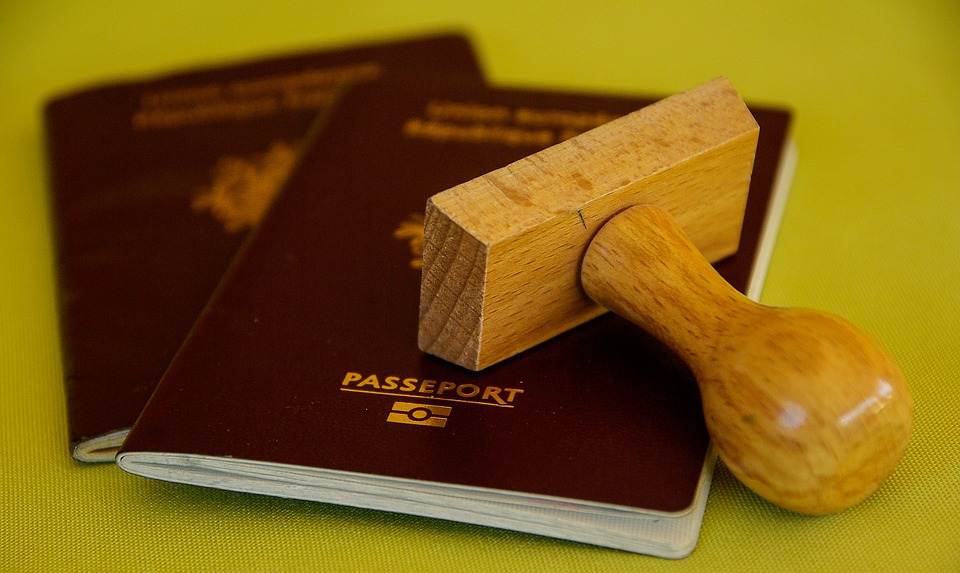
    Receipts from citizenship by investment programmes (CIPs) continue to be a major contributor to economic recovery in the Eastern Caribbean Currency Union (ECCU). This is according to the International Monetary Fund’s latest Staff Report on the ECCU released this month (October 2016).

    CIPs have been an important development tool in Eastern Caribbean countries. In January 2016 St. Lucia became the 5th ECCU country to institute a CIP. The other ECCU countries which run CIPs are St. Kitts & Nevis, Grenada, Dominica and Antigua & Barbuda.

    According to the IMF, most ECCU governments continued to rely on CIP inflows to fund their budgets in 2015. CIP inflows were highest in St. Kitts and Nevis, which has the world’s longest running CIP. In that country, CIP revenues to the public sector were at 17.4 percent of GDP. The report also noted that inflows reached 7.9 percent of GDP in 2015 in Antigua and Barbuda and 3.6 percent in Dominica.

    However, the IMF did mention several potential downsides to the sustainability of the CIPs, including the increased competition ECCU CIPs face not only amongst themselves but from other CIPs and residency programmes worldwide, including Malta’s. Other risks the IMF mentioned include rising global migration pressures, elevated security concerns and geopolitical tensions which may trigger adverse actions by the international community, including suspension of visa-free travel for citizens of CIP countries.

    In order to improve the sustainability of the programmes, the IMF also encouraged authorities to “develop a strong, regionally accepted set of principles and guidelines for citizenship by investment programs in order to enhance their sustainability” The staff suggested that the authorities share due diligence information on clients to prevent citizenship shopping in cases where an application is rejected by one jurisdiction.

    The IMF cited the need to improve the management of the programmes and cautioned against over-reliance on CPI revenues for funding recurrent budgetary operations. Mindful of the threat posed by natural disasters, the IMF posited that CIP countries save the bulk of the CPI revenues in a well-managed fund to address natural disaster shocks and to fund disaster resilient infrastructure.

    Arguing that a comprehensive governance framework is crucial to mitigating increased risks facing CIPs, IMF also recommended more transparency by making data on the programmes public and subject to financial audits.

    The full IMF Staff Report for the ECCU may be viewed here.

    Alicia Nicholls, B.Sc., M.Sc., LL.B. is a trade and development consultant with a keen interest in sustainable development, international law and trade. You can also read more of her commentaries and follow her on Twitter @LicyLaw.
  • CARICOM Council of Ministers meeting

    Alicia Nicholls

    The CARICOM Community Council of Ministers is currently having its 37th meeting in Georgetown, Guyana.  The Council is the second highest organ of the Community (after the Conference of the Heads of Government) and has primary responsibility for the development of Community strategic planning and coordination in the areas of economic integration, functional cooperation and external relations.

    According to a news report by CARICOM Today, the items on the agenda are the Community Secretariat’s Work Programme and the budget for 2016. They are informed by the Community Strategic Plan 2015-2019 which seeks to reposition CARICOM. The Council, which consists of Ministers responsible for Community affairs or any other Minister designated by Member States, functions as a preparatory body for meetings of Heads of Government. The Council’s work at this session will inform the agenda at the upcoming Twenty-Seventh Inter-Sessional Meeting of the Conference of the Heads of Government in Belize next month.

    In his address to the Council, CARICOM Secretary General Ambassador Irwin LaRocque noted that the reform process was currently moving apace and that a planning, monitoring and evaluating system for the Strategic Plan is being developed with financing from the Caribbean Development Bank. He made reference to the development of a strategic business plan for the CARICOM Secretariat guided by the Change Management Office. Citing the historic Cop21 Paris Agreement, Ambassador LaRocque emphasised that “[CARICOM’s] achievements have been rooted in [its] united actions”and urged the need to carry this approach forward in the region’s efforts to provide a “safe, viable and sustainable Community for all citizens”.

    This view was also reiterated by  the Hon. Wilfred Elrington, Minister of Foreign Affairs of Belize and Chairman of the Community Council of Ministers of CARICOM.   Addressing the Council, Chairman Elrington emphasised the importance of building on the successes attained, stressing that the region’s challenges can only be overcome by “resolute collective action”. He noted the need to make governance arrangements more “flexible and dynamic”.

    Chairman Elrington also took the opportunity to encourage all remaining member states which have not yet done so to make CARICOM’s Caribbean Court of Justice (CCJ) their appellate court. To date Barbados, Belize, Dominica and Guyana are the only member states which have accepted the CCJ as their final court of appeal. He expressed Belize’s pleasure with the “excellent results” it has received from the Court thus far.

    Further information on the 37th Council Meeting may be obtained from CARICOM Today.

    Alicia Nicholls, B.Sc., M.Sc., LL.B. is a trade and development consultant with a keen interest in sustainable development, international law and trade. You can also read more of her commentaries and follow her on Twitter @LicyLaw.

  • Belize assumes CARICOM Chairmanship

    Alicia Nicholls

    Prime Minister of Belize, the Hon Dean Barrow, has assumed the chairmanship of the Caribbean Community (CARICOM) from January 1st, 2016.

    The chairmanship of CARICOM operates on a fixed rotating schedule with the Head of Government of each Member State assuming chairmanship for a six month stint each. Mr. Barrow, whose  United Democratic Party won its third successive term of office following general elections in November 2015, succeeds Prime Minister of Barbados, the Rt. Hon Freundel Stuart to the Community’s chairmanship. Mr. Stuart had been chairman from July 1st- December 31st.

    In his End of Year Message, the then outgoing chairman, Prime Minister Stuart of Barbados, deemed 2015 “a year of great importance” to the Region, highlighting that 2015 had “demonstrated in no uncertain terms the value of the Caribbean regional integration project to our Caribbean Community (CARICOM), and the influence that our united front can wield in the international arena”.

    Though lamenting the devastation caused by Tropical Storm Erika, Prime Minister Stuart pointed out several CARICOM achievements on the international front, namely the successes at three important conferences: COP21, Financing for Development and UN Post 2015 Development Agenda, and the election of Dominica-born Baroness Patricia Scotland as the first female Secretary General of the Commonwealth. On the regional sphere, Mr. Stuart mentioned the movement made by Member States on the implementation of the CSME Application Processing System (CAPS) , the establishment of the Caribbean Centre for Renewable Energy and Energy Efficiency (CCREEE) and the work of the CARICOM commisions on Human Resource Development and on reparations.

    The new chairman Mr. Barrow, who will hold the Chairmanship reins from January 1st to June 30th, last held chairmanship of the Community in 2009. At the start of this current stint, Chairman Barrow articulated his vision for the Community in his New Year’s message which is available for download on CARICOM Today’s website. Though recognising the harsh economic climate still facing the Region, Mr. Barrow stated that the Community’s resolution is to “continue to strengthen our integration movement to deliver ever-increasing benefits to the people of our Community”.

    To this effect, he outlined several goals which the Community will be working towards in 2016, including:

    • Becoming “more efficient and effective in the conduct of [CARICOM] affairs”,
    • Increasing “the pace of the reform process which includes the Community Five-Year Strategic Plan 2015-2019 “,
    • Encouraging more CARICOM members to sign on to the appellate function of the Caribbean Court of Justice. So far only Barbados, Guyana, Belize and Dominica recognise the CCJ as their final court of appeal,
    • Making the governance arrangements “more flexible and dynamic”, including revising the “arrangements for [the] integration movement to become more effective and relevant to the needs of our people”,
    • Working towards the consolidation of the Single Market,
    • Increasing efforts to combat crime “through initiatives which target those most at risk in our societies”,
    • Using CARICOM’s coordinated foreign policy “to advocate at every opportunity for urgent implementation” of decisions  taken on Financing for Development, the 2030 Development Goals and Climate Change.

    With a clarion call for CARICOM to strive to make 2016 one to remember as “a landmark year for our integration movement”, Mr. Barrow also rightly noted:

    The base factor in whatever we have achieved has been the strength of our unity.  That was never more evident than in the manner in which we rallied together to attain our objectives at the three major international conferences in the past year, particularly at COP 21 in Paris.

    I wish Mr. Barrow a successful tenure.

    Alicia Nicholls, B.Sc., M.Sc., LL.B. is a trade and development consultant with a keen interest in sustainable development, international law and trade. You can also read more of her commentaries and follow her on Twitter @LicyLaw.