Tag: CARICOM

  • Helms-Burton and CARICOM-Cuba Trade

    Helms-Burton and CARICOM-Cuba Trade

    Alicia Nicholls

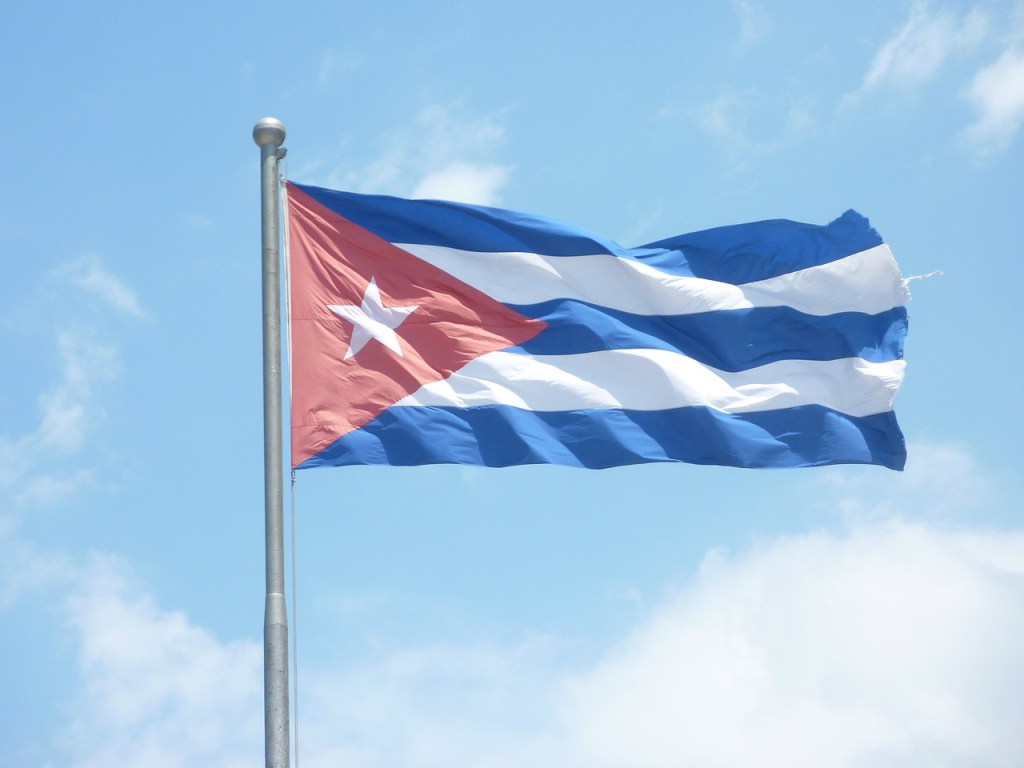
    Last week (April 17, 2019), United States (US) Secretary of State, Mike Pompeo, announced that the US will for the first time enforce the provisions of Title III of the Cuban Liberty and Democratic Solidarity (LIBERTAD) Act of 1996. Title III gives US citizens, who were owners of private properties in Cuba confiscated by the Cuba Government following the 1959 revolution, the right to bring claims against foreign individuals and entities utilizing or deriving economic benefits from those confiscated properties.

    Because of the threat of legal challenges being brought by third States before the World Trade Organisation (WTO), President Bill Clinton, as well as his successors President George W. Bush and President Barack Obama never enforced Title III. However, the Trump Administration has indicated that it will start enforcing these provisions with effect from May 2, 2019.

    Given the extraterritorial nature of this development, this article briefly explores what possible implications this development may have for CARICOM firms which currently trade or invest in Cuba or are seeking to do so.

    Background 

    The LIBERTAD Act, more commonly known as the Helms-Burton Act, gives legislative force to the commercial, financial and economic embargo which the US has imposed on Cuba since the 1960s to force regime change in that Caribbean country. It is an embargo which the international community has condemned as illegal, immoral and ineffective.

    Title III (Protection of Property Rights of United States Nationals) of the Helms Burton Act gives US nationals, whose property was confiscated (that is, nationalised or expropriated) by the Government of then Cuban leader Fidel Castro following the Cuban Revolution of 1959, the right to bring an action in US federal courts against any person who “traffics” in confiscated property.

    Three main things should be noted here. Firstly, the definition of “traffics”, as used in Title III, is broad. It includes for example not just selling, transferring, etc confiscated property, but engaging in a commercial activity using or otherwise benefiting from confiscated property, inter alia.  This means, for example, that the US owner of a piece of property, such as a hotel plant, confiscated by the Castro Regime, can bring an action  in the US courts against any foreign firm which uses that hotel plant or even more nebulously, “engages in a commercial activity using or otherwise benefiting from” that hotel plant.

    Secondly, claims can also be brought by persons who were not US nationals at the time their property was confiscated, which would include Cuban-Americans who are now naturalized US citizens. This, therefore, potentially increases the number of claims that could be brought. According to the US Department of Justice’s data, the US Foreign Claims Settlement Commission adjudicated a total of 8,821 claims in the Cuba program, of which it found 5,913 to be compensable.

    Thirdly, the Act is extraterritorial in reach. It empowers US citizens who are owners of confiscated property to bring claims in US courts against any “person” who traffics in said confiscated property. The term “person” is defined in the Act as “any person or entity, including any agency or instrumentality of a foreign state.” Moreover, under Part IV (Exclusion of Certain Aliens) foreign nationals and their spouses and minor children may be barred from entry into the US if found to have converted confiscated property for personal gain or traffic in confiscated property.

    These draconian provisions are meant to act as a deterrent to businesses from third States seeking to invest or do business in Cuba, in an effort to undermine  the Cuban economy. They are also a fetter on the sovereignty of third States wishing to trade with Cuba, which raises questions about their compatibility with international law, and more specifically, international trade law.

    Indeed, back in the mid-1990s, the EU had sought to challenge the compatibility of the Helms-Burton with WTO rules. This challenge was withdrawn after President Clinton agreed to suspend the right to private action under Title III. The Act allows the President to suspend Title III for up to six months at a time if deemed to be in US national security interests. Presidents Bush II and Obama also suspended this right of private action. In fact, the Obama administration saw an attempt at the normalization of US-Cuba relations, including the resumption of diplomatic ties. The Trump Administration, however, has taken a hard lined stance on Cuba. In January 2019, the US Department of State released a statement indicating they would only give a 45 day extension of the Title III suspension while undertaking a “careful review”. This ultimately led to the decision of April 17, 2019 to no longer suspend Title III.

    Possible Implications of Helms-Burton Right of Action on CARICOM-Cuba Trade

    What does this development mean for CARICOM-Cuba trade potentially? CARICOM countries and Cuba have a long history of cooperation and friendship, most notably in the areas of education, health and culture. Turning to trade, CARICOM has a bilateral partial scope trade agreement with Cuba known as the Trade and Economic Cooperation Agreement (TECA) which was signed in 2000. It is a partial scope agreement in that it liberalizes trade between a limited number of goods between the parties, with the contemplation that a free trade agreement would eventually be negotiated. It also includes limited provisions on cooperation in other trade-related areas. Although a second protocol to the Agreement was signed in 2017, including an expansion of the list of goods, no free trade agreement exists as yet.

    Regrettably, detailed statistics on the level of CARICOM-Cuba trade or CARICOM firms’ level of foreign direct investment (FDI) into Cuba have been difficult to obtain. According to an ECLAC study entitled “An Assessment of the Performance of CARICOM Extraregional Trade Agreements” published in 2015, Cuba was the destination for 0.11% of CARICOM exports in 2013. According to a June 2018 press release from the Trinidad & Tobago Ministry of Trade and Industry, “Trinidad and Tobago is currently Cuba’s largest CARICOM trading partner, recording 80% of trade in the region”. Reporting from the Guardian Newspaper of Trinidad reveals that Trinidad & Tobago “ex­port­ed an es­ti­mat­ed $456 mil­lion in goods to Cu­ba in 2016 and im­port­ed $37 mil­lion worth of prod­ucts” and Trinidad is one of Cuba’s biggest trading partner in the LAC region.

    Although CARICOM-Cuba merchandise trade remains small, the Obama-era roll-backs saw increased interest on the part of CARICOM firms in exploring Cuba as a potential market. Caribbean countries have established or sought to establish trade liaisons in their Cuba-based diplomatic missions. The establishment of a direct air link via the Trinidad & Tobago-based Caribbean Airlines also made it easier for tourism and scoping out business opportunities.

    Regrettably, the current US administration’s  hardened stance potentially creates a cloud of uncertainty for CARICOM firms currently doing business or seeking to do business in Cuba. Once Title III goes into effect, Caribbean firms found to be dealing in confiscated property could be exposed to costly litigation before US courts and persons found liable face possible barred entry of themselves and their immediate families to the US. Extra-regionally, some countries, such as Canada’s Foreign Extraterritorial Measures Act (FEMA) and the EU’s Blocking Statute, bar the enforcement and recognition of US judgments under Title III of the Helms-Burton Act. I am uncertain whether any Caribbean country has a similar Act, and this is something on which CARICOM firms should seek counsel from their attorneys-at-law.

    It should be noted that those firms which would be most likely impacted would be US firms which invested in Cuba during the Obama-era détente, as well as European firms which have substantial business interests in Cuba, notably in the tourism sector. For this reason, it is no surprise that the EU, Canada, UK and Mexico have strongly condemned this latest action by the Trump Administration. The EU has stated that it would “consider all options at its disposal to protect its legitimate interests, including in relation to its WTO rights”.

    As I noted earlier, the extraterritorial application of the US Helms-Burton Act is of questionable legality under international law and meant to scare businesses from investing in Cuba in an effort to cripple the Cuban economy. Therefore, I am by no means advocating that CARICOM firms should stop investing in Cuba. What they should do, however, is to pay careful attention to this development and seek legal advice from their attorneys to ascertain and mitigate any current or potential areas of legal exposure.  For example, they should ascertain whether any property from which they are seeking to benefit commercially, is currently subject to a US claim. That said, however, the prospects of legal challenges before the WTO, as well as the upcoming US presidential election due in 2020, means that the durability of this policy reversal is not guaranteed.

    Alicia Nicholls, B.Sc., M.Sc., LL.B., is an international trade and development consultant with a keen interest in sustainable development, international law and trade. You can also read more of her commentaries and follow her on Twitter @LicyLaw.

  • Caribbean Trade & Development Digest – April 7 – 13, 2019

    Caribbean Trade & Development Digest – April 7 – 13, 2019

    Welcome to the Caribbean Trade & Development Digest for the week of April 7-13, 2019! We are happy to bring you the major trade and development headlines and analysis from across the Caribbean Region and the world from the past week.

    HIGHLIGHTS

    In this week’s highlights, the United States Trade Representative (USTR) released a list of Products for Tariff Countermeasures in Response to Harm Caused by EU Aircraft Subsidies. In response, the EU has indicated it aims to put tariffs on $12 billion of US exports.

    In Brexit news, the EU granted the Theresa May UK Government a six month extension to October 31, 2019. Read more here.

    Trade was a major topic looming over the IMF/World Bank Spring Meetings held this week. The IMF released its April Outlook in which it noted a deceleration in global growth on the back of several factors, including rising trade tensions. Read the Outlook here. Also watch the panel discussion on “How Trade can promote growth for all” here.

    The 12th Annual Update on WTO Dispute Settlement, which provided an overview and discussion on WTO dispute settlement cases and developments in 2018, was held this week. Watch the playback here!

    REGIONAL NEWS

    Trade between GCC, Latin America and the Caribbean hit $16.3b in 2018

    Gulf News: Trade flows between GCC countries and Latin America and the Caribbean (LAC) reached $16.3 billion (Dh59.86 billion) in 2018, while the UAE remained a top trading partner in the Gulf region for LAC countries, according to a new report conducted by Inter-American Development Bank (IDB) in cooperation with the Dubai Chamber of Commerce and Industry. Read more 

    Consumer and Business Confidence Up in Jamaica

    Caribbean360: Consumer and business confidence in the economy have recorded increases for the first quarter of 2019. Read more

    Jamaica deepens ties with China

    Jamaica Observer: The Government yesterday signed a Memorandum of Understanding with the People’s Republic of China on that country’s Belt and Road Initiative (BRI), to deepen cooperation and partnership between the two nations for economic development. Read more

    Guatemala’s Fishing Trade Spells Trouble for Belize

    The Reporter: An investigation into Guatemala’s thriving shark fishing industry reveals serious concerns for our country and fisherfolk. In February 2019, a team of investigative journalists from The Reporter traveled to southern Belize, then to Guatemala to evaluate the number and scope of sharks, fish and other marine species poached from Belizean waters and exported to Guatemala. Their findings were startling and it was discovered that this issue has deep roots. Read more 

    The Dominican Republic opens plant species and variety registration office

    Fresh Plaza: The Ministry of Agriculture opened the Plant Species and Varieties Registration Office (OREVADO), which seeks to guarantee the institutional framework for people who want to develop new varieties of vegetable crops, innovate in the transfer of technology or invest in production, i.e. breeders. Read more 

    Dominican Republic leads Caribbean economies

    Global Finance: The economy of the Dominican Republic is set to surpass its regional neighbors this year, notching the highest growth in the Caribbean region. The DR has been gaining attention for its ability to maintain steady robust economic growth. In 2018, GDP rose by 7%, and the latest report by the country’s central bank says all industries are expanding—and that its free-trade zones in particular are drawing investment. Read more

    Atlantic International Bank maintains innocence in US Federal Trade Commission accusations but faces international ramifications

    LoveFM: Atlantic Bank International is currently unable to process wire transfers, in and out, for its overseas customers who are in need of Belize currency. The stoppage in this service is the direct result of the Bank of New York issuing a ban against Atlantic Bank International after the US Federal Trade Commission has roped in Atlantic Bank International as an ally in the Sanctuary Bay multi-million-dollar scheme that saw several US investors lose money in a project that never came to fruition. Read more

    CDB Grant Stirs Up Fuss About Regional White Sugar

    Jamaica Gleaner: The April 2 announcement of a more than US$97,000 gift from the Caribbean Development Bank, CDB, to Caricom for a study on plantation white sugar has Jamaican manufacturing representatives lining up on different sides of the hot-button issue. Read more 

    Govt to build nation’s quality standards system – Sutherland

    Barbados Today: “Government considers this goal as urgent, and of very
    high priority, in our efforts to enhance the national competitiveness of our local micro-small and medium size (MSMEs) businesses, industries and the promotion of fair trade,” he said. Read more 

    CARICOM vital to regional development: Grenada’s new envoy

    Caribbean News Service: CARICOM has been an indispensable force, says new envoy. Read more 

    Call for Caribbean to speak out

    Barbados Today: The Minister for tourism has issued a call for the Caribbean to take a defiant stand against the international community’s imposition of standards on small states – even as his own Government was racing to comply with new financial reporting rules set by a global watchdog. Read more

    US report names several Caribbean nations as “major money laundering” centres

    Caribbean News Now: In the latest US International Narcotics Control Strategy Report (INCSR), volume two dedicated to money laundering, the report lists all major Caribbean and Central American countries as “Major Money Laundering Jurisdictions” for the year 2018: Antigua and Barbuda, Aruba, The Bahamas, Barbados, Belize, British Virgin Islands, Cayman Islands, Colombia, Costa Rica, Cuba, Curacao, Dominica, Dominican Republic, El Salvador, Guatemala, Guyana, Haiti, Honduras, Jamaica, Mexico, Nicaragua, Panama, St Kitts and Nevis, Saint Lucia, St Vincent and the Grenadines, St Maarten, Suriname, Trinidad and Tobago and Venezuela. Read more 

    INTERNATIONAL NEWS

    Argentine Elections Could Narrow Brazil’s Mercosur Reform Path

    Stratfor: Brazilian President Jair Bolsonaro’s push to reform the trade policy of the Common Market of the South (Mercosur) risks collapsing without the support of Argentina. Read more

    Ambassadors pave the way for EU-US trade talks, despite French opposition

    Euractiv: Europe is set to start trade talks with the US after ambassadors gave their green light on Thursday (11 April) to a proposed mandate for the European Commission to conduct the negotiations on behalf of the 28 EU member countries. Read more

    EU27 is now free to hold summits without the UK

    Euractiv: The EU27 will be free to hold official Council meetings and make decisions without the UK despite the country still being a member of the Union, in a move seen as a success for France’s President Macron, who led calls for the restrictions. Read more

    Tokyo and Washington finally set to kick off trade talks as American farmers fume over poor Japan access

    Japan Times: This week, negotiators from Japan and the United States will meet in Washington to address something that U.S. President Donald Trump considers to be long overdue: trade negotiations to open the Japanese market to more American goods. Read more

    China-US trade deal could threaten Beijing’s other trading partners, IMF says

    South China Morning Post: Any trade deal between China and the United States must comply with multilateral rules, as not doing so may create economic risks for the Asian nation’s other major trading partners, the International Monetary Fund said. Read more 

    South Korea WTO appeal succeeds in Japanese Fukushima food dispute

    Reuters: South Korea won the bulk of its appeal on Thursday in a dispute at the World Trade Organization over import bans and testing requirements it had imposed on Japanese seafood in the wake of the 2011 Fukushima nuclear disaster. Read more 

    China has good reasons to join Pacific Trade pact, but obstacles remain

    The Strait Times: If China joined a massive Pacific trade deal, it could create hundreds of billions of dollars in extra income and spur domestic reforms, say analysts, but signing up would be far easier said than done. Read more 

    China, US could win big on no-deal Brexit: UN

    France24: If Britain leaves the EU without a deal, the bloc and Britain’s smaller trading partners stand to lose big, but Beijing and Washington could reap huge benefits, the UN said Tuesday. In a fresh report, the UN Conference on Trade and Development (UNCTAD) examined what repercussions it would have for Britain’s trading partners if the country crashes out of the European Union without a deal. Read more 

    Commission releases detailed information on requirements for EU goods exported to the UK in case of a hard Brexit

    EU: The European Commission has included in its Market Access Database detailed information on the rules that the UK would apply on its imports from the EU in the event of a hard Brexit. It is based on information made publicly available by the United Kingdom authorities. Read more

    EU foreign investment screening regulation enters into force

    EU: The new EU framework for the screening of foreign direct investments has officially entered into force on 10 April 2019. The new framework is based on proposal tabled by the European Commission in September 2017 and will be instrumental in safeguarding Europe’s security and public order in relation to foreign direct investments into the Union. Read more

    India reduces trade deficit with China by $10 billion in FY19

    CNbcTV: India’s trade deficit with China fell by $10 billion to $53 billion in FY19 on the back of lower imports, officials told CNBC-TV18. The downtick in the merchandise trade gap was also aided by new market opportunities arising out of the US-China trade war in the neighbouring nation. Read more 

    India’s trade ministry says no legal basis to ban e-cigarette imports

    Economic Times: India’s trade ministry says it cannot impose a ban on electronic cigarette imports as there is no legal basis for doing so, an internal government memo viewed by Reuters shows, in a boost for those looking to tap into the country’s growing vaping market. Read more 

    Africa’s new free trade area faces bumpy road to full implementation

    Global Trade Review: The Gambia has become the 22nd nation to ratify the African Continental Free Trade Area (AfCFTA), the number required for the agreement to take effect. While this marks a significant step towards the continent’s ambition to create a single market, the free trade area will face a bumpy road to full implementation. Read more 

    Why no-deal Brexit could be a win for South Africa

    Business Tech: A no-deal Brexit could damage smaller economies trading with the United Kingdom (UK) – but bring substantial gains for China and other trading partners such as South Africa. Read more 

    A US-EU trade war would be a political and economic mistake, says French finance minister

    CNBC: With global growth already slowing down, starting a trade war now between the U.S. and the European Union would be both a political and economic mistake, French Finance Minister Bruno Le Maire said Thursday. Read more 

    Brexit: UK and EU agree delay to 31 October

    BBC: European Union leaders have granted the UK a six-month extension to Brexit, after late-night talks in Brussels. The new deadline – 31 October – averts the prospect of the UK having to leave the EU without a deal on Friday, as MPs are still deadlocked over a deal. Read more

    EU Commission split on fertiliser anti-dumping duties

    Independent: A serious spat involving two arms of the EU Commission has erupted over attempts by the fertiliser industry to have anti-dumping duties imposed on liquid urea ammonium nitrate (UAN). Read more 

    EU-U.S. Trade War Escalates Over Disputed Aviation Subsidies

    Bloomberg: The European Union is preparing retaliatory tariffs against the U.S. over subsidies to Boeing Co., significantly escalating transatlantic trade tensions hours after Washington vowed to hit the EU with duties over its support for Airbus SE. Read more

    Report to Congress on China’s Engagement with Latin America and the Caribbean

    The following is the April 11, 2019 Congressional Research Service Insight report, China’s Engagement with Latin America and the Caribbean. Read more 

    EU aid increases, bucking global trend

    Euractiv: Development aid spending by EU members saw a slight increase to $87 billion in 2018 (€77 billion) compared to 2017, according to new data published by the Organisation for Economic Co-operation and Development (OECD). Read more 

    WTO NEWS

    VACANCY: Young Professionals Programme – Apply by April 15, 2019

    The WTO Young Professionals Programme was launched in 2016 as an opportunity for qualified young professionals from developing and least-developed countries that are members of the WTO to enhance their knowledge regarding WTO and international trade issues. Read more 

    WTO’s Trade Policy Review Mechanism turns 30

    The WTO marked on 12 April the 30th anniversary of the Trade Policy Review Mechanism (TPRM), which over the last three decades has contributed to ensuring and facilitating the smooth functioning of the multilateral trading system by enhancing the transparency of WTO members’ trade policies. Read more 

    Registration opens for screening of second compliance panel meeting in “EC — Large Civil Aircraft”

    At the request of the parties in the dispute “European Communities and Certain Member States — Measures Affecting Trade in Large Civil Aircraft: Recourse to Article 21.5 of the DSU by the European Union and Certain Member States” (DS316), the panel has decided to invite officials of WTO Members and Observers, and the general public, to view a recording of its substantive meeting with the parties and consenting third parties. The public viewing will take place at the WTO headquarters in Geneva on 13 May 2019. Read more 

    DG Azevêdo: rules-based trading system is “irreplaceable” but must be ready to evolve

    At a speech delivered to the Peterson Institute in Washington DC on 11 April, Director-General Roberto Azevêdo underlined the critical importance of the WTO to the stability and predictability of the global trading system. At the same time “it is clear that the WTO has to be better, faster and more responsive” to the challenges facing the organization and the system as a whole. Read more 

    WTO hosts closing ceremony of Model WTO 2019

    Over 70 students from around the world came to the WTO’s headquarters on 11 April for the conclusion of Model WTO 2019, a week-long simulation of WTO negotiations organized by a group of students from the University of St. Gallen with the support of the WTO. Read more

    WTO establishes panel to review Turkish duties on Thai air conditioners

    At a meeting of the Dispute Settlement Body (DSB) on 11 April, WTO members agreed to Thailand’s request for the establishment of a dispute panel to rule on duties levied by Turkey on imported Thai air conditioners. Members also considered Russia’s request for a panel regarding European Union anti-dumping duties on Russian steel products and formally adopted the compliance panel and Appellate reports in the EU’s complaint against US subsidies for Boeing. Read more

    Appellate Body issues report regarding Korean restrictions on Japanese food imports

    On 11 April the Appellate Body issued its report in the case brought by Japan in “Korea — Import Bans, and Testing and Certification Requirements for Radionuclides” (DS495). Read more

    WTO, IMF and World Bank leaders stress vital role of trade in reducing poverty

    Director-General Roberto Azevêdo joined with IMF Managing Director Christine Lagarde and World Bank CEO Kristalina Georgieva on 10 April to argue for renewed efforts to leverage trade as a force to reduce poverty. DG Azevêdo argued that the current trade tensions could undermine recent progress in tackling poverty. “We cannot afford to go down this path,” he said. The three leaders were speaking at a joint WTO-IMF-World Bank event in Washington DC titled “Beyond Uncertainty: Leveraging Trade to Reduce Poverty”, held alongside the World Bank-IMF Spring meetings. Read more 

    EU initiates WTO dispute complaint against Turkish measures affecting pharmaceuticals

    The European Union has requested dispute consultations with Turkey regarding various requirements imposed by Turkey on the production, import and approval for reimbursement, pricing and licensing of pharmaceutical products. The request was circulated to WTO members on 10 April. Read more 

    Trade Policy Review: Samoa

    The first review of the trade policies and practices of Samoa takes place on 10 and 12 April 2019. The basis for the review is a report by the WTO Secretariat and a report by the Government of Samoa. Read more 

    CTLD BLOG NEWS

    Read my latest article with Dr. Jan Yves Remy, Deputy Director of the University of the West Indies’ Shridath Ramphal Centre for International Trade Law, Policy & Services exploring the issue of special and differential treatment in the World Trade Organization from a Caribbean perspective Special and Differential Treatment at the WTO: A Caribbean Perspective.

    The Caribbean Trade & Development Digest is a weekly trade news digest published by the Caribbean Trade Law & Development Blog. Liked this issue? To read past issues, please visit here. To receive these mailings directly to your inbox, please follow our blog.
  • CARICOM Protocol on Contingent Rights: An important Step to CSME Consolidation

    CARICOM Protocol on Contingent Rights: An important Step to CSME Consolidation

    Alicia Nicholls

    The Government of Barbados has recently announced a Bill entitled the Caribbean Community (Amendment) Bill 2019, which, when passed, would amend the principal Act to give effect to the CARICOM Protocol on Contingent Rights, making it part of Barbadian law.

    Barbados, along with six other CARICOM Member States, had signed the Protocol during the 39th Regular Meeting of the Conference of CARICOM Heads of Government in Montego Bay Jamaica in July 2018.

    Following the recently held 30th Inter-sessional Meeting of the Conference of CARICOM Heads of Government in St. Kitts & Nevis, it has been reported that all CSME participating Member States have now signed the Protocol. But what is the Protocol about and why is it necessary for the consolidation of the CSME?

    What is the Protocol on Contingent Rights and Why is it Necessary?

    The Revised Treaty of Chaguaramas confers a number of rights to Community Nationals, including the right of establishment, the right to provide services, the free movement of capital and of skilled Community Nationals to seek employment in other CSME participating Member States. However, it was recognised by Member States that despite these rights (called ‘primary rights’) being conferred, additional enforceable rights (or ‘contingent rights’) were needed to ensure that Community Nationals could enjoy them effectively and without frustration.

    For example, there was concern by CARICOM nationals who were working in other jurisdictions about their inability to access social services on the same basis as nationals of the host country, the inability of their spouses to also legally seek employment, and for their children to access primary education on the same basis as the children of nationals of the host country. These barriers frustrate the exercise of the rights conferred in the Revised Treaty.

    The Protocol, which was a long time in the making, confers certain enforceable social and economic rights to Community Nationals and their immediate families who make use of the right of establishment, the right to provide services, the right to move capital and the free movement of skilled labour under the Revised Treaty of Chaguaramas. As such, the Protocol is not only a starting point for addressing some of the issues currently faced by Community Nationals seeking to exercise these rights effectively, but is, therefore, an important step towards the consolidation of the CSME.

    Rights guaranteed under the Protocol

    The framers of the Protocol define ‘contingent rights’ as “rights to which a national and his or her spouse and immediate dependents are entitled, contingent on the exercise by the principal beneficiary of the right of establishment, provision of services, movement of capital or free movement of skills”.

    Subject to certain exceptions, the contingent rights currently guaranteed under the Protocol are:

    • the right of a principal beneficiary resident in a host country, his or her spouse or their dependants to transfer capital into and from a host country subject to Article 43 of the Treaty, which speaks to restrictions to safeguard balance of payments;
    • the right of a spouse or dependants of a principal beneficiary resident in a host country to leave and re-enter a host country;
    • the right of the spouse of a principal beneficiary resident in a host country to work in a host country without a work permit;
    • the right of a principal beneficiary resident in a host country and his or her spouse to access on a non-discriminatory basis lands, buildings and other property for residential or business purposes reasonably connected with the exercise of the rights of the principal beneficiary;
    • the right of dependent children of a principal beneficiary resident in a host country to access primary education on a nondiscriminatory basis, where and to the extent provided by the Government of the host country;
    • the right of a principal beneficiary resident in a host country to import into the host country free of duties within six months of being granted a stay, subject to the principal beneficiary having already satisfied the duty regime in another Member State, tools of trade that are (i) reasonably connected with the exercise of any of the
      primary rights of the principal beneficiary; (ii) in the possession of the principal beneficiary in the exercise of any of those primary rights; and (iii) located in a Member State.

    These are a minimum standard and as such, Article IV of the Protocol specifically notes that Member States are not precluded from granting greater rights once not done in a discriminatory manner in contravention of the non-discrimination principle (Article 7) and more specifically, the Most Favoured Nation principle (Article 8) of the Revised Treaty respectively. It should be noted that consistent with a phased approach, the Barbados Bill adopts the Protocol as is and does not grant any greater rights.

    Who may qualify for these rights?

    Principal Beneficiary

    The Protocol defines a ‘principal beneficiary’ as a national of a Member State exercising one or more primary rights, that is, rights pursuant to the Treaty in relation to the operation of the CSME and described in Articles 32, 34, 36, 40 and 46 of the Treaty, which deal with right of establishment, right to provide services, the movement of capital and free movement of skilled community nationals respectively.

    For example, under the free movement of skilled nationals regime, ten categories of wage earners may move and work freely within CSME participating Member States without having to seek a work permit in the jurisdiction in which they seek to work and once they hold a CARICOM Skills Certificate (formally known as the CARICOM Certificate of Recognition of Skills Qualification).

    The five original categories under the Revised Treaty of Chaguaramas were: University graduates, artistes, musicians, sportspersons, media workers. These were later expanded to include five additional categories: nurses, teachers, artisans with a Caribbean Vocational Qualification (CVQ), holders of Associates Degrees or comparable qualification and Household Domestics with a Caribbean Vocational Qualification (CVQ) or equivalent qualification. These eligible categories will soon include others, namely, agricultural workers, barbers, security guards and beauticians.

    All other Community nationals need to apply for work permits in order to seek employment in another CSME jurisdiction.

    Spouses and Dependents

    With a nod to inclusiveness, the framers of the Protocol adopted a broad definition of ‘dependent’ to include any unmarried child of a principal beneficiary or of his or her spouse provided that such child is under the age of 18 years, under the age of 25 years attending school or university full time or over the age of 18 years who is disabled and dependent on the principal beneficiary. However, the definition of ‘spouse’ is still restricted to heterosexual relationships either via marriage, or via common-law unions to the extent that such unions are recognized by the laws of the host country.

    Built-in agenda and monitoring

    The issue of contingent rights has been a sensitive one as not all CARICOM Member States offer their own nationals the same level of social benefits. There are legitimate fears that there may be undue burdens placed on those States with more generous social welfare programmes, such as free education and free health care, as well as concerns about the potential for abuse of these programs.

    One way the framers of the Protocol appear to seek to address this concern is by allowing for a phased approach through a built-in agenda (Article III). It enumerates a list of potential more extensive rights to be adopted by Member States on a phased approach subject to agreement. It also provides for monitoring and review. Additionally, temporary service providers are not entitled to contingent rights and safeguard measures in Article 47 apply to the Protocol mutatis mutandis.

    Moving from paper to practice

    CARICOM Member States are dualist States, that is, even after a treaty is signed by a Member State, it needs to be translated into domestic law in order for the treaty obligations to be binding on the State domestically. Therefore, the rights under the Protocol can only be enjoyed, and the State bound to provide these rights, once they have been translated into domestic law through an Act of Parliament.

    1. Domestic Ratification Needed by all signatories – For the Protocol to enter into force, it must be signed and then ratified by all parties to the Revised Treaty, which will not be an easy task. The Protocol, however, may be provisionally applied once seven or more of the Parties to the Protocol declare their intention to apply the Protocol provisionally before the Protocol enters into force.The next step is to ensure the Protocol is brought into force as soon as possible, thereby ensuring it is parlayed from mere ink on paper. On this front, it is commendable that Barbados, which has lead responsibility for the CSME in CARICOM’s quasi cabinet, is leading by example through its commencement of the ratification process.
    2. Procedures for implementation and monitoring – Procedures and systems must be put in place domestically and regionally to allow for implementation and monitoring of the Protocol’s operation to ensure Member States are honouring their commitments and to ascertain any problems. Data collection will be key.
    3. Training – Guidance, as well as further training of staff members of agencies which are tasked with implementation and monitoring, may be necessary.
    4. Public Awareness Campaign – As evidenced by the misinformation which was circulated on social media after the Bill was announced in Barbados, it is evident that a public awareness campaign is needed not only to educate CARICOM citizens about the rights contained in the Protocol and how they as nationals may benefit, but to help assuage concerns and fears about the Protocol’s intentions and implications.

    The very timely Golding Commission Report, which had examined Jamaica’s relations within CARICOM and CARIFORUM, had spoken of the CSME implementation deficit and challenged regional leaders to chart a way forward. Having this Protocol enter into force would not only facilitate greater movement, but also be a much-needed injection of confidence to show the region’s populace that the CSME is not moribund. On this note, Barbados’ initiative to begin the ratification process is certainly a commendable one, and it is hoped that other CARICOM countries will swiftly follow suit.

    Alicia Nicholls, B.Sc., M.Sc., LL.B., is an international trade and development consultant with a keen interest in sustainable development, international law and trade. You can also read more of her commentaries and follow her on Twitter @LicyLaw.

  • Future CARICOM-US Trading Relations Beyond the Caribbean Basin Initiative

    Future CARICOM-US Trading Relations Beyond the Caribbean Basin Initiative

    Alicia Nicholls

    A bipartisan bill (HR 991) was recently introduced in the United States (US) House of Representatives proposing to extend the Caribbean Basin Trade Partnership Act (CBTPA), one of the key pieces of legislation comprising the Caribbean Basin Initiative (CBI), to the year 2030. The benefits under the CBTPA are currently due to expire on September 30, 2020, unless extended by a subsequent Act of Congress.

    The CBI has generally been regarded by successive US administrations as being mutually beneficial to both the US and CBI beneficiary countries. However, the current US administration’s greater insistence on reciprocity in its dealings with external trading partners and the on-going re-examination of its current trading arrangements mean that the extension of the CBTPA should not be taken for granted as a fait accompli.

    While this article posits that CARICOM countries should indeed lobby for the CBTPA’s extension, it also proposes that, in the long-term, the region should think strategically beyond the CBI by considering a future CARICOM-US trading relationship which best enhances bilateral trade between the US and CARICOM to foster sustainable and inclusive development.

    The Status Quo: The Caribbean Basin Initiative

    Since 1983, preferential trade between CARICOM countries and the region’s largest trading partner, the US, has been governed largely by the CBI – a unilateral preference scheme of the US government which confers to eligible beneficiary countries non-reciprocal preferential access to the US market for a wide range of goods.

    The CBI was first announced by then US President Ronald Reagan during an address before the Organisation of American States (OAS) on February 24, 1982, to facilitate the economic development and export diversification of Caribbean Basin countries, while also advancing US strategic economic and geopolitical interests in its “backyard”.

    In 1983, the Caribbean Basin Economic Recovery Act (CBERA) was finally signed into law, coming into effect the following year. In 2000, after much lobbying by Caribbean countries, the CBTPA was passed and granted enhanced preferences for eligible textile and apparel from CBI countries on par with those enjoyed by Mexico under the North American Free Trade Agreement (NAFTA). While the CBERA was made permanent in 1990, the CBTPA is scheduled to expire on September 30, 2020.

    Seventeen Caribbean countries and territories are currently CBERA beneficiaries, while seven are eligible for the enhanced CBTPA preferences. Haiti also receives additional benefits for its apparel and textiles under the Haitian Hemispheric Opportunity through Partnership Encouragement (HOPE) Act of 2006, the Haitian Hemispheric Opportunity through Partnership Encouragement (HOPE II) Act of 2008, and the Haiti Economic Lift Program (HELP) Act of 2010, which are scheduled to expire in September 2025.

    Data in the United States Trade Representative’s Twelfth Report to Congress on the Operation of the Caribbean Basin Economic Recovery Act (December 2017) illustrated that for the years 2012-2016, on average about half of US total imports from CBI countries entered the US market otherwise duty-free. This was followed by imports under CBI tariff preferences which accounted on average for less than a quarter of US total imports from CBI countries. Trinidad & Tobago, Haiti and Jamaica were the top three sources of total US imports from CBI countries.

    CBI: Possible Headwinds

    The USTR report noted a 24% decrease in US consumption imports from beneficiary countries in 2016 compared to 2015, and down 58% from 2006. This decline was attributed to lower petroleum prices and an increase in US domestic petroleum production. US imports from CBI countries declined from 0.5% of total US imports from the world in 2012 to 0.2% of total US imports from the world in 2016. Energy products accounted for 39.3% of US imports under CBI in 2016 and textiles and apparel (primarily Haitian apparel) accounted for 34.9%.

    In an article I wrote on this topic a couple of years ago, I outlined some of the structural deficiencies with the CBI as currently operated which I argued circumscribe its effectiveness at promoting economic development and diversification in beneficiary economies. One of those deficiencies is that the CBI preferences apply to goods only, which over time has arguably lessened its value given the increasing contribution of services trade to Caribbean economies.

    Besides the structural issues inherent in the CBI, its continuation faces some possible political headwinds. The CBERA’s incompatibility with the World Trade Organisation (WTO) rules on non-discrimination and its ineligibility for the ‘enabling clause’ exception mean that the US must seek a waiver from the WTO which must be approved by WTO members. The US’ current WTO waiver for CBERA (inclusive of the CBPTA) is due to expire on December 31, 2019. Given this administration’s greater insistence on reciprocity with its trading partners, as articulated in the 2018 Trade Policy Agenda, it should not be taken for granted that the US will seek a new waiver for CBERA. Moreover, the strong opposition made by some developing WTO members the last time the US sought a waiver means that approval of yet another waiver by the WTO is also not a fait accompli.

    Additionally, the current mercantilist tenor of US trade policy has occasioned a greater insistence on reciprocity and enhanced scrutiny of its trade agreements with countries with which the US has a trade deficit. It is this policy shift which hastened the renegotiation of NAFTA and its renaming to the USMCA. While reports do not indicate that the CBI is under the microscope, the programme’s unilateral nature means that preferences thereunder may be unilaterally varied or ended at any time. This adds some uncertainty for Caribbean exporters.

    One element which might be keeping the CBI out of the current administration’s cross-hairs is that the CBI had immediately led to a spike in US domestic exports to CBI countries (then including other Caribbean Basin economies), peaking at $26 billion in 2005. Although US exports to CBI countries have declined since 2005, the US still enjoys a wide trade surplus with CBI countries – the total value of US exports to CBI countries in 2016 was $10.5 billion, while the total value of US imports to CBI countries in that same year was only $5.3 billion, leading to a US merchandise surplus with CBI countries of $5.1 billion in 2016.

    Indeed, in the statement released by US Representative Terri Sewell (D-AL), one of HR 991’s co-sponsors (the other is Brad Wenstrup (R-OH)), the congresswoman noted, inter alia, that “Extending the U.S. Caribbean Basin Trade Partnership Act will expand the United States’ trade with Caribbean basin countries and increase our nation’s economic growth”.

    CBI: Next Steps

    Let me note that even if the CBTPA is not extended, this does not necessarily affect other components of the CBI programme which in the case of the CBERA is currently ‘permanent’ and with regard to the Haiti-specific preferences are due to expire in September 2025.

    Nonetheless, this is not to diminish the importance of retaining the CBTPA tariff preferences, which still account for an important share of US imports from CBI countries. In 2016, the value of US imports under CBERA was $479 million and $252 million under the CBTPA. For this reason, the best immediate option is for CARICOM countries to step up their lobbying for an extension of the CBTPA. This lobbying effort should, of course, be done in collaboration with the regional private sector, the Caribbean diaspora and friends of the Caribbean in the US Congress. It is in this vein that the closure of the US-based Caribbean Central American Action (CCAA), which did excellent work on behalf of the region in the US, leaves a void which will need to be filled.

    Another issue will be finding ways to increase the rate of utilization by CBI exporters of the CBERA/CBTPA preferences. This is a catch-22, of course, as the current wide US surplus with the region is perhaps the reason why CBI has been outside of the current administration’s crosshairs.

    Nevertheless, US foreign policy has recognised that an economically prosperous Caribbean is in the US’ best interests. The Multi-Year US Strategy for Engagement in the Caribbean, pursuant to the US-Caribbean Strategic Engagement Act of 2016, recognizes this by outlining several broad proposals for improving the trade and investment climate between the US and Caribbean. The mechanism of the US-CARICOM Trade and Investment Council, as provided for under the Trade and Investment Framework, should be used as a forum to discuss the implementation of these proposals and ways to improve CBI beneficiaries’ utilization of the preferences with the view to enhancing their economic development.

    Let me hasten to say, however, that underutilization of the CBI is not simply a product of the structural problems of the initiative, but is symptomatic of the chronic under-utilisation by regional firms of current trade agreements in place between CARICOM and its trade partners. This speaks to wider structural issues prohibiting regional exporters from converting market access into market penetration. For one, navigating the myriad of requirements for exporting to the US under the CBI and other trade preference programmes is not easy for businesses, especially MSMEs which lack scale and have limited resources to interpret and meet the legal and other requirements under these arrangements.

    Beyond CBI: Options for Future CARICOM-US Trading Relations

    Given the CBI’s inherent structural problems and the possible political headwinds which may face the CBTPA’s renewal, CARICOM should seriously consider options beyond the CBI for its future trading relations with its most important partner.

    An appropriate policy response should be evidence-based, that is, backed by sound data, as well as broad-based stakeholder consultations on the way forward. However, at least four options are readily apparent.

    • Trading under WTO MFN conditions

    This is not an attractive (or real) option for CARICOM countries as it would result in regional exporters paying WTO Most Favoured Nation (MFN) rates for goods currently benefiting from CBI tariff preferences, thereby reducing what little margin of competitiveness they currently enjoy in the US market.

    • Trading under the US Generalised System of Preferences (GSP)

    The US GSP was created in 1974 and provides duty-free, non-reciprocal access to the US market for a number of goods from 131 designated beneficiary countries, including 44 Least Developed Countries (LDCs). In March 2018 President Trump signed legislation to renew it to March 2020. Similar to the CBI, the GSP’s unilateral nature still adds an element of uncertainty for traders. The rules of origin under the GSP are also stricter than those under the CBI.

    While some US imports from CBI countries do enter the US market under the GSP, these are much less than those entering otherwise duty-free, under CBI and HOPE Act tariff preferences and under WTO Most Favoured Nation (MFN) terms. Additionally, not all CBI countries are GSP designated countries. For example, Antigua & Barbuda, Barbados and Trinidad & Tobago were graduated and are no longer eligible for preferences under the GSP.

    • Acceding to CAFTA-DR FTA

    Acceding to an existing US FTA, such as the CAFTA DR, may be another possible option. Under Article 22.6 (Accession) of the CAFTA-DR, any country or group of countries may accede to the Agreement “subject to such terms and conditions as may be agreed between such country or countries and the Commission and following approval in accordance with the applicable legal procedures of each Party and acceding country.”

    Acceding to CAFTA-DR would create market access openings for CARICOM exporters not only to the US, but to the other CAFTA-DR parties: Costa Rica, El Salvador, Guatemala, Honduras and Nicaragua, as well as enhanced market access to the Dominican Republic (with which CARICOM already has an FTA).

    Conversely, there are considerations to be borne in mind. Are the commitments under the CAFTA-DR ones that CARICOM Member States are prepared to undertake and capable of implementing? What would be the possible impact of these market access openings on CARICOM’s most sensitive industries?

    There are also political considerations. With the USMCA signed (but still awaiting ratification by all three governments), the current administration is said to be looking closely at the CAFTA-DR, which means that a possible renegotiation of that agreement at some point cannot be ruled out.

    • Negotiation of a CARICOM-US Free Trade Agreement

    The fourth and perhaps best long-term scenario is the eventual conclusion of a CARICOM-US Free Trade Agreement. As noted in the latest USTR Report on CBERA, eight countries (including the Dominican Republic) are no longer CBERA beneficiaries due to being party to FTAs with the US. Indeed, the aim was for the US to conclude an FTA with CBERA beneficiaries as soon as possible.

    There are possible positives to concluding a CARICOM-US FTA, including gaining preferential access to the US market for CARICOM services providers, and the prospect of negotiating a mutually beneficial and binding trading agreement which provides certainty for exporters from both sides.

    However, there are also some potential downsides. An FTA is reciprocal and binding which means CARICOM Member States will be required to make market access concessions to the US as well. CARIFORUM countries are already struggling to implement commitments made under the CARIFORUM-EU Economic Partnership Agreement which has been provisionally applied since 2008. Some CARICOM governments may also worry about the further erosion of tariff revenue.

    It is also doubtful whether the current US administration (or any future one) would agree to the generous level of special and differential treatment as CARIFORUM was able to negotiate with the European Union (EU) under the CARIFORUM-EU EPA. Negotiating a CARICOM-US FTA will also necessitate reconciling differing levels of ambition and competing interests among CARICOM Member States due to asymmetric development levels and capacity for undertaking commitments.

    Nonetheless, of the four future scenarios presented, this is likely to be the most beneficial option for CARICOM. Any post-CBI CARICOM-US trading arrangement should at the very least be reciprocal (not unilateral), provide for special and differential treatment and development assistance, include gender and environmentally sensitive provisions, include an investment chapter which incorporates recent best practices in investment treaty rule-making which seek to ensure a proper balance between investor rights and States’ regulatory rights, and mandate on-going review and monitoring of the agreement to ensure that it is achieving its objectives. These could be best captured in an FTA.

    Conclusion

    In conclusion, the best immediate option for CARICOM at this moment should be lobbying for the CBTPA’s extension. However, given the flaws inherent in the CBI and the possible headwinds facing the programme’s future continuation, CARICOM policymakers would be advised to keep one eye on lobbying for an extension of CBTPA with the other on a longer term view of what its next steps should be regarding the region’s future trading partnership with its most important trading partner.

    Alicia Nicholls, B.Sc., M.Sc., LL.B., is an international trade and development consultant with a keen interest in sustainable development, international law and trade. You can also read more of her commentaries and follow her on Twitter @LicyLaw.