Tag: CARICOM

  • Eight Key Outcomes from the St. Anns Declaration on CSME

    Alicia Nicholls

    Caribbean Community (CARICOM) Heads of Government met from December 3-4, 2018, in Port of Spain, Trinidad last week for the 18th Special Meeting of the Conference of Heads of Government of CARICOM which was a special meeting on the CARICOM Single Market and Economy (CSME).

    The CSME envisions deepened economic integration among participating CARICOM Member States by creating a single economic space for the free movement of Community goods, services, capital and labour, with the aim of promoting economic development and increased well-being of Community nationals. All independent CARICOM Member States, except the Bahamas, are part of the CSME, while Haiti is not yet a full participant.

    Progress towards implementation of the CSME has been painstakingly slow, a point noted in numerous reports commissioned to look at this issue, including the Jamaica-government commissioned Golding Commission Report released earlier this year which examined Jamaica’s relations within the CARICOM and CARIFORUM frameworks.

    At the end of the special CSME meeting last week, CARICOM leaders released their St. Ann’s Declaration on CSME in which they recommitted to the regional integration process and outlined several priority areas for immediate action, including setting timelines for some action areas.

    Based on the St. Ann’s Declaration on CSME, here are eight key outcomes from the CSME Special Meeting:

    1.Recommitment to national action to further CSME implementation

    CARICOM leaders recommitted to take action at the national level to advance the regional integration agenda. In their preamble to the Declaration, they reiterated that the CSME “continues to be the most viable platform for supporting growth and development” in CARICOM Member States, but acknowledged that progress on the CSME should have been further advanced by now. They welcomed Haiti’s commitment to full integration into the CSME by 2020.

    2.Greater voice for private sector and labour

    CARICOM leaders have agreed to establish a formalised and structured mechanism to facilitate dialogue between the Councils of the Community and the private sector and labour. They also agreed to amend the Revised Treaty of Chaguaramas to include representative bodies of the regional private sector and labour as Associate Institutions of the Community.

    3. Full Free Movement in 3 years (for willing Member States)

    CARICOM leaders have set a timeline of the next three years for those Member States which are willing to do so to move towards full free movement. The leaders have also agreed to reinforce the operation of their security mechanisms to ensure the integrity of the regime allowing the free movement of CARICOM nationals.

    4. Expansion of categories of skilled nationals entitled to move

    Agricultural Workers, Beauty Service Practitioners, Barbers and Security Guards will be added to the categories of skilled nationals who are entitled to move freely and seek employment within the Community.

    CARICOM leaders also reiterated that a skills certificate issued by one Member State would be recognised by all Member States. They also agreed to complete domestic legislative and other arrangements for all categories of free movement of skilled persons.

    5. Greater CARICOM-OECS collaboration

    They have mandated that steps be taken to deepen cooperation and collaboration between the Secretariats of CARICOM and the OECS “to avoid duplication and maximise the utility of scarce resources”.

    6. Single Domestic Space for passengers in the Region

    CARICOM leaders agreed to examine the re-introduction of the single domestic space for passengers in the Region and agreed to work towards having a single security check for direct transit passengers on multi-stop intra-Community flights. They also agreed to conduct a special session on Air and Maritime Transportation at the Intersessional meeting of the Conference to be held next February to focus on this matter.

    7. Public Procurement and Mutual Recognition of Member States’ incorporated companies

    CARICOM leaders set a timeline of 2019 for the finalization of the regime that permits citizens and companies of the Community to participate in Member States’ government procurement processes. They also agreed to take the necessary steps to allow for mutual recognition of companies incorporated in a CARICOM Member State.

    8. Restructured Commission on the Economy

    CARICOM leaders have restructured the Commission on the Economy to advise Member States on a growth agenda for the Community. Leading Barbadian-UK economist, Professor Avinash Persaud, has been appointed to lead this restructured commission, while its nine other members include distinguished regional and international persons.

    The text of the St Ann’s Declaration on CSME may be viewed here.

    Alicia Nicholls, B.Sc., M.Sc., LL.B., is an international trade and development consultant with a keen interest in sustainable development, international law and trade. You can also read more of her commentaries and follow her on Twitter @LicyLaw.
  • Have Caribbean Citizenship by Investment Programmes Run Their Course?

    Have Caribbean Citizenship by Investment Programmes Run Their Course?

    Alicia Nicholls

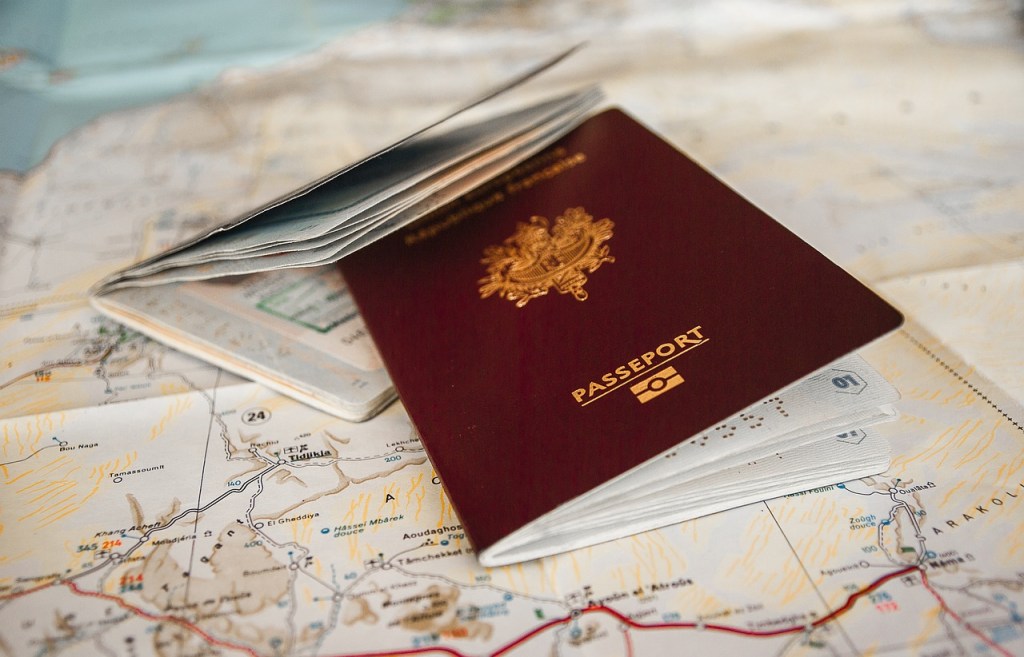
    Caribbean Citizenship by Investment (CBI) programmes, and to a lesser but growing extent, residence by investment (RBI) programmes, are facing a rough ride. The latest blow came when the Paris-based Organisation for Economic Cooperation and Development (OECD) deemed CBI/RBI programmes operated by 21 jurisdictions, including those in the Caribbean, as “high risk to the integrity of the Common Reporting Standard”. While the OECD has clarified that this was not a blacklist, the list puts another glaring spotlight on Caribbean CBI/RBI programmes which are already battling to justify their existence to an increasing choir of skeptics.  In October, the European Union (EU) released a report analysing the state of play, issues and impacts of its own members’ programmes. With the mounting scrutiny being placed on Caribbean countries’ CBI/RBI programmes and stiffened competition from other investment migration programmes globally, have Caribbean countries’ CBI programmes run their course?

    What are CBI Programmes?

    CBI programmes are one of the two main types of investment migration programme – programmes which offer high net worth (HNW) investors accelerated citizenship or residence of the host country in exchange for a pecuniary contribution. Unlike RBI programmes which only confer accelerated permanent residence status, CBI programmes grant a qualifying investor, upon making a specified economic contribution to the host country (usually in real estate, investment in a business or in a specified government fund), accelerated citizenship for himself/herself and his/her qualifying spouse and/or dependents, once all relevant fees are paid and due diligence requirements are met. It means that a person can acquire citizenship or residence of another country in just a few months, compared to several years under regular naturalisation procedures.

    Five Caribbean countries currently operate CBI programmes: St. Kitts & Nevis (the world’s oldest CBI programme), Dominica, Grenada, Antigua & Barbuda and St. Lucia. International examples include the EU member states of Austria, Cyprus and Malta, and the Pacific island nation of Vanuatu.

    Second citizenship is a booming international industry reportedly worth US $3 billion, according to Citizenship by Investment.ch. There are now over one hundred CBI/RBI programmes worldwide, which seek to lure an expanding and highly mobile class of global High Net Worth Individuals (HNWIs) seeking the advantages a more favourable second passport could bring for themselves and their families. These advantages include greater mobility and security, tax planning advantages, and business opportunities.

    The British Overseas Territory of Anguilla is the most recent Caribbean jurisdiction to commence a RBI programme, but versions of these programmes are also operated in the Bahamas, Barbados, Montserrat and Turks & Caicos, for example. Examples of RBI programmes in developed countries include the United States’ EB-5 programme and the United Kingdom’s Tier 1 Visa.

    Challenges to Caribbean CBI/RBI programmes

    Those Caribbean countries which operate them view these programmes as a pathway for economic diversification and development, bringing greatly needed foreign exchange and foreign direct investment (FDI) inflows, infrastructure development, and employment opportunities. In its Article IV Report on Dominica, which had been badly affected by category five Hurricane Maria in September 2017, the International Monetary Fund (IMF) noted that “fiscal performance deteriorated sharply due to the fall in tax revenue after the hurricane, but was partially offset by a surge in grants and buoyant Citizenship-by-Investment (CBI) sales revenues.”

    Despite their economic benefits, CBI programmes have always been controversial due to some governments’ philosophical aversion to what many have called the “commodification of citizenship” or “selling of passports”. Indeed, CARICOM Member States remain philosophically divided on the desirability of CBI programmes.

    There have also been, in some cases, legitimate concerns about the efficacy of the due diligence procedures, the perceived absence of a ‘genuine link’ between recipients of citizenship under CBI programmes and the host country, and reports of alleged instances of misuse of passports obtained under CBI programmes, which have brought increased international scrutiny of Caribbean countries’ CBI programmes.

    One of the pull factors of Caribbean countries’ CBI programmes is the visa free access. For example, on the Henley & Partners Passport Index published by the world’s leading investment migration firm, Henley & Partners, St. Kitts and Nevis ranked the highest among Caribbean CBI countries in the strength of its passport,  providing visa-free access to 151 countries. Unfortunately, this advantage may be undermined if third countries, as is their right, decide to revoke visa-free access to citizens originating from countries offering CBI programmes, due to national security concerns. For example, Canada imposed visa requirements for citizens from St. Kitts & Nevis in 2014 and from Antigua & Barbuda in 2017 over similar concerns. Both countries have subsequently made changes to their programmes, but their citizens have not yet regained visa-free access to Canada.

    The US Government has also repeatedly flagged Caribbean CBI programmes as possibly being used for financial crime, including in its International Narcotics Control Strategy Report 2017. With the current US administration taking an even tougher stance on national security,  US scrutiny of Caribbean CBI programmes is likely to continue or even intensify.

    The European Commission has already sounded the alarm about the potential security risks that golden passport programmes operated by its own members could pose to the bloc. It reiterated this in its recently released report on those programmes operated in the EU.  But this scrutiny is not limited to EU CBI/RBI programmes. In a recently released report, global NGOs, Transparency International and Global Witness, also recently called on the EU to review its visa waiver schemes with those Caribbean countries operating CBI programmes.

    In light of this scrutiny, other CARICOM Member States which do not operate programmes have feared that they themselves may suffer reputational and security risks due to the CBI programmes of other Member States. The CARICOM Secretariat has been examining the issue of CBI programmes operated by member states, but there appears to be no public information on what have been the outcomes of this examination thus far.

    The other risk comes from increased global competition. The list of countries offering some kind of CBI or RBI programme has grown exponentially in the years since the global economic and financial crisis. For instance, this year Moldova started its own CBI. Moreover, while St. Vincent & the Grenadines is currently the only independent member of the Organisation of Eastern Caribbean States (OECS) to not offer a CBI programme due to the current government’s philosophical opposition to these programmes, the leader of St. Vincent & the Grenadines’ opposition party recently reaffirmed his support for launching a CBI programme there. What this shows is that countries around the world still see the economic potential of these programmes and it also means that competition is increasing.

    Caribbean countries’ CBI programmes have ranked high on the Professional Wealth Management (PWM) Index. Regrettably, the increased competition between Caribbean CBI programmes both inter se and with other CBI programmes internationally has led to an apparent ‘race to the bottom’ among Caribbean CBI programmes in the form of price competition.

    The OECD Challenge to CBI/RBI programmes

    In early 2018, the OECD announced that it was examining CBI/RBI programmes as part of its Common Reporting Standard (CRS) loophole strategy and requested public input into the misuse of these programmes and effective ways of preventing abuse. The CRS is an information standard approved by the OECD Council in 2014 for the automatic exchange of tax information among tax authorities of countries which are signatories. CRS jurisdictions are required to obtain certain financial account information of their tax residents from their financial institutions and automatically share this information with other CRS jurisdictions on an annual basis. Most Caribbean IFCs are early adopters of the CRS.

    While noting that CBI/RBI programmes may have legitimate uses, the OECD stated that CBI/RBI programmes are a risk to the CRS because they can be misused by persons to hide their assets offshore and because the documentation (such as ID cards) obtained through these programmes could be used to misrepresent an individual’s jurisdiction of tax residence. This, the OECD noted, could occur when persons fail to report all the jurisdictions in which they are resident for tax purposes.

    In April 2018, the OECD published a compilation of the responses it had received, which also included responses by countries in the Caribbean offering CBI programmes. In its list of ‘high risk CBI/RBI” programmes to the integrity of the CRS” published in October 2018,  the OECD focused on those CBI/RBI programmes which gave access to a lower personal income tax rate on offshore financial assets and those which did not require an individual to spend a significant amount of time in the host jurisdiction.

    It should be noted that reporting for CRS purposes is based on tax residence and that just because an investor has obtained citizenship of a country under a CBI programme, does not mean that he or she is automatically deemed to be a tax resident of the country. For example, a person may obtain St Lucian citizenship under St. Lucia’s CBI programme pursuant to the Citizenship by Investment Act and regulations, but under the St. Lucia Income Tax Act, he or she is only deemed to be resident for income tax purposes in St. Lucia for a given income year if he/she has been physically present there for not less than 183 days in that income year.

    While the OECD has clarified that the list of ‘high risk CBI/RBI programmes’ was not a blacklist, there is concern about what reputational impact this list may have on the countries whose programmes were named. Financial institutions have been told by the OECD to bear in mind its analysis of high-risk CBI/RBI schemes when performing their CRS due diligence, which potentially brings increased scrutiny for Caribbean countries, which are already suffering the loss of correspondent banking relationships due to de-risking practices by risk-averse global banks.

    Have CBI programmes run their course?

    Given the growing array of challenges outlined, have CBI programmes run their course? While I do not think Caribbean CBI programmes have run their course, I think that there needs to be strong consideration by each of the countries concerned, and their citizens, of whether the economic benefits justify the increasing reputational and security risks, and to consider what further changes could be made to make their programmes more sustainable.

    Caribbean countries are well aware that it is not in their interest for their CBI/RBI programmes to be perceived as loopholes for tax evasion or other criminal activity. It is, therefore, in their interest to work with the OECD to address the concerns raised about the potential for misuse of their CBI programmes.

    According to the communique released at the 66th Meeting of the Organisation of Eastern Caribbean States (OECS) Authority, that organisation’s highest body, it was noted  as follows:

    “The Heads engaged in extensive discussions on the matter, noting the unreasonableness of the OECD position, and resolved to undertake comprehensive reviews of the respective CBI and RBI Programmes to ensure that areas where they may be limitations are identified and strengthened.”

    This is a promising development and it is hoped that these reviews will be conducted in a timely manner, that the results will be made public in the spirit of transparency and that the recommendations made will be implemented.

    To their credit, there already exists cooperation among the Citizenship by Investment Units or equivalents of the Caribbean CIP countries through the Association of the Citizenship By Investment (CIPA). They have also been receiving the assistance of  the Joint Regional Control Centre arm of the CARICOM Implementation Agency for Crime and Security (IMPACS).

    There is the real risk that countries may become overly dependent on CBI programme revenues for their fiscal and macroeconomic stability during boom times, leaving them vulnerable during periods of leaner revenue inflows. Since 2010, revenues from its programme have buoyed St. Kitts & Nevis’ economy, but the IMF in its Article IV Report of 2017 warned that “ the recent slowdown in CBI-related inflows and the ending of the five-year holding period for CBI properties call for close monitoring of the implications for the financial sector through the real estate market and banks’ exposure to real-estate-related activities.”

    On a broader note, a comprehensive study of the economic contribution these CBI programmes have made and are making to the economies and societies of these Caribbean countries is recommended. This would provide empirical evidence of whether the macroeconomic benefits outweigh the reputational and national security risks. In this regard, the recent EU study on its own programmes could provide a good model for CARICOM or the OECS in terms of analysing the state of play and the impacts of Caribbean countries’ CBI/RBI programmes and making recommendations for mitigating the risks identified.

    Such a study will require sound data. This brings me to another problem with these programmes – the transparency deficit, which was also highlighted by Transparency International and Global Witness in their report. Obtaining data on these programmes remains regrettably difficult due to the unfortunate reluctance by some authorities to share data publicly, even with researchers. Though some data on the macroeconomic contribution of these programmes may be obtained from those countries’ IMF Article IV reports, other data, such as employment generated by these programmes, are not.

    Making data on these programmes publicly available will not only negate the perceived opacity of these programmes’ operation, but facilitate evidence-based planning, monitoring and evaluation of these programmes.

    Alicia Nicholls, B.Sc., M.Sc., LL.B., is an international trade and development consultant with a keen interest in sustainable development, international law and trade. You can also read more of her commentaries and follow her on Twitter @LicyLaw.

  • Why WTO Reform Matters for Caribbean Small States

    Why WTO Reform Matters for Caribbean Small States

    Alicia Nicholls

    At the conclusion of its 47th Meeting this week, the Caribbean Community (CARICOM) Council for Trade and Economic Development (COTED) released a statement in support of the multilateral trading system and its guardian, the World Trade Organisation (WTO), which are currently under threat. All independent CARICOM member States, with the exception of the Bahamas which is currently in the process of accession, are WTO members and have a rich history of engagement in the WTO. WTO reform is more than a moot point for the Caribbean, but a question of economic and sustainable development importance for the region.

    What is the Multilateral Trading System and the WTO?

    The multilateral trading system was formed at the end of the Second World War with the creation of the General Agreement on Tariffs and Trade (GATT), the progenitor to the WTO, in 1947. This rules-based system has provided for the predictable and peaceful conduct of global trade for more than a half century to the benefit of the global economy.

    Since its inception in 1995, the WTO has been the guardian of the multilateral trading system. Its 164 members account for over 97% of global trade, with 22 other countries currently in the accession process. Despite its flaws, some of which I will come to shortly, the WTO has been an important building block in the global economic governance structure. Among its functions, the organisation serves not just as a permanent forum for negotiation of global trading rules among its members, but its dispute settlement system provides to WTO members an exclusive and compulsory system for the timely and orderly settlement of trade disputes.

    Why the need for reform?

    The core functions of the WTO have become increasingly under strain. Calls for reform are not new, but have intensified in recent years. Without doubt, the United States’ threat of withdrawal unless its own demands are met, has invigorated political will for reform of the WTO.

    Firstly, the negotiation function of the WTO is in a paralytic state given the inability of member states to conclude the Doha Development Agenda – the latest round of trade negotiations which were launched at the Doha Ministerial in 2001 and whose only major agreement so far is the Trade Facilitation Agreement. The paralysis has been due largely to current decision-making procedures and the increased number of members which has made multilateral rule-making on ever more complex trade issues difficult. Secondly, the US has been blocking the appointment of judges to the WTO’s Appellate Body, which means there are currently only three judges, the minimum needed to hear a dispute. The once vaunted system will grind to a halt by December 2019 when two other judges’ terms are up for renewal. Thirdly, there are concerns with the lack of compliance by some States with notification and transparency requirements which impacts on the WTO’s monitoring function.

    In response, many countries have not just pivoted their attention away from the multilateral table towards the regional arena, but there is growing protectionism and resort to unilateral measures. In its latest economic outlook released November 21st , the Organisation for Economic Cooperation and Development (OECD) warned that global GDP growth has peaked on the back of a slowdown in global trade and investment flows owing to current trade tensions. The OECD has, therefore, called for renewed international cooperation and dialogue to tackle global trade issues and reform of the global trading system. Similar warnings have been made by other multilateral institutions and bring into sharp focus the importance of the stability of the multilateral trading system for the global economy in general, and for Caribbean small states, in particular, whose small open economies are susceptible to global economic shocks.

    These systemic risks suggest that the WTO requires more than superficial tinkering, but comprehensive, inclusive and transparent reform. The challenge is making the WTO, an institution born in a different era and different economic landscape, “fit for purpose” for twenty-first century global trading realities, and in a way that caters to the unique needs of its smallest and most vulnerable members.

    Why does WTO reform matter to Caribbean small States?

    Caribbean small states, and small States in general, comprise only a tiny fraction of world trade, but their equitable integration into the global economy is essential for their economic survival. These States comprise primarily small island States, but also some small continental States. Compromised by limited bargaining power and inherent economic and other vulnerabilities, they depend on the certainty and predictability of the rules-based multilateral trading system not just to ensure that their traders face fair trading conditions in external markets, but that they could hold (at least in theory) larger states to account through the WTO’s dispute settlement body when they do not play by the rules.

    It is of importance to Caribbean small States that updated trade rules for the twenty-first century not be made in negotiation theatres to which they are often not party (such as in Regional Trade Agreements and Mega-Regional Trade Agreements), but in the multilateral system where they have an equal seat at the table.

    What proposals are on the table?

    Thankfully, the silver lining to this story is that most WTO members have thus far expressed continued support for the multilateral trading system and have exhibited interest in WTO reform. The EU and Canada have both publicly shared their initial reform proposals and Canada held a meeting with thirteen other ‘like-minded’ governments in Ottawa to discuss WTO reform. The proposals have touched, for example, on decision and rule-making, improving the dispute settlement function and improving transparency and notification requirements.

    In November 2018, the US, EU, Japan, Argentina and Costa Rica laid a proposal for tightening transparency and notification requirements under the WTO agreements. Among the recommendations were changes to the current Trade Policy Review mechanism, special consideration for developing countries and penalties for non-compliance by members.

    Many of the proposals currently on the table have direct implications for Caribbean small States. For example, the EU and Canadian proposals evince growing appetite by the more advanced economies to change the current model of decision-making, that is, the consensus-based approach which requires absence of any formal objection to the decision. This approach has made the WTO one of the most democratic of the multilateral economic institutions. It allows small States to have bargaining power they otherwise would not have had and by mere numbers has led to a shift in the balance of bargaining power in favour of developing countries in the WTO. Though this approach has accounted for some of the stalemate, the wholesale move to a less democratic form of decision making would be disadvantageous to small States beset by limited negotiation might.

    There are also calls for reforming the application of special and differential treatment (SDT) since currently any WTO member can self-designate as a developing country, entitling it to the flexibilities under the Agreements. This concern is due to the inclusion of large emerging economies such as China, India and Brazil in particular as developing countries. While not specifically supporting the creation of special categories, the EU concept paper notes the lack of nuance in the concept of a ‘developing country’. This is a good reason why small States should redouble their advocacy efforts for the translation of the Small Vulnerable Economy (SVE) informal group into a formal sub-category of developing countries.

    What should we do?

    The current crisis in the multilateral trading system has implications for Caribbean small states which rely on the certainty of the multilateral trading system and on the health of the global economy. It, however, also opens the door for our States to advocate for reforms as well. CARICOM countries have always played an active role in WTO negotiations, including pushing for the SVE grouping. For this reason, the COTED statement supporting the multilateral trading system and the WTO, and demanding a space for small States in the negotiations, was a good initial step.

    The next step should entail formulating our own carefully considered responses to the proposals already on the table and advancing our own concrete proposals where we deem necessary. For instance, as noted before, given the dissatisfaction by advanced economies with the current carte blanche approach to SDT, this may be the opportune time to raise the reconsideration of making the SVE category a formal category. Additionally, as the on-going US-Antigua Gambling dispute shows, even though a small State may win a dispute, obtaining compliance is another matter. For this reason, dispute settlement reform is another area on which Caribbean small States should take particular interest.

    Indeed, CARICOM governments will not have to depend solely on the vast knowledge and experience of their technocrats, but there are an increasing number of regional scholars and academic institutions, such as the University of the West Indies’ Shridath Ramphal Centre for International Trade Law, Policy & Services, which are pro-actively considering these issues, and whose technical expertise and research capacity could be drawn upon. There is also no need to reinvent the wheel given the growing corpus of literature, developed by the Commonwealth Secretariat for example, which has analysed the drawbacks of the WTO for small States and making proposals for reform. This work can be drawn upon in the formulation of our own proposals.

    The Caribbean has a strong history of multilateral engagement within the WTO. The current situation gives us an appropriate moment to contribute to the comprehensive reform of the guardian of the multilateral trading system to ensure it remains fit for purpose for 21st century trading realities and for the global economy, and that it better serves its smallest and most vulnerable members. Caribbean small States can ill-afford to be perceived as backseat participants, but must be fully engaged and mobilized in this critical moment.

    Alicia Nicholls, B.Sc., M.Sc., LL.B., is an international trade and development consultant with a keen interest in sustainable development, international law and trade. You can also read more of her commentaries and follow her on Twitter @LicyLaw.

  • Jamaica remains easiest place in CARICOM to do business, according to World Bank Doing Business Report 2019

    Jamaica remains easiest place in CARICOM to do business, according to World Bank Doing Business Report 2019

    Alicia Nicholls

    Jamaica has maintained its spot as the easiest place to do business in the Caribbean Community (CARICOM) in the just released World Bank Doing Business Report 2019.  This is the 16th edition of this flagship World Bank publication which objectively ranks 190 economies globally on their ease of doing business based on a number of indicators. The theme of this year’s report is Training for Reform.

    Jamaica has an overall ranking of 75 out of the 190 economies ranked. Of note is that overall, Jamaica also ranked as the 6th easiest place to start a business and 12th in the ease of getting credit. With respect to significant business reforms, the World Bank highlighted Jamaica’s improved access to credit information by distributing data from utility companies.

    No Caribbean country has made the top 50. The rankings of the other Caricom countries are as follows: St. Lucia (93), Dominica (103), Trinidad & Tobago (105), Antigua and Barbuda (112), The Bahamas (118), Belize (125), Barbados (129), St Vincent and the Grenadines (130), Guyana (134), St Kitts and Nevis (140), Grenada (147), Suriname (165) and Haiti (182).

    The Dominican Republic, which is not a CARICOM country but is part of CARIFORUM, has a ranking of 102. Puerto Rico, a Commonwealth of the US, is the Caribbean region’s easiest place to do business, with a ranking of 64.

    Globally, New Zealand was ranked the easiest place to do business (1), while Somalia was ranked as the least (190). Turning to small States, Singapore was ranked second, while Mauritius continued its upward climb, with a current rank of 20th.

    The World Bank reported a record 314 regulatory reforms between June 2, 2017 and May 1, 2018. Some 128 economies introduced ‘substantial regulatory improvements’ which made doing business easier in all areas measured. The following economies internationally were singled out as having made the most improvement: Afghanistan, Djibouti, China, Azerbaijan, India, Togo, Kenya, Cote D’Ivoire, Turkey and Rwanda.  

    The full World Bank Doing Business Report 2019 may be accessed here.

    Alicia Nicholls, B.Sc., M.Sc., LL.B., is an international trade and development consultant with a keen interest in sustainable development, international law and trade. You can also read more of her commentaries and follow her on Twitter @LicyLaw.