Tag: CARICOM

  •  CARICOM Declaration on Climate Change leading up to COP26 (re-issued)

     CARICOM Declaration on Climate Change leading up to COP26 (re-issued)

    CARICOM Secretariat:


    “1.5: Ambition to Defend the Most Vulnerable”
    Underscoring that Small Island and low-lying coastal Developing States (SIDS) are particularly vulnerable to climate change, and have been internationally recognized as a special case for sustainable development,
     
    Recalling the Special Report of the IPCC on 1.5°C and the recent IPCC Report which confirms that the current decade is the final opportunity to keep 1.5°C within reach,
     
    Gravely concerned that global average warming has already reached 1.2°C, and the prospect of exceeding 1.5°C in the 2030s is imminent, noting in this regard that the IPCC projects that global warming could rise to 2.7°C by the end of the century,
     
    Alarmed that even at 1.5°C SIDS will continue to experience the worsening of slow onset events and extreme events including more intense storms, along with heavy or continuous rainfall events, ocean acidification, increased marine heatwaves, rising sea levels together with storm surges resulting in coastal inundation, saltwater intrusion into aquifers and shoreline retreat, as well as the continued overall decline in rainfall, increased aridity, and more severe agricultural and ecological droughts,
     
    Recognizing that these impacts threaten both human and natural systems, and that the already steep social, economic and environmental costs have already exceeded the Region’s overall capacity to adapt,
     
    Underscoring thus the limits to the region’s adaptive capacity, the increasing evidence and the growing toll of loss and damage, with cataclysmic and existential implications for the Caribbean,
     
    Emphasizing with consternation that while the Region emits roughly 0.2% of global greenhouse gases, it is disproportionately bearing the costs of a climate crisis it did not create,
     
    Further emphasizing that the ineligibility of CARICOM Members to access grant or concessionary support has contributed to increasing unsustainable debt burdens that are grossly exacerbated by the economic fallout from the continuing COVID-19 pandemic as well as other shocks including extreme weather events,
     
    Noting that developed countries have failed to deliver on the long-term climate finance goal of providing at least USD100 billion per annum by 2020, and continue to channel most resources to mitigation, with adaptation making up merely 20 percent of climate finance thus far, Noting also that the scale of the current finance goal and the rate of disbursement of financing is incommensurate with the scale of the needs of developing countries to implement their climate plans which is estimated to be in the range of trillions of dollars,
     
    Noting that despite the climate crisis not being of their making, SIDS have had to use their own resources, constrained by COVID, debt, a lack of policy and fiscal space wrought by global financial norms and inflexible rules, an absence of support, and, for some, the millstone of being classified as middle-income countries, to finance the climate crisis, jeopardizing progress towards the attainment of the Sustainable Development Goals.
     
    Highlighting thus the need for a new collective quantified goal on climate finance that shifts from billions to trillions and adequately as well as predictably addresses the needs of developing countries in a timely fashion,
     
    Taking note of the UNFCCC Synthesis Report which concludes that current NDCs fall far short of the mitigation ambition to maintain global temperatures below 1.5°C, and highlighting in particular that the major emitters especially those with historic responsibility have not submitted NDCs consistent with 1.5°C,
     
    Underscoring that members of the Group of 20, who account for 75 percent of global greenhouse gas emissions, have the greatest mitigation potential to curb emissions and keep 1.5°C within reach,
     
    Recognizing that the Conferences of the Parties to the Convention, the Kyoto Protocol and the Paris Agreement are meeting for the first time since the COVID-19 pandemic, and that it is expected to complete the Paris Agreement Work Programme in order to strengthen accountability, transparency and ensure environmental integrity, in line with the Paris Agreement and its subsequent Work Programme,
     
    Recognizing also that this COP marks the first five-year cycle since the adoption of the Paris Agreement and therefore it is a first opportunity to examine Nationally Determined Contributions in light of the goals of the Paris Agreement,
     
    Convinced that, in light of the foregoing, COP26 is the last best chance to keep 1.5°C within reach,
     
    Resolved to engage across all of society to amplify a robust regional response to climate change, and motivated to do so to secure a safe climate future for our young people,
     
    We, the CARICOM Ministers with responsibility for Climate Change, hereby declare that the Region faces a climate emergency and unavoidable loss and damage. We call urgently for unswerving global solidarity to deliver ambition, timely action, and support, for a just transition this decade with the aim of limiting global warming to well below 1.5°C. We demand climate justice and the assurance that our survival will not be compromised. We call upon leaders at COP26 to close the emissions gap, scale up finance particularly for the most vulnerable, and agree on rules to guide parties to progressively increase and demonstrate highest ambition.
     
    To close the emissions gap, we call on leaders of the Group of 20 to commit by COP26 to:
     Urgently close the emissions gap in order to maintain global warming to well below 1.5°C; Deliver, well before the global stocktake in 2023, new NDCs with 2030 targets that are consistent with the 1.5°C temperature goal and credible net zero by 2050 long-term strategies; Support efforts to encourage the aviation and shipping sectors to align with the Paris goals; and, Provide fair and just compensation for ecosystem services provided by forests regarding climate and atmospheric regulation; Support efforts to conserve and enhance reservoirs and sinks of greenhouse gases, including forests. Ensure a green and sustainable approach to the recovery from the COVID-19 pandemic. 
    We resolve to continue to do our part to contribute ambitious climate plans and in this regard:
     Commend fellow Member States who have already submitted ambitious targets and note encouragingly the efforts of others to finalize their submissions; and Commit to marshal all efforts to present low emission development strategies in line with a net zero by 2050 commitment and adaptation communications or adaptation plans, as appropriate. 
    We also underscore the need to optimize synergies between climate action and COVID-19 responses to ensure a green and sustainable approach to the recovery and plea for the international community to urgently support:
     CARICOM Members rapid access to grants and other sustainable and affordable financial instruments, Improved modalities of access for the Region to climate finance including at the sub- national and local levels, direct access modalities as well as direct financing mechanisms, simplified approval procedures, innovative financial arrangements such as debt for climate swaps Regional efforts to develop capacity, and access fit for purpose, state of the art technology, to improve and accelerate responses to climate change, and to strengthen monitoring and reporting, Dedicated funds for adaptation and for loss and damage for SIDS; and,Debt forgiveness, debt relief, and increased liquidity for the region. 
    To close the finance gap, we call on developed countries to:
     Deliver on their goal of at least USD100 billion per annum by 2020, aiming for a balance between mitigation and adaptation, and to progressively scale up finance from the floor of USD100 billion p.a.; Submit a credible plan for the period 2020 through to 2025, on delivering and going beyond the floor of USD100 billion p.a., that includes a specific target to significantly increase finance for SIDSin accordance with our needs, and modalities for fast-track financing in keeping with the emergency we face; Ensure that all CARICOM Member States are able to access climate finance as grants and other concessionary instruments on affordable terms bearing in mind the lender’s responsibility not to undermine a country’s debt sustainability; Provide dedicated funds additional to the USD100 billion p.a. floor to support the Caribbean and other SIDS in proactively responding to loss and damage already being incurred; Support the establishment of a formal replenishment process for the Adaptation Fund; Agree to a process for the new climate finance goal to be disaggregated to address: adaptation; mitigation; loss and damage response; just transition; transparency; readiness and enabling activities; and mechanisms supporting capacity building, technology transfer and providing technical assistance to developing countries; a sub-goal for non-state actors; specific attention to the needs and capabilities of Small Island and low-lying Developing States; and, transparency and consistency in reporting, linked to the enhance transparency framework and the implementation and compliance mechanism of the Paris Agreement; and At the regional level, to enhance capitalization of the Caribbean Catastrophe Risk Insurance Facility. 
    We also welcome the additional support of others in a position to do so.
     
    To finalize the Paris Agreement Work Programme, we commit to work with all delegations:
     Guided by the objective of enabling the highest possible ambition so as to maintain global warming to well below 1.5°C and to keep all Paris goals within reach, to elaborate article 6 rules and guidance emphasizing the need to address the core issues of: environmental integrity, A substantial discount rate on carbon credits in order to accelerate reduction of greenhouse gas emissions for the overall mitigation of global emissions in line with the 1.5°C temperature goal, corresponding adjustments, avoidance of double counting and carryover of Kyoto Protocol units, a defined share of proceeds that provides a significant predictable and sustainable source of finance contributing to the scaling up of adaptation finance that can be channeled to the Adaptation Fund; and capacity building and technology transfer for developing countries to participate in the range of available article 6 approaches; To ensure that in the operationalization of the rules and guidance of article 6 that developing countries are able to fully and effectively participate in, contribute to and benefit from market and non-market approaches; Finalise the arrangements for the implementation of the enhanced transparency framework in line with the modalities, and guidelines agreed under the Paris Agreement Work Programme and in accordance with the principles of transparency, accuracy, consistency, completeness and comparability; and, expand capacity building support for SIDS and LDCs especially for generating data, and for reporting on support needed and received; Synchronize nationally determined contributions (NDCs) preferably on a five-year timeframe with the aim of enabling progressive increase of ambition to limit global warming to well below 1.5°C; Establish a process utilizing the best available science, to support the implementation, and assessment of progress of activities towards achieving the global goal on adaptation; and, Agree on a time bound process for the full operationalization of the Santiago Network on Loss and Damage that will ensure that the Network can deliver on its mandate to developing countries, with adequate support, both institutional and financial.
    Finally, we recall that thirty years ago, SIDS raised the issue of loss and damage and the need therefore for international cooperation to prevent dangerous anthropogenic climate change. Thirty years later we are facing dangerous climate change and the SIDS are dangerously on its frontline. Clearly the models have not worked and there must now be renewed effort, renewed commitment and a different way of thinking.
     
    We urge all leaders at COP26 to finally confront the reality of loss and damage in SIDS and to identify robust options on a way forward for the UNFCCC to deliver action and support that responds to this reality and ensures our survival. We emphasize that there is no more time for equivocation and no more time for delay.
  • USITC Releases latest CBERA Report: Haiti, Barbados & Grenada have highest utilisation rate

    USITC Releases latest CBERA Report: Haiti, Barbados & Grenada have highest utilisation rate

    Alicia Nicholls

    On September 30, 2021, the United States International Trade Commission (USITC) released its latest report on the operation of the Caribbean Basin Economic Recovery Act (CBERA) and its impact on US industries, consumers and on beneficiary countries. Enacted in 1983 and made effective in 1984, the CBERA is one of the constituent acts under the Caribbean Basin Initiative. The CBERA allows the US President to extend to designated beneficiary countries in the Caribbean Basin non-reciprocal and unilateral duty-free or reduced duty access to the US market for a wide range of goods. The CBERA is of indefinite duration in that it has no statutory end date unlike, for instance, the other Acts. The Caribbean Basin Trade Partnership Act (CBTPA) of 2000 extended preferential treatment to textiles and apparels and was most recently renewed in October 2020 until 2030.

    The 17 CBERA beneficiaries in 2020 were as follows: Antigua and Barbuda, Aruba, The Bahamas, Barbados, Belize, British Virgin
    Islands, Curaçao, Dominica, Grenada, Guyana, Haiti, Jamaica, Montserrat, Saint Kitts and Nevis, Saint Lucia, Saint Vincent and the Grenadines, and Trinidad and Tobago. CBTPA beneficiaries (8) in 2020: Barbados, Belize, Guyana, Haiti, Jamaica, Saint Lucia, and Trinidad and Tobago. The Haiti Economic Lift Program (HELP) Act of 2010 and Haiti Hemispheric Opportunity through Partnership Encouragement Act of 2006 and of 2008 (HOPE I & II) provide special preferences for Haiti and were extended in 2015 until 2025.

    The latest CBERA report found that “the impact of the CBERA program on the US economy and industries continued to be small in 2019 and 2020”, which it attributed to the fact that “the value of US imports under the CBERA preference program are a
    small share of total US imports”. Turning to the future effect of the CBERA program on the US economy, including on U.S. domestic industries and US consumers, the report found that the effect ” is likely to remain minimal for most products, given the relatively small volume of imports from CBERA countries that is unlikely to grow substantially”.

    The report highlighted that the top US imports under the CBERA were petroleum oils, methanol, T-shirts of cotton, sweaters of manmade fibers, and polystyrene. The five largest CBERA exporting countries over the reporting period were Trinidad & Tobago, Haiti, Guyana, Jamaica and the Bahamas. However, Haiti, Barbados and Grenada were the beneficiary countries with the highest utilisation rate (94.7%) of the programme. It is noteworthy that Barbados moved from a utilization rate of just 38.2% in 2016 (one of the lowest) to a utilization rate of 94.7% in 2020. US imports under CBERA as a share of total US imports for consumption remained small (only 0.07% in 2020), while US imports from beneficiaries that receive program preferences as a share of total US imports from beneficiary countries were 33.8% in that same year.

    The report may be accessed here.

    Alicia Nicholls, B.Sc., M.Sc., LL.B. is a trade and development consultant with a keen interest in sustainable development, international law and trade. All views herein expressed are her personal views and should not be attributed to any institution with which she may from time to time be affiliated. You can read more of her commentaries and follow her on Twitter @LicyLaw.

  • Historic first CARICOM-Africa Summit – LIVE STREAM

    Historic first CARICOM-Africa Summit – LIVE STREAM

    Alicia Nicholls

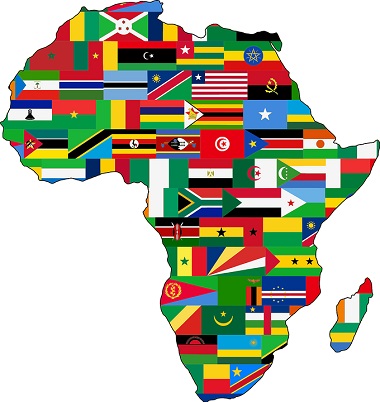
    Days after the first ever United Nations (UN) International Day for People of African Descent was celebrated, there will be the first ever Caribbean Community (CARICOM)-Africa Summit! The summit, which was originally carded for July 2020, was postponed due to the COVID-19 pandemic. The rescheduled summit, which will now be held on September 7, will be hosted by the Government of Kenya and chaired by Kenyan President, His Excellency Uhuru Kenyatta under the theme “Unity Across Continents and Oceans: Opportunities for Deepening Integration”. The event will be livestreamed on CARICOM’s Youtube and Facebook pages. You can watch it below:

    CARICOM Today notes that participants will include “Heads of State and Government of the Caribbean Community and the African Union, Chairs of CARICOM and the African Union Commission, and the Africa Regional Economic Communities (RECs), the Secretaries-General of CARICOM and the Organisation of the African Caribbean and Pacific States (OACPS), and the President of Caribbean Development Bank (CDB)”.

    The summit is the latest initiative in a push on both sides of the Atlantic for closer Africa-CARICOM ties which transcend traditional historic and cultural ties towards real commercial ties and deeper economic and cultural cooperation. As I noted in a previous piece back in 2019 entitled “Africa-Caribbean Trade: What are the prospects?“, current Africa-Caribbean trade remains small, but the prospects for expanded Africa-Caribbean trade are promising given four main factors: (1) Caribbean countries’ push for export partner diversification, (2) Africa is on the rise, (3) increased Caribbean-African awareness such as the Timaya-Machel collaboration, (4) the signing of the Africa Continental Free Trade Agreement (AfCFTA). I had further argued in that piece that “since it is firms which trade and not countries, building linkages between chambers of commerce and investment promotion agencies in the Caribbean and African countries would also be key”.

    On another note, starting Monday, I am truly pleased to have co-convened this Afronomicslaw. org Blog Symposium with the brilliant Dr Ohiocheoya Omiunu (PhD) on “Prospects for Deepening Africa-Caribbean Economic Relations“! The insightful contributions to this symposium will be released daily (from Monday) and can be read on the Afronomics Law Blog. Deepest appreciation to our expert contributors for their invaluable contributions!

    The CTLD Blog wishes the organisers a successful CARICOM-Africa summit. I sincerely hope that the results go more beyond simply a lengthy communique of hortatory goals, but there will be a concrete action plan on deepening CARICOM-African ties.

    Alicia Nicholls, B.Sc., M.Sc., LL.B. is a trade and development consultant with a keen interest in sustainable development, international law and trade. All views herein expressed are her personal views and should not be attributed to any institution with which she may from time to time be affiliated. You can read more of her commentaries and follow her on Twitter @LicyLaw.

  • New CARICOM SG committed to a more ‘inclusive’ community

    New CARICOM SG committed to a more ‘inclusive’ community

    Alicia Nicholls

    Newly installed Caribbean Community (CARICOM) Secretary General, Dr. Carla Barnett, has voiced her commitment towards greater stakeholder engagement for a “truly integrated, inclusive and resilient community that is driven by knowledge, excellence, innovation and productivity”. She made this pledge while outlining her vision during an installation ceremony streamed online on August 16.

    Dr. Barnett, who assumes office as CARICOM’s eighth and first appointed female Secretary General, acknowledged the many “economic, social, environmental and financial challenges” affecting lives and livelihoods in the region. She specifically outlined the issues of climate change, youth unemployment, rising crime, the need for greater food security and the issue of blacklisting by large global powers which has led to the loss of correspondent banking relations (CBRs) for many indigenous Caribbean banks. The new SG also extended condolences to the people of Antigua & Barbuda on the passing of their second Prime Minister, Sir Lester Bird, who she acknowledged as a committed regionalist. She also expressed solidarity with the people of Haiti where over 1,200 innocent lives were lost as a result of a 7.2 magnitude earthquake on August 14 and who also face the impending Tropical Storm Grace.

    Dr. Barnett implored stakeholders to reach out to the Secretariat to share their “their fears, concerns, and vision for the future of the Community and telling us how they feel they can contribute to building our Community”, as no one has all the ideas or answers so all must be involved. She further noted that “it is, therefore, incumbent on all of us to be engaged in finding solutions and taking action to overcome these obstacles in our path to a secure, viable and ultimately sustainably prosperous Community for all”.

    She made reference to the unity showed by CARICOM people during sports, culture and in times of adversity. She stated she would “build on and maintain that strength” and “will require that my team and I reach out on a regular basis to explain, to exhort, to inform, to educate so that all will feel a part of the whole that constitutes CARICOM and “I Am CARICOM” will mean much more than a catchy slogan”.

    In addition to greater stakeholder engagement, Dr. Barnett also called for new thinking “not only to solve the problems of the present but to outline new paths for the future of our integration process”, including for closing the implementation gap. She praised the work of her predecessor Ambassador Dr. Irwin Larocque of Dominica who served from 2011-2021. She noted that much has been achieved in the past 48 years, but “a lot of it is taken for granted today, to the extent that some are not even associated with the integration movement”.

    Dr. Barnett is the first Belizean national to be appointed CARICOM SG. She brings to the position a wealth of experience, including as an economist and having previously served as the first woman and the youngest person appointed as Deputy-Secretary of CARICOM (1997 -2002).

    We at the Caribbean Trade Law & Development Blog wish Dr. Barnett the very best during her tenure.

    The recording from the event may be viewed here, while the transcript from her full address is available here.

    Photo credit: CARICOM

    Alicia Nicholls, B.Sc., M.Sc., LL.B. is a trade and development consultant with a keen interest in sustainable development, international law and trade. All views herein expressed are her personal views and should not be attributed to any institution with which she may from time to time be affiliated. You can read more of her commentaries and follow her on Twitter @LicyLaw.