Tag: de-risking

  • Caribbean States raise de-risking concerns at the 71st United Nations General Assembly

    Caribbean States raise de-risking concerns at the 71st United Nations General Assembly

    Alicia Nicholls

    De-risking was one of the myriad of developmental issues raised by small states of the Caribbean Community (CARICOM) at the 71st Regular General Assembly of the United Nations in New York over the past few days. The theme of the general debate of the 71st session was “The Sustainable Development Goals: a universal push to transform our world.”

    De-risking practices by banks involve the avoidance of risk by discontinuing business with whole classes of customers without taking into account their levels of risk. This is in direct contradiction to the risk-based approach advocated by the Financial Action Task Force (FATF). The major manifestation of bank de-risking has been the restriction or termination by large banks (particularly in the US) of correspondent banking relationships with banks and discontinuing relationships with money transfer operators (MTOs).

    While countries across the world have been affected by de-risking in varying degrees, a World Bank study published in 2015 found that the Caribbean region appeared to be the most affected by a decline in correspondent banking relationships. This situation is even more vexing considering CARICOM countries’ adherence to international regulations and best practices, including the recommendations of the Financial Action Task Force.

    Arguing that correspondent banking services are a public good, CARICOM countries launched a high-level diplomatic offensive over the past months to raise awareness and mobilise action on this serious issue. The restriction and loss of correspondent banking relationships not only threaten the region’s financial stability but also threaten to de-link Caribbean countries from the global financial and trading system, undermining their sustainable development prospects. There has, however, been limited international progress on this front despite strong advocacy and a myriad of studies on the issue by regional and international development agencies.

    Singing from the same hymn sheet, CARICOM representatives consistently raised the issue in their national speeches before the UN General Assembly.  In perhaps one of the most comprehensive and impassioned statements, Minister for Foreign Affairs of the Bahamas, H.E. Frederick Mitchell,  made de-risking the starting point in his speech, emphasizing not only the difficulty being faced in opening accounts, but also the impact on tourism, remittance and financial flows. Calling it a “moral imperative,” he reiterated Caribbean countries’ adherence to anti-money laundering rules, while condemning the over-regulation which has had led to the de-risking phenomenon. He also termed the attacks on the Bahamas and the CARICOM region as “inaccurate and unfair”.

    Touching on the sustainable development implications of de-risking, representative of Trinidad & Tobago, Senator the Honourable Dennis Moses, Minister of Foreign and CARICOM  Affairs, poignantly stated as follows:

    “The 2030 Sustainable Development Agenda recognizes that national development efforts need to be supported by an enabling international economic environment through international business activity and finance, international development cooperation, and international trade. However, the issue of financial institutions terminating or restricting correspondent banking relations in the CARICOM Region has destabilized the financial sectors of our Member States and has disrupted the Region’s growth and economic progress.”

    On behalf of Trinidad & Tobago and CARICOM, Senator Moses further called on “international banks to engage collaboratively with affected Member States to restore normal financial relationships between domestic banks and international markets.”

    Prime Minister of St. Kitts & Nevis, the Hon. Timothy Harris noted that “[a]lready, in the Caribbean, as of the first half of this year, some 16 banks, across five countries have lost all or some of their correspondent banking relationships putting the financial lifeline of these countries at great risk”. Highlighting Caribbean countries’ dependence on tourism and remittance flows, he further explained that “such [de-risking] actions threaten to derail progress, undermine trade, direct foreign investment and repatriation of business profits.”

    Laying the blame for de-risking on “heavy-handed” FATF regulations, Prime Minister of St. Vincent & Grenadines reiterated the potential of de-risking to disconnect Caribbean countries from global finance and “a shifting of potentially risky transactions to institutions that lack the regulatory wherewithal to handle them”. He further explained that “these [FATF] regulations must be revised urgently before legitimate transactions in the Caribbean–from credit card payments to remittances to foreign direct investment–grind to a halt.”

    Besides de-risking, CARICOM representatives raised several other development issues, including climate change, graduation policies of international development agencies, United Nations reform, the US embargo of Cuba, the attack on international financial centres by OECD countries and the on-going border disputes between Guyana and Venezuela and Belize and Guatemala. CARICOM states also congratulated newly elected UNGA President, Peter Thomson of Fiji, and thanked outgoing UN Secretary General Ban Ki-Moon for his service, particularly his support of SIDS.

    Alicia Nicholls, B.Sc., M.Sc., LL.B. is a trade and development consultant with a keen interest in sustainable development, international law and trade. You can also read more of her commentaries and follow her on Twitter @LicyLaw.
  • De-risking and its Foreign Trade Impact in the Caribbean

    De-risking and its Foreign Trade Impact in the Caribbean

    Alicia Nicholls

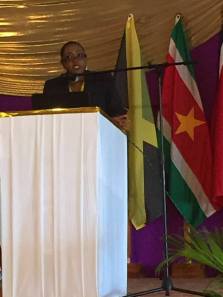
    A few weeks ago I had the honour and pleasure of presenting on the Foreign Trade Impact of De-Risking at the Institute of Chartered Accountants’ (ICAC) 34th Annual Conference in beautiful Belize as part of a panel discussion along with Dr. Trevor Brathwaite, Deputy Governor of the Eastern Caribbean Central Bank (ECCB) and Mr. Filippo Alario, Chief Risk Officer of Belize Bank.

    Alicia Nicholls ICAC 2016 Belize
    Alicia Nicholls  at ICAC 2016 Photo compliments of R Mohammed

    I wish to again express my gratitude to ICAC for the invitation and to all stakeholders and everyone who kindly provided me with information and assisted me in my research.

    Some of the key points from the presentation were as follows:

    • De-risking is a business decision but with serious implications for Caribbean foreign trade.
    • As small open economies, Caribbean countries are highly dependent on foreign trade as evidenced by their high trade to GDP ratios which range between 70-130% of GDP, according to World Bank data.
    • Several Caribbean countries are among the most dependent in the world on remittance-inflows.
    • Bank de-risking threatens the region’s integration into the global trade and financial systems and has implications for economic growth, stability, employment.
    • Disruptions to remittance and FDI flows by de-risking also have poverty alleviation and sustainable development implications.
    • Cross-border payment for goods via wire transfer and remittance sending appear to be the most affected from a trade perspective.

    Several persons  have written me requesting a copy of the full presentation. It is available below:

    ICAC_Presentation_2016_ANicholls(1)

    Alicia Nicholls, B.Sc., M.Sc., LL.B. is a trade and development consultant with a keen interest in sustainable development, international law and trade. You can also read more of her commentaries and follow her on Twitter @LicyLaw.

  • Caribbean Region Most Affected by Loss in Correspondent Banking Relationships, according to World Bank Survey

    Caribbean Region Most Affected by Loss in Correspondent Banking Relationships, according to World Bank Survey

    Alicia Nicholls

    The withdrawal by international banks of correspondent banking relationships with Caribbean-based banks and money transfer businesses has once again been making headlines in the Caribbean. This week Antigua & Barbuda’s Prime Minister raised the issue at the Fourth Summit of the Community of Latin American and Caribbean States (CELAC), terming it a “clear and present danger”. Last year mere weeks after Prime Minister Barrow of Belize raised the issue in his address at the Summit of the Americas in Panama, the Bank of America severed ties with Belize Bank, the largest bank in Belize.

    Correspondent banking relationships are Caribbean countries’ umbilical cord to the international financial system. They allow for the conduct of international trade and investment by facilitating crossborder payments, as well as the receipt and sending of remittances through international wire transfers. At the microlevel these relationships help local exporters to receive payments for their goods and services, local businesses to pay for imports, and poor families to receive remittances for their day to day survival. As I mentioned in an earlier article, the loss of correspondent banking relationships could spell disaster for the small, open economies of the region which are highly dependent on trade and investment flows, with implications for poverty reduction and eradication.

    World Bank Survey

    The Caribbean’s fears are not unfounded. According to the findings of a survey published by the World Bank in its report “Withdrawal from Correspondent Baking: Where, Why, and What to do About it” in November last year, the World Bank found that “small jurisdictions with significant offshore banking activities are particularly affected by the decline of CBRs”. More ominously, according to the Report, the Caribbean Region seems to be the most affected by a decline in correspondent banking relationships.

    It also noted that United States banks have been most frequently identified as withdrawing their correspondent banking services. According to the Report, the services which respondents mentioned as being the most affected by the loss of correspondent banking are “cheque clearing and settlement, cash management services, international wire transfers”, while banking authorities and local/regional banks identified trade finance.

    While the report noted that the majority of respondent banks have been able to find alternative banking relationships, in some cases the time and cost of finding new relationships are significant and not always on comparable terms and conditions as with the previous correspondent bank.

    The survey highlighted several reasons identified by international banks for withdrawing their correspondent banking services and noted that for large international banks, the main reasons were AML/CFT (anti-money laundering and counter-terrorism financing) and CDD/KYC (customer due diligence and know your customer) related concerns.

    In concluding, the Report provided a number of recommendations for both respondent banks and correspondent banks. One of the recommendations was for correspondent banks to consider the respondent bank’s business when making their decision to end a relationship, including by outlining the reasons for withdrawal, considering giving longer notice periods and considering the use of restrictions as opposed to outright termination.

    Caribbean seen as “Risky business”

    For the Caribbean, the loss of correspondent banking relationships, mainly as a result of banks’ de-risking practices, is intertwined with the fight against the arbitrary blacklists the region’s offshore financial jurisdictions are constantly called on to defend themselves against. Last year, both the EU and the District of Columbia (US) published blacklists which included Caribbean countries, causing regional governments to spend consider time advocating for their removal. Either way, the net result of these arbitrary actions would appear to do little to mitigate international banks’ perception of the Caribbean as literally a “risky” place to do business. The Financial Action Task Force (FATF) has reiterated the risk-based approach to AMT/CTF on a case-by-case basis as opposed to the wholesale de-risking which many banks are doing.

    The way forward

    The World Bank’s report is welcomed as it has provided some empirical evidence to support the concerns of Caribbean countries and in so doing helps to place a global spotlight on this issue. The Financial Stability Board (FSB) Report to the G-20 on actions taken to assess and address the decline in correspondent banking referenced the World Bank Report. The FSB has partnered with several organisations, including the World Bank, IMF among others, to address this issue through a four-point action plan which it has articulated in its report to the G-20.

    The E15 Initiative Report entitled “Strengthening the Global Trade and Investment System in the 21st Century” which was launched at World Economic Forum’s Annual Meeting at Davos this year noted that while data was scarce it would appear that developing countries are most affected by limited correspondent banking relationships and has offered some very timely proposals.

    Given the potential threat this issue poses to the region’s economies, it is incumbent on Caribbean banks to continue to observe the highest regulatory standards, including on AML/CTF and CDD/KYC. The Caribbean Association of Banks (CAB) has commendably been at the forefront of advocacy in regards to the issue of correspondent banking and their continued advocacy will be important.

    Former Prime Minister of Barbados and economist, Owen Arthur, at a Roundtable discussion on Correspondent Banking held in Kingston, Jamaica earlier this month has called on regional leaders to adopt coordinated regional measures to address the issue. Caribbean leaders must continue to raise the issue at the diplomatic and multilateral levels at every opportunity, and join forces with other similarly affected countries in advocating for an immediate global solution to the problem, including action on some of the proposals highlighted in the World Bank’s and E15 Initiative’s reports.

    Alicia Nicholls, B.Sc., M.Sc., LL.B. is a trade and development consultant with a keen interest in sustainable development, international law and trade. The Author is not affiliated with the World Bank, the Caribbean Association of Banks or any bank. You can read more of her commentaries and follow her on Twitter @LicyLaw.

  • Bank De-risking: An Emerging Threat to Caribbean SIDS’ Survival

    Bank De-risking: An Emerging Threat to Caribbean SIDS’ Survival

    Alicia Nicholls

    De-risking actions by banks in advanced economies are an emerging threat to Caribbean SIDS’ financial inclusion and sustainable development. This reduced risk appetite by foreign banks is in response to an increasingly stringent regulatory environment aimed at combating the twin threats of money laundering and terrorist financing. De-risking actions have impacted Caribbean countries in two main ways: the severance of correspondent banking relationships with regional banks and the denial or withdrawal of services to money transfer operators. The net result is that Caribbean SIDS face the threat of being cut out of the global financial system, while the fall-out from the loss of remittances and the impact on their financial sectors, cross-border trade and investment could pose serious threats to these states’ economic growth  and sustainable development prospects.

    What is De-Risking?

    In an increasingly inter-connected world where money can be moved across the globe with the click of a mouse, anti-money laundering efforts and efforts targeted at combating the financing of terrorism (AML/CFT) are national and global security priorities particularly for the US and European countries.

    The regulatory authorities and courts in these countries have taken a zero tolerance approach towards their banks found to have willingly or unwillingly facilitated financial crimes like money laundering and tax evasion. Banks are increasingly facing tougher regulatory policies and sanctions and face the threat of onerous penalties, prosecution, private lawsuits and reputational damage if they are found to have facilitated financial crime

    The Financial Action Task Force (FATF)’s risk based approach requires that “countries, competent authorities and banks identify, assess, and understand the money laundering and terrorist financing risk to which they are exposed, and take the appropriate mitigation measures in accordance with the level of risk”.

    However, in response to an ever stricter regulatory environment, an increasing number of banks in advanced economies are seeking to reduce their risk exposure by engaging in “de-risking”. That is, instead of managing risk in line with the FATF’s risk-based approach, they are avoiding risk altogether by terminating or restricting business relationships with clients, regions or in sectors deemed to be high risk.

    Driving Factors of De-Risking

    The Caribbean is increasingly seen as a high risk area for banking. This state of affairs is regrettable as Caribbean countries have expended significant time, funds and effort to make themselves compliant with international standards and best practices, including updating their anti-money laundering legislation. Caribbean states have also signed Foreign Account Tax Compliance Act (FATCA) agreements with the US government.

    Despite these efforts, Caribbean countries have had to continuously duck from the target placed on their backs by authorities in advanced economies. The US Department of State’s International Narcotics Control Strategy Report 2015 identified several countries, including  in the Caribbean, as ‘jurisdictions of primary concern’ for money laundering and financial crimes. Coupled with the frequent ‘tax haven’ smear, this only reinforces the notion that dealing with Caribbean banks is literally a risky business.

    Banks in advanced economies are increasingly wary of the exposure to risks of financial crime inherent in corresponding banking relationships. Correspondent banking relationships are entered into bilaterally between banks and allow banks to offer their services in a country in which they have no physical presence through the use of a correspondent bank in that foreign jurisdiction. A correspondent bank can conduct business transactions, receive deposits and make payments on behalf of the other bank. In effect, the bank is placing its faith on the due diligence and transaction monitoring rigor of the correspondent bank, increasing the risk it can be unwittingly used as a vehicle for money laundering.  As such, a major manifestation of de-risking is the severing of correspondent bank relationships with banks in countries and regions perceived to be “high risk”.

    A second manifestation of de-risking by banks is seeking to limit their exposure by getting out of higher risk sectors, such money transfers, through the denial or withdrawal of bank accounts and services to money transfer operators for fear of unwittingly assisting in terrorist funding and money laundering.

    Impact of De-Risking on Caribbean SIDS

    The impact of de-risking is already being felt in the region. Only a limited number of foreign banks have correspondent relationships with Caribbean banks and this number has been decreasing. This has made it difficult for Caribbean banks to find corresponding banks in advanced economies for the completion of transactions. Just this year the Bank of America cut its correspondent banking relationship with Belize Bank and Atlantic Bank International in Belize, compromising these banks’ ability to execute US dollar bank drafts, wire transfers and foreign currency transactions. In most cases banks are ending correspondent relationships without evidence of wrongdoing on the part of the regional bank and without giving clear reasons for their actions.

    Correspondent banking relationships are Caribbean SIDS’ links with the international financial system. The severing of this link can potentially wreck economic havoc on Caribbean countries’ economies by excluding them from the global financial system. A reduction of accessible financing for cross border transactions and of services for transmitting and authenticating payments has implications for the ability of individuals and businesses in Caribbean states to pay for and engage in the trade of goods and services across borders.

    The remittances business has also been a casualty of bank de-risking. Remittances are an important source of foreign exchange inflows to Caribbean economies, particularly in Jamaica and Guyana, where they are much more impactful than official development aid.  Remittances, which are usually sent through money transfer, are a lifeline for poor households which depend on monies sent by relatives living abroad to meet their daily needs.

    As a result of the high due diligence costs compared to the relatively low profits from remittances services, many banks see it in their best interest to simply sever their ties with money transfer operators in ‘high risk’ regions. In the Cayman Islands, which unlike Jamaica and Guyana is a net exporter of remittances, Fidelity Bank ceased its money transfer business with Western Union making it difficult for migrants there to repatriate remittances back to their families. Difficulties in receiving remittances due to higher fees or the unavailability of money transfer services compromise the financial well-being of dependent households and individuals, with implications for poverty reduction and eradication.

    Caribbean SIDS are not the only ones affected by de-risking policies. Last year it was reported that the Central Bank of Seychelles had to swoop in to the rescue of an offshore bank, the Bank of Muscat International (BMI) Offshore Bank after the Bank of China (Johannesburg) and JP Morgan months earlier ceased correspondent banking relations, making it unable to process outward foreign transactions. In war-torn Somalia where there is a high dependence on remittances banks have been ceasing money transfers to that country for fear of sanctions by the US government, with devastating consequences on dependents. Even charities and aid groups operating in ‘high risk’ countries have felt the brunt of banks’ de-risking policies.

    Global Recognition of the De-Risking Phenomenon

    In recognition of the de-risking phenomenon, the FATF has reiterated the risk-based approach to AMT/CFT on a case-by-case basis as opposed to the wholesale de-risking which many banks are doing. The Global Center has begun an exploratory study on de-risking in the financial services industry, while the World Bank has launched a survey of 19 member countries (excluding the EU) to assess the impact of de-risking on remittance flows. The findings are expected to be published later this year. This month the Financial Stability Board (FSB) released its report to the G20 on actions taken to assess and address the decline in correspondent banking.

    In the interim findings of its qualitative study on de-risking the G-24/Alliance For Financial Inclusion identified several drivers of de-risking and outlined several proposals for stemming the tide of de-risking.  Moreover, among the points highlighted by the recently held G-24/AFI Policymakers’ Roundtable on Financial Inclusion in Peru on the theme “Stemming the tide of De-Risking through Innovative Technologies and Partnerships” was that de-risking could have the unintended consequence of driving consumers to smaller informal providers, which only enhances the AML/CFT risk.

    Several Caribbean countries have sounded the alarm about the de-risking threat. Prime Minister of Belize, the Rt. Hon. Dean Barrow raised the issue in his speech at the Summit of the Americas, noting that “our financial and trade architecture cannot survive this phenomenon“. At the recently held Institute of Chartered Accountants of Barbados (ICAB) Conference, the Minister of Finance of Barbados, the Hon Christopher Sinckler, drew attention to the ‘fresh threat’ currently posed by bank de-risking to the international business and financial services sectors of Barbados and other Caribbean SIDS.

    The Bottom Line

    The threat posed to Caribbean SIDS by de-risking is real, with implications for trade, investment and remittances flows which are critical to the financial stability, inclusion and sustainable growth of regional economies. The worst part is that this is only just the beginning. A balance needs to be struck between AML/CFT regimes on the other hand with the interests of SIDS and their people to conduct business and transfer money on the other. Caribbean countries and other affected SIDS need to leverage their collective strengths to raise awareness about the real and negative fall-out of this phenomenon for their economies and the urgent need for international solutions to the issue of de-risking. Their survival depends on it.

    Alicia Nicholls, B.Sc., M.Sc., LL.B. is a trade and development consultant with a keen interest in sustainable development, international law and trade. You can read more of her commentaries and follow her on Twitter @LicyLaw.