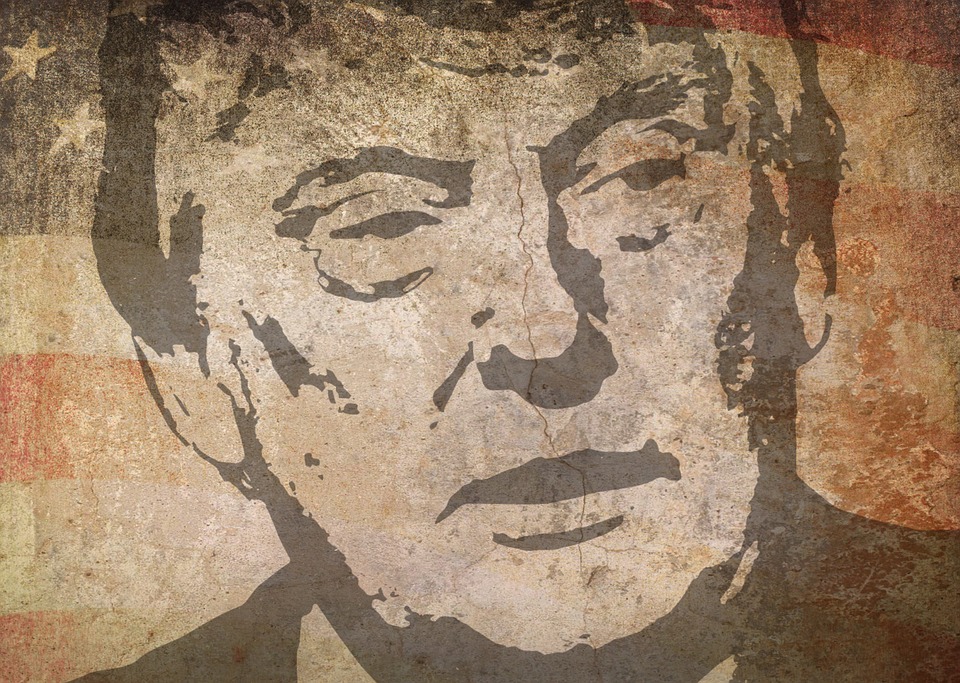
Tag: Donald Trump

  • Trump Presidency: What priorities for US-Caribbean Economic Engagement?

    Trump Presidency: What priorities for US-Caribbean Economic Engagement?

    Alicia Nicholls

    The United States’ position as most Caribbean countries’ largest economic partner and an important foreign policy ally means that constructive engagement with the incoming Trump administration is not just a choice but an imperative. The Caribbean Community (CARICOM) and individual Caribbean governments have all expressed congratulatory messages, emphasizing their willingness to work with Mr. Trump and continuing the harmonious US-Caribbean relationship.

    But in contrast to the idealism attending then Senator Barack Obama’s “Yes we can” message eight years ago, a spectre of profound uncertainty shrouds the President-elect not just because of his extreme rhetoric on trade and foreign policy, undergirded by his “Make America Great Again” and “America First” refrains, but also the lack of policy specificity.

    In this article, I will outline what I believe are five key priorities which will likely frame US-Caribbean economic and foreign policy engagement for the foreseeable future:

    1. Correspondent Banking/De-Risking

    A first order of business will be continuing the conversation that CARICOM governments and stakeholders have started with US officials and regulators on the de-risking activities of US-based international banks, including the withdrawal and restriction of correspondent banking relationships. These relationships are Caribbean’ lifeline to the global financial and trading system, critical for the trade, investment and remittance flows which buoy our small open economies and sustain households.

    US foreign policy orientation towards the Caribbean has constantly recognized that an economically secure “third border” complements US’ strategic security interests. Any threat therefore to the region’s economic and financial inclusion is something which should be of mutual concern. Unfortunately, there appears to be limited progress on the correspondent banking issue.

    While de-risking is a cost-benefit decision for banks, it is also partly fuelled no doubt by ambiguous regulations and the Caribbean’s undeserved reputation in some quarters as a high risk place for doing business. To their credit, the US Treasury and Federal Banking Agencies released a Joint Factsheet on Foreign Correspondent Banking. Additionally, the US Treasury has reiterated that the de-risking issue is a “key priority”.

    However, actions by US authorities which unfairly label Caribbean countries as “tax havens” contribute to the perception that Caribbean jurisdictions and banks are higher risk. In 2015 the state legislature of Montana, and the District of Columbia, had included several Caribbean countries among their proposed lists of tax havens. This is despite Caribbean countries’ having taken steps to ensure their compliance with the Foreign Account Tax Compliance Act (FATCA) and our clean bill of health by the Organisation for Economic Cooperation and Development (OECD).Continued engagement with US states and federal authorities on this issue is a must.

    1. International Financial Services & FATCA

    Although President-elect Trump has promised to lower the US federal corporation tax rate from 35% to 15% and  provide a deemed repatriation of corporate profits held offshore at a one-time tax rate of 10%, his orientation towards international financial centres (IFCs) in general is not well-known.

    The Obama administration has not been friendly to Caribbean IFCs, and that is putting it mildly. On the other hand, Mr. Trump’s background as a businessman may make him more appreciative of the role IFCs play in making US businesses more efficient and profitable, which in turn facilitates their contribution to US economic and job growth. Moreover, conventional wisdom holds that Republican governments are usually friendlier to the Caribbean than are Democratic governments, and there is good anecdotal evidence to support this.

    Additionally, continued engagement with US authorities will be necessary to iron out any implementation and reporting issues under FATCA.

    1. Caribbean Basin Initiative & Other Market Access Issues 

    Manufacturers in most Caribbean countries enjoy non-reciprocal duty-free access to the US market for most goods under the Caribbean Basin Initiative (CBI), an initiative of the Reagan administration in the 1980s which had both economic, ideological and geopolitical imperatives. The CBI is unilateral which means that the benefits can be unilaterally revoked and the criteria for eligibility changed at any time. However, CBI is generally believed to be beneficial to US manufacturing and jobs and Caribbean has a large trade deficit with the US, which should keep CBI off the President-elect’s immediate radar.

    One sticking point in US-Caribbean trade relations is the cover over subsidies which the US Federal government pays to the US territories of Puerto Rico and the US Virgin Islands out of excise taxes it collects from imported rums, which has made Caribbean rums less competitive in the US market. Turning to merchandise trade in general, non-tariff barriers such as sanitary and phyto-sanitary and labelling requirements have also been a constraint on market access.

    Caribbean workers benefit from temporary employment under the US Farm Workers and Hospitality Workers programmes. However, outside of this, Caribbean service providers have no preferential access to the US market. The CBI does not cover services trade. Caribbean business persons seeking to supply a service in the US instead rely on non-immigrant visas. Mr. Trump has promised to tighten the US’ border and control policy. It is not certain whether this will be extended to non-immigrant visas as well.

    1. Immigration & Workers’ Programmes

    Mr. Trump made tightening immigration one of the cornerstones of his campaign platform. While his ire was directed towards Mexican and Muslim immigrants, Caribbean immigrants will be collateral damage. For instance, undocumented immigrants who had come to the US as children and had identified themselves in good faith when applying for protection under the Deferred Action for Childhood Arrivals (DACA) programme might have unwittingly made themselves prime targets for deportation if Mr. Trump goes through with his plans.

    Most Caribbean immigrants are law-abiding citizens who are making sterling contributions to the American society. However, another pertinent concern is Mr. Trump’s vow to accelerate the deportation of those immigrants convicted of crimes to their country of birth, which has been a sticking point in US-Caribbean relations for some time. Caribbean governments have criticised the deportation of persons who were born in the Caribbean but socialised in the US with only superficial Caribbean roots. They have also linked these deportations to increased violent crime in the Region.

    Mr. Trump has also spoken earlier about reforming legal immigration. This will make it difficult for Caribbean persons to emigrate legally to the US. This also has implications for remittances, a lifeline for many poorer Caribbean households.

    5. Mobilising Climate Finance

    Climate finance is needed to assist countries, particularly poorer and most vulnerable countries, in their climate change adaptation and mitigation efforts. It is something which the Small Island Developing States in particular were adamant upon during the negotiations leading up to the eventual signing of the Paris Climate Change Agreement.

    Developed countries committed themselves to mobilising 100 billion USD in climate finance from a variety of sources each year by 2020, a pledge which dates back to Copenhagen in 2009 and one which President Obama has supported. Caribbean countries have also received climate change aid under USAID programmes.

    Mr. Trump, however,  is not a believer in anthropogenic (man-made) climate change, and has vowed to “cancel the Paris Agreement”, to ramp up fossil fuel production and to defund the clean energy initiatives. Further US contribution to the Green Climate Fund, which was established to assist developing countries like those in the Caribbean, is now in question.

    Conclusion

    Mr. Trump’s election has evoked an aura of uncertainty over what will be the future paradigm of US-Caribbean relations. Although the Caribbean had not featured in the policy discussions during the campaign, Mr. Trump’s populist rhetoric illustrated a marked departure from the tenets of current US economic and foreign policy. He has, however, been light on specifics. If implemented, his proposals will be a strong departure from current US policy, particularly in the area of climate change which I addressed in a previous post.

    Nonetheless there are two sparks of hope. Firstly, President-elect Trump is a businessman at heart and should be more attuned to a ‘dollars and cents’ argument. Secondly, Mr. Trump’s malleability in regards to his positions evinces some pragmatism on his part. It is worth remembering that for much of his public life, Mr. Trump has espoused liberal views until becoming an independent and then a Republican in later years. He has also softened some of his most ardent positions during the campaign and since winning the election, and has also been rumored to be considering some of his former Republican opponents for Cabinet positions.

    These two factors suggest that there may be more scope for discussion with a Trump administration than may initially be perceived. What will the emerging Trump Doctrine mean for the Caribbean? And whether we will see a “hard” or “soft” Trump, to borrow the clever nomenclature employed by former WTO Director General, Pascal Lamy, no one knows. A clearer sense of Mr. Trump’s true policy orientation will be more discernible when more of his Cabinet picks are revealed and his proposals are elaborated upon.

    While these issues I have highlighted will not be policy priorities for the Trump Administration, they are issues of importance to Caribbean countries. As such, Caribbean governments and other stakeholders must be pro-active in their engagement with the Trump administration from day-one when he assumes office in January 2017.

    Alicia Nicholls is a trade and development consultant with a keen interest in sustainable development, international law and trade. You can also read more of her commentaries and follow her on Twitter @LicyLaw.

  • President-Elect Trump’s Trade Policy Proposals: A Quick Look

    President-Elect Trump’s Trade Policy Proposals: A Quick Look

    Alicia Nicholls

    Few other aspects of President-elect Donald Trump’s proposed policy platform have attracted as much attention and scrutiny as have his trade policy proposals. In often colourful language, Mr. Trump has charged that current United States (US) trade policy is disadvantageous to American workers and interests and that other countries are taking advantage of the land of the free.

    In October before the vote, Mr. Trump outlined his broad trade policy proposals in his first 100 days action plan to “Make America Great Again”. The guiding principle of Mr. Trump’s trade policy is to protect American workers and address the country’s trade deficit. The President-elect has proffered the plan as a contract between himself and the American voter. Many of these proposals he had previously outlined in his Trade Policy speech on June 28, 2016.

    Here are the broad policy guidelines of President-elect’s Trump trade policy according to his first 100-days plan in a nutshell:

    1.Renegotiate or Withdraw from NAFTA

    Mr. Trump has called the trilateral North American Free Trade Agreement (NAFTA), consisting of the US, Canada and Mexico “the single worst trade deal in history”. He has vowed to renegotiate it to make it better.

    Truth be told, NAFTA has been controversial from its inception. The Agreement was negotiated and signed under Republican president, George H.W. Bush, in 1992, but the task of pushing for congressional approval and signing it into US law was left to his successor, Democratic president, Bill Clinton in 1993. In 1992, even before the agreement came into effect, then independent presidential candidate Ross Perot made his famous “giant sucking sound going south” quotation by which he argued that NAFTA would result in the relocation of American companies (hence American jobs) to Mexico where labour is cheaper and there are less environmental and workers’ protections. Back in the 2008 presidential campaign then Senator Obama made a campaign pledge that he would renegotiate NAFTA.

    Views on NAFTA remain divided to this day. Besides its criticism as an American job killer, NAFTA’s Chapter 11 (Investment Chapter) has seen all three countries paying out large sums of money in compensation to investors who utilised the investor-state dispute settlement (ISDS) provisions.

    But has NAFTA been as bad for the US economy as Mr. Trump claims? A report by the Congressional Research Service in 2015 found it is not so simple:

    In reality, NAFTA did not cause the huge job losses feared by the critics or the large economic gains predicted by supporters. The net overall effect of NAFTA on the U.S. economy appears to have been relatively modest, primarily because trade with Canada and Mexico accounts for a small percentage of U.S. GDP.

    It is not yet clear what aspects of the Agreement Mr. Trump intends to re-negotiate or how he intends to go about this.

    Mr. Trump has also floated the option of withdrawing from NAFTA if Mexico and Canada do not agree to renegotiate. Under Article 2205 of the NAFTA Agreement, a State may withdraw from NAFTA six months upon giving written notice of same. It will be uncharted territory as no state has withdrawn from NAFTA before and it would mean that trade between the US and Canada and Mexico, its second and third largest bilateral trading partners (by merchandise trade) would be left in a state of uncertainty. This would be disadvantageous to American businesses which conduct trade with Canada and Mexico.

    2. Withdrawal from the Trans-Pacific Partnership

    Equating the Trans-Pacific Partnership with “rape” and calling it a “deathblow for American manufacturing“, Mr. Trump has stated that he will withdraw the US from the agreement.

    The TPP is a mega free trade agreement involving twelve Pacific Rim countries. The US signed the Agreement in February 2016 but ratification requires Congressional approval which it is yet to receive. After Mr. Trump’s election, President Obama announced he was suspending his efforts to win congressional approval of TPP before Mr. Trump assumes office. A significant amount of popular, political and civil society resistance to TPP has been against the secrecy in which it was negotiated and its ISDS and intellectual property provisions.

    Since the TPP has not been ratified by the US, it is probable that President Trump may simply not bother to let it be ratified, which means it will die a natural death as far as the US is concerned.

    3. Direct his Secretary of the Treasury to label China a currency manipulator

    According to US Census Bureau data as at September 2016,  China is now the US’ largest  bilateral trading partner in terms of the total volume of merchandise trade between the two countries. The US has a large trade deficit with China ($79.3 bn in exports to China versus $337 bn in imports year to date, according to US Census Bureau data), something which Mr. Trump has constantly criticised during the campaign.

    Another issue Mr. Trump has raised is “currency manipulation” by China. In a Wall Street Journal op-ed in November 2015, Mr. Trump wrote that “the worst of China’s sins is not its theft of intellectual property. It is the wanton manipulation of China’s currency, robbing Americans of billions of dollars of capital and millions of jobs”.

    So what is this currency manipulation business? China’s currency exchange rate policy uses a trading band, that is, the exchange rate  of the Renminbi (China’s official currency) is allowed by the People’s Bank of China to appreciate or depreciate only 2% against a basket of currencies, including the US dollar. It is not uncommon for governments to intervene to influence their exchange rates and it is a country’s sovereign right to determine its own exchange rate regime. The only possible WTO guidance on the subject is in the General Agreement on Tariffs and Trade (GATT), namely Article XV(4) which is  quite vague.

    The main argument made against China’s exchange rate regime by the US is that the Renminbi’s undervaluation gives China an unfair trade advantage as it makes Chinese exports more price competitive than American goods. Bear in mind that large bilateral trade deficit we discussed earlier. It should be noted that this concern is not unique to Mr.Trump as in the 2012 presidential election, former Massachusetts Governor Mitt Romney, the then Republican nominee, promised to label China a currency manipulator. Criticism of China’s intervention in the currency market by US administrations is not new, including under the Obama Administration.

    In highlighting the perceived injustices of China’s actions, Mr. Trump noted in the same op-ed that “[t]hrough manipulation of the yuan, the Chinese government has been able to tip the trade balance in their direction by imposing a de facto tariff on all imported goods.

    The President-elect has stated that he would impose a countervailing 45% tariff on Chinese imports because of China’s “currency manipulation. Many commentators have warned that such an action would likely trigger a trade war with the US’ most important bilateral trading partner, to which Mr. Trump promptly quipped that the US was already in a trade war with China.

    It should be noted that in its Article IV Report of 2015 the IMF noted that “our assessment now is that the substantial real effective appreciation over the past year has brought the exchange rate to a level that is no longer undervalued”, although in the 2016 report it noted “[a]fter appreciating 10 percent in real effective terms through mid-2015, the renminbi has depreciated some 4.5 percent since then and remains broadly in line with fundamentals”.

    4.Direct the Secretary of Commerce and U.S. Trade Representative to identify all foreign trading abuses

    Mr. Trump has promised that he will direct the Secretary of Commerce and the U.S. Trade Representative “to identify all foreign trading abuses that unfairly impact American workers and direct them to use every tool under American and international law to end those abuses immediately”.

    Defending her trade interests against perceived unfair trade practices by other states is an American tradition, including under the Obama administration, and would be nothing new. In the Caribbean we have had an unfortunate taste of this with the banana disputes successfully brought by the US and Latin American countries on behalf of big US banana producers against the European Union over its preferential import regime for bananas from African, Caribbean and Pacific (ACP) countries.

    Indeed, if one looks on the WTO’s website, one can see a long list of WTO disputes brought by the US as a complainant against other WTO members. More specifically, 19 of those cases the US has brought against China.

    5.Ending Offshoring by establishing tariffs

    Mr. Trump has promised to “discourage [American] companies from laying off their workers in order to relocate in other countries and ship their products back to the U.S. tax-free”. To this extent, he has indicated on several occasions his willingness to impose a 35% tariff on goods coming into the US which are produced by American companies which had moved offshore. This promise in particular appealed to blue collar workers in Rust belt states where manufacturing jobs have declined as some American manufacturers have either offshored or outsourced aspects of their production to more cost effective locales, including Mexico and Asian countries.

    Critics of Mr. Trump’s plan to place a tariff on those imports argue that the tariff will raise prices for American consumers and negatively impact the working class. Additionally, there appears to be some trend of reshoring, that is, relocation by American manufacturers of plants back to the US, although this Deloitte report notes that it is too early to tell whether this is a permanent trend.

    6. Other Trade Statements made on the Campaign Trail

    In his 7-point plan on trade, Mr. Trump also promised to “appoint tough and smart trade negotiators to fight on behalf of American workers” to ensure America signs deals which benefits American jobs. It is not clear what criteria will be used to select these negotiators. Mr. Trump also supports the continuation of the US’ long-standing trade and economic embargo against Cuba. Although only Congress can end the embargo, President Obama had through a series of executive orders loosened some of the restrictions since 2014 in hopes of a future normalisation in US-Cuba relations. It is likely that Mr. Trump will reverse those orders.

    Some of President-elect Trump’s trade policy proposals such as aggressively defending America’s interests against unfair trading practices and challenging China’s perceived currency manipulation are already mainstream to existing US policy. What is different, however, is his rhetoric against free trade agreements which he views as “job-killing” and his tariff-happy rhetoric. I have already discussed the implications of this for US-Caribbean relations in a previous post.

    His zero-sum approach to trade policy has been strongly criticised in many quarters as being protectionist and anti-growth. For instance, an empirical study by the Peterson Institute for International Economics had found that if implemented, Mr. Trump’s trade proposals “could unleash a trade war that would plunge the US economy into recession and cost more than 4 million private sector American jobs”.

    If he does decide to implement tariffs on countries deemed to be “unfair”, this is also likely to lead to more WTO trade disputes as countries may decide to take pre-emptive or retaliatory action against US goods in order to protect their own interests. Such an outcome from Mr. Trump’s proposals are particularly concerning in the context where global trade growth is sluggish and there are concerns about creeping protectionism, which has prompted some concern expressed by IMF and WTO officials.

    As evidenced by his electoral win, Mr. Trump’s protectionist promises successfully appealed to blue collar workers  in the “Rustbelt” states and is symptomatic of the anti-trade populism which has been sweeping through western countries. However, the implementation of some of his more controversial proposals might not be as simple as one might think. Needless to say, some of these proposals, if implemented, will likely be judicially challenged in the domestic courts by American businesses which are adversely affected, in the WTO dispute settlement system by affected countries. Mr. Trump has hinted that he may withdraw the US from the WTO, when the suggestion was made that some of his proposals might be contrary to WTO rules if implemented.

    The specifics of the President-elect’s policy proposals have not yet been elaborated. It is also not yet known who Mr. Trump will pick to lead his trade team. As trade is high on the incoming President’s agenda, one can expect to see more elaboration of his trade proposals in the coming weeks and after he takes office in January 2017.

    Alicia Nicholls is a trade and development consultant with a keen interest in sustainable development, international law and trade. You can also read more of her commentaries and follow her on Twitter @LicyLaw.

  • Climate Change, the US Elections and Small Island Developing States’ Survival

    Climate Change, the US Elections and Small Island Developing States’ Survival

    Alicia Nicholls

    We are the first generation to be able to end poverty, and the last generation that can take steps to avoid the worst impacts of climate change. Future generations will judge us harshly if we fail to uphold our moral and historical responsibilities.” – Ban Ki-Moon, Secretary General of the United Nations.

    In a step that was both historic and symbolic, the Presidents of the United States (US) and China last week ratified the Paris Agreement ahead of the on-going G20 summit in Hangzhou, China. This single showing of solidarity by the world’s two largest industrialised powers was welcomed news for the small island developing states (SIDS) such as those in the Caribbean, Pacific and the Africa, Indian Ocean, Mediterranean and South China Sea (AIMS) states. Through the 44-member Alliance of Small Island States (AOSIS), SIDS  pushed not only for the conclusion of the Paris Agreement but insisted on the inclusion of language in the Agreement in which parties endeavored to “pursue efforts to limit the temperature increase to 1.5 °C above pre-industrial levels” (Article 2(a) of the Paris Agreement).

    SIDS are the least culpable but most physically and economically vulnerable to the adverse effects of climate change. Rising sea levels have dislocated coastal communities and threaten the territorial integrity of the Pacific states of Kiribati and the Marshall Islands. Earlier this year, Cyclone Winston caused US1.4billion in damage, with the highest economic and human toll in Fiji, while Tropical Storm Erika in 2015 cost the Caribbean state of Dominica nearly half of its GDP. However, as the story of a remote Alaskan village which has voted to relocate from their ancestral home because of sea level rise shows, climate change is not a SIDS’ problem alone. It is a cross-cutting global issue which has implications not just for the global environment but for human health, security, sustainable development and economic growth.

    So what does all of this have to do with the upcoming election for the 45th President of the US? Well, if one considers the wide disparity in climate change rhetoric and policy proposals between the two major candidates running for the Oval Office, it is pellucid that the election of either Mrs. Clinton or Mr. Trump is the difference between strong US support for reducing GHG emissions and leading the global fight against climate change on the one hand, and on the other, a reversal of the gains that have been hard fought for. In other words, the future of SIDS’ survival could depend on the outcome of the US election.

    Current US climate change policy

    Current US policy supports global climate change efforts. US President Obama’s three-pronged Climate Action Plan commits to cutting carbon pollution in America, preparing the US for the impacts of climate change, and critically for the Paris Agreement, leading international efforts to address Global Climate Change. This is a policy position which Democratic candidate, Hillary Clinton, has pledged to honour should she be elected to office by the American people this November.

    The Paris Agreement was concluded in December 2015 at the end of the United Nations Framework Convention on Climate Change (UNFCCC) Twenty-first session of the Conference of the Parties (COP21). Since the Agreement’s opening for signature in April 2016, over 180 states have signed. However, as of September 3, only 26 states so far (representing 39% of global emissions) have ratified it. The recent ratification by the US and China, which together account for about nearly 40% of GHG emissions, is a significant step towards the threshold needed for the Agreement to come into effect; ratification by at least 55 countries which contribute to 55% of global GHG emissions. According to a White House press release on the US-China Climate Change cooperation outcomes, the two countries “committed to working bilaterally and with other countries to advance the post-Paris negotiation process and to achieve successful outcomes this year in related multilateral fora”.

    Climate Change Platforms of Candidates 

    While a four-way race in theory, the candidates of the two major parties, the Democratic Party and the Republican Party, still have a large lead ahead of the two other candidates (Jill Stein of the Green Party and Gary Johnson of the Libertarian Party). Perhaps never before has there been such wide disparity in the positions of two US presidential candidates on the issue of climate change. The democratic candidate, former US Secretary of State, Hillary Clinton, has vowed to “take on the threat of climate change and make America the world’s clean energy superpower”. Some of her major policy initiatives to this end are: launching a $60 billion Clean Energy Challenge, investing in clean energy production and infrastructure, cutting methane emissions across the economy and prioritising environmental and climate justice, inter alia.

    This stands in stark contrast to the stated position of Republican candidate, billionaire real estate mogul Donald Trump, who, inter alia, tweeted in November 2012 that “the concept of global warming was created by and for the Chinese in order to make US manufacturing non-competitive”. He later said he was joking. Unfortunately, for the world, and especially for SIDS, climate change is no joking matter.

    While Trump’s skepticism on the anthropogenic nature of climate change is not dissimilar to that of most Congressional Republicans, a Sierra Club report has rightly stated that “if elected, Trump would be the only world leader to deny the science of climate change.” He has also denounced the Paris Agreement as a bad deal for America, ascertaining it “gives foreign bureaucrats control over how much energy we use right here in America”, a claim soundly and poignantly rejected by the US special envoy for climate change (2009-2016) in a Washington Post op-ed. Mr. Trump first asserted he would renegotiate the Agreement and later stated that he would ‘cancel‘ the US’ participation in it. He has railed against environmental regulations. His proposals to reverse President Obama’s climate change initiatives, abolish the US Environmental Protection Agency, save the coal industry and continue subsidies to the oil and gas industry would jeopardise the US’s current emission reduction targets.

    Implications for SIDS of US Climate Policy Change

    Should a President Trump, if elected, implement his stated policies, not only will there be a 360 degree reversal of the US’ current commitment to meeting its emission-reduction targets, but an end to US cooperation or support for the global climate change agenda. If this happens, there will be little the world could do,besides raise universal condemnation. This is because one weakness of the Paris Agreement is that there is no binding enforcement mechanism in the agreement to force compliance of countries to the emissions limits they set for themselves. Already, there is skepticism that the current “nationally determined contributions” are not ambitious enough to conform with the Agreement’s goal of “holding the increase in the global average temperature to well below 2 °C above pre-industrial levels and to pursue efforts to limit the temperature increase to 1.5 °C above pre-industrial levels” (Article 2(a) of the Paris Agreement).

    Secondly, should the US withdraw from the Agreement or renege on its commitments, some other high emitters may feel less of a moral imperative to follow through with their own commitments or may withdraw as well.

    Thirdly, climate change finance is important for SIDS’ adaptation to, and mitigation of, the effects of climate change. Under Article 9 of the Paris Agreement developed country members are obligated to provide “financial resources to assist developing country Parties with respect to both mitigation and adaptation in continuation of their existing obligations under the Convention”.

    Caribbean countries  and several other vulnerable states around the world have benefited significantly over the years from the US Department of International Aid (USAID)’s projects which aim to build countries’ resilience to climate change. Climate change was one of the Obama Administration’s priorities for DA funding with $310.3 million in funding requested for Global Climate Change in the FY2017 Budget Request. The future of USAID aid flows to developing countries for climate change adaptation is bleak if current US policy towards climate change action changes under a Trump administration.

    What then for SIDS?

    The aim of this article is NOT to be an endorsement of either of the two major candidates running for the upcoming US Presidential election, neither is it an attempt to influence the American people’s decision. The US election is a democratic choice for the American people and only they can decide which of the four candidates’ platform better serves their interests. What this article attempts to do is to discuss and show the wide policy differences which exist between the two candidates of the major parties on climate change, and argues that any negative change in current US climate change policy will have far-reaching implications for the global climate change fight.

    There are a few nuggets of hope, however.  Because of Article 28 of the Paris Agreement, a President Trump would have to wait at least three years from the date the Agreement has entered into force in the US before he could notify his intention to withdraw the US from the Agreement and it would take another year for such withdrawal to come into effect.Any US withdrawal from the Paris Agreement is unlikely to be a popular move among Americans. Recent US polling data show there is grassroots support for Climate Change. Action. This includes not just environmental lobbies but the ordinary man on the street. There would also be universal condemnation by other major countries.

    SIDS may have a few allies in the fight within the US. Outside of federal action, some states, like Oregon, have quite robust climate change initiatives. Moreover, faced with pressure from more discerning and environmentally-aware consumers, more businesses and large corporations are forced to demonstrate their use of energy-friendly processes and products.

    Despite this, however, besides lobbying and moral suasion by other countries, there is little SIDS  can realistically do to change US climate change policy should there be a reversal. The vote for US president is a decision only the US electorate can make. However, for SIDS it could be a matter of survival.

    Alicia Nicholls, B.Sc., M.Sc., LL.B. is a trade and development consultant with a keen interest in sustainable development, international law and trade. You can also read more of her commentaries and follow her on Twitter @LicyLaw.