Tag: ghana

  • CARICOM and the African Union to deepen ties: Why this is a good idea!

    CARICOM and the African Union to deepen ties: Why this is a good idea!

    Alicia Nicholls

    Caribbean-African relations have become an exciting and refreshing trade space to watch in recent months. Over the past few weeks, two African leaders (Their Excellencies President Nana Akufo-Addo of Ghana and President Uhuru Kenyatta of Kenya) paid separate official visits to the Caribbean. Barbados’ Prime Minister, the Hon. Mia Amor Mottley also paid a state visit to Morocco in June 2019.

    It was also announced earlier this month that the Caribbean Community (CARICOM) would over the next year seek to deepen and formalise cooperation with its African equivalent – the African Union (AU). This article takes a brief look at why formalization of south-south cooperation and engagement between CARICOM and the African Union is a good idea.

    CARICOM and AU have more similarities than differences

    The formal relationship between the two regions has been mainly through their participation in the Africa, Caribbean, Pacific (ACP) and the Commonwealth of Nations groupings, and not directly bilateral. But change is on the horizon. In 2012, Heads of State and Government of the African Union, the Caribbean and South America concluded the Global African Summit with a declaration which outlined a plan of action for forging political, economic and social cooperation between the AU and ‘all inter-governmental entities in regions in which African Diaspora populations are part of’, which includes CARICOM.

    As I wrote in a previous article a couple of weeks ago, there is much promise for expanding and deepening economic and political relations between Africa and the Caribbean. A boost would be, of course, formal collaboration between CARICOM and the AU.

    CARICOM is an intergovernmental organization of fifteen mostly English-speaking Caribbean States and territories founded on July 4, 1973 by the Treaty of Chaguaramas (revised in 2001). It was preceded by the Caribbean Free Trade Agreement (CARIFTA) which lasted from 1968-1973 and the West Indian Federation (1958-1962). CARICOM has a collective population of approximately 18 million. Its secretariat is based in Georgetown, Guyana. Twelve CARICOM Members are currently full members of the CARICOM Single Market and Economy (CSME).

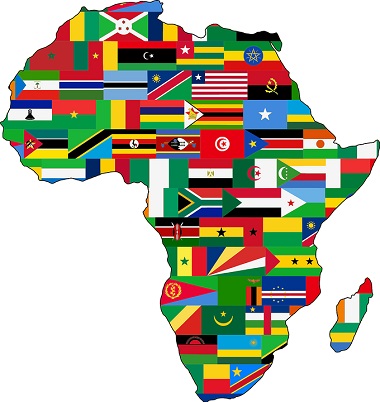
    The AU is a 55-nation pan-continental, intergovernmental organization which was officially launched in July 2002. The AU has a population of just over 1 billion. Its secretariat is in Addis Ababa, Ethiopia. The AU has launched Agenda 2063, an ambitious plan to transform the continent into a global powerhouse. There are currently eight regional economic communities considered ‘building blocks’ of the AU, and diaspora relations are also integral to the AU.

    Both CARICOM and the AU are intergovernmental organisations which encompass post-colonial States with cultural and linguistic differences, facing a myriad of challenges and varying levels of development. Both are in the process of wide-scale regional integration projects. CARICOM, for instance, is in the process of trying to consolidate its CSME. The African Continental Free Trade Agreement (AfCFTA), which was signed in March 2018 and currently has 54 signatories, seeks to create a seamless pan-African economic space. The AfCFTA came into effect in May 2019 and the process has started for the Agreement’s operationalization.

    There are, of course, differences between the two regions which may impact on the policy and negotiating positions taken in multilateral fora. For example, most CARICOM countries are services-based (mainly tourism and/or financial services) economies, with the exception of Belize, Guyana, Suriname and Trinidad & Tobago where commodities trade is important. In the mostly resource-rich African countries, however, commodities trade is king. Most Caribbean countries are Small Island Developing States (SIDS), while those in the AU include mainly landlocked and coastal continental States. The only six AU SIDS are Comoros, Guinea Bissau, Mauritius, Sao Tome e Principe and Seychelles. Moreover, 33 of the 55-member AU are classified by the United Nations (UN) as Least Developed Countries (LDCs), while Haiti is the only LDC in CARICOM.

    Despite these differences, which should not be overlooked, I believe the prospects for CARICOM/AU collaboration and engagement are very promising. Both regions can learn from each other as they seek to deepen their integration projects. There is also scope for closer Caribbean/Africa multilateral collaboration on issues of mutual interest, such as confronting the growing threat of unilateralism and protectionism; the achievement of the United Nations’ 2030 Agenda and its 17 Sustainable Development Goals (SDGs) and their targets; de-risking by global banks; climate change; reform of the World Trade Organisation (WTO); securing reparations, to name a few. Intra-regional cooperation prospects are also promising in many areas such as agriculture, education, the creative industries, renewable energy, medicine/health, the blue and green economies, sports, information and communications technology (ICTs), for example.

    Moreover, Barbados’ upcoming co-hosting of the UNCTAD 15 Quadrennial in October 2020 provides further prospects for collaboration on important multilateral trade and development issues. It is interesting to note that UNCTAD 14 was held in Nairobi, Kenya so there is the opportunity for Kenya to share with Barbados its experience in the successful hosting of the UNCTAD 14.

    Plans for Deepening CARICOM/AU ties  

    A press release issued by the CARICOM Secretariat noted that CARICOM Secretary General Ambassador Irwin LaRocque and Deputy Chair of the African Union Commission (AUC), His Excellency Kwesi Quartey, discussed the need for continued ACP solidarity in the on-going negotiations for the Post-Cotonou Agreement with the European Union (EU) and agreed to explore collaboration on multilateral areas of concern, such as climate change.

    The CARICOM press release further noted that the two leaders “took the opportunity to consider some of the areas in which their two organisations could work together including the formalisation of an institutional relationship between CARICOM and the AU to promote cooperation and to strengthen the deep bond of friendship between Africa and the Caribbean.”

    Moreover, St. Lucia Times has quoted St. Lucian Prime Minister, the Hon. Allen Chastanet, as stating that there will be a planned CARICOM and the AU Summit and the signature of a Memorandum of Understanding establishing a framework for engagement and cooperation. Prime Minister Chastanet is further quoted by this news agency as stating that “Barbados and Suriname will partner in establishing an Embassy in Ghana, while Barbados and Saint Lucia will partner in establishing an Embassy in Kenya.”

    During President Kenyatta’s visit, Barbados and Kenya have also committed to negotiating a Double Taxation Agreement and Bilateral Investment Treaty with each other, and discussed collaboration in areas such as ICTs, renewable energy, sports, the blue economy, health, education and air services. Kenya has also sought the Caribbean’s support in its bid for a seat on the UN Security Council.

    While this high-level political commitment to greater Caribbean-African engagement is needed and commendable, it is firm to firm, university to university and people to people collaboration which will transform deeper Caribbean-African relations from an aspiration to reality. An important step, therefore, will also be formalizing relations between private sector organisations, business support organizations, investment promotion agencies, universities and tourism boards in the Caribbean and Africa in order to promote Caribbean-Africa trade and investment in both traditional and emerging sectors, research and tourism. On this note, it was welcomed news that there will be commencement of engagement between the private sectors of Barbados and Kenya, as well as deeper university collaboration.

    Alicia Nicholls, B.Sc., M.Sc., LL.B., is an international trade and development consultant with a keen interest in sustainable development, international law and trade. You can also read more of her commentaries and follow her on Twitter @LicyLaw.

    DISCLAIMER: All views expressed herein are her personal views and do not necessarily reflect the views of any institution or entity with which she may be affiliated from time to time.
  • Prospects for deepening Caribbean-Africa Trade and Economic ties

    Prospects for deepening Caribbean-Africa Trade and Economic ties

    Caribbean and African countries share an extensive history forged from the scars of the egregious 300-year long Trans-Atlantic slave trade, the abuses of colonialism and the anti-colonial/independence struggle. As such, Africa’s imprint on the Caribbean is not just phenotypical, but its unmistakable genetic markers course through many of the rhythms, music and culinary delights which characterise the Caribbean cultural DNA.  

    Last week, President of Ghana, His Excellency Nana Akufo-Addo, visited five Caribbean countries: Barbados, Guyana, St Vincent and the Grenadines, Trinidad and Tobago, and Jamaica. Aiming to build on the shared historical and cultural ties between his continent and the Caribbean, President Akufo-Addo took the opportunity to sign bilateral cooperation agreements with these countries and to encourage Afro-Caribbean descendants to take part in Ghana’s Year of Return which marks 400 years since the commencement of the Trans-Atlantic slave trade which officially ended in the early nineteenth century.

    President Akufo-Addo’s visit presents an opportune occasion to consider the prospects for deepening Caribbean-African trade and economic ties, particularly in light of the recent entry into force of the African Continental Free Trade Area (AfCFTA) which will transform 52 out of 55 African countries into the world’s largest free trade area.

    Current Caribbean-Africa trade

    The Caribbean Community (CARICOM) comprises 15 Member States and territories in the Caribbean. Africa is one of the few trading partners with which the region enjoys a trade surplus. According to data from ITC Trade Map, CARICOM countries exported US$449 million worth in goods to Africa in 2017, representing 2.6% of CARICOM’s total exports to the world. Whereas, the region imported US$258 million worth of goods from the continent in that same year. Africa’s exports to CARICOM represented a mere 0.06% of its total world exports in 2017.

    On an international relations front, CARICOM countries and many African countries are both members of the Africa, Caribbean, Pacific (ACP) grouping and the Commonwealth of Nations and cooperate in multilateral fora, such as the World Trade Organisation and the United Nations. While CARICOM currently does not have a free trade agreement with any African country, some individual CARICOM Member States have bilateral investment treaties (BITs) and double taxation agreements (DTAs) with individual African States, not all of which are in force.

    Tourism between Africa and the Caribbean remains underdeveloped due to the lack of direct air links. Getting to Africa from the Caribbean or vice versa requires going through a major international gateway, usually London or New York City.

    Prospects for deepening Caribbean-Africa trade

    There are several developments which are promising for an expansion of Caribbean-Africa trade.

    1. Caribbean push for export partner diversification

    Caribbean countries have stepped up their attempts to diversify their export partners, particularly through promoting south-south trade. Thus far, among CARICOM Member States, Guyana, Haiti, Jamaica, Trinidad & Tobago and Suriname have a diplomatic mission in at least one African country. Barbados may soon join that list after announcing an intention to establish an embassy in Ghana by the end of 2019.

    Maintaining a diplomatic presence is often a costly exercise for small resource-constrained countries. Establishing a joint diplomatic mission in strategic African capitals, similar to what the Organization of Eastern Caribbean States (OECS) has done in key international capitals, is something CARICOM may wish to consider. Trade and investment liaisons could be attached to the missions to assist in promoting business and investment. Since it is firms which trade and not countries, building linkages between chambers of commerce and investment promotion agencies in the Caribbean and African countries would also be key.

    • Africa is on the rise

    Africa is home to some of the world’s fastest growing economies and according to the United Nations (UN), the world’s youngest population, comprising one fifth of the global youth population (aged 15-24). Despite challenges related to unemployment, Africa’s youth has the potential to unleash positive change and are an asset in a rapidly digitalizing global economy. The perceived lack of opportunities for youth in Africa may be the Caribbean’s gain leading to the export of high skilled services. Ghana, for example, which has a surplus of nurses, has agreed to assist Barbados with its nurses shortage. Indeed, there is already a small but growing ‘recent’ African diaspora in many Caribbean countries making sterling contributions in diverse fields, such as education, medicine, law and the like. There are also prospects for Caribbean-Africa trade and economic cooperation and sharing of expertise, particularly in the areas of education, renewable energy and health. Deepening and expanding links between universities in the Caribbean and those in African countries would allow for student and faculty exchanges.

    •  Increased Caribbean-African awareness

    Caribbean people are becoming better aware of the continent through for example, Nollywood/Gollywood movies, African music, traditional African dance and the Africa Channel broadcast in the US and the Caribbean. The potential exists for collaboration in the creative industries, particularly in film production, dance, the visual arts and music. Caribbean musical genres such as reggae, dancehall and soca are becoming quite popular in some African cities. For instance, renowned Nigerian artiste Timaya and famous Trinibagonian soca artiste Machel Montano have collaborated on several songs.

    In the area of tourism, Caribbean persons of African descent are increasingly interested in travelling to West African countries like Ghana, from which the majority of persons enslaved during the Trans-Atlantic slave trade were derived, in order to trace their ancestral roots and explore the Motherland.

    Barbados recently announced visa waivers for several African countries, including Ghana, which would facilitate greater tourism and investment. The lack of direct air or modern day sea links between the Caribbean and the African continent is a challenge. It is therefore refreshing to hear the current Barbados Prime Minister speak to the possibility of negotiating an air services agreement with Ghana. President Adufo-Addo and Prime Minister Mottley also spoke of Barbados being a gateway for Africa-Caribbean trade. Barbados, because of its location as the most easterly island in the Eastern Caribbean, was one of the first stops in the Trans-Alantic Slave Trade, the island would geographically make a logical hub for any direct Caribbean-Africa air links.

    • AfCFTA – a single African market

    At a time when some major world powers are retreating to protectionism and isolationism, all but three countries on the African continent (except Benin, Eritrea and Nigeria) have formed a continental-wide single market, a step towards a continental customs union.

    The AfCFTA was signed in March 2018 and entered into force on May 30, 2019, thirty days after The Gambia became the 22nd country to sign. It represents the world’s largest free trade agreement with a collective GDP of $2.5 trillion and a population of 1.2 billion people. The AfCFTA will eliminate tariffs on 90% of goods trade within the countries party to it. Once implemented, the AfCFTA is estimated to boost intra-African trade (which currently remains less than 20% of total African trade), promote economies of scale, industrialization, improve the competitiveness of African companies and lead to wider welfare and income gains.  

    While there is still much unfinished work to be done, as well as political, legal and regulatory hurdles to overcome before the ambitious agreement can be rendered operational, some of the potential benefits of the AfCFTA are apparent. Firstly, it aims to transform what is currently a disjointed and fragmented grouping of disparate regional markets and spaces with a maze of regulatory and legal barriers into one single continental market, making for a potentially more appealing and navigable market for investors. A company which establishes in one African State would not have to navigate a perplexing labyrinth of complicated rules of origin, regulations and other non-tariff barriers in order to trade across the continent.

    Secondly, the vast African continent currently has several regional economic groupings based primarily on geographic region and with varying levels of integration. Though these groupings are not replaced by the AfCFTA, the AfCFTA means that CARICOM and other third parties seeking to secure a free trade agreement with Africa could negotiate with one grouping as opposed to several.

    Thirdly, the AfCFTA and the Protocol on the Free Movement of Persons are potentially welcomed news for third parties seeking to establish a business in Africa as it could make sourcing inputs and hiring staff from other parts of the continent easier and much cheaper.  

    Additionally, both Africa and the Caribbean, which each comprise countries separated by language and geography, are in the midst of creating regional integration movements. CARICOM, and in particular the OECS sub-grouping which has evolved into a deeply integrated sub-region, can share its own experience as it seeks to consolidate its own CARICOM Single Market and Economy (CSME). It can also learn from any successes of the AfCFTA.

    In summary, Caribbean-Africa trade is small but there is potential for growth given Caribbean countries’ export partner diversification efforts, Africa’s economic rise and increased Caribbean-African cultural awareness. Additionally, the single African market contemplated by the AfCFTA is an exciting development which makes the prospects all the more alluring for deepened Caribbean-Africa trade based on a shared history, friendship and the potential for mutual benefit.

    Alicia Nicholls, B.Sc., M.Sc., LL.B., is an international trade and development consultant with a keen interest in sustainable development, international law and trade. You can also read more of her commentaries and follow her on Twitter @LicyLaw.

    DISCLAIMER: All views expressed herein are her personal views and do not necessarily reflect the views of any institution or entity with which she may be affiliated from time to time.