| CARICOM-U.S. Trade and Investment Council to meet in Georgetown |
| (CARICOM Secretariat, Turkeyen, Greater Georgetown, Guyana – Wednesday, 11 October 2023): The trade and investment relationship between the Caribbean Community (CARICOM) and the United States of America (USA) will come under review on Friday, 13 October when representatives of the two sides meet in Georgetown, Guyana. Agricultural sustainability, food and nutrition security, matters pertaining to the Caribbean Basin Initiative, trade in services, trade facilitation and good regulatory practices, are on the packed agenda of the Ninth Meeting of the CARICOM-United States Trade and Investment Council, at the CARICOM Secretariat headquarters. The two sides are expected to review the Caribbean Basin Initiative (CBI), the U.S. trade preference programmes for the Region and explore ways in which to enhance the trade and investment relationship between the United States and CARICOM. As CARICOM accelerates efforts to achieve the goal of 25 percent reduction in food imports by the year 2025, the discussion on agricultural sustainability and food and nutrition security would highlight the use of biotechnology and other tools to promote climate resilience in agriculture, and CARICOM’s 25 by 2025 initiative. On trade facilitation, officials are expected to discuss avenues for streamlined procedures to facilitate exports and the participation of micro, small and medium enterprises (MSMEs) in international trade. CARICOM and U.S. representatives would also examine ways to enhance engagement under the Trade and Investment Framework Agreement (TIFA). This agreement rationalizes CARICOM and Unites States’ desire to promote long-term development, expansion, and diversification of trade in products and services. The Meeting will be co-chaired by HE Felix Gregoire, Ambassador of Dominica to CARICOM and the OECS, on behalf of CARICOM and by Ambassador Jayme White, Deputy US Trade Representative on behalf of the US. |
Tag: guyana
-
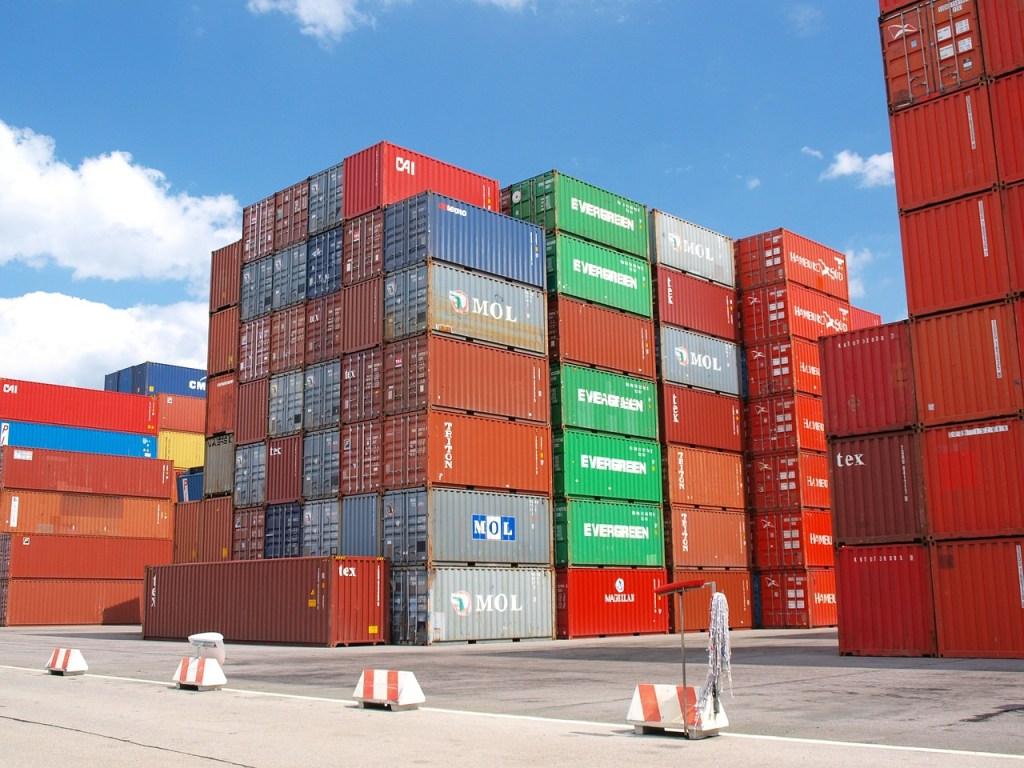
CARICOM-US Trade and Investment Council to meet in Georgetown, Guyana
-

Guyana undergoes fourth WTO Trade Policy Review
Alicia Nicholls
On March 2 and 4, Guyana underwent its fourth trade policy review at the World Trade Organization (WTO). The trade policy review mechanism (TPRM) is an important component of the WTO’s work to ensure transparency in the rules-based multilateral trading system. Under the TPRM, all WTO members’ trade policies and practices are reviewed at regular intervals. The frequency of a member’s review depends on the member’s share of world trade. Guyana’s previous review was in 2015.
The WTO’s full membership, meeting in its capacity as the Trade Policy Review Body (TPRB), discusses both the WTO Secretariat report and a policy statement by the government of the member under review which form the basis of the review. Guyana’s delegation was headed by the Honourable Mr. Deodat Indar, Minister within the Ministry of Public Works.
The Chairperson’s concluding remarks at the end of Guyana’s TPR provide useful insights on some of the issues and comments raised by members during the review process. According to the Chairperson’s remarks, “Guyana received 162 written questions from 10 Members, and has already responded to the majority of them”.
Members commended Guyana for its impressive economic growth buoyed by recent oil discoveries, while also acknowledging the on-going challenges such as those posed by the COVID-19 pandemic. Members also applauded Guyana’s active participation in, and contribution to, the work of the multilateral trading system, the country’s commitment to improving its business environment, combatting illegal logging and strengthening forest governance and efforts towards good governance and inclusive and sustainable development. Members also expressed interest in Guyana’s new copyright legislation and its plans to modernize intellectual property laws.
Members outlined some areas for greater improvement, such as its business environment, increasing transparency in its government procurement practices, engaging in regulatory reforms for improving its service sector and the longstanding situation where some applied tariff rates exceeded their corresponding bound rates. Questions were also raised about Guyana’s recent local content law and how the framework might affect existing joint ventures and create additional barriers to foreign investment.
The documents from Guyana’s review may be accessed here.
Alicia Nicholls, B.Sc., M.Sc., LL.B. is a trade and development specialist and founder of the CaribbeanTradeLaw blog http://www.caribbeantradelaw.com.
-

FATF congratulates Guyana on AML/CFT Improvements
Alicia Nicholls
At its recently held plenary session on October 19-21, 2016, the Paris-based Financial Action Taskforce (FATF) congratulated Guyana on the “significant progress” the country has made in addressing the deficiencies in its framework for anti-money laundering/combatting the Financing of Terrorism (AML/CFT).
Background
Since its establishment in 1989, FATF has sought to protect the integrity of the global financial system from threats posed by money-laundering (ML), terrorist financing (TF) and the financing of proliferation of weapons of mass destruction. Its main role is setting and promoting standards on these areas and its 40 plus 9 Recommendations are the international standards for AML/CFT and the financing of the proliferation of weapons of mass destruction. FATF’s work is complemented by the nine FATF-style regional bodies, including the 27-member Caribbean Financial Action Task Force (CFATF), of which Guyana has been a member since 2002.
The AML/CFT Mutual Evaluation is a peer review process to evaluate each member country’s level of compliance with FATF’s Recommendations. These reviews are concerned not just with the jurisdiction’s technical compliance with the recommendations but also now with the effectiveness of the country’s AML/CFT systems.
CFATF was very critical of Guyana’s technical compliance with the FATF recommendations in its third round Mutual Evaluation report dated July 2011. Inter alia, the reviewers had highlighted several deficiencies in the Anti-Money Laundering and Countering of the Financing of Terrorism (AML/CFT) Act 2009, the lack of statistics, staffing shortages and limited staff training. As a result, the country was placed on expedited follow-up and required to report every Plenary. Due to internal political wrangling over the proposed bill’s content, for many sittings Guyana’s legislature could not pass the proposed amended AML legislation.
This inaction, however, had several negative consequences. Starting in May 2013, CFATF had named Guyana among its list of jurisdictions with strategic AML/CFT deficiencies that had not made sufficient progress in addressing them and had warned that if Guyana did not take specific steps by November 2013, not only would it call upon its members to consider implementing counter measures to protect their financial systems from the ongoing ML/TF risks emanating from Guyana but would consider referring the country to the FATF International Cooperation Review Group (ICRG) which analyses the AML/CFT threats from high-risk jurisdictions.
After Guyana had failed to meet the agreed timelines in the action plan, the regional watch body followed through on its threat in its public statement released May 2014 in which it called on its Members to “consider implementing further counter measures to protect their financial systems from the ongoing money laundering and terrorist financing risks emanating from Guyana”.
That language may sound extreme to the reader considering that Guyana is not an international financial centre and any AML/CFT lapse is unlikely to cause even a ripple in the global financial system. Regulatory costs are burdensome for cash-strapped small states which often lack the financial resources and the human resource capacity to meet all the requirements. What little technical assistance is given is often not adequate. As countries which are not members of FATF Caribbean countries also have little say in the regulatory framework or agenda which are often slanted towards the interests of advanced economies.
However, these important inequities aside, a sound AML/CFT framework is important for countries, especially those with porous borders and which are dependent on foreign investment and foreign trade. Having a reputation for a deficient AML/CFT framework could make it difficult for an FDI-dependent country to attract new investment as some parent companies may prohibit the establishment of subsidiaries in a country with a deficient AML/CFT regime. It also increases the country’s risk profile which would make financial transactions and relationships with businesses and persons in that country subject to enhanced due diligence due to the higher level of perceived risk, increasing the chances of its local banks losing their foreign correspondent banking relationships and thereby restricting its access to the global trade and financial systems.
Guyana’s progress to date
Since coming to power in 2014, the new government in Guyana has been able to implement several reforms to improve the country’s level of compliance with FATF recommendations. These changes have been well-documented in this article by Anand Goolsooran. However, some of those identified in CFATF’s 10th Follow Up Report released June 2016 include the passing of the AML/CFT (Amendment) No.2 Act 2015 in January 2016 and of the AML/CFT (Amendment) Act No. 15 of 2016 in May 2016 and the issuance of AML/CFT Directives and Guidelines.
As a result, the CFATF assessors concluded as follows:
Guyana has significantly improved its overall level of compliance and most importantly Guyana has fully addressed the core and key Recommendations. While Guyana satisfies the criteria for application to exit the follow-up process, it is still in the FATF ICRG process which it needs to complete first. As such it is recommended that Guyana stay in enhanced follow-up and be required to report on continuing implementation to the next Plenary in November 2016
In mid-September 2016, the visiting FATF/ICRG delegation praised Guyana’s progress towards bringing its framework in compliance with FATF recommendations. As of October 2016, Guyana is no longer subject to FATF’s on-going global AML/CFT compliance process. Guyana will continue to work with CFATF to address the outstanding issues with the goal to exit the CFATF follow-up process.
The outcomes of the FATF October 2016 Plenary session may be viewed here.
Alicia Nicholls, B.Sc., M.Sc., LL.B. is a trade and development consultant with a keen interest in sustainable development, international law and trade. You can also read more of her commentaries and follow her on Twitter @LicyLaw.
 Caribbean Trade Law and Development