Tag: immigration

  • COVID-19: Side Effects on the World

    COVID-19: Side Effects on the World

    Image by Alexandra_Koch from Pixabay

    Renaldo Weekes, Guest Contributor

    Renaldo Weekes, Guest Contributor

    COVID-19 has been characterised by the disruption of many systems and procedures that the world uses to conduct business and everyday life. It follows, then, that the global economy took a severe hit when the virus spread across the world and forced many countries to close their borders and businesses to halt or slow their operations. Many began to ponder how countries, especially Small Open Economies (SOEs), would survive. Now that a year has passed since the start of the pandemic, many are eager to return to the life we once had.  Though this is possible with the availability of vaccines, there is no doubt that COVID-19 has left a scar on the world that may never be healed. In assessing this, we must consider the ways in which trade is impacted. Namely, through scams and Anti-Money Laundering (AML), tourism and immigration, and the acceleration of technological trends.

    Scams and Anti-Money Laundering

    Scams are schemes used to swindle money out of unsuspecting persons. The money gained from scams are laundered through the bank system in order to legitimize it. AML seeks to prevent the act of laundering money. In the context of the current COVID-19 pandemic, government agencies such as the Federal Trade Commission (FTC) have warned that fraudsters are sending phishing emails, posing as government agencies promising to provide aid in exchange for access to bank accounts.

    As many countries and businesses are slow to recover from the pandemic, many persons remain desperate and vulnerable to scammers who continue to exploit the situation. In light of the increase in scam activity at a time when Governments are hyper focused on providing relief, it is imperative that AML procedures are enforced to ensure that fraudsters do not slip by. National Public Radio (NPR) in the United States (US) reported that so many business requested assistance that the government could not properly vet who actually needed assistance and thus, many fraudsters slipped by. How does this relate to trade?

    Trade is driven by businesses and individuals located in different countries buying from or selling to each other. AML procedures can persuade persons seeking to do business in other countries. They indicate a jurisdiction’s commitment to stopping money laundering which can be used for things such as acts such as terrorism. Persons must be sure that their assets are safe. Scammers’ abilities to continually slip through the cracks during this crisis unscathed may serve as an indication of weak enforcement of AML procedures. Reviews of internal procedures must be prioritized. This issue is more likely to affect countries with an already undesirable AML rating, especially those that may have had the unfortunate privilege of being included on lists such as the European Union’s (EU) list of non-cooperative jurisdictions. Such lists can restrict foreign investment which is especially important to SOEs.

    Tourism and Immigration

    Tourism and immigration are two aspects of trade that are sometimes overlooked. Tourism is only associated with vacationing families and immigration associated with persons moving from one country to another permanently. However, there is more to these two areas. Tourism and immigration are predicated on the movement of people across borders and the pandemic has hindered this significantly, but how does this affect trade? We will consider tourism first. Tourism is defined by the UNWTO as “a social, cultural and economic phenomenon which entails the movement of people to countries or places outside their usual environment for personal or business/professional purposes.” It “has to do with their activities” which involves “tourism expenditure.” This definition notes that tourists travel for business, and contribute to expenditure. A paper entitled ‘Tourism and Trade: A Global Agenda for Sustainable Development’ notes that tourism counts as an export for the destination country and import for the tourists country of origin.

    Tourism expenditure directly involves several companies such as hotels, travel agencies and tour companies, and self-employed persons who focus on tourists. Indirectly, tourism involves companies that provide services to the aforementioned companies. Part of their success depends on the success of those directly impacted by tourism. It is no secret that tourism is major source of revenue for SOEs, especially those in the Caribbean. A decline in a major revenue earner for SOEs counts toward a decrease in their exports and leads to the disruption of the value chains that exist between companies that are involved in tourism.

    In addition to this, tourists aid building the brand of a country. Not only the for the sake of leisure but for the sake of investments. Each product they return home with, review of services and other infrastructure gives insight into the country. Tourists themselves can turn into possible investors. Being physically in a country provides experiences that online-only services cannot provide.

    With this coming to a sudden halt during 2020 and some countries struggling to fully reopen, it remains a struggle to regain ground for those that rely on tourism. Though the distribution of vaccines seems promising, there are reports of a third wave of the pandemic in some parts of the world. This third wave will likely result in the reinstatement of lockdowns which will further hinder the regrowth of tourism. The institution of a vaccine passport is another hindrance as those unable to receive the vaccine will not be able to travel. This is especially for those who live in relatively poor countries that must rely on the COVAX facility and the generosity of wealthier nations for vaccine doses.   

    Immigration

    Immigration, being similar to tourism in terms of the movement of people, is affected in many of the same ways as tourism. Closed borders and the institution of a vaccine passport limit rates of tourism and immigration alike. This notwithstanding, immigration affects trade and concomitant supply links in other in its own ways. Firstly, immigrants add to the number of workers within a country and this increases the capacity of businesses and investment since there would be, in theory, more productivity. Added to this is the fact that immigrants are willing to do jobs that natural born citizens of a country may not be willing to do. For example, immigrants in America perform jobs that native born Americans opt out of. This being the case, immigrants contribute greatly to the export of commodities such as agriculture as this sector is likely to be filled with immigrant workers.

    Secondly, immigrants forge links to their home country in their destination country. Immigrants have family and friends in their home country that they send remittances and other products to. In turn, they import products from their home country that may not be otherwise available in their new home. This diasporic link contributes to businesses that specially target immigrants. Recognizing the contributions that immigrants make to both their home country and their resident country, any downturn in immigration can hinder the growth of these trade links.  

    Acceleration of technological trends

    Before the pandemic began, certain practices within the global economy were trending either upward or downward. One such practice that was trending upward was the reliance on technology. The worldwide spread of COVID has pushed a work from home initiative that has made technology more of a necessity in our lives. Many businesses and governments were forced to have more online presence and reshape their operations to have more technological focus. The benefits of this include more fluidity in logistics and operations as there would be less administrative overhead. This translates to better trade fluidity since efficiency would be increased. This is especially important for SOEs that heavily rely on trade. They must have a state of the art customs system that facilitates fluid importation and exportation that serve as the lifeline of the country.

    Conclusion

    While most persons are concerned with the side effects of the coronavirus on the body, the pandemic itself will prove to have variety of side effects on the global economy at large. It may have been obvious to the majority of persons that the world would have been forced to change as result of a pandemic that has pushed the boundaries of our systems and made reconsider things once considered impossible. However, some persons may not have considered the specific ways in which the world would be changed, especially international trade. In light of increasing scams related directly the pandemic, the current limits placed on tourism and immigration, and the acceleration of trends that were already in place, it is imperative that persons be ready for the stresses and permanent changes that are in place or will be put in place as we prepare to leave COVID behind once and for all and rebuild our society and economy.

    Renaldo Weekes is a holder of a BSc. (Sociology and Law) who observes international affairs from his humble, small island home. He has keen interest in how countries try to maneuver across the international political and legal stage.

    The views and opinions expressed herein are solely those of the guest author and are not necessarily representative of those of the Caribbean Trade Law & Development Blog.

    SOURCES

    FEDERAL TRADE COMMISSION WARNING – https://www.ftc.gov/news-events/blogs/business-blog/2021/01/business-owners-latest-covid-scam-directed-you

    NPR – https://www.npr.org/2020/10/28/928792199/billions-in-covid-19-relief-loans-may-have-been-handed-out-to-scammers-report-sa

    TOURISM DEFINITION – https://www.unwto.org/glossary-tourism-terms

    TOURISM AS TRADE – https://www.intracen.org/uploadedFiles/intracenorg/Content/Publications/Tourism_and_Trade__low%20res_2014-2015-335.pdf

    DO IMMIGRANTS STEAL JOBS? – https://www.brookings.edu/blog/brookings-now/2017/08/24/do-immigrants-steal-jobs-from-american-workers/
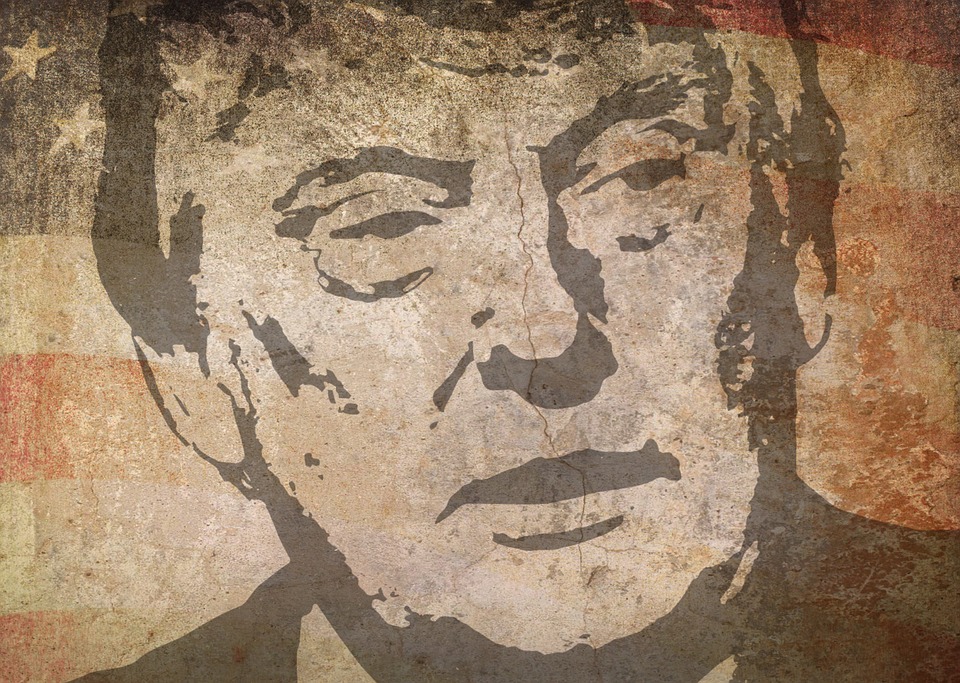
  • Trump Presidency: What priorities for US-Caribbean Economic Engagement?

    Trump Presidency: What priorities for US-Caribbean Economic Engagement?

    Alicia Nicholls

    The United States’ position as most Caribbean countries’ largest economic partner and an important foreign policy ally means that constructive engagement with the incoming Trump administration is not just a choice but an imperative. The Caribbean Community (CARICOM) and individual Caribbean governments have all expressed congratulatory messages, emphasizing their willingness to work with Mr. Trump and continuing the harmonious US-Caribbean relationship.

    But in contrast to the idealism attending then Senator Barack Obama’s “Yes we can” message eight years ago, a spectre of profound uncertainty shrouds the President-elect not just because of his extreme rhetoric on trade and foreign policy, undergirded by his “Make America Great Again” and “America First” refrains, but also the lack of policy specificity.

    In this article, I will outline what I believe are five key priorities which will likely frame US-Caribbean economic and foreign policy engagement for the foreseeable future:

    1. Correspondent Banking/De-Risking

    A first order of business will be continuing the conversation that CARICOM governments and stakeholders have started with US officials and regulators on the de-risking activities of US-based international banks, including the withdrawal and restriction of correspondent banking relationships. These relationships are Caribbean’ lifeline to the global financial and trading system, critical for the trade, investment and remittance flows which buoy our small open economies and sustain households.

    US foreign policy orientation towards the Caribbean has constantly recognized that an economically secure “third border” complements US’ strategic security interests. Any threat therefore to the region’s economic and financial inclusion is something which should be of mutual concern. Unfortunately, there appears to be limited progress on the correspondent banking issue.

    While de-risking is a cost-benefit decision for banks, it is also partly fuelled no doubt by ambiguous regulations and the Caribbean’s undeserved reputation in some quarters as a high risk place for doing business. To their credit, the US Treasury and Federal Banking Agencies released a Joint Factsheet on Foreign Correspondent Banking. Additionally, the US Treasury has reiterated that the de-risking issue is a “key priority”.

    However, actions by US authorities which unfairly label Caribbean countries as “tax havens” contribute to the perception that Caribbean jurisdictions and banks are higher risk. In 2015 the state legislature of Montana, and the District of Columbia, had included several Caribbean countries among their proposed lists of tax havens. This is despite Caribbean countries’ having taken steps to ensure their compliance with the Foreign Account Tax Compliance Act (FATCA) and our clean bill of health by the Organisation for Economic Cooperation and Development (OECD).Continued engagement with US states and federal authorities on this issue is a must.

    1. International Financial Services & FATCA

    Although President-elect Trump has promised to lower the US federal corporation tax rate from 35% to 15% and  provide a deemed repatriation of corporate profits held offshore at a one-time tax rate of 10%, his orientation towards international financial centres (IFCs) in general is not well-known.

    The Obama administration has not been friendly to Caribbean IFCs, and that is putting it mildly. On the other hand, Mr. Trump’s background as a businessman may make him more appreciative of the role IFCs play in making US businesses more efficient and profitable, which in turn facilitates their contribution to US economic and job growth. Moreover, conventional wisdom holds that Republican governments are usually friendlier to the Caribbean than are Democratic governments, and there is good anecdotal evidence to support this.

    Additionally, continued engagement with US authorities will be necessary to iron out any implementation and reporting issues under FATCA.

    1. Caribbean Basin Initiative & Other Market Access Issues 

    Manufacturers in most Caribbean countries enjoy non-reciprocal duty-free access to the US market for most goods under the Caribbean Basin Initiative (CBI), an initiative of the Reagan administration in the 1980s which had both economic, ideological and geopolitical imperatives. The CBI is unilateral which means that the benefits can be unilaterally revoked and the criteria for eligibility changed at any time. However, CBI is generally believed to be beneficial to US manufacturing and jobs and Caribbean has a large trade deficit with the US, which should keep CBI off the President-elect’s immediate radar.

    One sticking point in US-Caribbean trade relations is the cover over subsidies which the US Federal government pays to the US territories of Puerto Rico and the US Virgin Islands out of excise taxes it collects from imported rums, which has made Caribbean rums less competitive in the US market. Turning to merchandise trade in general, non-tariff barriers such as sanitary and phyto-sanitary and labelling requirements have also been a constraint on market access.

    Caribbean workers benefit from temporary employment under the US Farm Workers and Hospitality Workers programmes. However, outside of this, Caribbean service providers have no preferential access to the US market. The CBI does not cover services trade. Caribbean business persons seeking to supply a service in the US instead rely on non-immigrant visas. Mr. Trump has promised to tighten the US’ border and control policy. It is not certain whether this will be extended to non-immigrant visas as well.

    1. Immigration & Workers’ Programmes

    Mr. Trump made tightening immigration one of the cornerstones of his campaign platform. While his ire was directed towards Mexican and Muslim immigrants, Caribbean immigrants will be collateral damage. For instance, undocumented immigrants who had come to the US as children and had identified themselves in good faith when applying for protection under the Deferred Action for Childhood Arrivals (DACA) programme might have unwittingly made themselves prime targets for deportation if Mr. Trump goes through with his plans.

    Most Caribbean immigrants are law-abiding citizens who are making sterling contributions to the American society. However, another pertinent concern is Mr. Trump’s vow to accelerate the deportation of those immigrants convicted of crimes to their country of birth, which has been a sticking point in US-Caribbean relations for some time. Caribbean governments have criticised the deportation of persons who were born in the Caribbean but socialised in the US with only superficial Caribbean roots. They have also linked these deportations to increased violent crime in the Region.

    Mr. Trump has also spoken earlier about reforming legal immigration. This will make it difficult for Caribbean persons to emigrate legally to the US. This also has implications for remittances, a lifeline for many poorer Caribbean households.

    5. Mobilising Climate Finance

    Climate finance is needed to assist countries, particularly poorer and most vulnerable countries, in their climate change adaptation and mitigation efforts. It is something which the Small Island Developing States in particular were adamant upon during the negotiations leading up to the eventual signing of the Paris Climate Change Agreement.

    Developed countries committed themselves to mobilising 100 billion USD in climate finance from a variety of sources each year by 2020, a pledge which dates back to Copenhagen in 2009 and one which President Obama has supported. Caribbean countries have also received climate change aid under USAID programmes.

    Mr. Trump, however,  is not a believer in anthropogenic (man-made) climate change, and has vowed to “cancel the Paris Agreement”, to ramp up fossil fuel production and to defund the clean energy initiatives. Further US contribution to the Green Climate Fund, which was established to assist developing countries like those in the Caribbean, is now in question.

    Conclusion

    Mr. Trump’s election has evoked an aura of uncertainty over what will be the future paradigm of US-Caribbean relations. Although the Caribbean had not featured in the policy discussions during the campaign, Mr. Trump’s populist rhetoric illustrated a marked departure from the tenets of current US economic and foreign policy. He has, however, been light on specifics. If implemented, his proposals will be a strong departure from current US policy, particularly in the area of climate change which I addressed in a previous post.

    Nonetheless there are two sparks of hope. Firstly, President-elect Trump is a businessman at heart and should be more attuned to a ‘dollars and cents’ argument. Secondly, Mr. Trump’s malleability in regards to his positions evinces some pragmatism on his part. It is worth remembering that for much of his public life, Mr. Trump has espoused liberal views until becoming an independent and then a Republican in later years. He has also softened some of his most ardent positions during the campaign and since winning the election, and has also been rumored to be considering some of his former Republican opponents for Cabinet positions.

    These two factors suggest that there may be more scope for discussion with a Trump administration than may initially be perceived. What will the emerging Trump Doctrine mean for the Caribbean? And whether we will see a “hard” or “soft” Trump, to borrow the clever nomenclature employed by former WTO Director General, Pascal Lamy, no one knows. A clearer sense of Mr. Trump’s true policy orientation will be more discernible when more of his Cabinet picks are revealed and his proposals are elaborated upon.

    While these issues I have highlighted will not be policy priorities for the Trump Administration, they are issues of importance to Caribbean countries. As such, Caribbean governments and other stakeholders must be pro-active in their engagement with the Trump administration from day-one when he assumes office in January 2017.

    Alicia Nicholls is a trade and development consultant with a keen interest in sustainable development, international law and trade. You can also read more of her commentaries and follow her on Twitter @LicyLaw.