Tag: Investment

  • Global tax reforms and Caribbean countries’ investment policy implications

    Global tax reforms and Caribbean countries’ investment policy implications

    Alicia Nicholls

    As of August 12, all Caribbean Community (CARICOM) Member States have now endorsed the Organisation for Economic Cooperation and Development (OECD) statement on a ‘Two-Pillar Solution to Address the Tax Challenges Arising From the Digitalisation of the Economy’ of July 1, 2021. The OECD statement, signed now by 133 member jurisdictions of the OECD/G20 Inclusive Framework, is not a fait accompli per se but has been described as a ‘conceptual agreement’ indicating their ambition for global tax reform. The stated purposes behind this latest phase of the OECD Base erosion and profit shifting (BEPS) initiative, described as ‘BEPS 2.0’, are to ensure that multinational enterprises (MNEs) “pay their fair share of tax” and to stop a “race to the bottom” in countries’ corporate tax rates. As such, pillar one of the two-pillar solution seeks to ensure a fairer distribution of profits and taxing rights among countries with respect to the biggest MNEs globally, in particular large tech companies. Pillar two – and the more controversial for our region – aims to prevent tax base erosion by setting a global minimum corporate income tax of at least 15%.

    The technical details behind this solution remain to be worked out. As the statement notes, a detailed implementation plan and the remaining issues are to be finalised by October 2021. But what does this mean for the investment policies of Caribbean countries, especially in a COVID-19 climate where foreign direct investment (FDI) will be key to sustainable economic recovery efforts?

    In its latest IIA Issues Note entitled “Recent Developments in the IIA Regime: Accelerating IIA Reform”, UNCTAD (2021) devotes several paragraphs to the possible impact that ongoing global tax reform efforts might have for international investment patterns and global and national investment policies and policy-making. UNCTAD (2021) identified several possible implications. One implication is that it would discourage multinational corporations (MNCs) from shifting profits and tax revenues to low tax-countries, and second, stop the race to the bottom among countries’ tax rates which have occurred over the past three decades.

    Let us look at these first two implications. Not all Caribbean jurisdictions have low CIT rates, but some do, particularly those which have large international business sectors. A global minimum CIT, of course, would have implications for those countries (particularly low tax and no-tax jurisdictions) whose favourable tax regimes have traditionally been a key component of their value proposition to potential and existing foreign investors. Contrary to popular opinion, it is not only small island international financial centres (IFCs) which have made a favourable tax environment part of their investment attraction strategy, but some larger countries, including in the EU, such as the Republic of Ireland and Luxembourg.

    The possible loss of business from raising their CIT to meet a possible minimum global CIT of 15% could have implications for the macroeconomic stability of countries dependent on FDI inflows, as well as possible loss of jobs. Governments would need to conduct the appropriate economic analyses to ascertain the potential impacts of raising their tax rates to meet the proposed global minimum CIT, if and when it is decided. The possible socio-economic implications must be considered and weighed.

    A third implication raised by UNCTAD (2021), and what several Caribbean countries are currently undertaking, is the need to engage in a comprehensive review of their tax incentive regimes to attract investment. Indeed, those countries whose tax rate was their main value proposition will be forced to develop other areas of competitiveness which would make them attractive to global business. This, of course, is not a negative thing and could force our countries to build other areas of competitiveness and pay greater attention to accelerating on-going investment facilitation and wider business facilitation reforms.

    A fourth issue raised by UNCTAD (2021), and which must be seriously considered, is the implications for host country obligations under international investment agreements (IIAs) signed. More specifically, should host States decide to raise their tax rates to the proposed minimum standard (once agreed), there is the possibility of legal exposure to investor-State claims brought by investors under IIAs, especially relying on nebulous clauses such as the fair and equitable treatment (FET) standard. This is a real possibility as the majority of Caribbean countries’ bilateral investment treaties (BITs) are older generation treaties with broad investor protections and few, if any, explicit provisions for State regulation in the public interest. Even where a host State ‘wins’ an ISDS dispute, the costs incurred through the need to hire (often foreign) legal representation and the negative press surrounding such a dispute might be just as harmful.  

    While the threat of possible treaty-based investor claims would not be a concern for those Caribbean countries with few or no BITs in force, those whose investment promotion strategies have historically relied on the signing of BITs should pay close attention to this possible unintended consequence as they formulate new tax regimes.

    Caribbean  IFCs are in uncharted and hostile global regulatory waters, and not for the first time. The ideal response would have been unity among affected countries to contest this latest blatant encroachment on our sovereignty, in particular, our ability to determine our own tax regimes and by extension, investment policies. However, it appears that many countries have decided that it was in their own national interests to sign on to the initiative because of the very realistic possibility of victimisation (through arbitrary blacklisting, for example) and reputational risk at a time when they are already dealing with the impact of de-risking practices by global banks. Another stated reason for joining is the prospect of influencing and shaping the developments from within. Let us hope that by having a seat at the table, we can at least ensure our voices will be heard in an initiative that is likely to be consequential for our Caribbean small island developing States at a time when we most need FDI inflows for a sustainable post-COVID-19 recovery.

    Alicia Nicholls, B.Sc., M.Sc., LL.B. is a trade and development consultant with a keen interest in sustainable development, international law and trade. All views herein expressed are her personal views and should not be attributed to any institution with which she may from time to time be affiliated. You can read more of her commentaries and follow her on Twitter @LicyLaw.

  • Deadline Extended (June 4) – Call for Blogs – Afronomicslaw Symposium: Prospects for Deepening Africa-Caribbean Economic Relations

    Deadline Extended (June 4) – Call for Blogs – Afronomicslaw Symposium: Prospects for Deepening Africa-Caribbean Economic Relations

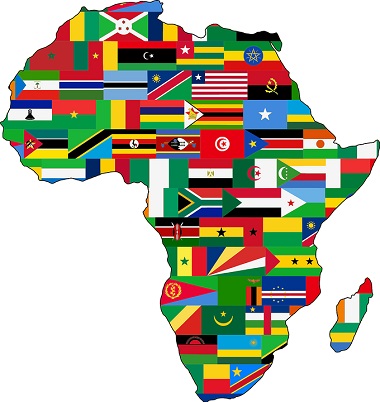
    Total trade volumes between African and Caribbean countries remain small, but the potential and opportunities for enhancing trade, investment and economic cooperation between these two regions are encouraging based on shared historical and cultural ties. To this end, the Caribbean Community (CARICOM) has announced steps to formalize relations with the African Union (AU).Several CARICOM countries have also sought to deepen bilateral ties with individual African countries. Africa-Caribbean Economic Relations and cooperation are even more critical now as countries on both sides of the Atlantic aim to kickstart economic recovery following the devastation wrought by the COVID-19 shock. Indeed, vaccine cooperation became another form of Africa-Caribbean cooperation when the AU offered CARICOM access to some of the approved vaccines from a shipment it was receiving.

    Given the limited but promising trade and investment relationship between both regions, there is a dearth of scholarly analysis on the Africa-Caribbean economic relationship. This Symposium aims to address this gap in international economic relations scholarship through considered analytical pieces exploring aspects of this understudied relationship.

    We invite authors to submit contributions which critically analyze and examine this relationship from a variety of perspectives, including but not limited to:

    • Geo-political and economic ties (both historical and present) between these two regions; 
    • The future of trade and investment relations between both regions in light of WTO-plus mega-regional trade agreements popping up;
    • EU-ACP relations e.g. EU-EPAs and issues relating to fragmentation and dilution of negotiating positions by African and Caribbean countries;
    • The impact of COVID-19 on the vulnerability of trade and investment regimes in both regions;
    • Comparative perspectives from both regions on the role of education in the advancement of critical thought in international economic relations scholarship;
    • Comparative perspectives from both regions on the regulation of digital trade/e-commerce;
    • Africa-Caribbean collaboration in multilateral fora, e.g., WTO, ACP, Commonwealth, UNCTAD; •
    • Comparative perspectives from both regions on approaches to cooperation and regional integration; 
    • Comparative perspectives from both regions on Sustainable Development, e.g., approaches to mainstreaming regulation of renewable energy, the green and blue economy into trade and investment regimes;
    • Air Connectivity/Tourism/Travel Trade, e.g., prospects for promoting leisure and business travel between CARICOM and African countries;
    • Cultural Industries collaboration;
    • Role of the private sector in shaping future Africa-Caribbean trade and investment relations;
    • Investment relations, e.g., opportunities for Africa-Caribbean FDI, cooperation on investment rule-making reform.

    Submission Guidelines:

    Essays that are submitted as part of this symposium must be analytical and original. Authors must comply with the Afronomicslaw.org blog submission guidelines accessible here. Blogs are to be submitted to afronomicslaw@gmail.com with the title ‘African-Caribbean Relations Blog Submission’.

    Deadline for Submission of Essays:

    May 14, 2021.

    Inquiries or clarifications relating to this call should be directed to Ohio Omiunu (ohio.omiunu@dmu.ac.uk) and Alicia Nicholls (alicia.nicholls@cavehill.uwi.edu)

  • COVID-19: Why Caribbean Countries should re-examine their investment treaties

    COVID-19: Why Caribbean Countries should re-examine their investment treaties

    Alicia Nicholls

    All Caribbean countries have signed at least one treaty containing provisions meant to reciprocally protect, promote and liberalise the flow of investments between themselves and their treaty partner(s). Unfortunately, the vast majority of our countries’ international investment agreements (IIAs) are older generation bilateral investment treaties (BITs) which lack many of the development-friendly language and best practices of newer vintage IIAs. The end result is that Caribbean countries could potentially face significant legal exposure to claims brought by investors under these treaties.

    Although most Caribbean countries’ experience thus far with investor claims have been contract-based and not treaty-based, the threat for treaty-based claims looms larger now in the midst of the novel coronavirus (COVID-19) pandemic. This is because Caribbean governments, like those governments around the world, have had to take measures to contain and mitigate the spread of the virus, and may face claims from foreign investors who feel aggrieved by these measures and seek legal protection under these BITs.  

    This article argues that the time is long overdue for Caribbean countries to re-evaluate whether their BITs remain ‘fit for purpose’ and to take proactive steps to mitigate the risk for investor disputes post COVID-19.

    CARICOM Investment treaty landscape

    CARICOM countries are party to a spaghetti bowl of IIAs. Some are investment chapters in free trade agreements, such as the CARIFORUM-EU Economic Partnership Agreement. However, the majority are the 83 BITs signed by individual Caribbean governments with external treaty partners, many dating back to the 1980-1990s. Of these BITS, 56 are currently in force according to data from UNCTAD’s IIA Navigator.

    Although the effectiveness of IIAs at attracting foreign direct investment (FDI) inflows remains debated in the academic literature, countries sign these agreements in order to increase their attractiveness to foreign investors. Signing IIAs shows their commitment to guaranteeing investors and their investments certain minimum standards of treatment, as well as protection from heavy-handed State action, such as, for example, direct or indirect expropriation of investors’ investment(s) without compensation.

    Another feature of IIAs is the inclusion of Investor-State Dispute Settlement (ISDS), allowing investors to by-pass domestic courts and bring a claim against a host State before a neutral and independent arbitration tribunal, either ad hoc or established under the rules of an established arbitration centre, such as the International Centre for Settlement of Investment Disputes (ICSID).

    Though popular back in the 1980s-90s, in recent years, however, the legitimacy of ISDS internationally has been increasingly questioned for many reasons. Firstly, arbitral tribunals have been criticized for their generous interpretation of vaguely drafted provisions, such as the Fair and Equitable Treatment (FET) standard, in favour of investors. Secondly, in many cases, tribunals have arrived at different decisions on the same facts. Thirdly, there is concern about the lack of geographic and other diversity of persons who serve as arbitrators on these panels. Fourth, there is the potential of using Most Favoured Nation (MFN) clauses for treaty shopping.

    A study I conducted a few years shows that there is no consistency in Caribbean countries’ BIT practice, which is reflective of our unequal bargaining power as rule-takers. Moreover, because of their vintage, our older BITs lack the best practices in development, such as more express provisions for the State’s right to regulate in the public’s interest, development exceptions and provisions on investor obligations.

    There are, of course, defences that States can make to investor claims, but many of these older BITs have very broadly drafted protections and lack the exceptions or defences newer BITs have included permitting the State to take action in the interest of public health. Failing this, States would have to rely on other defences under international law, such as necessity.

    ISDS and Caribbean countries

    Caribbean countries have had some experience with claims brought by foreign investors. Although the majority of these claims have been contract-based, one of the most well-known examples of a Caribbean country which was on the losing end of an investor dispute under a treaty-based claim was that of the Dunkeld International Investment Ltd. V Government of Belize. Following Belize’s compulsory acquisition of certain shares in Belize Telemedia Company, in which Dunkeld held an interest, Dunkeld brought a claim against the Government of Belize under the Belize-UK BIT. Belize was ordered by the arbitral tribunal to pay millions of dollars in compensation.

    In an excellent article from April 2020, the International Institute for Sustainable Development (IISD) raised the alarm about a possible deluge in investor claims post-COVID-19 and called for a ‘global, coordinated response’ to this risk. This fear and call to action are not unfounded as in the aftermath of the Global Financial Crisis, Argentina faced a litany of investor claims. The stakes are even higher for small States like ours. Defending investor claims is costly and the award amounts, if on the losing end, can be in the millions or billions of dollars, a cost which cash-strapped Caribbean governments, whose economies have been severely impacted by months of shutdowns and border closures, can ill-afford to pay.  There is also the potential for reputational damage for those countries involved in investor disputes, which could affect their investment attractiveness.  

    How can we get around this?

    Even prior to the COVID-19 pandemic, a growing number of countries around the world have already either suspended or completely overhauled their BITs to limit their legal exposure to investor claims under these treaties. For example, a couple years ago India unilaterally terminated its BITs with over 50 treaty partners, including Trinidad & Tobago, and South Africa terminated BITs with several EU countries.  More recently, in May 2020, 23 EU countries signed an agreement to terminate all intra-EU BITs.

    The CARICOM Secretariat has for many years been working on a Draft CARICOM Investment Code, as well as a template Member States could use for investment agreements with third country partners, incorporating many of the most recent investment treaty best practices. However, to my knowledge, there has not been a systematic review by individual CARICOM countries of their BITs and whether they are indeed ‘fit for purpose’, that is, drafted in a way that promotes investment for sustainable development. Moreover, current economic exigencies may make such a comprehensive evaluation of our BITs low down on the policy totem pole for Caribbean countries.

    Despite this, Caribbean governments should support calls for a multilateral solution to prevent what many anticipate could be a slew of investor claims arising from governments’ COVID-19 measures. However, there are interim mitigating measures they can take, such as deciding with their treaty partners to issue interpretive notes for some of the most used (and abused) provisions by investors or carving out COVID-19 related measures from the application of ISDS.

    On a final note, Caribbean governments need to be more actively involved in efforts to ensure investment rule-making actually creates an environment conducive to attracting investment for sustainable and inclusive development. We must move from simply being ‘rule-takers’ to part of the ‘rule-makers’. As such, our governments should, for example, consider taking an active part in the UNCITRAL Working Group III on ISDS reform.

    Alicia Nicholls, B.Sc., M.Sc., LL.B is an international trade and development specialist. Read more of her commentaries here or follow her on Twitter @licylaw. All views expressed herein are her personal views and do not necessarily reflect the views of any institution or entity with which she may from time to time be affiliated.

  • Africa-Caribbean relations to deepen with a joint CARICOM diplomatic mission

    Africa-Caribbean relations to deepen with a joint CARICOM diplomatic mission

    Alicia Nicholls

    CARICOM countries will establish a joint diplomatic mission in Kenya – which for many CARICOM governments, like Barbados, will be their first diplomatic mission on the African continent. According to a press release from the Barbados Prime Minister’s Office (PMO) dated December 7, Prime Minister of Barbados, the Hon. Mia Amor Mottley, unveiled a plaque and accepted the space for the joint mission on behalf of the regional grouping.

    The joint mission will be housed in an ultra-modern business complex in the diplomatic district of Nairobi, Kenya, across the road from the United Nations’ main office in Africa.

    During the unveiling, Prime Minister Mottley stated that “this is but only one of many steps we will take in the next few months that will communicate to our people, as well as to those who are watching from outside, that this is not a fly-by-night relationship.”

    She further stated that it is a relationship ” that will be anchored deeply and which is intended to unleash people-to-people communication and cooperation and the trade and investment opportunities such that our nations can prosper by relying on each other, and not simply on those from the North Atlantic.”

    Efforts at deepening Africa-Caribbean relations

    Only a handful of Caribbean countries have a diplomatic presence on the African continent. Additionally, trade between the countries of the Africa continent and the Caribbean is small, with the Caribbean enjoying a trade surplus. According to data from ITC Trade Map, CARICOM countries exported US$449 million worth in goods to Africa in 2017, representing 2.6% of CARICOM’s total exports to the world. Whereas, the region imported US$258 million worth of goods from the continent in that same year. Africa’s exports to CARICOM only represented a mere 0.06% of its total world exports in 2017.

    However, this volume of trade is likely to increase if the current interest in deepening Africa-Caribbean economic relations continues. Earlier this year, Prime Minister Mottley led delegations to Morocco, Ghana and now to Kenya where she is attending the ACP Summit.

    During the visit of President of Ghana Nana Akufo-Addo to Barbados in June this year, Prime Minister Mottley had also announced plans by her Government to soon establish a High Commission to Ghana. In a move to facilitate travel from Africa, the Barbados government has also waived visa requirements for nationals from eight African countries.

    This year as well, President of Ghana, Nana Akufo-Addo visited Barbados and several other Caribbean countries as part of Ghana’s year of remembrance of 400 years since the start of the Trans-Atlantic slave trade. President of Kenya, Uhuru Kenyatta, also paid a visit to the region a few weeks later. During their visits, both Presidents took the opportunity to sign cooperative agreements and outline plans to further develop business and other relations between the Caribbean and their respective countries.

    In August 2019, it was announced that CARICOM and the African Union “will shortly sign a Memorandum of Understanding establishing a framework for engagement and cooperation”.

    On that note, there is currently no trade agreement between CARICOM or any African countries. Some individual Caribbean countries have bilateral investment treaties (most of which are not in force) and double taxation agreements with individual African countries.

    Joint mission to be applauded

    The promised CARICOM joint diplomatic mission should be applauded and is a good sign of CARICOM leaders’ intention to meaningfully deepen our ties with the African continent – a continent with which we share strong historical bonds, but still limited commercial ties. A joint mission allows CARICOM countries to pool their scarce financial, human and other resources – similar to what the Organisation of Eastern Caribbean States (OECS) has demonstrated with its joint missions in Geneva and Brussels.

    Need for a trade/business attache

    It is hoped that the staff of the future CARICOM joint mission to Kenya would also include some kind of trade attache or business liaison which would be instrumental in helping to promote Africa-Caribbean trade, investment and tourism.

    According to the press release, Prime Minister Mottley will, when she assumes Chairmanship of CARICOM in January 2020, work with the Kenyan Government and business community to hold the first CARICOM-Africa summit. These are indeed exciting times for Africa-Caribbean relations!

    Alicia Nicholls, B.Sc., M.Sc., LL.B., is an international trade and development consultant with a keen interest in sustainable development, international law and trade. You can also read more of her commentaries and follow her on Twitter @LicyLaw.

    DISCLAIMER: All views expressed herein are her personal views and do not necessarily reflect the views of any institution or entity with which she may be affiliated from time to time.