Tag: Investment

  • Sustainable Infrastructure Investment Indispensable for Caribbean Competitiveness and Growth

    Sustainable Infrastructure Investment Indispensable for Caribbean Competitiveness and Growth

    Alicia Nicholls

    Earlier this week, Barbadians experienced something that for many of us was a lifetime first – two consecutive days of island-wide electrical blackouts. While this phenomenon has made international news, it should be noted that such occurrences are very rare in Barbados, a country which has long boasted of a high level of human development which belies its small size.  It should also be remembered that similar events have happened in much more resource-endowed countries.

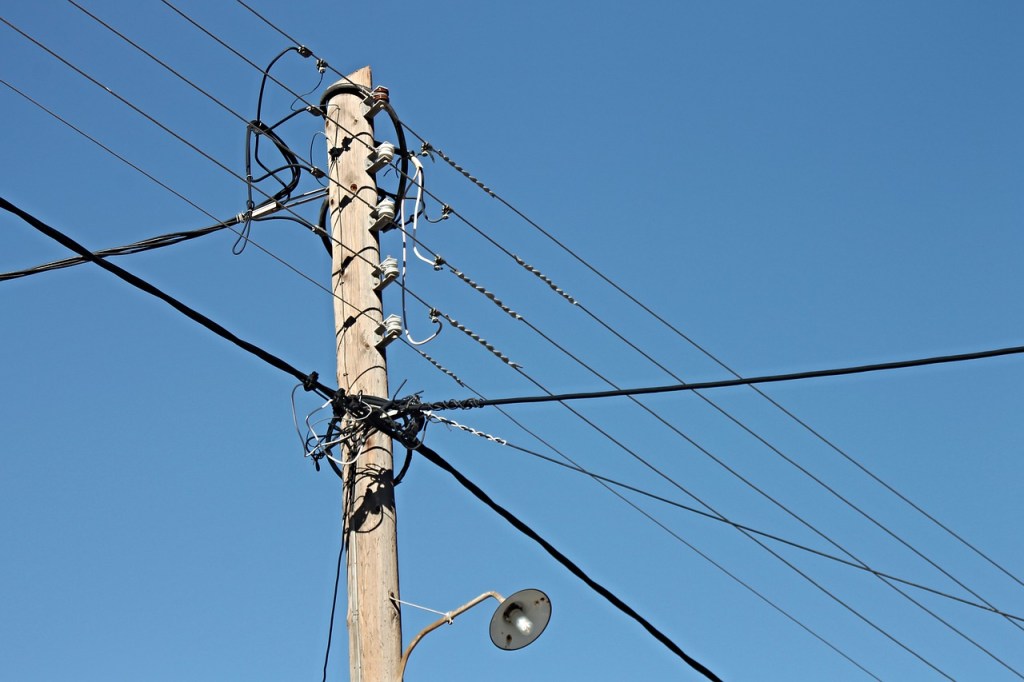
    According to information released by the island’s lone electrical company, the Emera-owned Barbados Light & Power Company (BL&P), the blackout was caused by an unfortunate combination of aging equipment and bad fuel. The blackout also had several spinoff effects. It led to water outages in many parts of the island due to the reliance of the Barbados Water Authority’s pumps on electricity. Moreover, some customers also had issues with their mobile service perhaps due to the heavy reliance on data caused by the unavailability of wifi.

    In the aftermath of ‘powergate’ in Barbados, there will be much discussion about the impact the two-day blackout has had on productivity, private sector profits and the Barbadian economy. What it reiterates, though, is that sustainable public and private infrastructure investment is indispensable for Caribbean competitiveness, trade and growth.

    Sustainable Infrastructure

    From the roads on which we drive, the ports and airports, the telecommunications network on which we depend for our daily communications, sanitation networks and the like, infrastructure comprises the physical building blocks of our countries. Infrastructure, for example, is what helps to connect suppliers with consumers, and exporters with foreign markets. It is needed for our daily work, play and comfort. Spillovers for the economy include increased productivity, economic inclusion, job creation and growth.

    Increasingly, owing to the need to build climate resilience, the conversation is turning towards sustainable infrastructure. CRC Research defines sustainable infrastructure as “the designing, building, and operating of these structural elements in ways that do not diminish the social, economic and ecological processes required to maintain human equity, diversity, and the functionality of natural systems.”

    The need for sustainable infrastructure is mentioned throughout the Sustainable Development Goals which comprise the United Nations’ Agenda 2030. For example, SDG 9 speaks to building resilient infrastructure. A report produced by The Economist magazine also highlighted the critical role of infrastructure in achieving sustainable development.

    Sustainable Infrastructure key to building competitiveness

    It is little wonder, therefore, why infrastructure is among the indicators of a country’s competitiveness, as seen with the World Economic Forum (WEF)’s Global Competitiveness Index. Countries, such as Singapore, New Zealand and Denmark, which rank high on that index, as well as on the World Bank’s Doing Business Index, almost always score high for their infrastructure. Jamaica, which currently leads the region in ease of doing business, has, among other things, made substantial investments in improving its infrastructure. The Transjamaica Roadway and the new Single Window for trade are two examples.

    Capital expenditure projects, such as for the upgrading of port facilities, hospitals and road infrastructure, are often costly for cash-strapped governments. As such, many governments turn to multilateral development agencies for loans for infrastructure development. It is also why the China-initiated Belt and Road Initiative (BRI) has become so attractive to many governments, including some in the Caribbean, which have signed Memoranda of Understanding with China on this.

    Private sector has role to play

    However, it is not only Governments which have a role to play in ensuring sustainable infrastructure. Private sector entities are increasingly taking over functions once believed to be the domain of the State, including the provision of utilities. As such, these private entities also have a duty to ensure that they continuously invest in upgrading their infrastructure in order to meet international best practices for efficiency and environmental sustainability. To do otherwise would be detrimental to the customers which rely on them, as well as the economy and society as a whole.

    Alicia Nicholls, B.Sc., M.Sc., LL.B. is an international trade and development consultant. Read more of her commentaries here and follow her on Twitter at Licylaw.

  • Prospects for deepening Caribbean-Africa Trade and Economic ties

    Prospects for deepening Caribbean-Africa Trade and Economic ties

    Caribbean and African countries share an extensive history forged from the scars of the egregious 300-year long Trans-Atlantic slave trade, the abuses of colonialism and the anti-colonial/independence struggle. As such, Africa’s imprint on the Caribbean is not just phenotypical, but its unmistakable genetic markers course through many of the rhythms, music and culinary delights which characterise the Caribbean cultural DNA.  

    Last week, President of Ghana, His Excellency Nana Akufo-Addo, visited five Caribbean countries: Barbados, Guyana, St Vincent and the Grenadines, Trinidad and Tobago, and Jamaica. Aiming to build on the shared historical and cultural ties between his continent and the Caribbean, President Akufo-Addo took the opportunity to sign bilateral cooperation agreements with these countries and to encourage Afro-Caribbean descendants to take part in Ghana’s Year of Return which marks 400 years since the commencement of the Trans-Atlantic slave trade which officially ended in the early nineteenth century.

    President Akufo-Addo’s visit presents an opportune occasion to consider the prospects for deepening Caribbean-African trade and economic ties, particularly in light of the recent entry into force of the African Continental Free Trade Area (AfCFTA) which will transform 52 out of 55 African countries into the world’s largest free trade area.

    Current Caribbean-Africa trade

    The Caribbean Community (CARICOM) comprises 15 Member States and territories in the Caribbean. Africa is one of the few trading partners with which the region enjoys a trade surplus. According to data from ITC Trade Map, CARICOM countries exported US$449 million worth in goods to Africa in 2017, representing 2.6% of CARICOM’s total exports to the world. Whereas, the region imported US$258 million worth of goods from the continent in that same year. Africa’s exports to CARICOM represented a mere 0.06% of its total world exports in 2017.

    On an international relations front, CARICOM countries and many African countries are both members of the Africa, Caribbean, Pacific (ACP) grouping and the Commonwealth of Nations and cooperate in multilateral fora, such as the World Trade Organisation and the United Nations. While CARICOM currently does not have a free trade agreement with any African country, some individual CARICOM Member States have bilateral investment treaties (BITs) and double taxation agreements (DTAs) with individual African States, not all of which are in force.

    Tourism between Africa and the Caribbean remains underdeveloped due to the lack of direct air links. Getting to Africa from the Caribbean or vice versa requires going through a major international gateway, usually London or New York City.

    Prospects for deepening Caribbean-Africa trade

    There are several developments which are promising for an expansion of Caribbean-Africa trade.

    1. Caribbean push for export partner diversification

    Caribbean countries have stepped up their attempts to diversify their export partners, particularly through promoting south-south trade. Thus far, among CARICOM Member States, Guyana, Haiti, Jamaica, Trinidad & Tobago and Suriname have a diplomatic mission in at least one African country. Barbados may soon join that list after announcing an intention to establish an embassy in Ghana by the end of 2019.

    Maintaining a diplomatic presence is often a costly exercise for small resource-constrained countries. Establishing a joint diplomatic mission in strategic African capitals, similar to what the Organization of Eastern Caribbean States (OECS) has done in key international capitals, is something CARICOM may wish to consider. Trade and investment liaisons could be attached to the missions to assist in promoting business and investment. Since it is firms which trade and not countries, building linkages between chambers of commerce and investment promotion agencies in the Caribbean and African countries would also be key.

    • Africa is on the rise

    Africa is home to some of the world’s fastest growing economies and according to the United Nations (UN), the world’s youngest population, comprising one fifth of the global youth population (aged 15-24). Despite challenges related to unemployment, Africa’s youth has the potential to unleash positive change and are an asset in a rapidly digitalizing global economy. The perceived lack of opportunities for youth in Africa may be the Caribbean’s gain leading to the export of high skilled services. Ghana, for example, which has a surplus of nurses, has agreed to assist Barbados with its nurses shortage. Indeed, there is already a small but growing ‘recent’ African diaspora in many Caribbean countries making sterling contributions in diverse fields, such as education, medicine, law and the like. There are also prospects for Caribbean-Africa trade and economic cooperation and sharing of expertise, particularly in the areas of education, renewable energy and health. Deepening and expanding links between universities in the Caribbean and those in African countries would allow for student and faculty exchanges.

    •  Increased Caribbean-African awareness

    Caribbean people are becoming better aware of the continent through for example, Nollywood/Gollywood movies, African music, traditional African dance and the Africa Channel broadcast in the US and the Caribbean. The potential exists for collaboration in the creative industries, particularly in film production, dance, the visual arts and music. Caribbean musical genres such as reggae, dancehall and soca are becoming quite popular in some African cities. For instance, renowned Nigerian artiste Timaya and famous Trinibagonian soca artiste Machel Montano have collaborated on several songs.

    In the area of tourism, Caribbean persons of African descent are increasingly interested in travelling to West African countries like Ghana, from which the majority of persons enslaved during the Trans-Atlantic slave trade were derived, in order to trace their ancestral roots and explore the Motherland.

    Barbados recently announced visa waivers for several African countries, including Ghana, which would facilitate greater tourism and investment. The lack of direct air or modern day sea links between the Caribbean and the African continent is a challenge. It is therefore refreshing to hear the current Barbados Prime Minister speak to the possibility of negotiating an air services agreement with Ghana. President Adufo-Addo and Prime Minister Mottley also spoke of Barbados being a gateway for Africa-Caribbean trade. Barbados, because of its location as the most easterly island in the Eastern Caribbean, was one of the first stops in the Trans-Alantic Slave Trade, the island would geographically make a logical hub for any direct Caribbean-Africa air links.

    • AfCFTA – a single African market

    At a time when some major world powers are retreating to protectionism and isolationism, all but three countries on the African continent (except Benin, Eritrea and Nigeria) have formed a continental-wide single market, a step towards a continental customs union.

    The AfCFTA was signed in March 2018 and entered into force on May 30, 2019, thirty days after The Gambia became the 22nd country to sign. It represents the world’s largest free trade agreement with a collective GDP of $2.5 trillion and a population of 1.2 billion people. The AfCFTA will eliminate tariffs on 90% of goods trade within the countries party to it. Once implemented, the AfCFTA is estimated to boost intra-African trade (which currently remains less than 20% of total African trade), promote economies of scale, industrialization, improve the competitiveness of African companies and lead to wider welfare and income gains.  

    While there is still much unfinished work to be done, as well as political, legal and regulatory hurdles to overcome before the ambitious agreement can be rendered operational, some of the potential benefits of the AfCFTA are apparent. Firstly, it aims to transform what is currently a disjointed and fragmented grouping of disparate regional markets and spaces with a maze of regulatory and legal barriers into one single continental market, making for a potentially more appealing and navigable market for investors. A company which establishes in one African State would not have to navigate a perplexing labyrinth of complicated rules of origin, regulations and other non-tariff barriers in order to trade across the continent.

    Secondly, the vast African continent currently has several regional economic groupings based primarily on geographic region and with varying levels of integration. Though these groupings are not replaced by the AfCFTA, the AfCFTA means that CARICOM and other third parties seeking to secure a free trade agreement with Africa could negotiate with one grouping as opposed to several.

    Thirdly, the AfCFTA and the Protocol on the Free Movement of Persons are potentially welcomed news for third parties seeking to establish a business in Africa as it could make sourcing inputs and hiring staff from other parts of the continent easier and much cheaper.  

    Additionally, both Africa and the Caribbean, which each comprise countries separated by language and geography, are in the midst of creating regional integration movements. CARICOM, and in particular the OECS sub-grouping which has evolved into a deeply integrated sub-region, can share its own experience as it seeks to consolidate its own CARICOM Single Market and Economy (CSME). It can also learn from any successes of the AfCFTA.

    In summary, Caribbean-Africa trade is small but there is potential for growth given Caribbean countries’ export partner diversification efforts, Africa’s economic rise and increased Caribbean-African cultural awareness. Additionally, the single African market contemplated by the AfCFTA is an exciting development which makes the prospects all the more alluring for deepened Caribbean-Africa trade based on a shared history, friendship and the potential for mutual benefit.

    Alicia Nicholls, B.Sc., M.Sc., LL.B., is an international trade and development consultant with a keen interest in sustainable development, international law and trade. You can also read more of her commentaries and follow her on Twitter @LicyLaw.

    DISCLAIMER: All views expressed herein are her personal views and do not necessarily reflect the views of any institution or entity with which she may be affiliated from time to time.

  • Could Promoting Bilingualism Give Caribbean Countries a Trade and Investment Advantage?

    Could Promoting Bilingualism Give Caribbean Countries a Trade and Investment Advantage?

    Alicia Nicholls

    What do Mauritius, Malaysia, and Singapore have in common? Besides being examples of highly competitive emerging economies, these countries have multilingual populations which they proudly count as part of their country’s competitive advantage.

    Prime Minister of Jamaica, the Most Honourable Andrew Holness, recently announced his government’s hope to adopt Spanish as a second language given the longstanding and growing importance of foreign direct investment (FDI) from Spain to Jamaica’s economy. Spanish chains are a growing presence in Jamaica’s tourism, wellness and construction  sectors and have injected US$1.7 billion in Jamaica’s tourist industry, according to the Prime Minister in his speech.

    Similar statements on the need for improving our populations’ language competencies have also been made by current and previous Commonwealth Caribbean governments. Could the promotion of bilingualism give our hitherto monolingual Commonwealth Caribbean countries a trade and investment edge in an increasingly interconnected global marketplace?

     ‘Everyone speaks English!” Or do they?

    I am not aware of any data on the rates of bilingualism (that is, proficiency in two or more languages) in the Commonwealth Caribbean. However, anecdotal evidence suggests that aside from local dialects, anglophone Caribbean countries have mostly monolingual (one language) populations.

    It is not uncommon to hear some persons strongly proclaim “everyone speaks English, so why must I learn another language?”. Though English is currently the most learnt second language internationally, this chart from the World Economic Forum shows that English is actually the third most spoken mother tongue in the world, with 372 million first-language speakers in 2017. The second most spoken language was Spanish, with 437 million speakers. But the most spoken was Chinese (Mandarin) with 1,284 million speakers, which is not surprising given the population of China.

    While the English language has been the global lingua franca since the 20th century, it has not always been, and it may not always be either given China’s growing economic dominance and promotion of its culture and language.  In recognition of this fact, China Daily has reported that there is growing interest in western countries for learning Mandarin. In Russia, for example, the number of Chinese language learners has reportedly increased from 17,000 in 2007 to 56,000 in 2017 and Mandarin is now an elective language in that country’s national college entrance examination.

    That aside, the Commonwealth Caribbean is surrounded not only by its Spanish, French and Dutch speaking Caribbean island neighbors, but also Spanish-speaking Latin American countries and Portuguese-speaking Brazil, which present still largely undertapped export and tourist markets.

    Bilingualism enhances labour force quality

    There is a corpus of research highlighting the cognitive, psychological and social advantages to human beings learning a second language. These include sharpened memory, improved decision-making skills, multi-tasking capability, problem-solving and mental dexterity. Knowledge of another language also increases a person’s employability, cultural sensitivity, earning potential and labour market opportunities. As a multilingual person, I can personally attest to the doors which knowledge of other languages have opened for me professionally.

    Internationally, employers’ demand for bilingual persons has increased not only as trade with other countries has increased, but because of the recognition by firms of the benefits to their export strategies of employing bilingual persons. A report of March 2017 by New American Economy found that demand for bilingual workers in the US is growing at both the higher and lower ends of the employment spectrum. This is further supported by a report by the Economic Intelligence Unit, which surveyed 572 executives globally and found that organisations with international ambitions were increasingly expecting prospective employees to be fluent in key foreign languages.

    Taken as a whole, improving a population’s language competency makes for a more attractive labour force to international investors. This advantage has not gone unrecognized by some countries. Mauritius, whose population speaks French, English and French Creole, proudly touts its bilingual population as one of its unique selling points as a place for international business. In Switzerland, which has four national languages, a report from 2008 estimated that country’s linguistic advantage as equivalent to about 9% of its GDP.

    In an increasingly interconnected world, I believe monolingualism will put our human resource, which is our greatest resource, at a distinct disadvantage in attracting international investment and tourism.

    Bilingualism/Biculturalism as Business Advantages in Cross-Border Transactions

    Effective communication is essential to the success of cross-border deals, which means that linguistic and cultural differences are frequent barriers to cross-border trade and investment. The previously mentioned report by the Economic Intelligence Unit found that “misunderstandings rooted in cultural differences present the greatest obstacle to productive cross-border collaboration”. For instance, a handshake or kiss on the cheek may be perfectly acceptable in one culture, but may cause offense in another.

    A UK-based report also found that “over time the trade cost to the UK resulting from language barriers has varied in magnitude, but has been consistently large.”  While I am unaware of similar research conducted in the Commonwealth Caribbean, anecdotal evidence shows that this may also be the case here as well.

    It is not uncommon for some businesses seeking to export to feel that it is not necessary to invest in developing a multilingual strategy or capacity given the increasing availability and accuracy, for example, of online translation services. However, online translation services miss subtle cultural nuances, which may be fatal when engaging in cross-border business negotiations, especially with enterprises from ‘high context cultures’. ‘High context’ is the term used in international business to describe those cultures which place greater emphasis on context, non-verbal cues and on interpersonal relations when conducting business. Examples would be most African, Middle Eastern and Asian countries. ‘Low context’ cultures usually rely mainly on verbal cues, and interpersonal relationships have less importance in the business context. These cultures include many Western European countries, the US and Canada.

    In the Commonwealth Caribbean most of our international trade is currently with low context cultures with which we share cultural, linguistic and historical ties. But, as our firms seek to diversify, and as China (a high context culture) expands its economic footprint in the region, there will be need for greater understanding of the Chinese language and culture.

    Prior knowledge of the language and cultural norms of a target export market is also invaluable when conducting market research into the business, legal and regulatory environment of that potential export market.

    Bilingualism can foster wider Caribbean integration

    Promoting bilingualism can foster closer Caribbean integration. By accident of geography, the Caribbean Region is divided by water. By accident of history, these divisions are furthered by language. However, greater linguistic and cultural awareness among our islands can bridge these divisions.

    As an example, the French-speaking island of Martinique is one of the top tourist source markets for St. Lucia, its neighbor just 40 miles to the south.  Its tourist and business ties with Martinique are facilitated not just by geography and reliable transportation links, but also the mutual intelligibility of the Martinican and St. Lucian creoles and some shared cultural similarities. St. Lucia, nicknamed Helen of the West, changed colonial hands fourteen times between France and England, giving the island a unique culture and patois which is a mélange of its French and English colonial roots.

    A new programme called the Trade Enhancement for the Eastern Caribbean (TEECA) programme seeks to promote trade and investment between Member States of the Organisation of Eastern Caribbean States (OECS) and Martinique, which became an OECS associate member in 2015. The success of this programme will undoubtedly hinge on OECS firms seeking to create or expand business with those in Martinique having an understanding of the Martinican cultural, business and legal context and knowledge of the French language.

    Building a Bilingual Advantage

    Promoting greater language competency among our populations could bring trade and investment advantages to Caribbean countries which rely disproportionately on their human resource. While not a panacea, it can provide for a more employable and attractive labour force, facilitate our export market diversification efforts, strengthen integration with the non-anglophone Caribbean and improve trade and investment ties with the wider LAC region

    Of course, creating a bilingual society cannot happen overnight. First of all, we need to determine what language competencies our Governments will seek to promote. Spanish and French are increasingly being taught in Commonwealth Caribbean secondary schools, but should Mandarin also be included on the curriculum?

    Moreover, expanding language instruction at the primary school level would be key, as well as promoting greater cultural exchanges. Languages should not be seen  solely as subjects for study, but as a door to further business opportunities, creating an edge for our people in an increasingly interconnected and competitive global environment.

    As it is firms which trade and not countries, it is incumbent on regional firms to increase their in-house language capacity by employing persons with the linguistic skills and cultural knowledge of their export target markets, and also, where appropriate, invest in developing the language proficiency of their existing staff.

    Alicia Nicholls, B.Sc., M.Sc., LL.B., is an international trade and development consultant with a keen interest in sustainable development, international law and trade. You can also read more of her commentaries and follow her on Twitter @LicyLaw.

  • G20 Leaders’ Hangzhou Summit: Trade and Investment Takeaways

    “Our growth, to be strong, must be reinforced by inclusive, robust and sustainable trade and investment growth.”  –G20 Leaders’ Communiqué 2016

    Alicia Nicholls

    Against the backdrop of an uneven global economic recovery, subpar global trade and investment growth, trade disputes and the recently held Brexit referendum vote in the UK, trade and investment were top of mind for world leaders at the just-concluded Eleventh Group of 20 (G20) Summit held on September 4-5, 2016  in Hangzhou, China.

    The G20 is the premier international forum for cooperation on global economic governance and its members account for 86 percent of global GDP and 78 percent of global trade. China currently holds the G20 presidency.

    With the goal of providing political leadership to ensure “inclusive, robust and sustainable trade and investment growth”, G20 leaders endorsed the decisions taken by G20 trade ministers at their Trade Ministers Summit held in Shanghai in July this year. Among the key outcomes of that July meeting were the Terms of Reference of the new G20 Trade and Investment Working Group, the G20 Strategy for Global Trade Growth and the G20 Guiding Principles for Global Investment Policymaking.

    Key Trade and Investment-Related Aspects of the G20 Leaders’ Communiqué

    Below are some of the key trade and investment-related takeaways from the G20 Leaders’ Communiqué:

    • Reiteration of G20 leaders’ recognition that strong growth must be reinforced by “inclusive, robust and sustainable trade and investment growth”;
    • Commitment to strengthening G20 trade and investment cooperation;
    • Commitment to a “rules-based, transparent, non-discriminatory, open and inclusive multilateral trading system” with the World Trade Organisation (WTO) playing a central role;
    • Commitment to continuing the post-Nairobi work. It is instructive that the Doha Round was not mentioned, confirming that the Doha Development Round is effectively dead despite disagreement among WTO members on the round’s future in the communique to the WTO Nairobi Ministerial held December 2015;
    • G20 leaders also reiterated their support for the inclusion of new issues into the WTO negotiating agenda, another area on which WTO members saw strong divergences of opinion in the aftermath of the Nairobi Ministerial. The G20 leaders  noted that “a range of issues may be of common interest and importance to today’s economy, and thus may be legitimate issues for discussions in the WTO, including those addressed in regional trade arrangements (RTAs) and by the B20″;

    • Commitment to ensure their regional agreements and bilaterals complement the multilateral trading system;
    • Commitment to ratify the Trade Facilitation Agreement by the end of 2016;
    • Indicated their support for the importance of the role that WTO-consistent plurilateral trade agreements “with broad participation” can play in complementing global liberalization initiatives and mentioned the Environmental Goods Agreement as an example;
    • Reiteration of their opposition to protectionism on trade and investment “in all forms” and reiterated the commitments to standstill and rollback protectionist measures till the end of 2018 and to support the work of the WTO, UNCTAD and Organisation for Economic Development (OECD) in monitoring protectionism;
    • In recognition of the rising anti-globalisation and anti-trade sentiment in many western countries, G20 leaders “emphasize[d] that the benefits of trade and open markets must be communicated to the wider public more effectively and accompanied by appropriate domestic policies to ensure that benefits are widely distributed”;
    • Endorsed the G20 Strategy for Global Trade Growth, as well as the G20 Guiding Principles for Global Investment Policymaking which “will help foster an open, transparent and conducive global policy environment for investment”. These were decided at the G20 Trade Ministers Meeting held in July;
    • Indicated their support of policies encouraging firms of all sizes (particularly women and youth entrepreneurs, women-led firms and SMEs) to take full advantage of global value chains (GVCs);
    • Although China was not specifically identified, G20 leaders noted that global steel oversupply was a global issue requiring a collective response and increased information-sharing. They called for the formulation of a Global Forum on steel excess capacity to be facilitated by the OECD with the active participation of G20 members and interested OECD members.

    For the tax-related aspects of the communiqué by FRANHENDY Attorneys, please visit  here.

    The full communiqué may be read here.

    Alicia Nicholls, B.Sc., M.Sc., LL.B. is a trade and development consultant with a keen interest in sustainable development, international law and trade. You can also read more of her commentaries and follow her on Twitter @LicyLaw.