Tag: Jamaica

  • Rest in peace Ambassador Richard Bernal – Pillar of the Caribbean Trade & Development Community

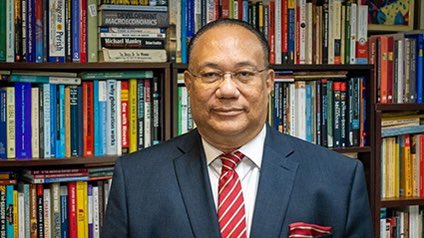
    Rest in peace Ambassador Richard Bernal – Pillar of the Caribbean Trade & Development Community

    Photo credit: The University of the West Indies

    Alicia Nicholls

    It is with profound sadness that my first blog post for the year 2023 is to express my condolences on the sudden passing of a pillar of the Caribbean trade and development community and a reader of this Blog, the late Ambassador Prof. Richard Bernal. To say that the Caribbean region has lost yet another a giant is an understatement. For me, it still has not completely sunk in.

    Prof. Bernal’s incomparable achievements and contributions, both as an academic and practitioner in the trade and development economics arenas, are lengthy and will be rightfully ventillated in other spaces. Many who follow trade developments would undoubtedly best remember him for his role as a diplomat and trade negotiator, the director general of the then Caribbean Regional Negotiating Machinery (CRNM) and the lead negotiator of the CARIFORUM-European Union Economic Partnership Agreement. This was CARIFORUM countries’ first trade agreement with a developed country. Prof. Bernal’s book “Globalisation, Trade and Economic Development: The CARIFORUM-EU Economic Partnership Agreement” is compulsory 101 reading for an understanding of the EPA, the background behind its negotiation and the wider Caribbean economic development problematique. But there is much more to Prof. Bernal’s work than this. Others will no doubt write profusely on the many facets of his accomplished career and life as an economist, diplomat, educator, academic, negotiator over the next few days as we mourn his loss.

    Prof Bernal was both an avid reader and writer. His writings were a quilt of measured, well-researched ideas woven expertly and drawn from his groundings in economics, trade, political economy, development policy and international affairs. At the heart of it all was a central trend, how can the Caribbean escape its current growth and development conundrum? His scholarship has undoubtedly informed, enthused and shaped my interests as a trade policy specialist from the time I was a fresh-faced student doing my Masters in International Trade Policy at The UWI Shridath Ramphal Centre for International Trade Policy & Services well over a decade ago. Even as recently as a few days ago I quoted Prof. Bernal in a journal article I am authoring. I continue to be inspired by and aspire towards his level of academic output. I was even happier when on one of his trips to Barbados, he kindly obliged my humble request to autograph my personal copies of two of his several books. I am an avid follower of his work and own copies of all his books.

    While I did not know Prof. Bernal as well as others, I consider myself honoured to have made his acquaintance and privileged to have eventually met him in person. I have also enjoyed serving with him and many other regional luminaries as fellows in the Caribbean Policy Consortium. I deeply cherish the nuggets of wisdom and encouragement he shared with me in our correspondences.

    His brilliant mind has physically left us. I however take some comfort in the fact that his voluminous publications list spanning books, journal articles, popular pieces and endless interviews, podcasts and webinars remain a rich repository of knowledge for future generations of trade and development practitioners, diplomats, specialists, scholars and students. These works contain his well-researched thinking and musings on key themes pervading the Caribbean development challenge – how do we achieve sustainable economic growth? How can trade assist this? How can we expand US-Caribbean relations for development? How can we make the growing Chinese-Caribbean relationship a mutually beneficial one? How has the Caribbean helped to shape international affairs even as small States?

    I do hope that in recognition of his stellar contribution to the region’s corpus of research and literature on trade, international affairs and development issues, there will be some special library or unit established at The UWI where all his works could be accessed in a central place and/or a lecture series on the topics he held dear to his heart or a scholarship fund for students studying these issues established in his honour. I take this opportunity to express my deepest condolences to the late Ambassador Bernal’s family.

    Walk good, Ambassador.

    Alicia Nicholls, B.Sc., M.Sc., LL.B. is an international trade and development consultant and the founder of the Caribbean Trade Law and Development Blog http://www.caribbeantradelaw.com.

  • World Bank Doing Business Report 2020: How did the Caribbean do?

    World Bank Doing Business Report 2020: How did the Caribbean do?

    Alicia Nicholls

    The World Bank has released its latest Doing Business Report (2020) – Sustaining the Pace of Reforms. With an overall rank of 71 out of 190 economies, Jamaica has retained its top spot as the English-speaking Caribbean’s easiest economy in which to do business, followed by St. Lucia which respectively has an overall rank of 93 out of 190 economies.

    Although several Caribbean countries were highlighted for reforms implemented in 2018/19, no Caribbean country ranks within the top 50 countries. This means that the region still has much catching up to do in terms of ease of doing business.

    Please see below the ranks of Caribbean Community (CARICOM) countries:

    Economy2020 Rank
    Jamaica71
    St. Lucia93
    Trinidad & Tobago105
    Dominica111
    The Bahamas119
    Barbados128
    St. Vincent & the Grenadines130
    Guyana134
    Belize135
    St. Kitts & Nevis139
    Grenada146
    Suriname162
    Haiti179

    Turning to the wider Caribbean, Puerto Rico is the easiest Caribbean country in which to do business with a rank of 65. The Dominican Republic ranked 115.

    Reforms and changes

    The following Caribbean countries were singled out for reforms made in improving business or changes which made business more difficult:

    EconomyArea of Reform (whether positive or negative)
    Antigua & BarbudaStarting a business (positive)
    BarbadosGetting electricity (positive)
    Registering property (negative)
    Trading across borders (positive)
    Enforcing contracts (positive)
    BelizeGetting Electricity (positive)
    Trading across borders (positive)
    GrenadaStarting a business (positive)
    GuyanaTrading across borders (negative)
    HaitiGetting credit (positive)
    JamaicaRegistering property (positive)
    Enforcing contract (positive)
    St Kitts & NevisGetting credit (positive)
    St Vincent & the grenadinesPaying taxes (positive)
    Trinidad & TobagoPaying taxes (positive)

    The international perspective

    Overall, the easiest economies in which to do business were New Zealand (1), Singapore (2), Hong Kong (3), Denmark (4) and South Korea (5). The most difficult were Libya (186), Yemen (187), Venezuela (188), Eritrea (189) and Somalia (190).

    The 10 top improvers in the 2020 report were Saudi Arabia, Jordan, Togo, Bahrain, Tajikistan, Pakistan, Kuwait, China, India, and Nigeria, and accounted for one-fifth of all the reforms recorded globally.

    The full World Bank Doing Business Report 2020 may be accessed here.

    Alicia Nicholls, B.Sc., M.Sc., LL.B., is an international trade and development consultant with a keen interest in sustainable development, international law and trade. You can also read more of her commentaries and follow her on Twitter @LicyLaw.

    DISCLAIMER: All views expressed herein are her personal views and do not necessarily reflect the views of any institution or entity with which she may be affiliated from time to time.

  • CARICOM and the African Union to deepen ties: Why this is a good idea!

    CARICOM and the African Union to deepen ties: Why this is a good idea!

    Alicia Nicholls

    Caribbean-African relations have become an exciting and refreshing trade space to watch in recent months. Over the past few weeks, two African leaders (Their Excellencies President Nana Akufo-Addo of Ghana and President Uhuru Kenyatta of Kenya) paid separate official visits to the Caribbean. Barbados’ Prime Minister, the Hon. Mia Amor Mottley also paid a state visit to Morocco in June 2019.

    It was also announced earlier this month that the Caribbean Community (CARICOM) would over the next year seek to deepen and formalise cooperation with its African equivalent – the African Union (AU). This article takes a brief look at why formalization of south-south cooperation and engagement between CARICOM and the African Union is a good idea.

    CARICOM and AU have more similarities than differences

    The formal relationship between the two regions has been mainly through their participation in the Africa, Caribbean, Pacific (ACP) and the Commonwealth of Nations groupings, and not directly bilateral. But change is on the horizon. In 2012, Heads of State and Government of the African Union, the Caribbean and South America concluded the Global African Summit with a declaration which outlined a plan of action for forging political, economic and social cooperation between the AU and ‘all inter-governmental entities in regions in which African Diaspora populations are part of’, which includes CARICOM.

    As I wrote in a previous article a couple of weeks ago, there is much promise for expanding and deepening economic and political relations between Africa and the Caribbean. A boost would be, of course, formal collaboration between CARICOM and the AU.

    CARICOM is an intergovernmental organization of fifteen mostly English-speaking Caribbean States and territories founded on July 4, 1973 by the Treaty of Chaguaramas (revised in 2001). It was preceded by the Caribbean Free Trade Agreement (CARIFTA) which lasted from 1968-1973 and the West Indian Federation (1958-1962). CARICOM has a collective population of approximately 18 million. Its secretariat is based in Georgetown, Guyana. Twelve CARICOM Members are currently full members of the CARICOM Single Market and Economy (CSME).

    The AU is a 55-nation pan-continental, intergovernmental organization which was officially launched in July 2002. The AU has a population of just over 1 billion. Its secretariat is in Addis Ababa, Ethiopia. The AU has launched Agenda 2063, an ambitious plan to transform the continent into a global powerhouse. There are currently eight regional economic communities considered ‘building blocks’ of the AU, and diaspora relations are also integral to the AU.

    Both CARICOM and the AU are intergovernmental organisations which encompass post-colonial States with cultural and linguistic differences, facing a myriad of challenges and varying levels of development. Both are in the process of wide-scale regional integration projects. CARICOM, for instance, is in the process of trying to consolidate its CSME. The African Continental Free Trade Agreement (AfCFTA), which was signed in March 2018 and currently has 54 signatories, seeks to create a seamless pan-African economic space. The AfCFTA came into effect in May 2019 and the process has started for the Agreement’s operationalization.

    There are, of course, differences between the two regions which may impact on the policy and negotiating positions taken in multilateral fora. For example, most CARICOM countries are services-based (mainly tourism and/or financial services) economies, with the exception of Belize, Guyana, Suriname and Trinidad & Tobago where commodities trade is important. In the mostly resource-rich African countries, however, commodities trade is king. Most Caribbean countries are Small Island Developing States (SIDS), while those in the AU include mainly landlocked and coastal continental States. The only six AU SIDS are Comoros, Guinea Bissau, Mauritius, Sao Tome e Principe and Seychelles. Moreover, 33 of the 55-member AU are classified by the United Nations (UN) as Least Developed Countries (LDCs), while Haiti is the only LDC in CARICOM.

    Despite these differences, which should not be overlooked, I believe the prospects for CARICOM/AU collaboration and engagement are very promising. Both regions can learn from each other as they seek to deepen their integration projects. There is also scope for closer Caribbean/Africa multilateral collaboration on issues of mutual interest, such as confronting the growing threat of unilateralism and protectionism; the achievement of the United Nations’ 2030 Agenda and its 17 Sustainable Development Goals (SDGs) and their targets; de-risking by global banks; climate change; reform of the World Trade Organisation (WTO); securing reparations, to name a few. Intra-regional cooperation prospects are also promising in many areas such as agriculture, education, the creative industries, renewable energy, medicine/health, the blue and green economies, sports, information and communications technology (ICTs), for example.

    Moreover, Barbados’ upcoming co-hosting of the UNCTAD 15 Quadrennial in October 2020 provides further prospects for collaboration on important multilateral trade and development issues. It is interesting to note that UNCTAD 14 was held in Nairobi, Kenya so there is the opportunity for Kenya to share with Barbados its experience in the successful hosting of the UNCTAD 14.

    Plans for Deepening CARICOM/AU ties  

    A press release issued by the CARICOM Secretariat noted that CARICOM Secretary General Ambassador Irwin LaRocque and Deputy Chair of the African Union Commission (AUC), His Excellency Kwesi Quartey, discussed the need for continued ACP solidarity in the on-going negotiations for the Post-Cotonou Agreement with the European Union (EU) and agreed to explore collaboration on multilateral areas of concern, such as climate change.

    The CARICOM press release further noted that the two leaders “took the opportunity to consider some of the areas in which their two organisations could work together including the formalisation of an institutional relationship between CARICOM and the AU to promote cooperation and to strengthen the deep bond of friendship between Africa and the Caribbean.”

    Moreover, St. Lucia Times has quoted St. Lucian Prime Minister, the Hon. Allen Chastanet, as stating that there will be a planned CARICOM and the AU Summit and the signature of a Memorandum of Understanding establishing a framework for engagement and cooperation. Prime Minister Chastanet is further quoted by this news agency as stating that “Barbados and Suriname will partner in establishing an Embassy in Ghana, while Barbados and Saint Lucia will partner in establishing an Embassy in Kenya.”

    During President Kenyatta’s visit, Barbados and Kenya have also committed to negotiating a Double Taxation Agreement and Bilateral Investment Treaty with each other, and discussed collaboration in areas such as ICTs, renewable energy, sports, the blue economy, health, education and air services. Kenya has also sought the Caribbean’s support in its bid for a seat on the UN Security Council.

    While this high-level political commitment to greater Caribbean-African engagement is needed and commendable, it is firm to firm, university to university and people to people collaboration which will transform deeper Caribbean-African relations from an aspiration to reality. An important step, therefore, will also be formalizing relations between private sector organisations, business support organizations, investment promotion agencies, universities and tourism boards in the Caribbean and Africa in order to promote Caribbean-Africa trade and investment in both traditional and emerging sectors, research and tourism. On this note, it was welcomed news that there will be commencement of engagement between the private sectors of Barbados and Kenya, as well as deeper university collaboration.

    Alicia Nicholls, B.Sc., M.Sc., LL.B., is an international trade and development consultant with a keen interest in sustainable development, international law and trade. You can also read more of her commentaries and follow her on Twitter @LicyLaw.

    DISCLAIMER: All views expressed herein are her personal views and do not necessarily reflect the views of any institution or entity with which she may be affiliated from time to time.

  • Jamaica remains easiest place in CARICOM to do business, according to World Bank Doing Business Report 2019

    Jamaica remains easiest place in CARICOM to do business, according to World Bank Doing Business Report 2019

    Alicia Nicholls

    Jamaica has maintained its spot as the easiest place to do business in the Caribbean Community (CARICOM) in the just released World Bank Doing Business Report 2019.  This is the 16th edition of this flagship World Bank publication which objectively ranks 190 economies globally on their ease of doing business based on a number of indicators. The theme of this year’s report is Training for Reform.

    Jamaica has an overall ranking of 75 out of the 190 economies ranked. Of note is that overall, Jamaica also ranked as the 6th easiest place to start a business and 12th in the ease of getting credit. With respect to significant business reforms, the World Bank highlighted Jamaica’s improved access to credit information by distributing data from utility companies.

    No Caribbean country has made the top 50. The rankings of the other Caricom countries are as follows: St. Lucia (93), Dominica (103), Trinidad & Tobago (105), Antigua and Barbuda (112), The Bahamas (118), Belize (125), Barbados (129), St Vincent and the Grenadines (130), Guyana (134), St Kitts and Nevis (140), Grenada (147), Suriname (165) and Haiti (182).

    The Dominican Republic, which is not a CARICOM country but is part of CARIFORUM, has a ranking of 102. Puerto Rico, a Commonwealth of the US, is the Caribbean region’s easiest place to do business, with a ranking of 64.

    Globally, New Zealand was ranked the easiest place to do business (1), while Somalia was ranked as the least (190). Turning to small States, Singapore was ranked second, while Mauritius continued its upward climb, with a current rank of 20th.

    The World Bank reported a record 314 regulatory reforms between June 2, 2017 and May 1, 2018. Some 128 economies introduced ‘substantial regulatory improvements’ which made doing business easier in all areas measured. The following economies internationally were singled out as having made the most improvement: Afghanistan, Djibouti, China, Azerbaijan, India, Togo, Kenya, Cote D’Ivoire, Turkey and Rwanda.  

    The full World Bank Doing Business Report 2019 may be accessed here.

    Alicia Nicholls, B.Sc., M.Sc., LL.B., is an international trade and development consultant with a keen interest in sustainable development, international law and trade. You can also read more of her commentaries and follow her on Twitter @LicyLaw.